

Why Intravesical Therapy Often Follows TURBT and How the Treatment Course Runs
Key Takeaways
- TURBT removes visible tumours and provides the pathology, but non-muscle-invasive bladder cancer recurs often enough that follow-up treatment and surveillance are standard rather than optional (NHS).
- A single chemotherapy instillation given within about the first day after TURBT targets tumour cells shed during surgery before they can re-implant on the raw lining (NHS, Mayo Clinic).
- BCG is a weakened live bacterium that works by provoking an immune attack on the bladder lining, which is why it needs a weekly induction course and, for higher-risk disease, maintenance over a prolonged period (NHS).
- Risk group, defined by stage, grade and the presence of carcinoma in situ on the pathology report, decides whether someone receives one instillation, a short course, or BCG with maintenance (Mayo Clinic).
- Flu-like symptoms and bladder irritation for a day or two after BCG are expected; a fever that persists or returns weeks later is a red flag for the organism spreading and needs same-day medical contact (NHS).
- Cystoscopy around three months after TURBT, and at intervals for years afterward, is the only reliable way to detect recurrence and is as important to the plan as the instillations themselves (NHS).
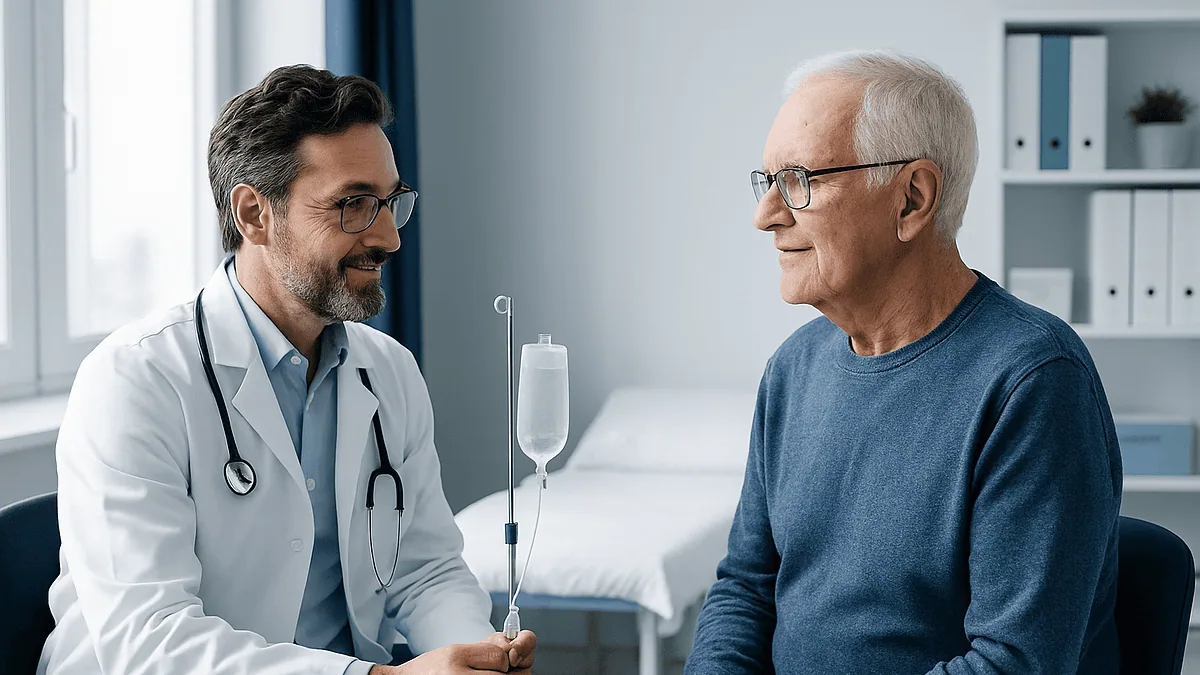
Intravesical therapy usually follows TURBT because the operation removes visible bladder tumours but cannot reliably clear microscopic cancer cells, and non-muscle-invasive bladder cancer tends to return. Medicine placed directly into the bladder through a thin catheter, either a single chemotherapy instillation soon after surgery or a weekly course of BCG immunotherapy followed by maintenance over months to years, is offered according to risk group, with the treating urologist deciding the plan.
The surgeon says the tumour is out, the scope went in through the urethra and nothing had to be cut from the outside, and then comes a second sentence that catches people off guard: we would like to start putting medicine into your bladder. It can feel like being told the house is safe and then being handed a fire extinguisher.
That second sentence has a solid logic behind it. Transurethral resection of bladder tumour, usually shortened to TURBT, is both a diagnosis and a treatment, but bladder tumours that have not grown into the muscle wall have a habit of coming back. Intravesical therapy after TURBT, meaning medicine instilled directly into the bladder rather than swallowed or given into a vein, exists to lower that chance.
This explainer walks through why it is offered, who usually gets it, what a session feels like, how the course is paced over weeks and months, and which symptoms should prompt a call.
What is intravesical therapy after TURBT, in plain language?
Start with the words. Intravesical simply means inside the bladder. Therapy here means a liquid medicine. TURBT is the procedure in which a urologist passes a narrow telescope (a cystoscope) through the urethra, finds the tumour on the bladder lining, and shaves it away with a small electrical loop, sending the tissue to a pathologist.
Put together, intravesical therapy after TURBT is medicine delivered through a soft catheter, a thin tube placed briefly in the urethra, so that the drug bathes the inside of the bladder for a set period before it is passed out with urine. The bladder is well suited to this. It is a hollow organ with a watertight lining called the urothelium, so a drug can sit in direct contact with the surface where these cancers arise, at a concentration that would be hard to achieve safely through the bloodstream, while very little of it is absorbed into the rest of the body (Mayo Clinic).
Two broad kinds of medicine are used. One is chemotherapy, most often the generic drugs mitomycin or gemcitabine, which damages dividing cancer cells on contact. The other is immunotherapy with bacillus Calmette-Guérin, abbreviated BCG, a weakened bacterium originally developed as a tuberculosis vaccine that provokes the immune system to attack cancer cells in the bladder lining (NHS).
Neither replaces TURBT. The resection removes the tumour that can be seen and gives the pathologist tissue to grade and stage. The instillations are a follow-through aimed at cells that cannot be seen. The order matters: surgery first, pathology report second, instillation plan third, and every step of that plan is set by the treating team on the basis of what the report shows.
Why TURBT alone is often not enough for non muscle invasive bladder cancer
Most bladder cancers are found while they are still confined to the lining or the thin layer just beneath it, the lamina propria. This group is called non-muscle-invasive bladder cancer. The muscle wall is intact, which is good news, because it means the bladder can usually be kept.
The catch is biology. The urothelium is a field, not a single spot, and the same exposures that produced one tumour, smoking above all, have often primed the rest of the lining. After a resection, new tumours frequently appear elsewhere in the bladder, sometimes months later and sometimes years later. Recurrence is common enough that follow-up cystoscopy is built into every care pathway rather than offered as an optional extra (NHS, Mayo Clinic).
Three mechanisms explain why a clean-looking bladder can still recur:
- Microscopic cells may remain at the resection edge or in flat patches that are hard to see with a white-light scope.
- Cells can shed during the operation and settle on raw areas of lining, where they re-implant.
- Fresh tumours can arise from genetically altered but still normal-looking lining.
Intravesical therapy addresses the first two directly and, in the case of BCG, may also influence the third by changing the immune environment of the whole bladder surface. The aim is twofold: fewer recurrences, which means fewer repeat operations, and, in higher-risk disease, a lower chance of progression to muscle-invasive cancer, where treatment becomes far more demanding (Mayo Clinic).
So the point is not that surgery failed. It is that this particular cancer behaves like a weed with a wide root system, and the resection has removed the part above the soil.
The single early instillation: mitomycin bladder instillation explained
For many people the first intravesical treatment happens before they have fully woken up from the anaesthetic. A single instillation of chemotherapy, often mitomycin or gemcitabine, may be given through the catheter that is already in place, typically within the first day after TURBT (NHS, Mayo Clinic).
Why so soon? The reasoning rests on the shedding problem described above. In the hours after resection, loose tumour cells float in the bladder and the lining has raw patches where they could take hold. A chemotherapy drug held in the bladder during that window acts on those floating cells before they can settle. Wait a week and the opportunity is largely gone.
Mitomycin works by cross-linking DNA so that a cell trying to divide cannot copy its genetic material and dies. Gemcitabine is a different type of chemotherapy that is inserted into the DNA strand as it is built, halting replication. Both act on contact and are absorbed only minimally through intact urothelium, which is why the sort of whole-body side effects people associate with chemotherapy, such as hair loss or lowered blood counts, are not expected from a bladder instillation (Mayo Clinic).
There are circumstances in which the early instillation is deliberately skipped. If the resection was deep enough to risk a perforation, or if there was heavy bleeding, chemotherapy in the bladder could leak into surrounding tissue and cause serious irritation. The urologist makes that call in the operating room. Being told you did not receive the early instillation is therefore not a sign of a missed step; it usually means the surgeon judged the bladder wall needed to heal first.
For low-risk tumours, this single early instillation may be the whole of the intravesical plan. For others, it is the opening move.
BCG treatment for bladder cancer: how an old vaccine fights a tumour
BCG is the odd one out in cancer medicine. It is not a drug that kills cells directly. It is a live but weakened strain of a bacterium related to tuberculosis, and it works by picking a fight.
When BCG is instilled, the bacteria attach to the bladder lining and are taken up by urothelial cells, particularly in areas where the surface has been disturbed. The immune system responds the way it would to any infection: white cells flood in, release signalling proteins called cytokines, and begin inspecting and destroying cells that look abnormal. Cancer cells in the lining are caught in that response. Over repeated instillations the immune reaction becomes trained and more targeted, which is thought to be why the effect can persist well after the course ends (Mayo Clinic, NHS).
This mechanism explains three things patients notice:
- The flu-like feeling and bladder irritation after a session are the immune response doing its work, not a sign that something has gone wrong, provided they settle within a day or two.
- The treatment needs a course rather than a single dose, because immune memory builds with repetition.
- Maintenance instillations spaced out over a long period are used in higher-risk disease to keep that immune memory active (NHS).
BCG is generally reserved for intermediate- and high-risk non-muscle-invasive disease, including carcinoma in situ, a flat high-grade cancer confined to the lining that is difficult to remove surgically and is treated mainly with BCG (Mayo Clinic). Because the organism is live, people with severely weakened immune systems, active urinary infection, or recent bladder trauma are usually not given it until those issues are resolved. The prescribing urologist weighs these factors for each patient; there is no fixed rule that applies to everyone.
Who is usually offered intravesical therapy after TURBT, and who is asked to wait?
The pathology report from TURBT is the document that decides the plan. Three features matter most: how deep the tumour went (stage), how abnormal the cells look under the microscope (grade), and whether flat carcinoma in situ is present. Alongside these, the urologist considers the number of tumours, their size, and whether this is a first tumour or a recurrence (NHS, Mayo Clinic).
From those features, non-muscle-invasive disease is sorted into risk groups, and the intravesical plan follows the group:
- Low risk, typically a single, small, low-grade tumour confined to the lining: a single early chemotherapy instillation, then surveillance cystoscopy.
- Intermediate risk, such as multiple or recurrent low-grade tumours: a course of chemotherapy instillations or a course of BCG, with the choice individualised.
- High risk, including high-grade tumours, carcinoma in situ, or tumours reaching the lamina propria: BCG induction followed by maintenance, often after a second-look TURBT to confirm nothing deeper was missed (Mayo Clinic).
Being asked to wait is also common. Reasons include an unhealed resection site, blood in the urine that has not settled, a urinary tract infection on the day of treatment, a catheter that cannot be passed comfortably, or a pending second resection whose result could change the plan. Waiting in these situations protects the bladder wall and makes the eventual treatment safer, not weaker (NHS).
People with muscle-invasive disease are outside this pathway altogether. For them, intravesical therapy is not sufficient, and the conversation turns to bladder removal, chemotherapy, radiotherapy or combinations. Which path applies is a decision for the urology team working with the pathology, and it is reasonable to ask them to show you where your report places you.
Chemotherapy or BCG: a side-by-side view
Patients often ask why a neighbour had one treatment and they are having another. The table below summarises the typical differences in mainstream guidance. It is a map, not a prescription, and the treating team may depart from it for good reasons.
| Feature | Intravesical chemotherapy (e.g. mitomycin, gemcitabine) | Intravesical BCG immunotherapy |
|---|---|---|
| How it works | Damages DNA of dividing cells on contact | Triggers an immune attack on the bladder lining |
| Usual role | Single early instillation after TURBT; sometimes a short course for intermediate risk | Induction course then maintenance for intermediate- and high-risk disease and carcinoma in situ |
| Typical timing | Within the first day after surgery, or weekly courses later (NHS) | Starts a few weeks after TURBT once the bladder has healed (Mayo Clinic) |
| Common effects | Bladder irritation, urgency, occasional skin rash on hands or genitals from contact | Burning, frequency, blood in urine, flu-like symptoms for a day or two |
| Rare but serious effects | Leakage outside the bladder if wall is damaged | Spread of BCG organism causing persistent fever or systemic infection |
| Who usually does not receive it | Suspected perforation, heavy bleeding | Severely weakened immunity, active urinary infection, recent bladder trauma |
Two further points frame the comparison. First, for high-risk disease, BCG is generally regarded as the more effective option for reducing progression, which is why guidelines steer that group towards it (Mayo Clinic). Second, the choice is rarely about which drug is better in the abstract; it is about which fits the risk group, the state of the bladder wall, and the patient’s other health conditions. When supplies of BCG have been limited, urologists have at times substituted chemotherapy courses, and that substitution is made at the discretion of the prescribing clinician.
What actually happens during an instillation session?
A session is usually a short outpatient visit, and much of it is spent waiting rather than being treated. Here is the typical sequence as described in patient guidance from the NHS and Mayo Clinic.
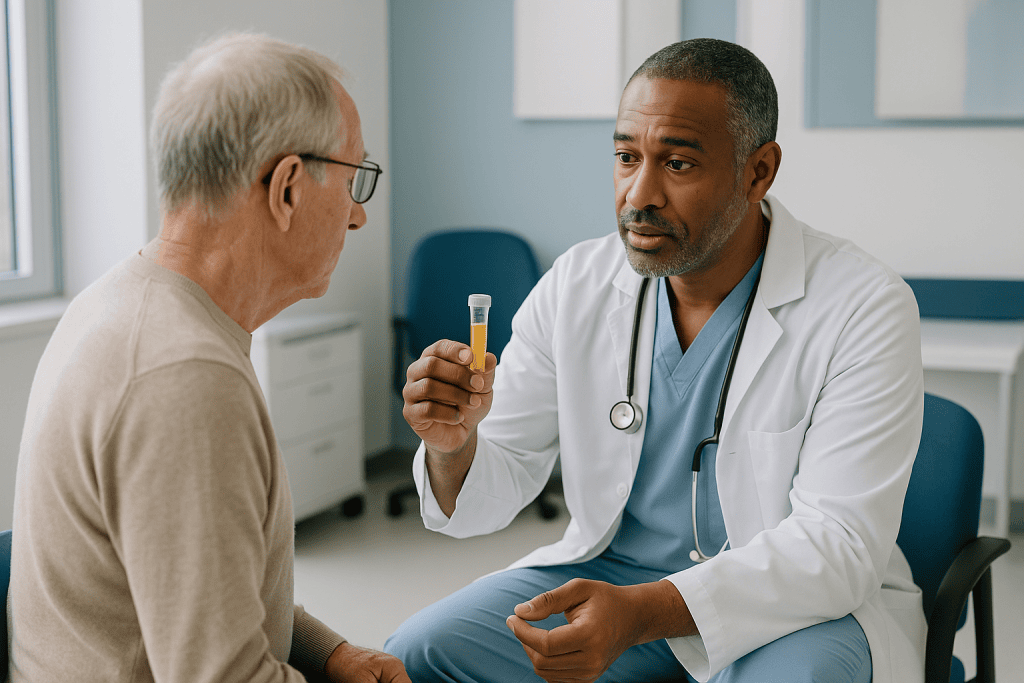
You will be asked to limit fluids for a few hours beforehand. A full bladder dilutes the medicine and makes it hard to hold the liquid for the required time. On arrival, a nurse checks for signs of infection and often tests a urine sample; cloudy urine, fever or burning on passing water may postpone the session.
Next comes the catheter. A lubricated tube, thinner than a pencil, is passed through the urethra into the bladder. Most people describe pressure and a brief sting rather than pain. The bladder is emptied, the medicine is instilled through the catheter, and the catheter is withdrawn. The whole procedure takes a few minutes.
Then you hold it. The medicine needs to stay in contact with the lining, and guidance typically asks patients to keep it in the bladder for around an hour or two before urinating (NHS). Some clinics ask you to change position every so often so the liquid reaches all surfaces; others let you sit or walk about. You may be able to go home during this period and empty your bladder there.
Afterwards, you urinate normally. For BCG and for some chemotherapy drugs, precautions apply to the first few voids, which the next sections cover.
Many people drive themselves to and from sessions, work the same day, and treat the appointment as a recurring errand. Those who find the catheter uncomfortable can ask about a local anaesthetic gel or a smaller catheter; this is routine and worth raising rather than enduring in silence.
How long does the treatment course run after TURBT?
The honest answer is that it depends on the risk group, and the plan is often revised as results come in. Still, mainstream guidance describes recognisable phases, and knowing them makes a long course feel less open-ended.
Phase one: the early instillation. If a single chemotherapy instillation is given, it happens within about the first day after surgery (NHS, Mayo Clinic). For low-risk disease this may be the whole programme.
Phase two: healing before BCG. BCG is not started straight after resection, because a raw bladder wall allows the live organism to enter the bloodstream. A gap of several weeks is typical while the lining heals (Mayo Clinic).
Phase three: induction. The initial BCG course is given once a week over roughly six weeks (NHS). Intermediate-risk chemotherapy courses follow a broadly similar weekly rhythm, though the length varies.
Phase four: first check. A cystoscopy is usually scheduled around three months after TURBT to look at the lining, and its findings shape what happens next (NHS).
Phase five: maintenance. For higher-risk disease, further BCG instillations are given in short clusters spread over an extended period, which guidance describes as lasting from about one year up to three years depending on risk (NHS). Not everyone completes the full maintenance schedule; the urologist may shorten it if side effects outweigh benefit or extend observation if the bladder stays clear.
Throughout, timing is a clinical decision rather than a fixed calendar, and these ranges are typical rather than promised. Infections, bleeding, holidays and life events all cause legitimate pauses. The thing that matters most is not rigid adherence to a date but staying in contact with the team so that pauses are planned rather than accidental.
BCG side effects on the bladder: what the following days usually look like
The first evening after an instillation is when most of the effects show. For chemotherapy, the commonest complaints are a burning sensation, needing to pass urine more often, and sometimes a little blood. For BCG, add a flu-like tiredness, mild fever, and aching muscles; these are the immune response and usually ease within one to two days (NHS, Mayo Clinic). Symptoms often build over a course as the bladder becomes more sensitised, so the sixth week can feel rougher than the first.
Simple measures help. Drink plenty of fluids after the holding period to flush the bladder, rest if you feel flu-like, and keep a note of how long symptoms last. Over-the-counter pain relief is something to discuss with the care team, since some people have conditions that limit which products are suitable.
Because BCG is a live organism and chemotherapy drugs are irritant, hygiene precautions apply for a short period after each session:
- Sit down to urinate for the first few voids to avoid splashing, and clean the toilet afterward; for BCG, many services advise adding household bleach to the bowl and leaving it before flushing (NHS).
- Wash hands and the genital area with soap and water after each void.
- Avoid sexual intercourse for a short period after BCG, or use a condom, as advised by the team.
Chemotherapy drugs can also cause a contact rash on the palms or genitals if the drug touches skin, which is why thorough washing is advised. A rash that persists should be reported.
Two things should not happen. A fever that climbs rather than settles, or symptoms that are still intensifying several days after a session, are not part of the normal pattern and are covered in the red-flag section below. The default expectation is a bad evening, a scratchy day, and then recovery before the next appointment.
Why cystoscopy follow-up matters as much as the instillations
Intravesical therapy and surveillance are two halves of one plan, and it is tempting to treat the second as optional once the instillations are done. It is not.
Cystoscopy, a direct look inside the bladder using a flexible telescope, is the only reliable way to catch recurrence early. Urine tests and scans help but miss small or flat tumours. For that reason, guidance builds a cystoscopy into the pathway roughly three months after TURBT and then at intervals that lengthen if the bladder remains clear, continuing for years in higher-risk disease (NHS, Mayo Clinic).
The three-month scope carries particular weight. If the lining looks normal, the plan proceeds as scheduled. If a new tumour is found, the pathology from that recurrence may move the patient into a different risk group, trigger a change from chemotherapy to BCG, or prompt a repeat TURBT. If carcinoma in situ persists after BCG, that is a signal the team watches closely, because it changes the conversation about alternatives.
The flexible cystoscopy itself is an outpatient procedure done under local anaesthetic gel, usually over in a few minutes, and most people describe it as uncomfortable rather than painful. Some centres use blue-light cystoscopy, in which a dye taken up by tumour cells glows under a special light, to improve detection of small lesions (Mayo Clinic).
What makes surveillance work is consistency. A recurrence found at a scheduled scope is typically small and treated with a minor resection. A recurrence found after two missed appointments may be larger or deeper. If a scope is dreaded enough to be avoided, that is worth saying out loud to the team, who can adjust pain relief or technique. Fear is a reason to adapt the appointment, not to skip it.
What people often get wrong about intravesical therapy
Myths cluster around this treatment, partly because it sits at the junction of surgery, chemotherapy and immunotherapy. Some of the commonest misunderstandings, and what the evidence actually shows:
“If I need chemo, the cancer must have spread.” Intravesical chemotherapy is used precisely because the cancer has not spread. It is a local treatment for a local problem, and almost none of the drug enters the bloodstream (Mayo Clinic).
“BCG is a vaccine, so one dose should be enough.” In the bladder, BCG works as a repeated immune stimulus rather than a one-off immunisation, which is why induction and maintenance are spread over months (NHS).
“Feeling awful after a session means it is working; feeling fine means it is not.” Symptom intensity does not reliably track benefit. Some people have little reaction and do well; others have strong reactions and still recur. Neither experience predicts the cystoscopy result.
“I can take a break whenever I like and pick up later.” Pauses are sometimes necessary and are built into care, but they should be agreed with the team, because long unplanned gaps may reduce the immune effect and leave the lining unobserved.
“Once maintenance finishes, I am done.” Surveillance continues for years after the last instillation, because late recurrence is a recognised feature of this disease (NHS).
“I can catch TB from BCG or give it to my family.” BCG is a weakened strain. Serious infection is rare and mainly a risk when the bladder wall is damaged, which is why treatment is delayed after resection and skipped during infection. Normal household contact carries no established risk when the simple hygiene steps are followed.
The thread running through all of these is the same: intravesical therapy is a long, local, immune-and-surveillance strategy, not a short course that either succeeds or fails on a single day.
What happens if intravesical therapy does not work or cannot be tolerated?
Not every bladder responds, and not every person can complete a course. Both situations have recognised pathways, and knowing they exist can take some of the dread out of a disappointing scope.
Recurrence during or after treatment. If a low-grade tumour comes back after chemotherapy, the team may repeat TURBT and switch to BCG. If high-grade disease or carcinoma in situ persists or returns within a short period of adequate BCG, this is sometimes described as BCG-unresponsive disease, and it carries a higher risk of progression. The most established option at that point is removal of the bladder (radical cystectomy) with reconstruction of a way to pass urine, because further intravesical therapy is less likely to control the cancer (Mayo Clinic). Other options that may be discussed include different intravesical drugs, combinations, or clinical trials, with suitability judged case by case.
Intolerance. Some people develop severe bladder irritation, persistent pain or recurrent fevers that make continuing unsafe. The team may reduce the frequency of instillations, lengthen gaps between them, switch from BCG to chemotherapy, or stop maintenance early while keeping surveillance. Any such change is made by the prescribing clinician on the basis of symptoms and findings, and patients should not alter their own schedule.
Rare serious BCG reactions. If BCG spreads beyond the bladder, treatment with anti-tuberculosis medicines may be needed, and BCG would not be used again.
A point worth holding on to: the decision to escalate to bladder removal is a major one, and the care team will usually involve several specialists before recommending it. Asking for a clear explanation of why intravesical therapy is no longer considered adequate, and what the alternatives are, is a normal and expected part of that conversation.
Questions to ask your care team
Appointments are short and the vocabulary is unfamiliar. Taking written questions, and writing down the answers, turns a blur into a plan. These are the ones that tend to matter most.
- What were the stage and grade on my pathology report, and was carcinoma in situ present?
- Which risk group does that place me in, and what does that mean for the type of intravesical therapy you are recommending?
- Did I receive a chemotherapy instillation at the time of surgery? If not, why was it skipped?
- Do I need a second-look TURBT before starting BCG?
- When will my induction course start, and what is the planned length of maintenance for my risk group?
- What symptoms after a session are expected, and which ones should prompt a call that day?
- Are there medicines or conditions I have that affect whether BCG is suitable?
- How should I handle urine and hygiene at home after each session, and for how long?
- When is my first follow-up cystoscopy, and how often will they continue?
- If a session has to be postponed for infection or travel, how is the schedule adjusted?
- What would you consider a sign that this treatment is not working, and what would the next options be?
- Is there a nurse specialist or helpline I can contact between appointments?
Two habits help beyond the list. Ask for a printed summary of the plan with the phases marked, so that you can see where you are in it. And ask who holds the decision at each stage. The answer should always be the treating team, informed by pathology and cystoscopy findings, and it is reasonable to expect them to explain each change in the plan rather than simply announce it.
When to call your doctor: red-flag signs during intravesical therapy
Most side effects after an instillation are mild and short-lived. A small number are not, and the difference lies in intensity, duration and direction of travel. Contact the urology team or seek urgent care the same day if any of the following occur (NHS, Mayo Clinic):
- A fever above about 38.5°C (101.3°F), or any fever that lasts more than one to two days after a BCG instillation, or that returns days or weeks later.
- Shaking chills, drenching sweats, or feeling markedly unwell beyond the usual flu-like day.
- Inability to pass urine, or passing only small amounts with increasing lower abdominal pain, which can signal blockage by blood clots.
- Heavy bleeding in the urine, especially with clots, or bleeding that worsens rather than settles.
- Severe bladder or pelvic pain that is not relieved by the measures agreed with your team.
- Burning, frequency or cloudy, foul-smelling urine that persists beyond two to three days, suggesting infection.
- A new cough, breathlessness, joint pain or eye inflammation in the weeks after BCG, which can be signs of the organism spreading beyond the bladder.
- A spreading skin rash after chemotherapy instillation.
Seek emergency help immediately if you have a high fever with confusion, rapid breathing or a racing heart, or if you cannot urinate at all and are in severe pain.
When you call, say that you are receiving intravesical BCG or chemotherapy and give the date of your last session. This detail changes how clinicians interpret a fever and speeds up the right response.
It is better to call about something that turns out to be ordinary than to wait on something that is not. Teams running these programmes expect these calls, and the decision about whether to pause, adjust or continue treatment after any of these events rests with them.
Frequently asked questions
What is intravesical therapy after TURBT?
It is medicine placed directly into the bladder through a thin catheter after a tumour has been removed by transurethral resection. The liquid sits against the bladder lining for a set time, then is passed out with urine. It may be chemotherapy, such as mitomycin or gemcitabine, or BCG immunotherapy, and its purpose is to reduce the chance of tumours returning.
How soon after TURBT does intravesical therapy start?
A single chemotherapy instillation, if used, is usually given within about the first day after surgery, often through the catheter placed in the operating room (NHS, Mayo Clinic). BCG is started later, typically after several weeks, so that the bladder wall can heal first. The exact timing is set by the urologist based on how the operation went.
What are the most common BCG side effects on the bladder?
Burning on passing urine, needing to go more often, a little blood in the urine and a flu-like feeling with mild fever are common for a day or two after each session (NHS). Symptoms can build over the course. Persistent high fever, inability to urinate or heavy bleeding are not typical and should prompt a same-day call to the care team.
Is a mitomycin bladder instillation the same as regular chemotherapy?
The drug is a chemotherapy agent, but the delivery is different. Because it stays inside the bladder and very little is absorbed, whole-body effects such as hair loss or lowered blood counts are not expected (Mayo Clinic). The usual effects are local: bladder irritation, urgency, and occasionally a skin rash where the drug has touched the hands or genitals.
How long does BCG treatment for bladder cancer take in total?
Induction is typically once a week for about six weeks, followed in higher-risk disease by maintenance instillations spread over roughly one to three years (NHS). These are typical ranges rather than fixed promises; the urologist may shorten, pause or extend the course depending on cystoscopy findings and how well the treatment is tolerated.
Can I go to work after an instillation?
Many people do, since the appointment itself is short and the medicine is held for an hour or two before urinating. Plan for a possible flu-like evening after BCG and for the hygiene precautions on the first few voids. If your work involves heavy physical effort or limited toilet access, ask the team whether a lighter day is sensible.
What does non muscle invasive bladder cancer mean for my treatment?
It means the tumour is confined to the lining or the thin layer beneath it and has not entered the muscle wall. The bladder can usually be kept, and treatment centres on TURBT, intravesical therapy and regular cystoscopy. Within this group, risk is further graded as low, intermediate or high, which determines the intensity of intravesical treatment (Mayo Clinic).
Why did my surgeon skip the early chemotherapy instillation?
The commonest reasons are concern about a deep resection or possible perforation of the bladder wall, or heavy bleeding, because chemotherapy leaking outside the bladder can cause serious irritation. Skipping it in those circumstances is a safety decision, not a missed step. The urologist can still plan a course of intravesical therapy once the bladder has healed.
Can BCG spread to other people in my household?
BCG is a weakened organism, and transmission to household members through normal contact has not been established as a risk when simple precautions are followed. Guidance advises sitting to urinate, cleaning the toilet, washing hands and the genital area after the first few voids, and avoiding intercourse or using a condom for a short period after each session (NHS).
What happens if the cancer comes back during intravesical therapy?
The team will usually repeat TURBT to confirm the stage and grade of the recurrence. A low-grade return may lead to a switch from chemotherapy to BCG. High-grade disease or carcinoma in situ returning soon after adequate BCG is treated more seriously, and bladder removal or other options may be discussed (Mayo Clinic). The decision rests with the treating team.
References
This article is for general information only and is not a substitute for professional medical advice. Please consult a qualified doctor about your individual situation.

More from the Blog

After Sarcoma Surgery: Physiotherapy Milestones From the First Days to Full Movement
Physiotherapy after sarcoma surgery usually begins within the first day or two with breathing, circulation and gentle assisted movement, then progresses through protected range-of-motion…
Warning Signs During Liver Cancer Treatment: What to Report to Your Oncology Team
During liver cancer treatment, report a fever of 100.4°F (38°C) or higher, new yellowing of the skin or eyes, dark urine, unusual bruising or…
Does Colon Cancer Always Need Chemotherapy After Surgery? How the Pathology Report Decides
No. Whether colon cancer needs chemotherapy after surgery depends mainly on the pathology report: how deeply the tumor grew, whether lymph nodes contained cancer,…
Removing Part or All of the Thyroid for Cancer: How Surgeons Weigh the Options
For thyroid cancer, surgeons choose between removing one lobe (partial thyroidectomy, also called lobectomy or hemithyroidectomy) and removing the whole gland (total thyroidectomy) based…
Pulmonary Rehabilitation After Lung Cancer Treatment: Rebuilding Stamina Safely
Pulmonary rehabilitation after lung cancer is a supervised program of graded exercise, breathing training, and education that helps people rebuild stamina once surgery, chemotherapy,…
How Long to Stay Near the Hospital After CAR-T Infusion: Planning as an International Patient
After a CAR-T infusion, most programs keep patients in hospital for roughly one to two weeks of monitoring, then ask them to remain within…