

Types of Hair Transplant: FUE, DHI, Sapphire and FUT: Which Fits Whom
Key Takeaways
- All four techniques, FUT, FUE, Sapphire FUE, and DHI, move the same DHT-resistant donor follicles; they differ only in how grafts are extracted and placed.
- The average scalp yields just 5,000–7,000 transplantable grafts in a lifetime, which makes conservative hairline design more important than any technology choice.
- Transplanted hairs normally shed between weeks two and eight, regrow from about month three, and should be judged for density at 12–18 months, not sooner.
- US clinics typically charge $2–$10 per graft, so a 3,000-graft session most often lands between $9,000 and $18,000, and insurance almost never covers it.
- No independent randomized trial shows DHI or sapphire blades improve graft survival over well-performed standard FUE; the surgical team is the dominant variable.
- Sudden, patchy, or symptomatic hair loss can signal thyroid, iron, or autoimmune conditions, get a medical diagnosis before booking any transplant consultation.
The main types of hair transplant are FUT (a strip of scalp is removed and divided into grafts), FUE (follicles are extracted one by one), Sapphire FUE (FUE using sapphire-blade incisions), and DHI (grafts placed with an implanter pen). All move the same permanent donor follicles; they differ in scarring, session size, cost, and recovery. The best fit depends on your donor supply, degree of loss, and goals, not marketing labels.
There is a particular angle, phone tilted just so in the barber’s mirror, that many men know by heart. It is the crown check. Somewhere between the third and thirtieth check, the search history changes: FUE, DHI, sapphire blades, strip surgery, before-and-after photos at 2 a.m.
The trouble is that most of what turns up is written by people selling one of those acronyms. Each method gets pitched as the breakthrough and the others as relics, when the honest picture is narrower: every modern hair transplant moves the same hardy follicles from the back and sides of your head to where they are missing. What differs is how they come out, how they go in, and what that means for scars, cost, and downtime.
So let’s do what the sales pages won’t, walk through all four techniques, what the evidence actually supports, and who each one genuinely fits.
What actually happens during a hair transplant?
Every technique on this list is a variation on one biological trick. The follicles at the back and sides of the scalp, the horseshoe that persists even in advanced baldness, are largely resistant to dihydrotestosterone (DHT), the hormone byproduct that miniaturizes hair in male- and female-pattern loss. Move those follicles to the front or crown and they generally keep their resistance, a principle surgeons call donor dominance.
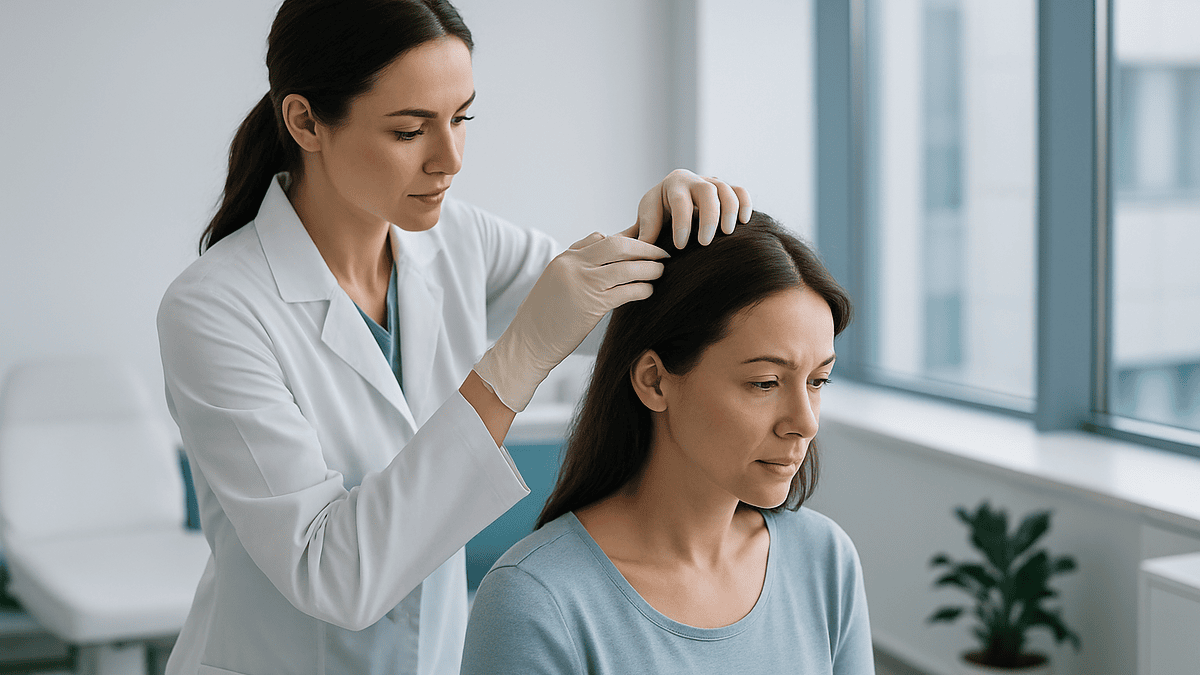
The procedure itself is outpatient surgery under local anesthetic. Hair is harvested in naturally occurring bundles called follicular units, grafts of one to four hairs each, averaging roughly two. A surgeon (or, ideally, the surgeon plus a trained team) then creates tiny recipient sites at controlled angles and depths and places the grafts into them. Sessions commonly run four to eight hours and involve anywhere from a few hundred to 4,000-plus grafts.
According to MedlinePlus, most patients go home the same day with a bandaged donor area and instructions to baby the scalp for a week or two. The four techniques, FUT, FUE, Sapphire FUE, and DHI, differ at two steps only: how grafts are extracted and how they are implanted. Everything else, from anesthesia to the 12-month wait for results, is essentially shared. That is worth holding onto as you read clinic websites, because the shared parts matter far more to your outcome than the branded parts.
FUT (strip surgery): the oldest modern method, and why it still exists
Follicular unit transplantation removes a narrow horizontal strip of scalp, often 1 to 1.5 centimeters tall and 10 to 25 centimeters long, from the back of the head. The wound is stitched closed, and technicians dissect the strip under microscopes into individual follicular units for placement.
The obvious drawback is the linear scar. With good closure technique it heals as a fine line hidden by hair of even modest length, but it rules out very short buzz cuts for most people. Numbness around the scar, sometimes lasting months, is also more common than with FUE, per the Cleveland Clinic.
So why does FUT survive in the FUE era? Three practical reasons:
- Graft yield. Strip harvesting takes follicles from the densest, most DHT-resistant core of the donor zone and does not thin the surrounding area, which preserves donor supply for future procedures.
- Large sessions. Surgeons can often harvest 3,000–4,000 quality grafts in one sitting.
- Cost. FUT is usually the least expensive option per graft.
FUT tends to fit people with advanced loss who need maximum grafts over a lifetime, wear their hair at least an inch long, and care more about coverage than about shaving to a zero guard. It is a poor fit for anyone set on very short hair or with a tight, inelastic scalp.
FUE: how the one-by-one method works
Follicular unit excision, the technique most people now mean when they say hair transplant, skips the strip entirely. A small rotary punch, typically 0.8 to 1.0 millimeters across, cores out individual follicular units directly from the donor zone. Each extraction leaves a dot-sized wound that heals open within days, scattering hundreds of tiny white scars across the donor area instead of one line.
Those dots are usually invisible even at short clipper lengths, which is the headline advantage: FUE keeps the buzz-cut option alive. Recovery in the donor area is faster and less sore than a stitched strip wound, and there are no sutures to remove.
The trade-offs are real, though rarely advertised. The whole donor area usually needs shaving for a standard session. Extraction is slower, so large cases may be split over two days. And because the punch samples a wider swath of scalp, including edges of the donor zone where follicles are less DHT-resistant, graft selection and long-term donor planning demand more skill, not less. Transection, where the punch cuts through and kills a follicle, is a known risk that varies with operator experience.
FUE fits people with mild to moderate loss, anyone who wears or wants short hair, athletes eager to return to training quickly, and those repairing an old strip scar. It fits less well when someone needs every possible graft over a lifetime of progressive loss.
Sapphire FUE: what the blade actually changes
Sapphire FUE is not a different operation. Extraction is standard FUE; what changes is the tool used to make recipient sites. Instead of steel blades or needles, the surgeon opens channels with blades cut from synthetic sapphire: a very hard, smooth crystal that can be manufactured with an extremely fine V-shaped tip.
The claimed benefits: narrower, more precise incisions; less tissue trauma and oozing; denser packing of grafts; and smoother crusting during the first week. Mechanistically, these claims are plausible, a finer, smoother blade should make a cleaner channel, and some small comparative studies report faster surface healing and less early redness.
Here is the honest caveat: there is no large, independent randomized trial showing sapphire blades improve the numbers patients actually care about, namely graft survival and final density at 12 months. Much of the published enthusiasm comes from clinics that market the technique. A skilled surgeon with steel instruments will beat an average surgeon with sapphire ones every time, because incision angle, depth control, and design matter far more than blade material.
Who does it fit? Essentially the same person FUE fits. If a practice you already trust for its results happens to use sapphire blades, that is a reasonable bonus, perhaps a slightly gentler first week. Choosing a clinic because of the blade, rather than because of its surgeons and healed long-term results, gets the priorities backward.
DHI: the implanter-pen technique explained
Direct hair implantation modifies the placement step. In standard FUE, the surgeon first opens recipient sites, then assistants insert grafts with forceps, two separate actions. DHI merges them: each graft is loaded into a spring-driven implanter pen (often called a Choi pen), and pressing the tip into the scalp creates the channel and deposits the follicle in one motion.
Potential advantages follow from that design. Grafts may spend less time outside the body, and forceps never grip the delicate follicle bulb during insertion. The pen gives fine control over angle and depth, which some surgeons prize for building sharp, dense hairlines. Because pre-made channels aren’t required, DHI is often offered as an unshaven or partially shaven option: a genuine draw for women and for anyone who cannot disappear from work for two weeks.
The costs of those advantages: DHI is slower, needs a larger trained team loading pens continuously, and therefore usually carries a premium price. Session sizes tend to be smaller, which makes it less practical for extensive baldness needing 3,000-plus grafts.
DHI fits best for hairline refinement, smaller or moderate cases where density and angle control are the whole game, unshaven requests, and women with patterned thinning. For a large crown-to-front restoration on a tight budget, it is rarely the pragmatic choice.
DHI vs FUE: which is actually better?
This is the most-searched comparison, so it deserves a blunt answer: neither is proven better where it counts. Both harvest grafts the same way. The difference is confined to implantation, and no rigorous head-to-head trial has shown that pen implantation yields higher graft survival or better one-year density than well-executed forceps placement into pre-made sites. Studies that exist are small, short-term, or come from practices with a commercial stake in one answer.
What we can say with reasonable confidence:
- DHI offers practical advantages, unshaven options, tight angle control, potentially shorter graft time outside the body, at the price of longer surgeries, smaller sessions, and higher fees.
- Standard FUE scales better to big cases and costs less per graft, with decades of accumulated technique behind graft handling.
- In both, the dominant variable is the team. Graft survival hinges on gentle handling, hydration, time out of body, and site quality, all human factors.
A useful way to reframe the question: don’t ask which acronym is better; ask which surgeon shows you healed results at 12-plus months on patients whose loss pattern resembles yours, and then use whichever implantation method that surgeon has mastered. The tool follows the hands, not the other way around.
FUE vs DHI vs Sapphire vs FUT: side-by-side comparison
Marketing pages make the four methods sound like different species. Laid side by side, the differences shrink to a handful of practical variables, and those variables, not brand names, should drive your choice.
| Feature | FUT (strip) | FUE | Sapphire FUE | DHI |
|---|---|---|---|---|
| Extraction | Scalp strip, dissected | Individual punch | Individual punch | Individual punch |
| Implantation | Pre-made sites + forceps | Pre-made sites + forceps | Sapphire-blade sites + forceps | Implanter pen, one motion |
| Donor scar | Linear line | Scattered dots | Scattered dots | Scattered dots |
| Shave needed | No full shave | Usually yes | Usually yes | Often avoidable |
| Typical session size | Largest (3,000–4,000+) | Large | Large | Smaller to moderate |
| Relative cost per graft | Lowest | Middle | Middle-high | Highest |
| Often fits | Advanced loss, longer hairstyles, max lifetime grafts | Short hairstyles, faster donor recovery | Same as FUE, possibly gentler early healing | Hairlines, unshaven cases, women |
Two notes on reading this honestly. Graft survival rates, done well, are broadly comparable across all four, commonly cited in the 85–95 percent range in experienced hands. And the final visual result at one year depends more on hairline design, graft angle, and donor management than on any row in this table.
Who is a good candidate, and who should wait or skip surgery?
A transplant redistributes hair; it does not create new hair. That single fact sorts candidates better than any consultation quiz.
Good candidates typically have patterned loss (male- or female-pattern) that has slowed or stabilized, a dense donor zone at the back and sides, enough loss to justify surgery, and realistic expectations, coverage and framing, not the density of age seventeen. The Cleveland Clinic notes that people with well-defined bald areas and healthy donor hair see the most reliable results.
Surgery is a poor idea, at least for now, for several groups:
- Very young patients with early loss. Under about 25, the final pattern is unpredictable; an aggressive teenage hairline transplanted today can look stranded in fifteen years as native hair recedes behind it.
- Diffuse, unpatterned thinning. If the donor zone itself is thinning, moved grafts may not be permanent.
- Active inflammatory or autoimmune hair loss. Alopecia areata and scarring alopecias can attack transplanted follicles; these need diagnosis and control first.
- Unstable, rapidly progressing loss. Transplanting into a shifting pattern often means chasing recession with a finite donor supply.
Women deserve a specific mention: many are candidates, particularly with patterned frontal thinning or traction alopecia, but diffuse shedding demands a medical workup first, iron status, thyroid function, and postpartum timing all belong in that conversation before anyone books an operating room.
How many grafts do you actually need?
Graft counts sound abstract until you anchor them to the map of a head. Each graft carries one to four hairs, call it two on average, and the number you need depends on the zone being rebuilt and the density required to look full under normal light.
Reasonable working ranges, which any ethical surgeon will tailor to your scalp:
- Hairline and temples only: roughly 1,000–1,800 grafts
- Front third of the scalp: roughly 1,800–2,500 grafts
- Front half plus mid-scalp: roughly 2,500–3,500 grafts
- Crown, added separately: often another 1,000–1,500, because its whorl pattern swallows density
Now the constraint that shapes everything: the average donor zone yields only about 5,000–7,000 transplantable grafts in a lifetime. Spend 3,000 on a low, straight hairline at 30, and you may lack the reserves to cover the crown and mid-scalp that thin at 45. This is why experienced surgeons often place hairlines conservatively and leave the crown for later, decisions that disappoint at the consult and pay off for decades.
Be wary of clinics quoting dramatically higher graft numbers than others for the same head. Overharvesting can visibly moth-eat the donor area, and some high-volume operations count hairs rather than grafts to inflate the figure. Ask specifically: grafts or hairs?
How much does a hair transplant cost in the US? (Including 3,000 grafts)
American clinics generally price per graft, and the spread is wide: roughly $2 to $10 per graft, with many established practices clustering between $4 and $6. Run the math on the most-searched number, 3,000 grafts, and you get a realistic range of about $9,000 to $18,000, with premium metropolitan practices exceeding $20,000 and budget-priced operations dipping below $8,000.
Technique moves the number. FUT is usually cheapest per graft because strip harvesting is faster. DHI typically commands the highest fees, reflecting the larger team and longer surgery. Sapphire FUE tends to price at or slightly above standard FUE.
A few financial realities worth stating plainly:
- Insurance rarely applies. Pattern hair loss is treated as cosmetic; exceptions sometimes exist for reconstruction after burns, trauma, or certain medical conditions.
- The quote is not the total. Budget for consultation fees, post-operative supplies, time off work, and, for many patients, ongoing medical therapy to protect non-transplanted hair.
- Cheap can be expensive. Repairing a poorly designed hairline or an overharvested donor zone costs more than doing it well once, and some damage cannot be undone because donor hair is finite.
Medical tourism advertises the same graft counts for a fraction of US prices. Sometimes the quality is excellent; sometimes surgery is delegated almost entirely to technicians. Whatever the country, the questions are identical: who holds the punch, who designs the hairline, and what do their patients look like at one year?
Recovery timeline: shedding, shock loss, and the 12-month wait
Nobody warns first-timers about month two, so let’s do it here: your new grafts will mostly fall out, and that is normal.
The first week brings pinpoint scabs over each graft, mild swelling that can drift toward the forehead, and donor-area soreness, usually more with FUT than FUE. Most people return to desk work within two to five days, though the scalp’s appearance may prompt a hat-friendly schedule for a couple of weeks. Per MedlinePlus, strenuous exercise generally waits about two weeks to protect grafts and healing wounds.
Between weeks two and eight comes shock shedding. The transplanted hairs shed because the follicles, jolted by relocation, drop into a resting phase. The follicles themselves stay put. Some native hairs around the recipient area can shed temporarily too. This stretch tests patience more than anything else in the process.
Regrowth begins around month three or four, fine, sometimes wavy hairs that thicken with each cycle. Roughly half to two-thirds of the eventual result is visible by month six; the honest checkpoint for judging density is 12 months, and crowns can keep improving to 18.
The technique changes the early weeks, not the calendar. FUE and DHI donor areas heal faster; FUT trades that for its larger single-session yield. But the biological timeline, shed, wait, regrow, mature, is identical for all four.
What happens 10 years after a hair transplant?
Ten-year photos are the ones clinics rarely post, which tells you where the interesting truth lives.
The transplanted hair itself usually endures. Follicles taken from the occipital donor zone keep their genetic resistance to DHT in their new location, so grafts placed well a decade ago are generally still growing, thinning only at the slow, universal pace of aging, and assuming the surgeon harvested from the permanent zone rather than its vulnerable edges.
The scalp around the grafts is another story. Pattern hair loss is progressive, and native hair behind and around a transplant often continues to recede. The classic long-term problem is the island effect: a preserved transplanted hairline with a widening gap of thinning behind it. It looks fine at year two and increasingly odd at year ten if nothing else was done.
Three things separate the good ten-year outcomes from the awkward ones:
- Conservative design. A hairline placed for the 50-year-old you will eventually be, not the 28-year-old you were on surgery day.
- Medical maintenance. Prescription treatments approved for pattern hair loss can slow ongoing native loss; many surgeons consider them the quiet partner of every lasting result. Discuss options with a dermatologist: this is a medication decision, not a marketing one.
- Banked donor supply. Grafts held in reserve make a touch-up at year eight possible instead of impossible.
Plan for the decade, and the decade usually cooperates.
Risks and honest limits no consultation should skip
Hair transplantation is safe as elective surgeries go, but safe is not the same as risk-free, and the limits deserve equal billing with the promises.
Common and usually temporary: swelling, scalp numbness or tingling, itching, small scabs, and folliculitis, inflamed bumps as new hairs push through, which occasionally need medical attention. Shock loss of nearby native hair happens in a minority of patients and typically reverses within months.
Less common but consequential: infection, prolonged numbness, visible donor scarring (a stretched FUT line, or a moth-eaten look from aggressive FUE overharvesting), and poor graft growth. Even in skilled hands, some percentage of grafts fail to thrive; experienced teams commonly cite survival in the 85–95 percent range, and results below that do happen, sometimes for reasons of technique, sometimes biology.
Then the structural limits. A transplant cannot restore teenage density; it creates the appearance of fullness by strategic placement, using perhaps a quarter to a third of the original follicle count in a given area. It does nothing to stop ongoing loss elsewhere. And the donor supply is a one-time account: every graft spent is spent forever.
None of this argues against surgery. It argues for choosing a surgeon who volunteers these numbers before you ask, shows healed donor areas, not just hairlines, and is willing to tell a poor candidate no. That last trait may be the single best predictor of how they’ll treat your scalp.
What did Elon Musk use to regrow his hair? (And what celebrity hair really tells us)
Photographs from the late 1990s show Elon Musk with clearly receding, thinning hair; photographs from the mid-2000s onward show a full hairline. He has never publicly detailed what changed. Surgeons commenting in the press have widely observed that the transformation is consistent with hair transplantation, likely more than one session, given the density, but that remains informed inference, not confirmation.
What the case does not support is the idea circulating in comment sections: that some secret product regrew his hair. No supplement, oil, laser cap, or gadget has ever been shown to reverse an established receded hairline. The evidence-backed toolkit for pattern hair loss is short: a small number of prescription medications approved by regulators to slow loss and partially thicken existing hair (a dermatologist can walk you through them, outcomes vary and none rebuilds a bald hairline), low-level light devices with modest and mixed trial evidence, and surgery, which is the only intervention that reliably restores hair where follicles have fully miniaturized.
Celebrity hairlines are worth exactly one lesson: modern transplants, done well and probably maintained medically, can look completely natural, natural enough that the public debates whether anything happened at all. That is a genuinely encouraging data point. Just remember the parts you cannot see in the photos: the budget, the likely multiple procedures, the maintenance, and a favorable donor supply.
When to see a doctor about hair loss, before you book anything
A hairline consult at a surgical clinic is not a diagnosis, and hair loss is sometimes a symptom before it is a cosmetic issue. See a physician, ideally a dermatologist, promptly if any of the following applies:
- Sudden or rapid shedding, especially clumps in the shower or on the pillow over weeks rather than years.
- Patchy losssmooth round bare spots can signal alopecia areata, an autoimmune condition surgery cannot fix and may worsen.
- Scalp symptoms alongside the loss: redness, scaling, pain, burning, or pustules, which raise the question of infection or scarring alopecia.
- Loss with systemic signsfatigue, unexplained weight change, irregular periods, or brittle nails, which can point to thyroid disease, iron deficiency, or hormonal conditions, per Mayo Clinic guidance.
- Shedding after illness, surgery, childbirth, or major stress, which is often telogen effluvium and frequently recovers on its own, no scalpel required.
- Hair loss in a woman of any pattern, because the differential is broader and lab work is usually warranted first.
Even for textbook male-pattern recession, a medical visit first is the smarter sequence: confirm the diagnosis, discuss whether prescription therapy should stabilize the loss before or alongside surgery, and rule out conditions that would sabotage a transplant. The best surgical outcomes almost always start in a doctor’s office, not a sales consultation.
Frequently asked questions
How much do 3,000 hair grafts cost in the USA?
Roughly $9,000 to $18,000 at most established US practices, based on typical per-graft pricing of $4–$6, though the full national range runs from under $8,000 to more than $20,000. FUT usually costs the least per graft and DHI the most. Insurance almost never covers surgery for pattern hair loss, and quotes rarely include consultation fees, post-operative supplies, or ongoing medical therapy to protect your remaining native hair.
Which is better, DHI or FUE?
Neither is proven superior for graft survival or final density; no rigorous head-to-head trial shows a winner. Both extract follicles identically: DHI simply places grafts with an implanter pen instead of forceps into pre-made sites. DHI offers unshaven options and fine angle control but costs more and suits smaller sessions; FUE scales better to large cases. The surgeon’s skill and the team’s graft handling matter far more than the acronym.
What happens 10 years after a hair transplant?
Well-placed grafts from the permanent donor zone usually keep growing at ten years, because they retain their resistance to DHT. The common problem is the surrounding native hair, which often continues thinning and can leave a preserved transplanted hairline with a widening gap behind it. Long-lasting results typically combine conservative surgical design, prescription maintenance therapy discussed with a dermatologist, and donor grafts held in reserve for a possible touch-up.
What did Elon Musk use to regrow his hair?
He has never publicly said. Photos show marked recession in the late 1990s and a full hairline afterward, and surgeons quoted in the media widely consider the change consistent with hair transplantation, likely over multiple sessions, though that remains inference, not confirmation. There is no evidence any secret product was involved; no supplement or gadget has ever been shown to rebuild an established receded hairline.
Does a hair transplant hurt?
The surgery itself is essentially painless because the scalp is numbed with local anesthetic; the anesthetic injections at the start sting briefly and are typically the worst moment. Afterward, expect donor-area soreness for several days, usually more with FUT than FUE or DHI, plus tightness, itching, and mild swelling. Most people manage discomfort with simple measures their surgeon recommends and return to desk work within two to five days.
Do hair transplants work for women?
Yes, for the right candidates. Women with patterned frontal thinning, a stable donor zone, traction alopecia, or hairline loss after surgery or burns can do well, and DHI’s unshaven approach is often appealing. Diffuse shedding is different: if the donor area itself is thinning, grafts may not last, and causes like iron deficiency, thyroid disease, or postpartum shedding need a medical workup first. A dermatologist visit should precede any surgical consult.
Can transplanted hair fall out again?
Transplanted hairs shed once, normally, between weeks two and eight after surgery: the follicles remain and regrow from around month three. Long term, grafts taken from the true permanent zone generally persist because they keep their genetic resistance to DHT, thinning only gradually with age. Grafts harvested from the edges of the donor area can be less durable, and native, non-transplanted hair around the grafts may continue to thin without medical maintenance.
How long until you see final hair transplant results?
About 12 months for the front and mid-scalp, and up to 18 months for the crown. New growth starts around month three or four as fine hairs that thicken with each cycle; roughly half to two-thirds of the final result shows by month six. Judging a transplant before the one-year mark is premature, which is also why credible clinics photograph outcomes at 12 months rather than at three.
Is there an age that is too young for a hair transplant?
Most experienced surgeons urge caution under about 25, and many decline to operate on the youngest patients with early loss. The final balding pattern is still unpredictable at that age, so an aggressive youthful hairline can end up isolated as native hair recedes behind it, while consuming donor grafts that can never be replaced. Stabilizing loss medically and reassessing after the pattern declares itself is usually the wiser sequence.
Will people be able to see my hair transplant scar?
It depends on the method and your haircut. FUT leaves a linear scar across the back of the head, generally hidden by hair about an inch long but visible with very short clipper cuts. FUE, Sapphire FUE, and DHI leave scattered dot scars that are usually undetectable even at short lengths, unless the donor zone was overharvested, which can create visible thinning. Ask any prospective surgeon to show healed donor areas, not just hairlines.
References
- MedlinePlus: Hair Transplant (Medical Encyclopedia)
- NHS: Hair Transplant (Cosmetic Procedures)
- MedlinePlus: Hair Loss
This article is for general information only and is not a substitute for professional medical advice. Please consult a qualified doctor about your individual situation.

More from the Blog

What Female Hair Transplant Results Look Like Month by Month: From Shedding to Settled Density
A female hair transplant results timeline typically unfolds in stages: swelling and crusting in the first week, shedding of most grafted hairs between roughly…

Beard Transplant Complications Explained: Ingrown Hairs, Pimples and Misdirected Growth
Beard transplant complications are usually minor and local: ingrown hairs, pimple-like folliculitis around new grafts, temporary swelling or numbness, small scars, and hairs that…

Hair Transplant Eligibility: The Checklist Surgeons Run Before Saying Yes
Hair transplant eligibility rests on five things surgeons weigh together: a confirmed diagnosis of pattern (androgenetic) hair loss, loss that has largely stabilized, a…

The Shedding Phase: The Scary-but-Normal Weeks After a Transplant
Yes, shedding after a hair transplant is normal and expected. Most transplanted hair shafts fall out between roughly two and eight weeks after surgery…
When Can Athletes Train Again After an FUE Hair Transplant? Sweat, Helmets and Contact Sport
After an FUE hair transplant, patient-information sources typically advise athletes to avoid strenuous exercise for about one to two weeks, keep heavy sweat and…
Is an Eyebrow Transplant an Option After Years of Over-Plucking? What Surgeons Assess First
An eyebrow transplant can be an option after years of over-plucking, but surgeons first check that the hair loss is stable, that plucking has…