

Weight Changes After Breast Fat Transfer: How Transferred Fat Behaves Over the Years

Key Takeaways
- Fat that survives the first six months after breast fat transfer has its own blood supply and then shrinks or enlarges with your body weight exactly like fat elsewhere.
- Early breast size loss in the first months is mostly reabsorption of graft that did not take, which the NHS notes can require a touch-up session, and is separate from any weight change.
- Scale drops in the first weeks usually reflect drained swelling, removed donor fat and reduced appetite rather than true fat loss, so daily weighing is misleading during recovery.
- Unintentional loss of around twenty pounds after any surgery is not an expected effect and warrants a medical review for infection, hormonal or eating-related causes.
- Human fat cells turn over at roughly a tenth per year while total numbers stay stable, which is why established grafts are expected to persist over a decade rather than vanish.
- Fat necrosis after grafting can show as calcifications on mammograms years later, so your fat transfer history should be recorded on every breast imaging request.
Fat moved to the breast behaves like fat anywhere else in the body once it has settled, usually by about six months. If you lose weight later, the transferred fat cells shrink and the breasts tend to get smaller in proportion; if you gain, they can enlarge. The cells themselves generally stay, but their volume follows your body. Your surgical team can advise on your situation.
The jeans come on without the usual tug. A colleague says you look well. Then, in front of the bathroom mirror, you notice something nobody mentioned in the consultation: the breast shape you waited months to see is quietly changing again. Weight loss after fat transfer breast surgery is one of the most common worries we hear, and one of the least well explained.
Part of the confusion is that two very different things get called “losing the result.” In the first few months, some grafted fat simply does not survive the move, and the breasts settle. Later, long after everything has healed, the fat that did survive responds to your metabolism exactly as the fat on your hips does. One process is surgical; the other is biology you live with every day.
This explainer separates the two, looks at what long-term follow-up actually shows, and gives you the questions worth bringing back to your treating team.
What is breast fat transfer, and how does the grafted fat actually survive?
Breast fat transfer, also called autologous fat grafting, is a two-stage operation performed in one sitting. First, a surgeon removes fat from an area where you have more than you want, often the abdomen, flanks or thighs, using liposuction (suction of fat through thin tubes under the skin). That fat is then washed or spun to separate the usable cells from fluid, blood and oil, and injected in small amounts into the breast through tiny entry points. The NHS describes the same basic sequence for surgical fat transfer anywhere on the body.
The transplanted material is not a solid implant. It is a cloud of individual fat cells, each about the width of a human hair, scattered through the existing breast tissue. For the first few days those cells have no blood supply of their own. They survive by soaking up nutrients from surrounding tissue, a process called imbibition, until new capillaries grow in. Cells placed as thin strands close to living tissue tend to do well; fat injected as a large lump tends to starve in the middle.
This is why surgeons talk about “take” the way gardeners talk about transplanted seedlings. Some of the graft establishes itself and becomes permanent breast tissue with a working blood supply. Some does not, and is broken down and cleared by the body over the following weeks and months. The NHS notes that the body may absorb some of the transferred fat, that final results take time to appear, and that more than one session is sometimes needed to reach the planned size.
Once a cell has survived that early window and connected to the circulation, it is simply a fat cell living in a new postcode. Everything that follows in this article rests on that single fact.
Weight loss after fat transfer breast surgery: why the breasts change too
Fat cells, or adipocytes, do not sit still. They are storage units that expand when you take in more energy than you use and contract when the balance tips the other way. Weight loss after fat transfer breast surgery therefore reaches the grafted fat for a straightforward reason: those cells are now part of your general fat store, and your body does not keep a ledger of where each one came from.

When you lose weight, hormonal signals, chiefly lower insulin and higher adrenaline-type signals, tell adipocytes throughout the body to release stored fat as fuel. Each cell shrinks. The number of cells usually stays roughly the same, which is why a large amount of weight loss can leave skin looser rather than making fat disappear. The breast, now carrying extra adipocytes, loses volume as those cells empty.
Two details shape how noticeable this is. The first is proportion. A breast that is mostly glandular tissue will change less with weight than one that is mostly fat, because glands do not shrink in the same way. After fat transfer, the fatty share of the breast is higher than it was, so the breast becomes somewhat more weight-sensitive than before. The second is where you naturally store fat. People who tend to lose from the upper body first often see breast change earlier.
None of this means the operation has failed. The surviving graft is still there, in the same number of cells. It is lighter, in the same way the rest of you is lighter. The result also tends to track back toward where it was if weight returns to the previous level, although nobody can promise a precise match.
Why am I losing weight after surgery? Early changes that are not graft loss
Many people step on the scales a few weeks after breast fat transfer and are startled by a drop. Before assuming the graft is vanishing, it helps to know what else is going on.
Liposuction itself removes fat. Depending on how many donor sites were treated, the surgeon may have taken out a volume that registers on the scale even before any of it is placed in the breast, and only a portion of what was removed is ever injected. The Mayo Clinic notes that liposuction is a contouring operation, not a weight-loss method, but the removed tissue still weighs something.
Fluid is the bigger swing. Surgery drives fluid into the tissues as swelling, and the Mayo Clinic describes swelling and bruising lasting weeks after liposuction. Early on this can mask weight loss; later, as the swelling drains away, the scale can fall several pounds in a short time without any true fat loss at all.
Appetite often dips. Anesthesia, pain-relief medicines and simply feeling tired can reduce how much you eat for a week or two. Some people also move less and lose a little muscle. The NHS advises that most people can return to normal activities within a couple of weeks after surgical fat transfer, and appetite usually recovers alongside.
Finally, the breasts themselves settle. The NHS states that it can take several months, up to around six, for the final result of fat transfer to be visible, because the portion of graft that did not survive is gradually cleared. That settling is expected and is not driven by your weight.
Where weight loss is rapid, continues beyond the early weeks, or comes with fever, poor appetite or feeling generally unwell, it needs a medical review rather than reassurance from an article.
Is it normal to lose 20 pounds after breast augmentation?
Twenty pounds is a lot. For someone who weighs 180 pounds it is more than a tenth of body weight, and for someone at 140 pounds it is around a seventh. A change of that size is unusual as a direct result of breast surgery alone, and it deserves a closer look at the cause.
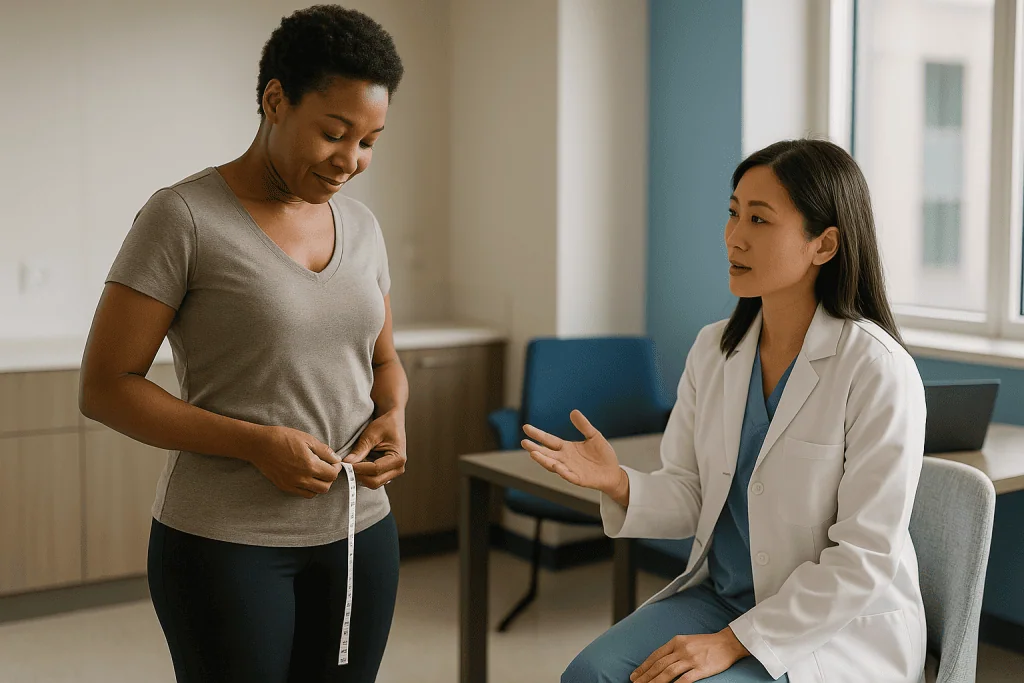
Some scenarios are benign. People who planned a lifestyle change around their operation sometimes lose steadily afterward through diet and exercise, and the breasts reduce in proportion. Others had several liters of fat removed from the abdomen and thighs as donor sites and see a combined effect of removed tissue, lost fluid and a quieter appetite in the first month or two.
Other scenarios are not benign. Unintentional weight loss of this scale, particularly with fatigue, nausea, night sweats, persistent pain, or a wound that is not healing, can signal infection, a problem with eating, a thyroid or other hormonal disturbance, or an unrelated illness that happens to coincide with recovery. Surgery can also unmask a pre-existing eating disorder, especially where body image was part of the motivation for the operation in the first place. Those are reasons to see a doctor, not to wait and see.
What the weight loss means for the breasts follows the same rule as any other weight change. Grafted fat cells shrink along with the rest. The more of your body weight you lose, the more visible the reduction is likely to be, although the exact relationship varies widely between people and nobody can predict it to the cup size.
If you are losing that much weight and did not intend to, tell both your surgeon and your general practitioner. The breast change is a symptom here, not the main issue.
What happens to transferred fat when you gain weight?
The mirror image is also true. If you gain weight after breast fat transfer, the grafted adipocytes take up their share of the new storage, and the breasts enlarge along with the rest of you. Some people find this welcome. Others feel the proportions have drifted away from what they discussed with their surgeon.
The Mayo Clinic’s liposuction guidance makes a point that applies directly here: if you gain weight after fat has been removed from an area, the distribution of new fat may change, because fewer cells remain in the treated zone to absorb it. In a fat transfer, the opposite also happens in the recipient site. The breast now has more adipocytes than it did, so it may claim a slightly larger share of any new fat than before surgery, while the donor area may claim slightly less. The overall picture is a modest reshuffling of where weight tends to show.
Weight gain also brings changes that have nothing to do with the graft. Hormone shifts around perimenopause, pregnancy and breastfeeding, and certain medicines can all enlarge breast tissue or alter its texture. Pregnancy in particular enlarges the glandular part of the breast dramatically and then involutes, and the fat transfer result may look different afterward for reasons unrelated to body weight.
Large, repeated swings in weight are the pattern most likely to leave a result looking different from the plan, in either direction. Fat that enlarges and shrinks repeatedly stretches the surrounding skin and ligaments, which can affect shape and position even when total volume ends up back where it started. A stable weight is the condition under which the operation is designed to be judged.
Fat transfer breast augmentation after 10 years: what long-term follow-up suggests
People searching for “fat transfer breast augmentation after 10 years” want a plain answer, and the honest one is that long follow-up data are thinner than anyone would like. Fat grafting to the breast has been widely practised for a relatively short time, and most published series follow patients for one to a few years. That said, the biology gives us a reasonable basis for expectations, and the available evidence is consistent with it.
Fat that survived the first six months has a blood supply and is living tissue. There is no mechanism by which it should spontaneously disappear a decade later. The NHS describes fat transfer results as long lasting, while noting that the body absorbs some fat early and that touch-up procedures may be needed. A landmark study of human fat cell turnover indexed in PubMed found that roughly a tenth of fat cells are replaced each year throughout adult life, while the total number stays fairly constant. Grafted fat is believed to join that normal cycle of renewal rather than being singled out for removal.
What does change over ten years is everything around the graft. Skin loses elasticity. Glandular tissue gradually gives way to fat with age and after menopause, which can make the whole breast softer and more weight-responsive. Weight itself rarely holds steady over a decade for most adults. So a breast at the ten-year mark reflects aging, gravity, hormones and body weight at least as much as it reflects the operation.
Two long-term issues deserve mention. Areas of grafted fat that did not survive can form oil cysts or small calcium deposits, known as fat necrosis, and these can persist for years. They are benign, but they can appear on mammograms, which is why your surgical history should be on every imaging request. Imaging specialists are familiar with these appearances, but knowing the history avoids unnecessary biopsies.
How different kinds of weight change affect transferred fat
Not all weight change is equal from the breast’s point of view. The table below summarises what the mechanism predicts and what follow-up generally supports. It is a guide to thinking, not a forecast for any individual, and your surgeon’s assessment of your own tissue should take precedence.
| Situation | What is happening to the fat cells | Typical effect on the grafted breast |
|---|---|---|
| First 2–6 weeks, scale drops a few pounds | Swelling fluid draining; appetite reduced; donor fat removed | Usually none from weight itself; early graft settling is separate |
| Months 1–6, breasts gradually smaller | Graft that did not gain a blood supply is being cleared | Expected settling toward the final result |
| Gradual, modest loss after 6 months | Surviving adipocytes shrink in step with body fat | Proportional reduction, often subtle |
| Large or rapid loss after 6 months | Marked shrinkage of adipocytes; possible skin laxity | Visible volume loss; shape and firmness may change |
| Weight gain | Adipocytes enlarge, breast may claim a larger share | Breasts enlarge, sometimes more than before surgery |
| Repeated large swings | Cycles of stretch and shrink in skin and ligaments | Shape and position may drift even if volume returns |
| Pregnancy and breastfeeding | Glandular tissue swells then involutes; hormones shift | Changes largely independent of the graft |
The pattern is simple once laid out. Early changes belong to surgery and healing. Later changes belong to your body. The one message that cuts across every row is that stability, rather than any particular number on the scale, is what keeps a result close to what was planned.
Who is breast fat transfer usually for, and who is usually asked to wait?
Surgeons tend to consider fat transfer to the breast for people who want a modest increase in volume, want to correct asymmetry or contour irregularities, prefer not to have an implant, or want to soften the edges of an existing implant. Because each session can only move a limited amount of fat safely, the size change achievable in one operation is usually smaller than with an implant, and the NHS notes that repeat procedures are sometimes needed. Someone hoping for a dramatic change in a single step is often guided toward other options or a staged plan.
A suitable donor site matters. People with very little body fat may not have enough to harvest, which is one of the paradoxes of this operation: the people who most want to avoid an implant sometimes have the least material to work with.
Weight stability is central to candidacy, and this is where the title question meets the consultation room. Surgeons commonly ask people who are actively losing weight, planning significant weight loss, or starting a weight-management medicine to reach and hold a stable weight first. Grafting fat into a body that is about to shrink is like fitting a suit before a diet. The same applies to anyone planning pregnancy in the near future.
Other reasons to wait or reconsider include current smoking, which impairs the small blood vessels the graft depends on; uncontrolled diabetes or other conditions that slow healing; and a personal or family history that makes breast imaging interpretation particularly important, where a conversation with a breast specialist may come first. Mental health, including body image concerns and disordered eating, is a legitimate part of the assessment, not a judgment.
Every one of these is a conversation, not a verdict. The decision rests with you and your treating team after a full assessment.
What the first days and weeks after fat transfer usually look like
The early timeline matters for this topic because so much of what looks like “losing the result” happens in these weeks and has nothing to do with body weight.
The first few days are dominated by the donor sites. Liposuction leaves bruising, swelling and a dull ache, and the Mayo Clinic describes swelling that can take several weeks to settle. Compression garments over the harvested areas are commonly advised to control swelling. The breasts themselves are usually swollen, firm and larger than the final result will be, partly from fluid and partly because the full volume of injected fat is still present.
Over the first month the swelling in both areas recedes. The NHS suggests most people are back to normal activities within a couple of weeks after surgical fat transfer, with heavier exercise introduced gradually on the surgeon’s advice. Many surgeons ask patients to avoid firm pressure on the breasts, including tight underwired bras and sleeping face down, while the graft is establishing a blood supply, because compression can starve cells that are still relying on diffusion.
Between months one and six, the breasts gradually soften and settle. The portion of fat that did not take is cleared by the body, and the NHS notes that final results of fat transfer can take around six months to appear. Small firm areas may be felt where fat has formed oil cysts; most soften, but some persist and should be mentioned at follow-up.
Scales are unreliable throughout this period for the reasons covered earlier. If you want to track your weight for your own reasons, weekly rather than daily readings give a truer picture. Your surgeon will usually review you at intervals over this window and can tell you whether what you see is expected settling.
What are the downsides of fat transfer breast augmentation?
Every operation has a cost side of the ledger, and a fair explainer should put it in plain terms.
The most predictable downside is unpredictability of volume. Because some of the graft is reabsorbed, the final size cannot be known in advance, and the NHS notes that more than one procedure is sometimes needed. Implants, by contrast, deliver a known volume. People who need a precise outcome in one step may find fat transfer frustrating.
Size change per session is limited. Only so much fat can be safely injected into a given volume of tissue before survival drops sharply, so the increase per operation is typically modest, usually described as around a cup size or less, though this varies widely and your surgeon can tell you what your tissue allows.
Fat necrosis, where fat that did not survive forms firm lumps, oil cysts or calcifications, is a recognised complication. The lumps are benign but can cause anxiety and can complicate mammogram interpretation. Imaging specialists can usually distinguish them, and your surgical history should always be recorded on imaging requests.
The operation involves two surgical sites, so you accept the risks of liposuction as well as the breast procedure: bruising, contour irregularities at the donor site, numbness, fluid collections, infection and, rarely, fat embolism or deeper injury. MedlinePlus and the Mayo Clinic both list bleeding, infection, scarring and anesthetic risks as general considerations for breast augmentation and liposuction respectively.
And then the subject of this article: the result is tied to your weight. That is a feature for some people and a drawback for others. Finally, long-term evidence beyond a decade remains limited, so claims about permanence should be heard as biological reasoning rather than proven fact.
What people often get wrong about weight and transferred fat
Myth: “If I lose weight, the transferred fat is the first to go.” There is no evidence that grafted fat is preferentially burned. It shrinks in step with your other fat stores. It may be more visible because the breast is now proportionally fattier, but it is not being targeted.
Myth: “Fat transfer results disappear after a few years.” The early reabsorption, which the NHS describes as the body absorbing some of the fat, is complete within months. Fat that has a blood supply by then is living tissue and is not known to vanish spontaneously. Later change is weight, hormones and aging.
Myth: “Gaining weight on purpose after surgery will make the graft take better.” Deliberate weight gain does not improve survival of cells that have already failed to establish a blood supply. It simply enlarges all your fat cells, including those in the breasts, and brings its own health costs. The Mayo Clinic’s guidance on liposuction frames stable weight, not weight gain, as the condition for lasting contour results.
Myth: “Losing weight means I wasted the operation.” The surviving cells are still there. If weight returns to the pre-surgery level, volume tends to return as well, though exact shape cannot be promised.
Myth: “Lumps after fat transfer mean something went badly wrong.” Small areas of fat necrosis are common and benign. They still warrant a check, because any new breast lump should be assessed, and your team will know your history.
Myth: “Weight-management medicines will melt the graft.” Medicines that reduce appetite or alter metabolism cause weight loss across the body; grafted fat follows the same proportional rule. Anyone considering such a medicine before or after surgery should discuss timing with both the prescriber and the surgeon rather than changing anything on their own.
Losing weight after fat grafting: can you protect the result?
The question behind “losing weight after fat grafting” is usually practical: what, if anything, is within my control? The honest answer is that the biggest factors are set in the first six months, and after that the main lever is stability.
In the early window, the evidence points to a few modifiable things. Smoking constricts the small vessels the graft needs and is associated with poorer healing across surgical specialties; stopping well before surgery and staying stopped through recovery is standard advice from the NHS for cosmetic procedures. Avoiding firm pressure on the breasts while the graft establishes itself is commonly recommended. Keeping blood sugar well controlled if you have diabetes supports healing generally. Following wound-care and activity advice reduces the risk of infection and fluid collections that can damage graft.
Nutrition in the weeks after surgery is often overlooked. Crash dieting during recovery deprives healing tissue of protein and energy at the moment it most needs them. A steady, balanced intake is sensible; dramatic restriction is not.
After the graft is established, weight stability becomes the whole story. The Mayo Clinic’s advice for liposuction, that results are best maintained by keeping weight stable, applies equally to the breast. If you are planning significant weight loss for health reasons, that is a good plan and should not be abandoned for cosmetic reasons; it simply means the breasts will change, and a later touch-up can be discussed if you wish.
Regular exercise, including strength work for the chest, supports posture and the muscle beneath the breast, which can influence how the breast sits even when volume changes. None of these steps guarantees a particular appearance. They stack the odds in your favour and leave the rest to biology.
Questions to ask your care team about weight and fat transfer
A consultation goes better when you arrive with questions that surface the trade-offs, not just the hoped-for result. The following are worth raising, and the answers belong to your surgeon, not to a search engine.
- Given my body fat and donor sites, how much volume is realistically achievable in one session, and might I need more than one?
- What proportion of grafted fat do you typically see survive in patients like me, and how do you measure it?
- My weight has changed by this much over the past year. Would you advise waiting until it is stable, and for how long?
- I am considering a weight-management medicine or a significant diet. How would that affect the timing or the result?
- I may become pregnant in the next few years. How does that change your advice?
- What lumps or firm areas should I expect, how long might they last, and when would you want to see one?
- How should I describe this operation when I book a mammogram, and will you provide a letter for my records?
- What activity, pressure and bra guidance do you give for the first weeks, and why?
- If I lose weight later and want a touch-up, what does that involve and what are its limits?
- What is your policy on follow-up over the first year, and who do I contact out of hours?
Ask also how the team handles concerns that fall outside surgery, such as unexpected weight loss or anxiety about body image after the operation. A good team will have a route to your general practitioner or other specialists rather than treating the breast in isolation.
Write the answers down. Memory of a consultation is unreliable, and the specifics about volume, settling and weight will be the things you want to check against the mirror months later.
When to call your doctor after breast fat transfer
Most change after fat transfer is slow, painless and predictable. The signs below are not. If any of them applies, contact your surgical team the same day, or seek urgent care if the team cannot be reached.
- Fever, chills or feeling generally unwell in the days or weeks after surgery.
- Increasing redness, heat, swelling or pain at a breast or donor site, or discharge from an incision.
- A breast that becomes suddenly larger, tense or very painful, which can indicate bleeding or a fluid collection.
- Shortness of breath, chest pain, coughing, confusion or a rash in the first days after surgery; these can signal a clot or fat embolism and are emergencies.
- Calf pain, swelling or warmth in one leg.
- Skin over the breast or donor site turning dark, blistered or numb beyond the expected area.
- Any new breast lump that is growing, hard, fixed, or associated with skin dimpling, nipple change or nipple discharge, at any point in the years after surgery. Fat necrosis is common and benign, but a new lump always needs assessment rather than assumption.
- Unintentional weight loss that continues beyond the early weeks, or weight loss accompanied by fatigue, night sweats, persistent nausea, or changes in appetite or mood.
- Thoughts about food, weight or your body that feel distressing or out of control.
Routine breast screening should continue on the schedule your doctor recommends, and your surgical history should be noted on every imaging request so that radiologists can interpret any calcifications or oil cysts correctly.
Nothing in this article replaces the judgment of the people who examined you. If something feels wrong, that feeling is reason enough to call.
Frequently asked questions
Does fat transfer to the breast last, or does it all get reabsorbed?
Part of the graft is reabsorbed in the first months, but fat that establishes a blood supply by around six months is living tissue and is expected to last. The NHS describes results as long lasting while noting some early absorption and the possibility of repeat sessions. Later changes in size reflect your body weight, hormones and aging rather than the graft disappearing.
Why am I losing so much weight after breast fat transfer surgery?
Early weight loss is usually a combination of fat removed from donor sites, swelling fluid draining away, and a smaller appetite during recovery. These effects settle within weeks. If weight loss continues, is rapid, or comes with fever, fatigue, nausea or feeling unwell, see your surgeon or general practitioner, because that pattern points to something other than normal healing.
Is it normal to lose 20 pounds after breast augmentation?
No, a loss of that size is not an expected direct effect of breast augmentation or fat transfer. It can happen if someone also changes diet and exercise, or had large-volume liposuction, but unintentional loss of twenty pounds should prompt a medical review. The grafted breast fat will shrink in proportion with the rest of the body in either case.
What happens to fat transfer breast augmentation after 10 years?
Long-term data beyond a decade are limited, but established grafted fat has no known reason to disappear and is believed to join the body’s normal fat cell turnover. Over ten years the breast will also reflect aging, skin laxity, hormonal change and whatever has happened to your weight. Fat necrosis lumps or calcifications can persist and should be noted at mammograms.
Will fat transfer breast reabsorption happen again if I lose weight later?
Not in the surgical sense. Reabsorption describes graft that failed to gain a blood supply being cleared in the first months. After that, weight loss shrinks the surviving fat cells without removing them, so the breasts get smaller in proportion. If weight returns to its earlier level, volume tends to return too, although exact shape cannot be promised.
How much weight loss will visibly change my breasts after fat grafting?
No study defines a threshold, and the effect varies with how much of your breast is fat, where your body loses fat first, and your skin quality. A useful mental model is proportion: the larger the share of body weight lost, the more visible the breast change is likely to be. Your surgeon can give a view based on your own tissue.
Should I lose weight before or after breast fat transfer?
Surgeons generally advise reaching and holding a stable weight before surgery, because fat placed into a body that is about to shrink will shrink with it. Losing weight afterward is not harmful to health, but it will reduce the result in proportion. If weight loss is planned for medical reasons, discuss timing with your treating team rather than delaying the health goal.
What are the downsides of fat transfer breast augmentation compared with implants?
The main downsides are unpredictable final volume because some fat is reabsorbed, a modest size change per session, possible need for repeat procedures, lumps from fat necrosis that can complicate mammograms, and the fact that the result follows your weight. There are also two surgical sites, so liposuction risks apply alongside breast surgery risks.
Do weight-management medicines affect transferred breast fat?
Medicines that reduce appetite or alter metabolism produce weight loss across all fat stores, and grafted fat follows the same proportional rule as the rest. They do not target the graft specifically. Anyone considering such a medicine around the time of surgery should raise timing with both the prescriber and the surgeon and should not start, stop or change anything without that advice.
Are lumps in the breast after fat transfer dangerous?
Small firm areas are common after fat grafting and are usually fat necrosis or oil cysts, which are benign. Even so, any new or changing breast lump should be examined rather than assumed harmless, and your surgical history should be recorded so that imaging specialists can interpret calcifications correctly. Your team will advise on which lumps need further assessment.
References
This article is for general information only and is not a substitute for professional medical advice. Please consult a qualified doctor about your individual situation.

More from the Blog

Immediate or Delayed Breast Reconstruction? How Timing Around Mastectomy Is Decided
Immediate breast reconstruction begins during the same operation as the mastectomy; delayed reconstruction takes place months or years later. Surgeons decide timing on whether…

When Nipple Reconstruction Is Scheduled: Why It Is Usually the Final Stage of Rebuilding
Nipple reconstruction is usually done as the final surgical stage of breast reconstruction, after the rebuilt breast has healed and settled into its lasting…
How Gynecomastia Surgery Is Performed: Gland Excision, Liposuction and the Incision Placement
A gynecomastia surgery procedure removes enlarged male breast tissue using two techniques that are often combined: liposuction, which suctions out excess fat through small…

Why Does Volume Settle After Breast Fat Transfer? Results Surgeons Expect Over the Months
Volume settles after breast fat transfer because only part of the injected fat survives. Fat cells must gain a new blood supply within days;…
When Breast Prosthesis Removal Is Considered: Rupture, Discomfort and Changing Preferences
Breast implant removal is usually considered for one of three broad reasons: a problem with the device itself, such as rupture or capsular contracture;…
Gynaecomastia Explained: Hormonal and Medical Causes and How Male Breast Reduction Is Planned
Gynaecomastia is a benign enlargement of glandular breast tissue in men and boys, caused by a shift in the balance between estrogen and testosterone.…