

What Chalazion Removal Involves: Numbing, the Incision Inside the Eyelid and the Patch

Key Takeaways
- The incision in a standard chalazion removal is made on the inner lining of the eyelid, is left open without stitches and leaves no visible scar.
- The injection of local anesthetic into the lid is usually the most uncomfortable moment; the incision and scraping that follow are felt as pressure and sound rather than pain.
- Each upper eyelid contains roughly 30 to 40 meibomian glands and each lower lid about 20 to 30, so losing the single gland at the center of a chalazion rarely changes tear quality noticeably.
- A chalazion is a blocked oil gland with sterile inflammation, not an infection, which is why antibiotics do not shrink it and why warm compresses of 10 to 15 minutes several times a day are the first-line home treatment.
- Bruising after chalazion drainage typically takes about a week to fade, and a small firm area at the site during that time is healing tissue rather than proof of recurrence.
- A chalazion that recurs in the same spot, distorts the lid margin or causes lash loss should be biopsied, because a rare eyelid cancer called sebaceous carcinoma can mimic a stubborn chalazion.
A chalazion removal procedure is a short outpatient operation for a blocked oil gland in the eyelid. The lid is numbed with a local anesthetic injection, the eyelid is turned outward and held with a small clamp, a tiny incision is made on the inner surface, the trapped material is scraped out, and a pressure patch is applied for a few hours. Swelling and bruising usually settle over the following week.
The lump has been there for six weeks. It started as a tender bump you assumed was a stye, but the redness faded and the firm pea-sized knot stayed, sitting in the upper lid like a small pebble under the skin. Warm compresses helped a little. Then the eye doctor said the words nobody wants to hear about an eyelid: incision, curettage, patch.
Most people who are offered a chalazion removal procedure have exactly one worry, and it is not the lump. It is the idea of a blade anywhere near the eye. That fear is reasonable, and it is also based on a picture that does not match what actually happens in the room.
This explainer walks through the real sequence: how the lid is numbed, why the cut is made on the inside where it leaves no visible mark, what the pressure patch is for, and what the days afterward usually look like. It also tackles the honest questions, including whether surgery hurts, how risky it is, and whether the gland survives.
What is a chalazion, and why does it sometimes need removing?
A chalazion is a firm, usually painless lump in the eyelid caused by a blocked meibomian gland. The meibomian glands are rows of tiny oil glands running along the inner edge of each lid; they secrete the oily layer that keeps tears from evaporating too fast. According to the NIH StatPearls review, the upper lid holds roughly 30 to 40 of these glands and the lower lid about 20 to 30, each opening onto the lid margin just behind the lashes.
When an opening clogs, oil backs up inside the gland. The body treats that trapped oil as an irritant and walls it off with inflammatory cells, producing a slow-growing granuloma. A granuloma is a small knot of immune tissue formed around something the body cannot clear. That is why a chalazion feels rubbery rather than soft, and why it can linger for weeks after any redness has gone.
People often confuse a chalazion with a stye. A stye, described by the Mayo Clinic, is an acute infection at the base of a lash or in a gland, and it is red, hot and sore. A chalazion is the aftermath of a blockage, not an infection, which is one reason antibiotics rarely make a difference to it.
Many chalazia drain on their own. The chalazion removal procedure enters the picture when a lump refuses to shrink after weeks of home care, presses on the cornea enough to blur vision, or bothers a person cosmetically or physically. MedlinePlus lists surgical drainage as the standard next step when conservative measures fail. The goal is straightforward: open the walled-off pocket and clear its contents so the tissue can settle.
What does the chalazion removal procedure actually involve?
Strip away the medical vocabulary and the chalazion removal procedure is a five-step sequence performed in a treatment room, not an operating theater, with the patient awake and lying back in a reclined chair.
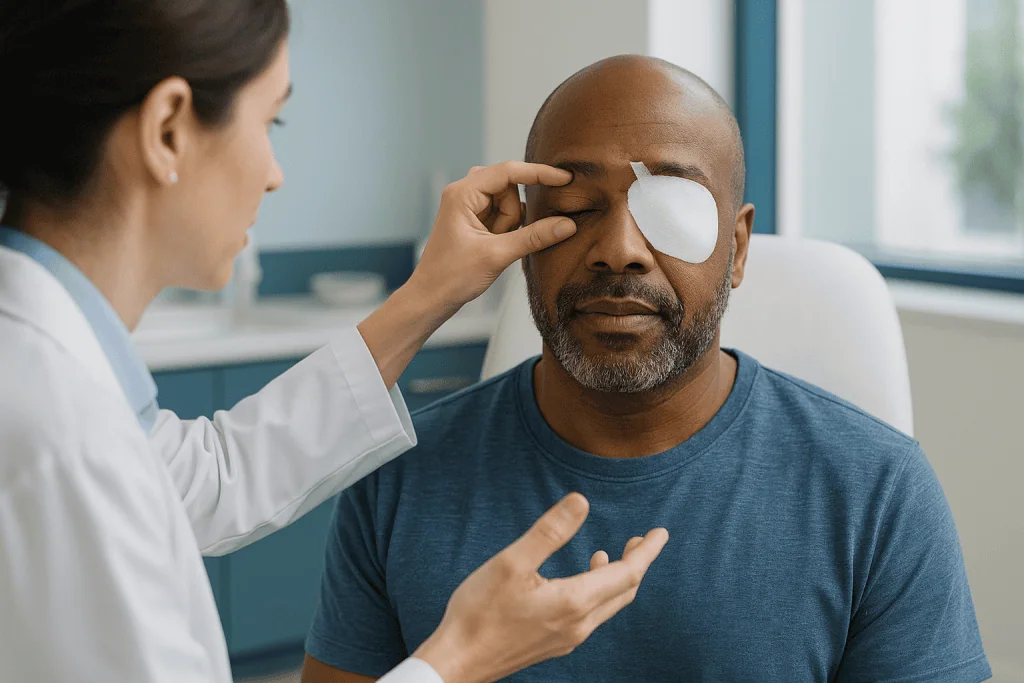
First, the eye is prepared. The surgeon cleans the lid skin and often places a drop of anesthetic on the surface of the eye itself so the clamp and instruments do not trigger the blink reflex. Second, a local anesthetic is injected into the eyelid skin near the lump. Third, once the lid is numb, a small metal clamp is placed around the chalazion. The clamp does two jobs: it flips the lid outward so the inner surface faces the surgeon, and it squeezes the surrounding tissue to limit bleeding.
Fourth comes the part everyone imagines and almost nobody feels. The surgeon makes a short vertical incision through the conjunctiva, the thin pink membrane lining the inside of the lid, directly over the lump. A curette, a small spoon-shaped instrument, is used to scoop out the thick, granular material and scrape the walls of the pocket so the cavity collapses. This is why the operation is formally called incision and curettage. The NIH StatPearls review describes the surgical portion as taking only minutes once the anesthetic has worked.
Fifth, the clamp is released, the surgeon checks that bleeding has stopped, and antibiotic ointment is placed in the eye. A firm pad is taped over the closed lid. No stitches are used for the inner incision; the conjunctiva heals over on its own within days.
The whole visit, including paperwork, numbing time and observation, usually runs longer than the surgery itself. Patients often report the strangest part is not pain but the sensation of pressure and the odd experience of hearing the scraping without feeling it.
How is the eyelid numbed before chalazion surgery?
Numbing is where the honest conversation about discomfort belongs, because the anesthetic injection is the one moment most people describe as genuinely unpleasant.
The process usually starts with a topical anesthetic drop on the eye. This numbs the surface so the clamp and later the instruments touching the conjunctiva are tolerable. Some surgeons also apply a numbing cream or gel to the lid skin for several minutes beforehand to take the edge off the needle.
The injection itself uses a local anesthetic, a medicine that temporarily blocks nerve signals in a small area. It is delivered with a fine needle into the eyelid skin around the chalazion, not into the eye. Many surgeons use a preparation that also contains a vasoconstrictor, a substance that narrows local blood vessels, to reduce bleeding and help the anesthetic stay put. The exact agent and amount are the surgeon’s decision and vary with the patient and the size of the lump.
What does the injection feel like? A sharp pinch as the needle enters, then a stinging or burning pressure for a few seconds as the fluid spreads through the thin lid tissue. The eyelid has a rich nerve supply and little space, so that stretch is felt more intensely than an injection into an arm. The sensation fades quickly, typically within a minute or two, and the lid then feels heavy and rubbery.
Before cutting, the surgeon tests the area. If you can still feel sharpness, say so; more anesthetic can be added. A well-numbed lid means the rest of the chalazion removal procedure registers as pressure, tugging and sound rather than pain.
Children and some adults who cannot lie still safely are usually offered the same operation under general anesthesia or sedation, a decision made case by case by the treating team.
Why is the chalazion incision made inside the eyelid?
The most reassuring fact about chalazion incision and curettage is where the cut goes. In the great majority of cases the incision is made on the conjunctival side, meaning the inner surface of the lid that normally rests against the eyeball. Nobody sees it, and it does not leave a visible scar.

There are three reasons surgeons favor this approach. The first is cosmetic: lid skin is thin and a scar there is hard to hide. The second is anatomical. The chalazion sits inside the tarsal plate, the stiff plate of connective tissue that gives the lid its shape and houses the meibomian glands. Approaching from the inside reaches the gland directly through the thinnest layer of tissue. The third is orientation. The incision runs vertically, parallel to the meibomian glands, so it slips between neighboring glands rather than slicing across a row of them. The NIH StatPearls review notes this vertical orientation is chosen specifically to spare adjacent glands.
Once the incision is made, the curette does the real work. The surgeon scrapes the inside of the pocket in several directions until the walls feel smooth and the thick contents, which range from cheesy to gelatinous, have been removed. Some surgeons also trim away part of the fibrous wall so the cavity cannot refill as easily.
The inner incision is left open. That sounds alarming but is deliberate: it allows any remaining fluid to drain onto the eye surface, where blinking and tears clear it away, rather than collecting again. The conjunctiva heals rapidly without sutures.
A skin-side incision is used less often, mainly when a chalazion has pointed toward the outer surface and thinned the skin, or when the lump sits very near the lid margin. In those cases a fine horizontal cut is made along the natural skin crease and closed with one or two stitches so the scar hides in the fold.
What happens right after: the pressure patch and the first hours
The patch is the part of the chalazion removal procedure that takes patients most by surprise, and it earns its place. Eyelids bleed generously because they are packed with small vessels, and the incision is left open. A firm pad taped over the closed eye applies steady pressure so those vessels seal and the cavity collapses rather than filling with blood.
Here is what usually happens in sequence. Antibiotic ointment is placed inside the lower lid to protect the surface and reduce infection risk. Two or three folded gauze pads are laid over the closed eye and taped down snugly. You are asked to keep it in place and keep your eye closed beneath it. Your team will tell you when it can come off; for most people that means the remainder of that day, and some surgeons ask for it to stay overnight.
Because one eye is covered, depth perception drops and you should not drive home. Arrange a ride or a companion before the appointment.
When you remove the patch, expect the following. The lid will look swollen and may be purple or yellow from bruising. A small amount of blood-tinged discharge on the gauze is normal; a steadily soaking pad is not. The white of the eye may be red near the incision. Vision may be blurry for a while because of the ointment, which coats the surface like a film.
Gentle care in those first hours matters more than anything else. Avoid rubbing the eye, keep contact lenses out until your team clears them, and use a cold compress over the closed lid in short spells to ease swelling. The Cleveland Clinic notes that bruising after drainage can take about a week to fade, so a dark lid on day two is not a sign that something went wrong.
Who is usually offered chalazion removal, and who is asked to wait?
Surgery is not the first move for a chalazion, and a clinician who suggests it at the first visit is the exception rather than the rule. The Cleveland Clinic and MedlinePlus both describe warm compresses and gentle lid massage as the starting point because many lumps soften and drain without any intervention.
Removal is typically considered when one or more of these apply:
- The lump has persisted for several weeks despite consistent home care.
- It is large enough to press on the cornea and distort vision, which can show up as blurring or astigmatism/">astigmatism on an eye test.
- It is causing physical irritation, drooping of the lid, or is cosmetically distressing to the person.
- It keeps returning in the same spot, in which case a surgeon will want tissue to examine under a microscope.
People who are usually asked to wait include those whose chalazion is still in its early, inflamed phase, because operating on hot, swollen tissue bleeds more and is harder to numb. Someone with an active infection of the lid, an acute stye, or blepharitis flaring around the lash line will generally be treated for that first. Very small chalazia that do not bother the person are often simply watched.
A blood-thinning medicine is not a barrier but is worth mentioning at the consultation; the surgeon may plan extra care with pressure and patching. Any change to a prescribed medicine before a procedure is a decision for the prescribing clinician, never something to do on your own.
The last point deserves emphasis. A chalazion that comes back in the same place, or a lump that looks unusual, thickens the lid margin or causes lash loss, should be biopsied. The NIH StatPearls review flags recurrent chalazia as a reason to send tissue for histopathology to rule out sebaceous carcinoma, a rare eyelid cancer that can mimic a benign lump. The treating team decides when that applies.
Is chalazion removal surgery painful?
The direct answer: the anesthetic injection stings, the operation itself should not hurt, and the days afterward bring soreness rather than pain for most people. Fear of the procedure is almost always worse than the procedure.
Break it into phases. The numbing drop on the eye may sting briefly. The injection into the lid is the peak of discomfort, a sharp pinch followed by a burning stretch that lasts seconds. Once the anesthetic has taken hold, the clamp produces a feeling of firm pressure, as if someone were pinching the lid between two fingers without letting go. Patients often describe the incision and curettage as a scraping sound and a tugging sensation. If sharp pain breaks through, the correct response is to say so, and the surgeon adds more anesthetic before continuing.
After the numbness wears off, usually within a couple of hours, the lid feels bruised and tender. Blinking may be uncomfortable for a day or two. The eye can feel gritty because the inner incision rubs against the surface before it heals. Most people manage with a cold compress and, if their team agrees, a simple over-the-counter pain reliever; the choice of medicine and how to take it belong with the clinician who knows your history.
Pain that escalates rather than eases, or that comes with increasing swelling, heat or discharge, is not normal recovery and is covered in the red-flag section below.
One honest caveat about expectations. People with very large, long-standing chalazia sometimes need more scraping, more anesthetic and a longer clamp time, and they may feel more sore afterward. Anxiety also amplifies the perception of pressure. Telling the surgeon you are nervous is not an admission of weakness; it lets the team pace the steps, talk you through each one and stop if you need a moment.
How risky is chalazion surgery? Complications in plain language
Chalazion surgery is regarded as a low-risk minor procedure, and it is performed routinely in eye clinics. Low risk is not the same as no risk, so here is what can go wrong, ordered roughly from common and minor to rare and serious.
Bruising and swelling are expected rather than complications; the Cleveland Clinic describes a healing period of about a week for the bruising to fade. Bleeding beyond the first hours is uncommon but is the reason the pressure patch exists and the reason people taking blood thinners should mention it.
Recurrence is the complication people care about most. The lump can come back if the pocket was not fully cleared, or a new chalazion can form in a neighboring gland because the underlying tendency to blocked glands has not changed. Infection after drainage is unusual, partly because the eye surface is bathed in tears containing natural antimicrobial proteins and partly because antibiotic ointment is used; signs of infection are listed in the red-flag section.
Less common risks include a small notch or irregularity in the lid margin if the lump sat very close to the edge, loss of a few lashes, and a visible scar if a skin-side incision was needed. Very rarely, a clamp or instrument can scratch the cornea, which is painful but usually heals quickly with treatment.
The gravest concern is not a surgical mishap but a missed diagnosis. A lump that is not a chalazion at all, most importantly sebaceous carcinoma, can look nearly identical. This is why surgeons send tissue for examination when a chalazion recurs at the same site or looks atypical, as the NIH StatPearls review advises.
Risks tied to anesthesia are minimal with local numbing. Where general anesthesia is used, mainly for children, the standard anesthetic risks apply and are discussed by the anesthesia team beforehand.
Chalazion removal vs steroid injection vs warm compresses: how the options compare
Three approaches cover nearly every chalazion, and they are not rivals so much as steps on a ladder. The table summarizes how they differ; the paragraphs afterward explain the mechanisms.
| Approach | How it works | Typical setting | Main trade-offs |
|---|---|---|---|
| Warm compresses and lid massage | Heat softens the hardened oil so the blocked gland can drain through its own opening | Home, several times daily | Slow; needs consistency; works best early; no procedure risk |
| Steroid injection | Corticosteroid placed into the lump calms the inflammatory reaction so the granuloma shrinks | Clinic, single visit, sometimes repeated | No incision or patch; may need repeat; small risk of skin lightening or fat thinning at the site |
| Incision and curettage | Mechanically opens the pocket and scrapes out the contents so the cavity collapses | Clinic treatment room under local anesthetic | Most direct; provides tissue for biopsy; bruising and a patch; small recurrence risk |
Warm compresses work on physics. Meibomian oil thickens like cooling butter when trapped, and heat liquefies it. MedlinePlus suggests applying warmth for 10 to 15 minutes at a time, several times a day, followed by gentle massage toward the lid margin. The limitation is that once a granuloma has fully formed, there is less liquid oil to release.
A chalazion steroid injection takes a different route. Rather than opening the lump, the clinician injects a corticosteroid, an anti-inflammatory medicine, directly into it. The steroid dampens the immune reaction that built the granuloma, and the lump gradually softens over weeks. It is attractive for lumps near the tear drainage system or for people who prefer to avoid a clamp. Its drawbacks, described in the NIH StatPearls review, include possible lightening of skin pigment and thinning of the fat under the skin at the injection site, which matters more in people with darker skin tones.
Incision and curettage is the most definitive single visit and is the only option that yields tissue for microscopic examination. Which rung of the ladder fits you is a judgment the treating team makes with you, weighing lump size, duration, skin tone, position and your own preferences.
What the days and weeks after chalazion removal usually look like
People searching for chalazion surgery recovery time usually want a calendar. The honest version is a range rather than a promise, because lump size and individual healing vary. What follows is the typical pattern described by the Cleveland Clinic and the NIH StatPearls review.
Day of surgery. Patch on, eye closed, someone else drives. The lid feels heavy as the anesthetic fades and then sore. A cold compress over the closed lid in short spells is the standard comfort measure.
Days one to three. The patch is off. Swelling peaks around the first or second day and the bruising is at its most colorful. Blinking feels gritty as the inner incision heals. Antibiotic ointment is usually continued as directed by the surgeon; how long depends on the team. Vision may be blurry from the ointment. Most people can work at a desk, though screens can feel tiring.
Days four to seven. Swelling shrinks noticeably and the bruise shifts from purple to yellow-green. The gritty feeling fades as the conjunctiva closes over. The Cleveland Clinic notes bruising generally takes about a week to fade after drainage. A small firm area may still be felt where the lump was; this is healing tissue, not necessarily recurrence.
Weeks two to four. The lid softens further. Any residual firmness continues to settle. A follow-up visit, if scheduled, usually falls in this window so the surgeon can check the lid margin and confirm that healing is on track.
Through this whole period the sensible restrictions are consistent: no eye rubbing, no contact lenses until cleared, no eye makeup near the incision until the team says so, and no swimming while the inner incision is still healing. Warm compresses are often reintroduced after the first few days, not to treat the operated lump but to keep neighboring glands flowing, because the blocked-gland tendency that caused the chalazion is still there.
Do all chalazions eventually go away on their own?
No, and the reason is written into how a chalazion forms. Many do resolve without help, but a meaningful share become chronic, and the odds shift with time.
In the early weeks, a chalazion is mostly trapped oil and active inflammation. Heat can liquefy the oil, the gland opening can clear, and the whole thing can drain. MedlinePlus notes that a chalazion often heals on its own within about a month with warm compresses, and the Cleveland Clinic gives a similar picture while acknowledging that some take longer.
Once the inflammation has walled the material off in a fibrous granuloma, the calculation changes. There is less liquid to drain, the capsule is tough, and the pocket sits inside the rigid tarsal plate where it cannot easily collapse. These mature chalazia can remain unchanged for months. Some eventually shrink slowly as the body absorbs the contents; others never do.
Three signals suggest a lump is unlikely to resolve without a procedure: it has been present for several weeks with no change in size despite daily compresses, it feels hard and rubbery rather than soft, and it has no redness or tenderness left. That painless, fixed quality is the signature of a mature granuloma.
There is also a category that must not be left to wait it out. A lump that keeps returning in the same spot, distorts the lid margin, causes lash loss or looks different from a typical smooth bump needs an eye examination and often a biopsy, because sebaceous carcinoma can present as a stubborn chalazion. The NIH StatPearls review is explicit that recurrence at the same site warrants tissue examination.
The practical takeaway is not that everyone with a chalazion needs surgery. It is that giving home care a fair trial makes sense for a fresh lump, and that a fixed, painless lump lasting beyond a month or two deserves an eye appointment rather than another month of hoping.
Can removing a chalazion destroy the gland?
The meibomian gland at the center of a chalazion has usually already stopped working by the time surgery is considered. The blockage, the back-pressure and the inflammatory reaction damage the gland’s secretory tissue long before the curette arrives. In that sense, the procedure is not destroying a healthy gland; it is clearing the wreckage of one that has failed.
What the surgeon actively tries to protect are the neighboring glands. This is the reason the incision is vertical, running parallel to the glands so it passes between them rather than across them. It is also why the incision is kept short and centered on the lump. The NIH StatPearls review describes this orientation as a deliberate gland-sparing choice.
Can the surgery damage neighbors anyway? Occasionally, yes. A very large chalazion may have already compressed adjacent glands, and thorough curettage of a big pocket can disturb tissue on either side. Each lid has dozens of glands, so losing one or a few rarely changes tear quality in a noticeable way. People with pre-existing meibomian gland dysfunction, a chronic condition in which many glands are blocked or thickened, are the exception; for them every functioning gland matters, and the surgeon weighs that in deciding between curettage and a steroid injection.
The larger truth is that the gland tendency, not the individual gland, drives outcomes. Chalazia cluster in people with blepharitis, rosacea affecting the eyes, or seborrheic skin. Removing one lump does nothing to change that background, which is why surgeons so often pair the procedure with a long-term lid hygiene routine: daily warmth, gentle lid cleaning and, where a clinician judges it appropriate, treatment of the underlying skin condition.
Asked plainly, then: surgery removes a gland that was already lost, aims to spare the rest, and does not by itself fix why glands are blocking in the first place.
What people often get wrong about chalazion removal
Some of the most persistent beliefs about chalazion surgery come from styes, from social media procedure videos, or from imagining the eye rather than the eyelid. Here are the ones worth correcting.
Myth: the surgeon cuts near the eyeball. The incision is made in the lid, on its inner lining, with a clamp shielding the eye. The eye is never entered. The clamp actually holds the lid away from the globe while the surgeon works.
Myth: you will be able to see a scar. The usual inner-lid incision is invisible once healed. A visible scar is only a possibility with the less common skin-side approach, and even then it is placed in the natural crease.
Myth: antibiotics will clear a chalazion. A chalazion is a blocked gland with sterile inflammation, not an infection. The Mayo Clinic distinguishes it from a stye for exactly this reason. Antibiotic ointment after surgery protects the fresh incision; it does not treat the lump.
Myth: popping or squeezing it at home works. The granuloma sits inside the rigid tarsal plate. Pressing hard bruises the lid, risks spreading inflammation and can damage the eye surface. Warm compresses and gentle massage are the home tools; pressure is not.
Myth: surgery guarantees it never returns. The same lump rarely refills, but a new chalazion can form in a neighboring gland if the underlying tendency continues. Lid hygiene afterward is not optional advice; it is the part that addresses the cause.
Myth: a chalazion that keeps coming back is just bad luck. Recurrence at the same site is a specific reason to biopsy, because a rare eyelid cancer can mimic a chalazion. The NIH StatPearls review treats this as a rule, not a footnote.
Myth: it is a big operation. The surgical portion takes minutes under local anesthetic, no stitches are needed for the inner incision, and most people return to ordinary activities within a day or two, with bruising fading over about a week according to the Cleveland Clinic.
Questions to ask your care team before chalazion removal
A good consultation leaves you knowing not only what will happen but why this option was chosen for your particular lid. These questions help get you there. Write down the answers; the numbing and the patch make it hard to remember details afterward.
- Is this definitely a chalazion, and what features make you confident it is not something else?
- Have I given warm compresses a long enough trial, or is there a reason to move to a procedure now?
- Would a steroid injection be a reasonable alternative for me, and what are the trade-offs given my skin tone and where the lump sits?
- Will the incision be on the inside of the lid or through the skin, and why?
- Will the tissue you remove be sent for examination under a microscope?
- How long should I keep the patch on, and who do I call if it soaks through?
- I take these medicines, including any blood thinners or supplements: does anything need to be discussed with my prescriber beforehand?
- What ointment or drops will I use afterward, for how long, and what should I do if my eye reacts to them?
- When can I drive, wear contact lenses, use eye makeup and swim again?
- What signs would mean I should come back urgently rather than wait for my follow-up?
- What can I do day to day to lower the chance of another chalazion forming in a different gland?
Two of these deserve extra weight. The question about sending tissue for examination matters most if this lump has appeared before in the same place or looks unusual. The question about alternatives matters because a steroid injection and curettage suit different lumps and different people, and the reasoning behind the choice should be something you understand, not just accept.
If English is not your first language or you process information better in writing, ask for printed aftercare instructions. Every decision, from whether to operate to which approach to use, sits with the treating team, but you are entitled to understand each step.
When to call your doctor after chalazion removal
Most recoveries are uneventful: a sore, bruised lid that improves day by day. The signs below are different. They point to bleeding, infection, injury to the eye surface or a diagnosis that needs another look, and they warrant a same-day call to the surgeon’s office or, out of hours, an urgent care or emergency assessment.
Contact your care team promptly if you notice:
- Bleeding that soaks through the pressure patch or continues after you have applied firm, steady pressure over the closed lid for several minutes.
- Pain that worsens after the first day rather than easing, or pain that is severe and not relieved by the measures your team recommended.
- Increasing redness, heat and swelling of the lid after the second day, especially spreading toward the cheek or brow, or a fever.
- Thick yellow or green discharge, or the lids sticking together with pus rather than a small amount of ointment or blood-tinged fluid.
- A sudden drop in vision, new double vision, or a persistent feeling that something sharp is in the eye, which can signal a scratch on the cornea.
- Extreme sensitivity to light, or a red eye that is getting redder rather than calmer.
- Any reaction to the ointment or drops, such as itching, hives or swelling of the face or lips.
Slower concerns also deserve a call, even if they are not emergencies. A lump that returns in the same spot within weeks or months, a lid margin that looks notched or distorted, loss of lashes around the site, or a firm area that grows rather than shrinks over the month after surgery should be seen. The NIH StatPearls review notes that a recurrent chalazion at the same location is a reason for tissue examination, and that judgment belongs with your eye specialist.
Trust the trend more than any single day. A lid that is a little worse on the morning of day two but clearly better by day four is healing. A lid that is worse on day four than on day two is asking for a phone call. When in doubt, call; treatment teams would far rather reassure you than see a problem late.
Frequently asked questions
Is chalazion surgery painful?
The operation itself should not hurt once the lid is numb; the anesthetic injection is the sharpest moment and lasts seconds. During the incision and scraping most people feel pressure from the clamp and a tugging sensation, and hear the curette working. Afterward the lid is sore and bruised for a few days rather than painful. If sharp pain breaks through during the procedure, tell the surgeon, who can add more anesthetic.
How risky is chalazion surgery?
It is considered a low-risk minor procedure performed routinely under local anesthetic. Expected effects are bruising and swelling that fade over about a week. Uncommon complications include bleeding beyond the first hours, infection, recurrence of the lump, a small notch in the lid margin, loss of a few lashes, or a scratch on the cornea. The most important risk is a missed diagnosis, which is why recurrent or unusual lumps are sent for microscopic examination.
What is chalazion incision and curettage, in plain terms?
Incision and curettage means making a small cut into the lump and scraping out its contents. After the eyelid is numbed and turned outward with a clamp, the surgeon cuts through the thin inner lining of the lid over the chalazion, then uses a tiny spoon-shaped instrument called a curette to scoop out the thick material and scrape the walls of the pocket so it collapses. No stitches are needed on the inner surface.
How long is chalazion surgery recovery time?
Most people return to ordinary desk activities within a day or two. Swelling peaks in the first couple of days, and the Cleveland Clinic notes that bruising generally takes about a week to fade. The gritty feeling from the inner incision settles as the lining heals over several days. Residual firmness can continue softening for a few weeks. Contact lenses, eye makeup and swimming wait until your surgeon clears them.
Do all chalazions eventually go away without surgery?
No. Many do, particularly fresh ones treated with consistent warm compresses; MedlinePlus notes resolution often occurs within about a month. Once inflammation has walled the material off in a firm granuloma, the lump can persist for months and may never drain on its own. A hard, painless, unchanging lump lasting beyond a month or two, or one that keeps returning in the same spot, should be examined by an eye specialist.
Can removing a chalazion destroy the gland?
The gland at the center of a chalazion has usually already stopped functioning because of the blockage and inflammation, so surgery clears a gland that was already lost rather than destroying a healthy one. The incision is made vertically, parallel to the neighboring glands, specifically to spare them. Each lid holds dozens of glands, so losing one rarely affects tear quality, though people with widespread meibomian gland dysfunction may be steered toward a steroid injection instead.
How does a chalazion steroid injection compare with surgery?
A steroid injection places an anti-inflammatory medicine directly into the lump, calming the reaction so the granuloma shrinks gradually over weeks, with no incision, clamp or patch. It may need repeating and carries a small risk of skin lightening or fat thinning at the site, which matters more in darker skin. Incision and curettage is more immediate and provides tissue for biopsy. The treating team weighs lump size, position, skin tone and preference.
Why do I need a patch after chalazion removal?
Eyelids are rich in small blood vessels and the inner incision is left open, so a firm pad taped over the closed eye applies steady pressure to stop bleeding and help the emptied pocket collapse rather than fill with blood. It usually stays on for the rest of the day, sometimes overnight, according to your surgeon’s instructions. Because one eye is covered, you should not drive and will need someone to take you home.
Will chalazion removal leave a scar?
The standard approach through the inner lining of the eyelid leaves no visible scar, because the incision faces the eyeball and heals without stitches. A skin-side incision is used less often, usually when the lump has thinned the outer skin or sits very close to the lid edge; in that case a short cut is placed along the natural crease and closed with fine stitches so the mark hides in the fold.
Can a chalazion come back after surgery?
The same lump rarely refills if the pocket was fully cleared, but a new chalazion can form in a neighboring gland because the underlying tendency to blocked glands, often linked to blepharitis or rosacea, has not changed. That is why surgeons recommend ongoing lid hygiene with daily warmth and gentle cleaning. A lump that returns in exactly the same place is a specific reason for tissue examination to rule out a rare eyelid cancer.
References
- MedlinePlus Medical Encyclopedia: Chalazion
- Cleveland Clinic: Chalazion
- NIH National Library of Medicine, StatPearls: Chalazion
This article is for general information only and is not a substitute for professional medical advice. Please consult a qualified doctor about your individual situation.

More from the Blog

What Cornea and External Disease Specialists Treat: Infections, Pterygium and Dystrophies
A cornea and external disease specialist is an ophthalmologist with extra fellowship training in the clear front window of the eye and the surface…

How Corneal Repair Is Done: Sutures, Tissue Glue, Membrane Grafts and Transplant Options
Corneal repair is matched to the depth and cause of the damage. Small scratches are usually left to heal under protection; cuts and perforations…

Ophthalmic Lasers Explained: Retina, Glaucoma and Corneal Lasers and What Each One Does
Eye lasers fall into three broad groups. Retinal lasers seal leaking or abnormal blood vessels and barricade retinal tears. Glaucoma lasers improve fluid drainage…

Ocular Surface Disease Explained: How Tear Film, Eyelids and Cornea Fail Together
Ocular surface disease is an umbrella term for conditions in which the tear film, eyelids and cornea stop working as a unit, most often…

Eye Surgery in Older Adults With Heart Disease or Diabetes: How the Plan Is Adjusted
Eye surgery in older adults with heart disease or diabetes is usually still possible, but the plan changes. Most procedures, especially cataract surgery, are…

Why You Must Pause Contact Lenses Before a Myopia Laser Assessment (and for How Long)
Contact lenses press on the cornea and temporarily change its shape, so measurements taken too soon after removing them can be inaccurate and could…