

What Deep Brain Stimulation Surgery Is: How It Works, Who It Helps and What to Expect
Key Takeaways
- DBS does not destroy brain tissue; it delivers adjustable, reversible electrical pulses through a lead placed a few centimeters deep and powered by a generator under the collarbone.
- The best candidates for Parkinson's DBS are people whose symptoms still respond to medication but whose response has become unpredictable, typically after at least four years of diagnosis.
- For Parkinson's disease, stimulation generally improves the same symptoms medication improves, such as tremor, stiffness and slowness, and usually does not help balance, speech volume, swallowing or thinking.
- The brain has no pain receptors, so the awake portion of surgery involves pressure and noise rather than sharp pain; the chest pocket and neck are the sorest spots afterward.
- Programming is a months-long process, often starting two to four weeks after surgery once brain swelling settles, with refinement continuing for three to six months.
- Non-rechargeable pulse generators typically last three to five years and rechargeable ones far longer, but every system requires specific precautions around MRI scans and diathermy.
Deep brain stimulation surgery implants thin electrodes into specific movement-control regions of the brain and connects them to a small pulse generator placed under the skin of the chest. Continuous, adjustable electrical pulses quiet abnormal signaling that causes tremor, stiffness and involuntary movement. It is used mainly for Parkinson's disease, essential tremor and dystonia when medication alone no longer gives steady control. It manages symptoms rather than curing the underlying condition.
A retired woodworker once described the moment his neurologist switched on the device in the clinic. His right hand, which had been shaking hard enough to spill coffee for a decade, went still on the armrest. He looked at it the way you look at a stranger. Then he laughed. The tremor had not been cured; a small battery under his collarbone was simply talking to his brain faster than the disease could.
That scene captures both the wonder and the limits of deep brain stimulation, usually shortened to DBS. It is real neurosurgery, with real risks, and it does not touch every symptom. Yet for a well-chosen group of people whose pills have grown unreliable, it can hand back hours of predictable movement each day.
Here is what the operation actually involves, who tends to benefit, what the recovery looks like and the honest downsides that glossy summaries tend to skip.
What is deep brain stimulation surgery, in plain terms?
Think of it as a pacemaker for the brain. A cardiac pacemaker sends timed pulses to keep the heart’s rhythm steady; a DBS system sends steady pulses to a small, deep cluster of nerve cells whose firing has gone haywire. The comparison is more than a metaphor. The battery-powered generator sits in the same kind of pocket under the skin, and the technology grew out of the same engineering lineage.
Three parts make up the system. The lead is a wire thinner than a strand of spaghetti with several metal contacts at its tip, placed inside a target region a few centimeters below the surface of the brain. The extension is an insulated cable tunneled under the skin from the scalp, behind the ear and down the neck. The pulse generator, roughly the size of a stopwatch, is implanted below the collarbone and houses the battery and the electronics. Mayo Clinic and Cleveland Clinic describe this same three-component setup, and most people have leads on both sides of the brain because symptoms usually affect both sides of the body.
What the system does not do is cut, burn or remove tissue. Older operations for tremor destroyed a tiny patch of brain permanently. DBS leaves the tissue intact and simply overrides its output. Settings can be raised, lowered, redirected to a different contact or turned off entirely. That reversibility is the single biggest reason it replaced the destructive procedures that came before it.
How does electrical stimulation calm tremor and stiffness?
The honest answer from neuroscience is that the full mechanism is still being worked out. What is well established is where the problem lives. In Parkinson’s disease, loss of dopamine-producing cells throws off the timing of circuits that run between the cortex, the basal ganglia and the thalamus. Neurons in structures such as the subthalamic nucleus and the globus pallidus begin firing in abnormal, synchronized bursts, a bit like a stadium crowd chanting in unison when it should be murmuring. That rhythm is what the body experiences as tremor, rigidity and slowness.
High-frequency stimulation appears to break up the chant. The pulses arrive so quickly that the target cells cannot settle into their pathological rhythm, and downstream circuits receive a smoother, more normal signal. Some researchers describe it as a functional “jamming” of the bad broadcast; others frame it as resetting the network’s timing. Both descriptions fit the observed result, which is that symptoms ease within seconds to minutes of the device switching on and return when it switches off.
The targets differ by condition. According to Johns Hopkins Medicine, the ventral intermediate nucleus of the thalamus is the classic target for essential tremor, while Parkinson’s disease is usually treated at the subthalamic nucleus or the globus pallidus interna. Dystonia also tends to be treated at the globus pallidus. Precision matters enormously: the sweet spot is a few millimeters wide, and a lead placed too close to a neighboring pathway can cause tingling, slurred speech or pulling of the face instead of relief.
Which conditions is DBS approved to treat?
Regulatory approval in the United States arrived one condition at a time, and the dates tell a story of growing confidence. Cleveland Clinic summarizes the sequence, which is reproduced below.
| Condition | US approval | Main goal of stimulation |
|---|---|---|
| Essential tremor | 1997 | Reduce shaking of the hands and arms |
| Parkinson’s disease | 2002 | Smooth out tremor, stiffness, slowness and medication swings |
| Dystonia | 2003 (humanitarian device exemption) | Ease sustained muscle contractions and twisting postures |
| Obsessive-compulsive disorder | 2009 (humanitarian device exemption) | Reduce severe, treatment-resistant symptoms |
| Epilepsy | 2018 | Lower seizure frequency when medication fails |
A humanitarian device exemption means regulators accepted the treatment for a rare condition on the basis of probable benefit and safety, without the large randomized trials required for full approval. It is not a lesser stamp so much as an acknowledgment that some conditions are too uncommon to study in thousands of people.
Movement disorders remain the heart of the practice. The great majority of DBS operations worldwide are for Parkinson’s disease and essential tremor, where the evidence is deepest and the results most predictable. Research into depression, Tourette syndrome, chronic pain, Alzheimer’s disease and addiction continues, but Mayo Clinic is careful to describe these as investigational. If a friend tells you DBS is available for one of them, ask whether they mean inside a clinical trial.
Who is a good candidate for deep brain stimulation?
The ideal candidate is not the person with the worst symptoms. It is the person whose symptoms respond well to medication but whose response has become erratic. That distinction surprises many families, so it is worth spelling out.
For Parkinson’s disease, Cleveland Clinic lists several typical criteria. The diagnosis should have been present for at least four years, long enough for the picture to settle and for look-alike conditions to reveal themselves. Symptoms should still improve clearly when dopamine-replacement medication is working, because DBS tends to help the same symptoms that medication helps. The problem being solved is usually the roller coaster: good hours, then wearing off, then involuntary writhing movements when a dose peaks. Tremor that refuses to respond to medication is the notable exception, since stimulation often controls it anyway.
Cognition is the other gatekeeper. Significant memory or thinking problems raise the risk that surgery will worsen them, and Mayo Clinic notes that dementia is generally considered a reason not to operate. Untreated depression or anxiety needs attention first. General health matters too, because the procedure requires several hours in the operating room.
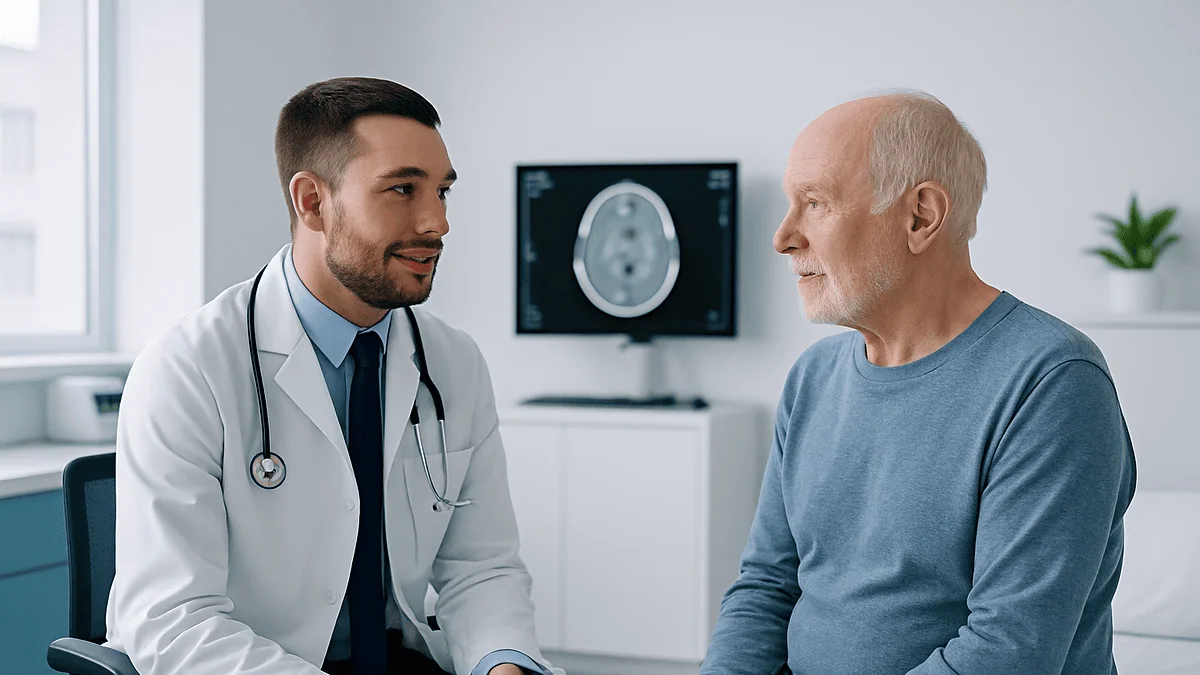
Nobody decides this alone. A movement disorder neurologist, a functional neurosurgeon, a neuropsychologist and often a psychiatrist review each case together. Expect a detailed neurological exam performed both off and on medication, brain imaging, cognitive testing and long conversations about goals. The process can take weeks, and a thoughtful team is as likely to say “not yet” as “yes.”
What happens during the operation, step by step?
The surgery unfolds in two stages, sometimes on the same day and sometimes a week or two apart.
Stage one: placing the leads. A detailed MRI is taken beforehand to map the target. On the morning of surgery, a lightweight frame or a set of small anchor pins is fixed to the skull so the surgical navigation system can lock the images to the actual head. After the scalp is numbed, the surgeon makes a small incision and drills an opening about the size of a coin in the skull. The lead is advanced along the planned path, often while a fine recording electrode listens to the crackle of individual neurons to confirm the location. Many centers perform this stage with the patient awake and talking, so the team can test the stimulation in real time; others use general anesthesia with imaging in the scanner to confirm placement. Both approaches are considered acceptable, according to Mayo Clinic.
Stage two: implanting the generator. Under general anesthesia, the surgeon makes a short incision below the collarbone, creates a pocket for the pulse generator and tunnels the extension wire beneath the skin of the neck to connect it to the lead. This part typically takes an hour or two.
Total operating time varies with the number of leads and the confirmation method, but a full day in the surgical suite is common. Most people stay in the hospital for a day or two after each stage, per Cleveland Clinic, and go home with dissolvable sutures or staples at three small sites.
How painful is deep brain stimulation surgery?
Less than most people fear, and in a different way than they expect. The brain itself has no pain receptors. Once the scalp is numbed with local anesthetic, the passage of the lead through brain tissue is not felt at all. People who go through the awake portion most often describe pressure, the vibration and noise of the drill, and the strangeness of hearing their own neurons amplified through a speaker. Discomfort, yes; sharp pain, rarely.
The frame or pins are the part people remember. The pins press into the scalp, and although they are numbed, the sensation of a fixed head for several hours can be tiring. Teams offer breaks, pillows and reassurance, and a nurse or anesthesiologist stays within arm’s reach throughout.
After surgery, the sorest spots are usually the chest pocket where the generator sits and the path of the wire along the neck. Turning the head can pull on the incision for a week or two. Headache is common in the first few days. Mayo Clinic and Cleveland Clinic both describe recovery pain as manageable with ordinary post-operative care directed by the surgical team; decisions about pain medication belong to that team, not to a magazine article.
One reassuring detail: the stimulation itself does not hurt. When the device is switched on, most people feel nothing at all beyond the easing of their symptoms. Occasionally a new setting produces a brief tingling in the face or hand, which the programmer adjusts away in minutes.
Do they shave your head for deep brain stimulation?
Usually not the whole head. Practices vary from surgeon to surgeon, but the trend over the past decade has been toward shaving only what is necessary. Cleveland Clinic describes trimming a small amount of hair around the incision sites. That often means two narrow strips or patches near the top of the head where the burr holes are placed, plus a small area behind one ear where the extension wire passes. Some surgeons still prefer a full shave because it simplifies sterile draping and lowers the chance of a stray hair reaching the wound, and there is nothing wrong with that choice either.
Ask directly during your pre-operative visit. Surgeons expect the question, and knowing the plan removes one small worry from a day that has enough of them. If hair matters a great deal to you, say so; there may be room to adjust.
Whatever is shaved grows back on the usual timeline, and hair generally covers the healed incisions within a couple of months. The burr holes are capped with a small plastic cover that sits flush with the skull, so there is typically a faint bump rather than a dent. Under hair it is invisible. The generator under the collarbone shows as a low, rounded outline in slim people and is often unnoticeable in others. People who swim or wear open-necked shirts sometimes ask about placement in the abdomen instead, an option some surgeons offer.
What is the success rate of deep brain stimulation surgery?
There is no single number, and anyone who quotes one without qualification is simplifying. Success depends on which condition is treated, which symptom you are counting, how it is measured and what you compare it to. A more useful framing is this: for the symptoms it targets, DBS reliably works, and its benefit is usually described in relation to the person’s best response to medication.
For Parkinson’s disease, the consistent finding across mainstream sources is that stimulation extends the amount of the day spent in good movement, reduces the involuntary movements that come with medication peaks and allows medication to be reduced under a neurologist’s supervision. Johns Hopkins Medicine notes that DBS tends to improve the same symptoms medication improves: tremor, stiffness, slowness and, often, walking. It does not typically improve balance problems, freezing that persists even when medication is working, speech volume or swallowing, and it does not help memory or thinking.
For essential tremor, the target symptom is the tremor itself, and control is often dramatic and immediate, which is why the woodworker in our opening laughed. Dystonia is slower; improvement may build over weeks to months rather than minutes, according to Cleveland Clinic, so patience is part of the plan.
What none of these outcomes represent is a halt to the underlying disease. Parkinson’s continues to progress with or without a device. Stimulation keeps working on the symptoms it reaches, but new problems can emerge that it does not touch. Realistic expectations, set before surgery, are the best predictor of a person who feels the operation was worth it.
What is the downside of DBS surgery?
Every honest conversation about DBS has three layers of risk, and they deserve equal airtime.
Surgical risks. Placing a lead through brain tissue carries a small chance of bleeding, which can cause a stroke, and any implant carries a chance of infection. Mayo Clinic and MedlinePlus list bleeding in the brain, stroke, infection, breathing problems under anesthesia, seizures and heart problems among the possibilities. Serious complications are uncommon in experienced hands, but they are not theoretical, and a surgical team should give you their own center’s figures rather than a national average.
These are genuine downsides, but many people who choose surgery accept them because the alternative, a shrinking window of reliable hours each day, has its own steep cost.
- Stimulation side effects. Tingling, muscle tightness, slurred or quieter speech, double vision, balance changes and mood shifts can occur when settings are not yet optimized. Most are adjustable, which is the advantage of a reversible therapy.
- Hardware problems. Wires can break or move, skin over the device can erode and batteries run down. Any of these means another procedure.
- Psychological effects. Apathy, impulsivity, depression or a sense of altered identity have been reported, particularly with stimulation of the subthalamic nucleus. Screening and follow-up are designed to catch these early.
- Practical burdens. Programming visits, device checks, travel to a specialist center and precautions around certain medical scans become part of life.
What is recovery like in the first weeks and months?
The first surprise is that the device is often not turned on right away. Swelling around a new lead can temporarily ease symptoms on its own, a phenomenon surgeons call the microlesion effect, and it can mask the true response to stimulation. Many teams wait two to four weeks for the brain to settle before the first programming session, a timeline Cleveland Clinic describes as typical.
Home recovery in that window is mostly about the incisions. Keep them clean and dry as instructed, avoid heavy lifting and vigorous neck movement, and expect fatigue that outlasts the soreness. Headaches fade over the first week or two. Some people notice brief confusion in the first days, especially older adults, and it usually clears.
Then comes the part that few summaries emphasize: programming is a process, not an event. At the first session the neurologist or nurse programmer tests each contact on the lead, watches the response and hunts for side effects. Settings are refined over several visits spread across three to six months, according to Mayo Clinic, while medication is adjusted in step. Improvement often arrives in layers. Tremor may settle at the first visit; stiffness and walking may take longer to reach their best.
Most people return to desk work within a few weeks and to more physical activities once the surgeon clears them. Driving resumes when the care team is satisfied that reflexes, vision and symptom control are steady. Physical therapy during this period helps translate improved movement into confident, practical function.
How long does the battery last and what does living with a device involve?
Two kinds of pulse generator exist. A non-rechargeable unit typically lasts about three to five years before it needs replacing, while a rechargeable unit can last far longer, often beyond a decade, according to Mayo Clinic and Cleveland Clinic. Replacement is a short outpatient procedure at the chest site; the leads in the brain stay put.
Rechargeable devices ask something in return: regular charging sessions, usually a few times a week, using a pad worn over the chest for a period of time. People who are forgetful or who live alone sometimes prefer the simplicity of a non-rechargeable unit and accept more frequent swaps. Neither choice is wrong.
Day to day, the device is quiet company. A handheld controller lets you check the battery and, within limits set by your neurologist, adjust stimulation or switch it off. Airport security scanners are generally safe to walk through, though a device identification card avoids confusion. Household appliances pose no problem. Strong magnets, certain industrial equipment and some medical procedures do. MRI scans require specific conditions and confirmation that your particular system is rated for them; diathermy, a form of deep heat therapy used in some physical therapy and dental settings, is off limits because it can heat the electrodes and injure tissue. MedlinePlus and Mayo Clinic both flag these precautions.
Follow-up never fully ends. Expect check-ins at least a couple of times a year, with fine-tuning as the underlying condition evolves.
How does DBS compare with medication and focused ultrasound?
DBS does not replace medication for Parkinson’s disease; it works alongside it. Dopamine-replacement drugs still do essential work, and the most common outcome is a reduction in dose, decided by the neurologist, rather than a farewell to pills. For essential tremor, the picture is different: stimulation frequently controls tremor well enough that medication becomes optional, though that too is a clinical decision.
The newest alternative for tremor is focused ultrasound, which uses converging sound waves guided by MRI to heat and destroy a small spot in the thalamus without any incision. It is a single session, involves no implant and requires no battery. The trade-offs are real, however. The lesion is permanent and cannot be adjusted, side effects such as numbness or imbalance can persist, and it is currently used on one side of the brain at a time. Mayo Clinic describes it as an option for tremor that has not responded to medication, alongside DBS.
Choosing between them is a values question as much as a medical one. A person who wants to avoid an implant and follow-up visits may lean toward ultrasound; a person who wants both hands treated and the flexibility to change settings as symptoms shift may lean toward DBS. Older destructive surgeries such as pallidotomy and thalamotomy are still performed in some settings, but they share ultrasound’s permanence without its incision-free advantage, and their use has declined sharply since DBS arrived.
When should you see a doctor before or after DBS?
Before surgery, the trigger for a conversation is not despair; it is unpredictability. If you or someone you love has Parkinson’s disease and has started planning the day around when the medication will work, or if essential tremor has made eating, writing or drinking in public a source of dread despite treatment, ask your neurologist whether a referral to a movement disorder center makes sense. Being evaluated commits you to nothing.
After surgery, most recovery is uneventful, but certain signs mean the same day, not the next appointment. Contact the surgical team or seek emergency care for:
- a sudden severe headache, new weakness or numbness on one side, trouble speaking or a drooping face, all of which can signal bleeding or stroke
- fever, spreading redness, swelling, warmth or fluid leaking from any incision, which can indicate infection around the hardware
- a first-ever seizure or a marked change in alertness or confusion
- sudden return of symptoms alongside a shock-like sensation, which can mean a broken wire or a device fault
- new or worsening depression, thoughts of self-harm, or striking changes in behavior such as compulsive spending or gambling
Mood changes deserve particular emphasis. They can appear weeks after an otherwise smooth recovery and are highly treatable when caught, sometimes with a simple programming adjustment. Families often notice them before the person does, so keep the team’s after-hours number somewhere everyone can find it.
What questions should you ask a DBS team before deciding?
The quality of a DBS outcome depends heavily on the quality of the selection and programming, which means the team matters as much as the technology. These questions help you gauge both.
Start with volume and results. How many DBS procedures does the center perform each year, and what are its own rates of bleeding, infection and lead revision? A confident team will know these numbers and share them. Ask which symptoms of yours they expect to improve, which they expect to stay the same and which could worsen. Vague optimism is a warning sign; a specific list is a good one.
Move on to logistics. Will the lead placement be awake or asleep, and why does the surgeon prefer that approach for you? Which target has been chosen, and what drove the choice? Who does the programming, how many visits are typical and how far will you have to travel? Rechargeable or not, and who decides?
Finally, ask about the exits. What happens if the device does not help as hoped? How is a failing battery handled? Which scans and procedures will you need to avoid, and how will other doctors know you have an implant?
Bring a second set of ears. Bring the list. A good team will welcome both. The decision is not whether DBS is a good therapy in general; the evidence settled that question years ago. The decision is whether it is the right therapy for one particular brain, at one particular point in a long journey, and that answer deserves an unhurried conversation.
Frequently asked questions
How painful is deep brain stimulation surgery?
The surgery itself involves little sharp pain because the brain has no pain receptors and the scalp is numbed. During an awake procedure, people typically describe pressure, the vibration of the drill and fatigue from a fixed head position. Afterward, the chest incision where the generator sits and the wire path along the neck are usually the sorest areas for one to two weeks, with headache common in the first few days.
What is the success rate of deep brain stimulation surgery?
There is no single success rate because outcomes depend on the condition, the symptom measured and the comparison used. For Parkinson’s disease, stimulation reliably extends good-movement time and reduces medication-related involuntary movements in well-selected people, improving the same symptoms medication improves. Essential tremor often responds dramatically and immediately. DBS does not slow disease progression or help symptoms such as balance, speech volume or memory.
Do they shave your head for deep brain stimulation?
Usually only small areas are shaved, not the whole head. Many surgeons trim narrow strips or patches over the incision sites near the top of the head and a small spot behind one ear where the wire passes. Some prefer a full shave for sterility, so ask your surgeon about their approach. Hair grows back on the normal timeline and typically covers the healed incisions within a couple of months.
What is the downside of DBS surgery?
The main downsides are a small but real risk of brain bleeding or stroke during lead placement, infection around the implanted hardware, stimulation side effects such as speech changes or tingling, and hardware problems like broken wires or worn-out batteries that require further procedures. Mood and behavior changes, including apathy or impulsivity, can also occur. Ongoing programming visits and precautions around certain medical scans add practical burdens.
Are you awake during deep brain stimulation surgery?
Often, but not always. Many centers place the leads with the patient awake and lightly sedated so the team can record neuron activity and test stimulation in real time, then implant the generator under general anesthesia. Other centers perform the whole procedure asleep using imaging in the scanner to confirm lead position. Both approaches are considered acceptable, and the choice depends on the surgeon’s expertise and your particular situation.
Does deep brain stimulation cure Parkinson's disease?
No. DBS manages symptoms by smoothing abnormal electrical activity in movement circuits, but it does not repair the loss of dopamine-producing cells or stop the disease from progressing. People typically continue medication, often at a reduced dose set by their neurologist. Over time, new symptoms that stimulation does not reach, such as balance problems or cognitive change, can still emerge, which is why realistic expectations before surgery matter so much.
How long does deep brain stimulation last?
The leads in the brain are designed to stay in place indefinitely, while the pulse generator battery eventually needs replacement. Non-rechargeable units typically last about three to five years and rechargeable units considerably longer, often beyond a decade. Battery replacement is a short outpatient procedure at the chest site. The benefit of stimulation itself generally persists for the symptoms it targets, even as the underlying condition changes.
Can you have an MRI with a deep brain stimulator?
Sometimes, under specific conditions. Whether an MRI is possible depends on the exact system implanted, the scanner settings and the body region being imaged, and the device usually must be set to a special mode beforehand. Never assume a scan is safe; the imaging team needs your device details and coordination with your DBS team. Diathermy, a deep-heat therapy, is not permitted because it can heat the electrodes.
How long is the hospital stay after DBS surgery?
Most people stay in the hospital for about one to two days after lead placement and often go home the same day or the next after generator implantation, depending on how the stages are scheduled. Recovery at home focuses on incision care, rest and avoiding heavy lifting or vigorous neck movement. The device is frequently not switched on until two to four weeks later, once swelling around the new lead has settled.
Who should not have deep brain stimulation?
DBS is generally not recommended for people with significant dementia or cognitive impairment, because surgery may worsen thinking and the benefits are less reliable. Untreated depression or other psychiatric conditions usually need to be addressed first. People whose Parkinson’s symptoms no longer respond to medication at all, apart from tremor, tend to gain little. Serious medical conditions that make a lengthy operation unsafe are also reasons a team may advise against it.
References
- Deep Brain Stimulation (DBS): Cleveland Clinic
- Deep brain stimulation: MedlinePlus Medical Encyclopedia
- Parkinson's disease: Treatment: NHS
This article is for general information only and is not a substitute for professional medical advice. Please consult a qualified doctor about your individual situation.

More from the Blog

Local, Regional or General? Anesthesia Options for Finger and Toe Surgery Explained
Most finger and toe operations can be done under local anesthesia, usually a digital block that numbs only the affected digit while you stay…
Who May Be a Candidate for Proximal Fibular Osteotomy When Inner-Knee Arthritis Is Mild?
Proximal fibular osteotomy is usually considered for adults whose knee osteoarthritis is confined mainly to the inner (medial) compartment, who have mild to moderate…

Knee Pain Causes: Why Knees Hurt (and Why It Differs in Women)
Knee pain in women most often comes from patellofemoral (front-of-knee) pain, osteoarthritis, tendon or bursa irritation, meniscus wear, or ligament injury. Women see certain…

Shoulder, Elbow, Wrist or Hand: How Upper Limb Surgery Is Planned for Each Joint
Upper limb surgery covers operations on the shoulder, elbow, wrist and hand, from nerve releases and tendon repairs to fracture fixation and joint replacement.…

Life After Adult Reconstruction Surgery: Why High-Impact Sport Is Limited and What Replaces It
After adult reconstruction surgery, the orthopedic term for hip and knee replacement, most care teams advise a long-term shift away from running, jumping and…
How Foot Surgery Is Performed: Bunion Correction, Fusion and Tendon Repair Step by Step
Foot surgery is usually performed as a day procedure under a nerve block, spinal or general anesthetic. The surgeon makes one or more small…