

What Recovery Usually Looks Like After Stroke Rehabilitation: Honest Expectations by Stage

Key Takeaways
- Most spontaneous recovery after stroke happens in the first three months, but the Johns Hopkins recovery timeline notes slower, effort-dependent gains remain possible well after six months.
- Stroke recovery moves in steps and plateaus, and a bad day linked to fatigue, illness or mood is a temporary dip, not a loss of the gain underneath.
- Spasticity often appears weeks to months after the stroke, is manageable with stretching, positioning and targeted treatments, and is sometimes deliberately left alone when it helps standing.
- Any sudden new deficit, such as new weakness, facial droop or speech change, is a possible second stroke and an emergency regardless of how well the person slept.
- Aphasia affects language, not intelligence, and speaking over someone who cannot reply is both hurtful and usually wrong about what they understand.
- Using the strong hand to save time teaches the brain to abandon the weak side, a pattern called learned non-use that is far easier to prevent than to reverse.
Stroke rehabilitation results vary widely, but most measurable change happens in the first three months, when the brain's natural recovery is fastest and therapy builds on it. Gains usually slow after six months rather than stop, and progress is rarely a straight line. Some people regain near-full independence; others live with lasting weakness, speech or thinking changes. Your rehabilitation team can only judge your likely path from your own progress.
On the third morning after his stroke, a retired bus driver managed to lift his right hand about an inch off the bedsheet. His wife cried. The physiotherapist smiled, wrote something in the notes, and said, with kindness and no flourish, “Good. Now we work.” Nobody in the room could say what that inch would become.
That uncertainty is the hardest part of asking about stroke rehabilitation results. Families want a forecast. Clinicians have patterns, not promises. The patterns are real, though, and they are worth knowing: recovery tends to move fast, then slow, then surprise you in small ways for a long time afterward.
This article walks through what usually happens at each stage, where the evidence is firm, where it is thin, and how to tell an ordinary rough week from a warning sign that needs a phone call.
What stroke rehabilitation results usually look like in the first days
The first week is not really about rehabilitation. It is about survival, stabilization and stopping a second stroke. Blood pressure, blood sugar, swallowing safety and the risk of a clot in the legs take priority, and the therapy that happens looks modest from the outside: sitting on the edge of the bed, standing with two people holding on, a speech and language therapist checking whether a teaspoon of water goes down safely.
Do not mistake modest for unimportant. Early mobilization, meaning getting out of bed and moving as soon as it is medically safe, is recommended in mainstream guidance because it reduces complications such as pneumonia, pressure injuries and deep vein clots. The Mayo Clinic notes that rehabilitation often begins within a day or two of the stroke, once the person is stable.
What you may see in this window is a mix of two things. One is swelling and “stunned” brain tissue settling down, which can bring back function that looked lost. The other is the beginning of the brain rewiring around the damage, a process called neuroplasticity: the ability of surviving brain cells to form new connections and take over jobs from cells that died.
Clinicians are cautious about predicting from these days for a good reason. A person who cannot move an arm on day two may have a large permanent injury, or may simply be in the swelling phase. The honest answer in the first week is almost always, “We will know more in a few weeks,” and a team that says so is being accurate, not evasive.
What families can usefully do now is practical: bring hearing aids and glasses, learn how the person is being positioned to protect a weak shoulder, and ask which therapists are involved. Those three things matter more to early stroke rehabilitation results than any amount of encouragement to “try harder.”
How stroke rehabilitation actually works, in plain language
Rehabilitation does not repair the dead tissue. Brain cells that died from lack of blood do not come back. What rehabilitation does is drive the surviving brain to reorganize, and it does that through repetition, difficulty and meaning.
Repetition first. A movement practiced hundreds of times a week strengthens the new neural pathway that controls it. This is why good therapy can feel tedious: reaching for a cup forty times is not glamorous, but the volume is the medicine. The American Heart Association describes inpatient rehabilitation as typically involving around three hours of therapy a day on most days, delivered by a coordinated team (AHA/ASA).
Difficulty second. The brain adapts to tasks that are just beyond current ability. A therapist adjusting the height of a step, the weight of an object or the speed of a word list is deliberately keeping practice at the edge of what you can do. Comfortable practice produces less change.
Meaning third. Practicing a movement inside a task you care about, such as buttoning your own shirt rather than squeezing a ball, tends to carry over better into daily life. This is the thinking behind task-specific training, which most modern programs use.
The team usually includes a physiotherapist (walking, balance, strength), an occupational therapist (daily tasks, hand function, home setup), a speech and language therapist (speech, language, swallowing) and often a neuropsychologist for memory and attention, plus nurses, a rehabilitation physician and a social worker. MedlinePlus lists these roles and stresses that the program is tailored to the individual.
Technology such as robotic gait trainers, electrical stimulation of weak muscles and virtual reality can add repetitions and motivation. The evidence suggests they are helpful tools for delivering more practice, not magic on their own; when a device is offered, the reasonable question is how it increases the amount or quality of practice.
Who is usually offered intensive rehabilitation, and who is asked to wait
Not everyone goes to the same place after the acute ward, and the decision is clinical rather than a judgment about effort or worth.
People are generally offered an inpatient rehabilitation program when they have meaningful deficits, are medically stable, and can take part in and benefit from several hours of therapy a day. A person who is drowsy, has an unstable heart rhythm or an active infection is usually asked to wait until those settle. That wait is protective, not punitive.
People with milder strokes, who can walk safely and manage basic self-care, are more often discharged home with outpatient or home-based therapy. This is not a lesser pathway. NHS guidance describes early supported discharge, where a community team continues rehabilitation at home, as an established option for suitable patients.
People with very severe strokes who cannot yet participate, for example because of profound drowsiness or an inability to follow any instruction, may be placed in a slower-stream or nursing-level setting first, with the door kept open for more intensive therapy if they improve. Families sometimes hear this as “giving up.” It usually means the team is matching intensity to what the person can currently use, and reassessing.
Factors that influence the placement conversation include:
- Level of alertness and ability to follow instructions
- Medical stability, including swallowing safety and blood pressure
- Sitting balance and whether the person can tolerate being upright
- Pre-stroke fitness and other health conditions
- Home situation and who is available to help
Age alone is not a reason to withhold rehabilitation, and mainstream guidance is explicit that older adults benefit too. If you feel the level of therapy offered is too low, you are entitled to ask what criteria were used and when the next review is. The decision sits with the treating team, but it is not fixed forever.
How long does it take to recover from an ischemic stroke?
An ischemic stroke, the common type caused by a blocked artery, has a recovery curve that most rehabilitation teams recognize. The Johns Hopkins stroke recovery timeline describes the first three months as the period of fastest change, with most spontaneous recovery, meaning the improvement the brain makes on its own as swelling resolves and networks reorganize, happening in that window.
After three months the curve flattens. It does not go to zero. Johns Hopkins notes that gains are still possible after six months, though they are usually slower and require more deliberate practice to achieve. Many therapists describe the pattern as “fast, then slow, then steady,” and the steady phase can continue for years in people who keep working on specific goals.
What “recovered” means also shifts over time. In week one it means sitting up. By week six it may mean walking to the bathroom. By month six it may mean returning to part-time work or driving after assessment. Each of these is a real result, and they are not all available to everyone.
The honest range is wide. Someone with a small stroke affecting only fine finger movement may be back to near-normal in weeks. Someone with a large stroke affecting movement, language and vision may reach a plateau that still involves a wheelchair for distance and help with dressing. Both are following the same biological curve; the starting point differs.
Hemorrhagic strokes, caused by bleeding, sometimes follow a slightly different pattern: the early phase can look worse because blood irritates surrounding tissue, and recovery may pick up later as that blood is cleared. Your team can tell you which type you had and what that typically means.
The most useful question is rarely “how long until I am better?” It is “what is the next realistic goal, and how will we know when I have reached it?”
Is stroke recovery typically linear?
No, and expecting it to be causes a great deal of unnecessary despair.
Recovery tends to move in steps and plateaus. A person may make no visible progress with their hand for two weeks, then open it for the first time on a Tuesday. Therapists see this so often that they have a phrase for the flat stretches: “consolidation,” the period when the brain is quietly strengthening a pathway before the result shows in movement.
Bad days are also normal. Fatigue, a poor night’s sleep, a minor infection, constipation or low mood can all make yesterday’s achievement impossible today. This is a temporary dip in performance, not a loss of the underlying gain. The distinction matters: a dip recovers within a day or two once the trigger passes, whereas a true loss of function persists and warrants medical review (see the red flags later in this article).
Different abilities also recover on different schedules. Leg strength for walking often returns before hand dexterity, partly because walking uses large, less specialized movements. Language can lag behind movement, or lead it. The Mayo Clinic’s overview of stroke rehabilitation stresses that the pace differs for every individual and every ability.
There is one more non-linear pattern worth knowing. Some functions improve on paper while feeling worse to the person. As sensation returns to a numb limb, it can bring pain or tingling. As awareness returns after a stroke that affected insight, a person may become more distressed because they now understand what has happened. Both are, uncomfortably, signs of recovery.
A practical approach is to measure progress weekly or monthly, not daily, and to track a few specific tasks: how far you walk in six minutes, how many pegs you can move in a minute, how many words you can name in a category. Numbers over weeks tell a truer story than feelings over days.
Stroke recovery stages and timeline: what typically changes when
The stages below are drawn from the way mainstream sources such as Johns Hopkins and the NHS describe recovery. They are typical ranges, not targets, and individuals move through them at very different speeds. Some skip stages; some stay in one for a long time.
| Stage | Typical window | What is usually happening | Common focus of therapy |
|---|---|---|---|
| Acute | First days to about 1 week | Medical stabilization, swelling, early spontaneous recovery | Safe swallowing, positioning, sitting, standing with help |
| Early subacute | About 1 week to 3 months | Fastest period of neuroplastic change | Intensive task practice, walking, arm use, speech, daily tasks |
| Late subacute | About 3 to 6 months | Gains continue but slow; spasticity may emerge | Refining movement, endurance, community skills, spasticity management |
| Chronic | Beyond 6 months | Slower, effort-dependent improvement; adaptation | Goal-specific practice, maintenance, return to roles, mood support |
Two cautions about reading this table. First, the boundaries are soft. A person who arrives at rehabilitation late, perhaps after a long stay in intensive care, may effectively enter the “early subacute” phase of rehabilitation later than the calendar suggests, and still make rapid gains. Second, the chronic phase is not a dead end. It is the phase in which most people live most of their post-stroke life, and it is where home exercise habits, community programs and periodic therapy “top-ups” have their effect.
Teams increasingly use standardized measures at each stage: scales for arm function, walking speed, independence in daily tasks and language. Asking for your scores, and what change would be considered meaningful, turns a vague sense of progress into something you can see.
Does post-stroke spasticity go away?
Spasticity is involuntary muscle tightness caused by the damaged brain losing its normal braking control over spinal reflexes. It often appears weeks to months after the stroke, not on day one, which surprises people who assumed the worst was behind them. A clenched hand, a bent elbow, a foot that turns inward or a knee that will not relax are common patterns. Cleveland Clinic describes spasticity as one of the more frequent long-term effects of stroke.
Does it go away? Sometimes, partly. In some people, spasticity lessens as voluntary movement returns and the brain regains more control. In others it persists and can worsen if untreated, because a muscle held short for months physically shortens and the joint stiffens. So the more accurate framing is: spasticity is manageable, and management aims to prevent it from stealing function and comfort.
Management is layered. The foundation is stretching, positioning and splinting, plus continuing to use the limb actively. Focal treatments, such as injections of a nerve-blocking agent into specific overactive muscles, are widely used to relax targeted muscles for a period of months, allowing therapy to work on the released movement; they are repeated as the effect wears off. Oral muscle relaxants act more broadly through the nervous system and can cause drowsiness or weakness, so prescribers weigh the trade-offs individually. Which, if any, of these is appropriate is a decision for your treating team, based on how the spasticity affects your goals.
A useful distinction: spasticity that helps is not always treated. A stiff knee can act like a brace and let someone stand who otherwise could not. Therapists sometimes deliberately leave a degree of tone alone. Spasticity that causes pain, prevents hygiene, interferes with dressing or blocks a movement you are otherwise regaining is the kind worth treating.
Warning signs that spasticity needs prompt attention include new skin breakdown in a clenched palm, a rapidly progressing contracture (a joint that is fixed in position) or pain severe enough to disturb sleep.
Is it normal for stroke symptoms to become worse?
This is the question that keeps families awake, so it deserves a careful, two-part answer.
Part one: fluctuation is normal. Weakness that seems worse in the evening, speech that deteriorates when tired, balance that is poor after a bad night: these are performance changes, and they reverse when the underlying trigger (fatigue, dehydration, infection, low mood, constipation, poor sleep) is addressed. Many people also notice that a hot day, a fever or a period of illness sets them back temporarily. The NHS recovery guidance describes post-stroke fatigue as common and as something that can make symptoms feel worse without indicating new brain damage.
Part two: sudden new or clearly worsening neurological symptoms are not normal, and they are an emergency until proven otherwise. A meaningful share of strokes occur in people who have already had one, which is why secondary prevention (blood pressure control, clot-preventing medicines where prescribed, cholesterol treatment, managing diabetes, stopping smoking) is such a large part of the post-stroke plan. If a face droops further, an arm becomes newly weak or speech suddenly changes, treat it as a possible new stroke and call emergency services. Do not wait to see if it settles, and do not take it to the therapy appointment tomorrow.
Between the two lies a gray zone: gradual worsening over days. Possible causes include a urinary or chest infection, medication side effects, a seizure (which some people experience after stroke), fluid on the brain in rare cases, or untreated depression. Gradual decline over more than a day or two should be reported to your doctor promptly, even if it does not meet the emergency threshold.
The mental model that helps most: fluctuations track with how you feel generally and resolve with rest; new deficits appear abruptly, do not resolve, and do not care how well you slept. The second pattern always earns a call.
What the following weeks usually look like at home
Going home is a milestone that many people describe, in hindsight, as harder than the hospital. The structure disappears. The bathroom door is narrower than the one in rehab. The dog is underfoot. And the tiredness is, for many, worse than they expected.
A typical first month at home, according to the pathway described by the NHS and MedlinePlus, involves continued therapy either at home or in an outpatient setting, a home exercise program to be done between sessions, follow-up with a doctor to review blood pressure and medicines, and often an occupational therapy home assessment for grab rails, a shower seat or a raised toilet seat.
Days are usually short on energy. Post-stroke fatigue is not ordinary tiredness; it is a heavy, sometimes sudden depletion that does not respond well to pushing through. People who plan two activities a day and rest between them generally do better in this phase than those who try to reclaim a full schedule at once. Fatigue tends to improve over months in many people but can persist, and it is worth naming to your team rather than treating it as a personal failing.
Small wins carry disproportionate weight now. Making a cup of tea safely, walking to the mailbox, reading a paragraph without losing the thread: these are the units of progress in the community phase.
Common practical issues in these weeks include:
- Falls, especially at night or in the bathroom; a night light and a clear floor path reduce risk
- Constipation and bladder urgency, which often improve but should be mentioned to the doctor
- Shoulder pain on the weak side, frequently from poor positioning or pulling on the arm during transfers
- Driving questions, which require formal assessment and a period of not driving set by your doctor and local rules
Carers need attention too. The person doing the lifting, prompting and worrying often reports exhaustion by week three. Respite and carer support are part of the rehabilitation plan, not an afterthought.
Speech, swallowing and thinking: recovery beyond the limbs
Arm and leg recovery gets the attention because it is visible. The less visible losses can shape life more.
Aphasia is difficulty with language: finding words, understanding speech, reading or writing. It is not a loss of intelligence, and one of the most damaging myths is that a person who cannot speak cannot understand. Recovery from aphasia follows the same fast-then-slow curve as movement, and language therapy focuses on both restoring skills and building strategies (gesture, drawing, communication apps). The NHS notes that speech and language therapy is a core part of stroke rehabilitation and that many people continue to improve their communication over a long period.
Dysphagia, meaning difficulty swallowing, is common early on because the coordination of swallowing depends on brain areas often affected by stroke. It matters because food or drink entering the airway can cause pneumonia. A speech and language therapist assesses swallowing, sometimes with an X-ray or camera study, and may recommend modified textures or thickened drinks for a time. Swallowing frequently improves substantially over weeks; when it does not, the team discusses longer-term options, and that conversation belongs with them.
Cognitive changes include slowed thinking, poor attention, memory lapses, difficulty planning and, after right-sided strokes especially, neglect, where the person is unaware of one side of space and may leave food on half the plate. Neglect and attention deficits can hold back physical recovery because they limit safe practice, so cognitive rehabilitation and physical rehabilitation are usually intertwined.
Vision is another quiet casualty. Loss of half the visual field, double vision or trouble processing what is seen can make reading, walking in crowds and driving unsafe. Orthoptists and occupational therapists teach scanning strategies that compensate.
The point for expectations: a person can make an excellent physical recovery and still not return to their former job because of fatigue, attention or language. That is not failure of rehabilitation. It is a reason to make sure these domains are assessed and treated, not assumed to be fine because the walking looks good.
Mood, fatigue and the parts of recovery nobody warns you about
Depression after stroke is common enough that the Mayo Clinic and the NHS both list it as an expected complication to screen for, not a rare reaction to be embarrassed about. It has two roots: the direct effect of brain injury on mood-regulating networks, and the grief of a life abruptly changed. Both are legitimate. Both are treatable.
Why does this matter for stroke rehabilitation results? Because depression reduces participation. A person who cannot summon motivation does fewer repetitions, skips the home program and withdraws from social contact that would otherwise exercise language and thinking. Treating depression is therefore not a side issue; it is part of the rehabilitation. Options include talking therapies, activity scheduling, peer support groups and, where the prescriber judges it appropriate, antidepressant medicines, which act gradually over weeks rather than days. The choice sits with your doctor and depends on your other medicines and health.
Emotionalism is a related but distinct phenomenon: sudden crying or laughing out of proportion to the situation, often within seconds and just as quickly gone. It reflects damaged control over emotional expression rather than deep sadness, tends to improve over months, and responds to explanation (it is a stroke effect) and sometimes to medication.
Anxiety, particularly fear of another stroke, is nearly universal early on and typically eases as follow-up appointments confirm that risk factors are being managed. When it does not ease, or when it stops someone leaving the house, it deserves treatment in its own right.
Then there is fatigue, mentioned earlier and worth repeating because it is so often misunderstood by relatives as laziness. Post-stroke fatigue can occur even after a small stroke with little physical disability. Pacing, sleep hygiene, treating pain and mood, and gradually building activity are the mainstays. There is no proven quick fix, and any source promising one should be viewed with caution.
Relationships shift. Roles reverse. Sexual function can change through fear, fatigue, medication or the stroke itself, and it is a legitimate topic for your team even if nobody raises it first.
Stroke rehabilitation results after six months: the plateau myth
For years, patients were told that whatever they had regained by six months was what they would keep. That message still circulates, and it is more pessimistic than the evidence supports.
What is true: the rate of change slows markedly after the first few months. The Johns Hopkins recovery timeline is explicit that improvement beyond six months is slower and depends more on continued, deliberate practice than on the brain’s spontaneous recovery.
What is not true: that the brain stops changing. Neuroplasticity persists throughout life. People in the chronic phase who take on a specific, intensive program for a specific goal, such as an arm-training block or a walking-speed program, can and do improve, though the gains are usually measured in inches rather than yards. The realistic expectation is meaningful, targeted improvement in the things you practice, not a general reawakening.
The plateau you actually experience often has three components:
- A biological slowing, which is real and universal
- A practice drop-off, because formal therapy has ended and the home program has quietly faded
- A goal vacuum, because the obvious targets (walk, dress, speak) have been met or accepted, and nobody has set new ones
Only the first is fixed. The second and third are where later gains hide. Therapists talk about “episodes of care”: returning for a focused block of therapy when a new goal emerges, such as wanting to carry a grandchild, return to gardening or manage stairs at a new home. Asking your doctor for a re-referral for a defined goal is a reasonable request at any point after stroke.
There is also adaptation, which is a form of result too often undervalued. Learning to type one-handed, cooking with adapted tools, using a communication app fluently: these do not restore the old function, but they restore the activity, and for most people the activity was the point.
What people often get wrong about stroke recovery
“If it is not back in three months, it is gone.” The fastest change happens early, but recovery continues, more slowly, for far longer. Later gains are effort-dependent, not impossible.
“Rest is the priority.” After the acute phase, the opposite is closer to the truth. The brain reorganizes in response to demand. Sleep matters, and pacing matters, but avoiding activity to “protect” the brain slows recovery.
“Use the good hand; it is faster.” Understandable and counterproductive. Every task done with the strong hand is a lost repetition for the weak one, and over time the brain learns not to bother with the affected side. Therapists call this learned non-use, and reversing it is much harder than preventing it.
“They cannot speak, so they cannot understand.” Aphasia affects language, not intelligence. Talking over or about someone with aphasia is both hurtful and, often, wrong about what they grasp.
“A bad day means the stroke is getting worse.” Fluctuation with fatigue, illness or mood is normal. Sudden new deficits are not, and the two are distinguishable: one tracks how you feel and resolves; the other appears abruptly and stays.
“Spasticity means the muscle is too strong.” It means the brain’s braking is damaged. The muscle underneath is usually weak. Treatment aims to release the tightness so that the weak muscle and its opposite can be trained.
“Younger people recover fully.” Age influences the odds but does not determine them. Younger survivors often face longer working lives with hidden deficits such as fatigue and concentration problems, and may be under-supported precisely because they look well.
“Supplements or a special device will fix it.” No supplement has good evidence for improving stroke recovery, and devices work by increasing practice, not by replacing it. Be wary of any product marketed with dramatic before-and-after claims. The MedlinePlus summary of rehabilitation lists no such shortcut, because none has been shown to exist.
Questions to ask your care team
Rehabilitation goes better when you and the team are working toward the same picture. These questions help build one. Write the answers down or ask a relative to; fatigue and memory changes make it hard to hold detail early on.
- What type of stroke did I have, where in the brain, and which functions does that area usually control?
- Which of my current problems do you expect to improve most, and which are likely to be longer-term?
- What standardized measures are you using to track my progress, and what change would you consider meaningful?
- How many hours of therapy a week am I getting, and how does that compare with what guidelines recommend for someone in my situation?
- What should I be practicing between sessions, and how will you check I am doing it safely?
- What is the plan for my weak shoulder and hand to prevent pain and stiffness?
- How will you screen for depression, fatigue and thinking changes, not just movement?
- Has my swallowing been assessed, and when will it be reassessed?
- What are my personal risk factors for another stroke, and what is each of my medicines for?
- When can I expect to be reviewed about driving, work or returning to specific activities?
- What happens when formal therapy ends? Can I be re-referred later for a specific goal?
- Who do I contact if I notice a gradual decline, and what counts as an emergency?
- What support is available for my family or carer?
A team that welcomes these questions is a team you can work with. If an answer is “we do not know yet,” that is often the honest one; ask when you will know, and what would change the picture.
One question to ask yourself as well: what three activities matter most to me? Rehabilitation goals built around your answers (holding a grandchild, getting back on the allotment, reading the paper) produce more engagement and, in the evidence on task-specific training, better carry-over than generic targets.
When to call your doctor
Most of stroke recovery happens without emergencies. Knowing the exceptions lets you relax about the rest.
Call emergency services immediately for any sudden new symptom that could be another stroke: new or worsening facial droop, new weakness or numbness in an arm or leg, sudden difficulty speaking or understanding, sudden loss of vision, sudden severe headache unlike your usual headaches, sudden loss of balance or coordination, or a seizure. Note the time it started. Do not wait to see whether it passes; treatments for acute stroke are time-limited, and the NHS and other mainstream sources are unanimous that a suspected stroke is always an emergency.
Contact your doctor the same day for: a swollen, painful or warm calf (possible clot); chest pain or new breathlessness; coughing or choking during meals, or a fever with a wet cough (possible aspiration pneumonia); a fall with any head injury or new pain; a gradual decline in function over more than a day or two; confusion that is new or worsening; inability to pass urine; or a new pressure sore.
Raise at your next appointment, or sooner if it is affecting daily life: shoulder pain on the weak side; increasing tightness or a joint that is becoming fixed; low mood, loss of interest or thoughts that life is not worth living (this one warrants a same-day call if the thoughts are strong); persistent fatigue that is not improving; sleep problems; medication side effects; or questions about driving, work or intimacy.
Every one of these deserves a conversation with the professionals who know your case, and every decision about medicines, therapy intensity or investigations sits with them. This article can describe the usual shape of recovery. Only your treating team can tell you where you are on it.
Frequently asked questions
How long does it take to recover from an ischemic stroke?
The fastest recovery usually happens in the first three months, when the brain’s own healing and rehabilitation work together, according to the Johns Hopkins stroke recovery timeline. Gains slow after six months but can continue for years with targeted practice. How far recovery goes depends on the size and location of the stroke, age, other health conditions and the amount of rehabilitation, so your own team’s assessment is the only reliable guide.
Does post-stroke spasticity go away on its own?
Sometimes it lessens as voluntary movement returns, but in many people spasticity persists and can worsen if a muscle is left short and untreated. The realistic aim is management: regular stretching, good positioning, splints, continued active use of the limb and, where the team judges it useful, targeted treatments to relax specific muscles. Spasticity that causes pain, prevents hygiene or blocks a returning movement should be raised with your rehabilitation team.
Is it normal for stroke symptoms to become worse?
Fluctuation is normal; sudden worsening is not. Weakness, speech or balance that seem worse when you are tired, unwell, dehydrated or low in mood usually improve once the trigger passes. A sudden new deficit, such as new arm weakness or new speech difficulty, could be another stroke and needs emergency services immediately. Gradual decline over more than a day or two should be reported to your doctor promptly.
Is stroke recovery typically linear?
No. Recovery moves in steps and plateaus, with quiet stretches while the brain consolidates a pathway followed by sudden visible change. Different abilities recover on different schedules; walking often returns before fine hand control, and language may lag or lead. Tracking a few specific measures weekly or monthly, rather than judging daily performance, gives a truer picture of progress.
How long to recover from stroke enough to walk again?
Many people who could not walk in the first days regain some walking ability during inpatient rehabilitation, often within the first weeks to months, but the range is very wide and depends on the severity of the stroke, balance, sensation and pre-stroke fitness. Some walk unaided, some use an aid or brace, and some use a wheelchair for longer distances. Your physiotherapist can give a realistic expectation based on your early progress.
What are the main stroke recovery stages?
Clinicians commonly describe an acute stage (first days, medical stabilization), an early subacute stage (roughly one week to three months, fastest neuroplastic change), a late subacute stage (about three to six months, slowing gains, spasticity may emerge) and a chronic stage beyond six months, where improvement is slower and depends on deliberate practice and adaptation. The boundaries are soft and individuals move through them at very different speeds.
Can you still improve years after a stroke?
Yes, in a targeted way. The brain’s capacity to reorganize persists throughout life, and people in the chronic phase who take on a focused, intensive program for a specific goal often make measurable gains in the skill they practice. Improvements tend to be smaller and slower than in the first months. Asking your doctor for a re-referral to therapy for a defined goal is reasonable at any point after stroke.
Why am I so tired months after my stroke?
Post-stroke fatigue is a recognized effect of the brain injury itself, not a sign of laziness or poor recovery, and it can occur even after a small stroke. It often improves over months but may persist. Pacing activities, protecting sleep, treating pain and low mood, and gradually building activity are the mainstays. Persistent or worsening fatigue should be discussed with your doctor, who may check for treatable contributors such as anemia, thyroid problems or medication effects.
Does stroke rehabilitation repair the damaged part of the brain?
No. Brain cells that died from lack of blood do not regrow. Rehabilitation works by driving surviving brain tissue to form new connections and take over lost functions, a process called neuroplasticity. This happens through large amounts of repetition, tasks that are challenging but achievable, and practice built around activities that matter to you. That is why therapy is intensive and why home practice between sessions matters.
How can family members help stroke rehabilitation results?
The most useful things are practical: learn the home exercise program and prompt gently, protect the weak shoulder during transfers, encourage use of the affected hand rather than doing tasks for the person, allow extra time for speech without finishing sentences, and watch for mood changes, falls or swallowing difficulties to report to the team. Carers also need rest; asking about respite and carer support is part of good rehabilitation, not a distraction from it.
References
This article is for general information only and is not a substitute for professional medical advice. Please consult a qualified doctor about your individual situation.

More from the Blog
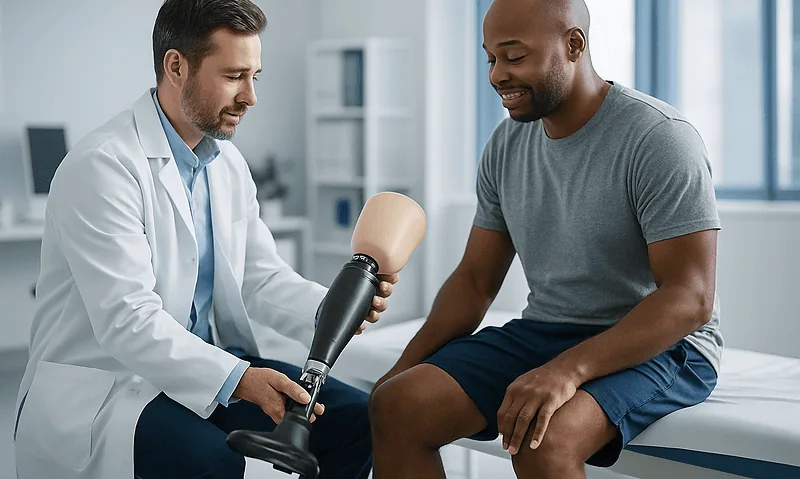
How a Prosthetic Limb Is Designed and Fitted: Casting, Gait Analysis and Adjustments
The prosthetic fitting process usually begins once the surgical wound has healed and swelling has settled. A prosthetist captures the shape of the residual…
How Do You Get Used to a Prosthesis? Wearing Schedules, Skin Checks and Early Training
Getting used to a prosthetic leg is gradual and supervised. Most rehabilitation programs begin with short wearing sessions of an hour or two, a…
Walking, Cycling, Massage, Chiropractic: What Helps Sciatica
Yes, walking is generally good for sciatica. Gentle, regular movement keeps the spine and hips mobile, eases muscle guarding, and is recommended by national…

The First Neurological Rehabilitation Assessment: What the Team Measures and Why It Sets Goals
A neurological rehabilitation assessment is the structured first evaluation a rehabilitation team makes after a stroke, brain or spinal cord injury, or a progressive…
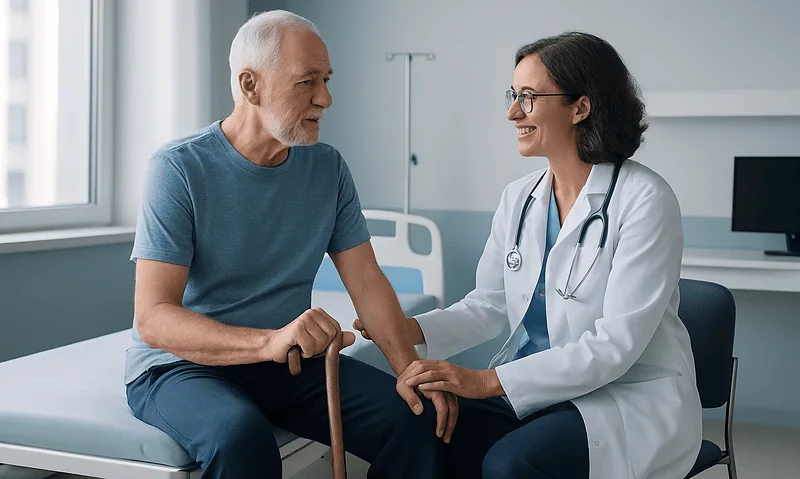
What a Neurological Rehabilitation Program Includes: Movement, Speech, Swallowing and Thinking
A neurological rehabilitation program is coordinated therapy for people whose brain, spinal cord or nerves have been injured by stroke, trauma, multiple sclerosis, Parkinson's…

How Much Does Physical Therapy Cost? Session Pricing Explained
A single private physical therapy session typically costs EUR 30–130 in our guide range for international patients, compared with roughly GBP 45–120 at private…