

When Can Coloring, Heat Styling and Ponytails Resume After a Hair Transplant for Women?

Key Takeaways
- Hair dye acts on the dead hair shaft and the surface of the skin, so the reason to wait after a transplant is healing scalp, not any direct effect on buried follicles.
- Transplanted hairs typically shed two to three weeks after surgery and regrow months later; that shed is expected, not graft failure, according to MedlinePlus.
- No national guideline specifies a dye interval; the common four-to-six-week convention for permanent color is expert consensus built on wound-healing timelines, and bleach usually waits longer.
- Post-surgical numbness can last weeks to months, which is why heat and chemical burns can happen without warning on a healing scalp.
- The NHS advises a 48-hour skin allergy test before every use of permanent or semi-permanent dye, including products you have used for years.
- Tight ponytails, braids and extensions are linked to traction alopecia, which Cleveland Clinic notes can become permanent, and the donor area behind the ears bears most of the tension.
Most surgical teams ask women to wait until the scalp has fully healed before coloring hair after a hair transplant, which usually means several weeks rather than days, because dye chemicals irritate raw skin rather than harm the hair itself. Heat styling is typically resumed once scalp sensation returns, and tight ponytails once donor and recipient areas are pain-free. Your own surgeon's timeline is the one to follow.
The box of color is already in the bathroom cabinet. It has been there since before the procedure, and now, a fortnight out, the part line shows a stripe of grey that no amount of clever brushing hides. For many women, this is the moment the hair transplant stops being a medical event and becomes a daily negotiation with the mirror.
The questions that follow are practical and oddly hard to answer online. Coloring hair after hair transplant surgery, blow-drying it, pulling it back for the school run or a gym session: none of these are covered in the glossy before-and-after galleries. Forum threads offer a dozen conflicting timelines, most of them written by men with cropped hair and different concerns.
What follows is the fuller picture: what is actually healing under your hair, why the scalp and not the strand sets the schedule, and how to have a useful conversation with your surgical team about the styling habits that matter to you.
What actually happens to your scalp in the first weeks after a hair transplant
A hair transplant moves follicular units, which are the tiny natural groupings of one to four hairs that grow together, from a donor area (usually the back or sides of the head) into thinning areas. Whether the surgeon removes a thin strip of skin (follicular unit transplantation, or FUT) or punches out units one by one (follicular unit extraction, or FUE), the result is the same for your purposes: hundreds or thousands of small wounds in the recipient zone and a healing donor site behind them.
Each graft sits in a tiny incision no wider than a pen tip. In the first days it is held only by a clot and the surrounding tissue; within roughly a week to two weeks new blood vessels and skin cells begin to anchor it. MedlinePlus describes the surface picture: small scabs form, the transplanted hairs usually shed between two and three weeks after surgery, and new growth appears months later from the follicle left behind (MedlinePlus). That shedding is expected, not a sign that grafts have failed.
Underneath, the skin is doing quiet, energy-hungry work. The outer barrier is rebuilding, tiny nerves cut during the procedure are regrowing, and swelling can drift down toward the forehead and eyes for a few days. Cleveland Clinic notes that soreness, tightness and numbness are typical early on and that the scalp needs time before ordinary routines resume (Cleveland Clinic).
Hold that image of a scalp made of fresh, thin, partly numb skin. Every styling question in this article, from dye to flat irons to elastics, comes back to it.
Coloring hair after hair transplant: why the wait is about skin, not hair
Here is the reassuring part first. Hair dye does not reach the living follicle. Permanent color works on the hair shaft, which is dead protein, by lifting the cuticle with an alkaline agent and depositing pigment with the help of a peroxide developer. A graft that has taken is buried several millimeters below the surface, well beyond where those chemicals act on the strand.

The problem is the skin in between. Alkaline agents such as ammonia or its substitutes, peroxide developers and dye intermediates like paraphenylenediamine (PPD) are known scalp irritants and, in some people, allergens. The NHS advises a skin allergy test 48 hours before every use of permanent or semi-permanent dye precisely because reactions on intact skin are common enough to matter (NHS). Now imagine the same chemicals sitting on a scalp whose barrier is still rebuilding, with micro-incisions that have only just closed. Irritation, delayed healing, crusting and, in a worst case, infection around grafts are the realistic risks.
Sensation matters too. Because the recipient area is often partly numb for weeks, a woman who would normally rinse early at the first tingle may not feel a chemical burn developing until the damage is done.
So the honest framing is this: the wait is not to protect the hair or even the graft directly. It is to give the skin around thousands of tiny wounds enough time to become ordinary scalp again. Once it has, coloring hair after hair transplant surgery carries roughly the same risks it carried before, plus one extra step that we will come to: telling your colorist what has changed.
When can I start dying my hair after a hair transplant? What the evidence really says
Search for a number and you will find plenty: two weeks, four, six, three months. What you will not find is a randomized trial or a national guideline specifying an interval, because none exists. The advice is expert consensus built on wound-healing physiology, and it is worth being candid about that.
What the mainstream sources do describe is the healing arc. Grafts are considered securely anchored once scabs have fallen away and the surface has re-epithelialized, which MedlinePlus places broadly in the second to third week when the transplanted hairs themselves shed (MedlinePlus). Cleveland Clinic frames full return to normal activity in terms of weeks rather than days, with numbness sometimes lingering longer (Cleveland Clinic). Surgeons then add a safety margin for chemical exposure, which is why many teams land somewhere between four and six weeks for permanent color and longer for bleach.
Treat those figures as a starting point for a conversation, not a permission slip. Your own timeline depends on factors only your team can see:
- how large the session was and how densely grafts were placed
- whether you had FUT with a sutured donor scar or FUE with many small punches
- how quickly your scabs cleared and whether there was any folliculitis
- whether you have a history of eczema, psoriasis or dye reactions
One more honest note. Some surgeons prefer to see the scalp at a follow-up visit before clearing color, rather than giving a date in advance. That is not caution for its own sake; it is the only way to check that the skin, not the calendar, is ready.
Bleach, permanent, semi-permanent, root touch-up and henna: not all color is equal
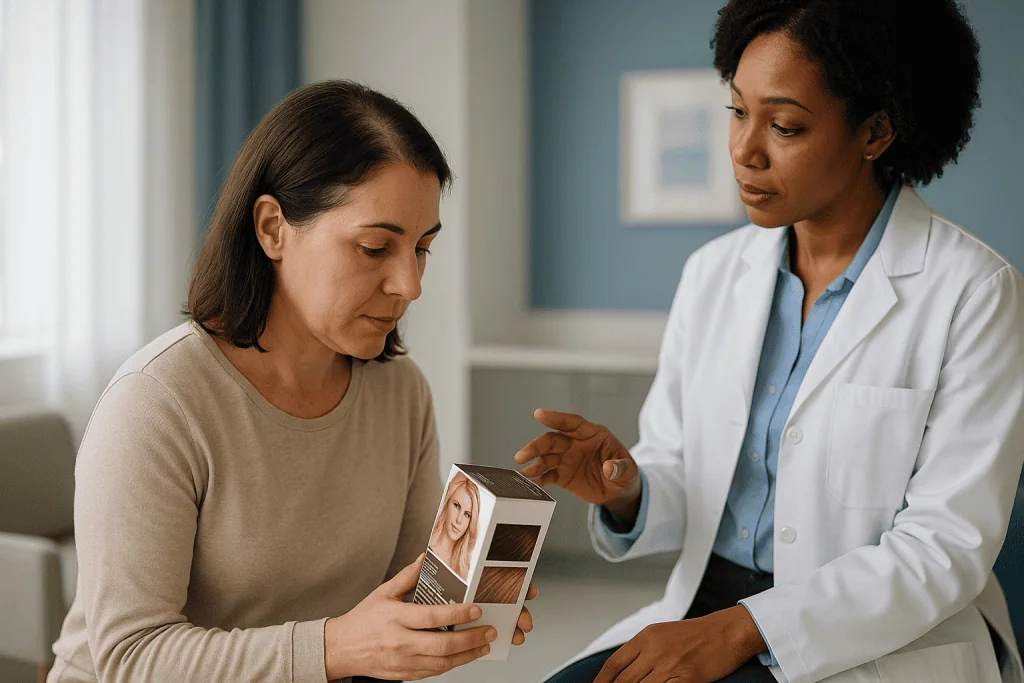
The word “coloring” covers products with very different chemistry, and your team’s answer may reasonably differ for each. The table below summarizes what each type does to the scalp, so you can ask a specific question rather than a vague one.
| Type of color | How it works | Why it matters for a healing scalp | Typical clinical view |
|---|---|---|---|
| Bleach or high-lift color | Strong alkaline plus higher-strength peroxide removes natural pigment | Most irritating; can cause chemical burns even on healthy scalps | Usually the last to be cleared; scalp-avoiding techniques often suggested |
| Permanent dye | Alkaline agent opens cuticle, peroxide activates dye, PPD-type molecules bond inside the shaft | Irritant and potential allergen; requires a 48-hour patch test per NHS guidance | Deferred until scabs are gone and skin looks normal |
| Semi- or demi-permanent | Little or no ammonia; low or no peroxide; pigment coats or partially enters shaft | Gentler but still contains dyes that can sensitize | Often cleared earlier than permanent, still not in the first days |
| Root concealer sprays and powders | Pigment sits on the surface of the hair and skin | No chemical reaction, but must be washed off and can clog fresh incisions | Commonly acceptable once grafts are anchored and the scalp is being washed normally |
| Plant-based henna | Lawsone stains keratin; pure henna has no peroxide | Long contact time; “black henna” mixes may contain PPD | Discuss the specific product; pure henna is not automatically the safe option |
The pattern is consistent. The more a product depends on high pH and oxidizers, the more it stresses the skin, and the later it usually sits in a recovery plan. A colorist who can keep product off the scalp entirely, using foils or a root-shadow technique that stops a few millimeters short of the skin, changes the risk profile considerably, and it is worth asking whether that is an option (NHS).
Heat styling after hair transplant: numbness is the hidden risk
Ask a room of surgeons whether a blow-dryer damages grafts and most will say no, provided the hair is dry, the air is cool to warm, and nothing touches the scalp. The follicle is protected by skin; a hairdryer held at a sensible distance does not cook it. The trouble with heat is subtler than that.
Small sensory nerves in the recipient and donor areas are cut during the procedure. Cleveland Clinic lists numbness among the expected after-effects, and for some women a patch of reduced sensation persists for months (Cleveland Clinic). A flat iron or curling wand that grazes numb skin produces a burn you cannot feel, on skin that is already thin and slow to heal. That is the real reason heat styling is often postponed: not the heat on the hair, but the heat you would not notice on the scalp.
Practical points most teams agree on, once you are cleared:
- Use the lowest heat setting that does the job and keep the dryer moving rather than parked on one spot.
- Keep hot tools well away from the hairline and part for as long as any numbness remains.
- Choose cool or medium air in the first weeks; fresh grafts do not need the extra drying stress.
- Skip heat entirely on any area that still has scabs, crusts or pinkness.
The transplanted hairs will shed in the first weeks regardless of what you do, so early heat styling buys little. Styling the surrounding native hair to cover the area is a different matter, and is usually possible sooner with a dryer on cool air than with hot tools.
Ponytail after hair transplant: tension, the donor area and traction alopecia
For women, this question often matters more than dye. Long hair has to go somewhere during recovery, and the instinct is to pull it back and out of the way. Two separate risks make surgeons hesitate.
The first is mechanical and short-term. A tight elastic drags on the skin behind and above the ears, exactly where an FUT strip scar is healing or where FUE punches are closing. Pulling on a fresh suture line can widen the eventual scar; pulling near recipient grafts in the first days can, in theory, dislodge them. Once grafts are anchored, the recipient area is far less vulnerable, but the donor scar continues to remodel for months.
The second risk is longer-term and often overlooked. Traction alopecia is hair loss caused by repeated pulling from tight hairstyles, and Cleveland Clinic notes that it can become permanent if the tension continues long enough to scar the follicles (Cleveland Clinic). Women who have already invested in a transplant have every reason to protect both native and transplanted follicles from that kind of chronic stress.
In practice, teams tend to allow a loose, low ponytail or a soft scrunchie fairly early, once the recipient site is pain-free and scabs have gone, while asking patients to avoid tight high ponytails, slick-backs, braids and extensions until the donor area has settled. Thereafter, the advice is the same as for any woman who wants to keep her hair: vary your parting, loosen the elastic, and give the hairline days off from tension. A transplant restores hair; it does not make follicles immune to being pulled out.
Hair transplant recovery timeline for women: what the days and weeks usually look like
Timelines vary, and your surgeon’s instructions supersede any general description. With that said, most women recognize this broad arc.
Days 1 to 3. The recipient area is dotted with tiny crusts; the scalp feels tight and may throb. Swelling can migrate to the forehead. Hair is left unwashed or washed only as instructed. No styling of any kind.
Days 4 to 10. Gentle washing usually begins, often by pouring rather than spraying water. Crusts start to lift. Numbness is obvious. Loose hair around the site can be arranged with fingers; no tools, no elastics near the area.
Weeks 2 to 3. Scabs are largely gone and the transplanted hairs begin to shed, which MedlinePlus describes as an expected phase rather than graft loss (MedlinePlus). Many teams relax washing rules and allow a cool dryer held at a distance.
Weeks 4 to 6. This is the window in which many surgeons review the scalp and, if it looks ordinary, discuss color, gentle heat and looser ponytails. It is also when some women feel their lowest, because the shed has happened and regrowth has not.
Months 3 to 4. Fine new hairs usually start to appear. Cleveland Clinic and MedlinePlus both place visible new growth in this range, with fuller results taking most of a year (Cleveland Clinic).
Months 6 to 12. Hair thickens and lengthens. Styling restrictions have generally lifted, with the standing advice about traction and harsh chemicals that applies to everyone.
Nothing in this sequence is a promise. It is simply the shape that healing tends to take, and a way to place your own progress in context.
Who is usually cleared sooner, and who is usually asked to wait
Two women can have the same procedure on the same day and receive different styling advice a month later. That is not inconsistency; it reflects differences in skin and circumstance that a surgeon weighs in the room.
Those often cleared toward the earlier end of the range tend to share features: a smaller session with grafts spaced generously, an FUE donor area with no suture line, crusts that cleared quickly, no sign of folliculitis (inflamed hair follicles that look like small pimples), and no history of scalp disease or dye allergy. If sensation has returned and the scalp looks like the surrounding skin, there is less physiological reason to keep waiting.
Women more often asked to wait include:
- anyone with a healing FUT strip scar, where tension and chemicals both matter for the final scar quality
- those with eczema, seborrheic dermatitis or psoriasis, whose barrier recovers more slowly and reacts more readily
- anyone who has previously reacted to hair dye; the NHS advises against using a product again after any reaction (NHS)
- women with diabetes, smokers, or those on medicines that slow wound healing, in whom small incisions can take longer to close
- anyone whose scalp still shows pinkness, crusting, tenderness or numbness at the review visit
A separate group is asked to think again about the color itself rather than the timing. Women whose hair loss has an inflammatory or scarring component, such as frontal fibrosing alopecia, sometimes find that scalp irritants of any kind are best minimized long term. That is a dermatology conversation, and one worth having before the first post-transplant appointment at the salon.
Washing, brushing and products between now and your first color appointment
The stretch between surgery and clearance for color is when most of the daily decisions happen, and small choices add up. The guiding principle is to keep the scalp clean without friction, and to keep anything sticky or occlusive away from healing incisions.
Washing usually restarts within the first few days on the surgeon’s schedule, with lukewarm water and a mild shampoo diluted in a cup and poured over the area rather than rubbed in. Fingertips replace nails; patting replaces towel-rubbing. As scabs soften and lift over the second and third weeks, gentle washing helps them come away without pulling the hair beneath (MedlinePlus).
Brushing is fine for the lengths early on, provided the brush does not touch the recipient area. A wide-tooth comb from mid-length down keeps long hair manageable while the scalp is off-limits. Detangling sprays should be applied to the ends, not misted over the head.
Products are where women most often go wrong without meaning to. Dry shampoo, strong-hold hairspray, gels and oils all leave residue that can trap bacteria around fresh incisions or clog follicles, which is a recipe for folliculitis. Most teams prefer nothing on the scalp until it is being washed normally and looks healed, and even then to keep styling products on the lengths for a while.
Sun protection is the quiet exception: a soft, loose hat outdoors is usually encouraged from early on, because new skin over the recipient area burns easily and pigment changes in a healing scalp can last.
Covering the in-between: hats, headscarves, root products and part changes
The awkward weeks are real, and pretending otherwise helps no one. Grafts are visible, then they shed, and for a while the area can look sparser than it did before surgery. Women with long hair have more options than men, and it is worth using them thoughtfully.
Loose fabric is the friend of a healing scalp. A soft, unlined cotton or silk headscarf that sits on the hair rather than gripping the skin, or a hat a size looser than usual, hides the area without pressure or friction. Structured hats with tight bands, and anything that rubs the hairline, are usually discouraged until crusts have gone.
Changing the parting is an underrated trick. Moving a part an inch or two to the side, or sweeping a fringe across, often covers a frontal or crown area better than any product, and it costs the scalp nothing. Combing native hair over the site with fingers, once washing has resumed, is generally acceptable.
Root touch-up powders and tinted sprays sit in a middle category. They contain no peroxide and do not react with skin, which makes them gentler than any dye, but they must be washed off daily and can clog fresh incisions. Many teams are comfortable with them once the recipient area is being shampooed normally and shows no open crusts, applied to native hair rather than sprayed onto healing skin. Ask before the first use rather than after.
Extensions, wigs with clips, and tape-ins concentrate exactly the kind of tension linked to traction alopecia (Cleveland Clinic). If a wig is essential for work or confidence, a soft, full wig with a breathable cap is the version to discuss with your team.
What happens 20 years after a hair transplant, and does dye change it?
This question surfaces often, and it deserves a straight answer rather than a slogan. Transplanted follicles are usually taken from the back and sides of the scalp because those areas are relatively resistant to the hormone-driven miniaturization behind pattern hair loss. Mayo Clinic describes the principle: the moved follicles keep the characteristics of where they came from, which is why they generally continue to grow in their new site (Mayo Clinic).
Two caveats shape the long view. First, the native hair around the grafts remains as vulnerable as it ever was, so the pattern can keep evolving and the transplanted area can end up looking like an island unless the underlying loss is managed. Second, follicles age along with the rest of you. Hair everywhere becomes finer and sparser with the decades, transplanted hair included. A transplant restores density; it does not stop time.
Where does dye fit? Repeated coloring damages the hair shaft, making it drier and more prone to breakage, but it does not shorten the life of the follicle beneath. The idea that dye “kills” hair roots is not supported by evidence. What can harm follicles over years is chronic scalp inflammation, whether from allergic reactions to dye, from persistent irritation, or from tight styling. The NHS notes that reactions to permanent dye can be severe in sensitized people, which is the argument for patch testing every time rather than for avoiding color altogether (NHS).
Grey hair, incidentally, arrives on the same schedule for transplanted follicles as for their neighbors. Coloring will be part of the picture for many women for years, which is one more reason to establish scalp-kind habits early.
Medicines you may have been prescribed alongside the transplant
Many women leave surgery with a small collection of prescriptions, and some of them interact with styling plans in ways that are easy to miss. None of this replaces the instructions from the prescribing clinician; it is context for the questions you might want to ask.
Topical minoxidil, a solution or foam that widens small blood vessels and prolongs the growth phase of follicles, is commonly continued or started after a transplant to support native hair (Mayo Clinic). It is applied directly to the scalp, which raises two practical points. Your team will tell you when to restart it on healing skin, and on color day it is sensible to ask whether to skip an application, since layering a solvent-based product under alkaline dye can increase irritation. The scalp shed that sometimes occurs in the first weeks of minoxidil use can also be confused with graft loss; the timing usually distinguishes the two.
Short courses of antibiotics or anti-inflammatory medicines are sometimes given around surgery. If a course is still running, that is a signal the scalp is not yet considered settled, and color is generally best deferred until it is finished and the team has reviewed you.
Women taking oral antiandrogens, sometimes prescribed for female pattern loss, have no direct styling restriction from the medicine itself, but should know that all of these treatments work slowly, over months, and that stopping them typically allows the underlying loss to resume. Any change to a prescribed medicine belongs with the prescriber, not with a colorist or an online forum.
What people often get wrong about coloring, heat and ponytails after a transplant
“Dye will reach the grafts and kill them.” It will not. Color chemistry acts on the dead shaft and the surface skin. The concern is irritation and infection of healing skin, not chemical death of a follicle sitting millimeters below.
“Semi-permanent means safe.” Gentler, yes; irritant-free, no. Semi-permanent products still contain dyes that can sensitize, and the NHS patch-test advice applies to them as well as to permanent color (NHS).
“Once the transplanted hairs shed, the transplant has failed.” Shedding of the transplanted hairs in the second to third week is the expected pattern; the follicle stays and regrows months later (MedlinePlus).
“If I can’t feel it, it isn’t hurting.” Post-surgical numbness is exactly why heat and chemical burns happen without warning. Reduced sensation is a reason for more caution, not less.
“A ponytail is fine as long as it isn’t on the grafts.” Tension is transmitted through the scalp, and the donor area behind the ears carries most of it. Chronic pulling is linked to traction alopecia in transplanted and native hair alike (Cleveland Clinic).
“Natural henna is always the gentle choice.” Pure henna has no peroxide, but it sits on the scalp for hours, and products sold as “black henna” may contain high levels of PPD.
“My friend colored at three weeks and was fine, so I can too.” Perhaps she had a small FUE session and thick, resilient skin. Anecdote is not a healing assessment. The only reliable clearance is from someone who has looked at your scalp.
Questions to ask your care team before you book the salon
A five-minute conversation at a follow-up visit saves weeks of second-guessing. Bring a list; teams generally welcome specific questions over vague ones.
- Looking at my scalp today, is the recipient area fully healed, or is there still pinkness, crusting or numbness you would want to see resolve first?
- Do you give separate timelines for bleach, permanent color, semi-permanent color and root concealers, and where do I currently sit on each?
- Would you prefer my colorist use a scalp-avoiding technique, such as foils or stopping short of the skin, for the first few appointments?
- Should I do a 48-hour patch test again even though I have used this dye for years?
- If I am using a topical treatment, should I skip an application before and after coloring?
- When is warm blow-drying reasonable, and when can hot tools come near the hairline and part?
- What kind of ponytail or updo is acceptable now, and what should I avoid until the donor area has settled?
- How will I recognize the difference between expected shedding and a problem I should report?
- Are there signs of a dye reaction that should bring me back to you rather than to a pharmacy?
- Do you want to see me again before I color, or is a photo enough?
Write down the answers. Recovery advice has a way of blurring by the time you are sitting in a salon chair with a colorist asking what you want done.
When to call your doctor
Most recovery days are uneventful, and most styling mistakes result in nothing worse than a sore scalp for a day. A few signs, though, need a phone call to your surgical team rather than a wait-and-see approach, particularly if they follow a color appointment, heat styling or a tight hairstyle.
- Spreading redness, warmth or swelling around the recipient or donor area, or pus from incisions, which can indicate infection.
- Fever or chills in the days after surgery or after a scalp reaction.
- A burning, weeping or blistering scalp after dye or heat, especially where sensation is reduced.
- Swelling of the face, eyelids or lips, hives, or any difficulty breathing after coloring; the NHS describes these as features of a serious allergic reaction that need urgent medical help (NHS).
- Bleeding from the donor area that does not stop with gentle pressure, or a suture line that appears to be opening.
- Pain that worsens rather than eases after the first few days, or new pain after a hairstyle or styling session.
- Grafts that appear to have been pulled out, with pinpoint bleeding, in the first two weeks.
- Crusting, scaling or itching that persists for weeks after the scalp should have settled.
Expected shedding of the transplanted hairs in the second to third week is not on this list; it is normal and does not need a call (MedlinePlus). When in doubt, a photograph sent to the team is a low-effort way to get a considered answer. The decision about whether to be seen, treated or simply reassured rests with the clinicians who know your scalp, and it is always reasonable to ask.
Frequently asked questions
When can I start dying my hair after a hair transplant?
Usually once your surgeon has confirmed the scalp is fully healed, which for permanent color often means somewhere around four to six weeks, though this is expert convention rather than a guideline figure. Grafts anchor and scabs clear over the first two to three weeks; teams then add a margin before allowing alkaline dyes and peroxide onto the skin. Bleach typically waits longer. Follow your own team’s clearance rather than a forum date.
Can I color my hair after a hair transplant at all, or is it off limits for good?
Yes, coloring is generally possible long term. Once the scalp has healed, dyeing hair after hair transplant surgery carries essentially the same risks as before, because color acts on the hair shaft and skin surface rather than on follicles below. Sensible habits help: a patch test before each use, scalp-avoiding application for the first few appointments, and stopping if the scalp becomes irritated.
What are my chances of dying after a hair transplant?
Many people typing this question mean dyeing their hair, but taken literally the answer is reassuring. A hair transplant is usually an outpatient procedure under local anesthesia, and serious complications are uncommon; the typical risks described by MedlinePlus and Cleveland Clinic are infection, bleeding, scarring, numbness and unnatural-looking results. Your surgeon should review your medical history and explain your individual risks before the procedure.
What happens 20 years after a hair transplant?
Transplanted follicles usually keep growing because they come from areas relatively resistant to pattern hair loss, as Mayo Clinic explains. Two things change the long-term picture: native hair around the grafts can continue to thin, and all hair, transplanted or not, becomes finer with age. Dye does not shorten the life of follicles, though chronic scalp inflammation or tight styling can harm them over time.
How long is the hair transplant recovery timeline before styling feels normal again?
Most women describe a return to near-normal styling within a few months. Scabs clear over about two weeks, the transplanted hairs shed by week three, and many teams review color and gentle heat around four to six weeks. New growth typically appears at three to four months, with fuller results toward a year, according to MedlinePlus and Cleveland Clinic. Restrictions on harsh chemicals and tight tension apply to everyone, transplant or not.
Is heat styling after hair transplant surgery dangerous for the grafts?
Not directly; grafts sit under the skin, and a dryer on cool or warm air held at a distance does not harm them. The real risk is burning numb scalp with hot tools, because sensation is often reduced for weeks or months after surgery. Most teams allow cool air early, warmer air once scabs are gone, and hot irons near the scalp only after sensation returns.
When can I wear a ponytail after hair transplant surgery?
A loose, low ponytail is often acceptable once the recipient area is pain-free and scabs have gone, but tight high ponytails, slicked-back styles, braids and extensions are usually postponed until the donor area has settled. Tension travels through the scalp and concentrates behind the ears, where FUT scars or FUE punches are healing. Long term, chronic pulling is linked to traction alopecia, which can become permanent.
Do I really need a patch test if I have used the same dye for years?
Yes. The NHS advises a skin allergy test 48 hours before every use of permanent or semi-permanent dye, because sensitization can develop after years of trouble-free use. After a transplant the argument is stronger: skin that has recently healed reacts more readily, and a reaction over grafts is harder to manage. Test on the inner elbow or behind the ear as the product directs, not on the healing scalp.
Can I use root touch-up powder or spray while I wait to dye?
Often, once the recipient area is being washed normally and shows no open crusts, and with your team’s agreement. These products contain no peroxide and do not react with skin, which makes them gentler than any dye, but they leave residue that can clog fresh incisions. Apply to native hair rather than spraying onto healing skin, and wash out thoroughly each day.
Will semi-permanent or henna color be allowed sooner than permanent dye?
Sometimes, but not automatically. Semi-permanent dyes skip most of the ammonia and peroxide yet still contain pigments that can irritate or sensitize. Pure henna has no oxidizer but sits on the scalp for hours, and products labeled black henna may contain PPD. Many surgeons clear gentler products a little earlier than permanent color; the safest route is to name the exact product and ask.
References
This article is for general information only and is not a substitute for professional medical advice. Please consult a qualified doctor about your individual situation.

More from the Blog

Is a Sapphire Transplant Painful? Local Anesthesia, Channel Opening and Scalp Soreness
A sapphire transplant is usually not described as painful during the procedure, because the scalp is numbed with local anesthetic before incisions are made.…
Is a Hair Transplant Permanent? What Stays, What Thins, What Ages
Mostly, yes. Transplanted follicles come from areas of the scalp that are genetically resistant to pattern balding, so they usually keep growing for decades,…
Hair Transplant for Women Recovery: Gentle Washing, Sprays and the Shedding Phase Week by Week
Recovery after a hair transplant for women usually follows a predictable arc: swelling and small crusts in the first week, gentle washing and saline…
After a Hair Operation: Normal Swelling vs Signs of Infection Your Clinic Wants to Hear About
After a hair operation, soft, painless swelling of the forehead and around the eyes in the first week is usually part of normal healing.…
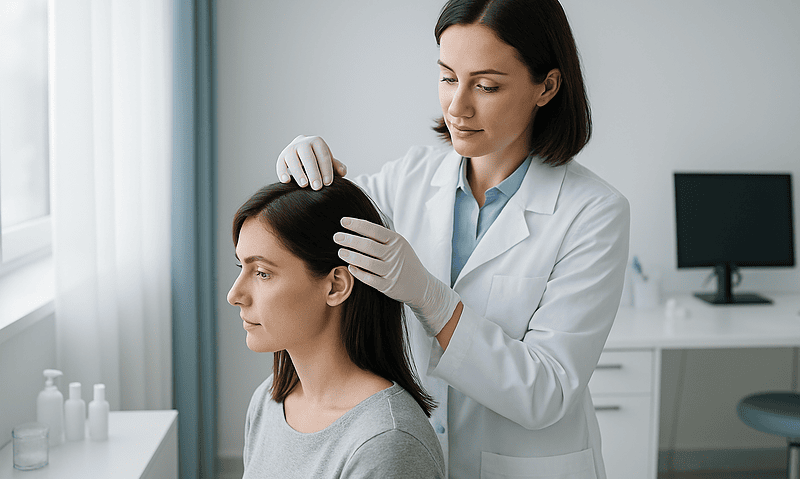
Sapphire Hair Transplant Step by Step: Extraction, Channel Opening and Graft Placement
A sapphire hair transplant is a follicular unit extraction (FUE) procedure in which the recipient incisions are opened with a blade made of synthetic…
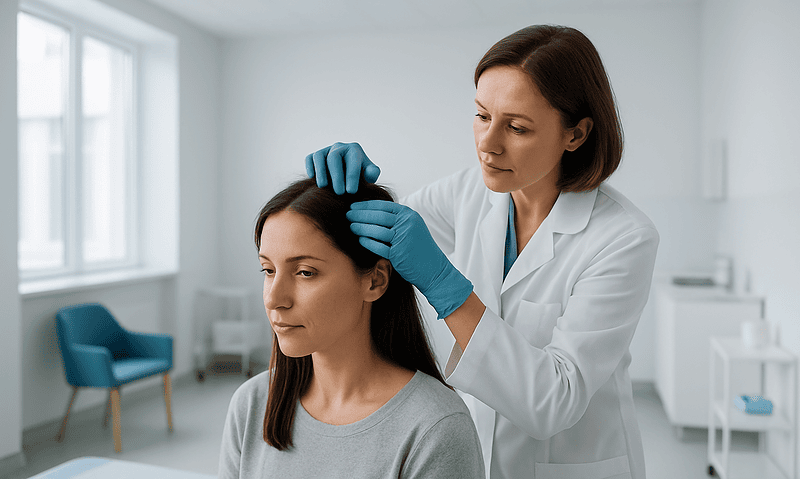
Hair Transplants 10 and 20 Years Later: How Results Age, Honestly
Transplanted hair usually survives for decades because it comes from a donor zone whose follicles resist hormone-driven pattern loss. Ten and twenty years on,…