

When Can You Return to Sport After ACL Reconstruction? Why Tests Decide, Not the Calendar
Key Takeaways
- In a large athlete cohort, those who returned to sport before passing strength and hop tests were reinjured at roughly 38 percent versus under 6 percent for those who passed (Grindem et al.).
- Each month of delay in returning to sport, up to about nine months, was associated with a 51 percent reduction in reinjury rate in the same cohort.
- About 81 percent of people return to some sport after ACL reconstruction, but only around 55 percent return to competitive sport (Ardern et al.).
- Among athletes under 25 who return to sport, roughly 23 percent sustain a second ACL injury, and the opposite knee is injured at least as often as the graft (Wiggins et al.).
- Professional athletes who did not meet six objective discharge criteria before returning had about four times the risk of graft rupture (Kyritsis et al.).
- ACL injury raises the long-term risk of knee osteoarthritis, and current evidence suggests reconstruction restores stability without clearly eliminating that elevated risk (Mayo Clinic).
Return to sport after ACL reconstruction is usually decided by passing objective tests rather than by reaching a date. Most rehabilitation guidance points to at least nine months of structured rehab, plus strength and hop tests showing the operated leg within about 90 percent of the other leg, before pivoting or contact sport. Your surgeon and physical therapist make the final call.
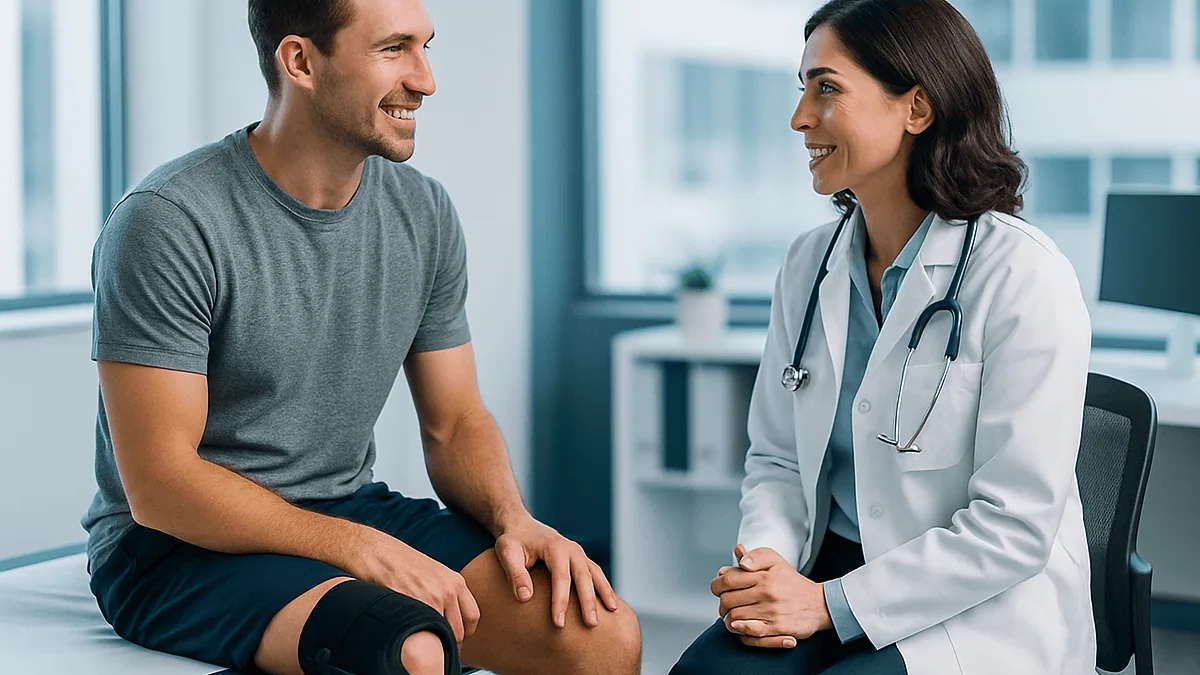
The physical therapist sets down the clipboard and asks the question the athlete has been dreading for eight months: not “How does it feel?” but “Which leg do you trust?” The knee looks fine. The scar has faded to a pale line. The calendar on the phone says the season starts soon. And yet the single-leg hop on the operated side lands a hand’s width shorter than the other one, every time.
That small gap is the whole story of return to sport after ACL reconstruction. The anterior cruciate ligament, the cord of tissue that keeps the shin bone from sliding forward under the thigh bone, has been replaced with a graft. The graft is healing on its own schedule. The muscles around it have their own schedule, too. Neither reads the fixture list.
This article walks through what the evidence actually shows about timing, testing and risk, and why the safest question is not “when” but “what have I proven I can do.”
Why the calendar is a poor judge of return to sport after ACL reconstruction
A date is comforting. It gives an athlete something to aim at and a coach something to plan around. The trouble is that a date measures only one thing, the passage of time, and time is the least specific ingredient in recovery.
Two people can have the same operation on the same day with the same graft. One is a teenager who plays a cutting sport six days a week; the other is a recreational runner in their forties. Their quadriceps strength, balance, movement quality and confidence will diverge within weeks. Clearing both at the same month mark treats them as identical when nothing about their knees, or their sports, is identical.
Research from a large Norwegian and US cohort followed athletes who had ACL reconstruction and tracked who was reinjured after returning to play. Athletes who went back before passing a set of strength and hop tests were reinjured at a rate of roughly 38 percent, compared with under 6 percent among those who passed. Each month that return was delayed, up to the ninth month, was associated with a 51 percent lower reinjury rate (Grindem et al., PubMed). Those findings are the backbone of why modern programs lean on testing.
None of this means time is irrelevant. Graft biology needs time, and no test can speed that up. The point is that time is necessary but not sufficient. A calendar tells you the earliest a knee could be ready. Only measurement can tell you whether this knee is.
The rest of this article treats the two as partners: the months set the floor, and the tests decide whether the floor has been reached.
What actually happens during ACL reconstruction and the healing that follows
Reconstruction does not stitch the torn ligament back together. A ligament is the tough band connecting bone to bone, and a fully torn ACL has poor blood supply and rarely heals in a way that restores stability. Instead the surgeon removes the remnants and threads a graft, a piece of tendon used as a substitute, through tunnels drilled in the shin bone and thigh bone, then fixes it at both ends (Mayo Clinic).
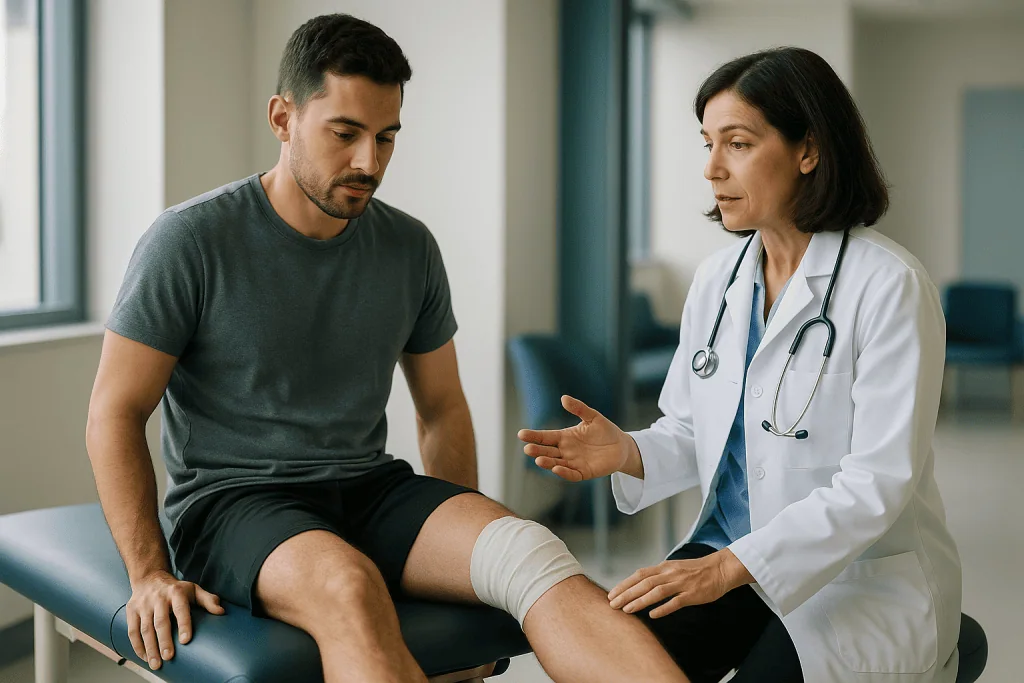
The graft usually comes from the patient’s own body: a strip of the patellar tendon below the kneecap, a portion of the hamstring tendons, or part of the quadriceps tendon. Donor tissue from a tissue bank is another option. Each choice has trade-offs in harvest-site soreness, early strength deficits and rerupture risk, and the surgeon weighs these against the patient’s age, sport and anatomy (Mayo Clinic; MedlinePlus).
The operation is typically done arthroscopically, through small incisions with a camera, and most people go home the same day. What follows inside the knee is the part patients never see. Over the coming months the graft undergoes a process often called ligamentization, in plain terms the tendon gradually remodels so that its cells, fibers and blood supply come to resemble a ligament. During the early part of that remodeling the tissue is thought to lose some of its original strength before slowly regaining it.
Around the graft, the rest of the knee is changing as well. The quadriceps, the large muscle group on the front of the thigh, shrinks quickly after surgery and is slow to recover. Nerve signals that tell the brain where the joint is in space are disrupted. Rehabilitation is largely the work of rebuilding these systems while the graft matures, and a return-to-sport decision has to account for all of them at once.
What week is the ACL graft weakest, and why the honest answer is uncertain
This question ranks high in searches because it feels like it should have a clean answer, a single week to circle in red. The evidence does not support that level of precision.
Most of what is known about graft strength over time comes from animal studies and small numbers of human biopsy samples taken during later procedures. Those studies broadly agree on the shape of the curve: the transplanted tendon is strong on the day of surgery, then goes through a phase in the early months when its cells die back and new blood vessels grow in, and mechanical strength dips before recovering. They disagree on exactly when the low point occurs, and whether the pattern in a sheep or rabbit knee maps neatly onto a human one.
What clinicians take from this is a principle rather than a date. The graft is generally considered most vulnerable during the first few months after surgery, before revascularization is complete, and it does not reach the structural properties of a native ligament for a year or longer. Fixation at the tunnels also needs time for bone to grow around it.
Two practical consequences follow. First, early rehabilitation is designed to load the knee enough to prevent stiffness and muscle loss without stressing the graft in the directions it is weakest, particularly pivoting and forceful hyperextension. Second, feeling good in month three tells you very little about how the graft would tolerate a cut on a wet field, because the structures that would fail are ones you cannot feel.
When someone claims a precise “weakest week” with confidence, it is worth asking where the number came from. A cautious answer, that the early months carry the highest biological vulnerability and that strength continues to build past a year, matches what the evidence actually shows.
How long after ACL surgery can you play sports again? What the guidance and studies say
The short version: most mainstream guidance describes a rehabilitation period of at least nine months before a return to cutting, jumping or contact sport, and a year or more is common for competitive athletes (Mayo Clinic). That range is a typical window from clinical sources, not a promise for any individual.
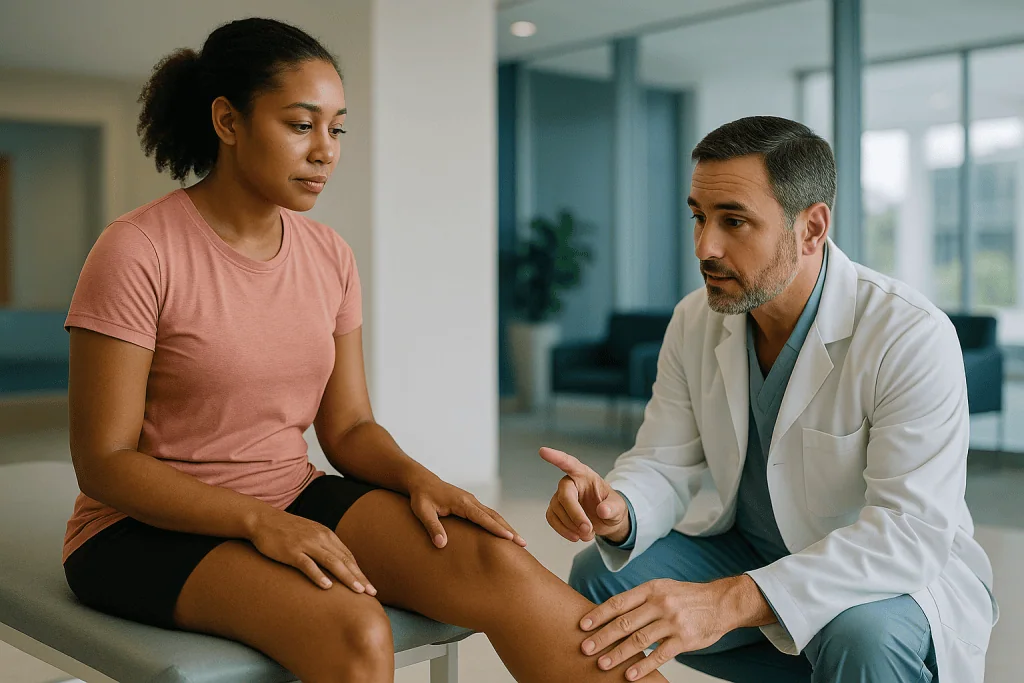
Why nine months? The figure did not come from surgical habit. In the Delaware-Oslo cohort, reinjury risk fell with each additional month of delay until roughly the nine-month mark, after which the benefit of waiting further was no longer measurable in that data (Grindem et al., PubMed). Nine months is therefore better read as a floor below which risk climbs steeply than as a target that guarantees safety.
The same study showed that time and testing work together. Athletes who waited nine months but still failed the strength and hop criteria remained at elevated risk. Athletes who passed the criteria earlier than nine months had a knee that looked ready on paper but a graft that may not have caught up biologically. The lowest reinjury rates belonged to those who satisfied both conditions.
Different sports also sit at different points on the risk curve. Grindem’s group found that athletes returning to level I sports, meaning those with frequent jumping, hard cutting and pivoting such as soccer, basketball and handball, had reinjury rates several times higher than those returning to straight-line or lower-demand activities. Running on a track and returning to a team sport are not the same decision.
The NHS describes knee ligament surgery recovery as taking months, with a gradual, supervised progression back to activity (NHS). Any specific date should come from the surgeon and physical therapist who know the graft type, the surgery details and the test results.
How many people return to sport after ACL surgery?
Fewer than most athletes expect, and the gap between “returned to some sport” and “returned to the same sport at the same level” is wide.
A systematic review and meta-analysis pooling data from thousands of patients reported that about 81 percent returned to some form of sport after ACL reconstruction, roughly 65 percent returned to their pre-injury level, and about 55 percent returned to competitive sport (Ardern et al., PubMed). Those three numbers describe three different outcomes, and it is easy to hear the first and assume it means the third.
Why the drop-off? The review found that younger age, male sex, elite level and a positive psychological outlook were each associated with a higher likelihood of returning to competition. Fear of reinjury and reduced confidence in the knee were among the most commonly cited reasons for stopping, often more prominent than persistent pain or instability. Life also intervenes: a two-year interruption can coincide with graduation, a new job or a shift in priorities that has nothing to do with the knee.
It also helps to remember that “did not return” is not the same as “failed.” Some people make a considered choice to move to a lower-impact sport after weighing their personal risk of a second injury. Others return, find the joy is gone, and stop. The statistics count both the same way.
For someone planning their own path, the useful message is that the physical rehabilitation is only part of the work. Addressing confidence, gradually re-exposing the knee to sport-specific situations, and having candid conversations with the care team about goals all shape whether a person ends up in the 55 percent, the 81 percent, or somewhere they are happier with.
What does return to sport testing after ACL reconstruction actually involve?
A test battery is simply a set of measurements done together, and the ones used after ACL reconstruction are designed to catch weaknesses that feel invisible in daily life. Most programs compare the operated leg with the uninjured leg and express the result as a limb symmetry index, the operated side’s score as a percentage of the other side’s.
The Delaware-Oslo criteria that produced the reinjury findings above used quadriceps strength testing plus four single-leg hop tests, with a passing standard of at least 90 percent symmetry on each, alongside a patient-reported knee function questionnaire (Grindem et al., PubMed). Many clinics add hamstring strength, movement-quality assessments of landing and cutting, and a psychological readiness questionnaire.
| Test | What it measures | Commonly used benchmark |
|---|---|---|
| Isokinetic or isometric quadriceps strength | Force the front thigh muscle can produce at set speeds or positions | At least 90 percent of the uninjured leg |
| Single hop for distance | Explosive power and confidence to land on one leg | At least 90 percent symmetry |
| Triple and crossover hops | Repeated loading, control of side-to-side movement | At least 90 percent symmetry |
| Six-meter timed hop | Speed of repeated single-leg propulsion | At least 90 percent symmetry |
| Movement quality screen | Knee position, trunk control and landing mechanics on video | Clinician judgment, no universal cutoff |
| Psychological readiness questionnaire | Confidence, fear of reinjury, emotional readiness | Clinic-specific thresholds |
One caveat matters. The uninjured leg also weakens during months of reduced activity, so a 90 percent match to a deconditioned limb can flatter the operated side. Some clinicians compare against pre-injury values or population norms where available. The numbers are a tool for the treating team, not a scoreboard for self-clearance.
Who is usually cleared sooner, and who is usually asked to wait
Clearance is individual, but patterns emerge from the research on who gets hurt again.
Age is the strongest single factor. A meta-analysis of younger athletes found that about 15 percent overall sustained a second ACL injury, either to the graft or to the other knee, and among those under 25 who returned to sport the figure was roughly 23 percent (Wiggins et al., PubMed). Teenagers and young adults heading back to pivoting sports are therefore the group most often asked to satisfy every criterion, and to wait the full nine months or more, before clearance. Their bodies heal well; their exposure to risky movements is simply enormous.
Sport type comes next. Someone returning to cycling, swimming or straight-line running is asked to demonstrate strength and control but faces a fraction of the pivoting load of a soccer or basketball player. Clinicians commonly allow graded return to these lower-demand activities earlier in the timeline, while holding cutting and contact until the full battery is passed.
People with additional injuries treated at the same time, such as meniscus repair (the meniscus is the cartilage cushion inside the knee) or cartilage procedures, often follow slower protocols in the early weeks because the repaired tissue has its own healing needs. Revision surgery, meaning a second reconstruction after a failed first one, generally carries more caution as well.
Persistent deficits are their own reason to wait. A quadriceps that remains well below the other side, a knee that still swells after training, or a landing pattern where the knee collapses inward are all findings that keep an athlete in rehabilitation regardless of the month. On the other side, the recreational adult with symmetric strength, no swelling and modest goals may be released to their chosen activity without ever needing the full sports battery. The treating team matches the standard to the demand.
ACL reconstruction recovery timeline: what the weeks and months usually look like
Protocols vary by surgeon and graft, so treat the following as a typical shape rather than a schedule to hold anyone to.
The first two weeks are about swelling, wound healing and waking the quadriceps up. Regaining the ability to fully straighten the knee is a priority, because a knee that cannot extend fully tends to stay that way. Many people walk with crutches for a period, then wean off as the surgeon allows (MedlinePlus; NHS).
Weeks two to six shift toward range of motion, controlled weight-bearing exercises and early balance work. Stationary cycling often begins once bending allows. Pain and swelling guide progression more than dates do.
From roughly six weeks to three months the emphasis moves to strength: squats, step-ups, leg presses and hip work, progressing as symmetry improves. This is also the period when the graft is thought to be biologically vulnerable, so pivoting remains off the table even though the knee may feel good.
Three to six months brings straight-line jogging for many people, once strength and swelling criteria are met, followed by plyometrics, the hopping and bounding drills that rebuild explosive power. Landing mechanics are filmed and corrected.
Six to nine months is agility: planned cutting, then unplanned reaction drills, then sport-specific movements at increasing speed. Test batteries are typically run during this window, and repeated until passed.
Nine months onward, if tests are passed, athletes often begin non-contact training with their team, progressing to full contact and competition only with clearance. Mayo Clinic notes that this phase can take a year or more for many athletes (Mayo Clinic). Setbacks, a swollen knee after a hard session or a plateau in strength, are common and usually mean stepping back a stage rather than starting over.
ACL reinjury rate after return: what the numbers say and what drives them
Reinjury is the outcome everyone fears, and the numbers deserve to be stated plainly.
In the pooled analysis of younger athletes, roughly one in seven suffered a second ACL injury, and among those under 25 who returned to sport the figure approached one in four (Wiggins et al., PubMed). Notably, the second injury was more often to the opposite knee than to the graft itself. That finding surprises many patients, and it points to why rehabilitation focuses on the whole body: the movement patterns and strength deficits that contributed to the first tear do not disappear on their own.
Several factors consistently raise or lower the risk in the research. Passing objective criteria before return was associated with a large reduction in reinjury in the Delaware-Oslo cohort, alongside waiting at least nine months (Grindem et al., PubMed). A separate study of professional athletes found that those who did not meet a set of six discharge criteria before return had about four times the risk of graft rupture compared with those who did (Kyritsis et al., PubMed). Higher-demand sports, younger age and returning to the same pivoting sport all pushed risk upward.
Graft choice also plays a role, with some evidence of differences in rerupture between graft types, though the effect is smaller than that of age and sport, and it is a decision the surgeon makes with the patient before the operation.
Two honest points close this section. First, no combination of waiting and testing brings the risk to zero; sport itself is the exposure. Second, the risk figures come largely from young, active cohorts, and a recreational adult returning to lower-demand activity is unlikely to face the same odds. Ask the care team what the evidence suggests for someone with your age, sport and test results.
The part rehab charts leave out: fear of reinjury and trusting the knee
Ask former patients why they did not go back, and the knee itself is often not the reason. In the return-to-sport meta-analysis, fear of reinjury was among the most frequently reported barriers, ranking alongside or above physical symptoms (Ardern et al., PubMed).
This is not weakness of character. The brain has learned, in a single violent moment, that a particular movement leads to catastrophe. Months later, the body may be strong enough, but the nervous system still braces at the sight of an opponent closing in. Bracing changes movement: the athlete lands stiffer, keeps weight on the other leg, hesitates in the half-second where a cut should happen. Hesitation on a field is itself a risk factor for injury.
Clinicians increasingly measure this. Psychological readiness questionnaires ask about confidence in the knee, emotions around returning and how much the injury still occupies the mind. Low scores are associated in the research with lower rates of return to the pre-injury level, and some programs treat readiness as a criterion alongside strength and hop symmetry.
What helps, according to the rehabilitation literature, is graded exposure: reintroducing the feared movements slowly, in controlled settings, at increasing speed and unpredictability, so the brain accumulates evidence that the knee holds. Watching one’s own landing on video, seeing objective test numbers improve, and returning to team training in non-contact roles all feed that evidence. Where fear is severe or persistent, referral to a sports psychologist is a reasonable step, and it is worth asking the care team about it.
The athlete from the opening scene, hopping a hand’s width shorter on one side, may have a strength deficit. She may also have a confidence deficit that shows up as a shorter hop. The battery is designed to catch both, and both are treatable.
What happens 20 years after ACL surgery?
A search for this question reflects a reasonable worry: is the knee that had a reconstruction at 19 going to be a problem at 40?
The most consistent long-term finding is an increased risk of osteoarthritis, the wear-related joint condition in which cartilage thins and the joint becomes stiff and painful. People who have had an ACL injury carry a higher risk of knee osteoarthritis later in life, and current evidence suggests reconstruction restores stability but does not clearly eliminate that elevated risk (Mayo Clinic). The initial injury often damages cartilage and bone at the moment of tearing, and meniscus injuries that accompany many ACL tears add to the long-term load on the joint.
That sounds grim, so context matters. Elevated risk is a population statement, not a personal forecast. Many people two decades out are active, pain-free and running or cycling regularly. The factors that appear to influence the long-term picture include whether the meniscus was preserved, body weight over the years, the number of subsequent knee injuries, and ongoing muscle strength around the joint. Some of these are within a person’s control.
Long-term studies also show that a proportion of grafts stretch or fail over decades, and that the opposite knee remains at risk for as long as a person keeps playing pivoting sport. Continued strength training and neuromuscular work, the balance and landing drills learned in rehabilitation, are commonly recommended as lifelong habits rather than a phase to finish.
Where numbers are quoted for long-term arthritis rates, they vary widely between studies depending on how arthritis was defined, from X-ray changes to symptoms, and on how long people were followed. Anyone weighing these figures should ask the care team which definition is being used and how it applies to their own knee.
What people often get wrong about return to sport after ACL reconstruction
Myths around this topic are stubborn because each contains a grain of truth. Here are the ones that cause the most harm, with what the evidence actually shows.
“Six months is the standard.” It was once a common target, and some athletes are still told it. The cohort data associate returns before nine months with markedly higher reinjury rates, and time is only one of two conditions; passing objective tests is the other (Grindem et al., PubMed).
“If it feels strong, it is strong.” The graft has no pain receptors that report its tensile strength, and quadriceps deficits of 20 percent or more are common in people who feel fine walking, climbing stairs and even jogging. Measurement exists precisely because feel is unreliable.
“The graft is the thing most likely to tear again.” In young athletes the opposite knee is injured at least as often as the reconstructed one (Wiggins et al., PubMed). Rehabilitation of the whole body, not just the operated leg, is the response.
“A brace makes it safe to go back early.” Evidence that functional braces reduce reinjury after reconstruction is weak and inconsistent. Some clinicians prescribe them for confidence or specific situations, but no brace substitutes for strength and time.
“Passing the tests means zero risk.” Passing shifts the odds substantially in the data, but sport carries irreducible risk, and the person who passed still needs ongoing training and a gradual reintroduction to competition.
“Professional athletes come back faster, so it must be possible.” Elite athletes rehabilitate as a full-time job with daily supervision, and even so a meaningful share of them are reinjured or never regain their previous level. Their timelines are not a template for someone training after work.
Questions to ask your care team before you are cleared
A clearance conversation goes better when the athlete arrives with specific questions. The following are ones surgeons and physical therapists generally welcome, because they show the patient understands what the decision rests on.
- Which tests will you use to decide I am ready, and what scores do you want to see on each? If the answer is vague, ask whether strength and hop symmetry will be measured against my other leg or against a norm.
- How does my graft type affect the timeline you have in mind, and are there movements you want me to hold off on longer because of it?
- Were any other structures repaired during my surgery, such as the meniscus or cartilage, and does that change any part of the plan?
- Given my age and my sport, what does the evidence suggest my risk of a second ACL injury might be, and what could lower it?
- Will you assess my psychological readiness as well as my physical readiness, and what happens if my confidence lags behind my strength?
- What does a graded return to my sport look like after clearance: how many sessions of non-contact training before full contact, and who decides each step?
- What signs during the first weeks back should make me stop and contact you?
- How should my strength and neuromuscular training continue after I am playing again, and for how long?
- If I am not ready by the time my season starts, what are the realistic options, and what do you see as the risks of each?
The goal is not to negotiate an earlier date. It is to understand the reasoning well enough that a decision to wait, if that is what comes, feels like a shared plan rather than a verdict. Athletes who understand why they are waiting tend to use the extra time better.
When to call your doctor: red flags during rehab and after returning to sport
Most of the rehabilitation journey involves ordinary soreness, occasional swelling after a hard session and the slow frustration of a plateau. Certain signs are different and should prompt a same-day call to the surgical team or, in some cases, urgent care.
In the early weeks after surgery, seek prompt medical attention for a fever with a hot, red or increasingly painful knee, drainage or opening of the wound, or calf pain, swelling and warmth in one leg, which can indicate a blood clot (a deep vein thrombosis). Chest pain or sudden shortness of breath after knee surgery is an emergency and warrants immediate emergency services (MedlinePlus; NHS).
At any stage, contact the care team if the knee gives way or buckles under you, if it locks and will not straighten or bend, if you feel or hear a pop followed by rapid swelling, or if swelling that had settled returns and persists for more than a few days despite rest. A knee that loses range of motion it previously had, or a sudden increase in pain that does not match the activity done, also deserves assessment rather than waiting for the next scheduled visit.
After clearance and return to sport, the same rules apply. A pivot that ends in a pop, a sensation of the knee shifting, or new swelling the morning after a game should be reported before the next session. Reinjury to either knee is more common in the first year back than later, and early evaluation gives the treating team the most options.
Numbness or tingling that spreads, a foot that becomes pale or cold, or an inability to bear any weight are reasons for urgent care rather than a message left with the clinic.
When in doubt, the threshold for calling is low. The team would rather hear about a false alarm than learn about a real problem weeks later.
Frequently asked questions
How long after ACL surgery can you play sports again?
Most mainstream guidance points to at least nine months of structured rehabilitation before returning to cutting, jumping or contact sports, and a year or more is common for competitive athletes. Cohort research links returns before nine months with sharply higher reinjury rates. The actual date depends on passing strength and hop tests and on your surgeon’s and physical therapist’s judgment, not on the month alone.
How many people return to sport after ACL surgery?
A systematic review found about 81 percent returned to some sport, roughly 65 percent to their pre-injury level, and about 55 percent to competitive sport. Fear of reinjury and reduced confidence were among the most common reasons for not returning, often more than ongoing pain or instability. Younger age, elite level and a positive outlook were associated with higher return rates.
What week is the ACL graft weakest?
There is no precisely established week. Animal and small human studies suggest the graft loses strength in the early months after surgery, while it is being revascularized and remodeled, before gradually regaining it over a year or more. Clinicians treat the first few months as the period of highest biological vulnerability, which is why pivoting is restricted even when the knee feels fine.
What happens 20 years after ACL surgery?
The most consistent long-term finding is a higher risk of knee osteoarthritis compared with uninjured knees, partly because the original injury often damages cartilage and meniscus. Many people remain active and comfortable decades later. Preserving the meniscus, maintaining leg strength, managing body weight and avoiding further knee injuries are the factors most often linked to better long-term outcomes.
What does return to sport testing after ACL reconstruction include?
Most batteries measure quadriceps strength and several single-leg hop tests, comparing the operated leg with the other and commonly requiring at least 90 percent symmetry on each. Many programs add hamstring strength, video analysis of landing and cutting mechanics, and a psychological readiness questionnaire. The results guide the treating team; they are not a pass mark for self-clearance.
What is the ACL reinjury rate after return to sport?
In pooled data on younger athletes, about 15 percent overall suffered a second ACL injury, rising to roughly 23 percent among those under 25 who returned to sport. The opposite knee was injured at least as often as the graft. Passing objective tests and waiting at least nine months were associated with substantially lower rates in cohort research.
Does a knee brace let you return to sport sooner?
Evidence that functional braces reduce reinjury after ACL reconstruction is weak and inconsistent. Some clinicians prescribe them for confidence or particular situations, but a brace does not change graft maturity or muscle strength, which are the factors most strongly linked to safe return. Any decision about bracing should come from the treating team.
What does an ACL reconstruction recovery timeline usually look like?
Typically, the first weeks focus on swelling, full extension and quadriceps activation; months two and three on strength; months three to six on jogging and plyometrics; months six to nine on agility and sport-specific drills; and nine months onward on graded return to training if tests are passed. Protocols vary by surgeon and graft, and setbacks usually mean stepping back a stage.
Why is nine months the number that keeps coming up?
In a large cohort study, each month of delayed return up to nine months was associated with a 51 percent lower reinjury rate, after which no further measurable benefit from waiting was seen in that data. Nine months is best understood as a floor combined with passing objective tests, not a guarantee of readiness at that point.
Can you return to lower-impact sports earlier than pivoting sports?
Often, yes. Activities such as cycling, swimming and straight-line running place far less rotational load on the graft than cutting sports, and clinicians commonly allow graded return to them earlier, provided strength and swelling criteria are met. Athletes returning to high-demand pivoting sports had reinjury rates several times higher in cohort research, so those returns are held to the full test battery.
This article is for general information only and is not a substitute for professional medical advice. Please consult a qualified doctor about your individual situation.

More from the Blog
Why Surgeons Ask You to Stop Smoking Before Rotator Cuff Repair: Tendon Healing Explained
Surgeons ask patients to stop smoking before rotator cuff surgery because nicotine narrows small blood vessels and carbon monoxide displaces oxygen, starving the repaired…
Flying Home After Cruciate Ligament Surgery: Clot Precautions, Bracing and Timing
Most people can fly after ACL surgery once the surgical team has confirmed that swelling is settling, the wound is healing and clot risk…
How Arthroscopy Works: The Camera, the Portals and What Surgeons Can Fix Through Keyholes
Arthroscopy works by passing a pencil-width tube with a light and a video camera into a joint through an incision a few millimetres long,…
Soft Tissue Injury Healing Stages: Why Sprains, Strains and Bruises Heal at Different Rates
Soft tissue injury healing time depends on what was damaged and how well it is supplied with blood. Bruises usually fade within about two…
What Happens Years After Meniscus Surgery? Cartilage Wear and Realistic Expectations
Years after meniscus surgery, the knee's future depends mainly on how much meniscus tissue was removed and how healthy the cartilage was beforehand. Partial…
Does a Sprain or Strain Need an MRI? When Imaging Adds to a Soft Tissue Injury Exam
Most sprains and strains do not need an MRI. Clinicians usually diagnose them by asking how the injury happened and examining the joint or…