

When Is Graft-Versus-Host Disease Suspected? Fever, Rash and Diarrhea After Transplant
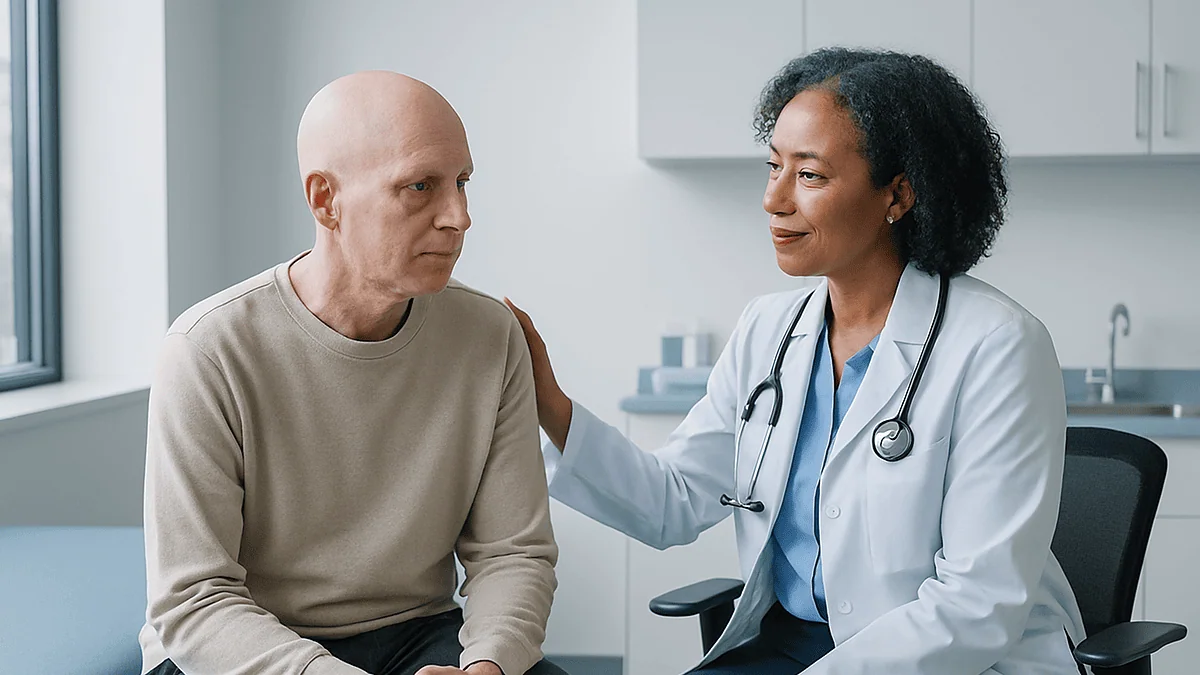
Key Takeaways
- Graft-versus-host disease happens only after a transplant from another person; people who received their own stored stem cells do not develop true GVHD.
- Acute GVHD most often appears within the first 100 days and targets three organs: skin (palms, soles, ears, neck), gut (watery diarrhea, nausea) and liver (rising bilirubin on blood tests).
- Cleveland Clinic estimates roughly half of donor-transplant recipients develop some degree of GVHD, but most cases are mild to moderate and skin-limited disease is the most frequent form.
- Fever after transplant is treated as a possible infection first, with cultures and antibiotics, even when GVHD is also suspected.
- A skin or gut biopsy is often needed because drug reactions, viral rashes and bowel infections can look identical to early GVHD.
- Chronic GVHD can surface a year or more after transplant with dry eyes, a sore mouth, tight skin or breathlessness, so symptom reporting remains important long after the hundred-day mark.
Graft-versus-host disease is suspected when someone who has received donor stem cells develops a new rash, persistent watery diarrhea, nausea, or rising liver tests, most often within the first 100 days after transplant. Fever alone points first to infection, so transplant teams check cultures, review medicines, and often take a small skin or gut biopsy before confirming the diagnosis. Any new symptom after transplant deserves a same-day call.
It is day 38. The counts have come back, the hospital bracelet is finally off, and a man who has spent a month in a single room is home, eating toast at his own kitchen table. His wife notices it first: a faint pink flush across the back of his neck and behind his ears, the color of a mild sunburn on someone who has not seen the sun in weeks. By evening his palms itch. He tells himself it is the new soap.
Moments like this are exactly why transplant teams drill patients and caregivers on gvhd symptoms after transplant before discharge. The signs can be quiet at first. A rash that could be a drug reaction, a loose stool that could be the antibiotics, a queasy morning that could be anything. The trick is not to diagnose it yourself; it is to know which changes earn a phone call today rather than a wait-and-see weekend.
This explainer walks through what graft-versus-host disease actually is, why donor cells turn on their new home, what the classic early signs look like, and how doctors separate it from the infections and medication effects that mimic it.
What actually happens in graft-versus-host disease
Graft-versus-host disease, usually shortened to GVHD, is a condition in which immune cells from a donor recognize the recipient’s body as foreign and attack it. The name is deliberate. In organ transplants the worry runs the other way: the patient’s immune system rejects the new kidney or heart. After a stem cell or bone marrow transplant from another person, the transplanted cells become the patient’s immune system, and it is that new immune system that can do the rejecting.
The key players are T cells, a type of white blood cell whose job is to inspect other cells and destroy anything that looks like an invader. T cells identify “self” using surface markers called HLA proteins, a set of molecular name tags inherited from both parents. Even a well-matched donor shares only the major tags. Minor differences remain, and donor T cells can read those differences as a threat.
Three tissues bear the brunt: skin, the lining of the gut, and the liver. Each of them is busy with rapidly dividing cells and sits at a boundary with the outside world, which makes them heavily patrolled by the immune system. The chemotherapy or radiation given before transplant, known as conditioning, also injures those linings, releasing chemical alarm signals that switch on the arriving donor cells. MedlinePlus describes this as the donor cells “attacking” the recipient’s tissues, and that is close to literal.
There is an uncomfortable twist. The same donor T cells that cause GVHD also hunt down any leukemia or lymphoma cells that survived treatment, an effect doctors call graft-versus-tumor. Transplant medicine spends much of its effort trying to keep enough of the second effect while limiting the first. That balance, not a switch, is what your team is managing when they adjust immune-suppressing medicines after transplant.
What causes GVHD after a transplant, and why matching is not enough
The single biggest driver is genetic distance between donor and recipient. HLA typing compares the main immune name tags, and the closer the match, the lower the risk. A fully matched sibling is the classic best case. An unrelated donor matched on the same markers is close behind. Half-matched relatives, often a parent or child, and mismatched unrelated donors carry more risk, though newer approaches to preventing GVHD have narrowed that gap considerably.
Matching, however, only covers the tags laboratories can test. Hundreds of “minor” antigens, small protein fragments that differ between any two people, are invisible to routine typing. This is why identical-twin transplants essentially never cause GVHD while a perfectly matched sibling transplant still can. Cleveland Clinic and MedlinePlus both list donor mismatch as the leading risk factor, but neither presents matching as a guarantee.
Several other factors tilt the odds:
- Older age of the recipient or donor, because tissue repair is slower and immune regulation is less flexible.
- Sex mismatch, particularly a female donor who has been pregnant giving cells to a male recipient, since pregnancy can prime her immune cells against male-specific proteins.
- Stem cell source. Cells collected from circulating blood contain more T cells than cells drawn from bone marrow or cord blood, which tends to raise the risk of chronic GVHD in particular.
- Intensity of conditioning, because more tissue injury means more alarm signals.
- Prior acute GVHD, the strongest predictor of the chronic form.
None of these is a choice made lightly. Donor selection weighs disease urgency, availability, and the desired graft-versus-tumor effect alongside GVHD risk. If you are trying to understand why a particular donor was chosen for you or a family member, that is a fair and common question to bring to the transplant physician.
How common is GVHD after transplant?
More common than most patients expect, and far less uniformly severe than the word “disease” suggests. Cleveland Clinic’s patient overview estimates that roughly half of people who receive donor stem cells develop some degree of GVHD. Most of those cases are mild to moderate and respond to treatment; a smaller share are severe. The exact figure in any one program depends heavily on donor type, the age mix of patients, and which preventive strategy is used, which is why quoted numbers vary so much between sources.
Two things distort how patients hear these statistics. The first is that GVHD is graded, and a grade 1 skin rash and a grade 4 gut illness are both counted under the same heading. Someone told “half of patients get GVHD” may picture the worst version. In practice, limited skin involvement that settles with topical treatment is the most frequent presentation.
The second is that the number applies only to allogeneic transplants, meaning transplants from another person. Autologous transplants, where a patient’s own stem cells are collected, stored and returned after high-dose chemotherapy, do not carry a meaningful GVHD risk because there is no genetic difference to fight over. The NHS makes this distinction clearly when it lists GVHD among the risks of stem cell transplantation. If your transplant used your own cells, a new rash still deserves a call, but GVHD is not the first thing your team will suspect.
Chronic GVHD, the longer-running form that emerges months later, has its own frequency curve and depends even more on stem cell source and prior acute disease. Your team can give you a personalized sense of risk based on your specific donor and regimen, and that conversation is worth having before discharge rather than after the first symptom.
GVHD symptoms after transplant: the three classic early signs
Acute GVHD has a recognizable trio. Not everyone gets all three, and the order varies, but transplant teams are trained to think of skin, gut, and liver together whenever one of them changes.
Skin is usually first and most visible. The rash tends to begin on the palms, soles, ears, neck and upper trunk, areas that are sun-exposed or were irritated by conditioning. It can be faint pink or a deeper red, sometimes itchy, sometimes painful, occasionally with a burning quality that patients compare to sunburn. MedlinePlus lists rash, itching and skin redness as the hallmark skin findings.
Gut involvement announces itself as watery diarrhea, often large in volume, sometimes with cramping and an urgent need to go. Nausea, vomiting and a sudden loss of appetite are part of the same picture and are easy to blame on medicines or the lingering effects of chemotherapy. Blood in the stool is a sign of deeper lining injury and is always urgent.
Liver involvement is the quietest of the three. It typically shows up on routine blood tests as a rising bilirubin, the yellow pigment the liver normally clears, before a patient notices anything. Yellowing of the eyes or skin, dark urine and pale stools come later. Because liver tests are drawn frequently after transplant, this is often caught in the lab rather than at home.
Fever is conspicuously not on the classic list. It can accompany GVHD, but in the early weeks after transplant a fever is treated as a possible infection until proven otherwise, and that assumption saves lives. The practical takeaway is simple: a new rash, new or worsening diarrhea, new nausea, or any yellow tint should be reported the same day, even if it seems minor and even if you feel otherwise well.
Acute vs chronic GVHD: two illnesses sharing one name
Doctors used to separate the two forms by the calendar: acute before day 100, chronic after. That line is still a useful rule of thumb, and MedlinePlus keeps it, but the modern definition rests more on what the disease looks like than on when it appears. Acute GVHD is an inflammatory attack on skin, gut and liver. Chronic GVHD behaves more like an autoimmune connective-tissue disorder, with scarring and dryness that can affect almost any organ. The two can overlap, and one can follow the other.
| Feature | Acute GVHD | Chronic GVHD |
|---|---|---|
| Typical onset | Within the first 100 days, often around engraftment | Usually beyond 3 months, sometimes a year or more later |
| Main organs | Skin, gut, liver | Skin, mouth, eyes, liver, lungs, joints, genital tissue and more |
| Skin picture | Red, itchy or burning rash; blistering when severe | Dry, tight, thickened or discolored skin; hair and nail changes |
| Gut picture | Watery diarrhea, nausea, cramping | Weight loss, difficulty swallowing, early fullness |
| Other clues | Rising bilirubin on blood tests | Dry gritty eyes, mouth ulcers, joint stiffness, shortness of breath |
| Course | Days to weeks; can escalate quickly | Months to years; slow, relapsing |
Why does the distinction matter to a patient? Because the warning signs you watch for change over time. In the first three months the questions are about rash, stool and appetite. Later, the questions shift: Are your eyes dry and gritty? Is your mouth sore or sensitive to spicy food? Does your skin feel tight when you reach overhead? Are you more breathless on the stairs than a month ago? Chronic GVHD is slower and sneakier, and patients often adapt to symptoms without reporting them. Your follow-up visits are structured to ask these questions on purpose.
GVHD rash after transplant: what it typically looks like
Patients often want a photograph to compare against. Pictures help less than you might think, because the rash of early GVHD is a chameleon. Its texture and location tell doctors more than its color, and the same rash can look different on lighter and darker skin.
On lighter skin the classic early appearance is a blotchy pink-to-red flush, sometimes with slightly raised bumps, that can be blanched by pressing on it. On darker skin the redness is harder to see; the rash may look purplish, gray-brown or simply darker than the surrounding skin, and texture and warmth become the more reliable clues. Itching or a burning sensation without much visible change is a legitimate reason to call.
Location is the strongest hint. Palms and soles are involved early and often, which is unusual for most other rashes. The ears, back of the neck, and the upper chest and shoulders follow. When the rash spreads across the trunk and limbs, or when the skin begins to blister or peel, it has moved into a more serious grade and needs urgent assessment.
Several look-alikes complicate the picture, and this is why a biopsy is often requested:
- Drug reactions, especially to antibiotics started for fever, which can produce an almost identical rash within a similar window.
- Engraftment syndrome, a burst of inflammation that occurs as new white cells first appear, bringing fever and rash together.
- Viral rashes, since reactivation of dormant viruses is common when immunity is low.
- Chemotherapy and radiation skin effects, which peak in the first two or three weeks.
A skin biopsy, a small sample taken under local numbing and examined under a microscope, is usually quick and tolerated well. It is not always definitive, because early GVHD and drug rash can look similar even under the lens, so your team will read it alongside the timing, your medicines and your other symptoms rather than in isolation.
Gut and liver signs: diarrhea, nausea and yellowing
If the skin is where GVHD is seen, the gut is where it is felt. The lining of the intestine renews itself every few days and is dense with immune tissue, so it is both a prime target and a place where damage shows quickly.
The characteristic complaint is diarrhea that is watery, frequent and often high in volume, with cramping that can wake a person at night. Teams measure it. You may be asked to record how many times you go and roughly how much, because stool volume is part of how acute gut GVHD is graded. Nausea, vomiting and a flat refusal of food can be the only early upper-gut signs and are easily dismissed, particularly when appetite has been poor for weeks anyway. Cleveland Clinic lists nausea, vomiting, abdominal cramping and diarrhea together as the gut features, and any new combination of them warrants a call.
Diarrhea after transplant has many causes, and a bowel infection with a bacterium called Clostridioides difficile is a frequent one, especially after courses of antibiotics. Viral gut infections and medication side effects are others. Stool tests come first. If they are negative and symptoms persist, a gastroenterologist may take tiny tissue samples through a flexible scope, from the stomach and upper intestine or from the lower bowel, to confirm GVHD and rule out infection.
The liver tells its story through numbers. Bilirubin rises as small bile ducts inside the liver are damaged, and other liver enzymes may climb with it. This is usually noticed on the twice-weekly labs of early recovery before jaundice, the yellow tint of skin and eyes, becomes visible. Liver GVHD also has impostors: medicines that stress the liver, viral hepatitis, and a conditioning-related complication called sinusoidal obstruction syndrome, in which small blood vessels in the liver become blocked. Sorting these out takes blood work, imaging and sometimes a liver biopsy, and it is one reason your team asks you not to add new supplements or over-the-counter remedies without checking first.
Who is most at risk, and who is usually not
Risk after transplant is layered rather than binary, and knowing where you sit changes how quickly your team will act on a symptom. Consider two people with the same faint neck rash on day 30. One received bone marrow from a fully matched sibling after reduced-intensity conditioning. The other received peripheral blood stem cells from a mismatched unrelated donor after full-intensity conditioning, and has already had one febrile episode. Both should call. The second is far more likely to be seen and biopsied the same day.
Higher-risk situations, drawing on the risk factors summarized by MedlinePlus and Cleveland Clinic, include:
- HLA-mismatched or unrelated donors.
- Peripheral blood as the stem cell source, particularly for chronic GVHD.
- Older recipients and older donors.
- A female donor with previous pregnancies for a male recipient.
- Full-intensity conditioning with extensive mucositis, the painful mouth and gut inflammation from chemotherapy.
- A previous episode of acute GVHD, when thinking about chronic disease.
Lower-risk situations are the mirror image: an identical twin donor, a matched sibling, cord blood as the source, or a T-cell-depleted graft in which many donor immune cells were removed or inactivated before infusion.
Then there is the group for whom GVHD is essentially off the table. People who had an autologous transplant, using their own stored cells, do not develop true GVHD because there is no donor immune system. A rash or diarrhea after an autologous transplant still needs evaluation, but the working list of causes is different, and understanding that can spare a lot of anxious late-night searching.
Where does “asked to wait” fit? It applies to GVHD prevention rather than to the disease itself. Some patients are offered lower-intensity preventive regimens, or are asked to delay tapering their immune-suppressing medicines, because their risk profile argues for caution. Those are individualized decisions and belong to the transplant team; the purpose of knowing your risk tier is to make your own reporting sharper, not to change your medicines.
How doctors confirm suspected GVHD symptoms after transplant
There is no single blood test for GVHD. Diagnosis is an act of triangulation: timing, the pattern of organs involved, exclusion of infection and drug effects, and, where possible, tissue under a microscope.
The sequence usually begins with infection. Fever in the first weeks after transplant, when white cell counts are low or only just recovering, is treated as a potential emergency regardless of whether GVHD is also on the table. Blood is drawn for cultures, often from a central line and from a vein, and broad-spectrum antibiotics are commonly started while results are pending. Urine, stool and sometimes chest imaging follow. The CDC’s guidance on infection in transplant recipients underlies this reflex: infections progress fast in this population, and the cost of missing one is higher than the cost of a few days of antibiotics.
Next comes the medication list. New antibiotics, antifungals, antiviral drugs and even some anti-nausea medicines can cause rash or diarrhea. Your team will look hard at what changed in the days before the symptom appeared.
Then the tissue. A skin biopsy takes minutes. Gut biopsies require an endoscopy or colonoscopy, usually under sedation, and are considered when diarrhea is persistent and stool tests are negative. Liver biopsy is done less often because of bleeding risk when platelets are low, so liver GVHD is frequently a diagnosis of pattern and exclusion.
Finally, grading. Acute GVHD is scored by how much skin is involved, how much bilirubin has risen and how much stool is produced, then combined into an overall grade from I to IV. That grade steers treatment intensity and is why your team may ask oddly specific questions about the size of a rash or the frequency of bowel movements. Research on blood biomarkers, proteins released from damaged gut or skin, is active and may one day allow earlier, less invasive diagnosis, but these tests remain investigational and are not yet a substitute for the clinical picture.
When do you feel the worst after a stem cell transplant, and where GVHD fits
Recovery after transplant follows a rough arc, and knowing its shape helps you tell an expected low from a new problem.
The first two to three weeks after the cell infusion are typically the hardest. Conditioning chemotherapy has wiped out the bone marrow, blood counts fall to their lowest, and mucositis makes eating painful. Fatigue is profound. Fevers are common and are worked up aggressively. Mayo Clinic describes this as a period of close monitoring in hospital, with transfusions and infection precautions until the new cells begin to produce blood. Most patients name this stretch, not the day of infusion, as the point when they felt worst.
Engraftment, the moment the donor cells take hold and white cell counts start climbing, usually arrives within several weeks according to Mayo Clinic, with the exact timing depending on the stem cell source. Paradoxically, feeling better and developing acute GVHD often coincide, because the newly active donor immune system is precisely what causes the disease. A rash appearing just as the counts recover is a textbook presentation.
Weeks four through twelve are the classic acute GVHD window. Patients are often home by now but attending clinic frequently, with blood tests once or twice a week. This is also the period of highest vigilance for viral reactivation, and when immune-suppressing medicines are at their steadiest levels.
Beyond three months, the acute risk fades and the watch shifts toward chronic GVHD and toward rebuilding immunity. Immune-suppressing medicines are typically tapered over months, and each step down is a moment when GVHD can flare, so symptom reporting stays important long after the hundred-day mark. The NHS notes that full recovery can take a year or more, and many people describe the second half of that year as when ordinary life starts to feel plausible again.
How GVHD is prevented and treated, in broad strokes
Every allogeneic transplant comes with a plan to prevent GVHD, because waiting for it to appear is riskier than dampening the immune system from the outset. The specific medicines and their timing are the prescribing team’s decision and are tailored to donor type and disease, so what follows is mechanism, not instruction.
Prevention rests on calcineurin inhibitors, a class of drugs that block the signal T cells need to become active, often combined with an antimetabolite that slows the division of immune cells. Some regimens add a dose of chemotherapy shortly after the cell infusion to selectively remove the most aggressive donor T cells while sparing the ones that will rebuild immunity. Others reduce T cells in the graft before it is given, or use antibodies that target immune cells. Each approach trades a little graft-versus-tumor effect for a lower GVHD risk, and that trade is weighed differently for different diseases.
When acute GVHD does develop, corticosteroids, hormones that broadly suppress inflammation, are the long-standing first-line treatment. Limited skin disease may be managed with steroid creams alone; more extensive or gut and liver involvement generally calls for systemic steroids. The response over the first days is itself diagnostic information: disease that fails to improve is labeled steroid-refractory and moves to second-line options, which include a class of drugs called JAK inhibitors that block signaling pathways immune cells rely on, as well as other targeted agents and, in some centers, a procedure called extracorporeal photopheresis that treats a patient’s white cells with light.
Supportive care matters as much as the immune-suppressing medicines. Gut GVHD can require intravenous fluids and nutrition while the lining heals. Skin care, eye lubricants and dental attention are central to living with chronic disease. Heavier immune suppression also raises infection risk, so preventive antimicrobials usually run alongside treatment. Never adjust or pause any of these medicines on your own, even when you feel well; tapering decisions are made on lab results and examination, not on how the skin looks that morning.
What people often get wrong about GVHD
“My donor was a perfect match, so I can’t get it.” Matching covers the major HLA markers only. Minor antigen differences exist between any two people who are not identical twins, and matched-sibling recipients develop GVHD regularly. A good match lowers the odds; it does not remove them.
“GVHD means the transplant failed.” The opposite is closer to the truth. GVHD is proof that the donor immune system has engrafted and is active. Mild GVHD is associated in many studies with a lower risk of the original cancer returning, because the same cells are attacking residual disease. Transplant failure looks like graft rejection or relapse, not a rash.
“It only happens in the first 100 days.” That marker is a convention, not a boundary. Late-onset acute GVHD can appear after day 100, especially when immune-suppressing medicines are tapered, and chronic GVHD can surface a year or more after transplant. Symptom watching is a long-term habit.
“A little fever is probably just GVHD.” Fever after transplant is infection until proven otherwise. Assuming it is GVHD and waiting delays antibiotics in a person with almost no immune defenses.
“If the rash is fading, I can skip a dose.” Skin improvement often precedes gut and liver improvement, and stopping or reducing medicines abruptly is a common trigger for flares. Every change belongs to the prescribing clinician.
“Chronic GVHD is just dry skin and dry eyes.” For some people it is mild. For others it involves the lungs, joints, liver or gut and is the main determinant of quality of life years after transplant. Reporting small changes early, when treatment options are widest, is one of the few levers patients hold.
“Nothing can be done except steroids.” Steroids remain first-line, but the range of second-line options has broadened considerably, and clinical trials are ongoing. Ask about them if first-line treatment is not working rather than assuming the road has ended.
Questions to ask your care team about GVHD
Most people leave transplant discharge teaching with a folder and a fog. A short list of specific questions, asked before symptoms begin and again when they do, tends to surface the information that matters. These are the ones experienced patients and caregivers say they wish they had asked earlier.
- Given my donor, stem cell source and conditioning, where does my GVHD risk sit compared with the averages I read about?
- Which prevention strategy am I on, what is it meant to do, and roughly how long do you expect me to stay on it before tapering begins?
- Exactly which symptoms should trigger a same-day call, which should wait for the next clinic visit, and what number do I call after hours?
- How will you tell a GVHD rash from a drug reaction or a viral rash in my case? Will a biopsy be needed?
- Should I be keeping a stool diary or photographing my skin, and how would you like me to share that?
- What signs of chronic GVHD should I watch for in the months ahead, especially in my eyes, mouth and lungs?
- If GVHD develops and first-line treatment does not work within the expected time, what are the next options here, and are there clinical trials I might be eligible for?
- How will GVHD treatment change my infection risk, and what extra precautions or preventive medicines would come with it?
- Who on the team coordinates eye, dental, skin and lung follow-up if chronic disease develops?
- What does GVHD, or its treatment, mean for returning to work, exercise, travel and sun exposure over the coming year?
Bring a caregiver to these conversations if you can. GVHD is often noticed by someone else first, and a partner or family member who knows the plan is a second set of eyes on the palms, the neck and the bathroom trips. Write the answers down; the details of your own risk profile are worth more than any general article, this one included.
When to call your doctor: red-flag signs after transplant
The rule that transplant nurses repeat until it sticks is this: after a donor transplant there is no such thing as an overreaction. Your team would rather field ten calls about nothing than miss one call about something. Use the after-hours number you were given, not a general emergency line, unless you cannot breathe or are losing consciousness.
Call the same day, without waiting for the next appointment, for any of the following:
- A new rash anywhere, especially on the palms, soles, ears or neck, or a rash that is spreading, itching or burning.
- New or worsening diarrhea, particularly if it is watery, frequent, waking you at night or accompanied by cramping.
- Nausea or vomiting that stops you keeping fluids down, or a sudden loss of appetite lasting more than a day.
- Yellowing of the whites of the eyes or skin, dark urine or pale stools.
- A temperature at or above the threshold your team set for you, or chills and shaking even without a measured fever. Fever after transplant is treated as an emergency because infection can progress within hours.
Seek urgent, in-person care immediately for:
- Blood in the stool or vomit, or black tarry stools.
- Blistering or peeling skin, or a rash covering most of the body.
- Severe abdominal pain, a swollen or rigid belly, or signs of dehydration such as dizziness on standing, very little urine or confusion.
- New shortness of breath, chest pain or a persistent dry cough, which can signal infection, a lung complication or, later on, chronic lung GVHD.
- Dry, gritty or painful eyes with blurred vision, or mouth sores that make eating impossible.
Bring your medication list and note when each symptom started and what changed just before it. Those two details shorten the path to a diagnosis more than anything else you can do. The decisions about biopsy, medicines and admission rest with your treating team, but the decision to pick up the phone is yours, and early is always the right time to make it.
Frequently asked questions
How common is GVHD after transplant?
Roughly half of people who receive stem cells from a donor develop some degree of GVHD, according to Cleveland Clinic’s patient overview. The range is wide because it depends on donor match, stem cell source, age and the preventive regimen used. Most cases are mild to moderate and involve mainly the skin. People who had an autologous transplant using their own cells do not develop true GVHD.
What causes GVHD?
Donor T cells, a type of immune cell in the transplanted stem cells, recognize the recipient’s tissues as foreign and attack them. Even a well-matched donor differs in minor protein markers that routine HLA typing cannot detect. Tissue injury from pre-transplant chemotherapy or radiation releases alarm signals that activate the donor cells, which is why the skin, gut lining and liver are the usual targets.
What are the first gvhd symptoms after transplant?
A new rash is usually the first sign, often starting on the palms, soles, ears, neck or upper chest and sometimes itching or burning. Watery diarrhea, nausea and loss of appetite point to gut involvement. Liver GVHD is usually detected as a rising bilirubin on routine blood tests before any yellowing is visible. Any of these should be reported to the transplant team the same day.
Is fever a sign of GVHD?
Fever can accompany GVHD but is not one of its defining features, and after transplant it is treated as a possible infection first. Blood cultures are drawn and antibiotics are commonly started while results are pending, because infection can progress within hours when immunity is low. If cultures are negative and a rash or diarrhea appears alongside the fever, GVHD moves higher on the list.
What is the difference between acute vs chronic GVHD?
Acute GVHD is an inflammatory attack on skin, gut and liver that typically appears within the first 100 days. Chronic GVHD behaves more like an autoimmune connective-tissue disease, usually starting after three months, and can affect the eyes, mouth, skin, joints, lungs and liver with dryness, tightening and scarring. The two can overlap, and having acute disease raises the risk of chronic disease later.
What does a GVHD rash after transplant look like?
It usually begins as blotchy pink or red patches on the palms, soles, ears and neck, sometimes with small raised bumps, itching or a sunburn-like burning. On darker skin the rash may appear purplish or darker than surrounding skin rather than red. Spreading across the trunk, blistering or peeling signals more severe disease. Because drug reactions look similar, a skin biopsy is often used to confirm.
How is GVHD diagnosed?
There is no single blood test. Doctors combine timing, the pattern of organs involved, exclusion of infection and medication effects, and where possible a biopsy. Skin biopsies are quick; gut biopsies are taken during endoscopy when diarrhea persists and stool tests are negative. Acute GVHD is then graded by skin area, bilirubin level and stool volume to guide how intensively it is treated.
When do you feel the worst after a stem cell transplant?
Most people say the first two to three weeks after the cell infusion are hardest, when blood counts are lowest, mouth and gut soreness from chemotherapy peaks, and fatigue is profound. Engraftment, when counts begin recovering, usually follows within several weeks according to Mayo Clinic. Acute GVHD often appears around that time, because the newly active donor immune system is what causes it.
Can a person live a normal life after a bone marrow transplant?
Many people return to work, exercise and travel, though the NHS notes full recovery can take a year or more and some restrictions apply while immunity rebuilds. Chronic GVHD, when it occurs, is the main long-term factor shaping quality of life and may require ongoing eye, skin, dental or lung care. Regular follow-up and early reporting of new symptoms help keep options open.
Does getting GVHD mean the transplant failed?
No. GVHD shows that the donor immune system has engrafted and is active. The same donor cells that cause GVHD also attack any remaining cancer cells, an effect known as graft-versus-tumor, and mild GVHD is associated in many studies with a lower risk of relapse. Transplant failure looks like rejection of the graft or return of the original disease, not a rash.
References
- MedlinePlus: Graft-versus-host disease
- Cleveland Clinic: Graft vs. Host Disease: An Overview in Bone Marrow Transplant
- NHS: Stem cell and bone marrow transplants, Risks
This article is for general information only and is not a substitute for professional medical advice. Please consult a qualified doctor about your individual situation.

More from the Blog

Mohs Surgery Recovery: Pressure Dressing, Stitches and the First Two Weeks of Wound Care
Mohs surgery recovery usually begins with a firm pressure dressing worn for about one to two days, followed by daily gentle cleaning, ointment and…

Why Genetic and Molecular Testing Comes First in Acute Myelogenous Leukemia Treatment
Genetic and molecular testing comes first in acute myelogenous leukemia because the chromosome changes and gene mutations found in the leukemia cells decide which…

Why a Dental Check Comes Before IMRT for Head and Neck Cancer
A dental check comes before IMRT for head and neck cancer because radiation permanently reduces the jawbone's blood supply and its ability to heal.…

Why Immunotherapy Side Effects Can Look Like an Infection: What the Care Team Checks
Immunotherapy side effects can look like an infection because both are driven by inflammation, so fever, cough, diarrhea, and fatigue overlap. Immune related adverse…
Rebuilding Strength After Acute Myeloid Leukemia Treatment: Nutrition, Activity and Rest
Recovery after AML treatment usually unfolds over months, not weeks, as the bone marrow slowly rebuilds normal blood cells. Evidence supports three anchors: regular…

HIPEC Recovery in Hospital: Pain Control, Bowel Recovery, Walking and Returning to Eating
HIPEC recovery in hospital usually means one to two weeks after the operation, often starting with a planned night or two in intensive care.…