

Who Is a Candidate for a BBL? Donor Fat, Body Shape and Why Very Slim Patients May Be Told No

Key Takeaways
- A BBL is liposuction plus fat grafting, so a candidate needs enough soft, superficial fat on the abdomen, flanks, back or thighs to harvest evenly before the operation is even possible.
- Very slim patients are frequently declined because harvesting, processing and normal reabsorption each reduce the fat available, leaving too little for a visible result to justify the risks.
- BMI (healthy range 18.5 to 24.9 per the NHS) is a screening number only; it cannot show where fat sits or how skin will retract, which matter more to candidacy.
- Fat injected into or under the gluteal muscle can enter large veins and travel to the lungs, which is why the NHS notes buttock fat transfer carries a higher risk of death than many other cosmetic procedures.
- Surviving grafted fat is permanent but behaves like native fat, enlarging with weight gain and shrinking with weight loss over the following years.
- Foul-smelling drainage, fever, spreading redness or sudden breathlessness after a BBL are red flags that require same-day contact with the surgical team or emergency care.
A typical BBL candidate is a healthy adult who is at or near a stable weight, has enough spare fat on the abdomen, flanks, back or thighs to harvest, does not smoke, and has realistic expectations about a modest, natural-looking change. Very slim people are often told no because there is too little donor fat to transfer safely and predictably. The final decision rests with the surgical team.
She had trained for a half-marathon, kept her weight steady for years and walked into the consultation with a photo saved on her phone. Twenty minutes later she walked out with an answer she had not expected: not enough fat to work with. Nothing was wrong with her. She simply did not have what the operation needs.
That conversation happens more often than the glossy imagery suggests. A Brazilian butt lift, or BBL, is not an implant and not a filler. It is a fat-transfer operation, and fat transfer has a stubborn arithmetic: you can only move what you already have, and some of what you move will not survive. Whether someone is a good bbl candidate therefore turns less on how much they want the result and more on body composition, health and the surgeon’s honest read of the numbers.
This explainer lays out how that read is made, why the scale is a poor guide, what the weeks afterward usually look like, and which warning signs should never be ignored.
What actually happens during a BBL?
Strip away the nickname and a BBL is two familiar procedures joined together. The first is liposuction, the surgical removal of fat through a thin hollow tube called a cannula. The second is fat grafting, the reinjection of that fat somewhere else in the body. In this operation the fat is taken from places where a person has more than they want (commonly the abdomen, flanks, lower back and thighs) and placed into the buttocks and sometimes the hips to change their shape.
The operation is usually done under general anesthesia. After the fat is suctioned out, it is cleaned and prepared so that mostly living fat cells remain, then injected in many small passes. According to the NHS, the surviving fat becomes a permanent part of the treated area, but not every cell survives the move; a portion is reabsorbed by the body in the following months, which is why the result seen in the first week is not the result seen at six months.
The placement matters enormously for safety. Fat is meant to go into the layer just under the skin and above the muscle. Injecting into or beneath the large gluteal muscles risks pushing fat into the wide veins that run there, which is the mechanism behind fat embolism, a rare but potentially fatal event in which fat travels to the lungs. The NHS specifically flags this complication as the reason buttock fat transfer carries a higher risk of death than many other cosmetic procedures. Understanding that one anatomical fact explains most of what follows about who is, and is not, a suitable candidate.
Who is a good BBL candidate? The four things surgeons actually weigh
Ask a surgeon what makes a good bbl candidate and the answer rarely begins with the buttocks. It begins with the rest of the body. Four factors carry most of the weight.
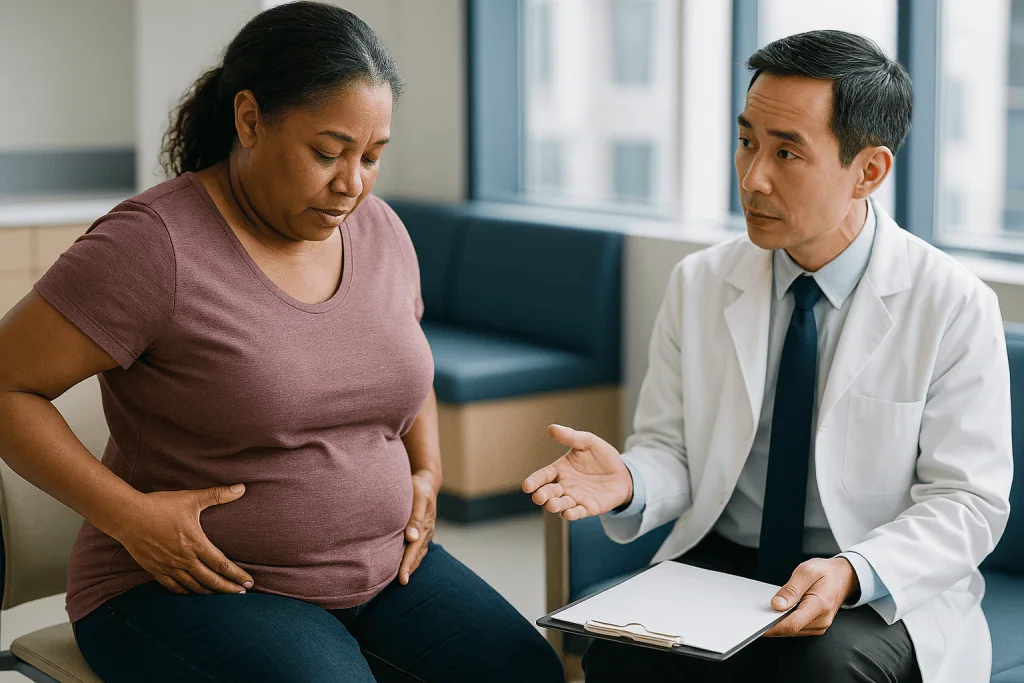
First, donor fat. There must be enough soft, pinchable fat in harvestable areas to remove a meaningful volume, prepare it, and still have enough left after reabsorption to make a visible difference. Second, general health. Liposuction is real surgery under anesthesia; Mayo Clinic advises that suitable patients are generally in good health without conditions that complicate surgery, such as poorly controlled diabetes, heart disease or bleeding disorders, and that current smokers are usually asked to stop because smoking impairs healing and blood flow to grafted tissue.
Third, a stable weight. Transferred fat behaves like the fat it came from. If a person gains weight later, the buttocks may enlarge; if they lose weight, the grafted area shrinks too. Surgeons therefore prefer someone whose weight has been steady for months and who is not planning a major change.
Fourth, expectations. The operation reshapes; it does not redesign. Skin quality, pelvic bone structure and how the body distributes fat all limit what can be achieved, and a candid surgeon will say so. Someone who wants a subtle improvement in proportion is far better served than someone chasing a specific silhouette seen online. That last factor is not a soft consideration. It is the one most likely to determine whether a person is glad they went ahead.
Why very slim patients may be told no: the “skinny BBL” problem
The phrase “skinny BBL” circulates widely, and it describes something real: fat transfer performed on a lean person to create a modest change. The trouble is that the phrase implies the operation scales down neatly. It does not.
Here is the arithmetic a surgeon runs. A lean person might have thin layers of fat across several areas, none of them thick enough to harvest safely without leaving dents, ripples or loose skin. Liposuction removes fat from the layer under the skin; take too much from a shallow layer and the surface becomes uneven. That limits how much can be collected. Then processing removes fluid, blood and damaged cells, shrinking the usable volume further. Then the body reabsorbs a portion of what is injected, a normal part of fat grafting that the NHS notes can make the final result smaller than it first appears.
By the end of that chain, a very slim patient may have too little viable fat to produce a change they could see, and the surgeon has taken on the risks of general anesthesia and gluteal injection for a result that may barely register. Most surgeons consider that an unfavorable trade.
A separate concern is that surgeons feeling pressure to deliver a visible result from scant fat may be tempted to place it deeper, where more volume seems to “fit.” Deeper placement is precisely what raises embolism risk. Being told no, in this context, is not a judgment about a body. It is a safety decision grounded in anatomy, and it usually comes with a discussion of other routes.
Does BMI decide whether you are a BBL candidate?
Body mass index, or BMI, is a rough estimate of body fatness calculated from height and weight. The NHS describes a BMI between 18.5 and 24.9 as the healthy range for most adults, 25 to 29.9 as overweight, and 30 and above as obese. Surgeons quote BMI constantly in BBL consultations, and it helps to know exactly what it can and cannot tell them.
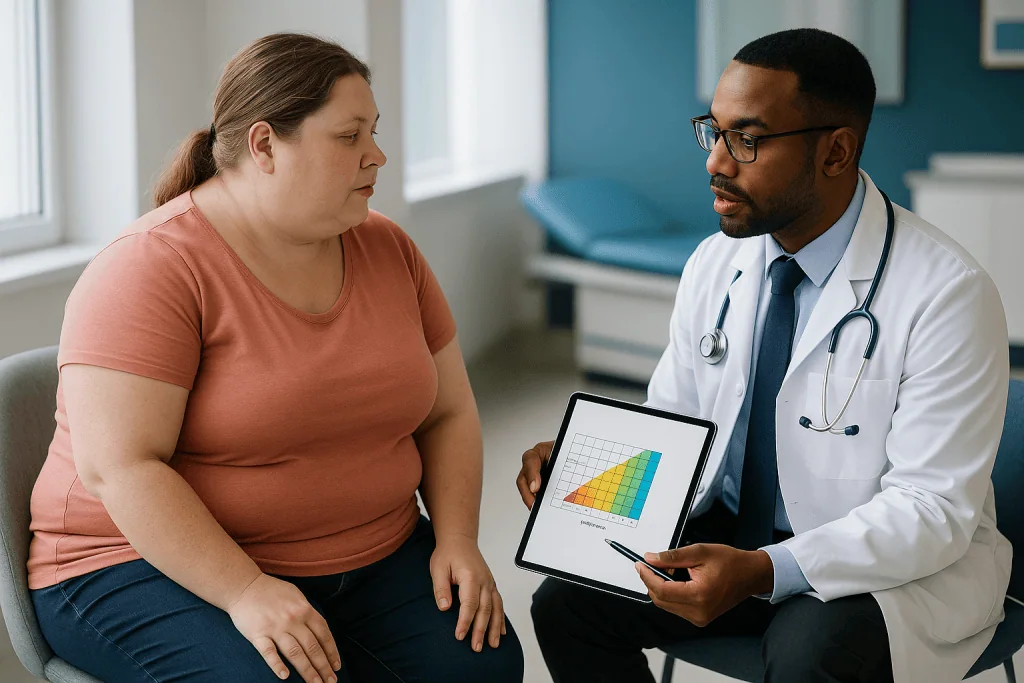
What it does reasonably well is flag the two ends of the spectrum. Someone with a BMI in the low healthy range or below often has limited donor fat, for the reasons already covered. Someone with a BMI in the obese range faces higher anesthetic and wound-healing risks, and Mayo Clinic notes that liposuction is not intended as a weight-loss method; it removes fat from specific spots rather than reducing overall body fat in a way that improves health. Many surgical teams therefore ask patients above a certain BMI to reach a more stable, lower weight before elective body contouring.
What BMI cannot do is show where fat sits or how much of it is the soft, pinchable kind that liposuction can reach. Two people with an identical BMI of 24 can be very different candidates: one carries fat mainly on the abdomen and flanks and has generous donor sites; the other is muscular, with fat spread thinly everywhere. The number is a starting conversation, not a verdict.
Any BMI cut-off a team uses is theirs to set based on their assessment of risk, and it is entirely reasonable to ask what their threshold is and why.
BBL body types: why where your fat sits matters more than the scale
Fat distribution is largely inherited and hormonal, and it varies enormously. That variation, more than weight, shapes what a fat-transfer operation can realistically do.
Consider three common patterns. A person who carries fat centrally, around the abdomen and lower back, is often described in consultations as an ideal donor because those areas can be harvested to slim the waist while the fat is redirected to the hips and buttocks; the contrast between a narrower waist and fuller hips is what creates most of the visual change. A person who carries fat mainly on the outer thighs and hips already has volume low on the body; harvesting the thighs can still reshape proportions, but the waist-to-hip contrast may change less. A person with an athletic build, fat spread thinly over muscle, may have sound health and a stable weight yet still be limited by donor supply.
Skin behavior belongs in this conversation too. After liposuction the skin must shrink back over the smaller area. Johns Hopkins notes that people with good skin elasticity tend to see smoother results, whereas skin that has been stretched by pregnancy, significant weight change or age may sag rather than retract. Buttock skin that is already loose will also drape differently over added volume.
Bone structure sets the floor beneath everything. Pelvic width, the height of the hip bones and the length of the torso cannot be changed by moving fat. A thoughtful surgeon will show a patient how their own frame limits or supports the shape they hope for, rather than promising to reproduce a photograph of someone built differently.
Who is not a good candidate for BBL, and who is usually asked to wait
Some reasons for declining are permanent; many are temporary. It helps to separate them.
People are generally asked to wait, rather than told no outright, in several situations. Current smokers and users of nicotine products are typically asked to stop well before surgery, because nicotine narrows blood vessels and grafted fat depends on new blood supply to survive. Someone actively losing or gaining weight, or planning pregnancy, is usually advised to reach a stable point first, since later change will alter the result. Recent illness, an unhealed skin infection near the planned site, or poorly controlled chronic conditions such as diabetes or high blood pressure are common reasons to postpone until the treating physician is satisfied.
A firmer no is more likely when general health makes anesthesia unwise; when a bleeding or clotting disorder raises the risk of hemorrhage or deep vein thrombosis, a blood clot in a deep vein of the leg that can travel to the lungs; when donor fat is genuinely insufficient; or when expectations cannot be reconciled with what the operation can do. Surgeons also take psychological readiness seriously. Someone seeking surgery under pressure from a partner, or hoping it will resolve distress about their body that is not really about the buttocks, may be referred for a conversation with a mental health professional first. That is standard, careful practice, not a brush-off.
None of these judgments are made from a form alone. A proper assessment includes a medical history, examination of donor and recipient areas, and often blood tests, and the treating team may reasonably reach a different conclusion from a general rule.
BBL requirements at a glance: what helps, what pauses, what stops
The table below summarizes how the factors discussed so far tend to be weighed. It reflects guideline-level considerations described by mainstream sources such as Mayo Clinic and the NHS for liposuction and fat transfer; individual surgical teams set their own thresholds, and the final call is always theirs.
| Factor | Generally favorable | Often means “wait” | Often means “not this operation” |
|---|---|---|---|
| Donor fat | Enough soft fat on abdomen, flanks, back or thighs to harvest evenly | Borderline supply; discuss modest goals | Very lean with thin fat layers everywhere |
| Weight trend | Stable for several months | Actively losing or gaining; planning pregnancy | Seeking the operation as a weight-loss method |
| Smoking and nicotine | Non-user | Current user willing to stop as advised | Unwilling to stop |
| General health | No conditions that complicate anesthesia or healing | Chronic condition not yet well controlled | Significant heart, lung, bleeding or clotting disease |
| Skin quality | Good elasticity at donor and recipient sites | Moderate laxity; alternatives may be discussed | Marked sagging better addressed by lifting procedures |
| Expectations | Wants proportional, natural change | Needs more information before deciding | Seeking a specific silhouette the frame cannot produce |
Two cautions belong alongside any table like this. First, “favorable” describes suitability for the operation, not a promise of a particular result; fat survival varies from person to person and cannot be guaranteed. Second, a person can tick every favorable box and still be advised against surgery if the surgeon judges the risk-to-benefit balance unfavorable for them. The table is a conversation starter for a consultation, not a substitute for one.
What are the alternatives when fat transfer is not an option?
Being told no to a BBL is not the end of the conversation, but the alternatives each carry their own trade-offs and none should be presented as a simple substitute.
Buttock implants are solid silicone devices placed surgically, usually within or beneath the gluteal muscle. They do not depend on donor fat, which is why they are sometimes raised with slim patients. The NHS lists the recognized risks of buttock implants, including infection, the implant shifting or becoming visible, fluid collecting around it, and the possibility of later surgery to adjust or remove it. Implants also cannot slim the waist, so the proportional change is different from fat transfer.
Liposuction alone is sometimes overlooked. For a person whose real concern is the contrast between waist and hips, removing fat from the flanks and lower back can change the perceived shape of the buttocks without adding anything to them. Mayo Clinic describes liposuction as a contouring procedure for specific areas in people near their goal weight, which matches this group well.
Injectable fillers into the buttocks are marketed in some places. Patients should know that liquid silicone injections for body contouring are not approved for that purpose by regulators in the United States and have caused serious harm; other injectable products used in the buttocks lack good evidence for safety and durability at the volumes involved. This magazine cannot describe them as effective, because the evidence does not support that.
Finally, there is the option of no procedure. Strength training targeting the gluteal muscles changes muscle bulk and tone rather than fat, and for some people that shift in proportion is enough. A good surgical consultation should be willing to say so.
What the first weeks after a BBL usually look like
Recovery has two halves that run at once: the donor areas healing from liposuction, and the grafted fat establishing a blood supply in its new home. Both need protecting, and they sometimes pull in different directions.
In the first days, bruising, swelling and soreness across the harvested areas are expected. MedlinePlus notes that fluid may drain from the small incisions and that a compression garment, a snug elasticated wrap worn over the treated areas, is typically used to control swelling and help the skin settle; Mayo Clinic describes wearing these garments for several weeks. Pain is usually managed with medicines the surgical team prescribes, and any questions about those belong with the prescribing clinician.
The grafted fat is fragile at first. Sustained pressure can compress the tiny new vessels it depends on, so teams commonly ask patients to avoid sitting or lying directly on the buttocks for a period; the NHS advises avoiding this for around two weeks after surgical fat transfer to the area, with the surgeon’s own instructions taking precedence. Sleeping on the stomach or side and using a cushion that shifts weight to the thighs are the usual workarounds.
Most people return to desk-based work within one to two weeks, according to the NHS, with strenuous exercise deferred for longer. Swelling in the donor sites can take weeks to settle, and MedlinePlus notes that the final contour may take several months to show as the tissues soften and reabsorption of some grafted fat completes. Follow-up visits check the incisions, the shape of the donor areas and any firm spots in the grafted region. These ranges describe what is typical; the treating team’s timeline for an individual patient is the one that matters.
How long does a BBL last, and what happens 10 years later?
People searching this question usually want a single number. The honest answer is a mechanism, not a number.
Fat that survives the transfer, meaning fat that has established a blood supply within the first few months, is living tissue and remains in place; the NHS describes this surviving portion as permanent. It then behaves like any other fat in the body. That has two consequences. With significant weight gain the grafted area enlarges along with the rest of the body; with significant weight loss it shrinks, because the same fat cells release their stored fat. And with time, the ordinary changes of aging continue: skin loses elasticity, muscle mass tends to decline without training, and fat distribution shifts with hormonal changes such as menopause.
So the picture a decade on depends mostly on what happened to the person in those ten years, not on the operation itself. Someone whose weight stayed stable and who kept the gluteal muscles strong may find the proportional change still visible, softened by normal aging. Someone whose weight swung substantially in either direction will see the buttocks change accordingly, sometimes unevenly, since grafted and native fat may not respond identically.
Long-term studies of gluteal fat grafting over ten or more years are limited, and no percentage of retained volume at that distance can be quoted from the sources this article relies on. Firm lumps of fat necrosis, dead fat that scars into nodules, or oil cysts can occasionally appear in the grafted area, sometimes long after surgery, and should be assessed rather than assumed harmless. Anyone considering the operation should weigh it as a permanent change to living tissue, not a fixed result that sits outside the body’s ordinary story.
Why is a BBL considered riskier than other cosmetic operations?
Every operation involving liposuction carries the general risks MedlinePlus lists: bleeding, infection, fluid collections called seromas, uneven contours, numbness, skin damage and, rarely, deeper injury. Fat transfer adds the possibility that grafted fat fails, forming firm lumps or being reabsorbed unevenly. Mayo Clinic also notes that removing large volumes of fat can shift fluid balance and stress the kidneys and heart, which is one reason surgeons cap how much they take out in one session.
The specific danger that sets the BBL apart is fat embolism. The buttocks contain large veins running through and beneath the gluteal muscles. If fat is injected into or under the muscle and enters a torn vein, it can travel to the lungs and heart within minutes. The NHS states plainly that this is why fat transfer to the buttocks has a higher risk of death than many other cosmetic procedures. Placement in the layer just under the skin, rather than into the muscle, is the technique most associated with reducing that risk, and it is a question patients are entitled to ask about directly.
Deep vein thrombosis deserves its own mention. Long anesthesia, reduced mobility afterward and pressure changes all raise clotting risk. Early gentle walking, staying hydrated and following the team’s instructions on compression and, where prescribed, clot-preventing medicines are the standard protective steps; decisions about any such medicine sit with the prescribing clinician.
None of this is meant to frighten. It is meant to explain why a careful surgeon spends so much of the consultation on health history, donor fat and technique, and why an easy yes should prompt more questions, not relief.
What people often get wrong about BBL candidates
“Any fat will do.” Fat must be soft, superficial and evenly distributed enough to harvest without leaving dents. Firm fat inside the abdomen around the organs cannot be reached by liposuction at all, so a rounded belly does not automatically mean a good donor site.
“I’ll gain weight first, then have it done.” Surgeons generally discourage deliberate weight gain. It raises anesthetic and metabolic risk, the added fat is not guaranteed to land in harvestable places, and losing that weight afterward shrinks the grafted buttocks along with everything else.
“There’s a particular race that gets BBLs.” Candidacy is anatomical and medical. Fat distribution, skin quality, health and goals vary within every population, and none of the sources this magazine relies on defines suitability by ethnicity. Marketing imagery has attached the procedure to certain bodies; that says something about marketing, not about who can safely have surgery.
“A skinny BBL is just a smaller version of the same operation.” Less donor fat means less to harvest, less after processing and less after reabsorption, with the same anesthesia and injection risks. Below a certain supply the balance tips against surgery.
“If my BMI is in range, I qualify.” BMI is a screening number. It cannot show where fat sits, how the skin will retract or whether the person is healthy enough for anesthesia.
“Smell after a BBL is normal.” A faint odor from drainage under a garment in the first days is common. A foul or worsening smell, especially with warmth, spreading redness, pus or fever, is not normal and can signal infection or fat necrosis that needs prompt assessment.
“Once it’s done, it’s done.” Surviving fat is permanent but lives on the body’s terms, changing with weight and age.
Questions to ask your care team
A consultation is an exchange, not an audition. The questions below are the ones that most often separate an informed decision from a hopeful one.
- Based on my examination, do I have enough donor fat for a change I would notice? Where would you take it from, and what will those areas look like afterward?
- What is your assessment of my skin elasticity at the donor and recipient sites, and how does that affect the plan?
- Into which tissue layer do you inject the fat, and how do you confirm placement stays above the muscle?
- Which of my medical conditions or medicines change my risk, and what needs to happen before you would proceed?
- What is your policy on nicotine, and how long before and after surgery do you require me to be free of it?
- How will my weight now, and any change later, affect the result?
- What alternatives would you consider for someone with my body shape, including doing nothing?
- What does your typical recovery timeline look like for sitting, driving, work and exercise, and who do I contact out of hours if something worries me?
- What complications have you managed, and how would a problem with grafted fat or a donor site be handled?
- Where will the operation take place, what anesthesia will be used, and who will be monitoring me?
Write the answers down or ask permission to record them. Then take time. Reputable teams expect patients to reflect before committing to elective surgery, and a surgeon who is comfortable with a second consultation, or with a patient seeking another opinion, is displaying exactly the temperament this operation demands. The decision to proceed, to wait or to choose a different route always rests with the patient and the treating team together.
When to call your doctor after a BBL
Most recovery days are uneventful: soreness, swelling, bruising and tiredness that ease week by week. A small number of signs mean the surgical team should hear from you the same day, and a few mean emergency services should be called immediately.
Call emergency services without waiting if you develop sudden shortness of breath, chest pain, coughing up blood, a racing heartbeat, confusion, fainting or a bluish tinge to the lips. These can indicate fat embolism or a blood clot that has traveled to the lungs, both of which are time-critical. Do the same for heavy bleeding that soaks through dressings and does not slow with firm pressure.
Contact the surgical team promptly for a fever, spreading redness or warmth around any incision or the grafted area, pus or foul-smelling drainage, a new or worsening bad smell under the compression garment, a rapidly enlarging swelling or a tense, painful area that could be a fluid collection or hematoma, pain that escalates rather than settles, skin that turns dark, blistered or numb, or calf pain and swelling in one leg, which can signal a deep vein thrombosis. Persistent nausea and vomiting, inability to pass urine, or dizziness on standing also warrant a call, since fluid shifts after larger-volume liposuction can affect the kidneys and circulation.
In the months that follow, report any firm lump, oily discharge or new asymmetry in the buttocks rather than assuming it will resolve on its own. None of these signs confirms a complication; each simply needs assessment by the people who operated, who know what was done and can judge what is expected and what is not.
Frequently asked questions
Can a very thin person have a skinny BBL?
Sometimes, but often not. A lean person may lack enough harvestable fat to produce a change they would notice once processing and normal reabsorption are accounted for, while still taking on the full risks of anesthesia and gluteal injection. Many surgeons decline in that situation and discuss alternatives instead. Only an in-person examination of donor areas can settle the question for an individual.
What are the basic BBL requirements surgeons look for?
Most teams look for a healthy adult at a stable weight who does not use nicotine, has adequate donor fat in reachable areas, has reasonable skin elasticity, and holds realistic expectations about a proportional rather than dramatic change. Chronic conditions need to be well controlled, and bleeding or clotting disorders are usually a reason to advise against surgery. Each surgical team sets its own thresholds.
Who is not a good candidate for BBL?
People with significant heart, lung, bleeding or clotting disease, those who cannot stop nicotine, those seeking the operation as a form of weight loss, and those with too little donor fat are generally not suitable. Anyone actively losing or gaining weight or planning pregnancy is usually asked to wait. Expectations that the frame cannot deliver are also a common reason surgeons decline.
Which BBL body types get the most noticeable change?
People who carry fat centrally, around the abdomen, flanks and lower back, tend to see the most visible shift because harvesting those areas slims the waist while the fat adds volume to the hips and buttocks. Athletic builds with thin fat layers and people who already carry fat low on the body may see less contrast. Pelvic bone structure and skin quality set limits no technique can override.
Can a BBL smell bad?
A faint odor from fluid draining under a compression garment in the first days is common and usually clears with the hygiene routine the team prescribes. A foul, worsening or unusual smell is different, particularly alongside fever, warmth, spreading redness or pus, because it can indicate infection or fat necrosis. That combination should be reported to the surgical team the same day.
What happens 10 years after a BBL?
Grafted fat that survived the first months remains and behaves like ordinary body fat, so the outcome a decade later mostly reflects what happened to the person: weight gain enlarges the area, weight loss shrinks it, and normal aging loosens skin and shifts fat distribution. Long-term studies are limited, and no retained-volume figure can be quoted from mainstream sources. Firm lumps or oil cysts appearing years later should be assessed.
What race is most likely to get a BBL?
Candidacy is not defined by race or ethnicity. Fat distribution, skin quality, health status and goals vary within every population, and none of the medical sources this article draws on uses ethnicity as a suitability factor. Marketing imagery has linked the procedure to particular bodies, but a surgeon’s assessment rests on anatomy and medical history, not background.
Does BMI alone determine whether I qualify?
No. BMI is a rough estimate of body fatness from height and weight, and the NHS gives 18.5 to 24.9 as the healthy range for most adults. It flags the extremes, where donor fat is scarce or surgical risk is higher, but it cannot show where fat sits, how the skin will retract or whether anesthesia is safe. Surgeons use it as a starting point alongside examination and health history.
Should I gain weight before a BBL to have more fat to transfer?
Surgeons generally advise against deliberate weight gain. It raises anesthetic and metabolic risk, the extra fat may not settle in harvestable places, and if the weight is lost afterward the grafted buttocks shrink with it because transferred fat behaves like native fat. Most teams prefer a weight that has been stable for several months. Any plan around weight should be discussed with the treating team.
How long before I can sit normally after a BBL?
Teams usually ask patients to avoid sitting or lying directly on the buttocks while the grafted fat establishes a blood supply; the NHS gives around two weeks as typical for surgical fat transfer to the area, with the surgeon’s own instructions taking priority. Cushions that shift weight to the thighs are commonly used in between. Swelling and final shape can take several months to settle.
References
- NHS – Surgical fat transfer
- NHS – Liposuction
- MedlinePlus – Liposuction
- NHS – Calculate your body mass index (BMI) for adults
This article is for general information only and is not a substitute for professional medical advice. Please consult a qualified doctor about your individual situation.

More from the Blog
Liposuction Recovery Time: Swelling, Compression and When Results Actually Show
Most people return to desk work within one to two weeks after liposuction, but complete recovery takes far longer than many expect. Swelling peaks…

Life After Lipedema Surgery: Compression Garments, Diet and Long-Term Care of the Legs
Compression after lipedema surgery is worn to limit swelling, support the healing tissue and help the lymphatic system clear fluid while the legs settle.…

Sitting, Walking and Sleeping After a Thigh Lift: Protecting the Incision in the First Weeks
After a thigh lift, most surgical teams ask patients to walk short distances from the first day to lower blood-clot risk, while avoiding deep…
Vaser Liposuction Side Effects: Normal Swelling vs Signs Your Surgeon Wants to Hear About
After Vaser liposuction, swelling, bruising, soreness, mild numbness and pink fluid leaking from small incisions are expected in the first weeks, and swelling can…

Which Tests Come Before Lymphedema Surgery? Lymphatic Imaging, Staging and Planning
Before lymphedema surgery, most teams confirm the diagnosis, exclude other causes of swelling such as a blood clot or vein disease, measure limb volume,…
Vaser vs Traditional Liposuction: Bruising, Skin Tightening and Which Areas Each Suits
Vaser is a brand of ultrasound-assisted liposuction that uses sound energy to loosen fat before it is suctioned out; traditional liposuction removes fat with…