

Who Is a Candidate for Laser Hair Therapy? Early Thinning vs Long-Standing Bald Areas
Key Takeaways
- Laser hair therapy uses low-energy red or near-infrared light in roughly the 600 to 1,100 nanometer range to stimulate living follicles, the opposite of laser hair removal, which uses high energy to disable them.
- Sham-controlled trials lasting 26 weeks found greater terminal hair counts in adults with early to moderate pattern loss using active devices, but long-term and cosmetic outcomes remain poorly studied.
- Miniaturized follicles in early thinning are alive and can respond to light; follicles in long-standing smooth bald areas have often fibrosed and cannot be regrown by any light-based device.
- Sudden, patchy, painful or scaling hair loss points to causes such as alopecia areata, telogen effluvium, infection or scarring alopecia, none of which are treated with laser therapy.
- Like minoxidil and 5-alpha reductase inhibitors, laser therapy appears to maintain its effect only while it continues, so candidacy includes willingness to sustain a months-long, open-ended routine.
- Light therapy shows a biphasic response, meaning more power does not mean more growth and may instead heat tissue, so using a device as instructed matters more than seeking intensity.
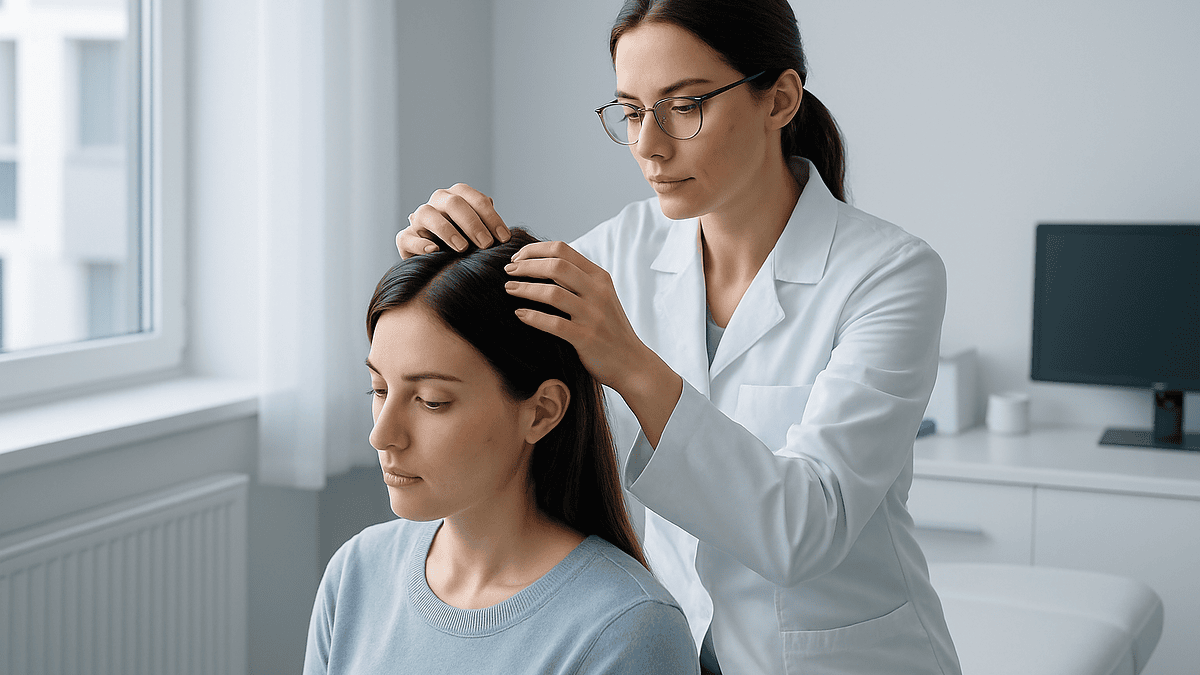
A laser hair therapy candidate is usually an adult with early to moderate hereditary (pattern) thinning, where follicles have shrunk but are still alive, a confirmed diagnosis, and realistic expectations of modest density gains over months of ongoing use. Long-standing, smooth bald areas rarely respond, because the light cannot create new follicles. Sudden, patchy, painful or scarring hair loss needs medical assessment first, and the decision rests with the treating team.
The photo that started it was taken from behind, at a family barbecue, by a cousin who meant nothing by it. There, under a patio light, was a crown a shade paler than the rest of the head. A week later a coworker mentioned a laser cap she wears while watching television, and the question arrived fully formed: is this for me, or for someone who caught it earlier?
It is a fair question, because the honest answer really does split in two. Whether someone is a good laser hair therapy candidate depends less on age or sex than on what the follicles under that paler patch are doing right now. Shrinking but alive is one story. Gone for a decade is another.
This explainer walks through the biology behind that divide, what the research actually shows, who is usually asked to wait, and the questions worth bringing to a clinician before spending months of evenings under a helmet of red light.
What is laser hair therapy, and how is it different from laser hair removal?
Two very different treatments share almost the same name, and the confusion sends thousands of people down the wrong search path every day. Laser hair therapy, more formally low-level laser therapy (LLLT) or photobiomodulation, uses low-energy red or near-infrared light to stimulate living scalp follicles. Photobiomodulation is simply the term for light changing how cells behave without heating or damaging them. Laser hair removal does the opposite: it delivers brief, high-energy pulses that are absorbed by pigment in the hair shaft, heating and disabling the follicle so that hair stops growing.
Same word, opposite goals, opposite ideal patient. The removal candidate wants follicles silenced; the therapy candidate wants them coaxed back into work. Nothing about a device designed for one job makes it suitable for the other.
Laser hair therapy devices come as handheld combs, helmets, caps with embedded diodes, and larger in-office panels. The light sits in a band of roughly 600 to 1,100 nanometers, the wavelengths that pass through skin most efficiently, according to a peer-reviewed review of the field published through the National Institutes of Health (see references). Some devices use true lasers, others light-emitting diodes; the biological principle is the same, though output and consistency vary widely between products.
Because the energy is low, sessions feel like little more than mild warmth. There is no shaving of the scalp, no cooling gel, no downtime. That gentleness is exactly why the treatment appeals to people with early thinning, and exactly why it has limits once follicles are no longer there to respond.
How does low level laser therapy for hair loss actually work?
Picture a hair follicle as a small factory that runs on a cycle. During anagen, the growth phase, it builds a hair shaft for several years. It then rests in telogen for a few months, sheds the hair, and starts again. A healthy scalp loses about 50 to 100 hairs a day through this normal turnover, as Mayo Clinic notes; thinning appears when factories shrink, slow down, or spend longer resting.

Red and near-infrared light appears to act at the level of the cell’s power supply. The leading explanation, laid out in the NIH-indexed review by Avci and colleagues, is that photons are absorbed by cytochrome c oxidase, an enzyme inside mitochondria. That absorption nudges the cell to produce more adenosine triphosphate (ATP), its energy currency, and shifts signaling molecules such as nitric oxide and reactive oxygen species in ways that favor activity over dormancy.
Downstream, the proposed effects are threefold: follicles resting in telogen are encouraged to re-enter anagen, follicles already growing stay in anagen longer, and the miniaturized follicles typical of pattern hair loss may produce a somewhat thicker shaft. Some researchers also point to improved local blood flow, though this is less firmly established.
The important word in every one of those sentences is follicle. Light modulates cells that are present and metabolically alive. It has no known ability to build a new follicle in skin where one has fibrosed and disappeared. The review is candid that the exact mechanism in human scalp is still being worked out, which is one reason clinicians describe the treatment in measured terms rather than guarantees.
Does laser hair therapy work? What the evidence actually shows
The short version: there is reasonable short-term evidence that it can increase hair counts in hereditary thinning, and much thinner evidence about how that translates into what you see in a mirror years later.
Mayo Clinic’s hair loss guidance states that the U.S. Food and Drug Administration has cleared low-level laser devices for hereditary hair loss in men and women, that a few small studies have shown improved hair density, and that more research is needed on long-term effects. That is a fair summary of where the field sits.
The Avci review, which examined randomized, sham-controlled trials, found that participants using active devices over 26-week study periods showed greater increases in terminal hair counts than those using an identical-looking sham device. Terminal hairs are the thick, pigmented hairs you want more of; a sham device looks and feels like the real one but emits no therapeutic light, which allows fair comparison. The review also flagged real limitations: many trials were small and industry-funded, follow-up ended at about six months, and counting hairs per square centimeter is not the same as measuring whether a person or their barber notices a difference.
Graded plainly, this is moderate evidence for a modest, measurable effect on density over months, and low evidence for durable cosmetic change or for any benefit in advanced loss. It does not support claims of reversal, and no reputable guideline describes laser therapy as a first-line replacement for established treatments. Anyone quoting a single percentage as the success rate is quoting one trial, not the body of evidence.
Who is a good laser hair therapy candidate?
Across the trials and the mainstream clinical guidance, a fairly consistent profile emerges. The typical laser hair therapy candidate is an adult with androgenetic alopecia, the medical name for hereditary or pattern hair loss, in its early or moderate stages. In men that usually means recession at the temples or thinning at the crown; in women it more often means a widening part line with the frontal hairline preserved. The follicles in these areas are shrinking, not absent.

Diagnosis matters more than eagerness. A clinician, often a dermatologist, will usually confirm the pattern by examining the scalp and may use dermoscopy, a handheld magnifier that shows follicle openings and hair shaft diameter. Seeing many fine hairs next to normal ones is the signature of miniaturization and a sign that a light-based treatment has something to work on.
Beyond the scalp, candidacy has a practical side. The evidence base involves use several times a week for months, and benefit appears to fade if treatment stops, so the person needs to be willing to make it a standing routine. Realistic expectations are part of the picture too: slower loss and somewhat fuller density, not the hairline of a school photograph.
Clinicians also tend to consider it for people who cannot tolerate, prefer not to use, or want to add to the two established medical treatments discussed later, or as one element of a broader plan that may include surgery. In every case the recommendation, and the decision to proceed, belongs to the treating team who has examined the scalp and knows the person’s medical history.
Early thinning: why shrinking follicles are the sweet spot
Pattern hair loss is not a switch that flips from hair to no hair. It is a slow negotiation between follicles and a hormone. Dihydrotestosterone (DHT), made from testosterone by the enzyme 5-alpha reductase, binds to receptors in genetically sensitive follicles and shortens each growth cycle a little. Cycle after cycle, the follicle produces a shorter, finer, lighter hair. Dermatologists call this miniaturization: a thick terminal hair gradually becoming a vellus hair, the soft down you see on a child’s cheek.
The crucial fact is that a miniaturized follicle is still a functioning follicle. It has a bulb, blood supply and stem cells. It is running slowly, not shut down. That is why early thinning is where laser therapy has shown its measurable effects. If light can extend anagen or push a resting follicle back into growth, the result is a slightly longer, slightly thicker hair from a factory that already exists, and thousands of slightly thicker hairs add up to visible coverage.
People at this stage often describe the scalp showing through under bathroom lights, a ponytail that feels thinner, or more hair on the pillow than they remember. None of these alone prove pattern loss; shedding above the normal daily range can have many causes, which is why assessment comes first. But when a clinician confirms miniaturization on a classic pattern, the biological conditions that trials studied are in place.
The Avci review’s trial populations were men and women with mild to moderate pattern loss on the standard clinical scales, not people with smooth, long-established baldness. The evidence, in other words, belongs to the early group.
Long-standing bald areas: why a smooth, shiny scalp changes the answer
Walk the other way along the same road and the biology eventually changes character. After many years of miniaturization, some follicles stop cycling altogether. The surrounding tissue fills in with fibrous collagen, the follicle opening closes, and the skin takes on the smooth, slightly shiny look of a scalp that has been bald for a long time. Under dermoscopy, a clinician sees few or no follicular openings at all.
Light cannot restore what is no longer there. Photobiomodulation works on living cells with mitochondria to stimulate; a patch of fibrosed skin offers nothing to stimulate. This is not a matter of using a more powerful device or persisting for longer. The NIH-indexed review notes that light therapy follows a biphasic response, meaning too much energy can be as ineffective as too little, so cranking up output is not a workaround.
That does not make laser therapy irrelevant to someone with an established bald crown. The fringe of thinning hair around that area is often still alive and still miniaturizing. Some clinicians discuss light therapy as a way to support that border zone, slowing the spread rather than refilling the center. Expectations have to be set precisely: protecting what remains, not reclaiming what has gone.
For the bald area itself, the conversation usually turns to hair transplantation, which moves follicles from the DHT-resistant back and sides of the scalp into the bare region, or to non-medical options such as cosmetic concealment. Mayo Clinic and the NHS both describe transplant as an option for permanent pattern loss, and both note that hereditary loss will continue in untreated native hair around a graft, which is one reason the two approaches are sometimes considered together.
Who is asked to wait, and who is usually not a laser hair therapy candidate?
The first group asked to pause is anyone without a diagnosis. Hair loss is a symptom with many causes, and MedlinePlus lists among them thyroid disease, iron deficiency, medication effects, autoimmune conditions and recent physical or emotional stress. Shining light on a scalp that is shedding because of an untreated medical problem delays the fix and muddies the picture.
Several patterns of loss are poor fits for the treatment regardless of enthusiasm:
- Sudden, patchy, coin-shaped bald spots suggest alopecia areata, an autoimmune condition in which the immune system attacks follicles. It has its own treatment pathway, described by the NHS, and laser devices for pattern loss are not part of it.
- Diffuse shedding a few months after childbirth, major illness, surgery or crash dieting is often telogen effluvium, a temporary shift of many follicles into the resting phase. Mayo Clinic notes this usually recovers on its own, so a device that needs six months to show effect cannot take credit for that recovery.
- Scalp redness, scaling, pain, pustules or scar-like smooth patches may indicate infection or a scarring alopecia, where inflammation destroys follicles. These need prompt medical treatment, not light.
Others are typically excluded because evidence is missing rather than because harm is proven. Trials enrolled adults, so teenagers are outside the data. Pregnant and breastfeeding participants were generally excluded. People taking medicines that increase light sensitivity, or with photosensitive conditions such as lupus, are usually told to check with their prescriber first, never to stop a medicine on their own. A history of skin cancer on the scalp warrants a dermatologist’s opinion before any light-based treatment.
Finally, someone who expects a smooth bald patch to fill in, or who will not sustain a routine for months, is unlikely to be well served, and an honest clinician will say so.
Early thinning vs long-standing bald areas: a side-by-side summary
The table below pulls the threads together. It is a general guide to how clinicians tend to frame the conversation, not a substitute for an examination.
| Feature | Early or moderate thinning | Long-standing bald area | Sudden or patchy loss |
|---|---|---|---|
| What the scalp looks like | Wider part, thinner temples or crown; scalp visible under bright light but hair still present | Smooth, often shiny skin with little or no visible hair for years | Round patches, rapid diffuse shedding, or redness and scaling |
| What follicles are doing | Alive but miniaturized; producing finer, shorter hairs each cycle | Many follicles no longer cycling; openings closed and tissue fibrosed | Depends on cause: autoimmune attack, temporary resting shift, infection or scarring |
| Role of laser hair therapy | Studied in this group; modest density gains over months in sham-controlled trials | Not expected to regrow the bare area; may be discussed for the surrounding fringe | Not a first step; diagnosis and cause-specific treatment come first |
| What else the team may discuss | Topical or oral prescription options, monitoring photos, lifestyle review | Hair transplantation, concealment options, protecting remaining hair | Blood tests, scalp examination or biopsy, treatment of the underlying condition |
Two observations follow. First, the same person can sit in more than one column at once: a crown that has been bald for years next to temples that are only now thinning. Second, the middle column is not a dead end. It simply means the most useful conversation is about surgical or cosmetic options, with laser therapy at most a supporting player for the hair that remains.
Whichever column feels closest, the next step is the same: an examination that confirms the type of loss before any device is bought or any plan is made.
What the first weeks and months of laser hair therapy usually look like
Nothing dramatic happens early, and that is worth knowing in advance, because most people who abandon hair treatments do so in the first two months when the mirror has not yet caught up with the biology.
The first several weeks are quiet. Sessions feel like mild warmth on the scalp. Some users report a brief period of slightly heavier shedding, which is generally interpreted as resting hairs being pushed out as follicles re-enter growth, though this is an observation from practice rather than a firmly quantified finding. Any shedding that is heavy, patchy or accompanied by scalp symptoms should be reported rather than waited out.
By roughly three to four months, the more noticeable change for many people is that the rate of loss slows. New growth begins as fine, short hairs that are easy to miss without comparison photos taken under the same light and at the same angle each month.
The trials summarized in the Avci review measured their primary outcomes at 26 weeks, and Mayo Clinic notes that treatments for hereditary loss generally take months to show effect and must be continued to maintain any gain. That makes six months a reasonable checkpoint to review with a clinician whether the effort is paying off.
Stopping does not cause a sudden collapse, but the underlying process resumes. Over subsequent months hair tends to drift back toward the course it would have followed untreated. This is true of the medical treatments as well, and it is why candidacy includes a frank conversation about whether an open-ended routine fits a person’s life.
What are the drawbacks of laser hair therapy?
People often search for two drawbacks, and two stand out above the rest. The first is that the effect is modest and uncertain: the best evidence shows increased hair counts over six months in early pattern loss, not transformation, and long-term outcomes are poorly studied. The second is commitment. Benefit appears to depend on continuous use, so this is a standing appointment with a device for as long as a person wants the effect, alongside an ongoing expense.
Beyond those two, a cluster of smaller issues deserves mention:
- Adverse effects reported in trials were mild and uncommon: transient scalp warmth, itching, dryness or tenderness, and occasional headache. Serious harm has not been a feature of the published data, but the studies were short.
- Eye safety is a genuine consideration with any laser. Devices are designed to be used as instructed, and staring into the light source is never advisable.
- Regulatory clearance for a device class is not the same as proof that a specific product delivers the results shown in a marketing image. Output, wavelength consistency and coverage vary between products, and few have been tested head-to-head.
- Delay is a hidden risk. Months spent on a device for hair loss that turns out to be thyroid-related, iron-related or autoimmune are months during which the real cause went unaddressed.
Set against these, the treatment’s advantages are that it is non-invasive, does not involve a systemic medicine, and can sit alongside other approaches. Whether that balance favors a particular person is a judgment for that person and their clinician, made with the honest numbers on the table rather than the promotional ones.
How laser therapy fits with medicines and after hair transplant surgery
Laser therapy rarely stands alone in a treatment plan for pattern hair loss, and understanding its neighbors helps clarify where it belongs.
Two medicine classes carry the strongest evidence. Topical minoxidil, a vasodilator applied to the scalp, appears to prolong the growth phase and enlarge miniaturized follicles; Mayo Clinic notes that it takes at least six months of use to judge whether it is helping and that stopping leads to loss of any gain. Oral 5-alpha reductase inhibitors, such as finasteride, lower DHT production and are prescribed for men; the NHS describes a similar months-long timeline and the same dependence on continued use, and lists potential side effects that should be discussed with a prescriber. Whether either is appropriate, and in what form, is a decision for the prescribing clinician, never something to start, stop or adjust based on an article.
Laser therapy is sometimes layered on top of one or both, on the reasoning that different mechanisms may add up. Small studies have explored this, but combination evidence is thin, and it should be framed as plausible rather than proven.
Around hair transplantation, the picture is similar. A transplant relocates DHT-resistant follicles into bald areas, but the native hair around them continues to thin. Some surgical teams incorporate light therapy in the recovery period, hoping to support both the grafts and the surrounding hair; published evidence for this specific use is limited and largely observational. Timing after surgery, and whether to use a device at all, should follow the surgeon’s instructions, since the scalp is healing and grafts are fragile in the early weeks.
The NHS also notes that treatments for pattern baldness are generally not provided through its public service, which is a reminder that in many systems these are self-funded choices to weigh carefully.
What people often get wrong about laser hair therapy
It is the same thing as laser hair removal. It is the opposite. Removal uses high energy to disable follicles; therapy uses low energy to stimulate them. Devices are not interchangeable, and a removal clinic is not where regrowth is discussed.
It can grow hair on a bald spot that has been smooth for years. No published evidence supports this, and the mechanism argues against it. Light acts on follicles that exist. Where they have fibrosed, transplantation is the relevant conversation.
Once you see results, you can stop. Both Mayo Clinic and the NHS make the same point about hereditary hair loss treatments in general: gains persist only while treatment continues, because the underlying process does not go away.
A stronger device works better. The NIH-indexed review describes a biphasic dose response, where energy beyond a certain window produces less effect, not more. Higher power also raises the possibility of heating tissue, which is the mechanism of removal.
It works for any kind of hair loss. The trials studied androgenetic alopecia. Autoimmune, infectious, nutritional, hormonal and scarring causes have their own treatments, and light therapy is not a substitute for finding the cause.
FDA-cleared means proven to deliver the advertised result. Clearance for this device class indicates the regulator accepted safety and similarity to existing devices for its stated use. It is not an endorsement of any particular brand’s before-and-after photographs.
You will know within weeks. Hair cycles are slow. Trials measured change at 26 weeks; earlier judgments, positive or negative, are usually premature.
Correcting these myths does not make the treatment less useful. It makes it useful for the right people, for the right reasons.
Questions to ask your care team before starting laser hair therapy
A good consultation is a two-way exchange, and arriving with specific questions tends to produce specific answers. These are the ones that most often change the plan.
- What type of hair loss do I have, and how confident are you in that diagnosis? Would dermoscopy or blood tests add anything?
- Are my follicles miniaturized or absent in the areas I am concerned about? Where am I on the standard scale for my pattern?
- Given my stage, what change would be realistic to expect from laser therapy, and over what period?
- Is there anything in my medical history or my current medicines that makes light therapy inadvisable or worth checking with another prescriber first?
- How does laser therapy compare with the medical options for someone like me, and would you consider using them together?
- If I have a bald area that has been present for years, is surgery the more relevant discussion for that region?
- How will we measure whether it is working? Would you recommend standardized photographs, and when should we review them?
- What symptoms during treatment would you want to hear about promptly?
- If I decide to stop, what should I expect?
- Are there device features, such as wavelength range or scalp coverage, that matter more than others?
Write the answers down. Six months is a long time to remember what was said, and the notes become the yardstick for the review appointment.
Bring your own honesty too. If the routine sounds unsustainable, or the expected result sounds smaller than what you were hoping for, saying so early lets the team steer toward something that fits better. No decision needs to be made in the room.
When to call your doctor
Most hereditary hair loss is gradual, painless and medically harmless, which is exactly why anything that does not fit that description deserves a call rather than another month of waiting. Contact your doctor promptly if hair loss is sudden, arrives in distinct round patches, or involves eyebrows, eyelashes or body hair as well as the scalp. The same applies to loss that begins soon after starting a new medicine; do not stop the medicine yourself, but do report it to the prescriber.
Scalp symptoms change the urgency. Redness, scaling, burning, pain, pustules, oozing, or smooth scar-like patches can signal infection or a scarring form of alopecia in which follicles are being permanently destroyed, and earlier treatment protects more hair. A new or changing pigmented spot, sore that will not heal, or lump on a thinning scalp should be examined without delay, since thinning hair exposes skin that was previously protected from the sun.
Hair loss alongside fatigue, unexplained weight change, feeling unusually cold or hot, heavy periods, or a new rash may point to a thyroid, iron, hormonal or autoimmune cause that needs blood tests. Hair loss in a child should always be assessed.
During laser therapy itself, stop use and seek advice if you notice eye discomfort or visual change after a session, scalp blistering or burning, or shedding that is heavy, patchy or persists beyond the expected early weeks. Any new symptom you cannot explain is worth a conversation.
Finally, if hair loss is affecting mood, sleep or how you feel about leaving the house, say so. It is a legitimate reason to seek care in its own right, and your treating team can help with that as well as with the follicles.
Frequently asked questions
Does laser hair therapy work for regrowth?
It can modestly increase hair density in early to moderate hereditary thinning, according to sham-controlled trials summarized in an NIH-indexed review, and Mayo Clinic notes small studies show improved density. The effect is measured in hair counts over about six months, is not dramatic, fades if treatment stops, and has not been shown in long-standing bald areas.
Who is a good laser hair therapy candidate?
Usually an adult with confirmed androgenetic (pattern) hair loss in its early or moderate stages, whose follicles are miniaturized but still present, who has realistic expectations and is willing to use the device regularly for months. People who cannot use or prefer to avoid prescription options, or who want an adjunct, are also commonly considered. The treating team makes the final call.
Who is not a good candidate for laser hair therapy?
People without a diagnosis, those with sudden or patchy loss, scalp inflammation, infection or scarring alopecia, and anyone expecting a smooth long-standing bald area to fill in. Children, pregnant or breastfeeding individuals, and people on light-sensitizing medicines or with photosensitive conditions were generally excluded from trials and should seek individual advice before starting.
What are two drawbacks of laser therapy for hair loss?
The two most cited are a modest, uncertain effect that has only been studied over about six months, and the need for indefinite continued use to hold any benefit. Smaller concerns include mild scalp irritation or headache, eye safety with any laser, wide variation between devices, and the risk of delaying diagnosis of a treatable underlying cause.
Can laser hair therapy regrow hair on a completely bald spot?
No published evidence supports regrowth on skin that has been smooth and hairless for years. Light stimulates follicles that still exist; where follicles have closed and fibrosed, there is nothing to stimulate. For those areas clinicians typically discuss hair transplantation or cosmetic options, while light therapy may at most be considered for the thinning fringe around the bald zone.
What is the difference between laser hair therapy vs laser hair removal?
They are opposites. Laser hair removal delivers high-energy pulses absorbed by pigment to heat and disable follicles so hair stops growing. Laser hair therapy uses low-energy red or near-infrared light to stimulate living follicles without heating tissue. An ideal removal candidate wants less hair; a therapy candidate wants shrinking follicles to grow thicker hair. Devices are not interchangeable.
Who is an ideal candidate for laser hair removal?
That is a different treatment with a different goal. Removal is typically discussed for people who want lasting reduction of unwanted hair, and candidacy depends on hair pigment, skin type, hormonal factors and medical history, all assessed by a clinician. If your concern is thinning scalp hair, laser hair removal is not the relevant treatment; low-level laser therapy is the topic to raise.
How long does low level laser therapy for hair loss take to show results?
Slowly. Trials measured their main outcomes at 26 weeks, and Mayo Clinic notes that treatments for hereditary loss generally take months. Early weeks often show no visible change and occasionally slightly more shedding; slower loss and fine new hairs tend to appear around three to four months. Six months is a sensible checkpoint to review standardized photos with a clinician.
Can laser therapy be used after hair transplant surgery?
Some surgical teams incorporate light therapy during recovery to support grafts and the surrounding native hair, but published evidence for this specific use is limited and largely observational. The healing scalp and new grafts are fragile in early weeks, so timing and whether to use a device at all should follow the operating surgeon’s instructions rather than a general schedule.
What happens if I stop laser hair therapy?
Nothing sudden, but the underlying process resumes. Hereditary hair loss is driven by ongoing hormonal sensitivity of follicles, so any gain in density gradually returns toward the course it would have followed untreated, typically over months. Mayo Clinic and the NHS describe the same pattern for minoxidil and finasteride, which is why all of these are considered maintenance treatments.
References
- NHS: Hair loss
- MedlinePlus: Hair Loss
- Cleveland Clinic: Hair Loss
- NIH / PubMed Central: Low-level laser (light) therapy (LLLT) for treatment of hair loss (Avci et al.)
This article is for general information only and is not a substitute for professional medical advice. Please consult a qualified doctor about your individual situation.

More from the Blog
How Scalp Micropigmentation Is Done: Pigment Dots, Session Spacing and Matching Your Hair Shade
Scalp micropigmentation is a cosmetic tattooing technique in which a trained practitioner deposits thousands of tiny pigment dots into the upper layer of the…
Hair Transplant Repair for International Patients: Photo Review, Staged Sessions and Follow-Up
Hair transplant repair for international patients usually begins with a remote photo review, followed by an in-person examination that checks the donor area, scar…

Hair Transplants for a Receding Hairline: Timing, Design and Realistic Density
A hair transplant can restore a receding hairline by moving follicles from the back of the scalp, where hair is genetically resistant to balding,…

Norwood 5: Planning Coverage When the Bridge Is Going
Norwood 5 describes advanced male pattern hair loss in which the band of hair separating the receded hairline from the thinning crown, the so-called…
Non-Surgical Hair Restoration Results: Why Months of Consistency Matter More Than One Session
Non-surgical hair restoration works with the hair growth cycle, so results unfold over months rather than after a single session. Topical minoxidil typically needs…

When Can Coloring, Heat Styling and Ponytails Resume After a Hair Transplant for Women?
Most surgical teams ask women to wait until the scalp has fully healed before coloring hair after a hair transplant, which usually means several…