

Who May Suit Teeth Veneers? Bite, Enamel Thickness and Grinding Habits Explained
Key Takeaways
- Veneers bond to etched enamel, and Cleveland Clinic notes preparation typically removes roughly half a millimeter of it, so teeth with thin or eroded enamel are often steered toward crowns instead.
- Active gum disease and untreated decay are the most common reasons a dentist says 'not yet' rather than 'no,' because both undermine the margin and the bond.
- An edge-to-edge or deep bite loads the thin margin of a veneer with every closure, which is why bite assessment, not appearance, often decides the plan.
- Night-time grinding is not an absolute barrier, but the NHS and Mayo Clinic describe a custom night guard and treatment of triggers as the mainstay, and dentists usually want that in place first.
- The '4-8-10 rule' is a social-media shorthand about smile width, not a clinical guideline; the right number of veneers is the number of teeth with a genuine problem in the visible zone.
- Porcelain veneers are described by Cleveland Clinic as lasting roughly a decade or more with care and composite less, meaning replacement, not permanence, is part of being a realistic candidate.
People most often considered for teeth veneers have healthy gums, little or no untreated decay, enough natural enamel to bond to, and a bite that does not overload the front teeth. Heavy grinding, active gum disease, severe crowding or very thin enamel usually mean a dentist will suggest treating those problems first or choosing a different option. The decision rests with your dental team.
A woman in her late thirties leans toward the bathroom mirror, runs a fingertip along the chipped corner of a front tooth she has been hiding in photographs since college, and types one question into her phone: could veneers fix this? The search results promise transformations. What they rarely explain is that the answer depends far less on how the tooth looks than on what is happening behind it: the thickness of the enamel, the way the upper and lower teeth meet, and whether the jaw spends the night clenching.
That is the honest starting point for anyone weighing whether they belong among likely teeth veneers candidates. A veneer is a thin shell of porcelain or composite resin bonded to the front of a tooth, and it borrows all of its strength from the tooth beneath it. So the real question is not whether you want veneers. It is whether your mouth can hold on to them.
This explainer walks through the factors dentists actually weigh, the myths that circulate online, and the conversations worth having before anything touches your enamel.
What are teeth veneers, and what actually happens at the chairside?
A veneer is a custom-made covering, roughly the thickness of a fingernail, cemented to the visible surface of a tooth to change its color, shape or length. Two materials dominate. Porcelain veneers are made in a laboratory from ceramic and bonded in a later visit; composite veneers are built directly on the tooth from the same tooth-colored resin used in white fillings, often in a single appointment.
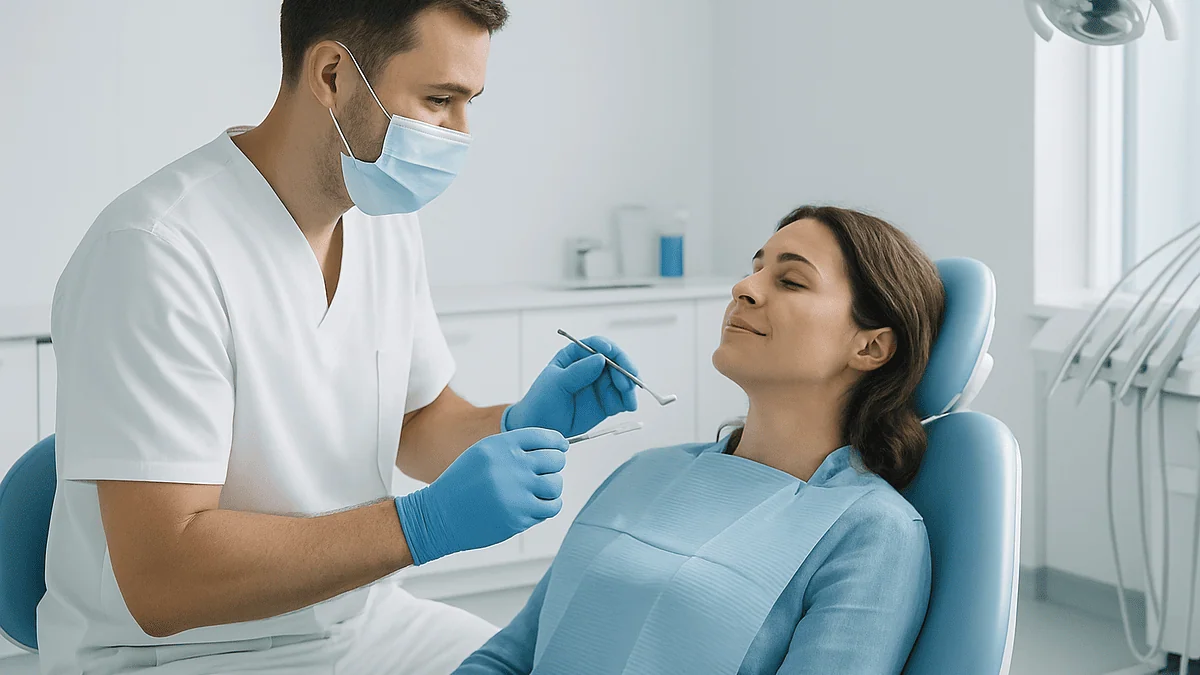
The process for a laboratory-made porcelain veneer usually unfolds over two or three visits. First comes assessment: an examination of the gums, dental X-rays to look for hidden decay or infection, and a check of how the teeth close together. Many dentists also take photographs and a scan or impression to plan the final shape.
Next is preparation. To keep the finished tooth from looking bulky, the dentist typically removes a thin layer of enamel from the front of the tooth. Cleveland Clinic describes this as a small fraction of a millimeter, which is why enamel thickness comes up so often in candidacy conversations. A temporary covering may be placed while the laboratory makes the veneer. Enamel does not grow back, so this step is permanent.
Finally, the veneer is checked for fit and color, the tooth surface is lightly etched with a mild acid to create a microscopically rough surface, and a resin cement is set with a curing light. The bond between etched enamel and resin is the whole reason veneers hold; it is also the reason dentists become cautious when there is little enamel left to etch.
None of this is emergency dentistry. It is elective, planned work, which means there is time to ask questions and to get the foundations right first.
Who are good candidates for dental veneers? The starting point dentists look for
Ask a dentist what makes someone a promising veneer patient and the answer rarely begins with the smile. It begins with health. The teeth in question should be free of active decay, the gums should not bleed or pocket around them, and any existing infection at the root should have been treated. Veneers cover the front of a tooth; they do not treat anything underneath it.

The second requirement is a reason the veneer can realistically address. Veneers are best suited to cosmetic problems on the front surfaces of teeth: discoloration that has not responded to whitening, small chips, worn edges, minor gaps, mild unevenness in length or shape, and teeth that are slightly rotated or set back. Cleveland Clinic lists exactly these kinds of concerns as typical reasons people consider veneers.
Third comes structure. A tooth with most of its enamel intact and a modest amount of filling material gives the cement something dependable to grip. Teeth that are mostly filling, or that have large old restorations on the front, are usually steered toward a crown, which wraps the whole tooth instead of one face.
Fourth is the bite. When the upper front teeth close, they should meet the lower teeth in a way that does not slam edge against edge. A relaxed overlap is what most veneer plans assume.
Finally, the person matters. Good teeth veneers candidates understand that the treatment is irreversible, that veneers will eventually need replacing, and that daily brushing, flossing and regular dental checks are part of the deal. Someone hoping for a one-time fix that never needs attention again is not a mismatch of teeth but of expectations, and dentists take that seriously.
Who isn't a good candidate for veneers, and who is usually asked to wait?
There is a difference between “not now” and “not this.” Most of the reasons a dentist declines to place veneers fall into the first group, and many can be resolved.
Active gum disease heads the list. Inflamed gums bleed, swell and later recede, and a veneer margin placed against unstable gum tissue tends to become visible or trap plaque as the gum line shifts. Treating the gum disease first, then reassessing once the tissue is stable, is standard practice.
Untreated decay is next. A cavity under a veneer keeps growing. Dentists restore decay before any cosmetic work, and if the resulting filling is large, the plan may change from veneer to crown.
Thin, eroded or heavily worn enamel is a structural concern rather than a temporary one. Acid erosion from reflux or frequent acidic drinks, decades of aggressive brushing, or grinding can leave too little enamel to bond to. In those cases a dentist may suggest crowns, or a minimal-preparation approach on carefully selected teeth, or no treatment at all.
Severe crowding, large gaps or a bite where the front teeth collide often calls for orthodontics first, because a veneer cannot move a tooth and will crack if the bite loads it.
People who grind or clench heavily, especially at night, sit in a gray zone discussed in detail later. Habits like nail biting, opening packets with the teeth or chewing ice raise the odds of chipping and are worth being honest about.
Children and adolescents are generally asked to wait until growth is complete and the gum line has settled, since a veneer placed on a still-erupting tooth can be left with an exposed margin within a few years.
Porcelain veneers requirements: why enamel thickness matters so much
Enamel is the hardest substance in the human body, a mineral shell over the softer, yellower dentin that makes up most of a tooth. It is also the surface that makes veneers possible. Resin cement bonds far more predictably to etched enamel than to dentin, which is moist, organic and structurally different.

That is why the preparation step is so carefully judged. The dentist removes a thin layer from the front of the tooth, aiming to stay within enamel. Cleveland Clinic puts the amount at roughly half a millimeter, though it varies with the material chosen and how much the tooth needs to change shape. Enamel on the front surface of an upper front tooth is itself only about a millimeter thick in healthy adults and thins toward the gum line, so there is little room for error.
Several situations shrink that margin further:
- Acid erosion, from frequent citrus, carbonated drinks or gastric reflux, dissolves enamel from the surface inward.
- Grinding wears the biting edges flat and can expose dentin as a darker central band.
- Previous whitening or earlier cosmetic work may already have removed some surface.
- Some people are born with thinner or weaker enamel.
When a dentist looks at your teeth and sees exposed dentin, chalky patches or translucent edges, they are weighing whether a bonded veneer will stay put or whether a crown, which relies on mechanical coverage of the whole tooth rather than a surface bond, is the sounder choice.
Once enamel is removed it does not regenerate, so a tooth prepared for a veneer will always need a veneer or a crown. Dentists tend to state this plainly, and it is one reason a clear-eyed candidacy assessment matters more than the color chart.
How does your bite decide whether veneers will last?
Watch someone bite into an apple and you see the front teeth doing exactly what they evolved for: shearing, not crushing. In a typical bite the upper front teeth sit slightly forward of and over the lower ones, so when the jaw closes the lower edges glide behind the uppers rather than striking them. Porcelain tolerates this kind of gentle contact well.
Problems begin when the geometry changes. In an edge-to-edge bite, the upper and lower front teeth meet tip to tip, and every closing movement loads the veneer edge directly. In a deep bite, the lower teeth travel high up the back of the uppers and can lever a veneer from behind. In an underbite or a crossbite, the front teeth may collide during chewing or speaking. Each of these puts repeated force on the one part of a veneer that is most vulnerable, its thin margin.
Dentists assess this by asking you to close, slide the jaw forward and side to side, and sometimes by placing thin marking paper between the teeth to see where contact actually happens. Wear facets, tiny flat polished spots on the edges, tell a story about where the teeth have been grinding against each other for years.
The findings shape the plan in practical ways. A slightly heavy bite may simply mean adjusting the veneer’s length or thickness. A significantly unfavorable bite may lead a dentist to suggest orthodontic alignment first, or to recommend crowns on teeth that need more protection, or to conclude that veneers are not the right tool.
None of this is a judgment on the smile. It is engineering. A veneer is a thin ceramic shell asked to survive thousands of jaw closures a day, and the bite decides how hard each one hits.
Veneers with teeth grinding: can bruxism and veneers coexist?
Bruxism is the medical term for grinding or clenching the teeth, and it happens most often during sleep, when nobody is around to stop it. MedlinePlus, Mayo Clinic and the NHS all describe the same tell-tale signs: worn or flattened teeth, a sore jaw or temples on waking, headaches, and a partner who hears grinding at night. Stress and anxiety are common triggers; Mayo Clinic also notes links with sleep disorders such as sleep apnea and with some medicines.
For veneers, grinding is the single lifestyle factor dentists probe hardest. The forces generated during sleep clenching far exceed those of ordinary chewing, and porcelain, while hard, is brittle. A veneer that survives years of meals can fracture or de-bond after a few weeks of unprotected nights.
That does not make grinding an absolute barrier. It changes the conversation in three ways.
First, the grinding itself gets attention. The NHS and Mayo Clinic describe a custom-fitted mouth guard or splint worn at night as the main way to protect teeth from bruxism, alongside addressing stress, sleep problems or other contributing causes with the appropriate clinician. A dentist may want to see that a guard is being worn consistently before committing to veneers.
Second, the material choice shifts. Some dentists lean toward composite, which is more likely to chip than shatter and is easier to repair, or toward stronger ceramics, or toward crowns on teeth that take the heaviest load.
Third, expectations adjust. Veneers in a grinder are more likely to need repair or replacement, and a night guard becomes a permanent companion rather than an optional extra.
People who clench without knowing it are common, so a dentist asking about morning jaw ache is not making small talk. Answer candidly; the veneer’s survival depends on it.
Gum health, decay and old fillings: the quiet gatekeepers
Nobody photographs their gums, yet gum tissue frames every veneer and decides how it looks in five years. Cleveland Clinic explains that gum disease begins as gingivitis, with redness and bleeding, and can progress to periodontitis, where the supporting bone is lost and gums recede. A veneer margin is placed at or just under the gum line. If the gum then moves, the junction between veneer and tooth becomes visible as a dark line or a step, and the exposed root surface is more prone to decay and sensitivity.
Dentists therefore want stable gums before they start. That usually means professional cleaning, a period of improved home care, and a follow-up check showing that bleeding has stopped and pocket depths are healthy. Smoking slows gum healing and stains the margins of any restoration, so it is often raised at this stage as well.
Decay is treated on the same principle. Any cavity on a tooth destined for a veneer is filled first, and X-rays are used to catch decay between teeth that cannot be seen by looking. If the filling ends up covering much of the front surface, the bond will be partly to filling material rather than enamel, and the dentist may recommend a crown instead.
Existing restorations get similar scrutiny. Old composite fillings on front teeth can be sound, but they discolor, shrink at the edges and bond less predictably than enamel. Large or leaking fillings are typically replaced or the tooth is re-planned as a crown.
The pattern across all three is consistent: a veneer is finish carpentry. Dentists want the plumbing and the framing done before it goes on, not because the cosmetic result matters less, but because it depends entirely on what lies beneath.
Porcelain, composite or no-prep veneers: which suits which mouth?
The word “veneer” covers several quite different approaches, and candidacy is not the same across them. A no-prep veneer, sometimes called minimal-prep, is an ultra-thin porcelain shell bonded with little or no enamel removal. It sounds ideal until you realize that adding thickness to a tooth without removing anything can make the tooth look bulky or push the gum margin, so no prep veneers candidates are a narrower group: typically people with small, worn or slightly set-back teeth that have room to be built outward.
| Factor | Porcelain (conventional) | Composite (direct) | No-prep or minimal-prep porcelain |
|---|---|---|---|
| Enamel removal | Thin layer, often around half a millimeter (Cleveland Clinic) | Little to none in many cases | Minimal or none |
| Visits | Usually two or more | Often one | Usually two |
| Stain resistance | High | Lower; may discolor over time | High |
| Repairability if chipped | Usually replaced | Often repaired in place | Usually replaced |
| Typical longevity | Longer; Cleveland Clinic cites roughly a decade or more with good care | Shorter than porcelain (Cleveland Clinic) | Similar material to porcelain; depends on bond area |
| Reversibility | Not reversible | Partly reversible if no enamel removed | More reversible in principle, though bonding still alters the surface |
| Often considered when | Discoloration, wear, shape change on teeth with sound enamel | Small chips, trial of a new shape, younger patients, budget or time constraints | Small or inward-set teeth with space to add volume |
The longevity figures are typical ranges from a general reference, not a guarantee; grinding, gum health and diet all shorten or extend them. The table is a map of trade-offs, and the dentist’s job is to match the trade-off to the tooth in front of them.
What is the 4-8-10 rule for veneers? Separating shorthand from evidence
Scroll through social media and you will meet the “4-8-10 rule,” presented as if it were a clinical standard. The numbers refer to how many veneers someone might have: four across the upper front, eight to include the teeth beside them, or ten to reach the visible edge of a wide smile. It is a talking point about smile width and symmetry, and it has some practical logic. If only two central teeth are veneered, matching their color and translucency to the untouched neighbors is hard, so dentists often treat in pairs that extend to the edge of what shows when you grin.
What the rule is not is a candidacy test or a guideline. No national dental body, and none of the mainstream medical references cited here, defines a correct number of veneers. The number that makes sense is set by how many teeth show, how many actually have a problem worth treating, and how much sound enamel each tooth has to give. Someone with one discolored tooth after a childhood injury may need one veneer, or a whitening trial first. Someone with generalized wear across ten teeth may need a fuller plan, and possibly crowns on the teeth bearing the heaviest load.
The risk in treating the rule as a target is that it nudges people toward preparing healthy teeth for symmetry alone. Enamel removal is permanent, and every veneered tooth becomes a tooth that will need maintenance for life. A careful dentist will talk about the fewest teeth that achieve the goal, not the roundest number.
Treat the phrase as a conversation starter, then ask the more useful question: which of my teeth actually need this, and which are better left alone?
What do the days and weeks after veneers usually look like?
The appointment where veneers are finally bonded tends to feel anticlimactic after weeks of planning. Local anesthetic is often used during preparation and sometimes during bonding, so the lip may feel numb for a couple of hours afterward. Once it wears off, most people notice the new teeth more than they feel them.
In the first few days, mild sensitivity to hot and cold is common, particularly on teeth where enamel was removed; Cleveland Clinic lists sensitivity among the expected short-term effects. The gums around the margins may feel tender, especially if they were retracted during cement cleanup. Speech can seem slightly different for a day or two as the tongue learns the new edges. If a temporary veneer was worn beforehand, the transition is usually easier.
Over the following weeks the bite is the thing to pay attention to. If one tooth feels as though it hits first when you close, or a veneer feels high, that is worth reporting; a small adjustment at the dentist can prevent a chip later. Any rough edge that catches the tongue can be polished.
Habits settle in during this period. Brushing twice daily with a soft brush, flossing carefully around the margins, and avoiding using the front teeth as tools all become routine. A night guard, if one has been made, is worn from the start rather than when a problem appears.
Most dentists arrange a review within a few weeks to check the margins, the gums and the bite, then fold veneer checks into regular dental visits. Sensitivity that persists beyond a few weeks, a veneer that loosens, or a margin the gum has pulled away from are not part of the expected course and should be assessed.
What people often get wrong about teeth veneers candidates
Myths about veneers travel faster than the evidence, so a few corrections are in order.
“Veneers are basically painted-on whitening.” They are bonded ceramic or resin restorations that usually require enamel removal. Once prepared, the tooth will always need covering. Cleveland Clinic states the irreversibility plainly, and so should anyone selling the idea.
“If my teeth look fine, I’m a candidate.” Appearance is the least of it. Healthy gums, treated decay, adequate enamel and a compatible bite are what dentists are checking, and none of those are visible in a selfie.
“Veneers fix crooked teeth.” A veneer can disguise mild rotation or a small gap by reshaping the visible surface. It cannot move a tooth, and trying to camouflage significant crowding by grinding teeth into alignment sacrifices a great deal of enamel. Orthodontics first is the usual advice.
“Grinders just need stronger porcelain.” Stronger materials help at the margins, but no ceramic reliably survives unprotected sleep bruxism. The NHS and Mayo Clinic both point to a night guard and to addressing the underlying triggers as the mainstay of managing grinding; the veneer plan is built around that, not instead of it.
“Veneers are permanent.” The preparation is permanent; the veneers are not. Cleveland Clinic describes porcelain lasting roughly a decade or more and composite less, after which replacement is expected. Budgeting time and attention for that is part of being a good candidate.
“More veneers means a better smile.” The number that helps is the number of teeth with a genuine problem in the visible zone. Treating healthy teeth for symmetry alone trades enamel for uniformity, and it is a trade worth questioning.
Alternatives to veneers your dentist may raise first
A good candidacy conversation often ends with a different treatment than the one you walked in asking about. That is not a failure of the consultation; it is the point of it.
Professional teeth whitening is the usual first suggestion when the concern is color alone. Whitening does not remove enamel and can be repeated, and if the result satisfies you, no veneer is needed. If a single tooth stays dark after whitening, a veneer or crown on that tooth alone may follow.
Composite bonding, the same material used for composite veneers but applied to a chip or a corner rather than the whole surface, handles small defects with little or no drilling. It stains and wears faster than porcelain but is easy to repair and, when no enamel is removed, largely reversible.
Orthodontics, whether with brackets or clear aligners, is the answer when the real problem is position. Straightening teeth first often reduces the number of veneers needed afterward, or removes the need entirely. It also corrects the bite problems that would otherwise threaten a veneer’s survival.
Enameloplasty, a minor polishing of uneven edges, can even out small length differences without any restoration at all.
Crowns come into the discussion when a tooth is heavily filled, cracked, or lacking enamel. A crown covers the whole tooth and relies less on surface bonding, at the cost of more tooth reduction.
Finally, there is the option to do nothing yet. Treating gum disease, getting a night guard fitted and revisiting the question once the mouth is stable is a legitimate plan, and often the wisest one.
The NHS describes veneers, crowns, bonding and orthodontics as part of the standard range of dental treatments, each with its own indications. The best fit is a clinical judgment, made tooth by tooth, with you in the chair.
Questions to ask your care team before agreeing to veneers
A consultation goes better with a short list in hand. These are the questions that tend to surface the information that matters most.
- Which of my teeth actually need treatment, and which are you suggesting for symmetry? How would the result look if we treated fewer?
- How much enamel would you expect to remove from each tooth, and do any of them have too little to bond to reliably?
- What did you find when you checked my bite? Are there contacts that would put a veneer at risk, and would orthodontics change the plan?
- Do you see signs that I grind or clench? If so, what would you want in place before we proceed, and would you recommend a night guard afterward?
- Are my gums healthy enough to start now, or is there periodontal treatment you would want completed first?
- Are there fillings or decay on these teeth that need attention before any cosmetic work?
- Which material are you recommending for me and why? What would make you choose composite, porcelain or a crown instead?
- What happens if a veneer chips or comes off? How is it repaired, and what does that involve for the tooth underneath?
- What would the maintenance look like over the years, and how often would you want to review them?
- Can I see a mock-up, a wax model or a trial in temporary material before anything irreversible happens?
- Is there a less invasive option, such as whitening or bonding, that you think I should try first?
Write down the answers. A dentist who welcomes these questions and explains the trade-offs frankly is giving you the information you need to consent properly. The decision about whether and how to proceed rests with you and the treating team together, and a good team will say so.
When to call your doctor or dentist
Most veneer treatment passes without incident, but a few situations should prompt a same-day call to your dental team rather than a wait for the next scheduled visit.
Call promptly if a veneer becomes loose, shifts, or comes off. Keep the piece if you can; the tooth underneath has had enamel removed and may be sensitive and vulnerable to decay until it is re-covered. Do not attempt to glue it back yourself.
Seek advice if tooth sensitivity is severe, worsens over days rather than easing, or wakes you at night. Short-lived sensitivity to cold in the first weeks is expected; pain that lingers after the stimulus is gone, or a tooth that aches spontaneously, can signal an irritated nerve or a bite that is too high.
Report gums that stay swollen, bleed persistently, or pull away from the veneer margin, and any dark line or gap appearing at the edge of a veneer. These can point to plaque accumulation, gum disease or a failing bond.
A sharp edge, a veneer that feels high when you bite, or a new click or ache in the jaw joint should be checked, since uneven loading is a common route to fracture.
Contact a dentist or doctor urgently, or use an emergency dental service, if you develop facial swelling, fever with tooth pain, a foul taste, or difficulty swallowing or opening the mouth. These are signs of a spreading dental infection and are not related to the cosmetic work itself, but they need prompt care wherever they arise.
Finally, if you wake most mornings with jaw or temple ache, headaches, or a partner reports night-time grinding, mention it. MedlinePlus and the NHS both note that bruxism can be managed with a guard and by addressing its triggers, and your team will want to protect the veneers before damage occurs.
Frequently asked questions
Who are good candidates for dental veneers?
People with healthy gums, no untreated decay, plenty of natural enamel and a bite that does not strike the front teeth edge to edge are usually the strongest candidates. The concern should be one veneers can address, such as discoloration, chips, worn edges or small gaps. Realistic expectations about permanence and maintenance matter as much as the teeth themselves, and the final judgment rests with the dentist examining you.
Who isn't a good candidate for veneers?
People with active gum disease, untreated cavities, very thin or eroded enamel, heavily filled front teeth, severe crowding or a bite that collides at the front are usually asked to treat those issues first or consider crowns, orthodontics or bonding instead. Heavy, unmanaged grinding also raises the risk of fracture. Children and teenagers are generally asked to wait until growth is complete.
Can I have veneers with teeth grinding?
Often yes, but with conditions. Dentists usually want the grinding addressed first, typically with a custom night guard, which the NHS and Mayo Clinic describe as the main way to protect teeth from bruxism, along with attention to stress, sleep problems or other triggers. Material choice may shift toward composite or crowns on heavily loaded teeth, and veneers in grinders are more likely to need repair over time.
What are the porcelain veneers requirements for enamel?
The veneer’s resin cement bonds most reliably to etched enamel rather than the underlying dentin, so dentists look for enough sound enamel on the front surface to prepare and bond to. Cleveland Clinic describes removing roughly half a millimeter during preparation. Teeth already eroded by acid, worn by grinding or largely covered by old fillings may not have enough, in which case a crown is often suggested.
Who are no prep veneers candidates?
No-prep or minimal-prep veneers suit a narrower group: people whose teeth are small, worn short or slightly set back, leaving room to add thickness without looking bulky or crowding the gum line. Teeth that are already full-sized or protrusive usually need some enamel removal to avoid an over-built look. A dentist judges this tooth by tooth, often with a mock-up first.
What is the 4-8-10 rule for veneers?
It is an informal shorthand for treating four, eight or ten upper front teeth so the veneered teeth extend to the edge of what shows when you smile, making color matching easier. It is not a clinical guideline and does not determine candidacy. The appropriate number depends on how many teeth actually have a problem and how much sound enamel each has to give.
Does Donald Trump have veneer teeth?
We do not comment on the dental or medical care of any individual, public figure or otherwise, and there is no reliable medical source on that question. Speculating about someone’s teeth from photographs is unreliable in any case, since lighting, whitening and natural variation can all mimic restorations. The useful takeaway is simply that veneer candidacy is decided by examination, not appearance.
Do veneers ruin your natural teeth?
Veneers do not damage teeth when the underlying mouth is healthy and the veneers are cared for, but conventional preparation permanently removes a thin layer of enamel, so the tooth will always need a veneer or crown afterward. Problems arise mainly when gum disease, decay or grinding are left untreated beneath them. Cleveland Clinic lists irreversibility and sensitivity among the recognized drawbacks.
How long do veneers last?
Cleveland Clinic describes porcelain veneers lasting roughly a decade or more with good care and composite veneers lasting a shorter time before replacement. These are typical ranges, not promises. Grinding, gum recession, diet and how the front teeth are used all shorten or extend them, and a night guard, careful hygiene and regular dental checks are the main ways to protect the investment of enamel.
Can veneers fix crooked teeth or a bad bite?
Veneers can disguise mild rotation, small gaps or slight unevenness by reshaping the visible surface, but they cannot move teeth or change how the jaws meet. Significant crowding or an unfavorable bite is usually treated with orthodontics first, because a veneer placed on a tooth that takes heavy contact is likely to chip. Straightening teeth beforehand often reduces how many veneers, if any, are needed.
References
- Cleveland Clinic: Dental Veneers
- Cleveland Clinic: Teeth Grinding (Bruxism)
- NHS: Teeth grinding (bruxism)
- MedlinePlus: Bruxism
This article is for general information only and is not a substitute for professional medical advice. Please consult a qualified doctor about your individual situation.

More from the Blog

When Composite Bonding Chips or Stains: Repair, Polish or Replace?
A chipped composite bonding can often be repaired by adding fresh resin to the existing material after the dentist roughens and re-bonds the surface,…

Laser Dentistry Myths: Does a Laser Replace Every Drill and Every Injection?
No. Dental lasers can remove some decay, reshape gum tissue and treat certain gum pockets, and research suggests they may reduce the need for…

Eating After a Tooth Extraction: Soft Foods, Straws to Avoid and Getting Back to Normal
After a tooth extraction, most people eat cool or lukewarm soft foods for the first 24 hours, move to semi-soft foods over the next…

How Gum Graft Surgery Treats Gum Recession: Where the Tissue Comes From and How It Is Placed
A gum graft procedure treats gum recession by moving a small piece of soft tissue onto the exposed root and thin gum margin so…

The First Weeks With Porcelain Veneers: Adjusting Your Bite, Speech and Sensitivity
In the first weeks with porcelain veneers, a slightly different bite, softer or hissier s sounds, and sensitivity to cold are common while the…
Is Wisdom Teeth Removal Different After 30? What Fully Formed Roots Change
Wisdom teeth removal after 30 is common and there is no age cutoff, but it is usually a slightly different operation. By the mid-twenties…