

Why Head Cancer Follow-Up Keeps Examinations and Scans on a Schedule After Treatment
Key Takeaways
- Guideline groups describe the highest recurrence risk in the first two to three years after head and neck cancer treatment, which is why examinations are most frequent then and taper toward annual visits by year five.
- The PET-NECK randomized trial of 564 people showed that a PET-CT around 12 weeks after chemoradiation, with surgery only if the scan was positive, gave similar survival to routine neck surgery for everyone, with far fewer operations.
- No single scan is the most accurate for recurrence: PET-CT is highly sensitive but prone to false alarms, MRI shows soft tissue best, CT shows bone and node size, and expert examination outperforms all of them for visible surfaces of the mouth and throat.
- Radiation to the neck can gradually cause an underactive thyroid, so periodic thyroid blood tests are part of guideline-recommended follow-up even when a person feels well.
- HPV-related throat cancers tend to carry a lower risk of a second head and neck cancer than tobacco-related ones, while smokers face a lifelong elevated risk of new cancers across the mouth, throat, esophagus and lungs.
- Routine repeat scans in people who feel well and examine normally have not been shown to improve outcomes, so being followed by examination rather than imaging usually reflects low risk, not reduced care.
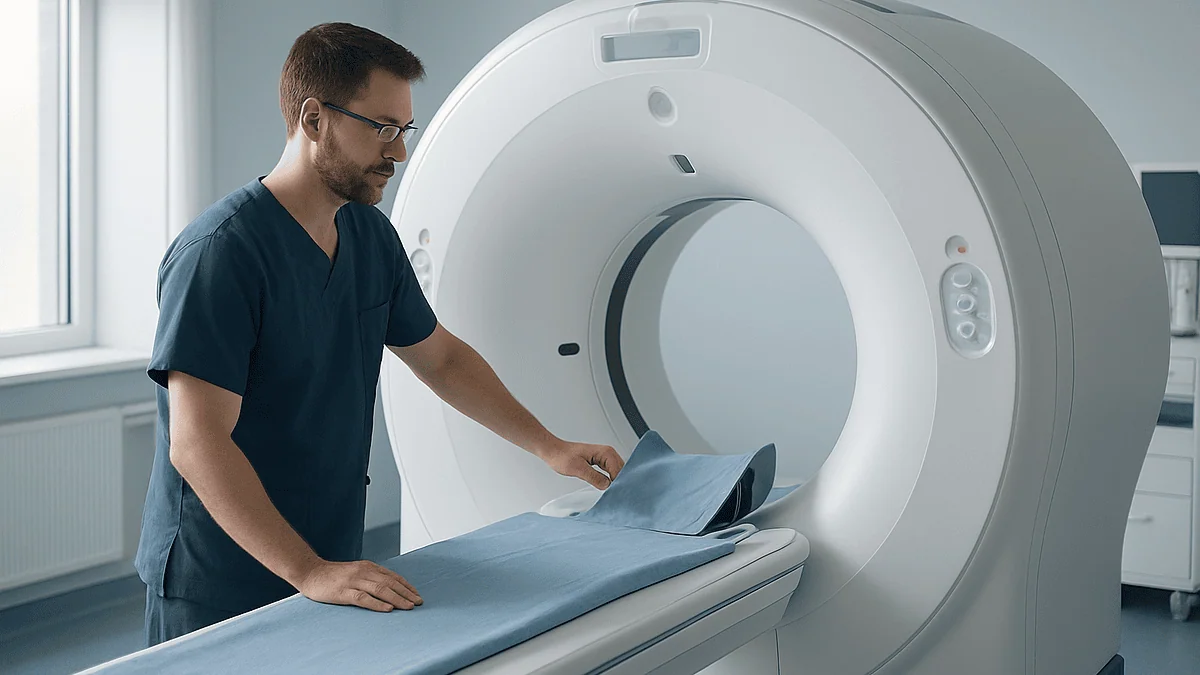
Head and neck cancer follow up scans and examinations stay on a schedule because most recurrences appear within the first few years after treatment, often before a person notices anything, and because radiation and surgery leave late effects that need monitoring. Guideline groups recommend frequent clinic examinations early, tapering over roughly five years, with imaging used selectively, guided by the treating team rather than fixed rules.
Six weeks after the last radiation session, the burn on the side of the neck has faded to a pale tan and the taste of metal is starting to lift. What has not lifted is the appointment list. There is a clinic visit next week, another the month after, and somewhere on the horizon a scan that everyone keeps calling “the twelve-week PET.” A reasonable person looks at that list and asks the obvious question: if treatment is finished, why is the hospital still booking me in so often?
The honest answer is that head and neck cancer follow up scans and examinations are not a formality. They are the second half of treatment, built around what is known about when and where these cancers tend to return, and around the slow-moving side effects of radiation and surgery that show up months or years later.
This article walks through what a surveillance schedule is for, what happens at each visit, why some people are scanned often and others hardly at all, and how to read the calendar without letting it run your life.
Why do head and neck cancer follow up scans stay on a fixed schedule?
Two facts drive the calendar. The first is timing. When cancers of the mouth, throat, voice box, sinuses or salivary glands come back, they tend to do so early. Guideline groups in the United States and United Kingdom describe the highest risk in the first two to three years after treatment, with risk falling steadily after that. A schedule that is dense at the start and sparse later simply mirrors that curve.
The second fact is anatomy. The head and neck is a crowded neighborhood. A recurrence the size of a pea at the base of the tongue can sit there without pain, without bleeding, and without changing how anything feels. A specialist with a light and a thin flexible scope can often see or feel it long before it announces itself. The clinic examination, not the scan, is the backbone of surveillance for that reason.
Scans add something the exam cannot. Radiation stiffens tissue and rearranges the landscape, so a surgeon’s fingers may no longer be able to judge whether a firm area in the neck is scar or something new. Imaging looks underneath, and in the case of PET-CT (a scan that combines a picture of where sugar is being burned with a picture of structure) it looks at activity rather than shape.
Treatment also leaves work to be done. Radiation to the neck can quietly slow the thyroid gland. Surgery and radiation can affect swallowing, jaw movement, dental health and hearing. The follow-up visit is where those problems are caught while they are still small. Keeping the schedule fixed protects against the very human tendency to drift once life feels normal again, which is exactly when a quiet recurrence is most likely to go unnoticed.
What actually happens at a follow-up appointment
Most visits follow a recognizable rhythm, even though every clinic arranges the furniture differently. It starts with conversation. The clinician asks about swallowing, voice, pain, weight, sleep, mood and whether anything has changed since last time. This is not small talk; new or changing symptoms are among the strongest reasons to order an unscheduled scan, so the questions carry weight.
Then comes the examination. The clinician looks inside the mouth with a light, checks the tongue and floor of the mouth, and feels systematically along the neck for lymph nodes. Lymph nodes are small bean-shaped filters of the immune system, and the neck has dozens of them; the pattern of which ones are enlarged matters as much as size. For cancers of the throat and voice box, a flexible nasoendoscopy usually follows. That is a thin, bendable camera passed through the nose to view the back of the throat and vocal cords, taking a minute or two and usually done with a numbing spray.
Depending on the treatment given, the visit may branch outward. A blood test may be added to check thyroid function. A dental or oral health review may be scheduled. A speech and language therapist may assess swallowing. Someone treated with radiation for a cancer of the nose or sinuses may have hearing checked.
Scans are ordered from within this framework, not on top of it. If the examination is reassuring and no symptoms have changed, many clinics do not image at every visit. If something is ambiguous, imaging is the next step. The visit ends with a plan for the next one, and with a clear route back if anything changes sooner. Cleveland Clinic and the NHS both describe this pattern of regular checkups continuing for several years after treatment.
What are the recommended follow-up guidelines for head and neck cancer?
People searching for head and neck cancer surveillance guidelines usually want a single official table, and there is a mild disappointment waiting: guidelines agree on the shape of follow-up far more than on the exact intervals. Consensus documents from oncology and head and neck surgery societies in North America and Europe converge on a few points.
Clinical examination is the foundation. Visits are frequent in the first year, less frequent in years two and three, and typically annual by years four and five. Many services then discharge to primary care or move to open access, meaning the person can contact the team directly if worried. The National Cancer Institute notes that people treated for head and neck cancer also carry a higher risk of developing a second primary cancer in the head and neck, lungs or esophagus, which is one reason lifelong vigilance about new symptoms is encouraged even after formal follow-up ends.
Imaging is recommended at a defined baseline after treatment, most often around three months after chemoradiation, to establish what the treated area now looks like and to check whether disease remains. Beyond that baseline, guidelines generally advise imaging when symptoms or examination findings prompt it, or when the anatomy cannot be examined reliably, rather than at set intervals for everyone.
Thyroid function testing is recommended periodically for anyone whose neck received radiation. Dental evaluation, swallowing assessment, hearing checks after certain chemotherapy drugs, and support to stop smoking and reduce alcohol all appear in the guidelines as part of surveillance, not as optional extras.
Where guidelines diverge is on routine repeat imaging in people who feel well and examine normally. The evidence that scheduled scans in that group change outcomes is limited, and most documents say so plainly. That uncertainty is why two people with similar cancers can be given different scan plans and both be receiving guideline-consistent care.
How often is follow up after throat cancer and other head and neck sites?
The table below summarizes the typical pattern described by consensus guidelines and by patient-facing summaries from the NHS and Cleveland Clinic. It is a shape, not a prescription. Your team may compress or stretch it based on stage, treatment type, how easy your anatomy is to examine, and how you are recovering.
| Time after treatment | Typical clinic examination frequency | Typical imaging approach | Other checks commonly added |
|---|---|---|---|
| First 3 months | Every few weeks while acute side effects settle | Baseline scan, often PET-CT or contrast CT/MRI, around 12 weeks after chemoradiation | Nutrition, swallowing, wound or skin review |
| Months 3–12 | Roughly every 1–3 months | Symptom- or finding-driven; sometimes a planned scan if baseline was uncertain | Thyroid blood test, dental review |
| Year 2 | Roughly every 2–4 months | Symptom- or finding-driven | Thyroid, swallowing, jaw mobility |
| Years 3–5 | Roughly every 4–6 months, moving to annual | Symptom- or finding-driven; chest imaging in some smokers | Thyroid, hearing if relevant, second cancer awareness |
| After year 5 | Annual or open access | Only if symptoms or findings prompt it | Ongoing dental and thyroid care, lifestyle support |
Throat cancer, meaning cancer of the oropharynx (the back of the tongue, tonsils and soft palate) or the larynx (voice box), follows this same shape. The difference is what the exam involves: a nasoendoscopy is nearly always part of the visit because those areas cannot be seen with a light alone. Mouth cancer follow-up leans more on direct inspection and less on scopes.
The intervals above are ranges drawn from guideline patterns and NHS descriptions of regular checkups for several years. A person whose scan at three months was clean and whose neck is easy to examine may sit at the sparser end. A person with dense post-radiation scarring, or one whose baseline scan was equivocal, will sit at the denser end. Neither is being treated better or worse; they are being matched to their own uncertainty.
What is a PET scan after head and neck cancer treatment for, and when is it done?
A PET-CT scan involves an injection of a small amount of radioactive sugar. Cancer cells and inflamed tissue burn sugar faster than resting tissue, so they light up. The CT part of the machine adds an anatomical map so the bright spots can be located precisely. MedlinePlus and the NHS both describe the test in plain terms: it takes roughly an hour from injection to finish, most of which is waiting for the tracer to circulate.
The most important PET scan after head and neck cancer treatment is the one taken around 12 weeks after chemoradiation. Why 12 weeks? Earlier than that, the treated area is still inflamed from radiation, and inflammation also burns sugar. Scan too soon and the picture is a blur of false alarms. Wait for the inflammation to settle and the scan becomes far more useful at distinguishing leftover cancer from healing tissue.
The strongest evidence for this approach comes from the PET-NECK randomized trial, published in the New England Journal of Medicine and indexed on PubMed. It enrolled 564 people with advanced head and neck cancer that had spread to neck lymph nodes and compared two strategies after chemoradiation: a planned operation to remove the neck lymph nodes in everyone, or a PET-CT at 12 weeks with surgery only if the scan showed persistent disease. Survival was similar between the groups, and the scan-guided group had far fewer operations. That trial is a major reason the 12-week PET-CT is now standard in many services.
What happens after that scan depends on its result. A clean scan usually means no planned neck surgery and a shift to examination-based surveillance. An equivocal scan may lead to a repeat scan a few months later or a biopsy. A clearly positive scan leads to a conversation about further treatment. Beyond this baseline, routine PET-CT at fixed intervals in people who feel well is not supported by strong evidence, and most guidelines reserve it for specific questions.
What is the most accurate scan to detect cancer coming back?
This is one of the most common searches, and the truthful answer is that there is no single most accurate scan. Each test answers a different question, and the best test is the one matched to the question being asked.
PET-CT is highly sensitive, meaning it rarely misses active disease of any meaningful size. Its weakness is specificity: inflammation, infection, recent dental work and even muscle tension can light up. A PET-CT that shows something is often the start of an investigation rather than the end of one.
Contrast-enhanced CT (a CT scan with an iodine-based dye injected to highlight blood vessels and tissue) is fast and good at showing bone involvement and lymph node size. It is less able than PET to tell an active node from a scarred one.
MRI uses magnetic fields rather than X-rays and gives the sharpest picture of soft tissue. For cancers of the tongue, nasopharynx (the area behind the nose) and skull base, it is often the preferred way to look at the primary site. It is slower, and some people find the enclosed machine difficult.
Ultrasound of the neck, sometimes with a needle sample of a suspicious node, is cheap in radiation terms (it uses none) and excellent for guiding a biopsy. It cannot see deep into the throat.
Then there is the clinical examination itself, which for surface areas of the mouth and throat can outperform every scan because the specialist sees the lining directly. The Mayo Clinic’s patient information on mouth and throat cancer describes endoscopy and biopsy as the way a suspicious area is confirmed, whatever any scan shows.
So the accurate approach is a system, not a machine: regular expert examination, a well-timed baseline PET-CT, and targeted CT, MRI or ultrasound when a specific question arises. Radiologists also stress that every scan is more accurate when there is a previous one to compare it against, which is another argument for a planned baseline.
Who is usually scanned regularly, and who is usually asked to wait
Surveillance is not one-size-fits-all, and the differences are deliberate. Some people are imaged often; others are examined carefully and scanned rarely. Understanding which group you are likely to be in can take some of the anxiety out of comparing notes with others in a waiting room or an online forum.
Regular or additional imaging is more likely when the primary site cannot be examined directly, for example a cancer deep in the nasopharynx or the sinuses. It is more likely after extensive radiation, because scar tissue makes the neck hard to assess by touch. It is more likely when the baseline scan was equivocal, when the original cancer was advanced, when it involved several lymph nodes, or when it had features on pathology (the microscopic examination of removed tissue) that predict a higher chance of return. Heavy smokers may also be offered periodic chest imaging because of the shared risk of lung cancer, a point the National Cancer Institute highlights in its discussion of second cancers.
People asked to wait, in the sense of being followed by examination alone unless something changes, are typically those with early-stage disease treated by surgery with clear margins, a normal baseline scan, an anatomy that is easy to inspect, and no new symptoms. For them, routine scanning adds radiation exposure, cost to the health system, and a real risk of false alarms without a demonstrated benefit. Being asked to wait is not being neglected; it reflects a low pre-test probability, the statistical likelihood that a scan will find something.
The category is not fixed. A new symptom, an unexplained finding on examination, or a change in overall health can move someone from the wait group to the scan group within a single visit. The treating team makes that call, and it is fair to ask them which group you are in and why.
What the first weeks and months after treatment usually look like
The early follow-up period is less about surveillance and more about recovery, though the two overlap. In the first month after radiation, skin reactions peak and then fade, mouth soreness slowly eases, and taste begins a long, uneven return. Visits during this window are about nutrition, pain control, hydration, and making sure a feeding tube (if one was placed) is still needed or can be removed. Weight is tracked closely because losing too much slows healing.
After surgery, the early visits focus on the wound, on swallowing and speech if the tongue or voice box was involved, and on shoulder and neck movement if lymph nodes were removed. A physiotherapist may be introduced early because stiffness sets in fast and is easier to prevent than to undo.
Somewhere around the three-month mark, attention shifts. This is when the baseline scan is usually taken, for the reasons described above, and when the first honest assessment of treatment response happens. Many people describe this scan as more stressful than treatment itself, because it is the first time the question “did it work?” gets a direct answer. That reaction is normal and worth naming to the team; many services can arrange support around it.
Between months three and twelve, the visits settle into a rhythm. Each one checks the same things, and the repetition is the point: change is easier to spot against a stable background. Thyroid blood tests typically start during this period, since radiation-induced hypothyroidism (an underactive thyroid gland, causing tiredness, weight gain and feeling cold) can develop gradually over the first year or two.
By the end of the first year, most people have a clearer sense of their new normal. Dry mouth, altered taste and some swallowing effort may persist, and the team will keep asking about them. Recovery timelines vary widely, and the ranges here reflect typical NHS and Cleveland Clinic descriptions rather than a schedule anyone should feel behind on.
Signs of head and neck cancer recurrence: what the examination is looking for
People naturally want a list of signs of head and neck cancer recurrence to watch for at home. It is more useful to understand what the clinician is looking for and why, because most changes after treatment turn out to be side effects rather than cancer, and a checklist without context mostly generates worry.
At the primary site, the specialist looks for an ulcer that has appeared or failed to heal, a new firm area within soft healed tissue, or bleeding that has no clear cause. Radiation-damaged tissue can ulcerate on its own, so the question is always whether something is new and progressing rather than whether it exists at all.
In the neck, the exam is hunting for a lymph node that is new, growing, or firmer than its neighbors. After radiation, a firm neck is common, which is exactly why the same clinician examining the same neck at regular intervals is so valuable. Consistency turns a vague finding into a trend.
Symptoms carry weight when they are new, persistent and one-sided. Pain in one ear with a normal ear examination can reflect a problem at the base of the tongue or throat, because those areas share a nerve supply with the ear. A change in voice that lasts weeks, difficulty swallowing that is getting worse rather than better, or numbness in part of the face or tongue would each prompt closer inspection. The NHS and Mayo Clinic list similar warning features for head and neck cancers in general, and the same features apply after treatment.
None of this is for self-diagnosis. The purpose is to help you describe change accurately when you are asked, and to make it easier to recognize when something deserves an earlier call rather than waiting for the next booked date.
Beyond recurrence: thyroid, teeth, swallowing and hearing
If follow-up were only about cancer coming back, most people could be discharged after three years. It continues longer because treatment side effects have their own timelines, several of them measured in years.
The thyroid sits in the lower front of the neck, squarely inside most radiation fields for throat and neck cancers. Radiation slowly damages it, and the National Cancer Institute lists hypothyroidism as a recognized late effect. The symptoms are vague, which is why guidelines recommend a periodic blood test rather than waiting for complaints. If the gland underperforms, thyroid hormone replacement is straightforward, and the decision and any adjustments belong to the treating clinician.
Teeth and jaw need attention because radiation reduces saliva and weakens the jawbone’s blood supply. Dry mouth accelerates decay, and a jaw that has been irradiated heals poorly after an extraction, a problem called osteoradionecrosis (bone death in the jaw following radiation). Regular dental review, fluoride care and careful planning before any dental surgery are part of surveillance for that reason.
Swallowing can worsen years after radiation as tissues stiffen, a process called fibrosis. Speech and language therapists monitor for this and teach exercises that help maintain function. Trismus, meaning a jaw that will not open fully, follows the same pattern and responds best to early stretching.
Hearing can be affected by certain platinum-based chemotherapy drugs and by radiation near the ear. Hearing tests are often included when those treatments were used. Lymphedema, a swelling of the face or neck from disrupted lymph drainage, can appear months after surgery or radiation and is managed with specialized massage and compression.
Each of these problems is more manageable when caught early, and none of them shows up on a PET scan. This is the practical reason why the clinic visit, not the imaging appointment, is the anchor of long-term follow-up.
Why HPV status and smoking history change the plan
Two pieces of history reshape surveillance more than almost anything else: whether the cancer was caused by human papillomavirus, and whether the person smokes.
HPV is a common virus, and certain types cause cancers of the oropharynx, particularly the tonsils and base of the tongue. The National Cancer Institute explains that HPV-related oropharyngeal cancers behave differently from those caused by tobacco and alcohol. They tend to affect younger people, respond well to treatment, and carry a lower risk of a second cancer in the head and neck because the surrounding lining has not been damaged by decades of smoke.
That difference changes what surveillance is for. In HPV-related disease, the main concern is detecting the uncommon recurrence, and when these cancers do return they sometimes do so in distant sites such as the lungs rather than locally. Some clinicians therefore consider chest imaging more carefully in this group, while the local examination remains important. Research into blood tests that detect fragments of HPV DNA as an early warning of recurrence is active and promising, but these tests are not yet part of standard guideline recommendations, and their role is still being defined.
For tobacco-related cancers, the whole lining of the mouth, throat, esophagus and airways has been exposed to the same carcinogens. The risk is not just recurrence but a new cancer somewhere along that shared surface, a phenomenon called field cancerization. Follow-up for this group leans harder on examining the entire upper airway, on considering periodic chest imaging, and on sustained support to stop smoking and reduce alcohol, because continuing either after treatment measurably raises the risk of a second cancer.
Neither history is a judgment. Both are simply information that lets the team point surveillance at the places where trouble is most likely to arise.
What people often get wrong about follow up scans
A few misunderstandings come up again and again in clinics and online communities, and correcting them makes the schedule easier to live with.
“If they were really worried, they would scan me every visit.” The opposite is closer to the truth. Frequent scanning in people who feel well and examine normally has not been shown to improve outcomes, and it produces false alarms that lead to biopsies of scar tissue. A team that examines carefully and scans selectively is following the evidence, not cutting corners.
“A clear PET scan means I am definitely fine.” PET-CT is sensitive but not perfect. Very small deposits and certain slow-growing tumors can escape detection. A clean scan is genuinely good news, and it is one piece of information alongside the examination and how you feel.
“Something lit up, so the cancer is back.” Inflammation, infection, recent dental treatment, tense muscles and normal tissue such as the vocal cords after speaking can all light up on PET. Uptake is a prompt for further assessment, not a verdict.
“Once I hit five years, I never need to think about it again.” Late recurrences are uncommon but real, and second cancers in the head and neck, lungs or esophagus remain a lifelong consideration, as the National Cancer Institute notes. Formal follow-up may end; awareness of new, persistent symptoms should not.
“Radiation from scans is dangerous, so I should refuse them.” CT and PET do involve ionizing radiation, and that is precisely why guidelines avoid unnecessary repeats. A scan ordered to answer a specific clinical question carries a benefit that outweighs the small added risk. Declining a targeted scan trades a small theoretical risk for a larger real one.
“Every symptom after treatment means recurrence.” Most do not. Dry mouth, altered taste, neck stiffness and fatigue are expected consequences of treatment. The useful question is whether a symptom is new, persistent and worsening.
What is the average life expectancy for someone with head and neck cancer?
People ask this question because they want to know how much of their future the diagnosis has claimed. It deserves a straight answer, and the straight answer is that no single average is meaningful for a group of cancers this varied.
Head and neck cancer is an umbrella covering the lips, mouth, tongue, throat, voice box, sinuses, nasal cavity and salivary glands. Outlook differs enormously by site, by stage at diagnosis, by whether the cancer was HPV-related, by general health, and by whether the person continues to smoke. An early-stage cancer of the vocal cord and an advanced cancer of the sinus that has spread to the neck share a category name and almost nothing else. The National Cancer Institute describes these differences and notes that HPV-related oropharyngeal cancers generally have a more favorable prognosis than tobacco-related cancers of the same site.
Statistics you may find online are usually five-year relative survival figures, meaning the proportion of people alive five years after diagnosis compared with people of the same age without the cancer. Such figures are drawn from people diagnosed years ago, before current treatments were standard, and they describe populations rather than individuals. They cannot tell you what will happen to you, and this article deliberately does not quote them for that reason.
What surveillance contributes to this picture is not a promise but a mechanism. Recurrences found while small and local are more often treatable with further surgery or radiation than those found late. Second cancers found early carry better odds than those found once symptoms are severe. Late effects such as hypothyroidism and swallowing decline, managed early, protect quality of life over the years that follow.
The person who can give you a meaningful sense of your own outlook is the oncologist who knows your pathology, your scans and your health. Asking directly, and asking what would change the picture, is reasonable and usually welcomed.
Questions to ask your care team
A follow-up plan makes more sense when you understand the reasoning behind your own version of it. These questions tend to produce useful answers and are easy to bring to a visit on a phone or a scrap of paper.
- Which group am I in for surveillance: mainly examination, or examination plus planned imaging? What about my cancer or treatment put me there?
- When is my baseline scan, what type will it be, and what are the possible results and next steps for each?
- How will you be able to tell scar tissue from recurrence in my neck, and what would prompt an unscheduled scan?
- Which specific changes should make me call before my next booked appointment, and who exactly do I call?
- How often will my thyroid be checked, and who is responsible for acting on the result?
- Do I need a dental review before or after treatment, and what should my dentist know about my radiation field before any extraction?
- Should I be seeing a speech and language therapist or physiotherapist now, even if swallowing and neck movement feel acceptable?
- Is chest imaging part of my plan, and if so, why?
- What support is available for stopping smoking or reducing alcohol, and how does that change my risk of a second cancer?
- How long will formal follow-up last, and what happens at the end: discharge, open access, or transfer to my primary care clinician?
- Is there anything about my HPV status, pathology or stage that changes the usual schedule for me?
- Who coordinates my care if I see several specialists, and how do I reach that person between visits?
Writing the answers down matters more than it sounds. Follow-up spans years, clinicians change, and a personal record of why decisions were made is something no electronic system reliably provides. Some people bring a partner or friend to visits specifically to take notes while they concentrate on listening.
When to call your doctor
The follow-up schedule is a floor, not a ceiling. Every head and neck cancer team expects to be contacted between appointments when something changes, and would far rather assess ten harmless changes than miss one that mattered. Contact your team promptly, without waiting for the next booked date, if you notice any of the following.
- A new lump in the neck, or an existing lump that is growing or becoming firmer
- A sore, ulcer or patch in the mouth or throat that has not healed after two to three weeks
- Bleeding from the mouth, nose or throat, or coughing up blood, with no obvious cause
- Pain in one ear that persists, particularly if the ear itself feels normal
- Swallowing that is becoming harder rather than easier, or food repeatedly sticking
- A voice change or hoarseness lasting more than a few weeks
- Unexplained weight loss, or new numbness or weakness in the face, tongue or shoulder
- Persistent tiredness, feeling cold and weight gain, which can signal an underactive thyroid
- Jaw pain, exposed bone or a tooth socket that will not heal after dental work
Seek urgent or emergency care the same day for noisy or difficult breathing, heavy bleeding that does not stop with gentle pressure, sudden inability to swallow liquids or your own saliva, a high fever with a rapidly swelling neck, or sudden severe pain. These are uncommon, and they are exactly the situations the emergency route exists for. The NHS and Mayo Clinic describe similar warning features in their patient guidance for head and neck cancers.
Above all, use the contact route your team has given you. Many services provide a specialist nurse line for this purpose. Calling with a change that turns out to be nothing is not wasting anyone’s time; it is the surveillance system working as designed. The decision about whether a change needs a scan, a scope or simple reassurance rests with your treating team, and reaching them early gives them the widest range of options.
Frequently asked questions
What are the recommended follow-up guidelines for head and neck cancer?
Consensus guidelines recommend regular specialist examination for about five years, most frequent in the first year and tapering to annual, with a baseline scan roughly three months after treatment and further imaging when symptoms or findings prompt it. Periodic thyroid testing after neck radiation, dental review, swallowing assessment and smoking cessation support are included. Exact intervals vary by cancer site, stage and treatment, and the treating team sets them.
How often is follow up after throat cancer?
Follow-up after oropharyngeal or laryngeal cancer typically involves visits every one to three months in the first year, every two to four months in the second, and every four to six months moving toward annual by years three to five. Each visit usually includes a flexible nasoendoscopy to view the throat and vocal cords. Your team may adjust these ranges according to your individual risk and recovery.
What is a PET scan after head and neck cancer treatment looking for?
It looks for tissue that is burning sugar faster than normal, which can indicate remaining or returning cancer. The key PET-CT is usually taken about 12 weeks after chemoradiation, once treatment inflammation has settled, to assess response and decide whether neck surgery is needed. A clean result generally allows examination-based surveillance; an uncertain result may lead to a repeat scan or biopsy.
What is the most accurate scan to detect cancer?
There is no single most accurate scan. PET-CT rarely misses active disease but often flags inflammation as well; MRI gives the clearest soft tissue detail for sites like the tongue and skull base; CT shows bone involvement and node size; ultrasound guides needle biopsies. Accuracy comes from matching the test to the question and comparing it against a previous baseline, alongside expert clinical examination.
What are the signs of head and neck cancer recurrence?
Clinicians watch for a new or growing neck lump, a mouth or throat ulcer that fails to heal within two to three weeks, unexplained bleeding, persistent one-sided ear pain with a normal ear, worsening swallowing, lasting voice change, or new facial or tongue numbness. Most changes after treatment are side effects rather than recurrence, so the useful test is whether a symptom is new, persistent and worsening.
What are some red flag symptoms for head and neck cancer?
Red flags that warrant prompt contact with your team include a neck lump, a non-healing mouth ulcer, unexplained bleeding, persistent hoarseness, difficulty swallowing that is worsening, one-sided ear pain, or unexplained weight loss. Same-day urgent care is needed for difficult breathing, heavy bleeding, inability to swallow saliva, or a rapidly swelling neck with fever. The NHS and Mayo Clinic list similar warning features.
What is the average life expectancy for someone with head and neck cancer?
No single average applies, because head and neck cancer covers many sites and stages with very different outlooks. Early-stage vocal cord cancer and advanced sinus cancer share a category name and little else. HPV-related throat cancers generally carry a more favorable prognosis than tobacco-related ones. Published statistics describe past populations, not individuals; your oncologist can give a meaningful picture based on your own pathology and scans.
Do I need a scan at every follow-up appointment?
Usually not. Most guidelines recommend a baseline scan after treatment and then imaging only when the examination or symptoms raise a question, or when the anatomy cannot be examined reliably. Routine scans in people who feel well and examine normally have not been shown to improve outcomes and generate false alarms. Being followed by examination alone typically reflects lower risk rather than less thorough care.
Why is my thyroid being tested during cancer follow-up?
The thyroid gland sits within most neck radiation fields and can slowly lose function over the first years after treatment, a late effect recognized by the National Cancer Institute. Symptoms such as tiredness, feeling cold and weight gain are easy to attribute to recovery, so guidelines recommend periodic blood tests rather than waiting for complaints. Any treatment decision rests with your clinician.
What happens when formal follow-up ends after five years?
Many services discharge to primary care or move to open access, meaning you can contact the team directly if worried. Late recurrences are uncommon but possible, and people treated for head and neck cancer keep a higher lifelong risk of second cancers in the head and neck, lungs and esophagus. Continued dental care, thyroid monitoring and prompt reporting of new persistent symptoms remain sensible indefinitely.
References
- PubMed: PET-CT Surveillance versus Neck Dissection in Advanced Head and Neck Cancer (PET-NECK trial)
- NHS: Head and neck cancer
- MedlinePlus: PET Scan
This article is for general information only and is not a substitute for professional medical advice. Please consult a qualified doctor about your individual situation.

More from the Blog
Ablation or Surgery for Liver Cancer? What Makes Each Option Suitable
Ablation and surgery are both used to treat liver cancer that has not spread beyond the liver. Ablation destroys a small tumor in place…

How Doctors Choose Between HDR and LDR Brachytherapy: Temporary Source or Permanent Seeds
Doctors choose between HDR and LDR brachytherapy based on the cancer type and size, how the tumor sits next to healthy organs, the patient's…

Immunotherapy Cycles Explained: Why Infusions Repeat Every Few Weeks and for How Long
Immunotherapy is usually given in cycles because the drugs are cleared from the body over days to weeks and the immune response they trigger…
How to Support Someone Through Radiation Therapy: Rides, Meals and Watching for Fatigue
To support someone going through radiation, take on the repeatable jobs: a shared ride rota for daily weekday appointments, small frequent meals matched to…
Recovery After Melanoma Surgery: Stitches, Skin Grafts and Getting Back to Activity
Recovery after melanoma surgery usually takes about one to three weeks for a wound closed with stitches, and several weeks longer when a skin…
Who Sits on a Head Cancer Tumor Board and How the Group Reaches a Recommendation
A head and neck cancer tumor board is a scheduled meeting where surgeons, radiation oncologists, medical oncologists, radiologists, pathologists, and supportive specialists review one…