

Why Immunotherapy Side Effects Can Look Like an Infection: What the Care Team Checks

Key Takeaways
- Immune related adverse events mimic infection because both run on the same inflammatory machinery, so fever, cough, and diarrhea alone cannot separate them.
- In the trial evidence reviewed by ASCO, serious immune events occurred in roughly one in ten to one in five people on single PD-1 or PD-L1 agents and in more than half on CTLA-4 plus PD-1 combinations.
- Skin effects usually appear first, gut and liver inflammation cluster in the second and third month, thyroid changes often emerge later, and pneumonitis has no reliable window.
- PD-L1 is a tissue biomarker measured once on a biopsy to guide treatment choice; it is not a blood tumor marker and does not predict side effects.
- Because corticosteroids weaken the response to infection, teams test for bacteria, viruses, and C. difficile before or alongside starting them, often treating for both until results return.
- Immune-related events can surface months after the final infusion, so anyone who has had a checkpoint inhibitor should mention it to every clinician they see for a new symptom.
Immunotherapy side effects can look like an infection because both are driven by inflammation, so fever, cough, diarrhea, and fatigue overlap. Immune related adverse events happen when checkpoint inhibitors release the immune system's brakes and healthy tissue gets caught in the response. The care team distinguishes the two with cultures, stool and blood tests, imaging, and timing, and often treats for both until results are clear.
Three weeks after her second infusion, a woman in her sixties wakes with a temperature of 100.9, a loose stomach, and the tired ache she associates with the flu. Her first instinct is a familiar one: rest, fluids, wait it out. Her second is the one that matters. She calls the number on her treatment card, and the nurse who answers does not say “probably a bug.” She says, “Come in this morning.”
That instinct to treat a possible infection and a possible immune reaction with equal seriousness sits at the center of modern cancer care. Immune related adverse events, the inflammatory side effects of checkpoint immunotherapy, borrow the same vocabulary the body uses for infection. A fever is a fever. A cough is a cough. Only the investigation tells you which story you are in.
This explainer walks through why the overlap exists, what the care team actually orders when a patient calls, and how the two problems are managed once the picture becomes clear.
What are immune related adverse events, and why can they look like an infection?
Immune related adverse events, usually shortened to irAEs, are side effects that occur when a cancer immunotherapy makes the immune system attack healthy tissue as well as the tumor. They are not allergic reactions and they are not the toxic cell damage that chemotherapy causes. They are inflammation, aimed at the wrong target.
The overlap with infection is not a coincidence. Inflammation is the body’s standard response to microbes: blood vessels widen, immune cells flood in, the thermostat in the brain rises, and the gut speeds up. When a checkpoint inhibitor removes the brakes on T cells, which are the white blood cells that recognize and destroy abnormal cells, the same machinery switches on without any germ present. The result is a fever with no bacteria, a colitis with no parasite, a pneumonia-like picture on a chest scan with no virus.
Two facts shape how seriously teams take this. First, irAEs are common. In the trial evidence reviewed for the American Society of Clinical Oncology (ASCO) guideline, most people on combination checkpoint therapy experienced some immune-related effect, and serious (grade 3 or 4) events occurred in roughly one in ten to one in five people on a single PD-1 or PD-L1 agent and in over half of those on a CTLA-4 plus PD-1 combination. Second, people with cancer really do get infections, and the treatments used to calm irAEs, mainly corticosteroids, make infection more likely still.
Both problems, then, can exist at once. A person can have immune-related colitis and a bacterial gut infection on top of it. That is why the care team rarely picks one explanation on the phone. The safe move is to test for infection while watching for inflammation, and to let the results, rather than the symptoms alone, decide the treatment.
How do immune checkpoint inhibitors actually work?
Picture a T cell as a security guard with a very sensitive alarm. Left unchecked, that guard would attack the body’s own cells, so evolution installed a series of brakes called immune checkpoints. These are proteins on the surface of immune cells that, when engaged, tell the T cell to stand down. PD-1 and CTLA-4 are two of the best known.
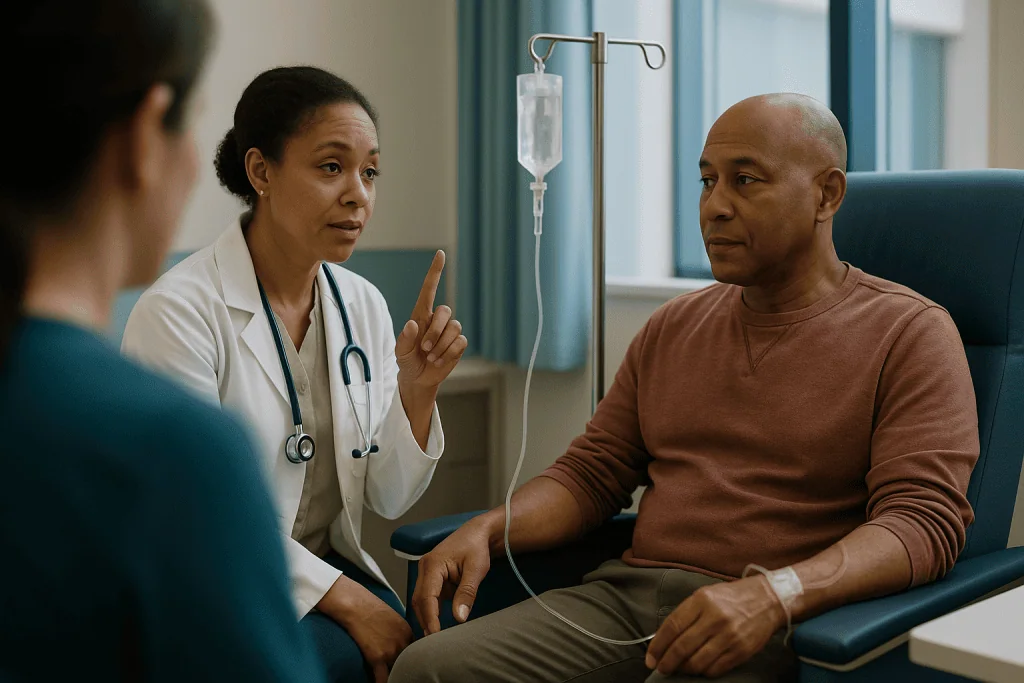
Some tumors learn to press those brakes on purpose. A cancer cell that displays PD-L1, the partner molecule that fits PD-1 like a key in a lock, can effectively whisper to an approaching T cell, “Nothing to see here.” The T cell stands down and the tumor survives.
Immune checkpoint inhibitors are monoclonal antibodies, which are laboratory-made proteins designed to stick to one specific target. Depending on the drug, they block PD-1, PD-L1, or CTLA-4. With the brake disengaged, T cells that had been silenced can recognize the tumor again. The National Cancer Institute (part of the NIH) describes this as taking the brakes off the immune system rather than adding a poison to the body.
Here is the trade-off. The brake pedal does not know the difference between a tumor and a thyroid gland. When PD-1 or CTLA-4 signaling is blocked everywhere, T cells that were quietly tolerating normal skin, gut lining, liver, lungs, or hormone glands may stop tolerating them. That is the mechanism behind every irAE in this article.
Timing follows from mechanism, too. Chemotherapy side effects appear within days because the drug damages fast-dividing cells directly. Immune effects take longer, because T cells need time to expand, travel, and settle into a tissue before inflammation becomes noticeable. Some effects emerge weeks in; others surface months after the last infusion, when the drug itself has long since cleared.
What is PD-L1, and is it a tumor marker?
PD-L1 is a protein, not a substance floating in the blood. It sits on the surface of some tumor cells and some immune cells. When a pathologist reports “PD-L1 positive” or gives a percentage, they are describing how many cells in a piece of tumor tissue stained for the protein under a microscope, using a technique called immunohistochemistry.
That makes PD-L1 a biomarker rather than a tumor marker in the everyday sense. Tumor markers such as PSA or CA-125 are measured in blood and used to follow how a cancer is behaving over time. PD-L1 is measured once, on tissue, to help predict whether a checkpoint inhibitor is a reasonable option for a particular cancer. A high PD-L1 result raises the odds that PD-1 or PD-L1 blockade will be useful, but the NCI notes that some people with low or absent PD-L1 still respond and some with high PD-L1 do not.
People also ask which immunotherapy modality PD-L1 inhibitors belong to. They are immune checkpoint inhibitors, a subgroup of monoclonal antibody therapy, which in turn sits within the broader family of cancer immunotherapy. Other modalities in that family include CAR T-cell therapy, cancer vaccines, and cytokine treatments, each with a different mechanism and a different side-effect profile.
One misunderstanding worth correcting early: a PD-L1 result says nothing reliable about whether you will get side effects. The immune reaction that inflames a healthy organ happens because the brakes are released body-wide, not because the tumor carried a particular label. A person whose tumor was PD-L1 negative can still develop colitis or thyroid inflammation, and a person with a very high PD-L1 score may sail through treatment with nothing more than mild itching.
What are the five most common immune-related adverse events?
Across checkpoint inhibitor trials summarized in the ASCO guidelines, five organ systems account for most events. Each has an infectious lookalike, which is the reason they belong in this article.

- Skin. Rash and itching are the most frequent and usually the earliest effects. The infectious mimics are drug-unrelated viral rashes and, less often, shingles. A widespread blistering rash or mouth sores are taken far more seriously than dry, itchy patches.
- Gut. Diarrhea and colitis, meaning inflammation of the large bowel lining, are the leading cause of hospital admission for irAEs and are more common with CTLA-4 agents. The mimics are food poisoning, viral gastroenteritis, and Clostridioides difficile infection.
- Endocrine glands. Thyroid inflammation is the most common, producing an overactive phase, an underactive phase, or both. Rarer are inflammation of the pituitary gland (hypophysitis) and of the adrenal glands. Fatigue, headache, and low blood pressure from these can look like a viral illness or sepsis.
- Liver. Immune hepatitis is usually silent and picked up on routine blood tests before each infusion. When it causes symptoms, nausea, right-sided abdominal ache, and yellowing skin overlap with viral hepatitis.
- Lungs. Pneumonitis is inflammation of lung tissue. Its cough, breathlessness, and patchy shadows on imaging are almost indistinguishable from pneumonia without further testing.
Less common but important targets include the joints, kidneys, heart muscle, nerves, and eyes. Inflammation of the heart muscle (myocarditis) is rare in the ASCO data but carries the highest risk, which is why chest pain or a racing heartbeat during treatment is never dismissed as anxiety over the phone.
The pattern to hold onto is this: the five common events map onto five ordinary complaints of daily life. That ordinariness is precisely what makes them dangerous to ignore.
Immunotherapy side effects timeline: when do immune related adverse events usually show up?
Timing is one of the most useful clues the care team has, though never a rule. The ASCO guideline authors, drawing on pooled trial data, describe a rough order of appearance that reflects how quickly released T cells reach different tissues.
Skin changes tend to arrive first, often within the first several weeks of treatment. Gut inflammation typically follows, clustering in the second and third month, and earlier with CTLA-4 combinations. Liver inflammation most often appears around the same window or slightly later. Endocrine effects, especially thyroid changes, commonly emerge after the second month, partly because hormone glands fail gradually and partly because the symptoms are vague enough to be missed for a while. Pneumonitis has no dependable window and has been reported from the first weeks to well beyond a year.
Two features of this timeline surprise people. The first is that events can appear after treatment ends. Because the immune system, not the drug, is doing the work, inflammation can surface months after the final infusion, when a person may already be under the care of a different doctor who does not think of immunotherapy at all. The NCI’s patient information on immunotherapy side effects makes exactly this point: effects can occur during or after treatment.
The second is that timing can argue against infection. A new fever and cough on day 3 of a course of antibiotics for a confirmed urinary infection has an obvious explanation. The same symptoms eight weeks into checkpoint therapy, with clear cultures and a scan showing symmetrical ground-glass shadows, shifts the balance toward pneumonitis.
Treat these ranges as a compass rather than a calendar. An event outside the usual window is still an event, and the care team investigates whichever week it arrives.
Fever on immunotherapy: infection, inflammation, or both?
A fever during checkpoint therapy has at least four plausible causes, and the care team works through them in a specific order because the consequences of missing each one differ.
Infection comes first, not because it is the most likely, but because it is the most time-sensitive. People who have also received chemotherapy may have low neutrophils, the white cells that fight bacteria, and a bacterial bloodstream infection in that setting can become life-threatening within hours. Even without chemotherapy, cancer itself and any steroids already on board lower defenses. Blood cultures, a urine sample, a chest X-ray, and a full blood count are standard first steps. Many teams will start broad antibiotics while those results are pending, following the general principle that a possible serious infection is treated first and questioned later.
Immune-related inflammation is considered in parallel. Fever can accompany colitis, hepatitis, pneumonitis, or hypophysitis, so the same visit usually includes liver tests, thyroid and cortisol levels, and questions about bowel habits and breathing. A pattern of low-grade fever with rising liver enzymes and no infectious source points one way; a spiking fever with a raised neutrophil count and a cloudy urine test points another.
Infusion reactions, which happen during or shortly after the drip, are a separate category, more like an allergic response, and usually settle quickly.
The cancer itself can also cause fever, particularly some lymphomas and kidney cancers.
One practical request from most teams: call before taking anything to bring the temperature down. Fever-reducing medicines can hide the very signal the team is trying to read, and knowing the untreated temperature and its timing helps them judge urgency. Whether and what to take is a decision for the treating team, who know your counts and your other medicines.
Diarrhea on immunotherapy: is it colitis or a stomach bug?
Diarrhea is where the overlap between infection and immune injury causes the most confusion, and where the wrong assumption does the most harm. Immune-related colitis that is treated as a stomach bug for a week can progress to bowel perforation. A C. difficile infection treated with high-dose steroids can spread unchecked. The two must be separated before treatment escalates.
The first step is stool testing. Samples are checked for C. difficile toxin, common bacterial pathogens, and sometimes viruses and parasites, depending on travel and exposure. A negative panel does not prove immune colitis, but a positive one changes the plan immediately. Blood tests look for inflammation markers, dehydration, and electrolyte loss. Some teams also measure fecal calprotectin, a protein released by inflamed bowel lining, which rises in both immune and infectious colitis but helps gauge severity.
Frequency and character matter. The ASCO grading system counts extra stools per day over a person’s baseline and asks about blood, mucus, night-time symptoms, and abdominal pain. The care team asks these questions not so you can diagnose yourself but because the answers decide whether you are managed at home with close phone contact or admitted for intravenous fluids and further tests.
When the picture remains unclear or symptoms are moderate to severe, a flexible sigmoidoscopy or colonoscopy is often arranged. A camera examination of the bowel with small tissue samples can distinguish the inflammatory pattern of immune colitis from infectious changes and can also detect cytomegalovirus, a virus that sometimes reactivates in the gut once steroids begin.
Timing helps again. Infectious gastroenteritis usually peaks and fades within days. Immune colitis tends to build, and it rarely improves on its own without the immunotherapy being paused. Antidiarrheal medicines from the pharmacy can mask that trajectory, which is why teams ask patients to call before using them.
Pneumonitis after immunotherapy: why a new cough gets a CT scan
Pneumonitis is inflammation of the lung tissue itself, the air sacs and the delicate walls between them, without a germ as the cause. Pneumonia is infection of the same tissue. On a plain chest X-ray they can look identical, which is why a new dry cough, breathlessness on stairs that were easy last week, or a drop in oxygen reading during checkpoint therapy almost always leads to a CT scan of the chest.
In the trial data reviewed by the ASCO guideline panel, pneumonitis occurred in a small minority of people on single-agent PD-1 or PD-L1 therapy, in the range of a few percent, and more often with combinations or in people with lung cancer or prior chest radiotherapy. Its rarity is exactly why it is easy to miss. A cough in winter is a cold until proven otherwise, unless someone is on immunotherapy.
The CT scan helps in two ways. Certain patterns, such as symmetrical hazy “ground-glass” shadows in both lungs or inflammation tracking along the airways, lean toward an immune cause. A single dense patch with a fluid collection leans toward bacterial infection. Radiologists are careful to say “lean,” because the overlap is real.
Alongside imaging, the team measures oxygen saturation, sends sputum and blood cultures, and tests for respiratory viruses. When results conflict or the person is deteriorating, a bronchoscopy may be arranged. This is a procedure in which a thin flexible camera is passed into the airways to wash out and sample fluid, which can be tested for bacteria, fungi, viruses including Pneumocystis, and the cell types that characterize immune inflammation.
Because the stakes are high on both sides, it is common for someone with a suspected pneumonitis to receive antibiotics and corticosteroids at the same time until the infectious work-up is complete. That is not indecision. It is the standard approach the ASCO and Society for Immunotherapy of Cancer guidelines describe when the two diagnoses cannot yet be separated.
What does the care team check to tell an immune-related event from an infection?
No single test settles the question. The care team assembles a picture from timing, pattern, blood work, microbiology, and imaging, then weighs where the balance of evidence sits. The table below shows the kinds of clues clinicians describe in the ASCO and SITC guidance. It is a map of their reasoning, not a checklist for home use.
| Clue | Leans toward infection | Leans toward immune-related event | What is usually ordered |
|---|---|---|---|
| Onset | Sudden, over hours to a day | Gradual, over days to weeks | Careful history of first symptom |
| Fever pattern | High, spiking, with chills | Low-grade or absent | Temperature record, blood cultures |
| White cell count | Raised neutrophils, or very low after chemotherapy | Often normal; eosinophils may rise | Full blood count with differential |
| Stool | Pathogen or C. difficile toxin detected | Tests negative; inflammation on scope | Stool panel, calprotectin, sigmoidoscopy |
| Chest imaging | Single dense area, fluid collection | Symmetrical ground-glass or airway-hugging pattern | CT chest, cultures, sometimes bronchoscopy |
| Liver tests | Viral hepatitis markers positive | Rising enzymes with negative viral screen | Liver panel, hepatitis A/B/C tests |
| Response to antibiotics | Improvement within days | No change or worsening | Reassessment visit |
Two habits distinguish experienced teams. They repeat tests rather than trusting one snapshot, because a liver enzyme that is drifting upward over three days tells a different story from one that is high once. And they keep both diagnoses alive until one is disproved, since the treatments pull in opposite directions: antibiotics do nothing for immune colitis, and steroids weaken the response to a bacterial infection.
For the person in the middle of this, the practical takeaway is to give the team the full timeline: when each symptom started, what changed day by day, and what you have taken for it. That history is often the most diagnostic data point they receive.
How are immune related adverse events treated once infection is ruled out?
Management follows a graded approach that the ASCO guideline lays out in detail, and it rests on two levers: pausing the immunotherapy and, when needed, calming the immune system directly.
Mild events, such as a limited rash or a small increase in stool frequency, are often managed with close monitoring and supportive care while immunotherapy continues. Moderate events usually lead to holding the next dose until things settle. Severe events typically mean stopping treatment, at least for now, and admitting the person to hospital.
Corticosteroids are the mainstay for moderate and severe events in most organs. They work by broadly dampening T-cell activity and inflammatory signaling, which is why they must not be started until infection has been reasonably excluded or is being treated at the same time. Once symptoms improve, the guideline approach is to taper gradually over weeks rather than stop abruptly, because rebound inflammation is common when the brake is released too fast. The schedule is set and adjusted by the treating team based on how the organ responds.
When steroids do not work within a few days, other immunosuppressive medicines by class may be added. For colitis, agents that block the inflammatory protein TNF are the usual next step. For other organs, different targeted agents are chosen. Endocrine events are the exception to the steroid rule: an underactive thyroid or adrenal gland is treated with hormone replacement, and the immunotherapy can often continue.
Because steroids and other immunosuppressants raise infection risk, the team may also consider preventive antimicrobials during prolonged courses, particularly against Pneumocystis pneumonia, and will monitor blood sugar, blood pressure, and mood.
Whether checkpoint therapy is restarted afterward depends on the organ involved, the severity, how fully it resolved, and how the cancer is responding. The ASCO guideline offers frameworks for that judgment, but the decision belongs with the oncology team and the patient together.
Who is usually offered checkpoint immunotherapy, and who is asked to wait?
Checkpoint inhibitors are now used across many cancers, including melanoma, lung, kidney, bladder, head and neck, some gastrointestinal cancers, certain lymphomas, and tumors with specific genetic features regardless of where they started. Whether a person is offered one depends on the cancer type, its stage, prior treatments, and in some cases the PD-L1 result described earlier.
Some people are asked to wait, to proceed with extra caution, or to consider alternatives. The reasons almost all trace back to the mechanism: releasing immune brakes is riskier when the immune system is already misbehaving or when a person cannot afford the consequences of inflammation.
- Active autoimmune disease. Conditions such as inflammatory bowel disease, rheumatoid arthritis, or lupus can flare. Many people with well-controlled autoimmune disease are still treated, but the guidelines advise individualized discussion and closer monitoring.
- Organ transplant. The same T cells that attack a tumor can attack a transplanted kidney or liver, and the anti-rejection medicines that protect the graft work against the immunotherapy.
- A previous severe irAE. Someone who had life-threatening myocarditis or pneumonitis on an earlier checkpoint inhibitor is usually not rechallenged.
- Heavy immunosuppression. High-dose steroids for another reason at the time of starting may blunt the treatment and complicate side-effect management.
- Fragile organ function. Advanced lung disease, unstable heart disease, or significant liver impairment leaves little reserve if that organ becomes inflamed.
None of these is an automatic exclusion. Trial populations were often narrower than real-world patients, and the ASCO and SITC guidelines emphasize shared decision-making rather than blanket rules. What a person can expect is an honest conversation about how their particular history shifts the balance between benefit and risk, and a monitoring plan that reflects it. The final call rests with the treating team, informed by that conversation.
What the days and weeks after a suspected event usually look like
The first 48 to 72 hours are about sorting. Expect blood tests, cultures, and possibly a scan on day one, then a phone call or visit within a day or two to review results. If antibiotics were started, the team will decide whether to continue them once cultures return. If steroids were started, they will be watching for the response that helps confirm the diagnosis: immune colitis and pneumonitis usually begin to ease within a few days of treatment, according to the ASCO guideline, whereas infection does not respond to steroids and may worsen.
For people managed at home, the following week typically involves repeat blood tests every few days and a symptom diary. Liver enzymes and thyroid or cortisol levels are rechecked to see whether a trend is settling or climbing. Bowel frequency, temperature, and breathlessness on exertion are the numbers most often asked for. This is the period when calling early about any worsening matters most, because the guideline approach escalates treatment when there is no improvement after roughly three days.
Over the following weeks, if steroids were used, the taper begins. People commonly notice steroid effects during this phase: disturbed sleep, increased appetite, raised blood sugar, mood swings, and a puffy face. These are expected and temporary, but they should be reported rather than endured in silence, particularly for anyone with diabetes.
Some events resolve completely. Others leave a permanent change. Immune thyroid damage often results in lifelong thyroid hormone replacement, and the same is true of adrenal or pituitary injury. The tissue does not regrow, but the deficiency is manageable with a daily hormone and periodic blood tests.
The conversation about whether to resume immunotherapy usually happens once the event has settled to a mild grade or resolved. It is a genuine weighing of how the cancer is behaving against how the body responded, and reasonable people, including reasonable oncologists, can land in different places.
What people often get wrong about immune checkpoint inhibitor side effects
“Side effects mean it is working.” Some studies have found an association between developing irAEs and better tumor response, and the idea has intuitive appeal. But the association is inconsistent across cancer types, and the ASCO guideline does not treat side effects as a marker of benefit. Plenty of people respond well with no irAE at all, and a severe event is never something to welcome.
“No side effects means it is not working.” The reverse is equally untrue, for the same reason.
“It is basically like chemotherapy.” Chemotherapy damages dividing cells directly, causing hair loss, low blood counts, and nausea within days. Checkpoint inhibitors cause inflammation in specific organs over weeks to months and rarely affect hair or blood counts. Advice that applies to one does not automatically apply to the other.
“Once the infusions stop, the risk is over.” The NCI notes that immunotherapy effects can appear after treatment has ended. Anyone who has had a checkpoint inhibitor should mention it to every doctor they see for a new symptom, indefinitely.
“Antibiotics will sort it out.” Antibiotics treat bacterial infection. They have no effect on immune-related inflammation, and a course that fails to help is itself a clue the team uses.
“A negative PD-L1 test means I am safe from side effects.” PD-L1 on the tumor has no bearing on whether healthy organs become inflamed.
“Steroids will undo the cancer treatment.” This is a common fear that leads people to delay reporting symptoms. The evidence reviewed in the ASCO guideline does not show that steroids used to manage an irAE reliably cancel the benefit of the immunotherapy. Delaying treatment of a serious event, by contrast, can be dangerous.
“Mild symptoms can wait until the next appointment.” Mild is where intervention is simplest. Waiting is how mild becomes severe.
Questions to ask your care team
Most people leave a consent discussion remembering the word “inflammation” and little else. A handful of specific questions, asked before the first infusion and again if something goes wrong, can make the difference between a confident phone call at 2 a.m. and a night spent wondering.
- Which checkpoint or checkpoints does my treatment block, and does that change which side effects are more likely for me?
- What is the single phone number I should call, day or night, and what should I say so the person answering knows I am on immunotherapy?
- Which symptoms do you want to hear about the same day, and which can wait until office hours?
- Should I take my temperature routinely, and is there a reading at which I should call regardless of how I feel?
- Before I take anything for a fever, diarrhea, or a cough, do you want me to check with you first?
- Which blood tests will you run before each infusion, and what are you looking for in them?
- Do I have any condition, such as an autoimmune disease or previous chest radiotherapy, that raises my risk for a particular event?
- If I develop a serious side effect, how will you decide whether to pause or stop treatment, and who makes that call?
- Will steroids or other immunosuppressants affect the cancer treatment, in your view of the evidence?
- How long after my last infusion should I still consider a new symptom possibly related to immunotherapy?
- Is there a card or letter I can carry so that an emergency department or another doctor knows what I am on?
- Who coordinates my care if I need a gastroenterologist, endocrinologist, or lung specialist during treatment?
Write the answers down, or ask whether they can be added to your after-visit summary. The best version of this list is the one you can find at midnight.
When to call your doctor: red-flag signs during or after immunotherapy
The single most important message of this article is that the care team wants the call. They would far rather hear about a symptom that turns out to be nothing than learn about one a week too late. The following signs warrant contacting the oncology team the same day, or emergency services if they are severe or rapidly worsening.
- A temperature of 100.4 F (38 C) or higher, or shaking chills, at any point during treatment or in the months afterward.
- New or worsening shortness of breath, a persistent new cough, or chest pain.
- Diarrhea that is clearly more frequent than your usual pattern, especially with blood, mucus, severe abdominal pain, or symptoms that wake you at night.
- Yellowing of the skin or eyes, dark urine, or pain under the right ribs.
- A severe headache that is unusual for you, particularly with vision changes or extreme tiredness.
- Confusion, drowsiness, slurred speech, or difficulty staying awake.
- A widespread rash with blistering, peeling, or sores in the mouth or eyes.
- Fainting, dizziness on standing, or a racing or irregular heartbeat.
- Sudden weakness, numbness, or trouble walking.
Sepsis, the body’s overwhelming response to infection, deserves particular mention because immunosuppressive treatment for an irAE raises the risk. The NHS lists mottled or bluish skin, a rash that does not fade when a glass is pressed on it, difficulty breathing, slurred speech or confusion, and passing little urine as signs needing immediate emergency care.
Do not wait to see whether an over-the-counter medicine helps, and do not assume a symptom is “just a bug” because someone at home has one. Give the team the timeline, tell every clinician you meet that you are on or have had immunotherapy, and let them decide what needs testing. Every decision about pausing, treating, or resuming your cancer therapy sits with the team that knows your history, and they can only make it if they know what is happening.
Frequently asked questions
Is PD-L1 a tumor marker?
Not in the usual sense. PD-L1 is a protein on the surface of tumor and immune cells, measured once on a tissue sample under the microscope to help decide whether a checkpoint inhibitor is a reasonable option. Blood tumor markers such as PSA are tracked over time to follow the cancer. PD-L1 is better described as a predictive biomarker, and it does not indicate side-effect risk.
What are the five most common immune-related adverse events with checkpoint inhibitors?
Skin rash and itching, diarrhea or colitis, thyroid and other endocrine gland inflammation, liver inflammation, and pneumonitis of the lungs are the five organ systems most often affected in the trial data summarized by ASCO. Each has a common infectious lookalike, which is why fever, cough, or loose stools during treatment prompt testing rather than reassurance.
What are common examples of adverse events in cancer treatment generally?
An adverse event is any unwanted medical problem that occurs during treatment, whether or not the treatment caused it. Common examples include nausea, fatigue, low blood counts, infection, rash, diarrhea, and abnormal blood tests. Immune-related adverse events are a specific subgroup caused by the immune system attacking healthy tissue after checkpoint blockade, and they are graded by the same severity scale clinicians use for other events.
PD-L1 inhibitors are an example of which immunotherapy modality?
They are immune checkpoint inhibitors, which are monoclonal antibodies designed to block a single immune brake, in this case PD-L1. Checkpoint inhibitors sit within the wider field of cancer immunotherapy alongside CAR T-cell therapy, cancer vaccines, and cytokine treatments. Each modality works differently and carries a different side-effect profile, so advice about one does not automatically apply to another.
Can immunotherapy cause a fever without an infection?
Yes. Immune-related inflammation of the bowel, liver, lungs, or pituitary gland can raise body temperature with no germ present. Infection remains the first thing the care team excludes, because it is time-critical and because cancer and steroids lower defenses. Blood cultures, urine tests, a blood count, and a chest X-ray are usually ordered, and antibiotics may be started while results are awaited.
What does the immunotherapy side effects timeline usually look like?
According to the ASCO guideline authors, skin changes tend to appear within the first several weeks, gut and liver inflammation most often in the second and third month, and thyroid or other endocrine effects frequently after month two. Pneumonitis can occur at almost any point. Events may also emerge months after the final infusion, so the timeline is a guide for clinicians, not a schedule you can rely on.
How is pneumonitis after immunotherapy told apart from pneumonia?
Usually with a CT scan of the chest, oxygen measurements, and infection tests including sputum and blood cultures and viral swabs. Symmetrical hazy patterns lean toward pneumonitis, while a single dense area with fluid leans toward infection, though overlap is common. When results conflict, a bronchoscopy to sample airway fluid may be arranged, and many people receive antibiotics and steroids together until the picture is clear.
Will antibiotics help with immune-related colitis or other side effects?
No. Antibiotics treat bacterial infection and have no effect on immune-related inflammation. In fact, diarrhea that fails to improve on an antibiotic course is one of the clues teams use to suspect an immune cause. Stool tests for C. difficile and other pathogens are sent first, and if they are negative and symptoms persist, treatment shifts to pausing immunotherapy and, where needed, immunosuppressive medicines.
If I have a serious immune-related side effect, will my immunotherapy be stopped for good?
Not always. The decision depends on which organ was involved, how severe the event was, whether it resolved fully, and how the cancer is responding. Endocrine events treated with hormone replacement often allow treatment to continue. Severe heart, lung, or nerve inflammation usually means stopping permanently. Your oncology team weighs these factors with you once the event has settled.
Do immune checkpoint inhibitor side effects mean the treatment is working?
Some studies show an association between developing side effects and tumor response, but the finding is inconsistent across cancers and the ASCO guideline does not treat side effects as proof of benefit. Many people respond well with no immune-related event, and a severe event is a medical problem, not a good sign. The absence of side effects likewise says nothing reliable about whether the treatment is helping.
References
This article is for general information only and is not a substitute for professional medical advice. Please consult a qualified doctor about your individual situation.

More from the Blog
Rebuilding Strength After Acute Myeloid Leukemia Treatment: Nutrition, Activity and Rest
Recovery after AML treatment usually unfolds over months, not weeks, as the bone marrow slowly rebuilds normal blood cells. Evidence supports three anchors: regular…

HIPEC Recovery in Hospital: Pain Control, Bowel Recovery, Walking and Returning to Eating
HIPEC recovery in hospital usually means one to two weeks after the operation, often starting with a planned night or two in intensive care.…

Does Radiotherapy Come Before or After Sarcoma Surgery? How the Sequence Is Chosen
Radiation can be given either before or after sarcoma surgery, and both sequences are accepted practice. Giving it before typically means a shorter course…

Can Graft Disease (GVHD) Be Prevented? Donor Matching and Early Medication Plans Explained
Graft-versus-host disease cannot be prevented with certainty, but its risk can be lowered substantially. The two main levers are choosing the closest available tissue…
Cytokine Release Syndrome After CAR-T: Why Fever Is Watched So Closely in Hospital
Cytokine release syndrome after CAR-T is an inflammatory reaction that happens when the infused CAR T cells attack cancer and release large amounts of…
Nutrition During Liver Cancer Treatment: How Dietitians Support a Working Liver
Nutrition during liver cancer treatment focuses on protecting muscle, keeping calories steady and easing side effects such as nausea, taste changes and fluid buildup,…