

Wound Healing Foods: Protein, Zinc and Vitamin C: What Speeds Recovery

Key Takeaways
- Nutrition and wound healing follow a threshold pattern: correcting a protein, zinc or vitamin C shortfall restores normal repair, while adding extra to a well-nourished body has not been shown in trials to speed closure.
- Collagen is a protein that cannot form stable fibers without vitamin C as an enzyme cofactor, which is why healed scars can reopen in scurvy.
- Surgical dietitians commonly use a protein target around 1.2 to 1.5 grams per kilogram of body weight daily around an operation, adjusted individually for kidney and liver function.
- Oysters provide more zinc per serving than any other common food, and a single red bell pepper supplies more vitamin C than a medium orange.
- The WHO's 2016 surgical site infection guideline, reissued in 2018, recommends considering nutrient-enhanced oral or tube feeds for underweight patients before major surgery, graded as a conditional recommendation on very low-quality evidence.
- Excess zinc from supplements can cause copper deficiency and interfere with certain antibiotics, so supplementation should follow a blood test and a clinician's advice rather than a viral protocol.
Wound healing foods are those that supply the raw materials a healing wound uses most: protein for new tissue, zinc for cell division and immune function, and vitamin C for collagen formation. Evidence is strongest for correcting a shortfall of these nutrients, and weakest for adding extra in people who are already well nourished. Eating enough overall, with protein at every meal, matters more than any single superfood.
A nurse on a surgical ward will tell you she can often guess, by day three, which patients ate breakfast. The ones who did sit up straighter, their dressings stay drier, and their wounds close on schedule. That observation, long passed between clinicians, has gone mainstream. As of 2025, short videos promising a “healing trio” of protein, zinc and vitamin C before and after operations are drawing millions of views, and hospital prehabilitation programs, which prepare patients physically and nutritionally in the weeks before surgery, now routinely include a dietitian visit.
The interest is welcome. The claims attached to it are not always accurate. Wound healing foods do have a real physiological basis, written into the biology of how skin and deeper tissue repair themselves. But the leap from “your body needs this nutrient” to “more of this nutrient heals you faster” is where the evidence gets thin, and where some viral advice tips from helpful into harmful.
This piece sorts the two apart, nutrient by nutrient, with the strength of the evidence stated plainly each time.
Why wound healing foods are suddenly everywhere
Three currents have converged. First, elective surgery volumes have climbed back after the pandemic years, so more people are searching for ways to prepare. Second, the prehabilitation movement, which treats the weeks before an operation as a training window rather than a waiting room, has moved nutrition from an afterthought to a formal checklist item. Third, social media has discovered that a bowl of Greek yogurt topped with strawberries and pumpkin seeds photographs well and can be captioned as “surgery prep.”
Behind the aesthetics sits a genuine medical idea. A healing wound is one of the most metabolically demanding sites in the body. After a significant operation or injury, resting energy expenditure rises, the immune system mobilizes, and the body breaks down muscle to free amino acids if the diet does not supply them. People who arrive at surgery malnourished have measurably higher rates of infection, wound breakdown and longer hospital stays. Those are observational findings from large surgical databases, consistent across decades and countries, and no clinician disputes them.
What the viral versions skip is the shape of the curve. Nutrient status and healing follow a threshold pattern, not a straight line. Below the threshold, repair stalls; a person with undiagnosed scurvy, which still occurs in people with very restricted diets, can watch old scars reopen. Above the threshold, piling on more does not build faster. The trend has correctly identified the nutrients that matter. It has mostly misunderstood how they work, and that misunderstanding is why a careful look at wound healing foods is worth your time before the next procedure on your calendar.
What changed recently
The science of nutrition and wound repair is older than antibiotics, so the recent changes are about guidance and emphasis rather than discovery. The most consequential is the World Health Organization’s Global Guidelines for the Prevention of Surgical Site Infection, first published in 2016 and reissued in a second edition in 2018. That document placed preoperative nutritional support alongside hand hygiene and antibiotic timing as a modifiable factor, recommending that clinicians consider oral or tube-fed nutrient-enhanced formulas for underweight patients undergoing major surgery. The WHO panel graded that recommendation as conditional, resting on very low-quality evidence, which is itself instructive: the world’s leading health body believes nutrition matters enough to include, while being candid that the trial base is thin.
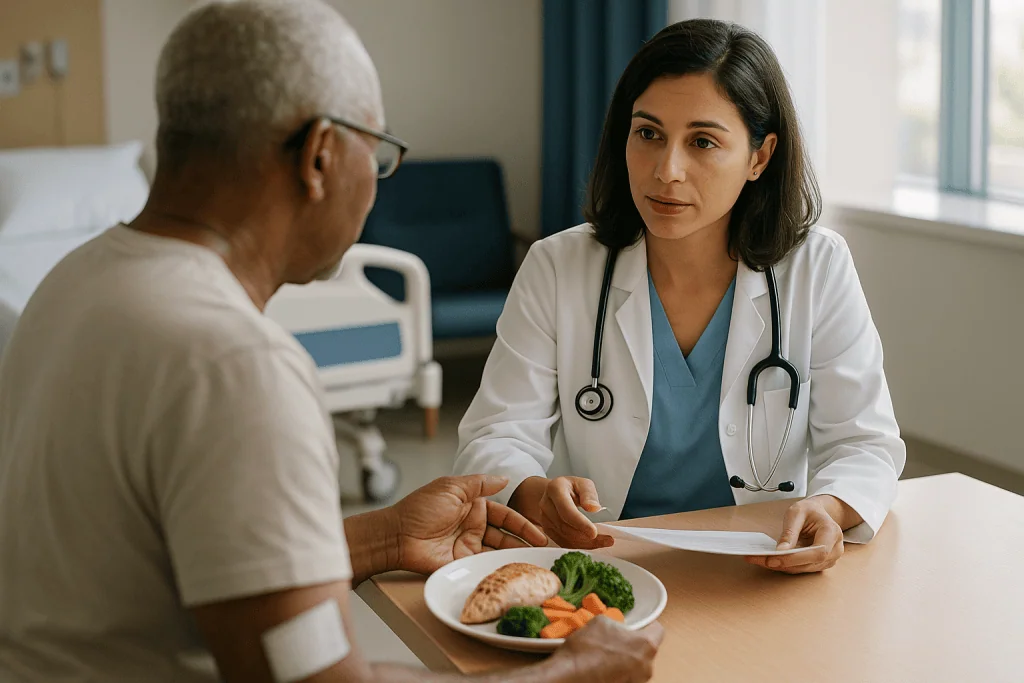
In the United States, the 2020–2025 Dietary Guidelines for Americans, released in December 2020, kept protein recommendations steady but gave new prominence to the finding that many older adults fall short of their protein needs. Since adults over 65 are also the largest group having joint replacements, cardiac procedures and cancer surgery, that gap landed squarely in surgical clinics.
The NIH Office of Dietary Supplements has meanwhile kept its zinc and vitamin C fact sheets current, and both now carry specific sections on wound healing that reach the same careful conclusion: deficiency impairs repair, and supplementation helps people who are deficient, with no convincing benefit shown for those who are not.
The newest shift is cultural. Surgeons who once said only “eat well” are now asking patients about appetite, weight loss and protein intake at the first consultation, because the WHO guidance made nutrition a quality measure. That is what pushed wound healing foods from the nurse’s hunch into the search bar.
How does a wound actually heal, and where does food come in?
Picture a cut as a construction site with four overlapping shifts. The first is hemostasis, the body’s clotting response that stops bleeding within minutes. The second is inflammation, usually lasting two to five days, when white blood cells arrive to clear bacteria and debris; the redness and warmth you see are blood flow being deliberately increased. The third is proliferation, roughly days four through twenty-one, when fibroblasts, the cells that manufacture connective tissue, lay down collagen and new blood vessels sprout into the gap. The fourth is remodeling, which can run for a year or more as that rough collagen scaffold is reorganized into a stronger, flatter scar.
Each shift has a payroll. Inflammation demands energy and the immune cells that zinc helps produce. Proliferation is where protein and vitamin C earn their reputation: collagen is a protein, and it cannot be assembled into stable fibers without vitamin C acting as a cofactor, a helper molecule that an enzyme needs to do its job. Remodeling needs a steady supply of amino acids over months, not a burst over days.
The practical consequence is timing. The window that matters most for food is the two to three weeks before a planned operation and the three to four weeks after, when proliferation is at full tilt. Eating heroically on the morning of surgery does nothing; most people are fasting anyway. Eating adequately every day across six weeks is what the biology rewards.
MedlinePlus describes these phases for patients in plain language, and the sequence explains a frustrating truth: a wound that looks closed at two weeks has reached only a fraction of its final strength, which is why surgeons restrict lifting long after the stitches come out.
Why protein matters most for wound healing
If you remember one thing from this article, make it protein. Collagen, the fibers that close a wound, is protein. Antibodies are protein. The enzymes that remodel scar tissue are protein. When intake falls short, the body does not pause the construction site; it strips amino acids from muscle to keep it running, which is why patients can lose noticeable muscle mass within a week of major surgery.
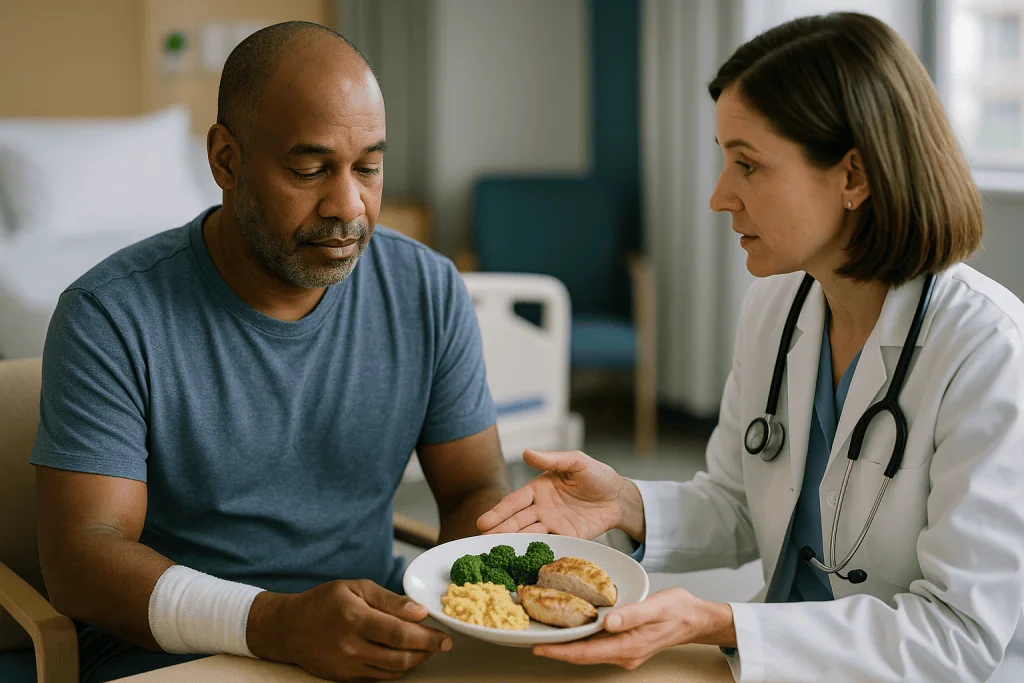
Observational evidence here is strong and consistent: low blood albumin, a protein marker that partly reflects nutritional state, predicts wound complications across surgical specialties. Randomized trial evidence is moderate. Trials of oral nutritional supplements rich in protein, given to malnourished patients before and after major abdominal and orthopedic surgery, have shown fewer complications and shorter stays. Trials in well-nourished patients are less impressive, which again points to the threshold effect.
Surgical dietitians commonly work with a target of roughly 1.2 to 1.5 grams of protein per kilogram of body weight per day around an operation, noticeably higher than the general adult recommendation, and they adjust it for kidney disease, liver disease and body composition. That number belongs in a conversation with your care team, not on a sticky note, because people with impaired kidneys may need the opposite advice.
Where does it come from? Eggs, poultry, fish, lean meat, dairy, tofu, tempeh, lentils, beans and nuts all count. The useful habit is distribution: spreading protein across three meals and a snack supports muscle protein synthesis better than one large dinner. A palm-sized portion of fish or chicken, a cup of lentils, two eggs with a glass of milk, each represents a meaningful dose of the one nutrient a wound cannot do without.
Zinc and wound healing: what it does and who is really short of it
Zinc is a mineral that sits inside more than 300 enzymes, including those that copy DNA when cells divide. A healing wound is cell division on an industrial scale, so it is no surprise that zinc deficiency slows every phase: inflammation lingers, fibroblasts multiply sluggishly, and the skin cells that must migrate across the wound bed move more slowly. Zinc also supports the immune cells that keep bacteria in check while the gap is open.
The question that matters is whether you are short of it. According to the NIH Office of Dietary Supplements, frank zinc deficiency is uncommon in the United States, but marginal status is more frequent in specific groups: older adults with poor appetite, people with inflammatory bowel disease or previous bariatric surgery that limits absorption, heavy drinkers, people with chronic kidney disease, and those following strict plant-based diets, because the phytates in whole grains and legumes bind zinc and reduce how much the gut takes up. Pregnant and breastfeeding women have higher needs as well.
Food sources are straightforward. Oysters contain more zinc per serving than any other common food. Beef, crab, pork and poultry follow. Among plant foods, pumpkin seeds, cashews, chickpeas, lentils, oats and fortified breakfast cereals contribute meaningfully, and soaking or sprouting legumes and grains reduces phytate and improves absorption.
Zinc wound healing evidence splits cleanly. In deficient people, replacing zinc restores normal repair; that is well established. In people with normal zinc status, trials of oral zinc for chronic wounds such as venous leg ulcers have not shown a clear benefit. Because zinc has a Tolerable Upper Intake Level and excess intake interferes with copper absorption and immune function, more is not safer. Whether a supplement is appropriate, and in what form, is a decision for your clinician, ideally after a blood test.
Vitamin C and wound healing: collagen's essential helper
Vitamin C, also called ascorbic acid, is the cofactor for two enzymes that add hydroxyl groups to the amino acids proline and lysine inside the collagen molecule. Without those hydroxyl groups, collagen chains cannot twist into their stable triple helix, and the fibers that form are weak and short-lived. That is the biochemistry behind scurvy, in which gums bleed, bruises spread and, in a detail that startled 18th-century naval surgeons, healed wounds from years earlier reopen because the body cannot maintain the collagen it already made.
Vitamin C also acts as an antioxidant in the inflammatory phase and supports the function of white blood cells. Humans cannot make it and store only small amounts, so intake needs to be regular, a matter of days rather than months.
The vitamin C wound healing evidence follows the same pattern as zinc. In people with low vitamin C status, which the NIH notes is more common among smokers, people with very limited diets, those with malabsorption and some people on dialysis, restoring intake restores normal healing. Small trials in surgical and pressure ulcer patients who were not deficient have given conflicting results, and the larger, better-designed studies tend to show no measurable advantage from extra doses. The NIH fact sheet rates the overall evidence for supplementation in replete people as insufficient.
Food delivers it generously. A single red bell pepper supplies more vitamin C than a medium orange. Kiwifruit, strawberries, broccoli, Brussels sprouts, tomatoes, potatoes and citrus all contribute, and because the vitamin is water-soluble and heat-sensitive, lightly steaming vegetables or eating them raw preserves more of it than long boiling. Excess from food is simply excreted; excess from high-dose supplements can cause digestive upset and, in susceptible people, kidney stones, which is one more reason to treat pills as a clinical decision.
What the evidence actually says
Grading the evidence honestly means separating three kinds of claim. The first is mechanistic: protein, zinc and vitamin C are biochemically required for tissue repair. This is as settled as nutritional science gets, supported by decades of laboratory and deficiency studies. The second is observational: malnourished surgical patients have worse outcomes. Large registries and cohort studies agree, with consistent findings across orthopedics, cardiac surgery and oncology. Observational data cannot prove that feeding people fixes the problem, because malnutrition travels with frailty, cancer and poverty, but the association is strong and biologically plausible.
The third claim is interventional: giving nutrients improves healing. Here the evidence is uneven. Randomized trials of protein-energy supplementation in malnourished or underweight patients before major surgery show moderate-quality evidence of fewer complications, which is why WHO included it. Trials of so-called immunonutrition formulas, which combine protein with arginine, omega-3 fats and nucleotides, have shown reduced infectious complications after gastrointestinal cancer surgery in several meta-analyses, though many trials were industry-funded and effect sizes vary.
For zinc and vitamin C given to people with normal status, randomized evidence is low quality and mostly negative or neutral. For collagen peptides, the trials are small, short and largely funded by manufacturers; the evidence is weak. For multivitamin “wound formulas,” there are no large independent randomized trials.
Expert opinion fills the gaps, and it is remarkably consistent: screen for malnutrition, correct deficiencies, ensure adequate protein and energy, and do not expect pills to do what a plate can do. That is the position of the NIH, the WHO and the major surgical nutrition societies. It is less exciting than a viral protocol. It is also what the data support.
Wound healing foods at a glance
The table below summarizes the nutrients most discussed for recovery, what each one does at the wound site, where to find it, and how strong the evidence is for adding more than a normal diet provides. The grading uses three plain levels: strong (consistent randomized trials or definitive deficiency studies), moderate (several trials with some inconsistency) and limited (small or conflicting trials, or expert opinion only).
| Nutrient | Role in healing | Best food sources | Evidence for correcting deficiency | Evidence for extra in well-nourished people |
|---|---|---|---|---|
| Protein | Builds collagen, immune proteins and new tissue; spares muscle | Eggs, fish, poultry, dairy, tofu, lentils, beans | Strong | Moderate for malnourished or elderly; limited otherwise |
| Zinc | Cell division, immune function, enzyme activity | Oysters, beef, crab, pumpkin seeds, chickpeas, fortified cereal | Strong | Limited; mostly neutral trials |
| Vitamin C | Cofactor for stable collagen; antioxidant | Bell peppers, kiwifruit, strawberries, broccoli, citrus | Strong | Limited; insufficient per NIH |
| Vitamin A | Supports skin cell growth and immune response | Liver, eggs, dairy, sweet potato, carrots, spinach | Moderate | Limited; excess is harmful |
| Iron | Oxygen delivery to the wound bed | Red meat, lentils, spinach, fortified grains | Strong (for anemia) | Not recommended without testing |
| Omega-3 fats | Modulate inflammation | Salmon, sardines, walnuts, flaxseed | Not applicable | Limited; mixed trials |
| Collagen peptides | Supplies amino acids found in collagen | Bone broth, gelatin, supplements | Not applicable | Weak; small industry-funded trials |
Reading down the two evidence columns tells the story more clearly than any slogan: fixing a shortfall is powerful, topping up is not. A plate built around a protein portion, a colorful vegetable rich in vitamin C, and a zinc-containing food such as beans or seeds covers the first three rows at once, which is why dietitians describe wound healing foods as a pattern rather than a shopping list.
Which other nutrients support recovery?
The headline trio gets the attention, but a wound does not read labels. Total energy comes first. If calories fall short, the body burns protein for fuel instead of building with it, so a person recovering from surgery who eats a high-protein diet while losing weight is still undermining repair. Appetite often drops after anesthesia and with pain medication, which is why smaller, more frequent meals and energy-dense snacks such as nut butter, full-fat yogurt and cheese are standard dietitian advice during recovery.
Fluids matter more than most people expect. Dehydration thickens blood and reduces the flow of oxygen and nutrients to the wound bed; it also makes skin less elastic and more prone to breakdown around dressings. Unless a clinician has set a fluid restriction, drinking regularly through the day supports healing in a quiet, unglamorous way.
Vitamin A supports the growth of new skin cells and the early inflammatory response, and it is found in eggs, dairy, liver and in orange and dark green vegetables as beta-carotene. Because preformed vitamin A accumulates in the body and is harmful in excess, especially in pregnancy, food rather than supplements is the sensible route.
Iron carries oxygen. Anemia, whether from blood loss during surgery or from chronic shortfall, is associated with slower healing and higher infection risk, and many surgical programs now screen for it weeks in advance so it can be corrected under supervision.
Omega-3 fats from oily fish may help temper excessive inflammation, and some immunonutrition trials included them, though evidence for fish oil alone is mixed. Arginine and glutamine, two amino acids sold widely as healing aids, have inconsistent trial results and are not routinely recommended for the general surgical patient. Taken together, these nutrients reinforce the same conclusion: variety across food groups beats precision dosing of any one component.
Should you take supplements or stick to food?
Food wins by default for three reasons. It carries nutrients in forms the body absorbs well, bundled with energy and fiber; it is almost impossible to overdose on; and it has a track record in the only trials that showed clear benefit, those that fed malnourished patients complete nutrition. Supplements, by contrast, are concentrated, unregulated for quality in many markets, and capable of harm at the high doses viral posts tend to favor.
Zinc illustrates the risk. Excess zinc blocks copper absorption, and copper deficiency causes anemia and nerve damage that can be mistaken for other conditions. Zinc also interferes with some antibiotics and with certain medicines used for rheumatoid arthritis, reducing their absorption. Vitamin C in very large amounts can cause diarrhea and raise the risk of kidney stones in susceptible people, and it can interfere with some laboratory tests. Vitamin A in supplement doses is toxic to the liver over time and dangerous in early pregnancy.
None of this means supplements have no place. A clinician may recommend one when a blood test shows deficiency, when appetite is too poor to meet needs through food, after bariatric surgery, or in older adults who have lost weight before an operation. Oral nutritional drinks that combine protein, energy and micronutrients are a well-studied middle ground, and they are the form of support the WHO guideline refers to. The form, amount and duration belong to the prescribing clinician or dietitian, who knows your kidney function, your other medicines and your diagnosis.
The practical advice is simple: tell your surgical team about every supplement you take, including protein powders and herbal products, because some affect bleeding or interact with anesthesia, and ask directly whether any are worth continuing or starting.
What should you eat before surgery?
Preparing for surgery nutritionally works best as a two-to-three-week project rather than a last-minute scramble. The goal is to arrive with full protein stores, corrected deficiencies and a stable weight, so that the body spends the postoperative weeks building rather than catching up.
Start with a frank look at the week you just ate. If breakfast is usually coffee and lunch is often skipped, the single highest-value change is adding a protein source to each of those meals: eggs, yogurt, cottage cheese, a tin of fish, leftover chicken, a bean salad. Then look at color. A red, orange or dark green vegetable or a piece of fruit at two meals a day covers vitamin C and beta-carotene without any counting. Zinc arrives almost automatically when protein does, especially with shellfish, meat, seeds and legumes in the rotation.
Unintended weight loss in the month before an operation is a warning sign surgeons take seriously, because it often signals that intake has fallen below needs. Mention it. Many programs will refer you to a dietitian, who may suggest oral nutrition drinks or a higher-energy eating pattern.
Alcohol deserves honesty too. Heavy drinking depletes zinc, impairs immune function and raises surgical complication rates, and cutting back in the weeks before surgery is one of the better-evidenced preparations a person can make. Smoking is the other; it reduces oxygen delivery and vitamin C levels, and stopping even a few weeks ahead improves wound outcomes.
Finally, follow your team’s fasting instructions exactly. Modern guidance often allows clear carbohydrate drinks until a couple of hours before anesthesia, but the specifics vary by procedure, and the anesthesiologist’s instructions override anything you read online, including this.
Who is most at risk of slow healing?
Some people need to pay closer attention to wound healing foods than others, not because the rules differ but because their starting point does.
Older adults top the list. Appetite declines with age, protein needs rise relative to body weight, dentition and medications can make eating harder, and sarcopenia, the age-related loss of muscle, means there is less reserve to draw on. The 2020–2025 Dietary Guidelines highlight that a substantial share of people over 70 fall below protein recommendations even without illness.
People with diabetes heal more slowly because high blood glucose impairs white blood cell function and damages small blood vessels, and because nerve damage can hide pressure injuries. Keeping glucose within the range agreed with their clinician around surgery is a healing intervention in its own right, and meal patterns that pair protein with carbohydrate help.
Anyone with a condition that limits absorption, such as Crohn’s disease, celiac disease or previous bariatric surgery, is at higher risk of low zinc, iron, vitamin C and protein even with a good diet, and usually needs blood testing rather than guesswork.
People who smoke, drink heavily, or follow very restrictive diets, including unsupervised prolonged fasting or extremely low-calorie weight-loss regimens, often have marginal micronutrient status. Those on long-term corticosteroids heal more slowly because the drugs suppress collagen synthesis and immune response, a point their prescribing clinician will weigh; no one should stop a steroid because of an upcoming operation without that conversation.
Chronic wounds such as pressure injuries and venous leg ulcers represent a different situation again: months of protein loss through wound fluid can create deficiency where none existed. For all these groups, early referral to a dietitian is the step with the best evidence behind it.
Common myths about wound healing foods
The viral version of this topic carries several claims that deserve a correction grounded in evidence.
“Megadoses of vitamin C speed healing in everyone.” The trials do not support this. In people with adequate vitamin C status, extra intake has not produced faster closure in well-designed studies, and very high intakes carry digestive and kidney stone risks. The NIH grades the evidence as insufficient.
“Zinc tablets are a safe bet before surgery.” Zinc helps people who are deficient. In those who are not, trials of chronic wounds show no clear benefit, and excess zinc can cause copper deficiency and interfere with some medicines. Testing and clinical judgment come first.
“Collagen powder rebuilds collagen directly.” Collagen is digested into amino acids and small peptides like any other protein; the body does not transport it intact to the wound. Collagen supplements are a protein source with an incomplete amino acid profile, and the supporting trials are small and mostly manufacturer-funded.
“Bone broth is a healing elixir.” Broth is pleasant, hydrating and modestly nutritious, but its protein content is lower than many people assume and its mineral content varies widely. It is a side dish, not a strategy.
“Protein shakes can replace meals during recovery.” They can help bridge a poor appetite, but whole meals supply energy, fiber, vitamin C and zinc that most shakes lack. Shakes work best as additions.
“A spoonful of sugar or honey in the diet feeds the wound.” Topical medical-grade honey has a role in some wound care protocols; eating sugar does not, and for people with diabetes it does the opposite.
Each myth contains a grain of truth about a nutrient that genuinely matters. The error is in the dose, the route or the promise.
When to see a doctor
Food supports healing; it does not replace assessment. Certain signs mean a wound needs professional eyes promptly, regardless of how well you are eating.
Contact your surgical team or primary care clinician the same day if you notice spreading redness around the wound, especially a red streak tracking away from it; warmth and swelling that increase rather than ease after the first few days; thick, cloudy or foul-smelling drainage; a wound edge that opens or gapes after it had closed; or a fever. Seek urgent care if you develop chills, confusion, a racing heart, or if the skin around the wound turns dusky, purple or black, because these can signal a deep infection that cannot wait.
Slower patterns also deserve a visit. A surgical wound that has not shown steady improvement by two weeks, a scrape or cut that is no better after a week, or any wound that stalls in a person with diabetes, kidney disease or poor circulation should be reviewed. Unintended weight loss of a few kilograms in a month, a persistent loss of appetite, or difficulty chewing or swallowing are nutritional red flags that affect healing and are worth raising even when the wound looks fine.
Bring a list of every supplement, protein product and herbal remedy you take. Ask whether blood tests for albumin, iron, zinc or vitamin C are appropriate in your situation, and whether a referral to a dietitian would help. If you are on a prescribed medicine that affects healing, such as a corticosteroid, a blood thinner or an immunosuppressant, do not adjust or stop it on your own; the prescribing clinician weighs those risks against the reasons you take it.
Every decision about supplements, testing and treatment belongs with the clinician who knows your history. This article is a map of the evidence, not a prescription.
Frequently asked questions
What are the best wound healing foods to eat after surgery?
The most useful foods after surgery are protein sources at every meal, such as eggs, fish, poultry, dairy, tofu and lentils, paired with vitamin C-rich produce like bell peppers, kiwifruit, strawberries and broccoli, and zinc-containing foods such as beef, shellfish, pumpkin seeds and beans. Adequate total calories and fluids matter as much as any single nutrient, because the body burns protein for energy when intake falls short.
Does zinc help wound healing if I am not deficient?
Probably not measurably. Zinc wound healing evidence shows clear benefit when a deficiency is corrected, but randomized trials in people with normal zinc status, including those with chronic leg ulcers, have not demonstrated faster healing. Because excess zinc can cause copper deficiency and interact with some medicines, a clinician should decide whether a supplement is appropriate, ideally after a blood test.
How does vitamin C help wound healing?
Vitamin C is the cofactor for enzymes that stabilize collagen, the protein fibers that close a wound; without it, collagen is weak and breaks down. The vitamin C wound healing evidence is strong for people who are deficient, such as some smokers or people with very restricted diets, and insufficient for extra doses in people who already get enough, according to the NIH Office of Dietary Supplements.
How much protein do I need for a wound to heal?
Needs rise around surgery or significant injury, and surgical dietitians often work in a range of roughly 1.2 to 1.5 grams per kilogram of body weight per day, spread across meals. That figure is a starting point rather than a rule, because kidney disease, liver disease and body composition change the advice. Your care team or a dietitian can set a target that fits your situation.
Are collagen supplements good for wound healing?
The evidence is weak. Collagen peptides are digested into amino acids like any other protein and are not delivered intact to the wound; the available trials are small, short and largely funded by manufacturers. Collagen supplements count as a protein source with an incomplete amino acid profile, so they do not replace complete protein foods such as eggs, dairy, fish, meat or soy.
What foods slow down wound healing?
No single food slows healing, but patterns do. Diets low in total calories or protein force the body to break down muscle, heavy alcohol intake depletes zinc and impairs immunity, and consistently high blood glucose in people with diabetes impairs white blood cell function. Smoking, though not a food, reduces oxygen delivery and vitamin C levels and is one of the strongest modifiable risks.
How long before surgery should I change my diet?
Two to three weeks is a realistic window to build protein stores and correct marginal shortfalls, since the body uses those reserves most heavily in the three to four weeks after an operation. Eating well on the day itself has little effect, and fasting instructions from your anesthesia team must be followed exactly. If you have lost weight unintentionally, tell your surgical team early so a dietitian can help.
Can I heal a wound faster with a vegan or vegetarian diet?
Yes, with attention to two details. Plant-based diets can supply ample protein from tofu, tempeh, lentils, beans and nuts when portions are generous and spread across the day. Zinc is the nutrient to watch, because phytates in whole grains and legumes reduce absorption; soaking, sprouting and fermenting help, as do pumpkin seeds, cashews and fortified cereals. A dietitian can check whether testing is useful.
Does drinking water help wounds heal?
Adequate fluid supports healing by maintaining blood flow and oxygen delivery to the wound bed and keeping skin elastic around dressings; dehydration does the opposite. Water, milk, soups and fruit all contribute. People with heart or kidney conditions may have fluid limits set by their clinician, and those instructions take priority over general advice to drink more.
Should I take a multivitamin before surgery to help healing?
Only if your clinician recommends it. There are no large independent randomized trials showing that multivitamins or marketed wound formulas improve healing in well-nourished people, while some ingredients, including high-dose vitamin E and certain herbs, can affect bleeding or interact with anesthesia. Bring every supplement you take to your preoperative visit and ask directly which, if any, are worth continuing.
References
- MedlinePlus: How wounds heal
- MedlinePlus: Protein in diet
- WHO: Global guidelines for the prevention of surgical site infection, second edition
This article is for general information only and is not a substitute for professional medical advice. Please consult a qualified doctor about your individual situation.

More from the Blog

Bruising After Surgery: The Normal Timeline and the Signs of a Problem
Bruising after surgery is expected: blood leaks from small vessels cut or stretched during the operation and settles beneath the skin. Most surgical bruises…

Alcohol and Supplements Before Surgery: What to Stop and When
Most surgical teams ask patients to avoid alcohol for at least 24 to 48 hours before anesthesia, and small randomized trials suggest heavier drinkers…

Nausea and Sore Throat After Anesthesia: Why They Happen and What Helps
Nausea after anesthesia affects roughly one in three people and usually settles within 24 hours; it is driven by anesthetic gases, opioid pain medicines,…

Blood Clots After Surgery: Why Risk Peaks, the Prevention Steps and the Warning Signs
Blood clots after surgery, mainly deep vein thrombosis and pulmonary embolism, are most likely in the first two weeks and remain more common for…

Post-Op Fever: When It Is Normal and When It Means Infection
A post op fever is common and usually harmless in the first 48 hours after surgery, when tissue injury releases inflammatory signals that briefly…

Are You Awake During Liposuction? Anesthesia Options Explained Calmly
It depends on the anesthesia chosen. Liposuction can be performed while you are fully awake using tumescent local anesthesia, lightly sedated in a 'twilight'…