

Zirconium Crown Treatment Step by Step: Tooth Shaping, Digital Design and the Fitting Visit
Key Takeaways
- Zirconium and zirconia describe the same crown material: zirconia is the ceramic form (zirconium dioxide) of the metallic element zirconium.
- Monolithic zirconia is milled from one block and favored for molars; layered zirconia adds a porcelain skin for front teeth at the cost of some chip resistance.
- Zirconia crowns are milled oversized from a chalky pre-sintered block, then fired in a furnace, shrinking to final size and hardness.
- Cleveland Clinic puts the typical wait for a lab-made crown at about two to three weeks, during which a temporary crown protects the shaped tooth.
- Crowns in general last roughly five to fifteen years on average per Cleveland Clinic, and most failures come from decay at the margin or nerve problems rather than broken ceramic.
- Well-polished zirconia is gentle on opposing teeth, but a rough or unpolished surface after adjustment can wear the enamel it bites against.
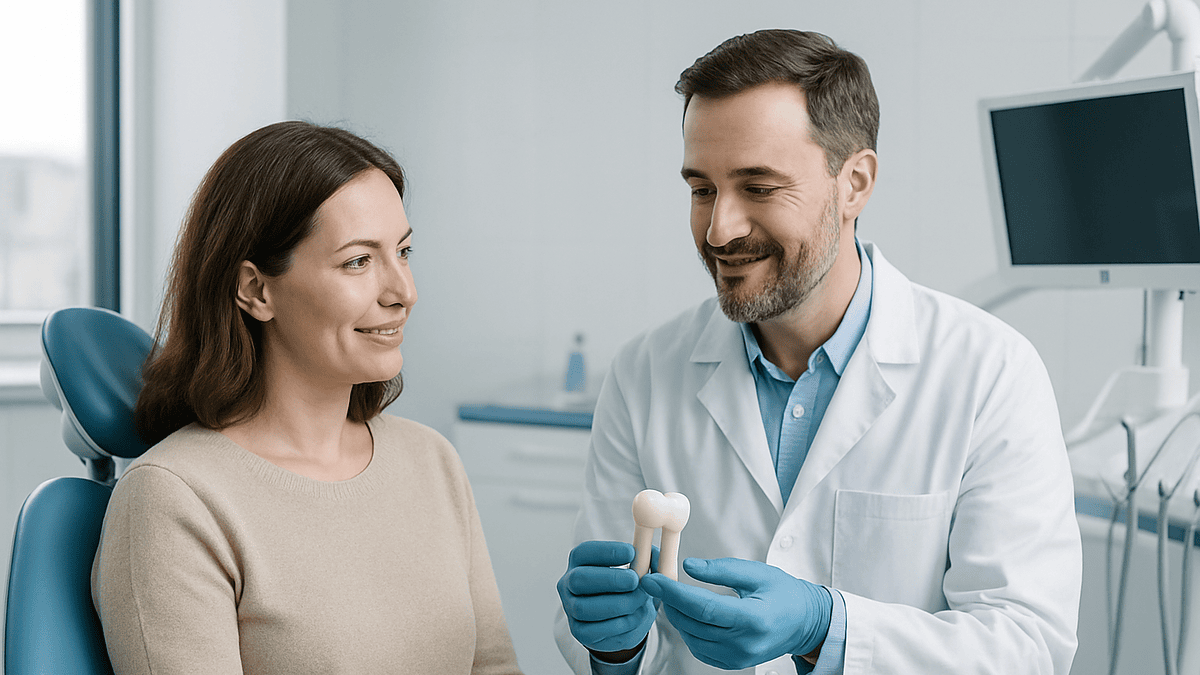
A zirconium crown procedure usually unfolds over two visits. At the first, the dentist numbs the tooth, removes decay or old filling material, and shapes the tooth so a cap can fit over it, then records its shape with a digital scan or impression. A dental lab designs and mills the zirconia crown by computer. At the fitting visit the crown is checked, adjusted and cemented.
The crack showed up on a Tuesday, halfway through a sourdough crust. Nothing dramatic, just a sharp twinge on the lower left and, later, a tiny ledge the tongue kept finding. The dentist looked, tapped, took an X-ray and said the words most of us dread and half expect: this tooth needs a crown. Then a second decision arrived on top of the first. Metal fused to porcelain, or zirconia?
If you are sitting in that chair, or expecting to be, this explainer walks through the zirconium crown procedure the way it actually happens: the shaping appointment, the scan, the computer-aided design in the lab, the temporary you wear in between, and the fitting visit where the new tooth finally clicks into place.
Along the way we sort what the evidence supports from what a glossy brochure implies. Crowns are among the most common restorative treatments in dentistry, and the questions people ask about them are refreshingly practical: Will it hurt? How long will it last? What can go wrong? Those deserve honest answers.
What is a zirconium crown, and why do dentists also call it zirconia?
A dental crown is a custom cap that covers a damaged tooth down to the gum line, restoring its shape, size and bite. Cleveland Clinic describes it as a restoration used when a tooth is too broken down for a filling, cracked, heavily worn, or has had root canal treatment and needs protection.
Zirconium is a metallic element. Zirconia, or zirconium dioxide, is the white ceramic made from it. Most dentists say zirconia; many patients say zirconium. Both terms point to the same material, so the phrases zirconium crown and zirconia crown are interchangeable in everyday use.
What makes zirconia interesting is a quirk of its crystal structure. Under stress, the tiny crystals can shift into a slightly larger form, which squeezes a developing crack shut. Engineers call this transformation toughening, and it is why the same ceramic family shows up in hip replacements and cutting blades. In the mouth, that translates into a cap that resists chipping better than older feldspathic porcelains.
Zirconia crowns come in two broad styles. A monolithic crown is milled from a single block, so the whole thing is zirconia; it is the tougher option and tends to be chosen for back teeth. A layered crown has a zirconia core with a thin skin of translucent porcelain baked on top for a more lifelike front tooth; the porcelain layer is prettier but slightly more chip-prone.
Neither style is right for everyone. The choice depends on where the tooth sits, how hard you bite, how much space the dentist can create, and how visible the tooth is when you smile.
How the zirconium crown procedure works from first X-ray to final bite check
Think of the process as three acts with an intermission. Act one is assessment and shaping. Act two happens off stage, in a dental laboratory or an in-office milling unit. Act three is the fitting.
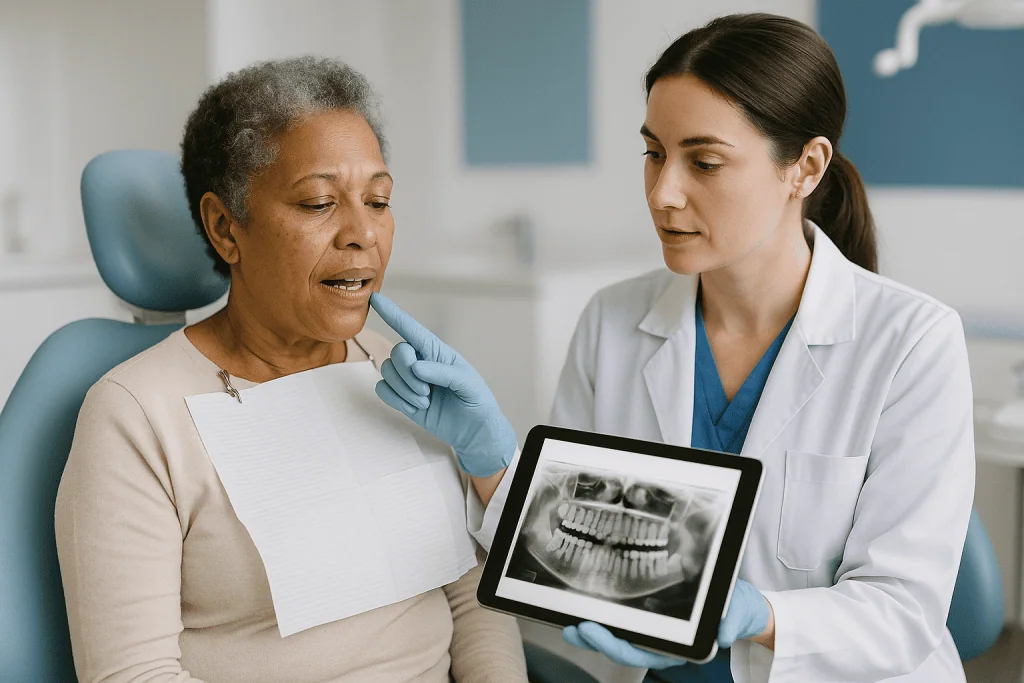
Before any drilling, the dentist confirms the tooth is worth crowning. That means an X-ray to look at the root and the bone around it, a check of the gums, and tests to see whether the nerve inside the tooth is healthy. A tooth with a dying nerve may need root canal treatment first; a tooth with too little sound structure may need a post and core, a built-up foundation that gives the crown something to grip.
Once the plan is agreed, the shaping appointment begins with local anesthetic. The dentist removes decay and old filling material, then reduces the tooth on all sides so the finished crown will be the same size as the original tooth rather than bulkier. The reduced tooth is scanned or an impression is taken, and a temporary crown is fitted.
According to Cleveland Clinic, a traditional lab-made crown is usually ready in about two to three weeks, while some practices mill crowns on site in a single visit. During the gap, the lab designs the crown on screen, mills it from a zirconia block, fires it in a furnace to reach full hardness, and colors and polishes it.
At the fitting visit the temporary comes off, the permanent crown is tried in, the fit and bite are adjusted, and it is bonded or cemented. A final X-ray often confirms the margins sit cleanly against the tooth.
Who is a zirconia crown usually for, and who is asked to wait?
Crowns are recommended when a filling alone will not hold. Cleveland Clinic lists the usual reasons: a large cavity that leaves thin walls, a cracked or fractured tooth, heavy wear from grinding or acid erosion, a tooth after root canal treatment, and covering a dental implant or anchoring a bridge. Zirconia is frequently chosen within those situations when strength matters, particularly on molars that take the brunt of chewing.
People who grind their teeth are often steered toward monolithic zirconia because it tolerates heavy loads. Those who want a metal-free mouth, whether for aesthetic reasons or because of a known metal sensitivity, also find zirconia a reasonable option, though true allergy to dental alloys is uncommon and worth confirming with a clinician rather than assuming.
Some patients are asked to wait or to consider a different path first:
- Active gum disease. Placing a crown on a tooth surrounded by inflamed, bleeding gums makes the margins hard to keep clean and can hide progressing disease. Gum treatment usually comes first.
- Uncontrolled decay elsewhere. If several teeth are actively decaying, the dentist may stabilize the mouth before investing in a definitive restoration.
- An uncertain nerve. If the tooth is unpredictably sensitive or shows early signs of nerve inflammation, the dentist may wait, test again, or recommend root canal treatment before crowning.
- Very little remaining tooth. A crown needs something to hold onto. When the root is cracked below the gum, extraction and replacement may be the more honest recommendation.
- Growing children and teens. Adult-style crowns on teeth with still-developing roots are generally avoided; pediatric dentists have their own approaches.
Every one of these calls belongs to the treating dentist, who can see the X-ray and the tooth in front of them.
Zirconia crown preparation: what tooth shaping actually involves
Tooth preparation is the part patients picture when they imagine the drill, so it helps to know what is happening and why.

After the local anesthetic takes effect, the dentist uses a high-speed handpiece with a water spray to remove roughly a millimeter or so from the sides of the tooth and a little more from the biting surface. The exact amount depends on the crown style. Monolithic zirconia is strong even when thin, so it can be made with less reduction than porcelain-fused-to-metal, which needs room for both a metal core and a porcelain skin. Preserving tooth structure is a genuine advantage, because every tenth of a millimeter kept is tooth you get to keep.
The dentist shapes the walls with a slight taper so the crown can slide on and off along one path, then finishes a smooth ledge around the base called the margin. The margin is where crown meets tooth, and its quality has more to do with the crown’s long-term health than the material does. A well-defined margin lets the lab make a crown that seals against the tooth; a ragged one invites plaque, leakage and new decay underneath.
Where the margin sits matters too. Placing it at or just above the gum line keeps it easier to clean and gentler on the gum. Occasionally it must go slightly below the gum to hide a dark line or cover old decay; the dentist weighs that against the added difficulty of cleaning.
If old fillings are removed and the remaining tooth is uneven, the dentist places a core build-up, a tooth-colored filling that fills undercuts and restores an ideal shape. You may feel vibration and pressure throughout, but with adequate anesthesia the shaping itself should not hurt.
Digital scan or impression: how the shape of your tooth reaches the lab
Once the tooth is shaped, its exact form has to travel to whoever makes the crown. Two methods exist, and many practices use both depending on the case.
The traditional impression uses a soft putty-like material in a tray that sits over your teeth for a few minutes while it sets. It captures fine detail well and remains widely used. Its drawbacks are familiar to anyone who has gagged on a tray: the taste, the pressure, and the wait. A small cord may be tucked gently around the gum beforehand to push the tissue aside so the margin records cleanly.
The digital approach replaces the tray with a wand-shaped intraoral scanner. The dentist or assistant moves it slowly around the tooth while a camera stitches thousands of images into a three-dimensional model on screen within minutes. There is no material to set and no tray to hold, which many people find more comfortable. The scan also lets the dentist inspect the preparation immediately, zooming in on the margin and checking whether enough space has been created for the crown. If a spot needs refining, it can be adjusted and rescanned on the spot rather than discovered as a problem at the fitting visit.
Both methods also record the opposing teeth and how you bite together, because a crown that sits a hair too high will feel wrong and can bruise the tooth’s supporting ligament.
A shade is chosen at this stage as well, ideally before the tooth dries out and lightens. Photographs next to a shade guide help the technician match neighboring teeth, including subtle features like translucency at the edges and faint white or brown flecks.
Digital design and milling: what happens to your crown inside the lab
This is the part of the zirconium crown procedure you never see, and it has changed dramatically. Zirconia is too hard to be carved or cast by hand, so nearly every zirconia crown is made using computer-aided design and computer-aided manufacturing, usually shortened to CAD/CAM.
A technician opens the scan on screen. Software proposes a crown shape based on the neighboring teeth and the opposing bite, and the technician refines it: adjusting the contours so food does not pack between teeth, shaping the biting surface so it meets the opposing tooth evenly, and making sure the inside matches the prepared tooth with a thin, even gap for cement.
The design file goes to a milling machine, which carves the crown from a disc of pre-sintered zirconia. Pre-sintered means the ceramic has been pressed into a chalky, partially bonded state that mills easily. Because the material will shrink when it is later fired, the software mills the crown deliberately oversized, often by roughly a fifth to a quarter, and calculates the shrinkage so the final size lands where it should.
The milled crown then goes into a sintering furnace, where extreme heat fuses the particles into a dense, fully hardened ceramic. This step is what gives zirconia its strength. After cooling, the technician stains and glazes it to match the shade photographs, or, for a layered crown, bakes on porcelain and characterizes it by hand. A final polish smooths the biting surface, which matters because rough zirconia can wear opposing teeth more than polished zirconia.
Some offices own a chairside scanner, mill and furnace, compressing the whole cycle into a single long appointment. The steps are identical; only the location and timeline change.
Living with a temporary crown for two or three weeks
Between shaping and fitting, your tooth is covered by a temporary crown. Its job is modest but important: keep the exposed tooth from feeling every sip of cold water, stop neighboring teeth drifting into the space, and give you something to chew on.
Temporaries are usually made of acrylic or a resin composite, shaped chairside, and set with a weak cement that is designed to release when the dentist needs it off. That deliberate weakness is also their main limitation. Cleveland Clinic and other patient resources give similar practical advice for the interim period:
- Chew on the other side when you can, and avoid very hard or crunchy foods like nuts, hard candy and ice.
- Skip sticky foods such as caramel, taffy and chewing gum, which can lift the temporary off.
- Brush normally, but when flossing, slide the floss out sideways rather than snapping it up, so you do not catch the edge.
- Expect some sensitivity to hot and cold; the temporary insulates less well than the final crown.
If a temporary comes off, keep it, call the practice, and ask for advice. Many dentists will simply recement it. Leaving the tooth uncovered for days can allow it to shift slightly or become sensitive, and either can complicate the fit of the permanent crown.
Temporaries are not made to look perfect. They are a little opaque, a little bulky, and sometimes a shade off. That is normal and not a preview of the final result.
The typical wait for a lab-made crown runs about two to three weeks, per Cleveland Clinic, though this varies with the lab and the case. If your dentist mills crowns in the office, you may skip the temporary altogether.
The fitting visit: try-in, bite adjustment and cementing the zirconia crown
The fitting appointment is usually shorter and calmer than the shaping visit. Local anesthetic may or may not be used; many people find the try-in comfortable without it, but you can ask.
The dentist removes the temporary, cleans off residual cement, and seats the new crown. Then the checking begins, and a good clinician checks in a particular order. First the margins: does the edge of the crown meet the tooth smoothly all the way around, with no catch for an explorer probe and no gap? Second the contacts: does floss pass between the crown and its neighbors with gentle resistance, neither too tight nor so loose that food will pack? Third the bite: colored marking paper shows where the crown touches the opposing tooth. High spots are polished down until you close evenly. Finally the appearance: shape and shade are compared with adjacent teeth in natural light.
Small adjustments are routine and not a sign something went wrong. Occasionally a crown does not fit acceptably and is sent back to the lab. That is frustrating but far better than cementing a compromised crown.
Once everyone is satisfied, the crown is cemented. Zirconia does not bond to tooth the way glass ceramics do, so dentists typically use a resin-modified or self-adhesive cement, sometimes after treating the inside of the crown with a primer. The crown is pressed into place, you bite on a cotton roll or stick while the cement sets, and excess cement is flicked away from the gum line. Cement left behind can irritate the gum for weeks, so this cleanup step is worth the extra minute.
A final bite check and often an X-ray confirm the crown is fully seated. Then you are done.
Is it painful to get zirconia crowns? Zirconia crown pain, honestly
People searching for zirconia crown pain want two separate questions answered: does the procedure hurt, and does the tooth hurt afterward.
During the shaping visit, local anesthetic numbs the tooth and surrounding gum. You will feel pressure, vibration and the water spray, and you will hear the handpiece, but sharp pain should not be part of the experience. If it is, tell the dentist; more anesthetic can be given. People with high dental anxiety can ask about options for relaxing during treatment, a conversation to have at the planning stage rather than in the chair.
Afterward, some sensitivity is common. The tooth has just been cut, its nerve is mildly irritated, and the temporary insulates less well than natural enamel. Cold drinks and cold air are the usual culprits. For most people this settles over days to a couple of weeks and is more of an annoyance than a pain. Mild soreness of the gum around the tooth is also normal for a few days, especially if a cord was placed or the margin sits close to the gum.
Pain that is different in character deserves attention. A throbbing ache that wakes you at night, pain that lingers for minutes after a hot drink, or pain on biting that persists beyond the first week can signal an inflamed nerve or a bite that is slightly high. The first may mean the tooth needs root canal treatment, which was always a possibility once a tooth was damaged enough to need a crown. The second is fixed with a quick adjustment. Neither is a reason to wait it out silently.
Over-the-counter pain relief is something to discuss with your dental team, who know your health history.
What the days and weeks after the fitting usually look like
Once the numbness fades, most people simply get on with life, but a few predictable things happen over the first month.
The first day: avoid chewing hard foods on the new crown until the cement has fully matured, which for most cements is a matter of hours. Your tongue will explore the new shape relentlessly. That is normal and usually stops within a few days as the brain updates its map of your mouth.
The first week: mild sensitivity to temperature is common and typically eases. The gum may feel slightly tender. Brush and floss normally, paying attention to the margin where crown meets tooth, because that line is the most vulnerable place for plaque to collect. If floss shreds or catches consistently at one spot, mention it; there may be a rough edge or residual cement.
The first few weeks: the bite should feel natural. If it feels as though the crown touches first when you close, or your jaw muscles ache on that side, contact the practice for a bite check. A high spot is easy to fix and much better addressed early.
Beyond that: a zirconia crown does not decay, but the tooth underneath can. Regular check-ups let the dentist inspect the margins on X-rays and catch leakage before it becomes a problem. If you grind your teeth at night, a night guard protects both the crown and the teeth that bite against it; Mayo Clinic notes that bruxism can wear, fracture and loosen teeth and dental work.
Crown lifespan is discussed in its own section below, but the short version is that daily care and check-ups matter more than the material.
Zirconia vs porcelain-fused-to-metal vs other ceramics: a side-by-side look
Choosing a crown material is a trade-off between strength, appearance, how much tooth must be removed, and how the material behaves over years. No option wins every column. The table summarizes typical, guideline-level characteristics discussed in patient resources such as Cleveland Clinic’s overview of crown materials.
| Feature | Monolithic zirconia | Layered zirconia | Porcelain-fused-to-metal | Lithium disilicate (glass ceramic) |
|---|---|---|---|---|
| Chip resistance | High | Moderate (porcelain layer can chip) | Moderate (porcelain can chip off metal) | Moderate |
| Appearance | Good; newer grades more translucent | Very natural | Good, but gray line may show at gum | Very natural |
| Tooth reduction needed | Least | Moderate | Most | Moderate |
| Metal content | None | None | Alloy core | None |
| Typical placement | Molars, grinders, bridges | Front teeth, premolars | Any, long track record | Front teeth, some premolars |
| Wear on opposing teeth | Low if well polished; higher if rough | Similar to porcelain | Similar to porcelain | Low to moderate |
A few points the table cannot capture. Porcelain-fused-to-metal has the longest clinical track record simply because it has been around longest. Gold and other full-metal crowns remain excellent for hidden back teeth and are gentle on opposing enamel, but few people choose them for visible areas. Glass ceramics bond very well to tooth, which helps when little structure remains, but they are less tolerant of heavy grinding.
The right column for you depends on the tooth, the bite and your priorities, and your dentist may recommend different materials for different teeth in the same mouth.
Zirconia crown disadvantages: the honest downsides of the zirconium crown procedure
Marketing tends to present zirconia as flawless. It is a very good material with real limitations, and knowing them helps you ask better questions.
Appearance is the most common concern. Traditional high-strength zirconia is quite opaque, which suited molars but could look chalky on a front tooth beside natural, translucent enamel. Newer, more translucent grades trade some strength for beauty, so the dentist and technician must balance the two for the specific tooth. Layering porcelain solves the aesthetic problem but reintroduces a chip-prone surface.
Wear of opposing teeth is a genuine consideration. Zirconia is harder than enamel. Well-polished zirconia appears to be kind to opposing teeth, but a rough or poorly glazed surface, or one that has been adjusted at the fitting and not repolished, can wear the tooth it bites against. Asking whether the crown will be polished after any adjustment is a reasonable question.
Adjustment and removal are harder. Because zirconia is so tough, cutting through it to remove a failing crown takes longer and burns through more burs than removing porcelain-fused-to-metal. That is a problem for the dentist more than the patient, but it means re-treatment is a bigger job.
Bonding is less predictable than with glass ceramics. Zirconia does not etch like glass, so the cement relies on mechanical retention and special primers. On a very short tooth with little to grip, a dentist may prefer a material that bonds more reliably.
Repairs are limited. A chipped porcelain layer can sometimes be patched; a fractured monolithic crown generally cannot and must be replaced.
Finally, zirconia crowns can and do fail, most often from decay at the margin or loss of the tooth’s nerve rather than from the ceramic itself breaking. The material is strong; the biology underneath is not guaranteed.
How long do zirconia crowns last, and what shortens their life?
People want a number, and it is fair to give the range the evidence supports while being clear about what it does not say.
Cleveland Clinic states that dental crowns in general last roughly five to fifteen years on average, with some lasting considerably longer, and that lifespan depends heavily on oral hygiene, habits and the location of the tooth. Zirconia falls within that broad range; the clinical literature on tooth-supported zirconia crowns is younger than the literature on metal-ceramic crowns, so very long-term data are still accumulating. No responsible clinician can promise a lifetime.
What tends to shorten a crown’s life has little to do with the ceramic:
- Decay at the margin. The crown cannot rot, but the tooth beneath it can, especially if plaque sits along the gum line. This is the leading reason crowns are replaced.
- Nerve problems. A tooth that needed a crown was already traumatized. Some develop an inflamed or dying nerve months or years later and need root canal treatment through the crown.
- Grinding and clenching. Bruxism loads crowns far beyond ordinary chewing. Mayo Clinic notes it can crack teeth and damage dental work; a night guard is the usual protective step.
- Using teeth as tools. Opening packages, biting nails, chewing ice and pens.
- Gum disease. As bone and gum recede, the margin becomes exposed and harder to clean.
What tends to extend it is unglamorous: brushing twice a day with fluoride toothpaste, cleaning between teeth daily, regular check-ups where the dentist can see the margin on an X-ray, and wearing a guard if you grind. The Centers for Disease Control and Prevention and the NHS both emphasize that these basics protect natural teeth and restorations alike.
Ask your dentist how your particular tooth is likely to behave. The answer for a short molar in a heavy grinder differs from the answer for a premolar in someone with a light bite.
What people often get wrong about zirconia crowns
A handful of beliefs circulate widely enough to deserve direct correction.
Myth: a crowned tooth cannot get a cavity. It can. The crown itself is immune to decay, but the natural tooth at and below the margin is not. Decay under crowns is common and often silent until it is advanced, which is one reason routine X-rays matter.
Myth: zirconia is unbreakable. It is very tough, not indestructible. Thin sections, heavy grinding, or a design flaw can still lead to fracture, and layered porcelain can chip like any porcelain.
Myth: once the crown is on, root canal treatment is off the table. A crown covers the outside of the tooth; the nerve inside remains alive. If it later becomes inflamed, root canal treatment can usually be done through a small opening in the crown, though sometimes the crown must be replaced.
Myth: the whiter, the better. A crown that is brighter than its neighbors draws the eye for the wrong reasons. Good shade matching aims to make the crown disappear, not to make it glow.
Myth: temporary crowns are a preview of the final result. They are placeholders, deliberately made quickly and set weakly. Judge the real crown at the fitting visit, in natural light.
Myth: the material is the main thing that determines how long a crown lasts. The fit of the margin, the health of the nerve, your home care and your bite habits matter at least as much. A perfectly made zirconia crown on a neglected margin will fail sooner than a modest metal-ceramic crown that is kept spotless.
Myth: sensitivity after a crown means something went wrong. Some sensitivity is expected and usually settles. Persistent or worsening pain is the signal to act, not the ordinary twinge from cold water in week one.
Questions to ask your care team before the shaping visit
The planning conversation is where you have the most influence over the result. These questions tend to produce useful answers rather than reassurance.
- Why does this tooth need a crown rather than a large filling or an onlay, and what would happen if I waited?
- Is the nerve healthy? What are the chances this tooth will need root canal treatment before or after the crown?
- Which material do you recommend for this specific tooth, and why? Would you choose differently for a different tooth in my mouth?
- If zirconia, will it be monolithic or layered, and how will that affect appearance and chip risk?
- How much tooth will need to be removed, and is enough sound structure left to hold a crown?
- Will you use a digital scan or a conventional impression?
- Where will the margin sit relative to my gum, and how will I keep it clean?
- Will the crown be made in a lab or milled here? How many visits, and roughly how far apart?
- What should I do if the temporary comes off or breaks?
- Do I show signs of grinding? Should I plan on a night guard?
- If the crown is adjusted at the fitting, will the surface be repolished?
- What sensations are normal afterward, and which ones should prompt a call?
- What are the alternatives, including doing nothing, and what are the risks of each?
Write the answers down. It is also reasonable to ask for an itemized treatment plan so you understand each step, and to ask what your dental insurance, if you have any, has been told about the plan. None of these questions is confrontational; a good clinician welcomes them, and the answers will tell you a great deal about how carefully your case has been thought through.
When to call your doctor or dentist after a zirconia crown
Most recoveries are uneventful, but a few signs mean you should contact your dental practice promptly rather than waiting for the next check-up. If the practice is closed and you have facial swelling that is spreading, fever, or difficulty swallowing or breathing, seek urgent medical care; a spreading dental infection is a medical emergency, not just a dental one.
Call the dentist within a day or two if you notice any of the following:
- Throbbing or spontaneous pain in the crowned tooth, especially pain that wakes you at night or lingers for minutes after hot or cold. This can signal an inflamed nerve.
- Pain on biting that persists beyond the first week, or a feeling that the crown hits first when you close. The bite may need adjusting.
- Swelling of the gum or face near the tooth, a bad taste, or a pimple-like bump on the gum. These suggest infection.
- The crown feels loose, moves, or comes off entirely. Keep it and bring it with you.
- A visible chip or crack, or a sharp edge your tongue keeps finding.
- Bleeding or soreness at the gum line that does not settle within a couple of weeks; leftover cement or a rough margin may be the cause.
- Numbness that lasts well beyond the expected hours after local anesthetic.
- A gap you can feel with floss between the crown and the tooth, or floss that shreds consistently in one spot.
Mild cold sensitivity in the first days, slight gum tenderness, and a tongue that will not stop investigating the new shape are expected and generally settle without treatment.
When in doubt, call. Practices would far rather hear from you about something small than see you later with something large. Every decision about adjustment, re-cementing, root canal treatment or replacement rests with the treating team who can examine the tooth directly.
Frequently asked questions
What is the downside of zirconia crowns?
The main downsides are appearance and adjustability. Traditional zirconia is more opaque than natural enamel, which can look chalky on front teeth, though newer translucent grades and layered designs reduce this. Zirconia is also harder than enamel and can wear opposing teeth if left rough, is difficult to cut off if it ever needs replacing, bonds less predictably than glass ceramics, and cannot usually be repaired if a monolithic crown fractures.
How long will a zirconia crown last?
Cleveland Clinic states that dental crowns generally last about five to fifteen years on average, with many lasting longer, and zirconia falls within that range. Lifespan depends far more on the health of the tooth underneath, the fit of the margin, oral hygiene, grinding habits and regular check-ups than on the ceramic itself. Long-term data specific to zirconia are still accumulating, so no clinician can promise a fixed number of years.
Is it painful to get zirconia crowns?
The shaping visit is done under local anesthetic, so you feel pressure and vibration rather than sharp pain. Afterward, mild sensitivity to cold and some gum tenderness are common for days to a couple of weeks and usually settle. Throbbing pain, pain that lingers after hot drinks, or biting pain lasting beyond the first week are not typical and should be reported to your dental team, who can check the bite or the nerve.
What is the average cost of a zirconia crown?
This article does not quote prices, because crown costs vary widely by region, the tooth involved, whether a core build-up or root canal is needed, the laboratory used, and insurance coverage. The most reliable figure comes from an itemized written treatment plan from your own dental practice. Ask what each step includes and whether alternatives such as a different material or an onlay would change the plan.
What does zirconia crown preparation involve?
Preparation is the shaping of the tooth so a crown can fit over it. Under local anesthetic, the dentist removes decay and old filling material, reduces the tooth on all sides and the biting surface, creates a smooth margin around the base, and, if needed, builds up missing structure with a core filling. Zirconia is strong when thin, so it often requires slightly less reduction than porcelain-fused-to-metal crowns.
How many visits does a zirconia crown take?
Most zirconia crowns take two visits: one for assessment, shaping, scanning and a temporary crown, and one for fitting and cementing. Cleveland Clinic notes the interval for a lab-made crown is typically two to three weeks. Practices with in-office scanning and milling equipment can sometimes complete the entire process in a single longer appointment, skipping the temporary crown. Additional visits may be needed if root canal or gum treatment comes first.
Can a zirconia crown chip or break?
Yes, though it is less prone to chipping than older porcelains. Monolithic zirconia, milled from a single block, is the most fracture-resistant option and is favored for molars and people who grind. Layered zirconia has a porcelain surface that can chip like any porcelain. Thin sections, heavy clenching, chewing ice, or using teeth as tools raise the risk. A fractured monolithic crown usually must be replaced rather than repaired.
Why is my tooth sensitive after a zirconia crown?
Some sensitivity is expected because the tooth has been cut, the nerve inside is mildly irritated, and the temporary or new crown may transmit temperature differently at first. This typically fades over days to a couple of weeks. Sensitivity that worsens, lingers for minutes after hot or cold, or throbs on its own may indicate an inflamed nerve or a high bite and should be checked by your dentist.
Can you get a cavity under a zirconia crown?
Yes. The zirconia itself cannot decay, but the natural tooth beneath and at the margin can, and decay under crowns is one of the most common reasons they are replaced. Plaque along the gum line is the usual cause. Brushing twice daily with fluoride toothpaste, cleaning between teeth, and regular check-ups with X-rays let your dentist catch marginal leakage early, before it undermines the crown.
Is zirconia safe for people with metal allergies?
Zirconia crowns contain no metal alloy, so they are often considered for people who report sensitivity to dental metals such as nickel. True allergy to dental alloys is uncommon, and self-diagnosis is unreliable, so it is worth discussing symptoms with your dentist or physician, who may recommend testing. Zirconia is widely regarded as biocompatible and is used in orthopedic implants as well as dentistry.
References
This article is for general information only and is not a substitute for professional medical advice. Please consult a qualified doctor about your individual situation.

More from the Blog
Which Dental Bone Graft Material Is Used? Your Own Bone, Donor, Animal-Derived and Synthetic
Dental bone graft material comes in four families: autograft (your own bone, usually taken from the jaw), allograft (processed human donor bone), xenograft (processed…

Are Zirconium Teeth Right for You? Bite Force, Smile Goals and When Another Ceramic Fits Better
A good zirconium teeth candidate usually needs a strong restoration for a back tooth, an implant crown, or a bridge, especially with a heavy…

All-on-4 vs All-on-6: When Two More Implants Make Sense
All-on-4 and All-on-6 both anchor a full arch of fixed replacement teeth; the difference is how many implants carry the load. Four implants suit…

What to Ask Before a Dental Crown: Material, Margin Placement and What Happens to the Nerve
Before agreeing to a dental crown, ask what the crown is for, which material is proposed and why, where the edge of the crown…
Dental Implants After Gum Disease: When They Are Possible, and What Comes First
Yes, people with periodontal disease can often get dental implants, but not while the disease is active. Infection and inflammation must be treated first,…

How Long Do All-on-4 Implants Last? Longevity, Care and What Can Go Wrong
With diligent daily cleaning and regular professional maintenance, the four titanium implants supporting an All-on-4 restoration commonly last 20 years or longer, and long-term…