Zirconium Crown
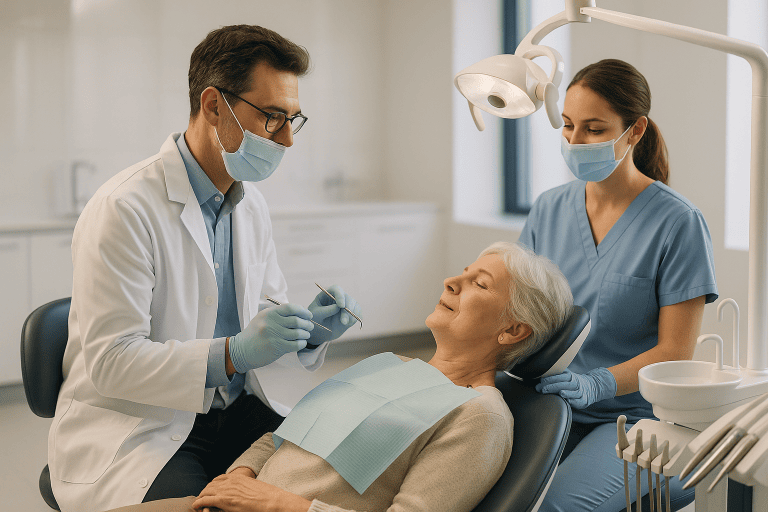
A zirconium crown is a durable, tooth-colored dental restoration used to improve tooth strength, shape, and appearance. It is commonly chosen for natural-looking smile restoration.
Quick answer
A zirconium crown is a custom-made cap, milled from zirconia, a strong, tooth-coloured ceramic, that covers a damaged or weakened tooth. It restores the tooth's shape, strength and appearance, and is cemented permanently in place. Treatment usually involves examination and planning, tooth preparation under local anaesthesia, a temporary crown while the laboratory makes the final restoration, then fitting, bite adjustment and cementation.
Zirconia Crowns: Strength and a Natural Appearance for a Damaged Tooth
A zirconium crown is a custom-made cap, milled from zirconia, a high-strength, tooth-coloured ceramic, that covers the whole visible part of a damaged tooth. It restores the tooth’s shape, size, strength and appearance, and it is cemented permanently onto the prepared tooth or fixed to a dental implant. Dentists recommend it when a tooth is too weakened, cracked, worn or heavily filled to be repaired reliably with a filling alone.
Zirconia has become one of the most widely used crown materials because it resolves a trade-off that older materials forced on patients: it has the strength to withstand chewing forces on back teeth, and a colour and translucency close enough to natural enamel to work in the smile zone. It is also among the dental treatments international patients most often travel to Turkey for, usually because a full course of examination, preparation, laboratory work and fitting can be organised within a coordinated visit. That coordination matters, because a crown is never a one-appointment purchase: it is a clinical process with a diagnosis at the start and a review at the end.
The decision often carries more weight than the word “crown” suggests. A damaged front tooth can change how freely you smile or speak. A broken molar can make every meal a calculation. A tooth that has had root canal treatment may feel fragile even after the infection has been dealt with. In these situations a carefully planned crown is not a cosmetic indulgence. It is a restorative treatment designed to preserve the tooth and support normal function for years to come.
At Acibadem, zirconium crown treatment is planned around both the dental diagnosis and your personal goals. Depending on the case, the process may involve restorative dentists, prosthodontic expertise, endodontic evaluation, periodontal assessment, digital imaging and close collaboration with the dental laboratory. For patients travelling from abroad, the plan is also built around medical suitability, timing, language support and follow-up: the practical details that decide whether a trip for dental care runs smoothly or not.
What Is a Zirconium Crown?
A zirconium crown is a full-coverage dental restoration: a cap that fits over the prepared tooth and replaces its outer surface entirely. Once fixed in place, it takes over the work the natural enamel used to do, bearing biting force, contacting the neighbouring teeth correctly and presenting a natural surface to the eye. It belongs to the broader family of dental crowns, alongside metal-ceramic and all-ceramic alternatives, and it is currently one of the most frequently chosen options within that family.
Unlike traditional metal-based crowns, a zirconium crown needs no dark metal substructure. That matters most in the smile zone, where light reflection, gumline appearance and natural translucency are visible every time you speak. Older metal-ceramic crowns can show a grey line at the gum margin, particularly if the gum recedes over time. A zirconia restoration is tooth-coloured through its entire thickness, so the margin stays discreet even as tissues change.
The crown itself is not a generic covering. It is designed individually to match your bite, the shape and shade of the neighbouring teeth, the contour of your gum and the proportions of your smile. A well-made crown lets you bite and chew comfortably, speak normally and clean the tooth as part of your daily routine. It should also look believable, proportionate to your face, your lip line and the rest of your teeth, rather than conspicuously perfect.
What is zirconia?
Zirconia is the common name for zirconium dioxide, a crystalline ceramic derived from the metallic element zirconium. Despite the name, the material in your mouth is not a metal: through processing, the metal is converted into a stable oxide ceramic, which is why zirconia crowns are described as metal-free. In its dental form, zirconia is prized for exceptional fracture resistance, chemical stability and good tolerance by gum tissue. It began in dentistry as a strong but rather opaque white material; modern formulations have been refined for greater translucency, which is what allows current zirconia restorations to be used convincingly on front teeth as well as molars.
What are zirconium crowns made of?
Zirconium crowns are made of zirconium dioxide ceramic, usually stabilised with small amounts of other oxides to control its strength and translucency. The crown starts life as a solid block or disc of partially processed zirconia. Guided by a digital design, a milling machine carves the crown shape from this block, and the milled crown is then sintered, fired at high temperature, which shrinks and hardens it to its final density. Depending on the design, the finished restoration is either solid zirconia throughout (monolithic) or a zirconia core veneered with a layer of aesthetic porcelain. Staining and glazing add the final shade characteristics before the crown is polished and sent for fitting.
A zirconium crown may sit on a natural tooth or on an implant. On a natural tooth, the dentist first reshapes the tooth to create space for the crown and to remove damaged or weakened structure. As part of implant treatment, the crown connects to the implant through an abutment once the implant has integrated with the jawbone. The planning differs, but the goal is the same: a stable, functional, natural-looking restoration.
One caution belongs here, because it is often skipped: a crown does not make a tooth immune to future problems. The tooth beneath the crown, the gum around it and the bite it works within all still need care. When properly planned, placed and maintained, zirconium crowns can give long service and a highly aesthetic result, but the crown protects the tooth; it does not replace your responsibility for it.
Types of Zirconia Dental Crown
A zirconia dental crown can be made in several forms, and the choice between them is a genuine clinical decision rather than a matter of price list. The main variables are how much of the crown is solid zirconia, how translucent the material is, and where in the mouth it will work.
Monolithic (full-contour) zirconia. The entire crown is milled from a single piece of zirconia. This is the strongest configuration, with no porcelain layer that could chip away from the core. It is often preferred for molars, for patients who grind or clench, and for any situation where biting forces are the dominant concern. Modern monolithic materials can be stained to a convincing shade, though they offer less optical subtlety than layered work.
Layered zirconia. A zirconia core is built up with hand-layered aesthetic porcelain. This allows the technician to reproduce the fine optical character of natural enamel, gradations of shade, translucency at the biting edge, surface texture. It is often chosen for visible front teeth, where a single crown must sit beside natural neighbours and pass unnoticed. The trade-off is honest: the porcelain layer, while durable, is not as fracture-resistant as the zirconia beneath it.
High-translucency zirconia. Newer formulations shift the balance towards aesthetics, offering more light transmission at some cost in raw strength. They occupy the middle ground for cases that need both a natural look and dependable durability.
Your dentist may also weigh zirconia against other all-ceramic options. Porcelain crowns in their traditional metal-supported form remain a serviceable choice, though the metal base limits their optics at the gumline. Lithium disilicate restorations, described on our E-Max crowns page, are often favoured for single front teeth where translucency is paramount, while zirconia tends to be favoured where strength is the priority or several units must be joined. There is no universally superior material, only a material that suits a particular tooth, bite and patient.
Are Zirconium Crowns a Good Choice? An Honest Assessment
Patients rightly ask whether zirconium crowns are a good idea before committing to irreversible tooth preparation. The fair answer: for many restorative situations they are among the best options available, provided the diagnosis is sound and the case suits the material. The questions below deserve direct answers.
Are zirconium crowns strong?
Yes, zirconium crowns are among the strongest tooth-coloured restorations in modern dentistry, which is why they are trusted on molars, where biting forces are highest, and in bridgework that must span gaps. Zirconia’s fracture resistance comfortably exceeds that of conventional dental porcelains, and monolithic designs remove the weakest link of older crowns: a veneering layer that could chip off a core. Strength has a context, though. A crown is only as dependable as the tooth under it, the cement seal at its margin and the bite it lives in. Heavy grinding, an unbalanced bite or a compromised foundation can defeat any material, however hard.
Are zirconium crowns safe?
Zirconium crowns are considered safe and are well tolerated by the tissues of the mouth. Zirconia is a biocompatible ceramic with a long track record in medicine and dentistry; it does not corrode, does not release metal ions and is generally kind to the gum that sits against it. Reported allergic reactions are rare, which makes the material worth discussing for patients who have reacted to metals in the past. Because it is a ceramic rather than a metal, it also avoids the galvanic and taste issues occasionally associated with older metal restorations. Safety, as always, depends on the whole treatment, not just the material: a well-tolerated crown placed on an undiagnosed infected tooth is still a problem waiting to surface.
What are the disadvantages of zirconium crowns?
The disadvantages of zirconium crowns are real and worth stating plainly before you decide.
- Tooth preparation is irreversible. Enamel removed to make space for the crown does not grow back. A tooth that receives a crown will always need a crown.
- Hardness cuts both ways. Poorly finished or roughened zirconia can wear the opposing natural teeth over time. A properly polished and adjusted surface manages this risk, which is one reason bite adjustment at fitting matters.
- Layered designs can chip. Where aesthetic porcelain is layered over a zirconia core, the veneering layer can fracture under heavy load, even when the core survives intact.
- Aesthetic limits at the extremes. Standard monolithic zirconia, while much improved, still cannot match the optical subtlety of the most translucent ceramics for a single front tooth beside natural neighbours.
- Adjustment and removal are demanding. The same strength that protects the tooth makes the crown time-consuming to modify or cut off if replacement is ever needed.
- Crowns do not whiten. If you plan to whiten your teeth, the shade should be settled before the crown shade is chosen; afterwards, the crown keeps its colour while the enamel around it changes.
- Some sensitivity is possible. A deeply prepared or previously irritated tooth may stay sensitive for a while after treatment, and occasionally a tooth under a crown later needs root canal treatment.
None of these drawbacks makes zirconia a poor material. They make it a material that rewards careful case selection, precise laboratory work and an honest conversation before the drill touches the tooth.
Who May Need a Zirconium Crown?
A zirconium crown may be recommended when a tooth cannot be reliably restored with a filling, inlay, onlay or veneer alone. In most cases the tooth has lost too much structure to withstand normal chewing forces without full coverage. The dentist’s job is to determine whether the tooth is still restorable, whether the nerve and root are healthy, and whether the surrounding bone and gum can support a crown over time.
Patients usually seek an assessment because of pain, fracture, visible damage or cosmetic concern. Some notice an old filling breaking down at its edges. Others have a tooth that darkened after trauma or root canal treatment. Some have severe wear from grinding or clenching; others want to correct a tooth that is poorly shaped or out of harmony with the rest of the smile.
Typical signs that a tooth may need crown treatment include sensitivity when chewing, pain on biting a cracked tooth, visible fracture lines, a large existing filling, repeated filling failure, marked discolouration, or weakness after root canal treatment. Not every symptom means a crown is necessary, and not every damaged tooth can be crowned. A careful diagnosis has to come before any decision about material.
Diagnosis usually starts with a clinical examination: tooth structure, bite relationship, gum condition, mobility and sensitivity are all checked. Dental X-rays or three-dimensional imaging may be used to assess the root, the bone, existing restorations, hidden decay, infection or previous root canal work. In many cases photographs, digital scans, shade analysis and bite records are taken so the restoration can be planned precisely rather than approximately.
For international patients this diagnostic phase carries extra weight. You may arrive with a firm idea that you want a crown, but the dental team must first confirm that a crown is the right treatment. Sometimes a tooth needs root canal therapy, gum treatment, crown lengthening or replacement of a failed restoration first. Sometimes a more conservative option will serve you better. The recommendation should follow the dental findings, not the appearance alone, and a team that tells you a crown is unnecessary is doing its job.
Conditions and Indications Addressed by Zirconia Crowns
Zirconia crowns are used across a range of restorative and aesthetic indications, and understanding which one applies to you clarifies what the crown is actually there to do.
Protecting a tooth weakened by decay or large fillings. When too much natural structure has been lost, a conventional filling cannot brace the remaining walls of the tooth. A crown surrounds the tooth completely and distributes chewing forces more evenly, reducing the chance that a weakened cusp breaks away.
Restoring a tooth after root canal treatment. A root-treated tooth can become more brittle, especially if it was heavily damaged before treatment. A crown protects the remaining structure against fracture. Whether a crown is needed after root canal therapy depends on the tooth’s position, how much structure remains and the forces it takes during chewing, back teeth generally need coverage more urgently than front teeth.
Holding together a cracked tooth. If a crack is limited and the tooth is otherwise restorable, a crown can bind the tooth and relieve symptoms. If the crack runs deep into the root or is associated with serious infection, a crown will not save it and other options must be discussed. Cracks are time-sensitive: what a crown can manage early, it often cannot manage late.
Improving severely compromised aesthetics. Zirconia crowns can transform teeth that are deeply discoloured, irregularly shaped, undersized, worn or structurally damaged. Where a front tooth is essentially healthy and only its surface needs changing, veneers are usually the more conservative route; a crown becomes the better answer when the tooth also needs reinforcement. Enamel thickness, bite forces, tooth position and the extent of existing damage decide which is appropriate.
Completing implant treatment. After a dental implant has integrated with the jawbone, a zirconia crown can recreate the visible tooth on top of it. Here the crown is not protecting a natural tooth; it is the final component of a replacement. The design must respect the gum contour, the bite and the neighbouring teeth. You can read about the implant stage itself on our dental implants page.
Multiple crowns within a larger rehabilitation. Some patients need several zirconium crowns as part of a broader smile restoration or full-mouth rehabilitation, typically where there is severe wear, bite collapse, multiple failing restorations or extensive aesthetic concerns. These cases demand more advanced planning, because the dentist is no longer treating one tooth in isolation: the bite, the jaw joints, the muscles, the tooth proportions and the long-term maintenance plan all have to work together.
How Zirconium Crown Treatment Is Performed
The treatment follows a defined sequence. Knowing it in advance removes most of the uncertainty, and it explains why an honest clinic will not promise a fixed number of appointments before examining you.
- 1. Consultation and diagnosis. The dentist evaluates the tooth, reviews your symptoms and history, takes the imaging the case requires and discusses your expectations. If the tooth is painful or infected, controlling the disease comes first. Gum inflammation, decay below the gumline or an unstable bite may all need attention before a final crown can be made, skipping this step is how crowns fail early.
- 2. Aesthetic planning. The team considers shade, translucency, gumline symmetry, smile line, tooth width and length, and how the crown will read in different lighting. A single front crown beside natural teeth demands the most detailed shade work; a molar crown prioritises strength and bite stability while keeping a natural colour.
- 3. Anaesthesia. Local anaesthetic numbs the tooth and surrounding tissue before preparation, and for most patients this keeps the procedure comfortable throughout. If dental treatment makes you anxious, say so openly, additional comfort measures can be considered depending on the case and facility. Our dental anaesthesiology page explains the options in more detail.
- 4. Tooth preparation. The dentist removes decay and any weakened old filling material, then reduces the tooth by a precise amount to create space for the crown. The remaining tooth is shaped so the crown seats securely and can carry chewing forces. If too little natural structure remains, a core build-up rebuilds the foundation; after root canal treatment, a post is sometimes added, though not every root-treated tooth needs one.
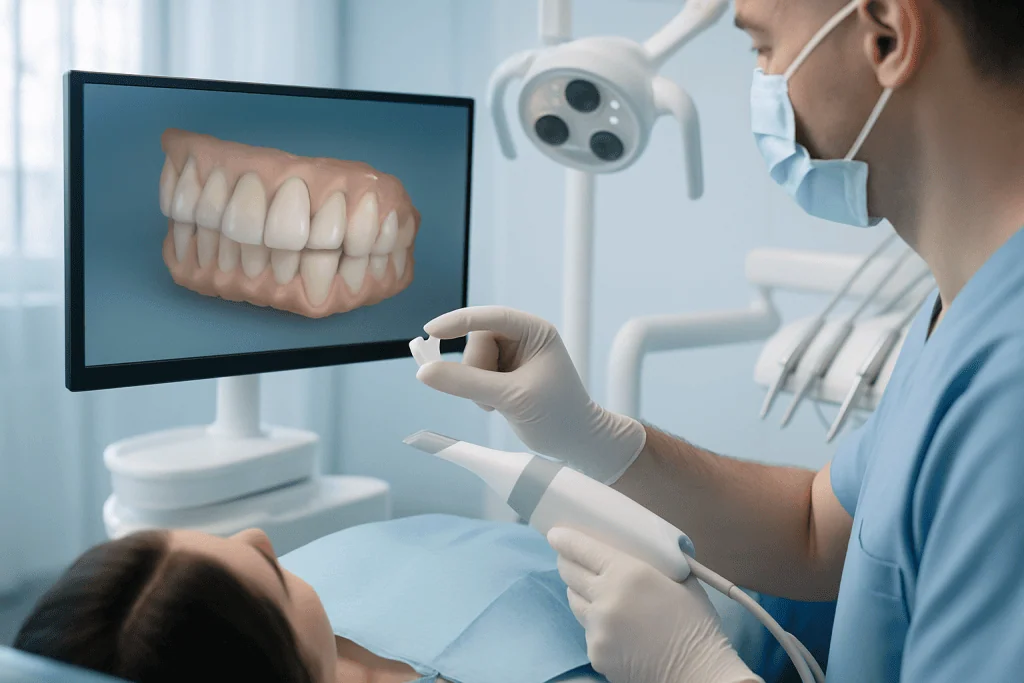
- 5. Scanning or impressions. The prepared tooth and your bite are recorded, either with a digital intraoral scanner or conventional impression material. Digital scanning tends to be more comfortable and communicates cleanly with the laboratory; the bite record ensures the finished crown meets the opposing teeth correctly.
- 6. Temporary crown. A temporary crown usually protects the prepared tooth while the final zirconia restoration is made. It maintains appearance and lets you chew carefully, but it is not as strong or refined as the final crown, avoid sticky, hard or very chewy foods on that side, and clean gently around the margin.
- 7. Laboratory fabrication. The crown is designed digitally, milled from zirconia, sintered, then shaped, coloured and finished to the treatment plan. In aesthetic cases, ceramic layering or staining recreates the subtle shade variations and translucency of a natural tooth.
- 8. Fitting and cementation. At the placement visit the temporary is removed and the final crown is checked: fit, margins, contacts with neighbouring teeth, bite, colour and overall shape. Small adjustments are made before final cementation with materials selected for the case. The bite is checked again afterwards, because a high spot left uncorrected causes discomfort and puts the crown and tooth under unnecessary force.
How long does all this take? It depends on the number of crowns, the condition of the tooth, laboratory timing and whether preparatory procedures are needed. A single straightforward crown is often completed over a small number of appointments; complex multi-tooth or implant-related cases need more planning and more time. Be wary of assuming every crown can be finished in one visit. The safest schedule follows the diagnosis, the health of the tissues, the laboratory’s requirements and the need for follow-up adjustment, not the return date on a flight booking.
Recovery Timeline After a Zirconium Crown
Recovery is usually straightforward, and most patients return to normal daily activities immediately. The tooth and surrounding tissues still need a short adjustment period, and knowing what is normal helps you judge what is not.
| Time Period | What You Can Expect |
|---|---|
| Day 1 | Numbness wears off within several hours. Mild gum soreness or sensitivity may occur. Avoid chewing on the side until sensation has fully returned. |
| First week | The tooth may feel slightly different as your mouth adapts. If the bite feels high or chewing is uncomfortable, the dentist checks and adjusts it at review. |
| First month | Most temporary sensitivity settles. Chewing should feel normal unless the tooth had deeper pre-existing problems. |
| Longer term | Regular check-ups, daily oral hygiene and protection against grinding or clenching maintain the crown, the gum and the supporting tooth. |
Some patients notice temperature or pressure sensitivity in the early weeks, particularly if the tooth was already irritated or the preparation was deep. This typically improves as the tooth and gum settle. Persistent pain, a bite that still feels too high, swelling or discomfort on chewing are signals that the crown needs to be checked and, where necessary, adjusted or investigated further.
Aftercare and Lifespan
Caring for a zirconium crown is much like caring for a natural tooth, and that is exactly the point: brush twice daily, clean between the teeth every day, and keep up professional check-ups and cleanings. The crown material cannot decay, but the tooth at its margin can, plaque left along the crown edge is the classic route to failure. The fundamentals are covered on our dental hygiene page. Beyond cleaning, treat the crown as a tooth, not a tool: no opening packages, no biting pen lids, no chewing ice.
How long do zirconia crowns last?
Zirconia crowns are built for long service, and with sound placement and consistent care a well-made crown can function for many years, frequently outlasting older crown types on comparable teeth. No responsible clinician will promise a specific lifespan, because the crown material is only one factor among several. What actually determines longevity: the amount and health of the tooth structure under the crown, the accuracy of the fit and cement seal, the balance of your bite, whether grinding or clenching is managed, the health of the surrounding gum, and how well the margin is kept clean day after day. A crown on a solid foundation in a cared-for mouth ages slowly; the same crown over a neglected margin does not. If you grind or clench, a night guard is often recommended: it protects not just the crown but the opposing teeth and the rest of your dentition.
Why Acting Early Matters
Problems that end in crown treatment rarely stand still. A cracked tooth may begin with mild discomfort and quietly develop deeper fracture lines. A large filling weakens the surrounding walls until one of them breaks away. Decay around an old restoration spreads beneath the surface long before it becomes visible. Every month of delay tends to reduce the amount of healthy tooth left to support a crown.
Early assessment gives the dentist more options. A tooth evaluated before the damage becomes extensive can often be crowned with its natural root preserved. A tooth left until it fractures below the gumline, develops serious infection or loses too much structure may only be treatable by extraction followed by implant or bridge work. Replacement dentistry can be very effective, but preserving a natural tooth, when clinically sound, is usually the better outcome.
Delay also erodes quality of life in quieter ways. Chewing shifts to one side to avoid pain, straining other teeth and the jaw muscles. A damaged front tooth makes people guard their smile in meetings and photographs. An infection, where present, can spread locally and turn a planned restoration into urgent care.
Acting early does not mean rushing into treatment. It means obtaining an accurate diagnosis while the situation is still simple, because a tooth that swells, aches spontaneously or breaks at the gumline has usually moved past the stage where a straightforward crown is the whole answer.
Benefits of Zirconium Crown Treatment
The benefits you can realistically expect depend on the condition of the tooth, the quality of the planning and your ongoing care. With those in place, this is what a zirconium crown offers.
| Benefit | What It Means for You |
|---|---|
| Improved tooth strength | A crown protects a weakened or heavily restored tooth by covering it fully and distributing chewing forces more evenly. |
| Natural tooth-coloured appearance | Zirconia can be shaded and shaped to blend with the surrounding teeth, supporting a natural-looking smile. |
| Durability for daily function | The material suits areas exposed to significant biting force, including many back teeth, when the crown is designed appropriately. |
| Metal-free restoration | With no metal base, zirconium crowns avoid the dark gumline margin sometimes seen with older metal-ceramic crowns. |
| Support after root canal treatment | For suitable teeth, a crown helps protect the remaining structure once the internal infection has been treated. |
| Improved shape and bite contact | A custom crown restores worn, broken or misshapen contours and helps create comfortable, correct chewing contact. |
Factors That Influence a Good Result
The success and longevity of a zirconium crown depend on far more than the crown material. A strong ceramic cannot compensate for untreated infection, poor gum health, an inaccurate bite or inadequate hygiene. A good result starts at diagnosis and runs through preparation, laboratory design, placement and long-term maintenance: a chain in which every link matters.
Remaining tooth structure. A crown needs a stable foundation. If the tooth is severely decayed, fractured or broken near the gumline, additional procedures may be needed to build a predictable base. Sometimes the honest advice is that the tooth cannot be reliably saved and that implant or bridge treatment should be considered instead, and that advice, delivered early, is worth more than an optimistic crown that fails within a couple of years.
Gum and bone health. Inflamed gums bleed during scanning or impressions, making accurate margins harder to capture. Periodontal disease reduces the support around the tooth itself. Before a final crown, the team may recommend professional cleaning, periodontal treatment or improved home care to create a healthier environment for the restoration.
Bite forces. Grinding and clenching load crowns, natural teeth, jaw joints and muscles heavily. The crown must be designed with the bite in mind, and a protective night guard is often part of the plan. Where there is extensive wear or multiple failing restorations, treating one tooth without understanding the overall bite rarely holds.
Aesthetic expectations. Zirconia can look very natural, but the right shade and shape depend on the neighbouring teeth, your skin tone, your lip movement and whether you intend to whiten. Whitening, if wanted, is usually done before the final crown shade is chosen, because a crown does not lighten the way enamel does.
Laboratory quality and communication. The dentist and the laboratory must work from accurate records and a clear design plan. Digital scans, clinical photographs, shade references and bite information all help the technician create a restoration that fits the mouth and matches the smile. On front teeth, details as small as translucency at the edge, surface texture and the exact line of the biting edge decide whether the crown disappears among its neighbours or announces itself.
Your daily habits. Brushing, interdental cleaning, regular check-ups and attention to early symptoms protect the crown margins and the gum around them. The crown covers the tooth; it does not guard the edge where crown meets tooth if plaque control is poor. Long-term success is a partnership between you and the dental team, and your half of it happens at the bathroom sink.
How Much Are Zirconium Crowns?
There is no single honest figure for the cost of a zirconium crown, because the cost is built from the specifics of a case rather than the name of the material. What actually drives it: the number of crowns needed; the condition of the tooth and whether preparatory work such as root canal treatment, a core build-up, gum treatment or extraction and implant placement comes first; the type of zirconia design (monolithic versus hand-layered aesthetic work); the laboratory’s standard and the technician’s time; the imaging and diagnostics the case requires; and the number of appointments and reviews in the plan.
This is why a serious quotation only follows an examination, or at minimum a review of recent X-rays and photographs. A price attached to a tooth nobody has assessed is a guess, and a treatment plan should itemise what is included: diagnostics, preparatory treatment, the crown itself, fitting, adjustments and follow-up. Comparing quotations line by line tells you far more than comparing headline figures.
How much do zirconium crowns cost in Turkey?
The cost of zirconium crowns in Turkey is shaped by exactly the same drivers: case complexity, preparatory treatment, crown design and laboratory quality. When weighing quotations for treatment in Turkey, look past the headline number and check what the plan actually contains: the diagnostic phase, any preliminary work, the crown specification, the number of visits and the follow-up arrangements. A complete, itemised plan built on your own records is the only figure worth comparing.
Having a Zirconium Crown in Turkey: Planning as an International Patient
For international patients, choosing where to have zirconium crown treatment involves more than picking a material. You are weighing clinical expertise, diagnostic standards, communication, travel logistics and continuity of care. It is worth understanding what a well-run pathway to Turkey actually looks like.
Before travel. Whenever possible, preliminary information, dental X-rays, photographs, treatment history and your specific concerns, can be reviewed before arrival. This remote review does not replace an in-person diagnosis, but it helps estimate the likely treatment pathway, the appointment sequence and whether additional dental or medical evaluations may be needed. It also flags early the cases that are not one-trip cases, such as teeth needing root canal therapy or implants that require integration time before final crowns.
During your visit. A typical care pathway covers examination and imaging on arrival, confirmation or revision of the plan, any preparatory treatment, tooth preparation with digital scanning, temporary crowns while the laboratory works, and then the fitting, bite adjustment and cementation of the final zirconia restorations, with a review before you travel home so adjustments can be made while you are still in the country. Laboratory timing sits at the centre of the schedule, which is why realistic planning beats compressed planning: an extra day for a proper review is cheaper than a return flight for an adjustment.
The clinical environment. At Acibadem, zirconium crown treatment sits within the broader dental and oral health framework, which matters when a case needs more than routine restorative work. Depending on the situation, restorative dentists, prosthodontically focused clinicians, endodontists, periodontists, oral surgeons and radiology teams may contribute, and complex cases, crowns within implant treatment, full-mouth rehabilitation, care after trauma or disease, are reviewed collaboratively. Because the group operates within a hospital setting, patients with conditions such as diabetes, heart disease or complex medication histories can have their medical suitability reviewed as part of planning rather than as an afterthought. Digital imaging, intraoral scanning, three-dimensional imaging where indicated and digital design workflows support the precision the laboratory depends on.
Communication and follow-up. Acibadem International supports patients in more than 20 languages, helping with appointment coordination, medical record transfer, travel-related planning and communication between patient and clinical team. That support matters more for crowns than for many treatments, because the work spans multiple appointments and depends on you understanding, in your own language, what has been done, what is temporary, and what the aftercare requires. Before departure, a clear written record of the treatment, the materials used and the maintenance plan lets your local dentist take over routine care at home, with review in Turkey reserved for anything the restoration itself requires.
Scheduling honesty. Some patients suit a relatively short restorative visit. Others need gum treatment, root canal therapy, implant integration time or bite stabilisation before final crowns can responsibly be placed. A trustworthy plan tells you which kind of case you are before you book flights, not after you arrive.
Making a Considered Decision
A zirconium crown is an excellent option when a tooth needs durable protection and a natural-looking result: it can preserve a weakened tooth, restore comfortable chewing, improve the smile and support long-term oral function. The best outcomes come from the same sequence every time, accurate diagnosis, skilled preparation, thoughtful material selection, careful laboratory work and consistent maintenance afterwards. Whether the question is a single crown, the replacement of an old restoration, a crown after root canal treatment or a wider rehabilitation, the answer starts with a proper examination of the tooth itself. Everything reliable in crown dentistry, the material choice, the timeline, the cost, the longevity, follows from that examination, and nothing reliable precedes it.
Preparation
- Your dentist examines the teeth, gums, bite, and smile goals before treatment. Digital imaging or impressions may be taken to design the crown accurately. Any decay, gum inflammation, or old restoration problems are treated before crown placement.
Aftercare
- Mild sensitivity or gum tenderness may occur for a few days after tooth preparation or crown fitting. Maintain good oral hygiene, avoid biting very hard objects, and attend follow-up visits if your bite feels uncomfortable. Regular dental check-ups help protect the crown and surrounding teeth.
Frequently Asked Questions
What affects the cost of a zirconium crown?
The final cost depends on the number of teeth treated, the type of zirconia, the complexity of preparation, laboratory customization, dentist expertise, imaging needs, temporary crowns, and whether additional dental treatment is required.
How can I get a personalised quote?
A personalised quote requires a dental consultation, photographs, dental imaging, and an assessment of your bite and tooth condition. International patients can request a free consultation to receive a treatment plan and cost estimate tailored to their needs.
Are zirconium crowns more expensive than other crown types?
They may cost more than some alternatives because of material quality, digital design, milling, finishing, and shade customization. However, the most suitable option should be selected according to clinical need, aesthetics, durability, and specialist advice.
Does the quoted cost usually include all steps?
Package contents vary by provider. A quote may include consultation, imaging, tooth preparation, temporary crowns, zirconium crown fabrication, fitting, and follow-up, but additional procedures such as root canal treatment or gum care may be quoted separately.
Can travel costs change the total budget for international patients?
Yes. Flights, accommodation, local transport, interpreter support, and the need for follow-up visits can affect the overall budget. Coordinated scheduling can help patients understand the likely timeline before travelling.
Medically reviewed by the Acıbadem International Medical Board September 13, 2026
See our medical review board →
Update history
- PublishedJune 8, 2026
- Medical review approvedSeptember 13, 2026
- Last content updateSeptember 12, 2026
References1
- Dental Crowns my.clevelandclinic.org
Planning tools for this treatment
Indicative figures for orientation only: your written plan and quote follow a free medical review.
Trusted care for international patients
From the Acibadem Blog
Which Zirconium Crown Suits Front or Back Teeth? Layered vs Monolithic Zirconia Compared
For most back teeth, a monolithic zirconia crown, milled from a single block with no porcelain layer, is usually preferred because there is no…

Zirconium Crown Problems: A Bite That Feels High, Sensitivity and Gum Irritation Explained
Most zirconium crown problems fall into three groups: a bite that feels high because the crown sits a fraction too tall, sensitivity because the…