

Which Zirconium Crown Suits Front or Back Teeth? Layered vs Monolithic Zirconia Compared
Key Takeaways
- Monolithic zirconia is one solid piece of ceramic with no porcelain veneer to chip, and that single feature is why it dominates molar and implant crowns.
- Review data place classic 3Y zirconia at roughly 900–1,200 MPa of flexural strength versus around 100 MPa for veneering porcelain, which is the mechanical root of layered zirconia crown chipping.
- A systematic review estimated about 91% five-year survival for veneered zirconia single crowns against about 95% for metal-ceramic, with most recorded failures being chips rather than lost crowns.
- Translucent 5Y zirconia gives up roughly half its strength for a more enamel-like look, an acceptable swap on front teeth that shear rather than crush.
- Polished zirconia is gentle on opposing enamel, but glazed or freshly adjusted rough surfaces can abrade it, so ask for repolishing after any bite adjustment.
- Cleveland Clinic's general expectation for crowns is roughly 5–15 years, and decay at the margin, not ceramic fracture, is the usual reason a crowned tooth eventually fails.
For most back teeth, a monolithic zirconia crown, milled from a single block with no porcelain layer, is usually preferred because there is no veneer to chip under heavy chewing. For front teeth, a layered zirconia crown or a high-translucency monolithic grade is more often chosen for a natural appearance. Your bite, grinding habits, available space and the shade of neighboring teeth decide the final choice with your dentist.
The mirror comes out, and there is a pause. Your dentist has just said the molar that cracked on a crust of bread needs a crown, and then adds a question you did not expect to answer: layered or monolithic? Both are zirconia. Both are white. The difference sounds like jargon, yet it decides how the tooth looks, how it survives your bite, and what happens if a piece breaks off in three years.
The layered vs monolithic zirconia crown decision is really a trade between two things you want at once: a crown that looks as if it grew there, and a crown that shrugs off decades of chewing. Front teeth and back teeth ask for those qualities in very different proportions.
This explainer walks through how each version is built, what the clinical evidence says about chipping and longevity, and how dentists usually weigh the choice. The final call belongs to you and your treating team, but it helps to arrive knowing what the words mean.
What is a layered vs monolithic zirconia crown, in plain language?
Zirconia is zirconium dioxide, a dense white ceramic; despite the name it is not a metal, which is why zirconia crowns are often described as metal-free. Dentistry adopted it because it is unusually tough for a ceramic. A crown is a cap that covers the visible part of a weakened tooth or sits on top of a dental implant.
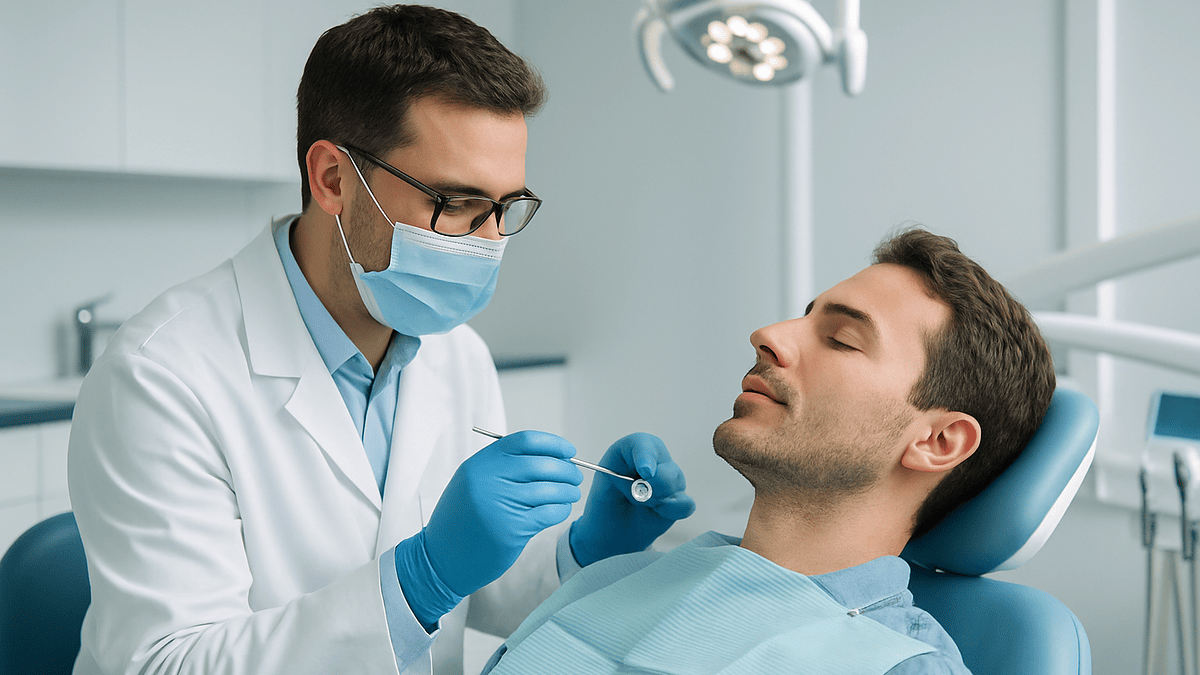
A monolithic zirconia crown, also called full contour zirconia, is milled from a single block of the material. The whole crown, from the fitting surface to the biting surface, is one continuous piece. Color comes from pre-shaded blocks and from stains and glaze painted onto the surface before a final firing.
A layered zirconia crown starts the same way but stops early. The zirconia is milled only as a thin inner shell, called a coping, and a technician builds up the outer shape by hand in feldspathic porcelain, a glassy dental ceramic fired in several thin layers. Porcelain carries light the way enamel does, so a skilled technician can paint in translucent edges, subtle color bands and the faint white flecks real teeth have.
There is also a middle path called a cut-back design. The crown is milled monolithic, then a small area on the visible face is cut back and layered with porcelain while the biting surface stays solid zirconia.
My view, after reading the evidence, is that the label matters less than where the porcelain sits. Porcelain on a surface that takes chewing force is the weak point; porcelain on a surface that only meets the lips and the light is where it earns its keep. Keep that single idea in mind and most of what follows will feel like common sense.
How is a zirconia crown made? What actually happens from scan to seating
The tooth is prepared first. Under local anesthetic the dentist removes old fillings and decay and reduces the tooth on all sides so the crown has room to fit without looking bulky. Monolithic zirconia tolerates thinner walls than veneered designs, so it often needs less tooth removed, one of its quieter advantages.
Next comes the record. Many practices use a digital scanner, a wand that photographs the tooth thousands of times to build a 3D model, although a conventional impression in soft putty still works. Design software or a technician shapes the crown on that model, adjusting the contacts with neighboring and opposing teeth.
The crown is then milled from a block of zirconia that is only partly fired. At this stage the material is chalky and soft, and it is cut oversized because the next step, sintering, shrinks it. Sintering means heating the ceramic in a furnace for hours until the particles fuse into the dense, glassy-hard final material. For a monolithic crown the technician applies stains and glaze and fires once more. For a layered crown the sintered coping goes to the bench, where porcelain is brushed on in layers and fired repeatedly, each cycle adding depth of color.
Fitting is the final visit. The dentist checks the margin where crown meets tooth, checks the bite with thin marking paper, and cements the crown, usually after roughening the inside with fine air abrasion and applying a primer designed for zirconia. Cleveland Clinic describes the traditional pathway as two appointments with a temporary crown in between, while chairside milling can compress suitable cases into a single visit. Layered crowns almost always take the laboratory route because the hand work cannot be rushed.
Why does layered zirconia crown chipping happen, and how often?
Chipping is the reason this debate exists. The zirconia coping under a layered crown is enormously strong; the porcelain sitting on it is not. Review data summarized by Zhang and Lawn in the Journal of Dental Research put the flexural strength of conventional 3Y zirconia at roughly 900–1,200 megapascals, while veneering porcelains sit closer to 100. Flexural strength is simply how much bending stress a material takes before it cracks. Bond a brittle skin to a stiff core, load it thousands of times a day, and the skin is where fractures begin.
Several details make the porcelain more vulnerable. Zirconia conducts heat poorly, so if the crown is cooled too fast after firing, stresses become locked into the porcelain. A coping that does not follow the final tooth shape leaves porcelain thick and unsupported in places. Night grinding multiplies the load, and a high spot in the bite concentrates force on one cusp. Any of these can turn a tiny internal flaw into a visible chip.
How common is it? A systematic review by Sailer and colleagues in Dental Materials reported estimated five-year survival of about 91% for veneered zirconia single crowns compared with about 95% for metal-ceramic crowns, and identified veneer fracture as the leading technical complication in the zirconia group. Those figures come from earlier layering techniques; slower cooling, anatomically designed copings and pressed rather than hand-built porcelain were introduced specifically to address the problem, and later reports look better, though long-term data are still accumulating.
What happens after a chip depends on its size. A small edge chip can often be smoothed and polished in the chair. A chip exposing the coping over a biting surface usually means a remake. Monolithic crowns sidestep the issue by having no porcelain to lose, which is exactly why they took over the back of the mouth.
Can a monolithic zirconia crown on front teeth look natural?
It can, and the answer used to be no. Early zirconia was bright white and opaque, closer to a bathroom tile than a tooth, and front-tooth crowns were layered by default to hide it. That changed when the chemistry changed. Zirconia is stabilized with yttria, a rare-earth oxide, and raising the yttria content from about 3% to 5% creates more of a cubic crystal form that scatters less light. Zhang and Lawn’s review explains the trade: translucent 5Y grades let light pass more like enamel, but their flexural strength drops to roughly half that of the classic 3Y material.
For a front tooth that trade is usually acceptable. Incisors do not crush; they shear and guide, and the forces are a fraction of what a molar sees. Multilayer blocks add a built-in gradient from a warmer, more opaque neck to a more translucent edge, and surface stains supply the finishing touches.
The limits show up in two situations. The first is a single central incisor beside an untouched natural neighbor, the hardest match in restorative dentistry, where a technician layering porcelain by hand still has the widest palette of effects. The second is a dark underlying tooth, such as one discolored after root canal treatment, where a translucent crown lets the shadow through and a layered design with a more opaque coping can mask it.
So the honest guidance for the front of the mouth is this: a monolithic crown in a translucent grade suits many people, particularly when several front teeth are treated together and matched to each other. A layered crown, or a cut-back hybrid with porcelain only on the lip-facing surface, remains the choice when one tooth must disappear among natural ones. Photographs and shade records taken before any drilling usually settle the question.
Is a zirconia crown for molars better monolithic?
For most molars, yes, and the reasoning is mechanical rather than cosmetic. Molars generate the highest bite forces in the mouth, they sit where nobody notices the gap between a good shade and a perfect one, and they are exactly where veneered porcelain historically failed. A monolithic zirconia crown for molars removes the fragile layer and puts the strongest material on the surface that takes the punishment.
There are practical bonuses. Because the material is so strong, the crown can be made thinner, which matters on teeth with little height left or where a worn opposing tooth crowds the space. A thinner crown also means less drilling of the remaining tooth, and preserving tooth structure is one of the few things every dental guideline agrees on.
The recurring worry runs the other way: will something this hard wear down the natural tooth it bites against? The evidence is reassuring with a caveat. Studies reviewed in the dental materials literature find that well-polished zirconia is gentle on opposing enamel, because surface smoothness governs abrasion far more than hardness does. Glazed zirconia is another matter; glaze wears through quickly and a rough surface beneath can abrade enamel. The same problem arises after chairside bite adjustments if the ground area is not repolished. Ask that any adjusted surface be polished, not simply left.
The molar case for monolithic zirconia is strong but not absolute. Someone with a low smile line and no grinding habit could reasonably choose lithium disilicate or a metal-ceramic crown, both discussed later. Very deep margins below the gum, limited mouth opening, or a tooth already carrying a tall metal post may tilt the choice. Those are conversations for the chair, not rules to memorize.
Full contour zirconia vs layered: the side-by-side table
The differences are easier to see laid out together. The strength figures are the ranges summarized by Zhang and Lawn; everything else reflects mainstream clinical practice rather than a fixed rule.
| Feature | Monolithic (full contour) zirconia | Layered (veneered) zirconia |
|---|---|---|
| Structure | One solid piece of zirconia, stained and glazed | Zirconia coping covered by hand-fired porcelain |
| Strength of outer surface | Roughly 500–1,200 MPa depending on grade | Porcelain near 100 MPa over a strong core |
| Chip risk | Low; no veneer to fracture | Higher; veneer fracture is the main reported complication |
| Translucency and shade depth | Good in newer grades, limited fine detail | Highest; custom effects and masking of dark teeth |
| Thickness needed | Thinner walls possible, less tooth removal | More space required for two layers |
| Usual home | Molars, premolars, implant crowns, grinders | Single front teeth, high smile lines |
| Repair of a chip | Rarely needed; polish minor edge damage | Small chips polished, larger ones may need a remake |
| Main limitation | Can look flat up close; hard to cut off | Weakest layer sits on the surface |
Two rows deserve a second look. The thickness row explains why monolithic designs are often chosen for worn dentitions and short teeth even where appearance matters. The chip-risk row explains why, when a layered crown is chosen for a front tooth, careful bite design and a protective nightguard for grinders are part of the plan rather than optional extras.
The cut-back hybrid is absent from the table because it deliberately sits between the columns: monolithic where the teeth meet, layered where the eye lands. Many dentists treat it as the default compromise for premolars and canines that show in a broad smile yet still carry real chewing load.
Who is each type of zirconia crown usually for, and who is usually asked to wait?
Crowns of either type are commonly proposed for a tooth that has cracked, lost a large filling, been root treated and left brittle, or worn down until it no longer meets its partner. Cleveland Clinic lists these among the standard reasons a crown is recommended. Zirconia in particular tends to be chosen when strength is the priority or when a person prefers to avoid metal.
Monolithic zirconia is usually favored for people who grind or clench, for molars and second premolars, for implant-supported crowns at the back, and for teeth with limited space. Layered zirconia, or a translucent monolithic grade, is usually favored for front teeth in someone with a high smile line, especially when one tooth has to match natural neighbors.
Some people are asked to wait, and the reasons concern the foundation rather than the crown. Active gum disease needs treating first, because a crown margin placed into inflamed tissue traps plaque and the gum keeps receding. Untreated decay on neighboring teeth is addressed so the bite does not change after the crown is made. A tooth that recently had root canal treatment is sometimes given time to confirm symptoms have settled before the final crown, and a tooth with too little structure may need a core build-up or a minor gum procedure to expose more tooth. People with unstable jaw pain or a shifting bite are often stabilized first, since a crown made to a moving target rarely fits for long.
Adolescents whose teeth are still erupting, people mid-way through orthodontic treatment, and anyone with a planned change to the opposing teeth are typically asked to sequence the crown later. None of these are refusals; they are ordering decisions, weighed by the treating team against how urgently the tooth needs protecting.
Does the choice change for a zirconia crown on a dental implant?
It changes in a few specific ways. A dental implant is a titanium or ceramic post placed into the jawbone to replace a missing root, and the crown attaches to it through a connector called an abutment. Mayo Clinic notes that bone must first fuse to the implant, a process called osseointegration that typically takes several months, before the final crown is fitted, so the crown decision comes well after the surgery.
The first difference is the connection. An implant crown is either screwed directly to the implant, with a small access hole later sealed with filling material, or cemented onto an abutment like a crown on a natural tooth. Monolithic zirconia suits screw-retained designs well because the access channel passes through solid material rather than through a porcelain layer that can crack at its edge.
The second difference is feel. A natural tooth sits in a thin ligament that lets it move fractionally and cushions impact; an implant is rigid in bone. That lack of give means the crown transfers every bite force straight through, so precise bite adjustment matters even more, and it is one reason clinicians have tended toward monolithic designs for posterior implant crowns. Reviews of veneered zirconia, including the Sailer analysis, flagged chipping as a recurrent complication, and implant crowns were no exception.
In the front of the mouth the priorities flip. The gum around an implant is thinner than around a tooth and can show a gray shadow from a metal abutment; a zirconia or zirconia-topped abutment with a layered or translucent crown is often used so the emerging crown looks natural. Cleaning around an implant crown is non-negotiable, because the tissue seal is more fragile than around a tooth and inflammation there, called peri-implantitis, can threaten the implant itself.
What do the days and weeks after a zirconia crown usually look like?
Expect two short settling phases, one after preparation and one after the final crown is seated. After the preparation visit you will usually leave with a temporary crown made of acrylic or composite. Temporaries are fixed with a weak cement on purpose so they come off easily later, which means sticky sweets and chewing on that side are best avoided. Cleveland Clinic describes the temporary phase as typically lasting a couple of weeks while the laboratory makes the final crown; same-day milling skips this stage.
Some sensitivity to cold and pressure is common once the anesthetic wears off, because the tooth has been reshaped and sits under a less insulating cover. In a tooth that still has a live nerve this usually eases as the tooth calms down. Your dentist will give you a rough window based on how deep the preparation was; if you are well past it and the tooth still twinges, that is worth a call.
At the fitting visit the crown is tried in, adjusted and cemented. Numbness lasts a few hours, so eating is best delayed until you can feel your cheek and tongue. The bite should feel even within a day or two once the tongue stops investigating the new surface; a crown that still feels high when your teeth close is the most common reason for a quick return, and it is a brief adjustment rather than a problem.
Flossing around the new crown from day one matters more than any other instruction. Zirconia cannot decay, but the tooth beneath its margin can, and margin decay rather than ceramic failure is the usual way a crowned tooth gets into trouble. People who grind are often fitted with a nightguard in the following weeks; Mayo Clinic lists a custom guard among the standard measures for protecting teeth and restorations from bruxism.
How long do layered and monolithic zirconia crowns last?
No one can promise a lifespan for a crown in a specific mouth, and it is reasonable to be wary of anyone who does. What can be said is where the ranges sit. Cleveland Clinic gives a general expectation of roughly 5–15 years for dental crowns of all materials, with hygiene, grinding habits and the health of the underlying tooth doing most of the work in deciding where an individual lands.
For zirconia specifically, the longest-running numbers come from veneered crowns because they arrived first. The Sailer systematic review estimated about 91% five-year survival for zirconia-ceramic single crowns, with chipping as the dominant complication and loss of the crown itself relatively rare. In other words, most layered crowns counted as failures in those studies were still in the mouth; they carried a visible porcelain defect rather than representing a lost tooth.
Monolithic zirconia crowns have shorter follow-up because they came later. The clinical reports discussed in the Zhang and Lawn review show very low fracture rates for the crown itself and shift attention to other questions: whether translucent grades hold up as well as the classic material over a decade, how zirconia behaves against opposing teeth over time, and whether the cements used to fix it stay sealed. These are open questions, not warnings; they simply mean the data are younger.
What ends a crown’s life is often not the crown. Decay creeping under the margin, a root fracture in a heavily restored tooth, gum recession exposing an edge, or a change in the bite after a neighbor is lost are frequent culprits. That is the strongest argument for choosing a design that keeps as much natural tooth as possible, then guarding the margin with unglamorous daily flossing and routine checkups.
What are the alternatives to a zirconia crown?
Zirconia is not the only material on the shelf, and for some teeth it is not the first choice. Knowing the alternatives helps you understand why your dentist recommends what they do.
Lithium disilicate is a glass-ceramic that many clinicians regard as the most lifelike single-material option for front teeth and premolars. Zhang and Lawn place its flexural strength around 350–400 megapascals, well below zirconia but well above veneering porcelain, and because it is glass-based it bonds strongly to enamel with resin cement. That bond lets it be used thinly, including for partial-coverage restorations that replace only the damaged part of a tooth. Its ceiling is heavy load; molars in grinders are usually steered elsewhere.
Metal-ceramic crowns, porcelain fused to a metal alloy core, have the longest track record of any crown type. The Sailer review’s estimated five-year survival of about 95% is the benchmark newer materials are measured against. Their drawbacks are a dark line that can appear at the gum as it recedes and the need to remove more tooth to hide the metal.
Cast gold crowns, and crowns in other high-noble alloys, remain the kindest option to opposing teeth and can be made very thin. They are proposed less often now because of appearance, but for a second molar in a heavy grinder some dentists still rate them highly.
Not every damaged tooth needs a full crown. Onlays cover only the compromised cusps, composite build-ups can carry a smaller tooth for years, and sometimes monitoring a crack with periodic checks is a reasonable interim plan. Each option shifts the balance between tooth preservation, strength and appearance, and the right one depends on the tooth in front of you rather than on a material’s reputation.
What people often get wrong about layered vs monolithic zirconia crowns
The first misunderstanding is that zirconia is a metal because the word looks like zirconium. It is an oxide ceramic with no free metal in it, which is why it does not corrode, does not conduct heat like a metal crown and is unaffected by MRI scanners.
The second is that monolithic means ugly. That was fair criticism of the original opaque material; it is not fair to the translucent, multilayered grades now common for front teeth. The reverse error is also made: assuming layered automatically means beautiful. A layered crown built on a poorly designed coping with a rushed firing schedule will look worse and chip sooner than a well-made monolithic one.
Third, people hear chipping and picture the crown breaking in half. In the studies that documented the problem, most chips were small porcelain losses that were polished or lived with, and the zirconia beneath stayed intact. That distinction is why survival figures and complication figures tell different stories.
Fourth, stronger is assumed to be always better. A crown far stronger than the root under it simply moves the failure point downward; the crown wins and the tooth loses. Strength should match the job.
Fifth, that zirconia cannot be bonded. It cannot be acid-etched the way glass-ceramics can, but air abrasion plus a primer containing a phosphate monomer gives a reliable bond, and dentists use it routinely.
Finally, the belief that zirconia is unbreakable. It is a ceramic; it can fracture under a very high load, at a thin margin, or where a deep groove was cut during adjustment. Rare is not never, which is exactly why the bite check at the fitting visit takes longer than people expect.
Questions to ask your care team before choosing
A short list carried into the consultation turns a five-minute material chat into a real decision. These are the questions clinicians tend to welcome because the answers are already in their heads.
- Which design are you recommending for this specific tooth, monolithic, layered or cut-back, and what is the main reason?
- Do I grind or clench, and does that change your recommendation or mean I should plan for a nightguard?
- How much of the tooth will need to be removed, and would one design let you keep more of it?
- If we choose a translucent grade for a front tooth, how will you handle the shade match, and will a technician see me in person?
- Is the underlying tooth dark, and if so how will the crown mask it?
- How will you check and polish the bite, including after any adjustments?
- Will the crown be cemented or bonded, and does that affect how it could be removed later if needed?
- If the crown chips or a margin opens, what are the repair options versus a remake?
- Is anything else, such as gum treatment or a build-up, needed first?
- When would you want to see me again, and what should prompt an earlier visit?
For an implant crown add two more: whether the crown will be screw-retained or cemented, and what the plan is for cleaning around it at home.
You are not expected to decide the material yourself. You are entitled to understand why the team lands where it does, and a team that explains its reasoning clearly has usually thought it through. Write the answers down; the details blur quickly once the appointment ends, and they are useful to have if a question arises months later.
When to call your doctor
Most zirconia crowns settle in without drama, but a handful of signs should not be waited out. Contact your dentist promptly, or an emergency dental service if the practice is closed, for any of the following.
- Pain that is severe, throbbing, or waking you at night, particularly if it began or worsened after the crown was fitted; this can signal an inflamed or dying nerve that may need root canal treatment.
- Swelling of the gum, face or jaw, a bad taste, pus, or a fever; these suggest infection and need same-day advice.
- A crown that feels loose, rocks when pushed, or comes off entirely; keep it, do not try to glue it yourself, and avoid chewing on that side until it is reassessed.
- A bite that still feels high or uneven after two or three days, or new pain when your teeth meet; a small adjustment usually resolves it, and leaving it can crack the crown or overload the tooth.
- A visible chip, crack or sharp edge, or a piece of porcelain in your mouth.
- Gums around the crown that bleed easily, recede, or stay red and puffy beyond the first couple of weeks.
- Sensitivity to hot or cold that is worsening rather than easing, or that lingers for more than a few seconds after the trigger is removed.
- Difficulty swallowing or breathing alongside facial swelling, which is a medical emergency; go to an emergency department.
For implant crowns, add any looseness, bleeding on cleaning, or a change in how the gum sits around the crown, since these can be early signs of peri-implantitis. Cleveland Clinic and Mayo Clinic both list persistent pain, swelling and a loose restoration among the reasons to be seen without delay. When in doubt, call; a reassuring phone conversation takes a few minutes, and an early visit is almost always a shorter one.
Frequently asked questions
Can I have a monolithic zirconia crown on front teeth?
Yes, in many cases. Newer high-translucency zirconia grades pass light more like enamel and come in multilayer blocks with a built-in shade gradient, which suits front teeth that shear rather than crush. The main exceptions are a single tooth that must match untouched natural neighbors and a dark underlying tooth, where a layered or cut-back design usually masks and blends better. Your dentist and technician decide after shade photographs.
Can layered zirconia crown chipping be repaired without replacing the crown?
Often, if the chip is small. Minor porcelain losses at an edge can be smoothed and polished in the chair, and some can be patched with composite bonded to the roughened surface, although such patches are less durable than the original porcelain. A chip that exposes the zirconia coping over a chewing surface, or one that leaves a sharp fragile edge, usually means the crown is remade.
Is a zirconia crown for molars too hard on the opposing tooth?
Not when it is well polished. Studies in the dental materials literature find that surface smoothness, not hardness, drives wear of the opposing enamel, and polished zirconia performs gently. Glazed zirconia loses its glaze and can become abrasive, and a spot ground during a bite adjustment is rough until repolished. Ask that any adjusted area be polished, and mention a grinding habit so a nightguard can be considered.
Full contour zirconia vs layered: which lasts longer?
Long-term comparisons are still incomplete. Veneered zirconia has the longer follow-up, with a systematic review estimating about 91% five-year survival and chipping as the main complication. Monolithic crowns show very low fracture rates in the shorter follow-up available so far, because there is no porcelain to lose. For heavily loaded back teeth most clinicians expect monolithic to hold up better; for the crown’s overall lifespan, hygiene and the tooth beneath matter as much as the design.
Is zirconia metal-free, and is it safe in an MRI scanner?
Zirconia is zirconium dioxide, an oxide ceramic containing no free metal, so it is generally described as metal-free and does not corrode or conduct heat like an alloy crown. It is nonmagnetic and does not interfere with MRI scans. Note that a zirconia crown may sit on a metal post or a titanium implant, which are also routinely accepted for MRI, but always tell the scanning team about any dental work.
What is a cut-back zirconia crown?
A cut-back crown is a hybrid. The crown is milled as a full monolithic piece, then a thin area on the surface facing the lips or cheeks is reduced and hand-layered with porcelain for translucency and detail, while the biting surface stays solid zirconia. It aims to keep the chip resistance of monolithic zirconia where forces are highest and the lifelike finish of layering where the eye lands. Premolars and canines are common candidates.
Will a zirconia crown stain or change color?
The zirconia itself is highly stain-resistant and does not change shade over time. Surface stains and glaze applied to a monolithic crown can wear slowly over years, particularly on biting surfaces, which may make a crown look slightly flatter rather than darker. Porcelain on a layered crown behaves like natural enamel and picks up little staining with normal cleaning. The bigger color risk is the natural tooth at the margin, which can darken if decay develops.
Can a zirconia crown be removed if the tooth needs treatment later?
Yes, but it takes longer than removing other crown types. Zirconia’s toughness means it must be sectioned with specific burs under water spray rather than lifted off, and a bonded crown resists more than a conventionally cemented one. Dentists plan for this by recording the cement used. If root canal treatment is needed later, it can sometimes be done through a small access hole in the crown, which is then sealed, avoiding removal altogether.
How long does sensitivity last after a zirconia crown?
Short-lived sensitivity to cold and pressure is common after preparation and again briefly after cementation, as the reshaped tooth adjusts under its new cover. It usually eases over the window your dentist gives you, which depends on how deep the preparation was and whether the nerve is alive. Sensitivity that worsens, lingers for many seconds after the trigger is gone, or turns into spontaneous or nighttime pain should be checked promptly.
Do I need a nightguard with a zirconia crown?
Only if you grind or clench, but many people do without knowing it. Bruxism, the medical term for grinding and clenching, multiplies the load on any restoration and is a recognized risk factor for porcelain chipping and for fractures in the natural teeth opposite a hard crown. Mayo Clinic lists a custom-made guard among standard protective measures. Your dentist can look for wear facets and muscle tenderness and advise whether one is warranted.
References
This article is for general information only and is not a substitute for professional medical advice. Please consult a qualified doctor about your individual situation.

More from the Blog

Is All On 4 Possible With Bone Loss? How Angled Implants Use the Bone You Still Have
Often, yes. All-on-4 with bone loss is frequently possible because the technique places four implants where bone usually remains, at the front of the…

How Removable Dentures Are Made: Impressions, Bite Records, Try-In and the Final Fitting
Removable dentures are made over several appointments, usually spread across a few weeks. The dentist takes preliminary and then detailed impressions of the gums,…
Implant-Supported Dentures: Fixed vs Removable: the Honest Comparison
Implant-supported dentures replace a full arch of teeth using implants anchored in the jawbone. Removable (snap-in) overdentures usually rest on two to four implants,…

Porcelain Crowns for People Who Grind Their Teeth: Night Guards, Materials and Bite Checks
People who grind their teeth can have porcelain crowns, but material choice, design and follow-up matter more than usual. Dentists often favor tougher ceramics…
Which Dental Prosthetic Fits Your Situation? From a Single Missing Tooth to a Full Arch
The dental prosthetic you need depends mainly on how many teeth are missing, where they sit, the health of the neighboring teeth and jawbone,…
All On 6 Surgery Explained: Implant Positions, Same-Day Temporary Bridge and the Final Teeth
The all on 6 procedure replaces a full upper or lower row of teeth with a single fixed bridge anchored to six dental implants…