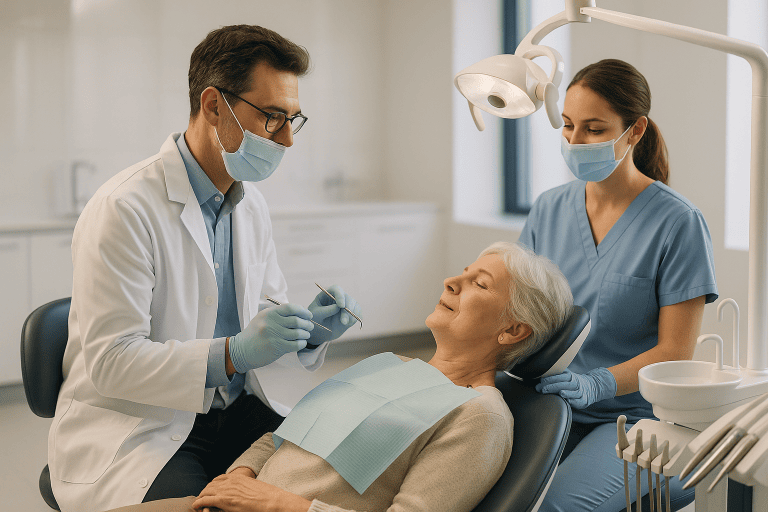
Peri-Implantitis Treatment
Peri-implantitis treatment addresses infection and inflammation that damage the bone supporting a dental implant. Care ranges from professional cleaning with implant-safe instruments and antiseptic rinses to surgical procedures that clean the implant…
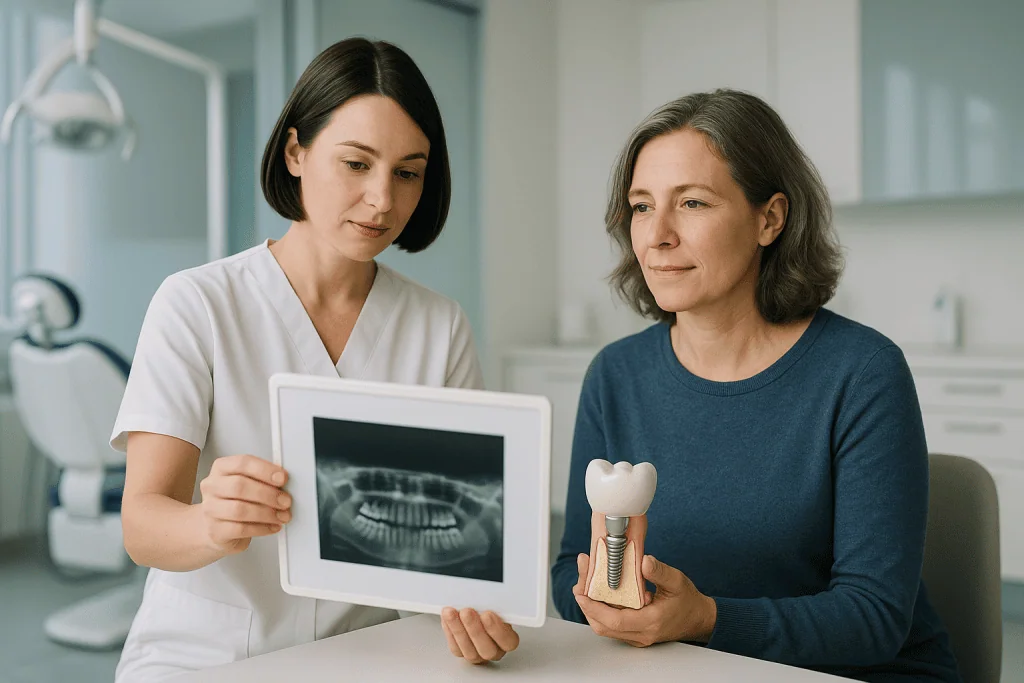
Quick answer
Peri-implantitis treatment stops infection and bone loss around a dental implant. It usually begins with professional cleaning of the implant surface, antiseptic rinses, and improved home care. If bone has been lost, a specialist may perform surgery under local anesthesia to clean the implant directly, reshape tissue, or place a bone graft, followed by long-term maintenance.
What is peri-implantitis treatment?
Peri-implantitis treatment is the care given to stop an infection and inflammation around a dental implant that is already damaging the bone holding the implant in place. A dental implant is a small titanium or ceramic post placed in the jawbone to support an artificial tooth. Peri-implantitis (pronounced peri-implant-EYE-tis) is a condition in which bacteria in plaque build up around the implant, the surrounding gum becomes inflamed, and the bone that anchors the implant begins to break down. If it is not treated, the implant can loosen and eventually be lost.
Peri-implantitis treatment is used for two related conditions. The milder form is called peri-implant mucositis, which means the soft gum tissue around the implant is inflamed but the bone is still intact. The more advanced form is peri-implantitis itself, in which bone has already been lost. Treatment ranges from careful professional cleaning and improved home care to surgical procedures that clean the implant surface, reshape the tissue, or rebuild lost bone. In many hospitals, this care is provided by dental specialists such as periodontists (gum specialists) or oral surgeons, often working alongside the dentist who placed the implant. At Acibadem, this care is coordinated through the Dental & Oral Health department.
Who is a candidate for peri-implantitis treatment
Understanding who needs peri-implantitis treatment starts with recognizing the signs. A dental professional may recommend treatment when an examination shows one or more of the following around an implant:
- Bleeding or pus when the gum is gently probed
- Red, swollen, or tender gum tissue
- Deepening of the pocket (the space between the gum and the implant) compared with earlier measurements
- Bone loss visible on an X-ray, beyond the small amount of remodeling that is normal in the first year after placement
- A bad taste, persistent bad breath, or discomfort near the implant
- Loosening of the implant or the crown attached to it
People at higher risk include those with a history of gum disease (periodontitis) around natural teeth, people who smoke, people with diabetes that is not well controlled, and people who find it difficult to clean around the implant because of its position or the shape of the crown. Regular dental check-ups are important because early peri-implantitis often causes little or no pain.
Treatment is not always suitable in the same form for everyone. Surgical peri-implantitis treatment may not be advised, or may be postponed, if:
- The implant is already so loose that it cannot be saved; in this case removal is usually the more appropriate option
- Bone loss is very advanced and rebuilding it is unlikely to succeed
- A general health condition, such as a recent heart attack, uncontrolled diabetes, or a bleeding disorder, makes surgery unsafe at that time
- The person is taking certain medications, such as some drugs for osteoporosis or cancer, that affect bone healing; the dental team will review this with the prescribing doctor
- Smoking continues at a high level and the person is unable to reduce it, since this markedly lowers the chance of healing
In these situations, your dentist may still recommend non-surgical care to control the infection, or may discuss removing the implant and considering other options later.
How the peri-implantitis treatment procedure works
The peri-implantitis treatment procedure is usually planned in stages. The first goal is always to control the infection; the second goal, where possible, is to repair the damage.
Before the procedure
Your dental specialist will examine the implant and surrounding gum, measure pocket depths with a small probe, and take X-rays to see how much bone has been lost. Sometimes a three-dimensional scan (a cone-beam CT scan) is used to show the bone shape in more detail. The crown or bridge on the implant may be checked to see whether it traps plaque or is loose. Your general health, medications, and smoking habits are reviewed, because these affect healing.
Non-surgical treatment
Almost all treatment begins with a non-surgical phase. The area is cleaned professionally using hand instruments, ultrasonic devices (which use vibration to remove deposits), or special plastic or titanium tips designed not to scratch the implant surface. Some clinics also use air-polishing devices that spray a fine powder to remove biofilm (the sticky layer of bacteria). Local anesthesia, which numbs only the treated area, is often used so the cleaning is comfortable. Your dentist may prescribe an antiseptic mouth rinse, and in some cases a short course of antibiotics. You will also receive detailed instruction on how to clean around the implant at home, sometimes with adapted brushes or floss.
After several weeks, the area is re-examined. For peri-implant mucositis, this phase alone is often enough. For established peri-implantitis with bone loss, non-surgical cleaning usually reduces the inflammation but frequently cannot fully clean the rough implant surface hidden below the gum. Surgery is then considered.
Surgical treatment
Surgical peri-implantitis treatment is performed under local anesthesia, sometimes with sedation to help you relax. The surgeon makes a small cut in the gum and gently lifts it back to see the implant and the bone defect directly. Infected soft tissue is removed, and the exposed implant surface is cleaned thoroughly. Depending on the shape of the bone loss, the surgeon may then choose one of the following approaches:
- Access flap and cleaning: the surface is cleaned and the gum is simply repositioned and stitched.
- Resective surgery: the surgeon reshapes the bone and gum so pockets are shallower and easier to keep clean; sometimes the exposed implant threads are smoothed, which is called implantoplasty.
- Regenerative surgery: where the defect has walls around it, a bone graft (bone material from you, a donor, an animal source, or a synthetic material) and sometimes a protective membrane are placed to encourage new bone to form.
The gum is then closed with stitches. Surgery for one implant typically takes about one to two hours. Most people go home the same day.
After the procedure
You will receive instructions on pain relief, rinsing, and how to avoid disturbing the area. Stitches are usually removed after one to two weeks. Follow-up visits at regular intervals check that the tissue is healing and that plaque is being controlled. Long-term, a maintenance schedule with professional cleanings every few months is a central part of treatment.
Preparation for peri-implantitis treatment
Preparation depends on whether you are having non-surgical cleaning or surgery, but several steps are common to both:
- Bring a full list of your medications and supplements. Blood thinners, some diabetes medications, and drugs that affect bone (such as bisphosphonates) may need review with your physician; do not stop any medication on your own.
- Tell the dental team about allergies, especially to antibiotics or local anesthetics, and about any heart conditions or artificial joints, since some people need antibiotics before dental procedures.
- If you smoke, your dentist will usually recommend stopping or reducing as much as possible before treatment, because smoking slows healing and raises the risk of the infection returning.
- Begin the improved home-care routine you have been shown. Cleaner tissue at the time of surgery tends to heal better.
- If sedation is planned, you may be told not to eat for several hours beforehand and to arrange for someone to take you home.
- Plan a lighter schedule for the day of surgery and the day after, and stock soft foods.
Ask what to expect in your specific case, including whether a bone graft is planned, since this can affect recovery time and cost.
Recovery and aftercare
Peri-implantitis treatment recovery time varies with the type of treatment.
After non-surgical cleaning, most people return to normal activities the same day. The gum may feel slightly tender or sensitive for a day or two, and minor bleeding when brushing is common at first and usually settles as the inflammation reduces.
After surgical treatment, many patients experience swelling, mild to moderate soreness, and some bruising for three to five days. Over-the-counter pain relief is often sufficient, though your dentist may prescribe something stronger for the first days. Many people return to work or light activity within one to three days, while the gum itself typically takes two to three weeks to close over and several months to fully mature. If a bone graft was placed, the bone may take many months to form, and your dentist will check progress with X-rays.
Typical aftercare instructions include:
- Avoid brushing directly on the surgical site for the period your dentist advises; use the prescribed antiseptic rinse instead.
- Eat soft, cool foods for the first few days and avoid chewing on the treated side.
- Do not smoke, and avoid alcohol while taking antibiotics.
- Sleep with your head slightly raised for the first night or two to help limit swelling.
- Attend the stitch-removal appointment and all follow-up visits.
- Once healed, clean around the implant daily using the tools your dental team recommends, and keep to the professional maintenance schedule, which is often every three to six months.
Because peri-implantitis can return, long-term maintenance is considered part of the treatment rather than an optional extra.
Risks and side effects
When weighing peri-implantitis treatment risks and benefits, it helps to remember that the main alternative, leaving the infection untreated, generally leads to continued bone loss and eventual loss of the implant. Treatment is intended to prevent that, but it carries its own risks.
Common, usually temporary effects include:
- Pain, swelling, and bruising after surgery
- Minor bleeding for the first day
- Temporary sensitivity of nearby teeth
- Gum recession, meaning the gum shrinks back and part of the implant or crown may become visible; this is common after resective surgery and can affect appearance, especially at the front of the mouth
Less common but more significant risks include:
- Infection of the surgical site, which may need further antibiotics
- Failure of a bone graft to integrate, which can require removal of the material
- Damage to adjacent teeth, nerves, or the sinus, depending on the location
- Allergic reaction to medications or graft materials
- Recurrence of peri-implantitis, particularly in people who smoke, have poor plaque control, or have a history of periodontitis
- Continued bone loss despite treatment, eventually requiring implant removal
Your surgeon will discuss which of these risks are most relevant to your situation and how they are managed.
Results and outlook
The evidence on peri-implantitis treatment shows that non-surgical care reliably reduces gum inflammation and is often sufficient for peri-implant mucositis. For established peri-implantitis with bone loss, non-surgical cleaning alone frequently does not resolve the disease, and surgical treatment offers a better chance of stopping progression. Studies generally find that a substantial proportion of treated implants can be stabilized and kept for many years, but outcomes vary considerably between individuals and between studies, and complete regrowth of lost bone is achieved in only some cases.
Factors associated with better results include catching the disease early, thorough cleaning of the implant surface, a bone defect shape that supports regeneration, not smoking, good control of diabetes, and consistent maintenance care afterwards. Factors associated with poorer results include advanced bone loss, continued smoking, and inconsistent follow-up. Because the disease can recur even after apparently successful treatment, most specialists describe the aim as long-term control rather than a permanent cure. An honest discussion with your dental team about the realistic outlook for your specific implant is an important part of planning.
Cost considerations
The cost of peri-implantitis treatment depends mainly on how advanced the disease is and which procedures are needed. Non-surgical cleaning and home-care instruction are the least involved and usually the least expensive. Surgical treatment costs more because it requires a specialist’s time in an operating setting, local anesthesia and possibly sedation, and sterile instruments designed for implant surfaces.
The use of bone graft material and membranes adds to the price, as does any three-dimensional imaging needed for planning. If the crown or bridge on the implant must be removed, adjusted, or remade to make cleaning possible, this is typically charged separately. Treatment is almost always outpatient, so there is usually no hospital stay to pay for.
Follow-up care is a recurring element: stitch removal, healing checks, X-rays to monitor bone, and regular professional maintenance visits for years afterward. If treatment does not succeed and the implant must be removed and later replaced, the total cost rises considerably. Insurance coverage for implant-related care varies widely, so it is sensible to ask your dental office for a written treatment plan and to check with your insurer before starting.
Frequently asked questions
What does the peri-implantitis treatment procedure involve?
It usually begins with professional cleaning of the implant surface using instruments that do not damage the implant, along with antiseptic rinses and improved home care. If bone has been lost and the infection does not settle, a surgeon may lift the gum to clean the implant directly and either reshape the bone and gum or place a bone graft to encourage repair. The exact steps depend on how much bone is lost and the shape of the defect.
How long is peri-implantitis treatment recovery time?
After non-surgical cleaning, most people feel normal within a day. After surgery, soreness and swelling often last three to five days, many patients return to light activity within one to three days, and the gum typically closes within two to three weeks. If a bone graft was placed, full bone healing may take many months, and your dentist will monitor it with X-rays.
Who needs peri-implantitis treatment?
Anyone whose dental implant shows bleeding or pus on probing, deepening pockets, swelling, or bone loss on an X-ray is generally advised to have treatment, because the condition tends to progress if left alone. People with a history of gum disease, smokers, and people with poorly controlled diabetes are at higher risk and benefit from regular checks so problems are found early.
What are the main peri-implantitis treatment risks and benefits?
The main benefit is the chance to stop bone loss and keep the implant, avoiding removal and replacement. Risks include post-operative pain and swelling, gum recession that can expose part of the implant, infection, failure of a bone graft, and recurrence of the disease. Your dentist can explain how these apply to your case.
Can peri-implantitis be treated without surgery?
Yes, in its early stage, when only the gum is inflamed and bone is intact, non-surgical cleaning and better home care are often sufficient. Once bone has been lost, non-surgical care usually reduces symptoms but often does not fully resolve the problem, and surgery is commonly recommended.
Will I lose my implant?
Not necessarily. Many implants with peri-implantitis can be stabilized and kept for years with treatment and regular maintenance. However, if the implant is already loose or bone loss is very advanced, removal may be the most appropriate option, and your dentist will discuss what can be done afterward.
Does peri-implantitis treatment hurt?
The procedures are carried out under local anesthesia, so the area is numb during treatment. Some soreness and swelling afterward is normal, especially after surgery, and is usually manageable with ordinary pain relief for a few days.
When to see a doctor
You should arrange a dental assessment if you notice any of the following around an implant: bleeding when brushing or flossing, redness or swelling of the gum, pus or a bad taste, a feeling that the gum is pulling away, sensitivity or discomfort when chewing, or any movement of the implant or crown. Because peri-implantitis is often painless in its early stages, it is also important to keep regular check-ups even when nothing feels wrong.
After treatment, contact your dental team promptly if you experience pain that is increasing rather than improving after the first few days, swelling that grows after day three, bleeding that does not stop with gentle pressure, stitches that come loose early, or exposure of graft material through the gum.
Seek urgent medical care if you develop a high fever, swelling that spreads to the face or neck, difficulty swallowing or breathing, or signs of an allergic reaction such as hives, facial swelling, or wheezing. These are uncommon but can indicate a spreading infection or a serious reaction that needs immediate attention.
Preparation
- Bring a complete list of medications, including blood thinners and bone-related drugs, and do not stop any without advice. Tell the team about allergies, heart conditions, or artificial joints. Stop or reduce smoking and begin the recommended home-cleaning routine before treatment. If sedation is planned, follow fasting instructions and arrange transport home.
Aftercare
- Take pain relief as directed and use the prescribed antiseptic rinse instead of brushing the surgical site until your dentist advises otherwise. Eat soft, cool foods and avoid chewing on the treated side for the first days. Do not smoke. Attend stitch removal and all follow-up visits, and keep to the long-term maintenance schedule to reduce the risk of recurrence.
Medically reviewed by the Acıbadem International Medical Board September 13, 2026
See our medical review board →
Update history
- PublishedSeptember 13, 2026
- Medical review approvedSeptember 13, 2026
- Last content updateSeptember 13, 2026
References2
From the Acibadem Blog

Non-Surgical vs Surgical Peri-Implantitis Treatment: How Dentists Decide Which You Need
Dentists usually try non-surgical peri-implantitis treatment first: cleaning the implant surface below the gum with instruments designed for titanium, followed by re-evaluation. Surgery is…
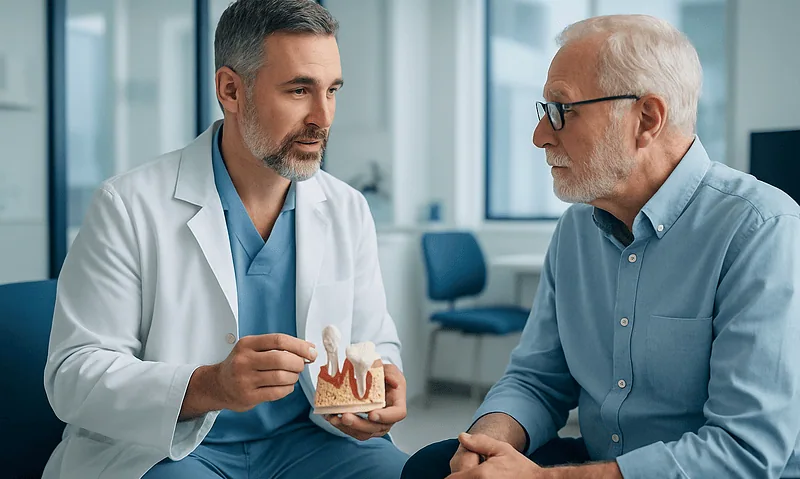
How Peri-Implantitis Progresses: From Gum Inflammation Around an Implant to Bone Loss
Peri-implantitis is an inflammatory disease of the gum and bone surrounding a dental implant, driven mainly by bacterial plaque that collects at the gum…