Amblyopia (Lazy Eye)
Learn what amblyopia (lazy eye) is, its symptoms and causes, how doctors diagnose it, and the treatment options often used in children and adults.
Quick answer
Amblyopia (lazy eye) is reduced vision in one eye, or rarely both, because the brain does not learn to use that eye properly during early childhood. Common causes include misaligned eyes, a large difference in prescription between the eyes, or something blocking vision. Early treatment with glasses, patching, or eye drops often improves vision.
What is amblyopia (lazy eye)?
Amblyopia (lazy eye) is a condition in which vision in one eye, or less commonly both eyes, does not develop normally during early childhood. The eye itself may look healthy, but the brain does not learn to use the visual signals from that eye properly. Over time, the brain begins to favor the stronger eye and gradually ignores the weaker one. As a result, the weaker eye does not reach normal sharpness of vision, even when glasses are worn.
The term “lazy eye” can be misleading. The eye is not lazy, and the child cannot simply try harder to see. The problem lies in how the brain and eye work together during a critical window of development, which is generally thought to run from birth to roughly the age of seven or eight, although some visual development continues beyond this.
Amblyopia is one of the most common causes of reduced vision in children. It usually affects only one eye. Because the stronger eye compensates so well, many children have no idea that anything is wrong, and parents often notice nothing unusual. This is one of the main reasons that routine childhood vision screening is widely recommended. In many hospital systems, including the ophthalmology department at Acibadem, the condition is assessed and managed by eye specialists, often those with a particular focus on children’s eye care.
Amblyopia (lazy eye) symptoms
Amblyopia (lazy eye) symptoms are often subtle or absent, especially when only one eye is affected. A young child rarely complains that one eye sees poorly, because the brain simply relies on the other eye. Parents, teachers, or caregivers are more likely to notice signs than the child is.
- An eye that turns inward, outward, upward, or downward, either constantly or from time to time
- Eyes that do not appear to move together
- Squinting or closing one eye, particularly in bright light or when concentrating
- Tilting the head or turning it to one side to look at things
- Poor depth perception, such as difficulty judging distances or catching a ball
- Bumping into objects on one side
- Reduced vision found on a school or pediatric screening test
- Head aches or eye strain in older children, though this is less common
How symptoms show up can depend on the type of amblyopia. When it is linked to a misaligned eye, the turning eye is usually the most visible sign. When it is caused by a large difference in focusing power between the two eyes, there may be no outward sign at all, and the condition may only be discovered during a routine eye check. When it is caused by something physically blocking vision, such as a cataract (a clouding of the eye’s natural lens), a parent may notice a white or cloudy appearance in the pupil or an eye that does not seem to fix on faces or toys.
In the early stage, the difference between the eyes may be small and easily missed. If the condition is not identified, the weaker eye may become progressively less used. In adults who were never treated in childhood, the main symptom is simply permanently reduced vision in one eye, sometimes noticed only when the good eye is covered or injured.
Causes and risk factors
Amblyopia (lazy eye) causes all share a common thread: something interferes with clear, matched visual input from both eyes during the years when the brain’s visual pathways are still forming. Doctors usually describe three main types.
- Strabismic amblyopia: Strabismus is a misalignment of the eyes, meaning they point in different directions. To avoid seeing double, the brain suppresses the image from the misaligned eye. This is one of the most common causes.
- Refractive amblyopia: A refractive error is a focusing problem, such as farsightedness, nearsightedness, or astigmatism (an unevenly curved front surface of the eye). When one eye has a significantly greater focusing error than the other, a situation called anisometropia, the blurrier eye is neglected by the brain. High but equal focusing errors in both eyes can also cause amblyopia in both eyes.
- Deprivation amblyopia: This occurs when something physically blocks light from entering the eye or reaching the retina (the light-sensing layer at the back of the eye). Causes include a congenital cataract, a drooping eyelid (ptosis) that covers the pupil, or a cloudy cornea. This type is less common but tends to be more severe and needs prompt attention.
Several factors are associated with a higher likelihood of developing amblyopia:
- Premature birth or low birth weight
- A family history of amblyopia, strabismus, or significant childhood refractive errors
- Developmental delay or certain genetic conditions
- Known strabismus or a noticeable eye turn
- A large difference in prescription between the two eyes
- Conditions present at birth that affect the eye’s clear structures, such as cataract
It is important to note that amblyopia is not caused by reading in dim light, sitting close to screens, or anything a child or parent did wrong. It is a developmental condition that usually cannot be prevented, although its effects can often be limited when it is found early.
Amblyopia (lazy eye) diagnosis
Amblyopia (lazy eye) diagnosis is made by an eye care professional, typically an ophthalmologist (a medical doctor specializing in eye disease) or an optometrist (a clinician trained to examine eyes and prescribe glasses). There is no single blood test or scan for amblyopia. Instead, the diagnosis rests on finding reduced vision in one or both eyes that cannot be fully explained by a physical eye problem and cannot be fully corrected with glasses alone.
The examination is adapted to the child’s age. Very young children who cannot read letters may be tested with pictures, matching games, or by observing how the eyes follow objects. The main components usually include:
- Visual acuity testing: Measuring how clearly each eye sees, one at a time, using age-appropriate charts. A significant difference between the two eyes is a key finding.
- Fixation and following tests: In infants, the doctor checks whether each eye can fix steadily on a light or toy and follow it smoothly.
- Cover test: The examiner covers one eye at a time to see whether the uncovered eye shifts position, which can reveal strabismus. A child who objects strongly to having one particular eye covered may be relying on that eye.
- Cycloplegic refraction: Eye drops are used to temporarily relax the focusing muscles and widen the pupil so the true focusing error of each eye can be measured accurately. This is especially important in children, whose focusing systems are very active.
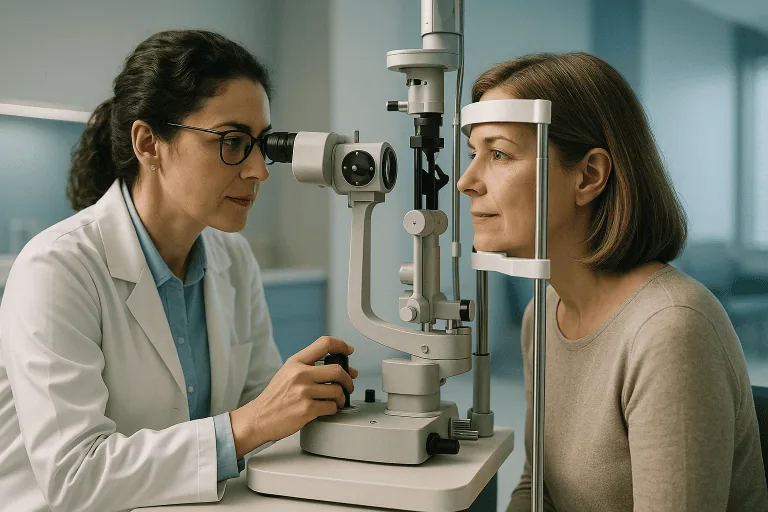
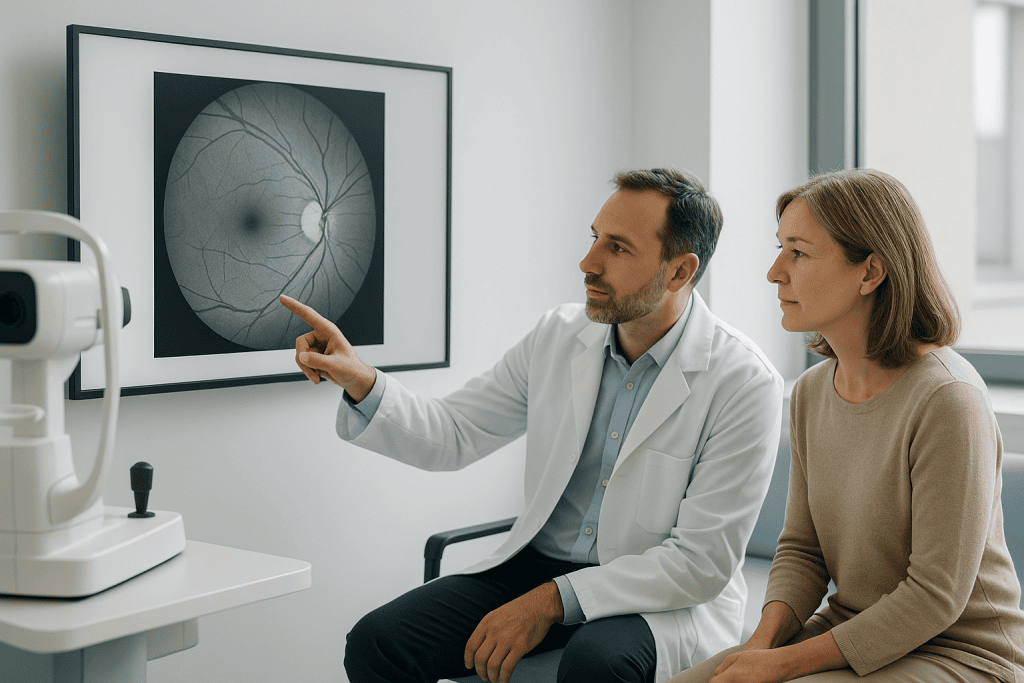
- Examination of eye structures: Using a light and magnifying instruments, the doctor examines the front of the eye, the lens, and the retina to rule out cataract, scarring, or other physical causes of poor vision.
- Photoscreening or automated screening: Some clinics and pediatric offices use camera-based devices that estimate refractive error and eye alignment. These are screening tools, not diagnostic tests, and a positive result leads to a full examination.
Doctors generally confirm amblyopia when vision in one eye is meaningfully worse than in the other, or worse than expected for age in both eyes, after the best possible glasses correction, and when the examination shows a recognized cause such as strabismus, a large prescription difference, or a past obstruction of vision. Imaging of the brain is not normally required unless the findings suggest a neurological problem rather than amblyopia.
Amblyopia (lazy eye) treatment options
Amblyopia (lazy eye) treatment options aim to do two things: correct whatever is preventing a clear image from reaching the weaker eye, and encourage the brain to use that eye. Treatment is most effective when started early in childhood, although older children and some adults may still benefit to a degree. Your child’s eye doctor will tailor the plan to the type and severity of the condition.
- Glasses or contact lenses: Correcting refractive errors is usually the first step. In many children with refractive amblyopia, wearing the right glasses full-time for several months produces meaningful improvement on its own, and some need no further treatment. The child must wear the glasses consistently for this to work.
- Patching (occlusion therapy): An adhesive patch is worn over the stronger eye for a prescribed number of hours each day, forcing the brain to rely on the weaker eye. The number of hours varies depending on severity and the doctor’s judgment. Patching is one of the longest-established treatments and is often continued for months, with regular checks to monitor both eyes.
- Atropine eye drops: Atropine is a medication that temporarily blurs near vision in the stronger eye by preventing it from focusing. Placed in the good eye, usually daily or on weekends, it encourages use of the weaker eye. It is often considered an alternative to patching, particularly when a child resists wearing a patch. Side effects can include light sensitivity and, less commonly, irritation or systemic effects, which the doctor will discuss.
- Optical penalization: A related approach uses a deliberately blurred lens over the stronger eye in the child’s glasses, or a filter applied to the lens, to achieve a similar effect to patching.
- Binocular and digital therapies: Some newer approaches use specially designed video games, tablet programs, or virtual reality headsets that present different images to each eye and encourage the eyes to work together. Evidence is still developing, and these are generally considered by specialists as additions to, rather than replacements for, established treatments.
- Surgery for underlying causes: Surgery does not treat amblyopia directly, but it may be needed to remove an obstacle to vision. Examples include removing a congenital cataract, lifting a severely drooping eyelid, or realigning the eye muscles in strabismus. After surgery, the child typically still needs glasses, patching, or drops to build vision in the weaker eye.
- Observation and follow-up: In very mild cases, or after treatment has finished, the doctor may recommend regular monitoring without active treatment. Amblyopia can return after treatment stops, especially in younger children, so follow-up visits are an important part of care.
Treatment can be demanding for families. Children often dislike patches or drops, and consistent daily effort over months is usually necessary. Doctors commonly suggest making patching time enjoyable with close-up activities such as drawing, reading, or games that engage the weaker eye. Progress is measured at regular visits, and the plan is adjusted based on response.
Living with amblyopia (lazy eye) and outlook
The outlook for amblyopia depends heavily on how early it is found and how consistently treatment is carried out. When identified and treated in the preschool years, many children achieve substantial improvement in the weaker eye, and some reach vision that is near normal. Improvement tends to be slower and less complete when treatment starts later, though it is not necessarily impossible, and specialists increasingly report gains in older children and some adults with sustained effort.
It is honest to say that not every eye recovers fully. Some people are left with permanently reduced vision in one eye, reduced depth perception, or both. Depth perception, which relies on the two eyes working together, may remain limited even when sharpness improves. Most people with untreated or partially treated amblyopia live full and independent lives, but certain occupations that require excellent vision in both eyes may be restricted, and some countries have specific vision standards for driving that a doctor can explain.
Protecting the stronger eye becomes especially important for someone whose weaker eye has permanently reduced vision, because an injury or disease in the good eye would have a much greater impact. Doctors often recommend protective eyewear for sports and hazardous activities, and regular eye examinations throughout life.
For families, the day-to-day reality often involves encouraging a young child to keep glasses on, tolerate a patch, or accept eye drops. Setbacks are common and do not mean the treatment has failed. Relapse can occur after treatment ends, particularly during the years when the visual system is still maturing, so scheduled follow-up appointments matter even when vision seems fine.
Frequently asked questions
What is amblyopia (lazy eye) in simple terms?
Amblyopia is reduced vision in an eye that looks structurally normal, caused by the brain not learning to use that eye properly during early childhood. Because the brain favors the other eye, the weaker eye does not develop sharp vision, and glasses alone cannot fully correct it. It is a problem of brain-eye development rather than of the eye tissue itself.
What are the first amblyopia (lazy eye) symptoms parents might notice?
Many children show no obvious signs, which is why screening is recommended. When signs are present, they may include an eye that drifts or turns, squinting or closing one eye, head tilting, clumsiness, or difficulty judging distances. A strong objection to having one particular eye covered can also be a clue that the child depends on that eye.
What are the main amblyopia (lazy eye) causes?
The main causes are strabismus (misaligned eyes), a significant difference in focusing power between the two eyes, and anything that blocks light from entering the eye during infancy, such as a congenital cataract or a drooping eyelid. Premature birth and a family history of childhood eye problems are associated with higher risk.
How is amblyopia (lazy eye) diagnosis confirmed?
An eye care professional measures vision in each eye separately using age-appropriate tests, checks eye alignment with a cover test, uses drops to measure the true prescription of each eye, and examines the eye’s internal structures. Amblyopia is generally confirmed when one eye sees meaningfully worse than the other after the best glasses correction and a recognized cause is identified.
What are the amblyopia (lazy eye) treatment options for a child who refuses a patch?
When patching is not tolerated, doctors may suggest atropine eye drops in the stronger eye, which blur that eye’s near vision and encourage use of the weaker one. Blurred or filtered glasses lenses are another option. Some specialists also use supervised digital therapies. Your child’s doctor can advise which approach fits your child’s age, severity, and circumstances.
Can adults be treated for amblyopia (lazy eye)?
Treatment has traditionally been considered most effective in early childhood, and this remains the case. However, some older children, teenagers, and adults do show improvement with correct glasses combined with patching or other therapies, though results are generally more modest and less predictable. An eye specialist can discuss realistic expectations based on an individual examination.
Will amblyopia (lazy eye) come back after treatment?
It can. Recurrence is a recognized risk, especially in younger children whose visual systems are still developing after treatment ends. For this reason, doctors usually reduce treatment gradually rather than stopping suddenly and schedule follow-up visits for some time afterward. Prompt reporting of any apparent decline in vision allows treatment to be restarted if needed.
When to see a doctor
Any child with a suspected eye turn, a noticeable difference between the eyes, or a failed vision screening should be examined by an eye care professional, ideally without long delay, because earlier treatment is generally associated with better results. Children with a family history of amblyopia or strabismus, or who were born prematurely, may benefit from an eye examination even when no problem is obvious. Adults with known amblyopia should have regular eye checks to protect the health of their stronger eye.
Some signs warrant urgent medical assessment because they may indicate a condition other than, or in addition to, amblyopia:
- A white, gray, or cloudy appearance in the pupil of one or both eyes in an infant or child
- A new or sudden eye turn that was not present before, especially in an older child or adult
- Sudden loss or blurring of vision in either eye at any age
- An eye turn accompanied by headache, vomiting, unusual drowsiness, or difficulty walking
- Double vision that begins suddenly
- A drooping eyelid that appears suddenly or worsens quickly
- Redness, pain, or swelling of the eye with reduced vision
- Any eye injury in a person whose other eye already has reduced vision
These features can point to problems that need rapid evaluation, and an eye specialist or emergency service is the appropriate place to have them assessed.
Medically reviewed by the Acıbadem International Medical Board September 9, 2026
See our medical review board →
Update history
- PublishedSeptember 8, 2026
- Medical review approvedSeptember 9, 2026
- Last content updateSeptember 8, 2026