Anal Cancer
Anal Cancer is a rare cancer of the anal canal. Learn symptoms, risk factors, diagnosis, treatment options and when to seek medical care.
Quick answer
Anal cancer is a malignant tumor that develops in the tissues of the anus, often causing symptoms such as bleeding, pain, itching, or changes in bowel habits, and it is diagnosed with examination, imaging, and biopsy. At Acibadem in Turkey, treatment is planned by a multidisciplinary team and may include chemoradiotherapy, surgery, and supportive care according to the cancer’s type…
What is anal cancer?
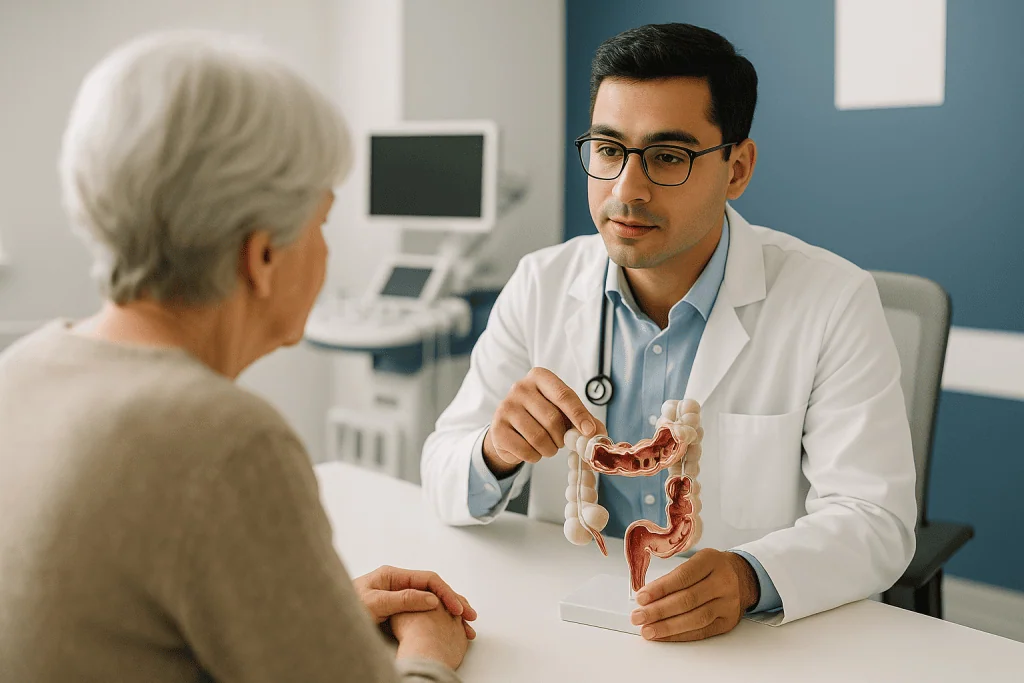
Anal cancer is a disease in which abnormal cells grow out of control in the tissues of the anus. The anus is the short canal at the end of the digestive tract, about 3 to 4 centimeters (roughly 1.5 inches) long, through which stool leaves the body. When doctors ask “what is anal cancer,” they are usually describing a tumor that starts in the anal canal or in the skin just around the anal opening. It is a different disease from colorectal cancer (cancer of the colon or rectum), even though the two areas sit next to each other, and it is treated differently.
Most anal cancers are a type called squamous cell carcinoma. Squamous cells are the thin, flat cells that line the anal canal, and carcinoma simply means a cancer that begins in the cells lining an organ or the skin. Less common types include adenocarcinoma (cancer starting in gland cells that make mucus), basal cell carcinoma, and melanoma of the anal area, which behave differently and may need different treatment plans.
Anal cancer is relatively uncommon compared with many other cancers, but its numbers have been slowly rising in several countries. It affects both men and women, and is diagnosed most often in adults over the age of 50, although younger people can develop it too. People with a weakened immune system, people living with HIV (human immunodeficiency virus), and people with persistent infection with certain strains of HPV (human papillomavirus) have a higher risk. When found early, anal cancer often responds well to treatment, which is why understanding the warning signs matters.
Symptoms of anal cancer
Anal cancer symptoms are often mild at first and can look very much like common, harmless conditions such as hemorrhoids (swollen veins around the anus) or a small tear in the anal skin. Because of this overlap, many people delay seeing a doctor. Any symptom in this area that lasts more than a few weeks deserves a medical check, even if it seems minor.
Common anal cancer symptoms include:
- Bleeding from the anus or rectumoften small amounts of bright red blood, noticed on toilet paper or in the stool. This is one of the most frequent early signs.
- Pain or pressure in the anal areaa persistent ache, soreness, or a feeling of fullness.
- A lump or mass at or near the anal openingsometimes mistaken for a hemorrhoid.
- Itching around the anus that does not go away with usual skin care.
- Discharge of mucus from the anus.
- Changes in bowel habitssuch as narrower stools, more frequent bowel movements, or a feeling that the bowel does not empty completely.
- Difficulty controlling bowel movements (incontinence), which can happen if the tumor affects the muscles that close the anus.
- Swollen lymph nodes in the groin or around the anal area. Lymph nodes are small, bean-shaped glands that are part of the body’s immune system.
Symptoms can differ by stage. In early-stage disease, there may be only slight bleeding or itching, or no symptoms at all, some early anal cancers are found during a routine examination or during surgery for what was assumed to be a hemorrhoid. As a tumor grows, pain, a noticeable lump, and changes in bowel habits become more likely. If the cancer spreads beyond the anus (advanced or metastatic disease), symptoms may include groin swelling from enlarged lymph nodes, unexplained weight loss, or fatigue. Rare types, such as anal melanoma, can grow with few symptoms until they are larger, which is another reason not to ignore persistent changes.
It is important to remember that all of these symptoms are far more often caused by benign (non-cancerous) conditions. Having one or more of them does not mean you have cancer, but only a doctor can tell the difference.
Causes and risk factors
Like most cancers, anal cancer develops when changes (mutations) in a cell’s DNA cause it to grow and divide abnormally instead of following the body’s normal signals. In many cases the trigger for these changes can be traced, at least in part, to infection with HPV. Understanding anal cancer causes helps explain who is at higher risk.
- HPV infection. Human papillomavirus is a very common virus passed mainly through intimate skin-to-skin and sexual contact. Most HPV infections clear on their own, but persistent infection with certain high-risk strains, especially HPV type 16, is found in the great majority of anal squamous cell cancers. HPV can cause slow, precancerous changes in the anal lining, sometimes called anal dysplasia or anal intraepithelial neoplasia, years before a cancer develops.
- Weakened immune system. People living with HIV, and people taking long-term medicines that suppress the immune system (for example after an organ transplant), are less able to control HPV infection and have a clearly higher risk.
- Age. Risk rises with age; most people diagnosed are over 50.
- Sexual history. Having many sexual partners or receptive anal intercourse increases the chance of HPV exposure and is linked with higher risk in both men and women.
- Smoking. Tobacco use raises the risk of anal cancer and may also make treatment less effective. Quitting smoking reduces risk over time.
- History of other HPV-related cancers or precancers. Women who have had cervical, vaginal, or vulvar cancer or high-grade precancerous changes have an increased risk of anal cancer, because the same virus is involved.
- Chronic inflammation or long-standing anal conditions. Some long-term conditions of the anal area may be associated with a modestly increased risk, although the evidence here is weaker than for HPV.
HPV vaccination, given before exposure to the virus (usually in early adolescence, though it may be offered to some adults), protects against the strains most often responsible for anal cancer and is considered an important prevention tool. Safer sexual practices and not smoking also lower risk. Having a risk factor does not mean a person will develop cancer, and some people with anal cancer have no known risk factors at all.
Diagnosis
Anal cancer diagnosis starts with a careful conversation about your symptoms and medical history, followed by a physical examination. From there, doctors use a stepwise series of tests to confirm whether cancer is present and, if so, how far it has spread. This process of mapping the extent of the disease is called staging.
Tests your doctor may use include:
- Digital rectal examination (DRE). The doctor gently inserts a gloved, lubricated finger into the anus to feel for lumps or abnormal areas. It is quick and often the first step.
- Anoscopy or proctoscopy. A short, thin tube with a light, an anoscope or proctoscope, is inserted into the anal canal so the doctor can see the lining directly. High-resolution anoscopy uses magnification to look for very early, precancerous changes.
- Biopsy. This is the only way to confirm the diagnosis with certainty. A small piece of tissue is removed from the suspicious area and examined under a microscope by a pathologist (a doctor who specializes in analyzing tissue). The biopsy shows whether cancer cells are present and what type they are.
- Ultrasound of the anal canal (endoanal or endorectal ultrasound). A small probe uses sound waves to show how deeply a tumor has grown into the wall of the anal canal.
- MRI (magnetic resonance imaging) of the pelvis. MRI uses magnets and radio waves to create detailed pictures of the tumor, nearby organs, and lymph nodes, and is often used to plan treatment.
- CT (computed tomography) scans of the chest, abdomen, and pelvis to check whether the cancer has spread to other parts of the body.
- PET-CT scanning. This combines a CT scan with a PET scan, which highlights areas of high cell activity after a small amount of a radioactive tracer is given. It is often used to check lymph nodes and to look for spread that other scans may miss. You can read more about PET-CT imaging and how the scan is performed.
- HIV testing and gynecologic examination. Because of the shared link with HPV and immune function, doctors may recommend HIV testing, and for women a cervical screening test if one is due.
Once the results are gathered, the cancer is assigned a stage, typically using the TNM system, which describes the size of the tumor (T), whether lymph nodes are involved (N), and whether the cancer has spread to distant organs (M). The stage guides which anal cancer treatment approach is recommended.
Treatment options for anal cancer
Anal cancer treatment depends on the type of cancer, its stage, its exact location, and your overall health. Care is usually planned by a multidisciplinary team: a group of specialists including radiation oncologists (doctors who treat cancer with radiation), medical oncologists (doctors who treat cancer with medicines), colorectal surgeons, radiologists, and pathologists who review each case together. In hospital groups such as Acibadem, drug-based cancer treatment is coordinated through the Medical Oncology Department, working alongside radiation oncology and surgery.
Chemoradiation: the standard first treatment
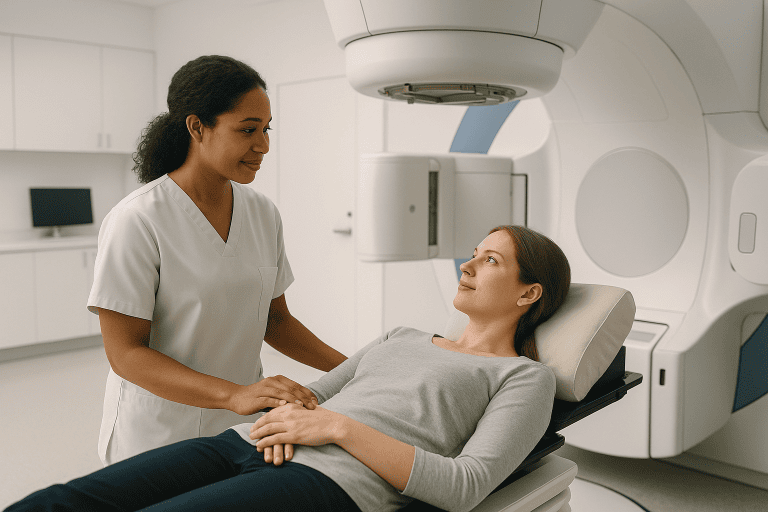
For most anal squamous cell cancers, the standard treatment is chemoradiation: a combination of radiation therapy and chemotherapy given during the same period, usually over five to six weeks. Radiation therapy uses precisely aimed high-energy beams to destroy cancer cells. Chemotherapy uses medicines that kill rapidly dividing cells; commonly used drugs for anal cancer include mitomycin and fluorouracil (5-FU) or capecitabine. Giving the two together makes the radiation more effective. A major advantage of this approach is that, in many cases, it can cure the cancer while preserving the anal sphincter, the ring of muscle that controls bowel movements, so that most people avoid major surgery and a permanent colostomy.
Chemoradiation does have side effects, which may include skin irritation in the treated area, diarrhea, fatigue, temporary lowering of blood counts, and, over the longer term, changes in bowel, urinary, or sexual function. Your care team can often reduce or manage these effects, and modern radiation techniques aim to spare healthy tissue as much as possible.
Surgery
Surgery plays a smaller role in anal cancer than in many other cancers, but it is important in specific situations:
- Local excision. For some very small, early tumors at the edge of the anus that do not involve the sphincter muscle, the surgeon may remove only the tumor with a margin of healthy tissue. This may be enough on its own for carefully selected cases.
- Abdominoperineal resection (APR). If the cancer does not respond fully to chemoradiation, or if it returns in the same area afterward, doctors may recommend a larger operation that removes the anus, rectum, and part of the lower bowel. After this surgery, stool leaves the body through an opening in the abdominal wall called a colostomy, into a bag worn outside the body. This is a significant change, and specialized nurses help patients learn to manage it.
Treatment for advanced or metastatic disease
If anal cancer has spread to distant organs, treatment usually centers on chemotherapy given through the medical oncology team, sometimes combined with immunotherapy, medicines that help the body’s own immune system recognize and attack cancer cells, depending on the situation and current guidelines. The aim may be to control the disease, relieve symptoms, and maintain quality of life for as long as possible. Radiation can also be used to relieve pain or bleeding from specific sites.
Watchful waiting and precancerous changes
True watchful waiting is not usually appropriate for a confirmed invasive anal cancer, because early treatment offers the best chance of cure. However, careful monitoring is used in two related situations. First, precancerous changes in the anal lining (anal dysplasia) may be watched closely or treated with minor local procedures to prevent cancer from developing. Second, after chemoradiation, doctors deliberately wait and re-examine the area over several months, because tumors can continue to shrink slowly; surgery is only considered if clear cancer remains. Regular follow-up examinations and scans continue for several years after treatment to detect any recurrence early.
Living with anal cancer and outlook
The outlook for anal cancer varies widely and depends mainly on the stage at diagnosis, the type of cancer, whether lymph nodes are involved, and your general health. In general, anal cancer found at an early stage responds well to chemoradiation, and many people are cured without major surgery. When the disease is more advanced or has spread to distant organs, cure is less likely, but treatment can often control the cancer for a meaningful period and ease symptoms. No doctor can promise a specific outcome for an individual, so it is reasonable to ask your own care team what your test results suggest in your case.
Life during and after treatment brings practical challenges. Bowel habits may change, the skin in the treated area may stay sensitive, and fatigue can last for weeks or months after chemoradiation ends. Some people experience changes in sexual function or, for women, earlier menopause after pelvic radiation; these topics can feel awkward to raise, but doctors and nurses deal with them routinely and can offer help. People who need a colostomy generally adapt over time with support from stoma-care nurses, and most can return to work, travel, and normal activities.
Emotional health matters as much as physical recovery. Anxiety about recurrence is common and usually eases as follow-up visits pass without problems. Counseling, patient support groups, and honest conversations with family can all help. Practical steps that support recovery include stopping smoking, eating a balanced diet, staying gently active, and attending every scheduled follow-up appointment, since most recurrences that do happen can be found during routine checks, and some can still be treated with the aim of cure.
Frequently asked questions
What is anal cancer and how is it different from colorectal cancer?
Anal cancer starts in the short canal at the very end of the digestive tract or in the skin around it, while colorectal cancer starts higher up, in the colon or rectum. They involve different cell types in most cases, anal cancer is usually a squamous cell carcinoma, whereas colorectal cancer is usually an adenocarcinoma, and they are treated differently. Anal cancer is most often treated first with combined chemotherapy and radiation, while colorectal cancer usually requires surgery as a central part of treatment.
Can anal cancer be cured?
In many cases, yes, particularly when it is found early. Chemoradiation cures a substantial proportion of localized anal squamous cell cancers, often without the need for major surgery. When the cancer has spread to distant organs, cure becomes much less likely, and treatment focuses on controlling the disease and preserving quality of life. Your own chances depend on your stage, cancer type, and health, so your oncology team is the best source of a realistic, individual assessment.
What are the first symptoms of anal cancer?
The earliest anal cancer symptoms are usually rectal bleeding, itching, a small lump near the anus, or mild discomfort, signs that are easy to mistake for hemorrhoids. Some early cancers cause no symptoms at all and are found by chance. Because the symptoms overlap so much with harmless conditions, any bleeding, lump, or anal discomfort lasting more than a few weeks should be checked by a doctor rather than self-treated.
How serious is anal cancer?
Anal cancer is a serious diagnosis, but it is also one of the cancers most responsive to combined chemotherapy and radiation when caught before it spreads widely. Seriousness depends heavily on stage: small, localized tumors have a favorable outlook in many cases, while cancer involving distant organs is harder to treat. Prompt diagnosis and completing the full recommended treatment course both improve the chances of a good outcome.
Does HPV always cause anal cancer?
No. HPV infection is extremely common, and the vast majority of people who carry the virus never develop anal cancer, most infections clear on their own. However, persistent infection with high-risk HPV strains is found in most anal squamous cell cancers, which is why HPV vaccination before exposure is considered an effective way to lower risk. A weakened immune system and smoking make it harder for the body to clear HPV and add to the risk.
Will I need a colostomy bag after anal cancer treatment?
Most people treated for anal cancer do not need a permanent colostomy. The standard first treatment, chemoradiation, is designed to cure the cancer while preserving the anal sphincter muscles. A colostomy is generally needed only if major surgery (abdominoperineal resection) is required, usually because the cancer did not respond fully to chemoradiation or came back afterward, or occasionally as a temporary measure. Your surgeon can explain the likelihood in your specific situation.
How long does recovery from anal cancer treatment take?
Recovery varies from person to person. Skin irritation and diarrhea from chemoradiation typically improve within a few weeks after treatment ends, while fatigue can last several months. Tumors may continue to shrink for up to six months after chemoradiation, so doctors judge the final response over time rather than immediately. Recovery after major surgery takes longer and includes learning to manage a colostomy. Follow-up examinations continue for several years to watch for recurrence.
When to see a doctor
See a doctor promptly if you notice any change in the anal area that lasts more than a few weeks, even if you believe it is a hemorrhoid. Do not assume bleeding is harmless just because it has happened before. In particular, arrange a medical assessment if you have:
- Bleeding from the anus or blood in the stool, even in small amounts or only occasionally.
- A new lump, swelling, or hardened area at or near the anal opening.
- Persistent anal pain, pressure, or itching that does not improve with simple care.
- Ongoing discharge of mucus or pus from the anus.
- A change in bowel habits lasting more than a few weeks, narrower stools, increased frequency, or a feeling of incomplete emptying.
- New difficulty controlling bowel movements.
- Swollen lymph nodes in the groin, or unexplained weight loss and persistent fatigue.
Seek urgent medical attention if you have heavy or continuous rectal bleeding, severe anal or pelvic pain, an inability to pass stool, or fever combined with anal pain and swelling, as these may signal a complication needing immediate care. People at higher risk, including those living with HIV, transplant recipients, and women with a history of cervical or vulvar precancer or cancer, should discuss whether regular anal examinations or screening are appropriate for them. Early evaluation is the single most important step you can take, because anal cancer found early is the most treatable.
Medically reviewed by the Acıbadem International Medical Board September 2, 2026
See our medical review board →
Update history
- PublishedJune 8, 2026
- Medical review approvedSeptember 2, 2026
- Last content updateSeptember 2, 2026