Autism Spectrum
Learn what autism spectrum is, common autism spectrum symptoms, possible causes, how doctors diagnose it, and the main support and treatment options.
Quick answer
Autism spectrum is a lifelong neurodevelopmental condition that affects how a person communicates, interacts socially, and experiences the world. Traits often include differences in eye contact and conversation, repetitive behaviors, strong preferences for routine, and sensory sensitivities. It varies widely between individuals, is diagnosed through clinical observation rather than a single test, and is supported…
What is autism spectrum?
Autism spectrum, often called autism spectrum disorder or ASD, is a lifelong neurodevelopmental condition. “Neurodevelopmental” means it relates to how the brain grows and develops, usually starting before birth or in early childhood. People on the autism spectrum tend to experience social communication and interaction differently from most other people, and they often have focused interests, repetitive behaviors, or strong preferences for routine. Many also process sensory information such as sound, light, touch, or taste more or less intensely than others.
The word “spectrum” is used because autism looks very different from one person to the next. Some people speak fluently, live independently, and work in demanding jobs, while others speak little or not at all and need substantial daily support. Intellectual ability also varies widely; some autistic people have an intellectual disability, while many have average or above-average intelligence.
Autism spectrum is usually identified in childhood, but it can be recognized at any age. It occurs in every country, culture, and social group, and it is diagnosed more often in boys than in girls, although many clinicians believe autism in girls and women is under-recognized because their traits may be less obvious. Autism is not an illness that a person “catches” or “recovers” from; it is a different way the brain is wired. Because it is a lifelong condition, many people prefer to talk about support rather than cure.
Autism spectrum symptoms
Autism spectrum symptoms are usually grouped into two main areas: differences in social communication and interaction, and restricted or repetitive patterns of behavior, interests, or activities. To meet the diagnostic definition, traits must be present from early development and cause noticeable challenges in everyday life, even if they were not recognized until later.
Common social communication features include:
- Limited or unusual eye contact, facial expressions, or gestures
- Delayed speech, or speech that develops and then is lost in toddlerhood
- Repeating words or phrases heard elsewhere, known as echolalia
- Difficulty starting or keeping a back-and-forth conversation
- Trouble understanding tone of voice, sarcasm, or unspoken social rules
- Less interest in sharing enjoyment or pointing things out to others
- Difficulty making or maintaining friendships in the usual way
Common restricted or repetitive features include:
- Repetitive movements such as hand flapping, rocking, or spinning, sometimes called “stimming”
- Lining up toys or objects, or playing with them in the same way every time
- Strong distress when routines change or plans are altered
- Intense, highly focused interests in specific topics
- Over- or under-reaction to sounds, textures, smells, lights, or pain
In infants and toddlers, early signs may include not responding to their name, not babbling or pointing by the expected age, limited smiling back at caregivers, or an unusual lack of interest in other children. In school-age children, differences in play, friendships, and coping with change often become clearer. In teenagers and adults, autism may show up as social exhaustion, anxiety in unstructured settings, very literal interpretation of language, or a history of feeling “different” without knowing why. Many adults, especially women, describe “masking”: consciously copying social behavior to fit in, which can be tiring and may hide their traits from others.
Autism often occurs alongside other conditions. These co-occurring conditions can include attention deficit hyperactivity disorder (ADHD), anxiety, depression, epilepsy (recurrent seizures), sleep problems, digestive complaints, and learning differences. Recognizing them matters, because they are often treatable even when autism itself is not something to be treated away.
Causes and risk factors
Autism spectrum causes are not fully understood, but research consistently points to a combination of genetic and biological factors that influence early brain development. There is no single “autism gene.” Instead, many different genes appear to play a role, and in most people autism likely results from several genetic variations acting together with other influences before birth.
Factors that researchers have linked to a higher likelihood of autism include:
- Genetics and family history. Autism runs in families more often than would be expected by chance. Having an autistic sibling raises the likelihood that a child will also be autistic.
- Certain genetic conditions. Conditions such as fragile X syndrome, tuberous sclerosis, and Rett syndrome are associated with autism in some people.
- Older parental age at the time of conception has been associated with a modestly higher likelihood in some studies.
- Pregnancy and birth factors. Very premature birth, very low birth weight, and some complications during pregnancy or delivery have been linked to autism in some children, although most children with these histories are not autistic.
- Some medicines taken during pregnancy, such as certain anti-seizure drugs, have been associated with a higher likelihood; this is one reason pregnant women should review all medications with their doctor.
It is equally important to be clear about what does not cause autism. Extensive, repeated research has found no link between childhood vaccines and autism. Autism is also not caused by parenting style, family stress, screen time, or diet. Parents sometimes blame themselves, but the evidence does not support this, and doing so can delay useful support.
Autism spectrum diagnosis
There is no blood test, brain scan, or single medical test that can confirm autism. Autism spectrum diagnosis is a clinical process, meaning trained professionals reach a conclusion by observing behavior, gathering a detailed history, and comparing the findings against agreed criteria. The most commonly used criteria are found in the Diagnostic and Statistical Manual of Mental Disorders, Fifth Edition (DSM-5) and the World Health Organization’s International Classification of Diseases (ICD-11).
The process usually involves several steps:
- Developmental screening. Pediatricians often use short questionnaires at routine checkups, such as the Modified Checklist for Autism in Toddlers (M-CHAT), to spot children who may benefit from a fuller evaluation. A screening result alone is not a diagnosis.
- Detailed developmental history. Clinicians ask about pregnancy, early milestones, language, play, behavior, and family history, often using structured parent interviews.
- Direct observation. Tools such as the Autism Diagnostic Observation Schedule (ADOS) involve structured play or conversation so the clinician can watch social communication and behavior directly.
- Assessments of speech, language, thinking, and daily skills. These help build a full picture of strengths and needs and are used to plan support.
- Medical evaluation. A physical examination and hearing test are usually recommended, because hearing loss can affect speech and social responses. Genetic testing may be offered, particularly if there are other physical findings or a family history of a genetic condition.
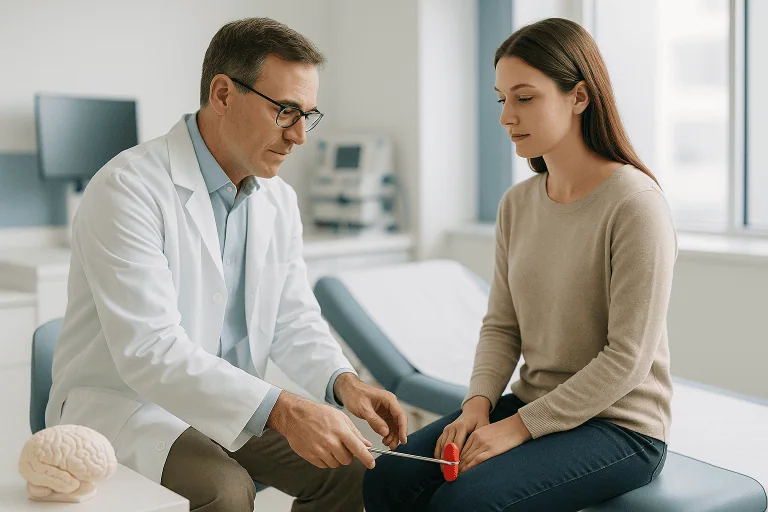
Brain imaging such as MRI (magnetic resonance imaging, a scan that uses magnets to picture the brain) and EEG (electroencephalogram, a recording of the brain’s electrical activity) are not used to diagnose autism. However, your doctor may order them if there are concerns about seizures or other neurological problems. Neurology specialists are often involved when epilepsy or unusual movements accompany autism; at Acibadem, for example, such concerns may be evaluated through the Neurology department alongside child development teams.
Diagnosis in adults follows the same principles but relies more on the person’s own account, and where possible on the recollections of parents or people who knew them as a child. Many adults seek assessment after a child in the family is diagnosed or after years of unexplained difficulty with work, relationships, or mental health. Because autism is a lifelong condition, a diagnosis in adulthood is not too late to be helpful; it can open the door to accommodations, understanding, and appropriate support for co-occurring conditions.
Autism spectrum treatment options
Autism itself is not a disease to be cured, so “treatment” in this context means support that helps a person communicate, learn, manage daily life, and address any co-occurring conditions. Autism spectrum treatment options are individualized. What helps one person may be unnecessary or unhelpful for another, and plans usually change as the person grows.
Observation and monitoring. For some children with mild traits, doctors may recommend a period of watchful monitoring with regular developmental reviews, particularly when it is unclear whether a young child is simply developing at a different pace. For many autistic people with low support needs, no formal intervention beyond understanding and reasonable accommodations is required.
Behavioral and developmental therapies. These are the most established supports, especially in early childhood. Approaches include applied behavior analysis (ABA), which uses structured teaching and positive reinforcement to build skills, as well as developmental and relationship-based approaches that work through play and everyday interaction. Early Start Denver Model and similar programs blend both ideas. Quality, intensity, and the child’s and family’s comfort with the approach all matter, and respectful programs focus on communication and wellbeing rather than on making a child appear less autistic.
Speech-language therapy supports spoken language, understanding, and social communication. For people who speak little or not at all, it may include augmentative and alternative communication (AAC), which means using pictures, sign, or electronic devices to communicate.
Occupational therapy helps with daily living skills, handwriting, coordination, and managing sensory sensitivities. Physical therapy may be useful when there are difficulties with movement or muscle tone.
Educational support. Individualized education plans, classroom accommodations, and specialist teaching approaches help many autistic children learn effectively. Social skills groups and psychological therapies adapted for autistic people, such as cognitive behavioral therapy (CBT) for anxiety, are often used from later childhood onward.
Medication. No medicine treats the core features of autism. However, doctors may prescribe medicines for specific co-occurring problems, for example medication for ADHD, anxiety, depression, sleep difficulties, or seizures. In some cases, medicines from the antipsychotic group are used to reduce severe irritability or self-injury. All of these carry potential side effects, so decisions are made case by case, with regular review.
Procedures and surgery have no role in treating autism itself. Surgery is only relevant when there is a separate medical problem, such as some forms of drug-resistant epilepsy.
Families are frequently offered unproven or alternative therapies, including special diets, supplements, chelation (removing metals from the body), or hyperbaric oxygen. None of these has been shown to treat autism, and some can be harmful. It is reasonable to discuss any therapy you are considering with your doctor before starting it.
Living with autism spectrum and outlook
Autism is lifelong, but it is not a fixed picture. Most children develop new skills over time, and many adults describe that their challenges shift rather than disappear as they learn strategies and find environments that fit them. Some autistic people live fully independently, work, and have families; others need lifelong support with daily activities. Outlook depends on many factors, including language development in early childhood, intellectual ability, co-occurring conditions, and the quality of support and acceptance a person receives.
Practical strategies that many families and autistic adults find helpful include predictable routines with advance warning of changes, clear and literal communication, visual schedules, quiet spaces to recover from sensory overload, and identifying and building on personal strengths and interests. Attending to physical health matters too: autistic people may find it harder to describe pain or illness, and regular medical, dental, and vision care should not be overlooked.
Mental health deserves particular attention. Anxiety and depression are common, especially in adolescence and adulthood, and are treatable. Family members and caregivers also benefit from support, information, and rest. Connecting with reputable autism organizations and with other families or autistic adults can reduce isolation and provide practical advice.
Frequently asked questions
What is autism spectrum in simple terms?
Autism spectrum is a lifelong difference in how the brain develops that affects social communication, interaction, and behavior. People on the spectrum often prefer routine, have focused interests, and experience senses differently. It is called a spectrum because traits and support needs vary widely from one person to another.
What are the earliest autism spectrum symptoms in babies and toddlers?
Early signs may include not responding to their name, limited eye contact or smiling back, not pointing or waving by the expected age, delayed babbling or words, and unusual repetitive movements. Every child develops at a slightly different pace, so these signs do not confirm autism, but they are a good reason to ask your doctor for a developmental review.
Can autism spectrum be diagnosed in adults?
Yes. Autism spectrum diagnosis in adults uses the same criteria as in children but relies more on the person’s own history and, where possible, on the memories of family members. Many adults are diagnosed after a relative is assessed or after long-standing difficulties with anxiety, relationships, or work. A later diagnosis can still be useful for understanding oneself and accessing support.
What are the main autism spectrum causes, and do vaccines play a role?
Autism appears to result mostly from genetic factors acting together with influences on early brain development, such as very premature birth or certain medicines taken during pregnancy. Large, repeated studies have found no link between vaccines and autism. Parenting style, diet, and screen time do not cause autism either.
Is there a cure among the autism spectrum treatment options?
No. Autism is not a disease with a cure, and no medication treats its core features. Support such as speech-language therapy, occupational therapy, behavioral and developmental approaches, educational accommodations, and treatment of co-occurring conditions can improve communication, skills, and wellbeing. Be cautious of any product or program that promises to cure autism.
Does everyone with autism spectrum have an intellectual disability?
No. Intellectual ability across the autism spectrum ranges from significant disability to above-average intelligence. Some autistic people have exceptional skills in specific areas such as memory, music, or mathematics, while others do not. Intellectual ability and support needs are assessed separately from the autism diagnosis itself.
When to see a doctor
If you have concerns about your child’s development, or about your own social communication and behavior as an adult, it is reasonable to discuss them with a doctor. Early assessment allows support to start sooner, and it can also identify hearing, vision, or other medical problems that may be contributing. A referral to a developmental pediatrician, child psychiatrist, psychologist, or specialist autism team may follow.
Seek prompt medical attention if any of the following occur:
- A child loses speech, social skills, or other abilities they previously had, at any age
- A seizure, fainting spell, or episode of staring and unresponsiveness that is new or unexplained
- Self-injury such as head banging or biting that causes bruising, bleeding, or wounds
- Sudden, marked change in behavior, sleep, or eating that is out of character, which may signal pain or illness the person cannot describe
- Signs of severe depression, talk of self-harm, or thoughts of suicide in an autistic teenager or adult
- Aggression that puts the person or others at immediate risk of harm
- Refusal of all food or fluids, or repeated vomiting, lasting more than a day
Any of these situations should be evaluated urgently, and thoughts of self-harm or suicide should be treated as an emergency. For less urgent concerns, keeping a short written record of what you have noticed and when can make the conversation with your doctor clearer and more useful.
Medically reviewed by the Acıbadem International Medical Board September 9, 2026
See our medical review board →
Update history
- PublishedSeptember 9, 2026
- Medical review approvedSeptember 9, 2026
- Last content updateSeptember 9, 2026