Quick answer
Dental caries are areas of tooth decay caused by acids from plaque bacteria that gradually damage enamel and deeper tooth structures. Treatment depends on how advanced the decay is and may include fluoride, fillings, root canal treatment, or tooth extraction, while care at Acibadem in Turkey begins with dental examination and imaging to plan the most suitable restorative or preventive…
What is dental caries?
Dental caries, commonly known as tooth decay or cavities, is a disease that gradually destroys the hard tissues of the teeth. It happens when bacteria that live naturally in the mouth feed on sugars from food and drink and produce acids. Over time, these acids dissolve minerals from the tooth surface, creating soft, damaged areas that can eventually form holes (cavities). The medical code K02.9 refers to dental caries that has not been specified further by location or type.
To understand what is dental caries and why it matters, it helps to know the basic layers of a tooth. The outer layer is enamel, the hardest substance in the body. Beneath the enamel lies dentin, a softer, more sensitive layer. At the center of the tooth is the pulp, which contains nerves and blood vessels. Caries usually begins in the enamel and, if untreated, can move inward through the dentin and reach the pulp, where it can cause pain and infection.
Dental caries is one of the most common chronic diseases worldwide. It affects people of all ages, from very young children (sometimes called early childhood caries or baby bottle tooth decay) to older adults, who are prone to decay on exposed tooth roots. Anyone with natural teeth can develop caries, although the risk varies with diet, oral hygiene, saliva quality, and access to dental care.
Symptoms of dental caries
Dental caries symptoms depend on how far the decay has progressed. In the earliest stage, there are often no symptoms at all, which is one reason regular dental checkups matter. As the decay advances, signs typically become more noticeable.
- White or chalky spots on the tooth surface, an early sign of mineral loss from the enamel
- Brown, gray, or black discoloration on or between teeth
- Tooth sensitivity to sweet foods, hot drinks, or cold drinks
- Mild to sharp pain when biting down or chewing
- Visible holes or pits in a tooth
- Food frequently trapping in the same spot between teeth
- Bad breath or an unpleasant taste that does not improve with brushing
- Persistent or throbbing toothache, which may indicate the decay has reached the pulp
Symptoms can also differ by the type of caries. Decay on the smooth surfaces of teeth or in the deep grooves of the chewing surfaces may progress slowly and quietly. Root caries, which affects older adults whose gums have receded, can advance faster because root surfaces lack a protective enamel covering. Caries under an existing filling or crown (sometimes called recurrent or secondary caries) may cause few symptoms until it is quite advanced.
A tooth that suddenly stops hurting after a period of severe pain is not necessarily healing. In some cases, this means the nerve inside the tooth has died, while infection can still be present and spreading. Any change in symptoms should be discussed with a dentist rather than assumed to be an improvement.
Causes and risk factors
Dental caries causes come down to a combination of four elements that must be present together: teeth, bacteria, fermentable carbohydrates (sugars and starches), and time. Certain bacteria in dental plaque, the soft, sticky film that constantly forms on teeth, convert sugars into acid. Repeated acid attacks pull minerals such as calcium and phosphate out of the enamel, a process called demineralization. Saliva helps repair early damage by returning minerals to the tooth (remineralization), but when acid attacks happen too often, the balance tips toward destruction.
Common risk factors include:
- Frequent consumption of sugary or starchy foods and drinks, especially between meals. Each exposure triggers a new acid attack, so how often you eat sugar matters as much as how much.
- Sugary drinks and snacking habits, including sodas, fruit juices, sweetened coffee or tea, and sticky snacks that cling to teeth.
- Inadequate oral hygienenot brushing twice daily with fluoride toothpaste or not cleaning between teeth allows plaque to build up.
- Insufficient fluoride exposure. Fluoride is a mineral that strengthens enamel and helps reverse early decay.
- Dry mouth (xerostomia), meaning reduced saliva flow. This can result from many medications, certain medical conditions, radiation therapy to the head and neck, or aging.
- Receding gums, which expose the softer root surfaces of teeth to decay.
- Deep grooves and pits in the chewing surfaces of back teeth, where plaque can hide from the toothbrush.
- Existing dental work with worn or leaking edges, where bacteria can enter.
- Frequent acid reflux or vomiting (for example, in gastroesophageal reflux disease or eating disorders), which erodes enamel and makes teeth more vulnerable.
- Bedtime feeding habits in infants, such as putting a baby to sleep with a bottle of milk or juice.
- Limited access to dental care, which delays detection and treatment of early lesions.
It is worth stressing that caries is not simply a matter of “weak teeth” or bad luck. It is a largely preventable disease driven by diet, hygiene, saliva, and fluoride exposure, all of which can be influenced to some degree.
Diagnosis
Dental caries diagnosis is usually made by a dentist during a clinical examination, often supported by dental X-rays. There is no blood test for caries; the diagnosis rests on directly examining the teeth and imaging the areas that cannot be seen with the eye.
A typical assessment includes the following steps:
- Medical and dental history. The dentist asks about symptoms, diet, oral hygiene habits, medications (especially those that cause dry mouth), and previous dental work.
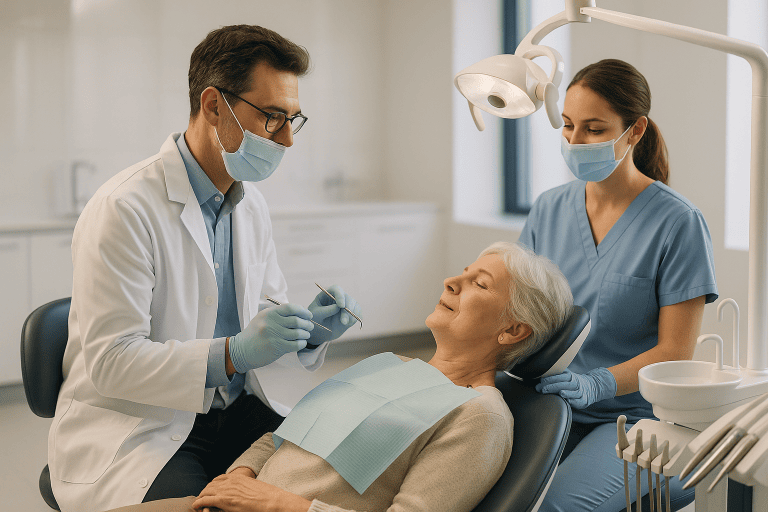
- Visual examination. Using a mirror, good lighting, and air drying, the dentist looks for white spots, discoloration, cavitation (actual holes), and shadowing under the enamel. Many dentists use standardized visual criteria to grade how advanced a lesion is.
- Gentle probing. A dental instrument may be used carefully to assess the texture of a suspicious area, since softened tooth structure suggests active decay. Modern practice avoids forceful probing, which can damage early lesions that might otherwise heal.
- Dental X-rays (radiographs). Bitewing X-rays are especially useful for finding decay between teeth and under existing fillings, areas that are invisible on direct examination. X-rays also help show how deep a cavity extends toward the pulp.
- Additional tools in some clinics. Some dentists use fiber-optic transillumination (shining light through the tooth) or laser fluorescence devices that detect changes in tooth structure. These are aids, not replacements, for clinical judgment.
- Vitality testing when needed. If deep decay is suspected of reaching the pulp, the dentist may test whether the nerve inside the tooth is still healthy, for example by applying a cold stimulus, to decide whether root canal treatment is likely to be required.
An important part of modern diagnosis is judging whether a lesion is active (still progressing) or arrested (stable), and whether the surface is intact or cavitated. This distinction guides treatment, because early, non-cavitated lesions can often be managed without drilling.
Treatment options for dental caries
Dental caries treatment depends on how deep the decay has gone and whether the pulp is affected. The general principle is to preserve as much healthy tooth structure as possible. Care for this condition is typically provided by general dentists and, for complex cases, by specialists within a hospital’s Dental & Oral Health department; at Acibadem, for example, this specialty manages both routine and advanced caries care.
Early lesions: remineralization and monitoring
When decay is caught at the white-spot stage, before a cavity has formed, it can often be halted or even reversed. Your dentist may recommend professionally applied fluoride varnish or gel, prescription-strength fluoride toothpaste, improved brushing and flossing technique, and changes to snacking habits. In many cases, the lesion is then monitored at follow-up visits rather than drilled. This is a genuine form of watchful waiting, but it only works with early lesions and good home care.
Sealants and minimally invasive measures
Dental sealants, thin protective coatings applied to the grooves of back teeth, can prevent decay in high-risk areas and, in some situations, arrest very early lesions. In selected cases, especially in children or patients who cannot tolerate conventional treatment, dentists may apply silver diamine fluoride, a liquid that can stop decay from progressing, although it permanently blackens the treated area.
Fillings (restorations)
Once a cavity has formed, the standard treatment is to remove the decayed tissue and fill the space with a restorative material, most commonly tooth-colored composite resin. A filling stops the decay in that spot and restores the tooth’s shape and function. The procedure is usually done under local anesthesia (numbing the area) and is typically completed in a single visit.
Crowns for heavily damaged teeth
When decay has destroyed a large portion of a tooth, a filling may not be strong enough. In these cases, the dentist may recommend a crown: a custom-made cap that covers the entire visible part of the tooth. Crowns can be made from various materials; ceramic options such as E-Max crowns are often used where a natural appearance is important. Placing a crown usually requires reshaping the tooth and, in many clinics, two or more visits.
Root canal treatment
If decay reaches the pulp, the nerve tissue can become inflamed or infected, causing significant pain or an abscess (a pocket of pus). Root canal treatment removes the infected pulp, cleans and disinfects the internal canals of the tooth, and seals them. The tooth is then usually restored with a filling or crown. Root canal treatment allows many badly decayed teeth to be saved rather than extracted.
Extraction and replacement
When a tooth is too damaged to restore, removal (extraction) may be the only realistic option. Because a missing tooth can affect chewing, speech, and the position of neighboring teeth, dentists often discuss replacement options such as implants, bridges, or dentures. Patients who have lost many teeth to widespread decay may be evaluated for a comprehensive rehabilitation plan, sometimes referred to as full mouth reconstruction, which combines several restorative procedures over multiple visits.
Medications and supportive care
Antibiotics do not cure dental caries and are not a substitute for dental treatment. They may be prescribed for a short period if an infection has spread beyond the tooth, for example, causing facial swelling or fever, but the underlying decayed tooth still needs treatment. Over-the-counter pain relievers can help manage discomfort temporarily; your dentist or doctor can advise which options are suitable for you.
Living with dental caries and outlook
The outlook for dental caries is generally good when it is found and treated early. Early lesions can often be stopped without drilling, and even deeper cavities can usually be treated successfully with fillings, crowns, or root canal treatment. However, caries is a chronic, recurring disease: treating one cavity does not remove the underlying risk. Without changes to diet, oral hygiene, and fluoride use, new lesions can develop on other teeth or around existing dental work.
Living well with a history of caries usually involves:
- Brushing twice daily with fluoride toothpaste and cleaning between teeth daily with floss or interdental brushes
- Limiting sugary foods and drinks, especially between meals, and avoiding constant sipping of sweetened beverages
- Drinking water, particularly fluoridated water where available
- Attending regular dental checkups so that new or recurring decay is caught early
- Discussing dry mouth with your dentist or doctor if you take medications that reduce saliva
- Asking about sealants and professional fluoride treatments if you or your child are at higher risk
Untreated caries can lead to serious problems, including severe pain, tooth loss, abscesses, and, in rare cases, infections that spread to the face, jaw, or beyond. In children, untreated decay can affect eating, sleeping, school attendance, and the development of the permanent teeth. For these reasons, dental caries should be viewed as a manageable but genuine health condition, not a cosmetic issue.
Frequently asked questions
What is dental caries in simple terms?
Dental caries is the disease process behind tooth decay and cavities. Bacteria in the mouth turn sugars from food and drink into acid, and repeated acid attacks dissolve minerals from the tooth surface. Over time this creates soft spots and eventually holes in the teeth. The word “caries” refers to the disease itself, while a “cavity” is the hole it produces.
Can dental caries heal on its own?
Only the very earliest stage can reverse. A white-spot lesion, where minerals have been lost but the surface is still intact, can often remineralize with fluoride, good oral hygiene, and reduced sugar intake. Once an actual cavity has formed in the tooth, it cannot grow back; the decayed tissue must be removed and the tooth restored by a dentist. This is why early detection matters so much.
How serious is dental caries if I ignore it?
Untreated caries tends to progress. Decay can move from the enamel into the dentin and then into the pulp, where it can cause severe pain, nerve death, and abscesses. In some cases, infection can spread to surrounding tissues and cause facial swelling or fever, which requires urgent care. Ignoring caries also usually means more extensive, and more involved, treatment later, such as root canal treatment or extraction instead of a simple filling.
What are the first symptoms of dental caries?
The earliest dental caries symptoms are often subtle or absent. You may notice a chalky white spot on a tooth, mild sensitivity to sweets or cold, or food catching in a new place. Pain typically appears later, once decay is closer to the nerve. Because early decay can be silent, regular dental checkups with X-rays when appropriate are the most reliable way to catch it in time.
Does getting a cavity filled hurt, and how long is recovery?
Most fillings are placed under local anesthesia, so the procedure itself is usually not painful, although you may feel pressure or vibration. Afterward, the treated tooth can be mildly sensitive to hot, cold, or biting for a few days to a couple of weeks in some cases. Most people return to normal eating and activities the same day. If pain is severe or persists, contact your dentist, as the filling may need adjustment.
Why do I keep getting cavities even though I brush?
Brushing is essential but not always sufficient. Frequent snacking or sugary drinks, not cleaning between teeth, dry mouth from medications, deep grooves in the teeth, receding gums, and decay around old fillings can all contribute. A dentist can help identify your specific risk factors and may suggest measures such as prescription fluoride toothpaste, sealants, dietary adjustments, or more frequent checkups.
Is dental caries contagious?
The bacteria involved in caries can be passed between people through saliva, for example, from a caregiver to a young child by sharing spoons or cleaning a pacifier with the mouth. This does not mean cavities themselves are transmitted like a cold, but reducing saliva sharing with infants, along with good hygiene and diet, may help lower a child’s risk. Discuss specific prevention steps for children with a dentist or pediatrician.
When to see a doctor
See a dentist promptly if you notice any signs of tooth decay, such as sensitivity, discoloration, a visible hole, or pain when chewing. Early treatment is simpler and preserves more of your natural tooth. Even without symptoms, regular checkups are recommended, because caries often develops silently.
Seek urgent dental or medical care, the same day if possible, if you experience any of the following red-flag warning signs:
- Severe, persistent, or throbbing toothache that does not respond to over-the-counter pain relief
- Swelling of the face, jaw, or gums, especially if it is spreading or worsening
- Fever, chills, or feeling generally unwell alongside tooth pain
- Difficulty swallowing, difficulty breathing, or trouble opening your mouththese can indicate a spreading infection and are a medical emergency
- A pimple-like bump or pus on the gums, or a foul taste suggesting a draining abscess
- A broken tooth with exposed inner tissue or bleeding that does not stop
- Tooth pain in a child that interferes with eating or sleeping
If you have facial swelling with fever or any difficulty breathing or swallowing, go to the nearest emergency department rather than waiting for a dental appointment. In hospital settings, ongoing care for tooth decay and its complications is generally coordinated through a dental and oral health department, such as the one at Acibadem, where dentists can plan the appropriate combination of preventive and restorative treatment for your situation.
Medically reviewed by the Acıbadem International Medical Board September 3, 2026
See our medical review board →
Update history
- PublishedJune 14, 2026
- Medical review approvedSeptember 3, 2026
- Last content updateSeptember 2, 2026