Heart Rhythm Disorders
Heart rhythm disorders (arrhythmias) make the heart beat too fast, too slow, or irregularly. Learn the symptoms, causes, diagnosis and treatment options.

Quick answer
Heart rhythm disorders, or arrhythmias, occur when the heart's electrical signals misfire, causing it to beat too fast, too slow, or irregularly. Symptoms can include palpitations, dizziness, breathlessness, and fainting, though some people have none. Diagnosis relies on ECG recordings, and treatment ranges from observation and medication to ablation, pacemakers, or defibrillators.
What is heart rhythm disorders?
Heart rhythm disorders, also called arrhythmias, are conditions in which the heart beats too fast, too slow, or in an irregular pattern. A healthy heart is controlled by an electrical system that tells the heart muscle when to contract and pump blood. When these electrical signals are delayed, blocked, or fire abnormally, the rhythm changes. Some heart rhythm disorders are harmless and need no treatment. Others can interfere with the heart’s ability to pump blood effectively and may require careful monitoring or treatment.
Doctors group heart rhythm disorders by where in the heart the problem starts and by how fast the heart beats. A fast rhythm (usually more than 100 beats per minute at rest) is called tachycardia. A slow rhythm (usually fewer than 60 beats per minute at rest) is called bradycardia. Rhythms that start in the upper chambers of the heart (the atria) are called supraventricular rhythms, while those that start in the lower chambers (the ventricles) are called ventricular rhythms. Atrial fibrillation, in which the upper chambers quiver instead of beating in a coordinated way, is one of the most commonly diagnosed heart rhythm disorders.
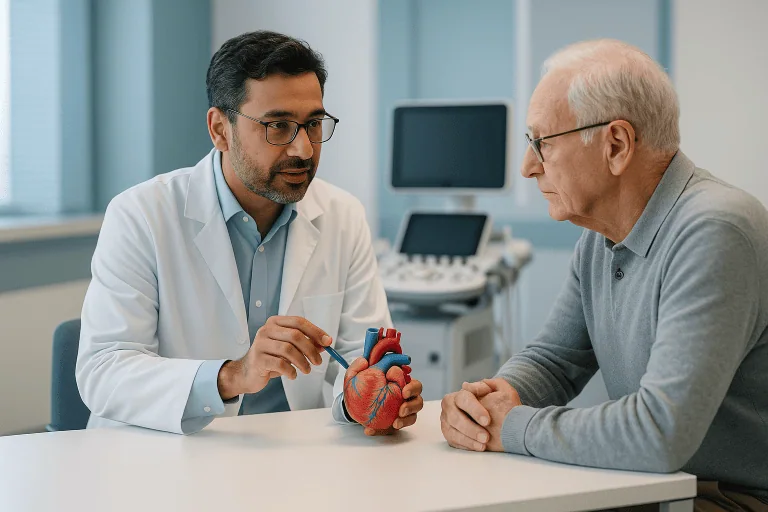
Heart rhythm disorders can affect people of any age, including children, but they become more common as people get older. People who have other forms of heart disease, such as coronary artery disease or heart failure, are more likely to develop them. Occasional extra or skipped beats are very common in otherwise healthy people and are usually not a cause for concern. The evaluation and management of these conditions is usually handled by a cardiology team, such as the Cardiology Department at Acibadem, often with input from specialists in heart electrical problems called electrophysiologists.
Heart rhythm disorders symptoms
Heart rhythm disorders symptoms vary widely. Some people have no symptoms at all and only learn about the problem during a routine examination. Others notice clear changes in how their heart feels or how they feel overall. Common symptoms include:
- Palpitations – an awareness of the heartbeat, often described as fluttering, pounding, racing, or skipping
- A slow or unusually fast pulse
- Dizziness or lightheadedness
- Fainting (syncope) or near-fainting
- Shortness of breath, especially during activity
- Chest discomfort or pressure
- Unusual tiredness or weakness
- Anxiety or a sense that something is wrong
- Reduced ability to exercise
The pattern of symptoms often depends on the type of rhythm problem. Fast rhythms such as supraventricular tachycardia typically cause sudden episodes of a racing heart that start and stop abruptly, sometimes lasting minutes to hours. Atrial fibrillation may cause an irregular, chaotic pulse together with tiredness and breathlessness, although many people with atrial fibrillation feel nothing at all. Slow rhythms, including heart block (a delay or interruption in the signal traveling from the upper to the lower chambers), more often cause fatigue, dizziness, and fainting because the heart is not pumping enough blood to the brain.
Symptoms can also change over time. A rhythm disorder that comes and goes (paroxysmal) may later become persistent or permanent, and symptoms may become more constant. In some cases, the first sign of a serious ventricular rhythm disorder is sudden collapse, which is a medical emergency. Because symptoms overlap with many other conditions, including anxiety and thyroid problems, a doctor’s assessment is needed to find out whether the heart rhythm is the cause.
Causes and risk factors
Heart rhythm disorders causes are varied, and in some cases no clear cause is found. Most arrhythmias arise when the heart’s electrical pathways are damaged, stretched, scarred, or irritated. Common causes and contributing conditions include:
- Coronary artery disease – narrowing of the arteries that supply the heart muscle, which can damage the electrical tissue
- Previous heart attack – scar tissue left behind can disrupt normal signal flow
- Heart failure or cardiomyopathy – conditions in which the heart muscle is weakened, thickened, or enlarged
- Heart valve disease – faulty valves can stretch the heart chambers over time
- High blood pressure – long-term strain that changes the structure of the heart
- Congenital heart conditions – structural or electrical problems present from birth
- Thyroid disorders – an overactive or underactive thyroid gland can speed up or slow down the heart
- Electrolyte imbalances – abnormal levels of potassium, magnesium, sodium, or calcium in the blood
- Inherited electrical conditions – such as long QT syndrome, which affects how the heart resets between beats
- Infections or inflammation of the heart muscle (myocarditis)
- Sleep apnea – repeated pauses in breathing during sleep
Several lifestyle and health factors raise the risk of developing a heart rhythm disorder or triggering an episode. Older age is one of the strongest risk factors, because the heart’s electrical system naturally changes with time. Others include heavy alcohol use, smoking, excessive caffeine intake, use of stimulant drugs, obesity, diabetes, and high levels of physical or emotional stress. Some prescription and over-the-counter medicines, including certain cold remedies, asthma medicines, and even some heart medicines, can also affect the rhythm. A family history of arrhythmia or sudden cardiac death may indicate an inherited tendency and is important to mention to your doctor.
Diagnosis
Heart rhythm disorders diagnosis begins with a detailed conversation about your symptoms, when they occur, how long they last, and what seems to trigger them. Your doctor will also ask about your medical history, medicines, family history, and lifestyle, and will listen to your heart and check your pulse and blood pressure. Because many rhythm problems come and go, the main challenge is often capturing the abnormal rhythm while it is actually happening.
The following tests are commonly used:
- Electrocardiogram (ECG or EKG) – a painless test in which small sensors on the skin record the heart’s electrical activity for a few seconds. This is the basic test for confirming a rhythm disorder, but it only shows what the heart is doing at that moment.
- Holter monitor – a small portable ECG device worn for one or more days to record every heartbeat during normal daily activity.
- Event monitor or patch monitor – worn for longer periods, often weeks, and records the rhythm when symptoms occur or when the device detects an abnormality.
- Implantable loop recorder – a very small device placed under the skin of the chest that can monitor the rhythm for months or years, used when episodes are rare.
- Echocardiogram – an ultrasound scan of the heart that shows the size of the chambers, the thickness of the walls, and how well the valves and muscle are working. This helps identify structural causes.
- Exercise stress test – recording the heart’s rhythm while you walk on a treadmill or ride a stationary bicycle, useful when symptoms are brought on by activity.
- Blood tests – to check thyroid function, electrolytes, and other factors that can affect rhythm.
- Electrophysiology (EP) study – a specialized procedure in which thin, flexible wires are guided through a blood vessel into the heart to map its electrical activity and, in some cases, deliberately trigger the arrhythmia to identify its exact source.
- Cardiac MRI or CT scan – detailed imaging that may be used to look for scarring, inflammation, or structural abnormalities.
A diagnosis is confirmed when the abnormal rhythm is recorded on an ECG or monitor and matches recognized patterns for a specific arrhythmia. Your doctor will then consider how often it occurs, how it affects your symptoms and blood flow, and whether there is an underlying heart condition. This overall picture guides decisions about treatment.
Treatment options
Heart rhythm disorders treatment options depend on the type of arrhythmia, how severe the symptoms are, whether there is underlying heart disease, and the risk of complications such as stroke or sudden cardiac arrest. Not every rhythm disorder needs active treatment. The main approaches are described below.
Observation and lifestyle changes
For mild or occasional arrhythmias that do not cause troubling symptoms and are not linked to structural heart disease, your doctor may recommend monitoring without medication. Reducing caffeine and alcohol, stopping smoking, managing stress, treating sleep apnea, and controlling blood pressure and diabetes can lessen episodes in many cases. Reviewing current medicines that may affect the heart rhythm is also part of this step.
Medication
Several groups of medicines are used. Rate-control medicines, such as beta blockers and certain calcium channel blockers, slow the heart rate so that a fast rhythm is better tolerated. Antiarrhythmic medicines act on the heart’s electrical channels to help restore or maintain a normal rhythm. For people with atrial fibrillation who are at increased risk of stroke, anticoagulants (blood thinners) are often prescribed to reduce the chance of blood clots forming in the heart. All of these medicines have potential side effects and require regular follow-up, and the choice depends on your individual situation.
Cardioversion
Cardioversion is a procedure that resets the heart to a normal rhythm. Electrical cardioversion delivers a controlled electric shock to the chest while you are briefly sedated. Chemical cardioversion uses medicines given by mouth or through a vein. It is most often used for atrial fibrillation or atrial flutter, and the rhythm may return to abnormal over time, so additional treatment is sometimes needed.
Catheter ablation
Catheter ablation is a minimally invasive procedure in which thin tubes are guided through a blood vessel, usually in the groin, to the heart. The doctor identifies the small area of tissue causing the abnormal signals and treats it with heat (radiofrequency energy) or extreme cold (cryoablation) to create tiny scars that block the faulty pathway. Ablation is a common option for supraventricular tachycardia, atrial flutter, atrial fibrillation, and some ventricular arrhythmias. Success varies by arrhythmia type, and some people need more than one procedure.
Implanted devices
A pacemaker is a small device implanted under the skin near the collarbone, connected to the heart by thin wires, that sends electrical impulses to keep the heart from beating too slowly. It is the main treatment for symptomatic bradycardia and heart block. An implantable cardioverter-defibrillator (ICD) monitors the rhythm continuously and delivers a shock if it detects a dangerous fast ventricular rhythm. ICDs are usually recommended for people at high risk of sudden cardiac arrest. Some devices combine both functions.
Surgery
Surgery is less common but may be considered when other treatments have not worked or when a person is already having heart surgery for another reason, such as valve repair or bypass surgery. The maze procedure creates a pattern of scar tissue in the upper chambers to redirect electrical signals and is used for certain cases of atrial fibrillation.
Cardiac rehabilitation and follow-up
After procedures or when a rhythm disorder is linked to other heart disease, a structured cardiac rehabilitation program may be recommended. This typically includes supervised exercise, education about heart health, and support with risk-factor control. Regular follow-up visits, often with repeat ECGs or device checks, are an ongoing part of care.
Living with heart rhythm disorders and outlook
The long-term outlook for people with heart rhythm disorders depends greatly on the type of arrhythmia and on the health of the heart overall. Many people with benign arrhythmias, such as occasional extra beats, live normal lives without any treatment. Others with conditions such as supraventricular tachycardia are often treated very effectively with ablation or medication. Atrial fibrillation is usually a long-term condition that can be managed to reduce symptoms and lower stroke risk, though it may not be permanently cured in every case. Ventricular arrhythmias associated with significant heart disease carry a higher risk and typically require closer monitoring and protective treatment such as an ICD.
Day-to-day, living well with a heart rhythm disorder often involves taking medicines as prescribed, attending follow-up appointments, and learning to recognize your own warning signs. Keeping a simple diary of episodes and possible triggers can help your care team adjust treatment. People with pacemakers or ICDs receive specific guidance about electrical devices, travel, and physical activity, and most are able to continue normal activities. Emotional well-being matters too; anxiety about the heart is common and can itself trigger palpitations, so support from your care team, family, or a counselor can be valuable.
No treatment can guarantee that an arrhythmia will never return, and the condition may change over time. Open communication with your cardiology team and a willingness to adjust the plan as needed usually give the best chance of controlling symptoms and reducing complications.
Frequently asked questions
What are the most common heart rhythm disorders symptoms?
The most frequently reported symptoms are palpitations (a fluttering, racing, or pounding sensation), dizziness, shortness of breath, tiredness, and occasionally chest discomfort or fainting. Some people have no symptoms at all, and the rhythm problem is found by chance during a routine check. Symptoms alone cannot identify the type of arrhythmia, so a recording of the heart’s electrical activity is needed.
What are the main heart rhythm disorders causes?
Most arrhythmias result from damage or changes to the heart’s electrical system caused by coronary artery disease, a previous heart attack, high blood pressure, heart failure, or valve disease. Other causes include thyroid problems, electrolyte imbalances, inherited electrical conditions, certain medicines, and stimulants such as alcohol, caffeine, or drugs. In some people, especially those with an otherwise healthy heart, no specific cause is identified.
How is heart rhythm disorders diagnosis confirmed?
Diagnosis is confirmed by recording the abnormal rhythm, most commonly with an electrocardiogram (ECG). Because episodes may be brief or infrequent, your doctor may ask you to wear a portable monitor for days or weeks, or in rare cases may recommend a small implanted recorder. An echocardiogram and blood tests are often added to look for underlying causes, and an electrophysiology study may be used to pinpoint the source of the rhythm problem.
What are the heart rhythm disorders treatment options if medicines do not work?
When medicines are not effective or cause unacceptable side effects, your doctor may discuss catheter ablation, which targets the tissue causing the abnormal signals, or an implanted device such as a pacemaker for slow rhythms or an ICD for dangerous fast rhythms. Cardioversion may be used to reset the rhythm in atrial fibrillation or flutter. Surgery is reserved for selected situations. The right option depends on the specific arrhythmia and your overall heart health.
Can heart rhythm disorders go away on their own?
Some do. Arrhythmias triggered by a temporary factor, such as an infection, an electrolyte imbalance, excess caffeine, or a medicine, may resolve once the trigger is removed. Occasional extra beats often come and go without treatment. However, arrhythmias linked to structural heart disease or to age-related changes usually persist and may progress, so ongoing medical follow-up is generally advised even when symptoms improve.
Are heart rhythm disorders dangerous?
The risk varies widely. Many arrhythmias are harmless or cause only bothersome symptoms. Others, such as atrial fibrillation, raise the risk of stroke and can weaken the heart over time if not managed. Certain ventricular arrhythmias can be life-threatening and lead to sudden cardiac arrest. This is why doctors assess not just the symptoms but also the type of rhythm and the condition of the heart before deciding on treatment.
Can I exercise if I have a heart rhythm disorder?
In many cases, yes, and regular physical activity is often encouraged as part of heart health. However, the type and intensity of exercise that is safe depends on your specific diagnosis and whether you have an implanted device or other heart disease. Some inherited conditions require avoiding intense or competitive sports. It is important to follow the individual guidance given by your doctor rather than general advice.
When to see a doctor
You should arrange a medical assessment if you notice frequent or prolonged palpitations, a pulse that is regularly very slow or very fast without an obvious reason, unexplained dizziness or tiredness, or reduced ability to exercise. Anyone with a family history of sudden cardiac death or inherited heart rhythm problems should also discuss this with a doctor, even without symptoms.
Seek emergency medical care immediately if you or someone near you experiences any of the following red-flag warning signs:
- Fainting or collapse, especially during exercise or without warning
- Chest pain or pressure, particularly if it spreads to the arm, jaw, neck, or back
- Severe shortness of breath or difficulty breathing
- A very fast heartbeat that does not slow down, together with dizziness, weakness, or confusion
- Sudden weakness or numbness on one side of the body, trouble speaking, or facial drooping (possible signs of stroke)
- A shock from an implanted defibrillator, particularly if more than one occurs or you feel unwell afterward
- Unresponsiveness with no normal breathing – begin CPR and use an automated external defibrillator (AED) if available while emergency services are called
These signs may indicate a dangerous arrhythmia, a heart attack, or a stroke, all of which require urgent treatment. Acting quickly can make a significant difference to the outcome.
Medically reviewed by the Acıbadem International Medical Board September 9, 2026
See our medical review board →
Update history
- PublishedSeptember 9, 2026
- Medical review approvedSeptember 9, 2026
- Last content updateSeptember 9, 2026