Quick answer
Hepatocellular carcinoma is the most common primary liver cancer, usually arising in damaged or cirrhotic liver tissue and managed according to the tumor’s stage and the liver’s function. At Acibadem in Turkey, evaluation typically combines imaging, blood tests, and pathology when needed, and treatment may include surgery, liver-directed therapies, systemic medicines, or liver transplantation within a multidisciplinary care plan.
What is hepatocellular carcinoma?
Hepatocellular carcinoma is the most common type of primary liver cancer, meaning a cancer that starts in the liver itself rather than spreading to the liver from another organ. It develops from hepatocytes, the main working cells of the liver that process nutrients, filter blood, and produce important proteins. When these cells become damaged over many years, some of them can begin to grow in an uncontrolled way and form a tumor. Doctors often shorten the name to HCC, and in medical coding systems it is listed under ICD-10 code C22.0.
Understanding what is hepatocellular carcinoma starts with understanding the liver conditions that usually come before it. In most people, this cancer does not appear in a healthy liver. Instead, it typically develops in a liver that has already been injured for a long time, most often by chronic hepatitis B or hepatitis C infection, long-term heavy alcohol use, or a buildup of fat in the liver. Many people with hepatocellular carcinoma also have cirrhosis, which is severe, permanent scarring of the liver caused by years of ongoing damage.
Hepatocellular carcinoma can affect adults of any age, but it is more common in people over 50 and occurs more often in men than in women. It is a significant health concern worldwide, particularly in regions where hepatitis B and hepatitis C infections are common. Because it often grows quietly at first, regular monitoring of people with known liver disease plays an important role in finding it early, when more treatment options are available.
Symptoms
Hepatocellular carcinoma symptoms are often absent or very mild in the early stages. The liver has a large reserve capacity and no pain-sensing nerves inside most of its tissue, so a small tumor can grow without causing any noticeable change. This is one reason why the cancer is frequently discovered during routine imaging or blood tests in people who are already being monitored for chronic liver disease.
When symptoms do appear, they may include:
- Pain or discomfort in the upper right side of the abdomen, sometimes spreading toward the right shoulder or back
- A feeling of fullness after eating only a small amount of food
- Unintended weight loss without changes in diet or activity
- Loss of appetite or nausea
- Fatigue and general weakness that does not improve with rest
- Jaundice, a yellowing of the skin and the whites of the eyes caused by a buildup of bilirubin, a waste product the liver normally removes
- Swelling of the abdomen caused by ascites, which is fluid collecting in the belly
- A lump or firm area that can be felt below the ribs on the right side
- Dark urine or pale stools
- Easy bruising or bleeding, because a damaged liver makes fewer clotting proteins
How symptoms show up often depends on the stage of the disease and the health of the surrounding liver. In early-stage disease, there may be no symptoms at all, or only vague tiredness. In intermediate and advanced stages, abdominal pain, weight loss, and swelling become more common. In people who already have cirrhosis, the first sign of hepatocellular carcinoma may be a sudden worsening of their existing liver disease, such as new jaundice, confusion caused by toxins building up in the blood (a condition called hepatic encephalopathy), or rapidly increasing abdominal fluid.
Because many of these symptoms overlap with other liver and digestive conditions, having one or more of them does not mean a person has cancer. However, new or worsening symptoms in someone with known liver disease should always be discussed with a doctor.
Causes and risk factors
There is no single cause of hepatocellular carcinoma. Instead, the cancer usually develops after years of repeated injury to liver cells. Each cycle of damage and repair increases the chance that genetic errors will build up in liver cells and eventually allow uncontrolled growth. The most important hepatocellular carcinoma causes and risk factors include:
- Chronic hepatitis B infection. This virus can directly damage liver cell DNA and is a leading cause of liver cancer worldwide, even in some people who do not have cirrhosis.
- Chronic hepatitis C infection. Long-term infection commonly leads to cirrhosis, which greatly raises cancer risk. Modern antiviral treatments can cure hepatitis C, which lowers, but does not completely remove, the risk in people who already have advanced scarring.
- Cirrhosis from any cause. Severe scarring of the liver, whatever its origin, is the single strongest risk factor for hepatocellular carcinoma.
- Long-term heavy alcohol use. Alcohol damages liver cells directly and is a common cause of cirrhosis.
- Nonalcoholic fatty liver disease. A buildup of fat in the liver, often linked to obesity and type 2 diabetes, can progress to inflammation and scarring. This is an increasingly common cause of liver cancer in many countries.
- Type 2 diabetes and obesity, which are associated with fatty liver disease and appear to increase risk on their own.
- Aflatoxin exposure. Aflatoxins are toxins produced by molds that can grow on improperly stored grains and nuts, mainly in warm, humid climates.
- Certain inherited conditions, such as hemochromatosis (a disorder in which the body absorbs too much iron) and some rare metabolic diseases.
- Tobacco use, which is associated with a higher risk of many cancers, including liver cancer.
Men develop hepatocellular carcinoma more often than women, and risk rises with age. Having a risk factor does not mean a person will develop cancer, and some people develop the disease without any obvious risk factor. For people with known chronic liver disease, doctors often recommend regular surveillance, typically with an ultrasound scan of the liver every several months, sometimes combined with a blood test, so that any tumor can be found as early as possible.
Diagnosis
Hepatocellular carcinoma diagnosis usually combines a medical history, physical examination, blood tests, and imaging. In some situations, unlike most other cancers, doctors can confirm the diagnosis with imaging alone, without a biopsy, when the pictures show a very characteristic pattern in a person with cirrhosis.
The steps your medical team may use include:
- Medical history and examination. The doctor asks about hepatitis infections, alcohol use, family history, and symptoms, and examines the abdomen for tenderness, an enlarged liver, or fluid buildup.
- Blood tests. Liver function tests measure how well the liver is working. A tumor marker called alpha-fetoprotein (AFP), a protein that can be raised in some people with liver cancer, may also be checked. AFP is not raised in everyone with the disease and can be raised in other conditions, so it is used as a supporting clue rather than a stand-alone test.
- Ultrasound. This painless scan uses sound waves and is often the first imaging test, especially in surveillance programs for people with cirrhosis.
- CT or MRI with contrast. A computed tomography (CT) scan or magnetic resonance imaging (MRI) scan performed with an injected contrast dye, taken in several timed phases, is the key test. Hepatocellular carcinoma tends to take up the dye rapidly and then release it in a recognizable pattern. In a person with cirrhosis, this typical appearance is often considered enough to confirm the diagnosis under widely used international criteria.
- Liver biopsy. If the imaging findings are unclear, or the person does not have cirrhosis, a doctor may remove a small sample of the tumor with a thin needle so a pathologist can examine the cells under a microscope.
Once the cancer is confirmed, staging follows. Staging describes how large the tumor is, how many tumors there are, whether the cancer has grown into blood vessels or spread beyond the liver, and, very importantly, how well the rest of the liver is functioning. For hepatocellular carcinoma, the health of the underlying liver influences treatment choices just as much as the size of the tumor, so doctors assess both together when planning care.
Treatment options
Hepatocellular carcinoma treatment depends on the size, number, and location of the tumors, whether the cancer has spread, how well the liver is working, and the person’s overall health. Because so many factors matter, treatment plans are usually made by a multidisciplinary team that may include liver specialists, surgeons, interventional radiologists, and cancer physicians such as those in a Medical Oncology Department. The main approaches include the following.
Surgery
When the tumor is limited to one part of the liver and the remaining liver is healthy enough, surgeons may remove the tumor along with a margin of surrounding tissue. This operation is called a liver resection. In carefully selected people, usually those with a small tumor burden and significant cirrhosis, a liver transplant may be considered. A transplant replaces the entire diseased liver, treating both the cancer and the underlying scarring, but it depends on strict eligibility criteria and the availability of a donor organ.
Tumor ablation
Ablation destroys small tumors without removing them. In radiofrequency or microwave ablation, a doctor guides a thin needle-like probe into the tumor, usually through the skin using imaging guidance, and uses heat to destroy the cancer cells. Ablation is often used for small tumors when surgery is not suitable, and in some cases it can be as effective as surgery for very small cancers.
Embolization procedures
Liver tumors receive most of their blood supply from a specific artery. In transarterial chemoembolization (TACE), a doctor threads a thin tube through blood vessels to that artery and delivers chemotherapy drugs together with particles that block the tumor’s blood flow. In transarterial radioembolization (TARE), tiny radioactive beads are delivered in a similar way. These procedures are commonly used for intermediate-stage disease that cannot be removed surgically, and they may also be used to control tumor growth while a person waits for a transplant.
Radiation therapy
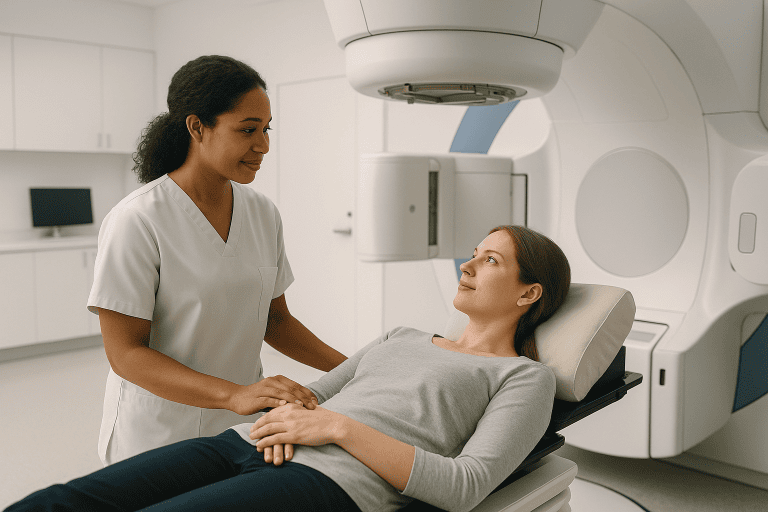
Highly focused external radiation, sometimes called stereotactic body radiation therapy, can be used for certain tumors that cannot be treated with surgery or ablation. It targets the tumor precisely while sparing as much healthy liver as possible.
Medication
For advanced hepatocellular carcinoma that has spread within or beyond the liver, or that cannot be treated with local procedures, doctors may prescribe systemic therapy, meaning medication that travels through the whole body. Options include targeted therapy drugs, which block specific signals that cancer cells use to grow and to build blood vessels, and immunotherapy drugs, which help the body’s own immune system recognize and attack cancer cells. Traditional chemotherapy is less effective for this cancer and is used less often. Your medical team will discuss which medications may be appropriate, along with their possible side effects.
Watchful waiting and supportive care
In some situations, such as a very small lesion of uncertain nature, doctors may recommend close monitoring with repeat imaging before starting treatment. For people whose liver function is too weak for active cancer treatment, or whose disease is very advanced, supportive care, also called palliative care, focuses on relieving pain, controlling fluid buildup, maintaining nutrition, and preserving quality of life. Supportive care can also be given alongside active treatment at any stage.
Treating the underlying liver disease matters as well. Antiviral medication for hepatitis B or C, stopping alcohol use, and managing diabetes and weight can help protect the remaining liver and may reduce the risk of new tumors forming.
Living with hepatocellular carcinoma and outlook
The outlook for hepatocellular carcinoma varies widely from person to person. It depends on the stage at diagnosis, the number and size of tumors, whether the cancer has entered blood vessels or spread, and how well the rest of the liver is working. In general, cancers found early, while they are small and confined to the liver, can often be treated with surgery, transplant, or ablation, and some people are treated with the goal of long-term control or cure. Cancers found at a later stage are usually managed with the aim of slowing the disease, relieving symptoms, and maintaining quality of life for as long as possible. No doctor can promise a specific outcome, and statistics describe groups of people rather than any individual.
Day-to-day life with this diagnosis usually involves regular follow-up scans and blood tests, whether treatment is ongoing or has finished, because hepatocellular carcinoma can return and new tumors can form in a scarred liver. Practical steps that many care teams recommend include avoiding alcohol completely, taking prescribed antiviral or other liver medications consistently, eating a balanced diet, checking with a doctor or pharmacist before using any new medication or herbal supplement (some can strain the liver), and staying as physically active as symptoms allow. Emotional support matters too; counseling, patient support groups, and open conversations with family and the care team can help people cope with uncertainty. In many hospitals, including centers such as Acibadem, long-term follow-up is coordinated between liver specialists and oncology teams.
Frequently asked questions
What is hepatocellular carcinoma in simple terms?
Hepatocellular carcinoma is a cancer that begins in the main cells of the liver, called hepatocytes. It usually develops in a liver that has been damaged over many years by hepatitis viruses, alcohol, or fat buildup, and it is the most common form of cancer that starts in the liver rather than spreading there from elsewhere.
Can hepatocellular carcinoma be cured?
In some cases, yes. When the cancer is found early and the liver is healthy enough, treatments such as surgical removal, liver transplant, or ablation are given with the intention of cure, and some people remain cancer-free long term. However, the disease can return, and later-stage cancers are usually managed rather than cured. Only your own medical team can discuss what is realistic in your situation.
How serious is hepatocellular carcinoma?
It is a serious diagnosis, both because of the cancer itself and because it usually occurs alongside chronic liver disease. That said, seriousness varies greatly with the stage at diagnosis and the strength of the remaining liver. Early-stage disease often has meaningful treatment options, which is why surveillance in people with cirrhosis or chronic hepatitis is so strongly encouraged.
What are the first symptoms of hepatocellular carcinoma?
Often there are none at first. When early symptoms do occur, they tend to be vague, such as tiredness, mild discomfort in the upper right abdomen, reduced appetite, or feeling full quickly. More obvious signs, like jaundice, noticeable weight loss, or abdominal swelling, usually appear at later stages or when the underlying liver disease worsens.
How is hepatocellular carcinoma diagnosed without a biopsy?
In people with cirrhosis, a contrast-enhanced CT or MRI scan can show a pattern of blood flow that is highly characteristic of this cancer. When that typical pattern is present, international guidelines allow doctors to confirm the diagnosis from imaging alone. A biopsy is reserved for cases where the imaging is unclear or the person does not have cirrhosis.
Which doctor treats hepatocellular carcinoma?
Care is usually shared by several specialists: hepatologists (liver physicians), surgeons, interventional radiologists who perform ablation and embolization procedures, radiation specialists, and medical oncologists who manage drug treatments such as targeted therapy and immunotherapy. Most hospitals coordinate these specialists through a tumor board that reviews each case together.
Can you prevent hepatocellular carcinoma?
Risk can be reduced, though not eliminated. Vaccination against hepatitis B, testing and treatment for hepatitis B and C, limiting or avoiding alcohol, maintaining a healthy weight, and managing diabetes all lower the chance of developing the liver damage that leads to this cancer. People who already have cirrhosis or chronic hepatitis should ask their doctor about regular surveillance scans.
When to see a doctor
Talk with a doctor promptly if you have chronic hepatitis B or C, cirrhosis, fatty liver disease, or long-term heavy alcohol use and you notice new or changing symptoms, or if you have never been assessed for liver cancer surveillance. Seek medical attention without delay if you experience any of the following red-flag warning signs:
- Yellowing of the skin or eyes (jaundice), or noticeably dark urine and pale stools
- Rapid swelling of the abdomen or sudden weight gain from fluid
- Persistent or worsening pain in the upper right abdomen
- Unexplained weight loss or ongoing loss of appetite
- Vomiting blood or passing black, tar-like stools, which can signal internal bleeding and is a medical emergency
- New confusion, unusual drowsiness, or personality changes, which may indicate hepatic encephalopathy and also require urgent care
- Fever with abdominal pain in someone with known liver disease
- Easy bruising or bleeding that is new or getting worse
These symptoms do not necessarily mean cancer, but in a person with liver disease they should always be evaluated quickly. Early assessment gives doctors the best chance to find the cause, and, if hepatocellular carcinoma is present, to offer treatment while more options remain available.
Medically reviewed by the Acıbadem International Medical Board September 3, 2026
See our medical review board →
Update history
- PublishedJune 14, 2026
- Medical review approvedSeptember 3, 2026
- Last content updateSeptember 2, 2026