Obstructive Sleep Apnea
Obstructive Sleep Apnea causes repeated breathing pauses during sleep. Learn symptoms, causes, diagnosis, treatment options, and when to seek care.
Quick answer
Obstructive sleep apnea is a sleep-related breathing disorder in which the upper airway repeatedly narrows or collapses during sleep, causing pauses in breathing, snoring, and fragmented rest. At Acibadem in Turkey, evaluation focuses on sleep assessment and airway examination, and treatment may include lifestyle measures, CPAP therapy, oral appliances, or surgery depending on the cause and severity.
What is obstructive sleep apnea?
Obstructive sleep apnea is a sleep disorder in which breathing repeatedly stops and starts during sleep because the airway at the back of the throat narrows or closes. The word “apnea” means a pause in breathing. In obstructive sleep apnea, the muscles that keep the throat open relax too much during sleep, allowing soft tissue to collapse inward and block the flow of air. Each blockage can last from a few seconds to more than a minute, and the brain briefly wakes the sleeper, often without the person remembering it, so that normal breathing can resume. This cycle may repeat many times each hour, preventing deep, restful sleep.
To understand what is obstructive sleep apnea in everyday terms, imagine trying to drink through a straw that keeps flattening: air, like the liquid, cannot pass until the passage opens again. These repeated pauses lower the amount of oxygen in the blood and put stress on the heart, blood vessels, and brain over time.
Obstructive sleep apnea can affect people of any age, including children, but it is most common in middle-aged and older adults. It occurs more often in men than in women before menopause, although the difference narrows with age. People who are overweight, who snore loudly, or who have certain features of the face and jaw are affected more frequently. Because the events happen during sleep, many people are unaware they have the condition until a bed partner notices the snoring and pauses, or until daytime symptoms such as severe sleepiness lead them to seek help.
It is helpful to distinguish obstructive sleep apnea from central sleep apnea. In the obstructive type, the airway is physically blocked while the body still tries to breathe. In central sleep apnea, which is less common, the brain temporarily fails to send the signal to breathe at all. Some people have a combination of both. This article focuses on the obstructive form.
Symptoms of obstructive sleep apnea
Obstructive sleep apnea symptoms fall into two groups: things that happen at night (often noticed by someone else) and problems that appear during the day because of poor-quality sleep.
Common nighttime symptoms include:
- Loud, persistent snoringoften the first sign a partner notices, although not everyone who snores has sleep apnea.
- Witnessed pauses in breathinga partner may see the sleeper stop breathing, then gasp or snort as breathing restarts.
- Choking or gasping during sleepsometimes the person wakes suddenly feeling short of breath.
- Restless, fragmented sleepfrequent tossing, turning, or brief awakenings.
- Waking often to urinate at night.
- Night sweats in some people.
Common daytime symptoms include:
- Excessive daytime sleepinessfalling asleep while reading, watching television, or, dangerously, while driving.
- Morning headaches that often fade as the day goes on.
- Dry mouth or sore throat on waking.
- Difficulty concentrating, memory problems, and slowed thinking.
- Irritability, low mood, or anxiety.
- Reduced sex drive in some adults.
Symptoms often vary with severity. Doctors describe obstructive sleep apnea as mild, moderate, or severe based on how many breathing events occur per hour of sleep. People with mild disease may notice only snoring and slight daytime tiredness, while those with severe disease frequently struggle to stay awake during ordinary activities and are at higher risk of accidents. Symptoms can also differ between groups: women may report insomnia, fatigue, or mood changes more than classic loud snoring, and older adults may attribute sleepiness to aging. In children, obstructive sleep apnea can look quite different: it may cause mouth breathing, bedwetting, poor school performance, hyperactivity, or behavior problems rather than obvious sleepiness.
Because the person with the condition is asleep when the main events happen, reports from a bed partner or family member are often an important part of recognizing the problem.
Causes and risk factors
The direct cause of obstructive sleep apnea is the collapse of the upper airway during sleep. When we fall asleep, the muscles of the throat and tongue naturally relax. In most people the airway stays open, but in people with obstructive sleep apnea the passage narrows or closes completely. Anything that makes the airway smaller, floppier, or more crowded increases the likelihood of these blockages. Understanding obstructive sleep apnea causes therefore means looking at the factors that affect the size and stability of the airway.
Common risk factors include:
- Excess body weight. Fat deposits around the neck and throat can narrow the airway. Obesity is one of the strongest and most common risk factors, although people of normal weight can also have the condition.
- Neck and airway anatomy. A thick neck, a naturally narrow throat, a large tongue, a small or set-back lower jaw, or a large uvula (the small tissue flap at the back of the throat) can all reduce airway space.
- Enlarged tonsils and adenoids. These lymphoid tissues at the back of the throat and nose are the most common cause of obstructive sleep apnea in children and can contribute in adults.
- Age. Muscle tone in the throat decreases with age, making collapse more likely.
- Sex. Men are affected more often than women, though a woman’s risk increases after menopause.
- Family history. Obstructive sleep apnea often runs in families, partly because facial and airway shape are inherited.
- Alcohol, sedatives, and sleeping pills. These substances relax the throat muscles further and can worsen breathing pauses.
- Smoking. Smoking can cause swelling and inflammation in the upper airway.
- Nasal congestion. Chronic blockage of the nose, from allergies, a deviated septum (a crooked wall inside the nose), or polyps, makes obstructed breathing more likely.
- Medical conditions. Hypothyroidism (an underactive thyroid gland), acromegaly (excess growth hormone), and certain other hormonal or neurological conditions are associated with higher risk.
- Sleeping position. Lying on the back allows gravity to pull the tongue and soft tissues backward, and in some people apnea occurs mainly in this position.
Untreated obstructive sleep apnea is associated over time with high blood pressure, heart rhythm problems such as atrial fibrillation, heart disease, stroke, type 2 diabetes, and worsening of mood disorders. This is one reason doctors take the condition seriously even when the main complaint is “just snoring.”
Diagnosis
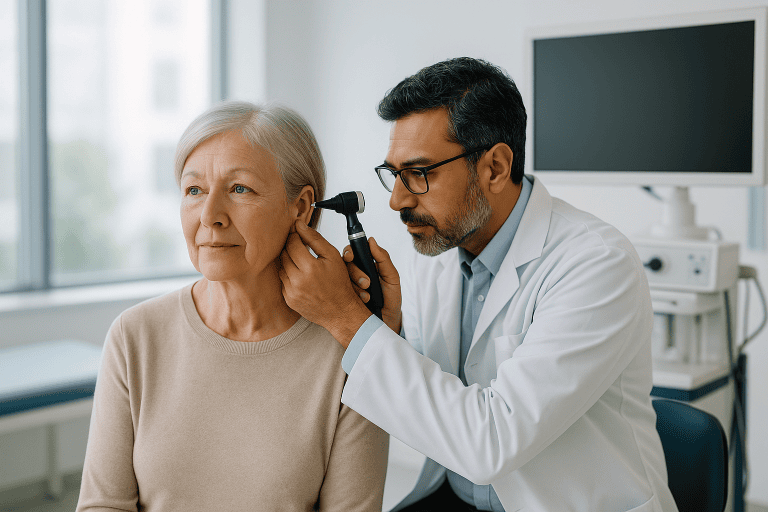
Obstructive sleep apnea diagnosis begins with a careful medical history and physical examination. Your doctor will ask about snoring, witnessed breathing pauses, daytime sleepiness, morning headaches, and sleep habits, and may use standardized questionnaires that estimate sleepiness and risk. Information from a bed partner is often very useful. The physical examination usually focuses on the nose, mouth, throat, jaw, and neck, looking for enlarged tonsils, a crowded airway, nasal blockage, or a large neck circumference. Blood pressure and weight are typically checked as well.
The condition is confirmed with a sleep study, which measures what actually happens to breathing during sleep. There are two main forms:
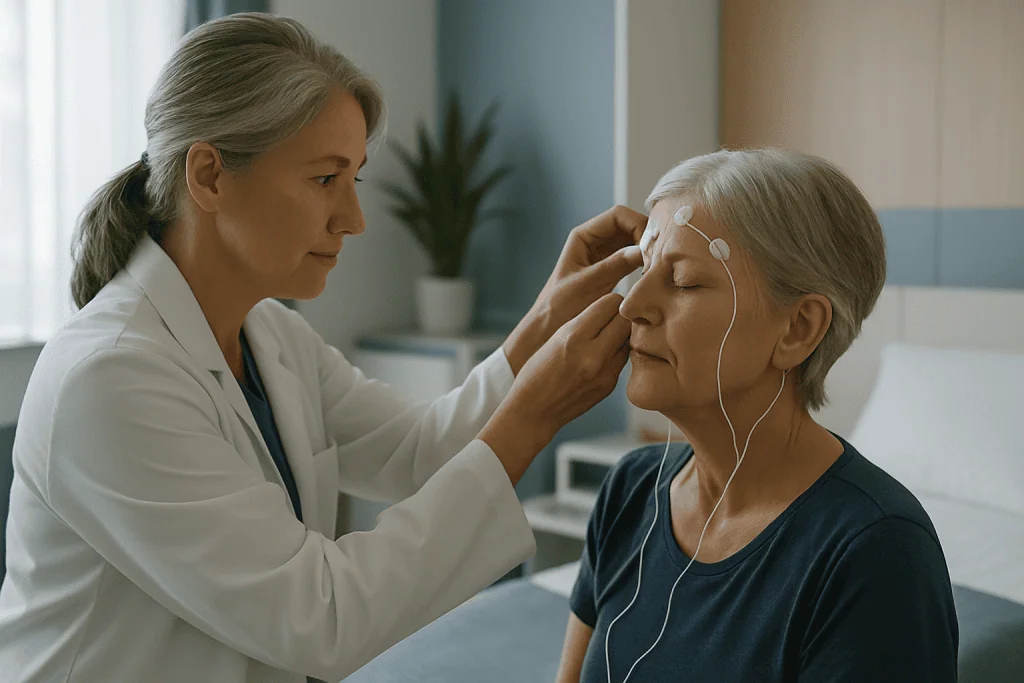
- In-laboratory polysomnography. This is the most complete test. You spend a night in a sleep laboratory while sensors record brain waves, eye movements, heart rhythm, airflow through the nose and mouth, chest and abdominal movement, blood oxygen levels, and leg movements. Trained staff monitor the study, and a specialist interprets the results.
- Home sleep apnea testing. For many adults with a high likelihood of moderate or severe obstructive sleep apnea and no major complicating illnesses, a simplified test can be done at home. A portable device records breathing, oxygen levels, and usually heart rate. Home testing is convenient, but it measures fewer signals and can underestimate the problem, so a normal home test in a person with strong symptoms may be followed by a full laboratory study.
The key result of a sleep study is the apnea–hypopnea index (AHI), which counts the average number of complete pauses (apneas) and partial reductions in breathing (hypopneas) per hour of sleep. In adults, doctors commonly describe an AHI of 5 to 14 events per hour as mild, 15 to 29 as moderate, and 30 or more as severe, interpreted together with symptoms and oxygen levels. In children, lower thresholds are used.
Depending on the situation, additional assessments may be arranged. An ear, nose, and throat specialist may examine the upper airway directly with a thin flexible camera (endoscopy), sometimes during drug-induced sleep, to identify exactly where the airway collapses. Imaging of the face and jaw, thyroid blood tests, or heart evaluations may be considered when the history suggests an underlying or associated condition. Routine X-rays or scans are not needed to diagnose obstructive sleep apnea itself; the sleep study remains the essential test.
Treatment options
Obstructive sleep apnea treatment aims to keep the airway open during sleep, relieve symptoms, and reduce long-term health risks. The best approach depends on the severity of the condition, its cause, your anatomy, and your preferences. Treatment is often a combination of measures rather than a single fix.
Lifestyle measures and watchful waiting
For mild disease with few symptoms, your doctor may first recommend lifestyle changes and follow-up rather than immediate device therapy. Useful measures often include weight loss in people who are overweight (which can meaningfully reduce, and occasionally resolve, the condition), avoiding alcohol and sedative medicines in the evening, stopping smoking, treating nasal congestion, and getting regular, sufficient sleep. Positional therapy, using special pillows, wearable devices, or simple techniques to avoid sleeping on the back, can help people whose apnea occurs mainly in that position. Watchful waiting is generally appropriate only for mild cases and requires reassessment if symptoms persist or worsen.
Positive airway pressure (CPAP)
Continuous positive airway pressure, or CPAP, is the standard first-line treatment for moderate and severe obstructive sleep apnea, and often for symptomatic mild disease. A small bedside machine gently blows air through a mask worn over the nose, or the nose and mouth, keeping the airway open like an air splint. When used consistently, CPAP typically eliminates most breathing pauses, reduces snoring, and improves daytime sleepiness. Some people find the mask uncomfortable at first; adjusting mask style, pressure settings, and humidification usually improves comfort, and support during the first weeks makes long-term use much more likely. Variants such as auto-adjusting (APAP) or bilevel (BiPAP) machines may be used in specific situations.
Oral appliances
Custom-made mouthpieces, usually called mandibular advancement devices, hold the lower jaw slightly forward during sleep, pulling the tongue away from the back of the throat. They are fitted by dentists trained in sleep medicine and can be a good option for mild to moderate obstructive sleep apnea, or for people who cannot tolerate CPAP. They are generally less effective than CPAP for severe disease, and follow-up is needed to check the fit and confirm the device is working.
Medications
There is currently no medication that reliably treats the airway collapse itself in most adults, so drugs are not a primary therapy. Medicines may still play supporting roles, for example, treating nasal allergies to improve airflow, or managing an underlying condition such as hypothyroidism. In selected people who remain sleepy despite well-treated apnea, a doctor may consider wakefulness-promoting medication, but this addresses the symptom, not the cause. Weight-loss treatment, including medication or bariatric (weight-loss) surgery where appropriate, can indirectly improve sleep apnea in people with obesity.
Surgery and procedures
Surgery may be considered when a clear anatomical blockage is present, when device-based treatments have failed or cannot be tolerated, or in children with enlarged tonsils and adenoids, for whom removing these tissues (adenotonsillectomy) is often the first-line treatment. In adults, surgical options depend on where the airway collapses and may include procedures on the soft palate and throat tissue (such as uvulopalatopharyngoplasty), nasal surgery to correct a deviated septum or remove polyps, tongue-base procedures, or jaw advancement surgery that moves the upper and lower jaws forward to enlarge the airway. Another option in carefully selected adults is an implanted nerve stimulator that activates the tongue muscles during sleep to keep the airway open. Surgical results vary from person to person, and no procedure guarantees a cure, so decisions are made after detailed airway assessment. These evaluations and operations are typically managed by an ear, nose, and throat surgeon; at Acibadem, this care is provided within the Otorhinolaryngology (ENT) department, often working together with sleep medicine, pulmonology, and dental specialists.
Living with obstructive sleep apnea and outlook
Obstructive sleep apnea is usually a long-term condition, but it is very manageable. With consistent treatment, most often CPAP, an oral appliance, or in some cases surgery, many people notice a marked improvement in sleep quality, daytime alertness, mood, and concentration, sometimes within days to weeks. Treating the condition also helps control blood pressure in many cases and is believed to reduce the long-term strain on the heart and blood vessels, although treatment cannot promise to prevent every complication.
Sticking with treatment is the biggest practical challenge. Using CPAP or an oral appliance every night, keeping devices clean, and attending follow-up visits all matter. The condition can change over time: significant weight gain often worsens it, while substantial weight loss may improve it, and settings or devices sometimes need adjustment. Periodic reassessment, occasionally including a repeat sleep study, helps confirm that treatment is still effective.
Practical points for daily life include avoiding alcohol close to bedtime, being cautious with sedative medicines (and telling every doctor and anesthesiologist that you have sleep apnea before any surgery or new prescription), and taking driving safety seriously. Untreated obstructive sleep apnea increases the risk of drowsy-driving accidents; if you feel sleepy behind the wheel, do not drive, and discuss this openly with your doctor. In some countries there are legal rules about driving with untreated sleep apnea. With treatment and sensible lifestyle habits, most people with obstructive sleep apnea can expect to live full, active lives.
Frequently asked questions
What is obstructive sleep apnea in simple terms?
It is a condition in which the throat repeatedly narrows or closes during sleep, briefly stopping breathing many times a night. Each pause lowers oxygen levels and briefly disturbs sleep, which is why people with the condition often snore loudly, wake unrefreshed, and feel very sleepy during the day even after a full night in bed.
Can obstructive sleep apnea go away on its own?
In most adults it does not disappear without treatment, and it often worsens gradually with age or weight gain. There are exceptions: significant weight loss can improve or occasionally resolve it, and children frequently improve after removal of enlarged tonsils and adenoids or as they grow. Because untreated apnea carries health risks, it is safer to be evaluated than to wait and hope it resolves.
How serious is obstructive sleep apnea?
Severity varies from mild to severe, and seriousness depends on how often breathing stops, how low oxygen levels fall, and how strong the daytime symptoms are. Left untreated, the condition is associated over time with high blood pressure, heart disease, stroke, type 2 diabetes, and accidents caused by sleepiness. With effective treatment, many of these risks are reduced, which is why diagnosis matters even if you feel you have “only” snoring.
What are the most common obstructive sleep apnea symptoms I should watch for?
The most typical signs are loud regular snoring, pauses in breathing noticed by a partner, gasping or choking during sleep, morning headaches, a dry mouth on waking, and pronounced daytime sleepiness or difficulty concentrating. Women, older adults, and children may show less typical patterns, such as insomnia, fatigue, mood changes, or behavior problems in children.
How is obstructive sleep apnea diagnosed?
Diagnosis is confirmed with a sleep study, either overnight in a sleep laboratory (polysomnography) or, for suitable adults, with a simplified home sleep apnea test. The study counts how many times per hour breathing pauses or becomes shallow and how much oxygen levels drop. Your doctor combines these results with your symptoms and examination findings to determine severity and plan treatment.
Do I have to use a CPAP machine forever?
Not necessarily, but CPAP works only while it is used, so most people who benefit from it continue nightly use long term. Some people can later switch to an oral appliance, benefit from surgery, or improve enough after major weight loss to reduce or stop device therapy, but any change should be confirmed with a follow-up sleep study rather than by simply stopping treatment.
Is snoring the same as obstructive sleep apnea?
No. Snoring is the sound of vibrating tissue in a partly narrowed airway and can occur without any breathing pauses. Obstructive sleep apnea involves actual interruptions in airflow with drops in oxygen and disturbed sleep. However, loud habitual snoring, especially with witnessed pauses or daytime sleepiness, is a common warning sign that a sleep study may be worthwhile.
When to see a doctor
Consider making an appointment if you snore loudly most nights, if a partner has seen you stop breathing during sleep, or if you regularly feel sleepy during the day despite spending enough time in bed. Evaluation is also sensible if you have hard-to-control high blood pressure, morning headaches, or if a child snores nightly, breathes through the mouth, or shows daytime behavior or learning problems.
Seek prompt medical attention, urgently or through emergency services where appropriate, if any of the following occur:
- You have fallen asleep, or nearly fallen asleep, while driving or operating machinery.
- Waking repeatedly gasping or choking, or a partner sees long pauses in breathing followed by struggling to breathe.
- Chest pain, palpitations, or severe shortness of breath at night, which may signal a heart problem.
- Bluish lips or skin during sleep, especially in a child, or pauses in a child’s breathing witnessed by a caregiver.
- New confusion, severe morning headaches, or sudden weakness or slurred speech, which need immediate assessment.
- Worsening symptoms despite treatment, such as returning sleepiness while using CPAP, which suggests the therapy needs adjustment.
Obstructive sleep apnea is common, underdiagnosed, and treatable. A timely evaluation, often starting with your primary care doctor and continuing with a sleep specialist or an ear, nose, and throat physician, is the most reliable way to find out whether your snoring or sleepiness is a sign of something that deserves treatment.
Medically reviewed by the Acıbadem International Medical Board September 3, 2026
See our medical review board →
Update history
- PublishedJune 8, 2026
- Medical review approvedSeptember 3, 2026
- Last content updateSeptember 2, 2026