Peyronie Disease
Peyronie disease causes a bend, lump, or pain in the penis during erection. Learn about symptoms, causes, how doctors diagnose it, and treatment options.
Quick answer
Peyronie disease is a condition in which scar tissue, called plaque, forms inside the penis, causing a bend, lump, indentation, or pain during erection. It most often affects men over 40 and is thought to follow minor injury and abnormal healing. Treatment ranges from observation to injections, traction, and surgery.
What is Peyronie disease?
Peyronie disease is a condition in which scar tissue, called plaque, forms inside the penis. This plaque develops in the tunica albuginea, the tough, elastic layer of tissue that surrounds the two spongy cylinders that fill with blood during an erection. Because scar tissue does not stretch the way healthy tissue does, the affected side of the penis cannot lengthen normally. The result is often a bend, curve, dent, or narrowing that becomes visible when the penis is erect.
If you are wondering what is Peyronie disease in simple terms, it may help to picture a piece of tape stuck to one side of a balloon. When the balloon inflates, it bends toward the taped side. Peyronie disease works in a similar way, although the plaque is inside the body and is often felt as a firm lump under the skin.
Peyronie disease is not cancer and it is not contagious. It most often affects men in middle age and older, although it can occur in younger adults as well. The exact number of people affected is uncertain, in part because many men feel embarrassed and do not report it. Peyronie disease is a recognized urological condition and is generally managed by a urologist, a doctor who specializes in the urinary tract and the male reproductive organs. At Acibadem, the Urology department manages the assessment and care of this condition.
Peyronie disease is different from a natural curve. Many men have a slight, lifelong curve to the penis that causes no pain or difficulty. That is a normal variation, not Peyronie disease. Peyronie disease usually involves a change that develops over time, often with a lump, pain, or a new bend that was not present before.
Peyronie disease symptoms
Peyronie disease symptoms can appear suddenly or develop gradually over months. They vary in severity from a mild curve that causes no problems to a marked deformity that makes sexual intercourse difficult or impossible. Common symptoms include:
- A firm lump or band under the skin of the penis, often on the upper side, which may be felt when the penis is soft or erect.
- A bend or curve of the penis during erection, most often upward, but sometimes downward or to one side.
- Pain during erection, and sometimes when the penis is not erect, especially in the early stage.
- Indentation, narrowing, or an hourglass shape along part of the shaft.
- Shortening of the penis, which may be noticed as a change compared with before.
- Erectile dysfunction, meaning difficulty getting or keeping an erection firm enough for intercourse.
- Difficulty or discomfort with sexual intercourse, for either partner.
- Emotional distress, including anxiety, low mood, or avoidance of intimacy.
Doctors often describe Peyronie disease in two stages, and the symptoms differ between them.
Acute (active) phase. This early stage often lasts several months to about a year. During this time the plaque is forming and changing. Pain with erection is common, and the curve or deformity may become more noticeable over time. Because the condition is still evolving, doctors are usually cautious about recommending surgery during this phase.
Chronic (stable) phase. In this later stage the plaque has hardened and the deformity has stopped changing. Pain usually eases or disappears, even if the curve remains. The shape of the penis is generally considered stable once it has not changed for several months. This is the stage at which more definitive treatment options are typically considered.
Not every man experiences all of these symptoms. Some notice only a small lump, while others have a significant curve without pain. In a minority of cases the condition improves on its own, although this cannot be predicted in advance.
Causes and risk factors
The exact cause of Peyronie disease is not fully understood. The most widely accepted explanation is that it results from injury to the penis, often minor and repeated, followed by an abnormal healing response. When the tunica albuginea is bent or stressed during sexual activity, sports, or an accident, small tears can occur. In most men these heal without a trace. In men who develop Peyronie disease, the healing process appears to produce excess scar tissue instead of normal elastic tissue.
Many men cannot recall any specific injury. This suggests that other factors also play a part. Possible peyronie disease causes and contributing factors include:
- Trauma to the penis, including bending during intercourse, sports injuries, or accidents.
- Abnormal wound healing, in which the body lays down too much scar tissue.
- Genetic factors, since the condition sometimes runs in families.
- Connective tissue disorders, especially Dupuytren contracture, a condition that causes thickened tissue in the palm and bent fingers. Men with one condition are more likely to have the other.
- Autoimmune processes, in which the immune system mistakenly reacts against the body’s own tissues, have been suggested as a contributor.
Several factors appear to raise the risk of developing Peyronie disease, although having a risk factor does not mean you will develop it:
- Age. The condition is more common in men over 40, possibly because tissue becomes less elastic and heals differently with age.
- Family history of Peyronie disease or Dupuytren contracture.
- Erectile dysfunction, which may make the penis more prone to bending and injury during intercourse.
- Diabetes, especially when it is long-standing or poorly controlled.
- Previous prostate surgery, particularly for prostate cancer.
- Smoking, which affects blood flow and tissue healing.
- Other health conditions such as high blood pressure and high cholesterol, which are also linked to blood vessel problems.
Peyronie disease is not caused by sexually transmitted infections and it is not passed from one person to another.
Peyronie disease diagnosis
Peyronie disease diagnosis is usually straightforward and is based mainly on your medical history and a physical examination. Blood tests and other laboratory tests are generally not needed to confirm the condition, although your doctor may order them to check for related problems such as diabetes.
Medical history. Your doctor will ask when you first noticed the changes, whether you remember any injury, whether you have pain, how the erection looks and feels, and whether the curve has changed over time. You may be asked about erectile function, other health conditions, medications, and family history. Some doctors use a short questionnaire to record how the condition affects you.
Physical examination. The doctor examines the penis to feel for plaque. The plaque is often felt as a firm ridge or lump beneath the skin. The doctor may also measure the length of the penis when it is stretched, since this provides a baseline for later comparison. The hands may be checked for signs of Dupuytren contracture.
Assessment of the erect penis. Because the curve is only visible during erection, the doctor needs to see or document it. You may be asked to bring photographs of the erect penis taken at home from the top and from the side. Alternatively, an erection may be produced in the clinic by injecting a medication into the penis. This allows the doctor to measure the degree and direction of the curve precisely.
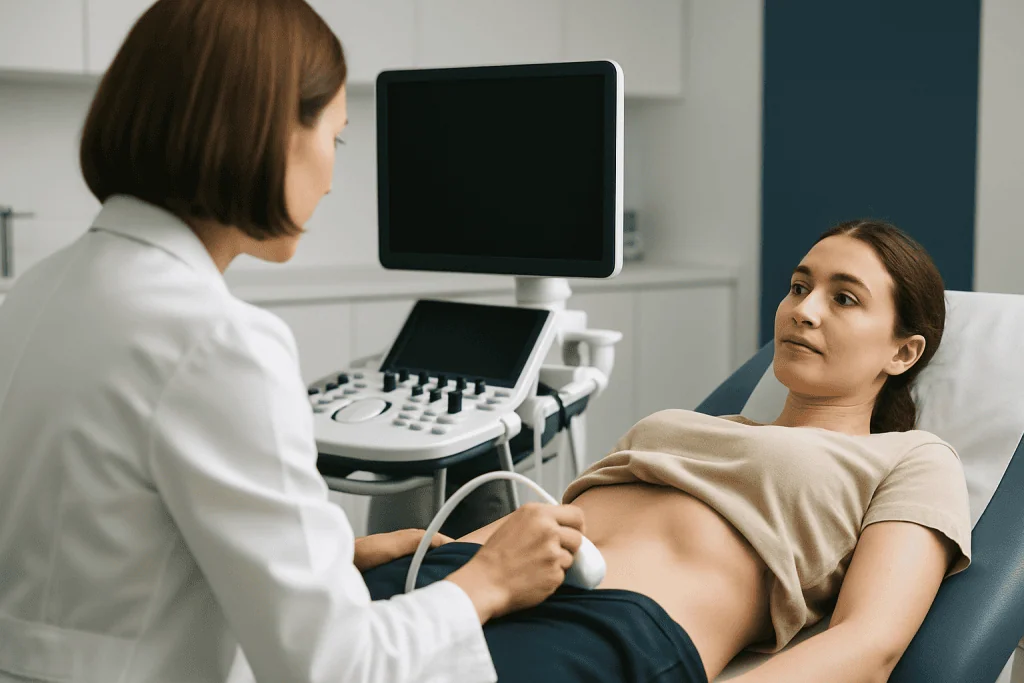
Ultrasound. Ultrasound is a painless scan that uses sound waves to create images. A penile ultrasound, often performed during an induced erection, can show the location and size of the plaque, whether calcium has built up in it, and how blood flows through the penis. This information helps guide treatment planning, especially if surgery is being considered.
Other imaging. X-rays or magnetic resonance imaging (MRI) are rarely needed. They are occasionally used when the picture is unclear or to look for calcification in the plaque.
There is no single test that is required to confirm Peyronie disease. The combination of a typical history, a palpable plaque, and a documented curve is generally enough. Your doctor will also want to rule out other causes of a lump or bend, such as a congenital curvature present since birth, an infection, or, very rarely, a tumor.
Peyronie disease treatment options
Peyronie disease treatment options depend on the stage of the condition, the severity of the deformity, the presence of pain, whether erections are otherwise normal, and how much the condition affects your sexual function and quality of life. Treatment is not always necessary. Many men with a mild curve and no pain or difficulty with intercourse do not need any active treatment. Your urologist will discuss the realistic goals and limits of each approach.
Observation and reassurance. During the acute phase, when the plaque is still changing, doctors often recommend watchful waiting. The pain usually settles as the condition stabilizes, and in some men the curve improves without treatment. Regular follow-up visits allow the doctor to track any changes.
Oral medications. A number of tablets have been tried for Peyronie disease over the years. The evidence for most of them is limited, and many guidelines do not recommend them as a primary treatment for reducing curvature. Pain relievers may help with discomfort in the acute phase. If erectile dysfunction is present, medications that improve erections may be considered.
Injection therapy. Medications can be injected directly into the plaque. One approved option is collagenase, an enzyme that breaks down the collagen in scar tissue. It is given as a series of injections over several months and is combined with gentle stretching or modeling exercises at home. It is generally used for men in the stable phase with a curve of a certain degree and without severe deformities such as an hourglass shape. Other injected medications, including verapamil and interferon, have been used, with varying levels of evidence. Bruising and swelling are common side effects; rarely, more serious injury can occur.
Traction therapy. A penile traction device gently stretches the penis for a period of time each day. Some men use this on its own or alongside injections or after surgery to help maintain or restore length. It requires consistent daily use over months, and results vary.
Surgery. Surgery is generally reserved for men in the stable phase whose deformity makes intercourse difficult or impossible. Doctors usually wait until the curve has been stable for several months, and often for about a year after symptoms began. The main surgical approaches are:
- Plication procedures, in which the surgeon places stitches or removes a small amount of tissue on the side opposite the plaque to straighten the penis. This approach is relatively simple but usually results in some shortening.
- Plaque incision or excision with grafting, in which the surgeon cuts or removes the plaque and covers the gap with a graft of tissue. This can preserve length but carries a higher risk of erectile dysfunction afterward.
- Penile prosthesis, an implanted device that produces an erection, which is often chosen when Peyronie disease is combined with significant erectile dysfunction. The surgeon may straighten the penis at the same time.
All surgical options carry risks, including numbness, shortening, recurrence of curvature, and changes in erectile function. Your surgeon will explain which approach fits your situation and what outcomes are realistic.
Sexual and psychological support. Peyronie disease can strain relationships and self-confidence. Counseling, sex therapy, or couples therapy may be offered alongside medical treatment and can be an important part of care.
Living with Peyronie disease and outlook
Peyronie disease is a chronic condition, meaning it generally does not go away completely on its own once the plaque has formed. That said, the outlook varies widely. Some men experience only minor changes that never interfere with daily life or sexual activity. Others develop a deformity that requires treatment. Pain, when present, usually improves as the condition moves into the stable phase.
It is generally not possible to predict at the start how the condition will progress in any individual. Some men see improvement, many stay the same, and some worsen before stabilizing. Treatments can reduce curvature and restore the ability to have intercourse in many cases, but they cannot promise a return to exactly how things were before. Realistic expectations are important.
Practical steps that may help include keeping follow-up appointments so that changes can be documented, being honest with your partner about discomfort, using adequate lubrication and avoiding positions that bend the penis sharply, and managing related conditions such as diabetes and high blood pressure. Stopping smoking supports general blood vessel health and healing.
Emotional effects are common and should not be ignored. Anxiety, embarrassment, and low mood can be as disabling as the physical changes. Speaking with your doctor about these feelings is appropriate, and referral to a counselor or therapist may be part of your care plan.
Frequently asked questions
What is Peyronie disease and is it dangerous?
Peyronie disease is a condition in which scar tissue forms inside the penis, causing a bend, lump, indentation, or pain, especially during erection. It is not cancer and is not life-threatening. However, it can cause pain, sexual difficulty, and emotional distress, so it is worth discussing with a doctor rather than ignoring.
What are the first Peyronie disease symptoms?
The earliest signs are often a small firm lump under the skin of the penis, pain during erection, or a new curve that was not there before. Some men notice the changes suddenly, while others see them develop gradually over weeks or months. Early symptoms may change during the first year as the condition evolves.
What are the main Peyronie disease causes?
The most accepted explanation is that minor injury to the penis, often during sexual activity, triggers an abnormal healing response that produces excess scar tissue. Genetics, age, connective tissue disorders such as Dupuytren contracture, and conditions like diabetes appear to increase the likelihood. In many men no specific cause is ever identified.
How is Peyronie disease diagnosis confirmed?
Diagnosis is usually based on your medical history and a physical examination in which the doctor feels for plaque. The curve is assessed from photographs taken at home or during an erection induced in the clinic. Ultrasound may be used to see the plaque and check blood flow. No blood test confirms the condition.
What are the Peyronie disease treatment options without surgery?
Non-surgical options include observation during the active phase, injections of medication into the plaque, such as collagenase, and traction therapy using a stretching device. Oral medications have limited evidence for straightening the penis, although some may help with pain or erectile function. Your doctor can explain which options are suitable for your stage and degree of curvature.
Can Peyronie disease go away on its own?
In a minority of men the curvature improves without treatment, and pain often settles as the condition stabilizes. However, in most cases the plaque and curve persist once they have formed. Because the course cannot be predicted, doctors usually recommend follow-up during the first year to see how the condition develops before deciding on treatment.
Does Peyronie disease affect fertility or the ability to have children?
Peyronie disease does not directly affect sperm production or the ability to father a child. It can, however, make intercourse painful or physically difficult if the curve is severe, which may interfere with conception. If this is a concern, it is worth discussing with your doctor, as treatment for the curvature may help.
When to see a doctor
Peyronie disease is usually not an emergency, but any new lump, curve, or pain in the penis should be evaluated by a doctor, ideally a urologist. Early assessment allows the condition to be documented and monitored, related problems such as erectile dysfunction to be addressed, and other causes to be ruled out.
Seek medical attention promptly if you notice any of the following:
- A sudden, severe pain in the penis during sexual activity, especially with a popping or snapping sensation, followed by rapid swelling or bruising. This may indicate a penile fracture, which needs urgent care.
- An erection that lasts more than four hours and does not go down, particularly after an injection or medication for erections.
- A lump that is growing quickly, is hard and irregular, or is associated with skin changes, ulceration, or bleeding.
- Difficulty passing urine, blood in the urine, or fever along with penile pain.
- Pain, swelling, or discharge after an injection or procedure that is worsening rather than improving.
- A curve or deformity that makes intercourse impossible or causes injury to you or your partner.
- Significant anxiety, depression, or relationship strain related to the condition.
You do not need to wait until symptoms are severe before seeking advice. A doctor can explain what is happening, what to expect, and which options are reasonable for your situation.
Medically reviewed by the Acıbadem International Medical Board September 9, 2026
See our medical review board →
Update history
- PublishedSeptember 9, 2026
- Medical review approvedSeptember 9, 2026
- Last content updateSeptember 9, 2026