Pulmonary Disease
Learn what pulmonary disease is, common pulmonary disease symptoms and causes, how doctors confirm a diagnosis, and the treatment options that may help.

Quick answer
Pulmonary disease is a broad term for any condition that affects the lungs or airways, including COPD, asthma, pneumonia, pulmonary fibrosis, pulmonary embolism, and lung cancer. Symptoms often include breathlessness, persistent cough, and wheezing. Diagnosis usually involves breathing tests and imaging, and treatment depends on the specific type and severity.
What is pulmonary disease?
Pulmonary disease is a broad term for any condition that affects the lungs or the airways that carry air into them. The word “pulmonary” simply means “relating to the lungs.” Doctors often use the term interchangeably with “lung disease” or “respiratory disease.” It is not one single illness but a family of conditions that share a common feature: they make it harder for the lungs to move air in and out, or to pass oxygen into the blood and remove carbon dioxide from it.
The main groups of pulmonary disease include:
- Obstructive lung diseases, in which the airways become narrowed and air flows out of the lungs more slowly than normal. Examples include chronic obstructive pulmonary disease (COPD, a long-term condition that includes emphysema and chronic bronchitis), asthma, and bronchiectasis (permanently widened, damaged airways that trap mucus).
- Restrictive lung diseases, in which the lungs cannot expand fully. Many of these are interstitial lung diseases, meaning conditions that scar or inflame the delicate tissue between the air sacs. Pulmonary fibrosis (progressive lung scarring) is one example.
- Infections, such as pneumonia (infection of the air sacs) and tuberculosis.
- Pulmonary vascular diseases, which affect the blood vessels of the lungs, such as pulmonary embolism (a blood clot that travels to the lungs) and pulmonary hypertension (high blood pressure in the lung arteries).
- Lung cancer and other growths in the lung.
- Pleural diseases, which involve the thin lining around the lungs, such as fluid collections (pleural effusion) or a collapsed lung (pneumothorax).
Pulmonary disease can affect people of any age, from newborns with breathing problems to older adults with long-term COPD. Some forms are inherited or present from birth, while many others develop over years as a result of smoking, infections, occupational exposures, or air pollution. Chronic pulmonary diseases are among the leading causes of illness and death worldwide, and their impact tends to increase with age. At Acibadem, conditions of the lungs and airways are managed within the pulmonology department, which is the medical specialty devoted to the respiratory system.
Pulmonary disease symptoms
Because pulmonary disease covers so many different conditions, symptoms vary widely. Some people notice only mild breathlessness during exercise for years, while others develop sudden, severe symptoms. Common pulmonary disease symptoms include:
- Shortness of breath (dyspnea), especially during activity and, later, at rest
- Persistent cough that lasts for weeks or months
- Producing mucus (sputum or phlegm) with the cough
- Wheezing, a whistling sound when breathing
- Chest tightness or pain
- Frequent respiratory infections, such as repeated bouts of bronchitis or pneumonia
- Fatigue and reduced ability to exercise
- Coughing up blood (hemoptysis), which always needs medical assessment
- Unintended weight loss in advanced or long-standing disease
- Bluish lips or fingertips (cyanosis), a sign of low oxygen
The pattern of symptoms often gives doctors clues about the type of disease. Obstructive conditions such as COPD and asthma tend to cause wheezing, a productive cough, and breathlessness that comes and goes or worsens during flare-ups. Asthma symptoms often vary from day to day and may be triggered by allergens, cold air, or exercise. Restrictive conditions such as pulmonary fibrosis more commonly cause a dry cough and slowly progressive breathlessness without much wheezing. Infections usually bring fever, chills, and symptoms that develop over days rather than years. A pulmonary embolism may cause sudden breathlessness and sharp chest pain that worsens with deep breaths.
Symptoms also change with the stage of disease. In early stages, many people attribute mild breathlessness to aging or being out of shape, and the condition may go unrecognized. As the disease progresses, everyday tasks such as climbing stairs, dressing, or talking may become difficult. In advanced disease, oxygen levels in the blood may fall, causing swelling in the ankles, confusion, or a bluish tint to the skin.
Causes and risk factors
Pulmonary disease causes depend on the specific condition, but several factors appear again and again across different types of lung disease.
- Tobacco smoking is the single most important cause of COPD and lung cancer and worsens nearly every other lung condition. Secondhand smoke also carries risk.
- Air pollution, both outdoor pollution and indoor smoke from cooking or heating with solid fuels, contributes to chronic lung disease in many parts of the world.
- Occupational exposures to dusts, chemicals, and fumes, including coal dust, silica, asbestos, and certain agricultural or industrial substances, can cause scarring, cancer, or occupational asthma.
- Infections caused by bacteria, viruses, and fungi lead to pneumonia and tuberculosis, and severe or repeated infections can leave lasting airway damage such as bronchiectasis.
- Genetic factors, such as cystic fibrosis (an inherited disorder that produces thick, sticky mucus) or alpha-1 antitrypsin deficiency (a hereditary condition that can cause early emphysema).
- Autoimmune and inflammatory conditions, including rheumatoid arthritis and scleroderma, can involve the lungs and cause interstitial lung disease.
- Blood clots that form in the legs and travel to the lungs cause pulmonary embolism; prolonged immobility, surgery, and certain medications increase this risk.
- Allergies and asthma often run in families and may be triggered by dust mites, pollen, mold, or pet dander.
Risk factors that make pulmonary disease more likely or more severe include increasing age, a history of smoking or heavy exposure to smoke, a family history of lung disease, premature birth or childhood lung infections, a weakened immune system, and other long-term illnesses such as heart disease or diabetes. In some cases, particularly with pulmonary fibrosis, no clear cause can be identified; doctors then describe the condition as idiopathic, meaning of unknown origin.
Pulmonary disease diagnosis
Pulmonary disease diagnosis begins with a careful conversation about your symptoms, smoking history, work exposures, family history, and any other medical conditions. Your doctor will listen to your lungs with a stethoscope for wheezes, crackles, or reduced breath sounds, and will look for signs such as clubbed fingernails or swelling in the legs. Because many lung conditions produce similar symptoms, tests are usually needed to confirm which type of disease is present.
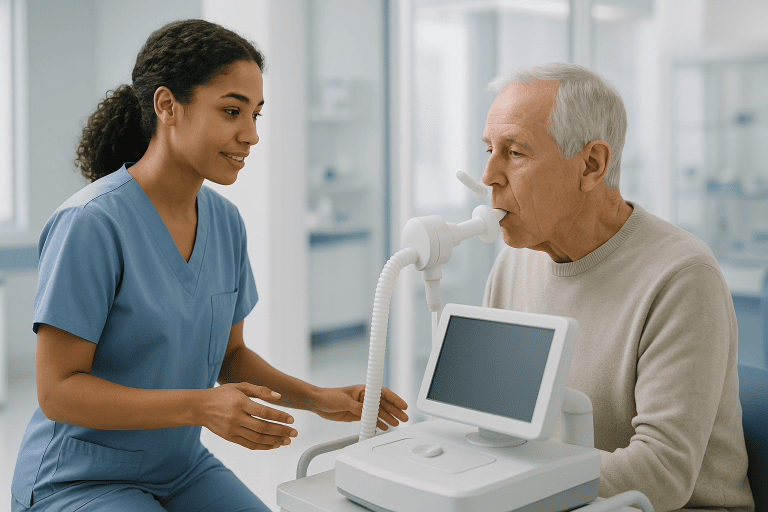
- Spirometry is a simple breathing test in which you blow forcefully into a machine. It measures how much air you can exhale and how quickly. It is the key test for confirming COPD and asthma and helps separate obstructive from restrictive patterns.
- Full pulmonary function tests add measurements of total lung volume and how well gases pass from the lungs into the blood, which is especially useful in interstitial lung disease.
- Chest X-ray gives a first look at the lungs and may show infection, fluid, scarring, or masses.
- CT scan (computed tomography, a detailed X-ray that creates cross-sectional images) shows much finer detail and is often used to assess emphysema, fibrosis, bronchiectasis, nodules, and blood clots.
- Pulse oximetry and arterial blood gas tests measure oxygen and carbon dioxide levels, either with a clip on the finger or a blood sample from an artery.
- Blood tests may look for infection, inflammation, autoimmune markers, or genetic conditions such as alpha-1 antitrypsin deficiency.
- Sputum tests examine mucus for bacteria, tuberculosis, or abnormal cells.
- Bronchoscopy involves passing a thin, flexible tube with a camera through the nose or mouth into the airways to look inside and, if needed, take tissue or fluid samples.
- Lung biopsy, the removal of a small piece of lung tissue for examination under a microscope, may be needed when the diagnosis remains uncertain, particularly for interstitial lung disease or suspected cancer.
- Exercise tests, such as a six-minute walk test, assess how your breathing and oxygen levels respond to activity.
Doctors often combine several of these results with established clinical criteria. For example, COPD is usually confirmed when spirometry shows airflow obstruction that does not fully reverse after an inhaled medication, in a person with a history of exposure to smoke or other irritants. Diagnosing the exact type of pulmonary disease matters, because treatments differ considerably from one condition to another.
Pulmonary disease treatment options
Pulmonary disease treatment options depend on the specific diagnosis, how severe it is, and your overall health. For many chronic lung conditions there is no cure, but treatment can often relieve symptoms, slow progression, reduce flare-ups, and improve quality of life. Your doctor may recommend one or a combination of the following.
Lifestyle measures and observation
Stopping smoking is the most effective step for almost every form of pulmonary disease and is the only intervention known to slow the decline in lung function in COPD. Avoiding secondhand smoke, air pollution, and workplace irritants is also important. Small lung nodules or mild, stable conditions may simply be monitored with repeat imaging or breathing tests over time rather than treated immediately.
Medications
Inhaled medications are the foundation of treatment for obstructive diseases. Bronchodilators relax the muscles around the airways to open them, and inhaled corticosteroids reduce airway inflammation. Some people use short-acting inhalers for quick relief and long-acting inhalers daily for control. Antibiotics treat bacterial infections such as pneumonia or infected flare-ups of bronchiectasis. Antifibrotic medications may slow scarring in certain types of pulmonary fibrosis. Blood thinners (anticoagulants) treat pulmonary embolism and prevent new clots. Specific medications exist for pulmonary hypertension and cystic fibrosis. Vaccinations against influenza, pneumococcal pneumonia, and other respiratory infections are usually recommended, because infections are a common cause of serious deterioration.
Oxygen therapy
When blood oxygen levels are persistently low, supplemental oxygen delivered through a nasal tube or mask can reduce strain on the heart and improve stamina. Some people need oxygen only during exertion or sleep, while others use it most of the day.
Pulmonary rehabilitation
Pulmonary rehabilitation is a structured program that combines supervised exercise training, breathing techniques, education about the disease, and nutritional and psychological support. It is widely recommended for COPD and other chronic lung conditions and, in many cases, improves exercise capacity and reduces breathlessness even when lung function itself does not change.
Procedures and surgery
Some conditions call for procedures. Fluid around the lung may be drained with a needle or chest tube. A collapsed lung may need a chest tube to re-expand it. In selected people with severe emphysema, bronchoscopic valve placement or lung volume reduction surgery removes or blocks off the most damaged areas so the remaining lung works more efficiently. Lung cancer may be treated with surgery, radiation therapy, chemotherapy, targeted drugs, or immunotherapy, depending on its type and stage. For end-stage lung disease in carefully selected candidates, lung transplantation may be considered.
Breathing support
During severe flare-ups, breathing may be supported with non-invasive ventilation, which delivers pressurized air through a tight-fitting mask. In life-threatening situations, mechanical ventilation in an intensive care unit may be necessary.
Living with pulmonary disease and outlook
The outlook for pulmonary disease varies enormously. Acute conditions such as uncomplicated pneumonia or a small pneumothorax often resolve fully with treatment. Asthma can usually be well controlled with regular medication, allowing most people to live normally. Chronic conditions such as COPD, bronchiectasis, and pulmonary fibrosis are generally long-term and progressive, meaning they tend to worsen over time, although the pace varies greatly from person to person. Early diagnosis, stopping smoking, and following a treatment plan can often slow this decline and reduce hospital admissions, but no treatment can guarantee a particular result.
Day-to-day life with a chronic lung condition is often easier with a few practical strategies. Taking inhalers correctly and consistently matters more than many people realize, and it is worth asking your care team to check your technique. Keeping active within your limits, staying up to date with vaccinations, avoiding people with colds when possible, and having a written action plan for flare-ups can all help. Breathing techniques such as pursed-lip breathing may ease breathlessness. Eating well and maintaining a healthy weight support the muscles used for breathing. Anxiety and low mood are common with chronic breathlessness, and support from a counselor, support group, or your care team can be valuable.
Regular follow-up allows your doctor to monitor lung function, adjust medications, and detect complications early. Over time, treatment goals may shift from slowing progression toward maximizing comfort and independence. Honest conversations with your care team about what to expect can help you and your family plan and make informed decisions.
Frequently asked questions
What is pulmonary disease in simple terms?
Pulmonary disease means any condition affecting the lungs or airways. It includes long-term conditions such as COPD, asthma, and pulmonary fibrosis; infections such as pneumonia; blood vessel problems such as pulmonary embolism; and lung cancer. These conditions differ in cause and treatment but all interfere with normal breathing or the exchange of oxygen and carbon dioxide.
What are the first pulmonary disease symptoms people notice?
Early pulmonary disease symptoms are often subtle. Many people first notice breathlessness when climbing stairs or hurrying, a cough that lingers for weeks, or more frequent chest infections than usual. Because these signs are easy to dismiss as aging or being unfit, chronic lung diseases are often diagnosed later than they could be. A persistent cough or unexplained breathlessness is worth discussing with a doctor.
What are the most common pulmonary disease causes?
Tobacco smoking is the leading cause of chronic pulmonary disease, including COPD and lung cancer. Other common causes include long-term exposure to air pollution or workplace dusts and fumes, respiratory infections, inherited conditions such as cystic fibrosis, autoimmune diseases, and blood clots. In some cases, particularly with certain types of lung scarring, no cause can be found.
How is pulmonary disease diagnosis confirmed?
Pulmonary disease diagnosis usually combines a medical history, physical examination, breathing tests such as spirometry, and imaging such as a chest X-ray or CT scan. Depending on the suspected condition, your doctor may add blood tests, oxygen measurements, sputum analysis, bronchoscopy, or occasionally a lung biopsy. The goal is to identify the specific type of lung disease, since treatments differ.
What pulmonary disease treatment options are available if there is no cure?
Even when a lung condition cannot be cured, treatment can often ease symptoms and slow progression. Options commonly include stopping smoking, inhaled medications, vaccinations, pulmonary rehabilitation, oxygen therapy when oxygen levels are low, and in selected cases procedures or surgery. Your doctor will tailor the plan to your diagnosis, severity, and general health, and may adjust it over time.
Can pulmonary disease be reversed?
It depends on the condition. Infections and some acute problems can resolve completely. Asthma can often be well controlled, though it tends to persist. Damage from COPD or pulmonary fibrosis is generally permanent and cannot be reversed with current treatments, but stopping smoking and appropriate therapy may slow further loss of lung function and improve how you feel and function day to day.
Is pulmonary disease the same as COPD?
No. COPD (chronic obstructive pulmonary disease) is one specific type of pulmonary disease, and one of the most common. Pulmonary disease is the wider category that also includes asthma, pneumonia, pulmonary fibrosis, pulmonary embolism, lung cancer, and many other conditions. Because COPD is so common, people sometimes use the terms loosely, but they are not interchangeable.
When to see a doctor
Make an appointment with a doctor if you have a cough lasting more than three weeks, breathlessness that is new or gradually worsening, wheezing, repeated chest infections, or unexplained fatigue or weight loss, especially if you smoke or have smoked in the past, or have been exposed to dusts and fumes at work. These symptoms do not necessarily mean you have a serious condition, but they should be evaluated.
Seek emergency medical care right away if you or someone near you has any of the following red-flag signs:
- Severe or sudden shortness of breath, or difficulty speaking in full sentences
- Chest pain, particularly if it is sudden, sharp, or accompanied by breathlessness
- Coughing up blood
- Blue or gray lips, face, or fingertips
- Confusion, extreme drowsiness, or fainting together with breathing difficulty
- High fever with breathlessness or rapid breathing
- A rescue inhaler that is not relieving symptoms during an asthma or COPD attack
- Swelling and pain in one leg combined with sudden breathlessness, which may suggest a blood clot
Breathing problems can worsen quickly, and prompt assessment allows treatment to begin before a situation becomes life-threatening.
Medically reviewed by the Acıbadem International Medical Board September 9, 2026
See our medical review board →
Update history
- PublishedSeptember 9, 2026
- Medical review approvedSeptember 9, 2026
- Last content updateSeptember 9, 2026