Quick answer
Spider veins are small, visible blood vessels that appear close to the skin, usually on the legs or face, and are commonly treated for cosmetic reasons or mild discomfort. At Acibadem in Turkey, evaluation focuses on the vein pattern and circulation, and treatment may include minimally invasive options such as sclerotherapy or laser-based procedures.
What is spider veins?
Spider veins, known medically as telangiectasias (tiny widened blood vessels visible at the skin surface), are small, thin veins that appear just beneath the skin as red, blue, or purple lines. They often spread outward in a branching pattern that resembles a spider’s web or the branches of a tree, which is how the condition earned its common name. Spider veins are classified under the diagnostic code ICD-10 I78.1. Understanding what is spider veins as a condition begins with knowing that these vessels are damaged or dilated capillaries and small veins in which blood has pooled or flowed backward, making them visible through the skin.
Spider veins most commonly appear on the legs, particularly the thighs, calves, and ankles, and on the face, especially around the nose and cheeks. They are extremely common. Women develop spider veins more often than men, and the likelihood of developing them increases with age. Pregnancy, hormonal changes, and a family history of vein problems all make spider veins more likely. Many adults will notice at least some spider veins during their lifetime.
It is important to distinguish spider veins from varicose veins. Varicose veins are larger, rope-like veins that bulge above the skin surface and can cause more significant symptoms. Spider veins are smaller, flatter, and closer to the surface. The two conditions can occur together, and in some cases spider veins are an early visible sign of an underlying vein problem, but in many people spider veins are a purely cosmetic concern with no serious health consequences.
Symptoms of spider veins
For most people, spider veins do not cause pain or other physical problems. The main sign is simply their appearance. However, some people do experience mild symptoms, particularly when spider veins on the legs are associated with an underlying condition called chronic venous insufficiency (a condition in which the valves inside leg veins do not close properly, allowing blood to flow backward and pool).
Common spider veins symptoms include:
- Visible vessels: thin red, blue, or purple lines on the skin, often in web-like or branching clusters
- Mild aching or discomfort in the legs, especially after standing for long periods
- A feeling of heaviness or tiredness in the legs toward the end of the day
- Itching or burning around the affected veins in some cases
- Mild swelling around the ankles, which may suggest an associated vein circulation problem
- Cramping or throbbing in the legs at night in some people
Spider veins symptoms can vary depending on where the veins appear and whether they are isolated or part of a broader vein condition. Facial spider veins are almost always painless and are noticed only because of their appearance. Spider veins on the legs are more likely to be accompanied by aching or heaviness, particularly in people who also have varicose veins or valve problems in the deeper leg veins.
In terms of progression, spider veins often begin as a few faint lines and may slowly become more numerous or more noticeable over months and years. They do not typically progress into varicose veins themselves, but new spider veins can continue to form over time, especially if the underlying risk factors remain. If leg symptoms such as swelling, skin discoloration, or persistent aching develop alongside spider veins, this may point to a more significant venous condition and is worth discussing with a doctor.
Causes and risk factors
Spider veins causes center on damage to, or weakening of, small blood vessels near the skin surface. In the legs, veins carry blood back to the heart against gravity, using one-way valves to keep blood moving in the right direction. When these valves weaken or fail, blood can flow backward and pool in the vein, stretching it and making it visible. On the face, spider veins are more often caused by tiny vessels bursting or dilating due to sun damage, pressure, or skin conditions.
Recognized risk factors include:
- Family history: a genetic tendency toward weak vein walls or valves is one of the strongest risk factors; spider veins often run in families
- Female sex: women are affected more often than men, likely because of hormonal influences on vein walls
- Hormonal changes: pregnancy, puberty, menopause, and the use of hormonal contraceptives or hormone replacement therapy can all contribute
- Pregnancy: increased blood volume and pressure from the growing uterus place extra strain on leg veins; spider veins that appear in pregnancy sometimes fade afterward but do not always disappear completely
- Increasing age: vein valves and vessel walls naturally weaken over time
- Prolonged standing or sitting: occupations that require long hours on the feet or long periods of sitting can increase venous pressure in the legs
- Excess body weight: carrying extra weight increases pressure on the leg veins
- Sun exposure: particularly for facial spider veins, ultraviolet damage can weaken small vessels in fair skin
- Previous injury or trauma: local damage to the skin or vessels can trigger spider veins in that area
- Certain medical conditions: for example, rosacea (a chronic skin condition causing facial redness) and some liver conditions can be associated with visible small vessels
In many cases, several of these factors combine. A person with a family history of vein disease who stands all day at work and has been pregnant, for example, has multiple overlapping spider veins causes. It is also common for spider veins to appear without any clearly identifiable trigger.
Diagnosis
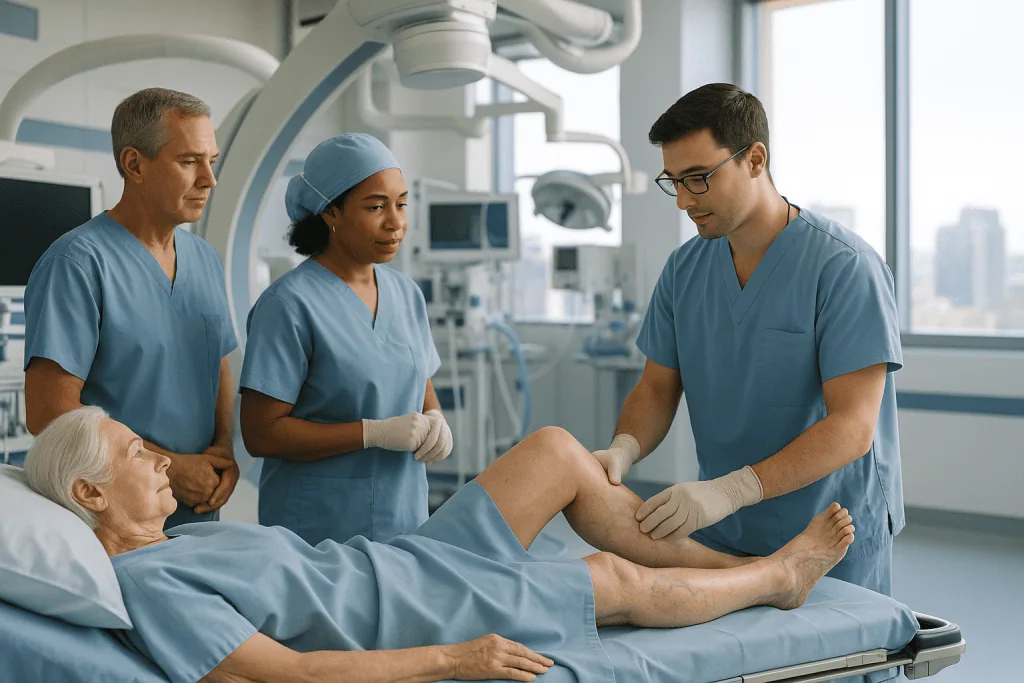
Spider veins diagnosis is usually straightforward. In most cases, a doctor can identify spider veins simply by looking at the skin during a physical examination. The characteristic appearance of thin, branching red, blue, or purple vessels near the skin surface is often enough to confirm the condition without any further testing.
During the visit, your doctor will typically:
- Examine the affected areas while you are standing, since leg veins fill and become more visible in the upright position
- Ask about symptoms such as aching, heaviness, swelling, or itching
- Ask about your family history, pregnancies, occupation, and any previous vein problems or treatments
- Check for signs of varicose veins or skin changes that could indicate a deeper vein problem
If your doctor suspects that the spider veins are linked to an underlying problem in the larger leg veins, the standard test is a duplex ultrasound. This is a painless, noninvasive scan that uses sound waves to show how blood flows through the veins. It can reveal whether the valves in the deeper or larger surface veins are leaking (a finding called venous reflux) and whether there are any blockages or clots. Duplex ultrasound is particularly likely to be recommended if you have leg swelling, significant aching, skin discoloration around the ankles, or visible varicose veins alongside your spider veins.
Blood tests and other imaging are rarely needed for spider veins diagnosis alone. However, if facial spider veins appear suddenly, in large numbers, or alongside other symptoms, a doctor may look for an associated condition. Vein conditions such as spider veins and varicose veins are generally evaluated and managed by vascular surgery or cardiovascular specialists, and in hospital settings such as Acibadem these assessments are typically handled within the vascular surgery department.
Treatment options for spider veins
Spider veins treatment is not always necessary. Because spider veins are usually harmless, many people choose to leave them alone, especially when they cause no discomfort. When treatment is pursued, it is often for cosmetic reasons, although it can also relieve mild symptoms such as aching or burning. The main spider veins treatment approaches are described below.
Watchful waiting and self-care
If spider veins are not bothering you, no treatment is required. Simple self-care measures may help prevent new spider veins from forming and can ease mild leg symptoms:
- Avoiding long periods of uninterrupted standing or sitting, and moving or flexing the legs regularly
- Elevating the legs when resting
- Maintaining a healthy body weight
- Exercising regularly to support circulation, particularly walking
- Using sun protection on the face to reduce vessel damage from ultraviolet light
Compression stockings
Compression stockings are specially fitted elastic stockings that apply gentle pressure to the legs, supporting the veins and helping blood flow back toward the heart. They do not remove existing spider veins, but they can relieve aching and heaviness and may slow the development of new visible veins. Your doctor may recommend a specific compression strength, since stockings come in different grades.
Sclerotherapy
Sclerotherapy is often considered the standard procedure for spider veins on the legs. A doctor injects a solution or foam directly into the affected vein using a very fine needle. The solution irritates the vein lining, causing the vessel to close and eventually be absorbed by the body. The procedure is performed in an outpatient setting, usually without anesthesia, and most people return to normal activities the same day. More than one session is often needed, treated veins may take several weeks to fade, and new spider veins can appear elsewhere over time. Temporary side effects can include bruising, small skin marks, or darkened patches of skin that usually fade gradually.
Laser and light-based therapy
Laser therapy uses focused light energy to heat and close small vessels without needles or incisions. It is commonly used for facial spider veins and for very fine leg veins that are too small to inject. Several sessions may be required, and results vary depending on skin type and vessel size. Temporary redness, swelling, or changes in skin color can occur after treatment. Your doctor can advise whether laser treatment or sclerotherapy is more suitable for your particular veins.
Treating underlying vein problems
If duplex ultrasound shows that spider veins are connected to leaking valves in larger veins, treating the underlying problem first often improves results and reduces the chance of the spider veins returning quickly. Options for underlying venous reflux may include endovenous thermal ablation (a catheter-based procedure that closes a faulty vein from the inside using heat) or, less commonly today, surgical removal of a diseased vein. Surgery is not used for the spider veins themselves; it is reserved for significant varicose veins or valve problems when a specialist judges it appropriate.
No spider veins treatment can guarantee that new spider veins will never form, because the underlying tendency toward vein weakness usually remains. Honest expectations matter: treatment can substantially improve the appearance of existing veins in many cases, but maintenance sessions may be needed over the years.
Living with spider veins and outlook
The outlook for people with spider veins is generally very good. Spider veins are not dangerous in themselves, do not turn into blood clots, and do not usually signal serious disease. For most people, the condition remains a cosmetic matter throughout life. Some people find that spider veins affect their confidence, particularly when the veins are extensive or located on the face, and it is reasonable to seek treatment for that reason alone.
Spider veins tend to be a long-term tendency rather than a one-time event. Even after successful treatment, new spider veins may appear over the years, particularly in people with strong risk factors such as family history or occupations involving prolonged standing. Ongoing self-care, regular movement, leg elevation, weight management, compression stockings when recommended, and sun protection for the face, can help limit new vein formation, although it cannot prevent it entirely.
If spider veins occur alongside symptoms of chronic venous insufficiency, such as persistent swelling, skin thickening or discoloration around the ankles, or leg ulcers, the outlook depends on how well the underlying vein condition is managed. In those situations, regular follow-up with a vascular specialist is often advised. Departments of vascular surgery, including those within hospital groups such as Acibadem, routinely follow patients with chronic venous conditions over time.
Frequently asked questions
What is spider veins exactly, and is it the same as varicose veins?
Spider veins are tiny widened blood vessels visible just under the skin, appearing as thin red, blue, or purple lines in web-like patterns. Varicose veins are larger, bulging, rope-like veins. The two conditions share some causes and can occur together, but spider veins are smaller, flatter, and usually harmless, while varicose veins are more likely to cause significant symptoms and complications. A doctor can distinguish between them during a simple examination.
Can spider veins go away on their own?
Spider veins do not usually disappear without treatment, although those that develop during pregnancy sometimes fade in the months after delivery. In most other cases, spider veins remain stable or slowly become more numerous over time. Self-care measures such as compression stockings and regular movement may ease symptoms and slow the appearance of new veins, but procedures such as sclerotherapy or laser therapy are generally needed to remove existing visible veins.
Are spider veins dangerous or a sign of something serious?
In the great majority of cases, spider veins are harmless and purely cosmetic. They do not cause blood clots and do not typically progress to serious disease. However, when spider veins on the legs occur together with swelling, aching, skin discoloration, or varicose veins, they may be a visible sign of an underlying vein circulation problem. In that situation, your doctor may recommend a duplex ultrasound to check how well the leg veins are working.
What is the best spider veins treatment?
There is no single best treatment for everyone. Sclerotherapy is often considered the standard approach for spider veins on the legs, while laser therapy is commonly preferred for facial veins and very fine vessels. The most suitable option depends on the size and location of the veins, your skin type, and whether an underlying vein problem is present. In many cases more than one session is needed, and your doctor can help you set realistic expectations before treatment.
Does spider vein treatment hurt, and how long is recovery?
Both sclerotherapy and laser therapy are outpatient procedures that most people tolerate well. Sclerotherapy involves brief stinging or cramping at the injection sites, and laser treatment can feel like small snaps of heat on the skin. Most people return to everyday activities the same day, although doctors often advise wearing compression stockings for a period after leg treatments and avoiding strenuous exercise or sun exposure briefly. Bruising or discoloration at treated sites usually fades over several weeks.
Will spider veins come back after treatment?
Veins that have been successfully closed by sclerotherapy or laser therapy do not usually reopen. However, because the underlying tendency toward weakened vessels remains, new spider veins can form in other areas over time. Treating any underlying valve problems, using compression stockings when advised, and maintaining healthy habits may reduce how quickly new veins appear, but no treatment can guarantee permanent freedom from spider veins.
How can I prevent spider veins from getting worse?
You cannot change risk factors such as family history or age, but several habits may help. Avoid standing or sitting still for long stretches, move and flex your legs frequently, elevate your legs when resting, maintain a healthy weight, and exercise regularly. Compression stockings can support the leg veins if your doctor recommends them. For facial spider veins, consistent sun protection is one of the most useful preventive measures.
When to see a doctor
Spider veins alone rarely require urgent care, but it is sensible to see a doctor if the veins are bothering you cosmetically, if you are unsure whether your visible veins are spider veins or varicose veins, or if you develop leg symptoms alongside them. A medical evaluation can confirm the diagnosis and rule out an underlying vein problem.
Seek prompt medical attention if you notice any of the following red-flag warning signs, as they may indicate a more serious condition than spider veins:
- Sudden swelling, warmth, or pain in one leg, which can be a sign of a blood clot in a deep vein (deep vein thrombosis) and needs urgent assessment
- Sudden shortness of breath or chest pain in someone with a swollen, painful leg, which requires emergency care
- A vein that becomes hard, red, tender, or hot to the touch, which may indicate inflammation or a clot in a surface vein
- Bleeding from a vein near the skin surface that does not stop with firm pressure
- Skin changes around the ankles, such as darkening, thickening, persistent itching, or an open sore (ulcer) that does not heal
- Rapidly increasing pain, aching, or heaviness in the legs that interferes with daily activities
If any of these signs occur, do not assume they are caused by simple spider veins. A doctor can examine you, arrange an ultrasound if needed, and determine whether the problem is limited to the small surface vessels or involves the deeper veins of the leg.
Medically reviewed by the Acıbadem International Medical Board September 2, 2026
See our medical review board →
Update history
- PublishedJune 14, 2026
- Medical review approvedSeptember 2, 2026
- Last content updateSeptember 2, 2026