Spinal Cord Injury
Spinal Cord Injury is damage to the spinal cord that can affect movement, sensation, bladder, bowel and body functions. Learn symptoms and care.
Quick answer
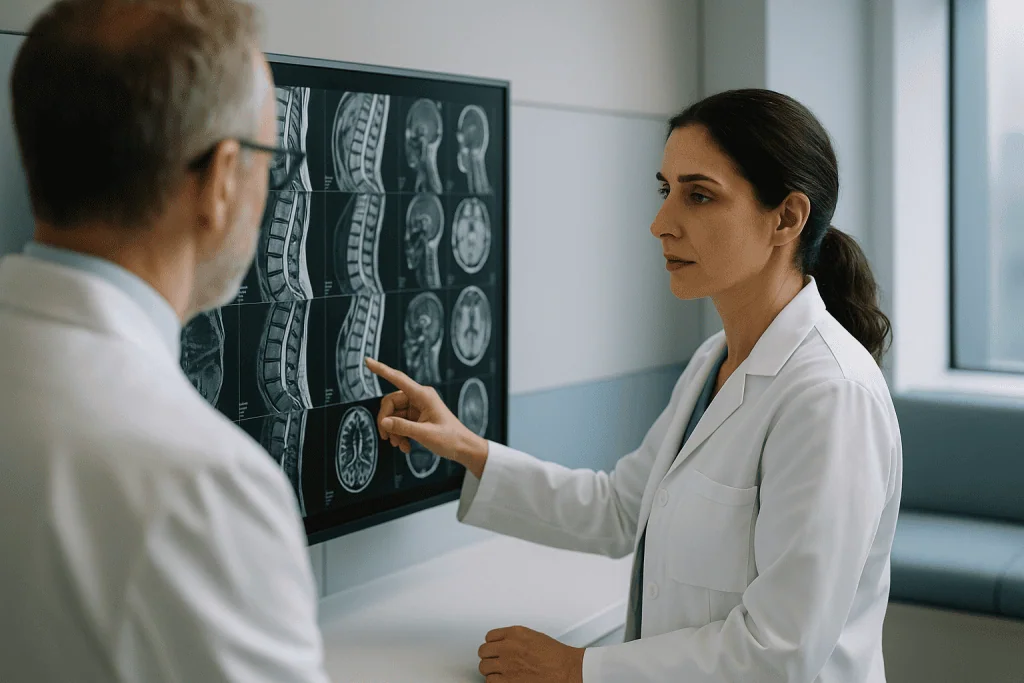
Spinal cord injury is damage to the spinal cord that can disrupt movement, sensation, and body functions below the level of the injury, whether caused by trauma or disease. Treatment depends on the location and severity and may include emergency stabilization, imaging-based evaluation, surgery when needed, intensive care, and rehabilitation aimed at preserving function and supporting recovery.
What is spinal cord injury?
A spinal cord injury is damage to the spinal cord, the thick bundle of nerves that runs from the base of the brain down through the back inside the spinal column (the stack of bones called vertebrae that protects it). The spinal cord carries messages between the brain and the rest of the body. When it is damaged, those messages can be interrupted, which may cause loss of movement, loss of feeling, or changes in how the bladder, bowel, and other organs work below the level of the injury.
To understand what is spinal cord injury in practical terms, it helps to know that the cord itself is rarely cut through completely. More often, it is bruised, compressed, stretched, or torn by an accident or a medical condition. Even so, the effects can be serious and sometimes permanent, because nerve tissue in the spinal cord has a very limited ability to repair itself.
Doctors describe a spinal cord injury by two main features:
- Level of injury: where along the spine the damage occurred. Injuries in the neck (cervical spine) can affect the arms, trunk, and legs. Injuries lower down, in the chest (thoracic) or lower back (lumbar) regions, mainly affect the trunk and legs.
- Completeness: a complete injury means there is no movement or feeling below the injury level. An incomplete injury means some signals still get through, so some movement or sensation remains.
Spinal cord injury can affect anyone, but it is more common in young adults, particularly men, because of road traffic accidents, falls, sports, and violence. Older adults are also at risk, mainly from falls, especially if they already have narrowing of the spinal canal or weakened bones. Non-traumatic causes, such as tumors, infections, or loss of blood supply to the cord, can occur at any age.
Symptoms of spinal cord injury
Spinal cord injury symptoms depend on where the cord is damaged and how severe the damage is. In general, functions controlled by nerves below the level of injury are affected, while functions above that level are preserved.
Common spinal cord injury symptoms include:
- Weakness or paralysis (loss of the ability to move) in the arms, legs, or both, depending on the injury level
- Loss of sensation, including reduced ability to feel touch, heat, cold, or pain below the injury
- Tingling, numbness, or burning sensations in the limbs or trunk
- Loss of bladder or bowel control, or difficulty emptying the bladder
- Severe pain or pressure in the neck, back, or head after an accident
- Muscle spasms or exaggerated reflexes, which often develop over time
- Difficulty breathing or coughing, particularly with injuries high in the neck, because the nerves that control breathing muscles start there
- Changes in sexual function and fertility
- Problems with blood pressure, heart rate, and body temperature regulation, especially with higher-level injuries
Symptoms often differ by stage. Immediately after a serious injury, many people go through a period called spinal shock, in which reflexes, movement, and sensation below the injury are temporarily lost, even if some function later returns. This is one reason doctors are cautious about predicting outcomes in the first days and weeks. Over the following weeks to months, the true extent of the injury usually becomes clearer, and some people with incomplete injuries regain a degree of movement or feeling.
Symptoms also differ by injury pattern. A complete injury causes total loss of movement and sensation below the level. Incomplete injuries can produce varied patterns: for example, some people keep more strength in their arms than their legs, or they may feel touch but not pain and temperature. Injuries at the very bottom of the spine can affect the bundle of nerve roots below the cord (the cauda equina), often causing leg weakness, numbness in the area that would sit on a saddle, and bladder or bowel problems.
It is important to know that a person can have a spinal cord injury without obvious paralysis at first. After any significant trauma to the head, neck, or back, new numbness, weakness, or bladder problems should be treated as an emergency, and the person should not be moved except by trained responders.
Causes and risk factors
Spinal cord injury causes fall into two broad groups: traumatic and non-traumatic.
Traumatic causes involve sudden physical force to the spine. Common examples include:
- Motor vehicle accidents, including car and motorcycle crashes, which are among the most frequent causes worldwide
- Falls, which are a leading cause in older adults, even from relatively low heights
- Sports and recreation injuries, such as diving into shallow water, contact sports, or horseback riding accidents
- Acts of violence, including gunshot and stab wounds
- Work-related accidents, for example in construction
Non-traumatic causes damage the cord without an accident. These include:
- Tumors growing in or pressing on the spinal cord
- Infections, such as abscesses (pockets of pus) near the cord
- Inflammation of the cord, as in some autoimmune conditions in which the body’s immune system attacks its own tissue
- Loss of blood supply to the cord, sometimes related to problems with the aorta or spinal blood vessels
- Degenerative spine disease, in which age-related narrowing of the spinal canal slowly compresses the cord
Risk factors that make spinal cord injury more likely include being male and between the ages of roughly 16 and 30 (mostly due to accidents), being an older adult prone to falls, taking part in high-risk sports without proper safety equipment, driving without seat belts, alcohol or drug use around driving or swimming, and having bone or joint conditions such as osteoporosis (weakened bones) or an already narrowed spinal canal, which make the cord more vulnerable to even minor trauma.
Diagnosis
Spinal cord injury diagnosis begins at the scene of an accident and continues in the emergency department. Because moving an unstable spine can worsen the injury, emergency teams usually immobilize the neck and back with a rigid collar and a firm board until the spine has been properly assessed.
In the hospital, doctors typically use a combination of the following:
- Physical and neurological examination: doctors carefully test muscle strength, sensation to light touch and pinprick, and reflexes throughout the body. A standardized examination is often used to define the level of injury and whether it is complete or incomplete. This examination is usually repeated over time, because the picture can change during the first days.
- X-rays: plain X-rays of the spine can show fractures (broken bones), dislocations, or misalignment of the vertebrae, though they cannot show the spinal cord itself.
- CT scan (computed tomography): a detailed X-ray-based scan that shows bone injuries much more clearly than plain X-rays. In many trauma centers, CT is the first imaging test performed after significant trauma.
- MRI (magnetic resonance imaging): a scan that uses magnetic fields rather than radiation and is the best test for viewing the spinal cord itself, along with soft tissues such as discs, ligaments, blood clots, and swelling. MRI helps doctors see bruising or compression of the cord and plan treatment.
In non-traumatic cases, additional tests may be needed, such as blood tests, a lumbar puncture (a sample of the fluid around the spinal cord), or specialized imaging, to look for infection, inflammation, or tumors. Nerve conduction studies, which measure how well electrical signals travel along nerves, are sometimes used to clarify the pattern of damage.
Because breathing, blood pressure, and other body systems can be affected, doctors also monitor lung function, heart rhythm, and bladder emptying as part of the initial assessment.
Treatment options
There is currently no treatment that can fully reverse damage to the spinal cord. Spinal cord injury treatment therefore focuses on three goals: preventing further damage in the emergency phase, stabilizing the spine and the body’s vital functions, and helping the person regain as much function and independence as possible through rehabilitation.
Emergency care. Immediately after a traumatic injury, treatment centers on keeping the airway open, supporting breathing and blood pressure, and immobilizing the spine. Maintaining adequate blood pressure is important because the injured cord is sensitive to reduced blood flow. Some people with high injuries need help breathing with a ventilator, at least temporarily.
Medication. Medicines cannot repair the cord, but they are an important part of care. Doctors may use pain relievers, muscle relaxants for spasms, medicines to manage blood pressure, blood thinners to reduce the risk of clots in the legs (a common complication of immobility), and drugs that help with nerve pain or bladder function. In some centers, corticosteroid medicines have been used in the early hours after injury, but their benefit is debated and they are not used everywhere; your medical team will decide based on the individual situation.
Procedures and surgery. Not every spinal injury needs an operation. If the spine is stable and the cord is not being compressed, doctors may recommend bracing and careful monitoring rather than surgery: a form of watchful waiting. Surgery is often considered when:
- Bone fragments, a damaged disc, or a blood clot is pressing on the spinal cord (surgeons perform a decompression, meaning they remove whatever is pressing on the cord)
- The spine is unstable and needs to be fixed with screws, rods, or bone grafts (stabilization or fusion) to prevent further movement and damage
The timing of surgery is decided case by case; in many situations, earlier decompression is preferred when it is safe to perform.
Rehabilitation. Rehabilitation usually begins as soon as the person is medically stable and often continues for months or longer. A team approach is standard and may include physical therapists (who work on strength, movement, and mobility), occupational therapists (who focus on daily activities such as dressing and eating), specialists in bladder and bowel management, respiratory therapists, psychologists, and rehabilitation physicians. Assistive equipment, such as wheelchairs, braces, and adapted tools, helps many people regain independence. Newer approaches, including functional electrical stimulation and robot-assisted training, are used in some rehabilitation programs, though results vary from person to person.
Ongoing medical care. Long-term care aims to prevent and treat complications, including pressure sores (skin breakdown from prolonged pressure), urinary tract infections, blood clots, chronic pain, and problems with blood pressure regulation. Regular follow-up allows problems to be caught early.
Care for spinal cord injury is typically coordinated across several specialties, including neurosurgery, orthopedics, rehabilitation medicine, and neurology, which manages the nervous-system aspects of the condition. At hospital groups such as Acibadem, these specialties commonly work together in multidisciplinary teams for both the acute and rehabilitation phases.
Living with spinal cord injury and outlook
The outlook after a spinal cord injury varies widely and depends mainly on the level of the injury, whether it is complete or incomplete, the person’s age and general health, and the quality of early treatment and rehabilitation. Doctors are usually cautious about firm predictions early on, because some recovery, particularly with incomplete injuries, can continue for months, and in some cases longer.
In general, people with incomplete injuries have a better chance of regaining some movement or sensation than those with complete injuries. Most meaningful neurological recovery, when it occurs, tends to happen in the first months after injury, though functional gains from rehabilitation can continue well beyond that. No treatment currently guarantees recovery of lost function, and anyone promising a certain cure should be viewed with caution.
Living well with a spinal cord injury is possible, and many people return to work, education, relationships, sports, and travel with the right support. Key elements often include:
- Consistent bladder, bowel, and skin care routines to prevent infections and pressure sores
- Regular physical activity adapted to the person’s abilities, to maintain strength, circulation, and mood
- Mental health support, since depression and anxiety are common after such a life-changing event and respond to treatment
- Home and workplace adaptations, such as ramps, adapted bathrooms, and vehicle modifications
- Support networks, including family education and peer support groups of people living with similar injuries
Lifelong medical follow-up is recommended, because some complications can develop years after the original injury. Research into nerve repair, stimulation techniques, and cell-based therapies is active worldwide, but these approaches remain experimental and are not yet standard treatment.
Frequently asked questions
What is spinal cord injury in simple terms?
A spinal cord injury is damage to the main nerve pathway that connects the brain to the body. Because messages for movement, sensation, and organ control travel through the spinal cord, damage can cause weakness or paralysis, loss of feeling, and bladder or bowel problems below the injured level. The effects depend on where the cord is damaged and how badly.
Can a spinal cord injury heal on its own?
The spinal cord has very limited ability to repair itself, so complete self-healing is uncommon. However, some people, especially those with incomplete injuries, regain part of their movement or sensation over weeks to months as swelling settles and surviving nerve pathways adapt. Rehabilitation helps make the most of any recovery, but no one can promise a specific outcome, and your medical team will usually wait to see how the injury evolves before discussing long-term expectations.
How serious is a spinal cord injury?
A spinal cord injury is always considered serious and is treated as a medical emergency. Injuries high in the neck can affect breathing and may be life-threatening, while lower injuries mainly affect the legs and pelvic organs. Even so, seriousness varies greatly: some people have mild, temporary symptoms, while others live with permanent paralysis. Early specialized care improves the chances of the best possible outcome.
What are the first spinal cord injury symptoms to watch for?
After trauma to the head, neck, or back, warning signs include severe neck or back pain, weakness or inability to move the arms or legs, numbness or tingling, loss of bladder or bowel control, difficulty breathing, and an oddly positioned or twisted neck or back. If any of these appear, the person should be kept still and emergency services called, because movement can worsen the damage.
What does spinal cord injury treatment involve?
Treatment usually happens in stages: emergency care to protect the spine and support breathing and blood pressure; possible surgery to relieve pressure on the cord or stabilize broken bones; medicines to manage pain, spasms, and complications; and then rehabilitation with physical and occupational therapy. The exact plan depends on the injury, and in some stable cases doctors may recommend bracing and monitoring rather than an operation.
Will someone with a spinal cord injury walk again?
It depends on the individual injury. People with incomplete injuries, where some signals still pass through the cord, have a better chance of regaining walking ability than those with complete injuries. Recovery is hardest to predict in the first days after injury. Doctors usually reassess over time and base their guidance on repeated neurological examinations rather than early impressions, so it is reasonable to ask your team what patterns they are seeing as recovery progresses.
How long does recovery from a spinal cord injury take?
There is no single timeline. When neurological recovery occurs, much of it tends to happen within the first several months, but gains in strength, independence, and daily skills through rehabilitation can continue for a year or more. Many people also continue adapting long after formal rehabilitation ends. Ongoing follow-up helps address complications and keep progress on track.
When to see a doctor
Any suspected spinal cord injury is an emergency. Call emergency services immediately, and do not move the injured person (except to prevent immediate danger, such as fire), if any of the following occur after an accident, fall, or blow to the head, neck, or back:
- Weakness, paralysis, or loss of coordination in any part of the body
- Numbness, tingling, or loss of feeling in the hands, feet, arms, or legs
- Loss of bladder or bowel control, or inability to urinate
- Severe pain or pressure in the neck, head, or back
- Difficulty breathing after the injury
- An oddly twisted or positioned neck or back
- Impaired balance or trouble walking that starts after the injury
Even without an accident, seek urgent medical care for new, unexplained weakness in the legs, numbness in the groin or inner thighs, or sudden loss of bladder or bowel control, as these can signal pressure on the spinal cord or nerves that needs rapid treatment. If you are living with a spinal cord injury, contact your medical team promptly for signs of complications such as fever, worsening pain, new skin sores, sudden severe headache with high blood pressure, or swelling in a leg.
From the Acibadem Blog

Paraplegia: Causes, Levels of Injury and What Rehabilitation Can Restore
Paraplegia is paralysis affecting the legs and, in some cases, the trunk, most often caused by damage to the spinal cord at or below…
Medically reviewed by the Acıbadem International Medical Board September 3, 2026
See our medical review board →
Update history
- PublishedJune 8, 2026
- Medical review approvedSeptember 3, 2026
- Last content updateSeptember 2, 2026