Surface Diseases
Surface diseases of the eye include dry eye, blepharitis and allergy. Learn about symptoms, causes, how doctors diagnose them, and treatment options.
Quick answer
Surface diseases, usually meaning ocular surface diseases, are conditions affecting the front layers of the eye: the cornea, conjunctiva, eyelid margins, and tear film. They include dry eye disease, blepharitis, eye allergies, and pterygium. Symptoms include dryness, burning, redness, and blurred vision. They are typically chronic and managed with lubrication, lid hygiene, anti-inflammatory drops, and occasionally…
What is Surface Diseases?
In everyday medical language, the term surface diseases most often refers to ocular surface diseases: a group of conditions that affect the outermost layers of the eye. The ocular surface includes the cornea (the clear, dome-shaped window at the front of the eye), the conjunctiva (the thin, moist membrane that covers the white of the eye and lines the inside of the eyelids), the edges of the eyelids, and the tear film (the thin layer of fluid that coats and protects the eye every time you blink). When any part of this system is inflamed, damaged, or not working together properly, doctors describe the result as an ocular surface disease.
Surface diseases are not a single illness. The group includes common conditions such as dry eye disease, blepharitis (inflammation of the eyelid margins), allergic conjunctivitis (eye allergy), meibomian gland dysfunction (blockage of the oil glands in the eyelids), pterygium (a wedge of tissue growing onto the cornea), and less common problems such as chemical injury, autoimmune inflammation, or damage after eye surgery. Because these conditions share the same location and often occur together, eye doctors frequently treat them as an overlapping group rather than separate problems.
Surface diseases can affect people of any age, but they become more common with increasing age, particularly after midlife. They are seen more often in women, in people who spend long hours looking at screens, in contact lens wearers, and in people with certain autoimmune or skin conditions. In many cases the condition is chronic, meaning it tends to persist or return over time and is managed rather than cured. Within a hospital, these conditions are usually assessed and managed by the Ophthalmology department, which is the branch of medicine dealing with the eye.
Surface diseases symptoms
Surface diseases symptoms vary from mildly annoying to significantly disruptive, and they often fluctuate during the day or with the environment. Many people notice that symptoms are worse in air-conditioned rooms, in wind, after long periods of reading or screen use, or late in the day. Common symptoms include:
- Dryness, grittiness, or a feeling that something is in the eye
- Burning, stinging, or itching
- Redness of the white of the eye or the eyelid edges
- Watering eyes, which can seem contradictory but is a common reaction to surface irritation
- Blurred or fluctuating vision that clears with blinking
- Sensitivity to light
- Crusting, flaking, or stickiness along the eyelashes, especially on waking
- Tired or heavy-feeling eyes, particularly after visual tasks
- Discomfort when wearing contact lenses
Symptoms can differ by type. In dry eye disease, dryness, grittiness, and fluctuating vision tend to dominate. In blepharitis and meibomian gland dysfunction, eyelid crusting, redness of the lid margins, and a burning sensation are often more prominent. In allergic conjunctivitis, itching is usually the main complaint, often alongside sneezing or a runny nose. A pterygium may cause little more than a visible growth and mild irritation at first, though it can affect vision if it grows toward the center of the cornea.
Symptoms also tend to change with stage. Early or mild surface disease often produces intermittent discomfort that comes and goes. As the condition progresses, symptoms may become constant, vision may be affected more often, and the surface of the cornea can develop small areas of damage that a doctor can see with special dyes. Severe, long-standing disease can occasionally lead to corneal scarring or infection, which is why persistent symptoms deserve assessment rather than self-treatment alone.
Causes and risk factors
Surface diseases causes fall into a few broad groups. Understanding them helps explain why treatment often targets several problems at once.
- Reduced tear production: The lacrimal glands (the tear-producing glands above the outer corner of each eye) may make fewer tears with age, with certain medications, or because of autoimmune conditions such as Sjögren’s syndrome, in which the body’s immune system attacks moisture-producing glands.
- Tears that evaporate too quickly: The oil glands in the eyelids (meibomian glands) normally add a thin oily layer to the tear film that slows evaporation. If these glands become blocked or produce poor-quality oil, tears dry out faster. This is thought to be the most common mechanism behind dry eye.
- Eyelid inflammation and bacteria: Blepharitis is associated with an overgrowth of normal skin bacteria, skin conditions such as rosacea or seborrheic dermatitis (a scaly, oily skin condition), and sometimes tiny mites that live in eyelash follicles.
- Allergy: Exposure to pollen, dust mites, pet dander, or mold triggers the release of histamine (a chemical released by the immune system) in the conjunctiva, causing itching and swelling.
- Environmental and lifestyle factors: Dry or windy climates, air conditioning, heating, smoke, and prolonged screen use (which reduces blinking) all stress the ocular surface.
- Ultraviolet (UV) light exposure: Long-term sun exposure is linked to pterygium and a related growth called pinguecula.
- Contact lens wear: Lenses can disrupt the tear film, reduce oxygen to the cornea, and increase the risk of irritation or infection.
- Eye surgery or injury: Refractive surgery, cataract surgery, chemical splashes, and burns can temporarily or permanently affect nerves and tear function on the surface.
Risk factors that make surface diseases more likely include older age, being female (hormonal changes, particularly around menopause, are thought to play a role), autoimmune disease, diabetes, thyroid eye disease, use of certain medications (including some antihistamines, antidepressants, blood pressure medicines, and acne treatments), a diet low in omega-3 fatty acids, previous eye surgery, and long-term use of some eye drops that contain preservatives. Many people have more than one contributing factor at the same time.
Surface diseases diagnosis
Surface diseases diagnosis is mainly clinical, meaning it relies on your symptoms and what an eye doctor sees during an examination. There is no single blood test that confirms most surface diseases. A typical assessment may include:
- Symptom questionnaire: Standardized questionnaires ask how often you experience symptoms and how much they affect daily activities. They help grade severity and track change over time.
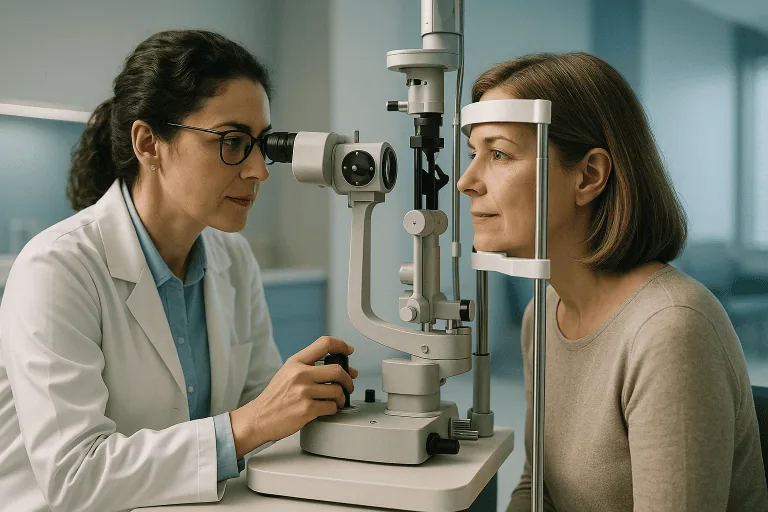
- Slit-lamp examination: A slit lamp is a microscope with a bright light that lets the doctor examine the eyelids, eyelashes, conjunctiva, cornea, and tear film in fine detail.
- Vital dye staining: Drops containing harmless dyes such as fluorescein or lissamine green are placed on the eye. The dye highlights dry spots and tiny areas of damage on the cornea and conjunctiva that are otherwise invisible.
- Tear break-up time: After fluorescein is applied, the doctor measures how many seconds the tear film stays smooth before dry patches appear. A short time suggests the tears evaporate too quickly.
- Tear volume tests: The Schirmer test uses a small strip of filter paper placed under the lower eyelid to measure how many tears are produced over a few minutes.
- Eyelid and gland assessment: The doctor may gently press on the eyelids to see whether the meibomian glands release clear oil, thick paste, or nothing at all. Imaging of the glands (meibography) is available in some clinics.
- Tear osmolarity and inflammation markers: Some clinics measure the salt concentration of tears or test for inflammatory proteins, which may support the diagnosis when results are unclear.
- Corneal sensitivity and vision testing: Checking how well you see and how the cornea responds to light touch can reveal nerve involvement.
If an autoimmune cause is suspected, your doctor may arrange blood tests or referral to a rheumatologist (a specialist in autoimmune and joint conditions). If a surface growth looks unusual, a small tissue sample may occasionally be taken to rule out other conditions. In practice, the diagnosis is often confirmed by combining several of these findings rather than relying on one result.
Surface diseases treatment options
Surface diseases treatment options depend on the specific condition, its severity, and the underlying causes identified during the examination. Treatment is usually stepwise, starting with simple measures and adding stronger options only if needed. It often takes several weeks to judge whether a treatment is working, and many people need ongoing maintenance rather than a one-time cure.
Self-care and environmental measures
For mild disease, doctors often begin with lifestyle changes: taking regular breaks from screens and consciously blinking, using a humidifier, avoiding direct airflow from fans or vents, wearing wraparound sunglasses outdoors, and stopping smoking. Warm compresses applied to closed eyelids followed by gentle lid cleaning can help unblock oil glands and reduce eyelid inflammation. Contact lens wearers may be advised to reduce wearing time or change lens type.
Lubricating drops, gels, and ointments
Artificial tears are the mainstay for many surface diseases. They supplement the natural tear film and can be used several times a day. Preservative-free formulations are often recommended for frequent use because preservatives can irritate an already sensitive surface. Thicker gels or ointments may be used at night. These products relieve symptoms but do not treat the underlying cause, so they are usually combined with other approaches.
Anti-inflammatory and prescription medicines
Because inflammation drives many surface diseases, your doctor may prescribe anti-inflammatory eye drops. Options include short courses of corticosteroid drops, longer-term immunomodulating drops such as cyclosporine or lifitegrast, and, for allergic conjunctivitis, antihistamine or mast-cell stabilizer drops. Blepharitis may be treated with antibiotic ointments or, in some cases, low-dose oral antibiotics from the tetracycline family, which are used for their anti-inflammatory effect on the oil glands. All of these have potential side effects, and steroid drops in particular require monitoring for raised eye pressure.
Procedures
Several office-based procedures are used when drops are not enough. Punctal plugs are tiny devices inserted into the tear drainage openings in the eyelids to keep tears on the eye longer. Thermal pulsation and related devices apply controlled heat and pressure to the eyelids to melt and express blocked oil. Intense pulsed light therapy, adapted from dermatology, is offered in some centers for meibomian gland dysfunction, although evidence is still developing. Autologous serum drops, made from a person’s own blood, may be used for severe disease that has not responded to standard treatments. Bandage or scleral contact lenses can protect a badly damaged cornea in selected cases.
Surgery
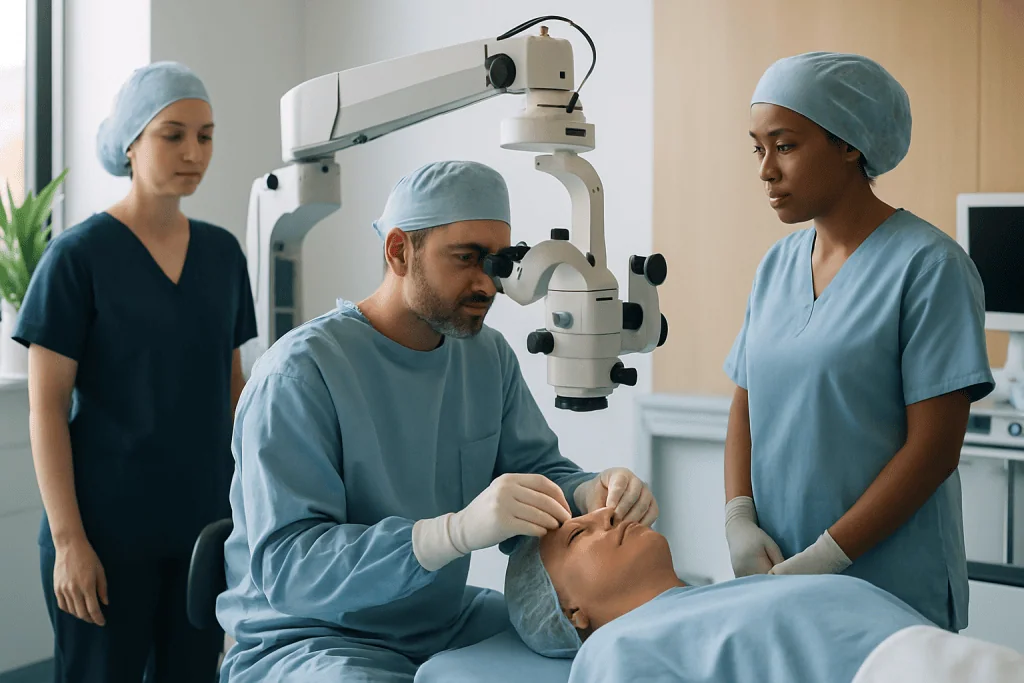
Surgery is reserved for specific situations. A pterygium that threatens vision or causes persistent irritation may be removed, often with a tissue graft to reduce the chance of regrowth. Eyelid surgery may be needed if the lids do not close properly or turn inward or outward, exposing the surface. In severe corneal scarring, corneal transplantation may be considered, though this is uncommon for most surface diseases.
Treating underlying conditions
When surface disease is linked to an autoimmune condition, thyroid disease, diabetes, or a medication, treating or adjusting that underlying factor is part of the plan. Your doctor may coordinate with other specialists. Nutritional measures, such as omega-3 supplements, are sometimes suggested, although research results on their benefit have been mixed.
Living with surface diseases and outlook
Most surface diseases are chronic conditions. This means the realistic goal of treatment is usually good control of symptoms and protection of the eye surface, rather than permanent cure. Many people achieve comfortable, stable eyes with a consistent routine of lid hygiene, lubrication, and environmental adjustments, sometimes with prescription drops added. Others find that symptoms flare during allergy season, with illness, or after long periods of intense visual work, and need to step treatment up temporarily.
The outlook for vision is generally good when the condition is recognized and managed. Serious complications such as corneal ulcers, scarring, or lasting vision loss are uncommon and are usually associated with severe, untreated disease or with additional problems such as infection. Regular follow-up allows your doctor to adjust treatment before complications develop.
Day to day, many people find it helpful to keep a symptom diary, to apply lubricating drops before rather than after long tasks, to set reminders for blinking breaks, and to protect the eyes outdoors. Because treatment is ongoing, adherence to a routine is one of the most important factors in how well the condition is controlled. If you use several types of drops, spacing them a few minutes apart helps each one work. Hospital groups such as Acibadem typically manage these conditions through their ophthalmology departments, often alongside specialists in autoimmune and skin conditions when relevant.
Frequently asked questions
What is surface diseases in simple terms?
Surface diseases, usually meaning ocular surface diseases, are conditions that affect the front layers of the eye: the cornea, the conjunctiva, the eyelid edges, and the tear film. They include dry eye disease, blepharitis, eye allergies, and growths such as pterygium. They cause irritation and sometimes blurred vision, and they are usually long-term conditions that are managed rather than cured.
What are the most common surface diseases symptoms?
The most frequently reported symptoms are dryness, grittiness, burning, redness, watering, and vision that blurs and then clears with blinking. Itching points more toward allergy, while crusting along the lashes suggests blepharitis. Symptoms often vary during the day and worsen with screen use, wind, or air conditioning. Only an eye examination can confirm which condition is responsible.
What are the main surface diseases causes?
The main causes are reduced tear production, tears that evaporate too quickly because of blocked eyelid oil glands, eyelid inflammation, allergy, environmental stress such as dry air and screen use, sun exposure, contact lens wear, and certain medications or medical conditions. Many people have several contributing causes at once, which is why treatment often addresses more than one factor.
How is surface diseases diagnosis made?
Diagnosis is usually made in the eye clinic through a symptom questionnaire, a slit-lamp examination, and simple tests using colored dyes to measure how quickly tears break up and where the surface is damaged. Tear volume may be measured with a paper strip test, and the eyelid oil glands are often examined directly. Blood tests are only needed if an autoimmune cause is suspected.
What are the surface diseases treatment options if drops do not help?
If artificial tears alone are not enough, your doctor may consider anti-inflammatory prescription drops, antibiotic treatment for blepharitis, punctal plugs to retain tears, heat-based procedures to unblock oil glands, or serum drops made from your own blood for severe cases. Surgery is generally reserved for problems such as a vision-threatening pterygium or eyelids that do not close properly.
Can surface diseases cause permanent damage to vision?
In most cases, no. With appropriate management, surface diseases usually cause discomfort and fluctuating vision rather than permanent loss. However, severe and untreated disease can occasionally lead to corneal ulcers or scarring, particularly if infection develops or if the eyelids cannot protect the eye. This is why persistent or worsening symptoms should be assessed rather than treated only with over-the-counter products.
Are surface diseases contagious?
Most surface diseases, including dry eye, blepharitis, meibomian gland dysfunction, allergic conjunctivitis, and pterygium, are not contagious. Infectious conjunctivitis caused by viruses or bacteria is contagious, and it can look similar in the early stages, with redness and discharge. An eye doctor can usually tell the difference on examination, which matters because treatment differs.
When to see a doctor
Mild, occasional dryness or irritation that settles with rest and lubricating drops does not usually need urgent attention. However, you should arrange an eye examination if symptoms persist for more than a few weeks, keep returning, interfere with daily activities, or are not improving with over-the-counter measures. Ongoing symptoms in someone who wears contact lenses or has an autoimmune condition also warrant assessment.
Seek urgent medical care if you notice any of the following red-flag signs, which may indicate infection, injury, or a more serious eye condition:
- Sudden or rapidly worsening loss of vision
- Severe eye pain, especially with nausea or headache
- A white or gray spot on the cornea, or a visibly cloudy cornea
- Thick yellow or green discharge, particularly in a contact lens wearer
- Intense redness in one eye with pain and light sensitivity
- Chemical splash or any injury to the eye
- Inability to close the eyelid fully
- Symptoms following recent eye surgery that are getting worse rather than better
These signs do not necessarily mean something serious is happening, but they require prompt examination so that treatable problems are not missed.
Medically reviewed by the Acıbadem International Medical Board September 9, 2026
See our medical review board →
Update history
- PublishedSeptember 9, 2026
- Medical review approvedSeptember 9, 2026
- Last content updateSeptember 9, 2026