37.5 C to F: An Evidence-Based Guide for Patients

37.5°C equals 99.5°F. A reading of 37.5°C may be normal for some people and times of day.
Key Takeaways
- 37.5°C equals 99.5°F.
- A reading of 37.5°C may be normal for some people and times of day.
- Temperature method matters: oral, ear, forehead, armpit, and rectal readings can differ.
- A single mild elevation is less important than symptoms, duration, and risk factors.
- Infants, older adults, pregnant people, and those with chronic illness may need earlier medical advice.
- Seek medical care promptly if fever comes with breathing trouble, confusion, dehydration, severe pain, or a very unwell appearance.
37.5 c to f converts to 99.5°F. For many adults, this is only slightly above average and does not always mean fever, but the meaning depends on how the temperature was taken, the person’s age, and any accompanying symptoms.
Overview: 37.5 C to F and what it means
37.5 c to f = 99.5°F. This is found by multiplying 37.5 by 9, dividing by 5, and adding 32. In everyday terms, 99.5°F is a mildly elevated body temperature, but it is not automatically a concerning fever in every person.
Body temperature naturally changes during the day. It may rise after exercise, a warm bath, heavy clothing, stress, or being outdoors in hot weather. It is often lower in the morning and slightly higher in the late afternoon or evening.
Because of these normal variations, one number alone rarely tells the full story. A temperature of 37.5°C can be entirely harmless in some situations, while in others it may be an early sign of infection or inflammation. The best interpretation depends on symptoms, the method used to measure temperature, and the person’s general health.
Is 37.5°C a fever?
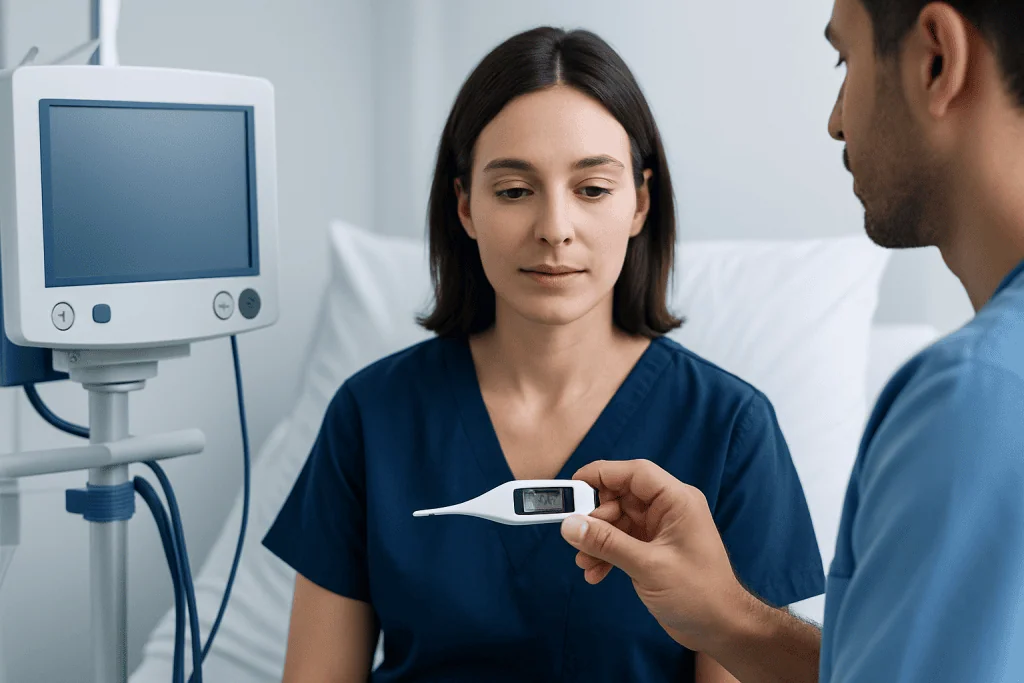
For many healthy adults, 37.5°C is best described as a slight temperature elevation or a possible low-grade fever rather than a definite high fever. Many clinicians consider fever more likely when the temperature is 38°C (100.4°F) or higher, especially when measured accurately and repeated.
However, there is no single cut-off that fits every situation. Some people normally run a little cooler or warmer than average. Children may develop fevers more easily than adults, and older adults can have serious infections with only a small temperature rise.
The context matters. A person with 37.5°C who feels well, is drinking normally, and has no concerning symptoms may only need observation. By contrast, 37.5°C together with cough, sore throat, urinary symptoms, vomiting, rash, or marked fatigue may suggest an infection that deserves attention. If fever persists or symptoms point to a cause such as influenza or pneumonia, a clinician can help guide next steps.
Why temperature readings can vary

Temperature readings are affected by where and how they are measured. Rectal temperatures tend to be closer to core body temperature and are usually a bit higher than oral readings. Armpit readings are often lower. Ear and forehead thermometers can be useful, but technique matters and results may vary if the device is not positioned correctly.
Other common reasons for variation include eating or drinking hot or cold foods before an oral reading, recent physical activity, wearing too many layers, and room temperature. In children, crying or restlessness can also affect measurement.
If a reading seems unexpected, it is reasonable to wait a short time, rest, and repeat it using the same thermometer according to the manufacturer’s instructions. Recording the time, the method, and any symptoms can make the number more meaningful and help a healthcare professional assess the situation if needed.
- Oral: commonly used in older children and adults
- Rectal: often most accurate for infants
- Ear: quick, but sensitive to correct placement
- Forehead/temporal: convenient, but technique matters
- Armpit: easy, though often less precise
Common reasons for a 37.5°C temperature
A temperature of 37.5°C may occur for many reasons, including normal daily variation. It can also appear early in a viral illness, after vaccination, during dehydration, or with noninfectious inflammation. Heat exposure and intense exercise can temporarily raise body temperature as well.
Minor infections are among the most common explanations. These may include a cold, sinus symptoms, throat infection, stomach upset, or a mild urinary tract infection. In some cases, temperature changes are accompanied by body aches, headache, chills, cough, congestion, nausea, or reduced appetite.
Less commonly, ongoing low-grade temperature elevation can be related to inflammatory conditions, medication effects, hormone changes, or more persistent infections. If temperatures continue for several days or keep recurring without a clear reason, medical assessment may be appropriate. Depending on the symptoms, a doctor may recommend tests such as a medical check-up, blood tests, or urine testing to look for the cause.
How to respond at home
For a mild temperature like 37.5°C, home care is often enough if the person otherwise feels well. Rest, fluids, light clothing, and avoiding overheating are sensible first steps. It is also helpful to eat lightly if tolerated and monitor for changes over the next several hours.
There is not always a need to lower a slight temperature if the person is comfortable. In many cases, the body is responding normally to a temporary trigger. If discomfort develops, a clinician or pharmacist can advise on appropriate symptom relief based on age, medical history, and other medications.
It can be useful to recheck the temperature at regular intervals rather than repeatedly every few minutes. Watch for patterns: Is the number rising? Are new symptoms appearing? Is the person alert, drinking enough, urinating normally, and breathing comfortably? These observations often matter more than a single isolated reading.
When to seek medical care
Medical advice is recommended sooner if the person is an infant, an older adult, pregnant, immunocompromised, or living with a serious chronic condition. These groups may become unwell more quickly or show less typical fever patterns. In babies younger than 3 months, any suspected fever should be discussed urgently with a healthcare professional.
Prompt medical attention is important if 37.5°C comes with warning signs such as trouble breathing, chest pain, confusion, unusual drowsiness, stiff neck, seizures, severe headache, a spreading rash, signs of dehydration, or ongoing vomiting. Severe local symptoms, such as significant ear pain, abdominal pain, or pain when passing urine, also deserve assessment.
If the temperature persists for several days, rises to a clearer fever range, or keeps coming back, a doctor may evaluate for infection or another underlying cause. Assessment may include examination and tests such as diagnostic imaging when symptoms suggest a deeper source of illness. Near the end of the care pathway, patients may also wish to know that Acibadem International’s multidisciplinary specialists and JCI-accredited hospitals diagnose and treat a wide range of conditions for international patients.
Practical temperature conversion guide
Some patients prefer a simple mental shortcut for Celsius-to-Fahrenheit conversion. To estimate quickly, double the Celsius number and add 30. This gives a close approximation, though it is not exact. For 37.5°C, doubling gives 75 and adding 30 gives about 105, which is too rough for clinical use, so the exact formula is better when precision matters.
The accurate formula is: °F = (°C × 9/5) + 32. Using that formula, 37.5°C becomes 99.5°F. This is useful when comparing readings from home thermometers, discharge instructions, or online medical information written in a different unit system.
Here are a few common comparisons patients often find helpful:
- 37.0°C = 98.6°F
- 37.5°C = 99.5°F
- 38.0°C = 100.4°F
- 39.0°C = 102.2°F
Although conversion is straightforward, interpretation should remain personal and symptom-based. A precise number is valuable, but the full clinical picture is what guides safe decisions.
Frequently asked questions
What is 37.5 c to f exactly?
37.5°C converts exactly to 99.5°F. This is a mild temperature elevation and is not always considered a true fever in adults.
Is 99.5°F a fever?
99.5°F can be a low-grade temperature, but it is not necessarily a significant fever on its own. Whether it matters depends on symptoms, age, medical conditions, and how the temperature was measured.
Can 37.5°C be normal?
Yes. Body temperature changes throughout the day and may rise slightly after exercise, warm environments, or heavy clothing. Some people naturally have temperatures a little above the classic 37.0°C average.
Should someone take medicine for a temperature of 37.5°C?
Not always. If the person feels comfortable, is drinking fluids, and has no concerning symptoms, observation and rest may be enough. If there is discomfort or an underlying medical condition, a healthcare professional or pharmacist can advise safely.
When is a mild temperature more concerning?
It is more concerning in young infants, older adults, pregnant people, and anyone with weakened immunity or serious chronic disease. It also needs attention if it comes with breathing difficulty, confusion, dehydration, severe pain, or lasts several days.
Which thermometer reading is most accurate?
Accuracy depends on age and proper technique. Rectal readings are often closest to core temperature, especially in infants, while oral readings are commonly used in adults. Ear and forehead thermometers can work well when used correctly, but readings may vary.
This article is for general information only and is not a substitute for professional medical advice. Please consult a qualified doctor about your individual situation.
Explore treatments in Turkey — costs, top hospitals & a free quote
JCI-accredited · board-certified surgeons · reply within 24h
Add us as a Preferred Source to see more of our trusted health content across Google Search, AI Overviews and Discover.

More from the Health Library

Wisdom Teeth Removal — Explained by Medical Evidence, Not Myths

Eczema on Black People Skin: An Evidence-Based Guide for Patients

Milia: A Complete Medical Overview

Psoriasis on Nails Images: An Evidence-Based Guide for Patients

Altered Mental Status: A Complete Medical Overview