3rd Degree Burn: What Patients Need to Know

A 3rd degree burn affects all layers of the skin and often needs emergency medical care. The burned area may look white, charred, leathery, brown, or black and may be less painful than expected because nerves can be damaged.
Key Takeaways
- A 3rd degree burn affects all layers of the skin and often needs emergency medical care.
- The burned area may look white, charred, leathery, brown, or black and may be less painful than expected because nerves can be damaged.
- Treatment may include wound cleaning, dressings, pain control, fluids, infection prevention, and sometimes surgery or skin grafting.
- People should not apply ice, butter, toothpaste, or home remedies to severe burns.
- Early specialist care can improve healing, function, and scar management.
A 3rd degree burn is a severe, full-thickness burn that destroys the outer and deeper layers of skin and may also injure nerves, fat, muscle, or bone. It is a medical emergency that requires prompt professional treatment to protect healing, reduce complications, and support recovery.
What Is a 3rd Degree Burn?
A 3rd degree burn, also called a full-thickness burn, is a serious injury that destroys both the outer layer of skin (epidermis) and the deeper layer (dermis). In many cases, the damage extends below the skin into fatty tissue and sometimes deeper structures. Because the skin helps control body temperature, retain fluid, and protect against infection, a severe burn can affect the whole body, not just the injured area.
Unlike mild burns, a 3rd degree burn does not usually heal well on its own. The skin may lose its normal ability to regenerate, which is why specialist treatment is often needed. Care focuses on stabilizing the patient, protecting the wound, managing pain, preventing infection, and planning repair of damaged tissue.
These burns can happen after contact with flames, hot liquids, steam, chemicals, electricity, hot metal, or prolonged exposure to a heat source. When the burn is large, on the face or hands, or caused by electricity or chemicals, doctors often recommend urgent evaluation in a hospital setting.
How a 3rd Degree Burn Looks and Feels
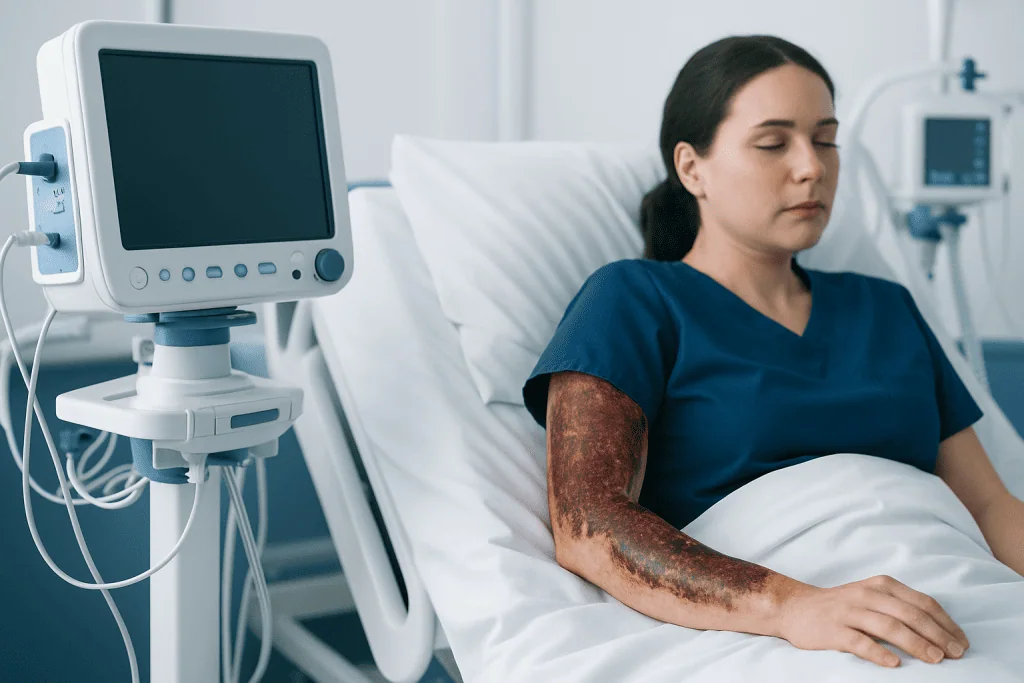
A 3rd degree burn can look different from person to person. The skin may appear white, waxy, leathery, dark brown, or blackened. It can be dry rather than blistered, and the texture may feel stiff or tough. Surrounding skin may show areas of lesser burn depth, including redness or blistering.
One confusing feature is that the worst part of the burn may not be very painful. This happens because severe heat or chemical injury can damage nerve endings. Even so, nearby less severely burned areas may be very painful, and the person may still feel significant overall discomfort.
- Skin that looks charred, white, brown, or leathery
- Little or no pain in the deepest area of injury
- Blisters or redness around the edges
- Swelling
- Signs of shock in larger burns, such as weakness, pale skin, or confusion
Burn severity is not judged by appearance alone. The cause of the burn, its size, its location, the patient’s age, and any breathing problems all matter. For example, a smaller burn on the face, genitals, hands, feet, or major joints may still require specialist care because these areas are important for function and healing.
Common Causes and Risk Factors

Flames are one of the most common causes of a 3rd degree burn, but they are not the only cause. Scalding liquids, industrial heat, exploding fuel, fireworks, chemicals, and electrical current can all create deep tissue damage. Electrical and chemical burns are especially important because the visible skin injury may underestimate deeper internal damage.
Risk can be higher in workplaces with heat, electricity, or chemical exposure, as well as in homes where cooking, heaters, smoking materials, or faulty wiring create hazards. Children, older adults, and people with limited mobility may be more vulnerable because they may not move away from a heat source quickly enough.
Certain factors can also affect how serious a burn becomes and how well it heals. These include a large burn size, delayed first aid, diabetes, circulation problems, malnutrition, and smoking. If a burn occurs alongside other trauma or breathing injury from smoke, evaluation is even more urgent.
Some severe skin injuries may overlap with other wound problems, and doctors may coordinate care with specialists in wound care when healing is complex or prolonged.
Diagnosis and Immediate Medical Assessment
Doctors diagnose a 3rd degree burn by examining the wound, estimating its depth, and calculating how much of the body surface is affected. They also check where the burn is located and whether there are signs of inhalation injury, dehydration, low blood pressure, or damage to deeper tissues. In children and older adults, even smaller burns may need close medical attention.
If the burn was caused by fire in an enclosed space, smoke exposure, chemicals, or electricity, the medical team will look for hidden complications. This may include airway injury, eye irritation, irregular heart rhythm, muscle damage, or internal tissue destruction. Blood tests, heart monitoring, or imaging may be needed depending on the cause.
Assessment also includes reviewing tetanus protection, medicines, chronic conditions, and the patient’s pain level. Burn specialists may classify the wound into areas that can heal with dressings alone and areas that may need surgery. In some situations, patients benefit from evaluation by teams experienced in burn treatment and coordinated intensive wound management.
People should seek emergency help right away if the burn is deep, larger than a person’s palm, affects the face, hands, feet, genitals, buttocks, or a major joint, or if there are breathing problems, electrical injury, chemical exposure, or signs of shock.
Treatment Options and Hospital Care
Treatment begins with stabilization. Medical teams may cool the burn briefly with clean, cool running water if the injury is very recent, but they avoid prolonged cooling and never use ice because it can worsen tissue damage. The wound is then protected with a clean covering while doctors manage pain, fluids, body temperature, and other urgent needs.
Hospital treatment often includes cleaning the wound, removing dead tissue when appropriate, applying advanced dressings, and monitoring for infection. Larger burns may require intravenous fluids because the damaged skin cannot hold fluid normally. If swelling threatens circulation or breathing, more urgent procedures may be needed.
Many 3rd degree burns require surgery. This can include removing nonviable tissue and covering the area with a skin graft or other reconstructive method so the wound can heal more effectively. Depending on the location and extent, care may involve specialists in plastic and reconstructive surgery to help restore function and appearance.
Rehabilitation is also an important part of treatment. Physical or occupational therapy may help preserve movement, reduce stiffness, and support recovery, especially when burns cross joints or affect the hands. Patients with difficult healing patterns may also need ongoing follow-up for scar management, itching, and emotional recovery.
Recovery, Scarring, and Self-Care After Treatment
Healing after a 3rd degree burn can take time. Recovery depends on the size and location of the burn, whether surgery was needed, the person’s general health, and whether complications occur. Some people heal with relatively limited long-term effects, while others need months of wound care, therapy, and scar management.
Scarring is common after full-thickness burns because the normal skin structure has been destroyed. Doctors may recommend pressure garments, silicone-based products, moisturizers, range-of-motion exercises, and regular follow-up to monitor how scars are maturing. If scars become thick, tight, or restrict movement, further treatment may be considered.
At home, patients should follow the wound-care plan exactly as instructed. Dressings should be changed only as advised, hands should be cleaned before wound contact, and any prescribed medicines should be used correctly. It is also important to support healing with adequate fluids, balanced nutrition, and avoiding smoking.
For some patients, burn scars and skin changes may later be assessed with support from specialists experienced in dermatology and reconstructive follow-up, especially if there is itching, sensitivity, color change, or concern about long-term skin health.
What Not to Do and How to Prevent Severe Burns
Home remedies should not be used for a 3rd degree burn. Ice, butter, oils, toothpaste, powders, and adhesive materials can trap heat, increase irritation, and make medical assessment harder. Clothing that is stuck to the skin should not be pulled away. Rings, watches, or tight items near the burned area should be removed early if possible because swelling can develop quickly.
Basic first aid for a suspected severe burn is simple: stop the burning process, move away from the source, flush chemicals with plenty of water if appropriate, cover the area loosely with a clean cloth or sterile non-stick dressing, and seek emergency care. If the person has trouble breathing, collapses, or is not responsive, emergency services should be contacted immediately.
Prevention is an important part of burn safety. Practical steps include:
- Keeping children away from stoves, irons, fireplaces, and hot drinks
- Checking water heater temperatures and testing bath water
- Using smoke alarms and planning home fire escape routes
- Handling chemicals and electrical equipment with proper protection
- Turning pot handles inward and avoiding loose sleeves while cooking
- Storing flammable liquids and lighters safely
These simple measures can reduce the chance of life-altering injury at home, work, and during travel.
When to Seek Medical Care
Any suspected 3rd degree burn should be assessed by a doctor promptly, and many require emergency care the same day. Medical evaluation is especially important if the burn is deep, extensive, caused by electricity or chemicals, or located on the face, hands, feet, genitals, buttocks, or over joints. Immediate care is also needed if there is smoke exposure, hoarseness, coughing, shortness of breath, or burns inside the mouth or nose.
People should also seek medical advice if a burn wound becomes more red, swollen, foul-smelling, increasingly painful, or starts draining pus, as these can be signs of infection. Fever, chills, dizziness, reduced urination, or confusion also need urgent attention. Follow-up matters because even a wound that initially seems stable can change over time.
Burn recovery may involve emergency physicians, surgeons, rehabilitation teams, and wound-care clinicians working together. Acibadem International’s multidisciplinary specialists and JCI-accredited hospitals diagnose and treat burn injuries for international patients, with care tailored to wound severity, recovery goals, and follow-up needs.
Frequently asked questions
Is a 3rd degree burn always an emergency?
A 3rd degree burn is generally considered a medical emergency because it destroys the full thickness of the skin and may cause serious fluid loss or infection. Urgent assessment is especially important if the burn is large, on a sensitive area, or caused by electricity, chemicals, or fire in an enclosed space.
Can a 3rd degree burn heal on its own?
Small areas may slowly heal at the edges, but full-thickness burns usually do not heal well without medical treatment. Many require specialized wound care and sometimes surgery, such as skin grafting, to close the wound and improve function.
Why might a 3rd degree burn not hurt much?
Severe burns can damage or destroy nerve endings in the deepest part of the wound, which may reduce sensation there. However, nearby less deeply burned skin can still be very painful, so the overall injury may still cause major discomfort.
Should ice be used on a 3rd degree burn?
No. Ice can worsen tissue damage and should not be applied directly to a severe burn. Clean, cool running water may be used briefly right after the injury if appropriate, but the person should still seek urgent medical care.
What are the signs of infection in a healing burn?
Possible signs include increasing redness, swelling, warmth, worsening pain, pus, foul odor, or fever. Because burn wounds can change quickly, any concern about infection should be discussed with a qualified doctor promptly.
Will a 3rd degree burn leave a scar?
Scarring is common after a 3rd degree burn because the normal skin structure has been deeply damaged. Early treatment, proper wound care, rehabilitation, and scar management can help improve long-term healing and movement.
References
- World Health Organization
- American Burn Association
- National Institute of General Medical Sciences
- MedlinePlus
- Mayo Clinic
This article is for general information only and is not a substitute for professional medical advice. Please consult a qualified doctor about your individual situation.
Explore treatments in Turkey — costs, top hospitals & a free quote
JCI-accredited · board-certified surgeons · reply within 24h
Add us as a Preferred Source to see more of our trusted health content across Google Search, AI Overviews and Discover.
Check your numbers in seconds
BMI, calories, due date, blood pressure and 30+ more clinical calculators — free, instant, doctor-reviewed ranges.