4000 Grafts Hair Transplant: Coverage, Cost Factors, and What to Expect

A 4000 grafts hair transplant usually suits moderate to advanced hair loss rather than small isolated areas. Coverage depends on graft quality, hair thickness, curl, color contrast, scalp laxity, and donor availability.
Key Takeaways
- A 4000 grafts hair transplant usually suits moderate to advanced hair loss rather than small isolated areas.
- Coverage depends on graft quality, hair thickness, curl, color contrast, scalp laxity, and donor availability.
- Cost factors are driven by technique, complexity, team expertise, and whether more than one session is needed, not graft count alone.
- Results develop gradually over months, with early shedding and later regrowth being a normal part of healing.
- A specialist evaluation is needed to confirm candidacy, especially if hair loss is still active or the donor area is limited.
A 4000 grafts hair transplant can restore a large area of thinning or balding scalp, but the exact coverage depends on hair characteristics, donor density, and the desired hairline design. Understanding what 4000 grafts means, what influences planning, and what recovery involves helps patients set realistic expectations.
Overview: What Does a 4000 Grafts Hair Transplant Mean?
A 4000 grafts hair transplant means that about 4,000 follicular units are moved from the donor area, usually the back and sides of the scalp, to areas affected by hair loss. Because each graft may contain one to several hairs, 4,000 grafts often translate into a much higher total number of transplanted hairs. In practical terms, this graft count is commonly used for people who need restoration across the frontal scalp, mid-scalp, and sometimes part of the crown.
For many patients, 4,000 grafts can provide broad coverage rather than extremely dense packing in a small area. The outcome depends on whether the goal is to rebuild a natural hairline, strengthen thinning zones, or cover larger bald regions. Hair characteristics such as curl, shaft thickness, and color contrast can make the same graft count look fuller in one person than in another.
This is why a graft number should be understood as part of a treatment plan, not as a guarantee of a certain visual result. A specialist will assess the pattern of hair loss, the stability of shedding, and donor capacity before deciding whether 4,000 grafts is appropriate. Patients exploring hair transplant treatment often also benefit from understanding related topics such as Norwood scale hair loss staging and hair transplant recovery timeline.
How Much Coverage Can 4000 Grafts Provide?
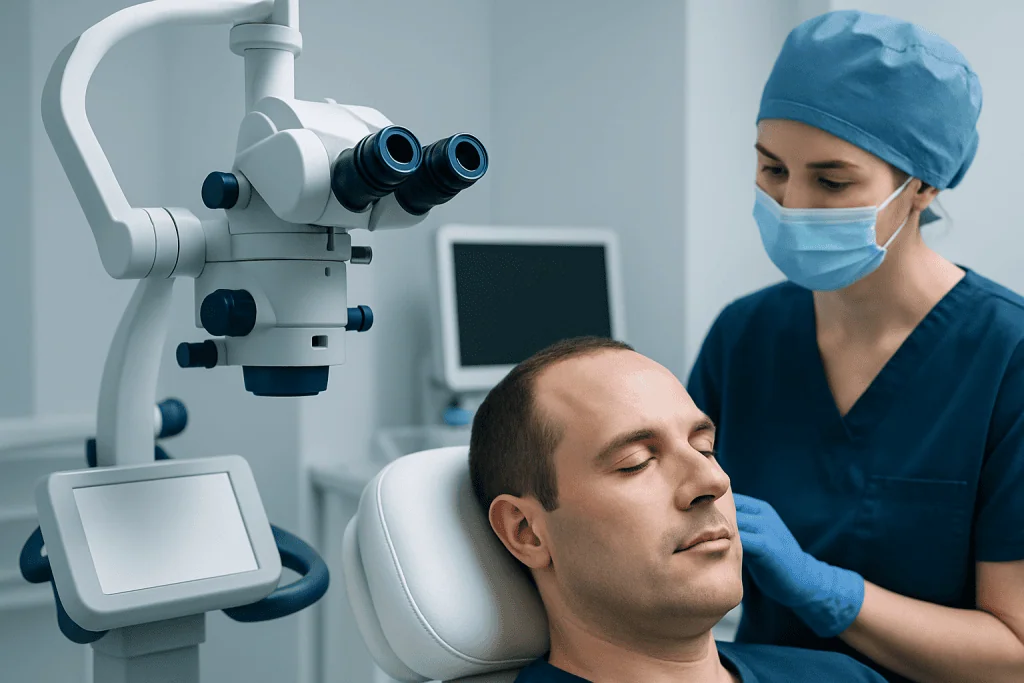
The coverage from a 4000 grafts hair transplant varies widely from person to person. In general, this amount may be enough to address moderate to advanced androgenetic alopecia, especially when the focus is on the front and mid-scalp. If the balding area is extensive, the surgeon may prioritize natural framing of the face and strategic coverage rather than trying to fully fill every thin area in one session.
Hairline work often requires careful placement and a softer, more irregular pattern for a natural appearance. Mid-scalp and crown restoration may need more grafts because these regions can cover a larger surface area. If a patient wants both a low hairline and dense crown coverage, 4,000 grafts may not be enough to maximize both goals at the same time.
Visual fullness depends on more than the number of grafts. Thick or wavy hair often creates better apparent coverage than fine, straight hair. Dark hair against a light scalp, or light hair against a dark scalp, may change how noticeable thinning appears. Patients researching graft counts may also find it useful to compare this topic with 3000 grafts hair transplant and 5000 grafts hair transplant to understand how treatment planning changes with different levels of hair loss.
- Front only: often allows higher density
- Front and mid-scalp: common use of 4,000 grafts
- Front, mid-scalp, and crown: may require compromise or staged treatment
- Advanced baldness: may need long-term planning across more than one procedure
Who May Be a Good Candidate?

A person may be a good candidate for a 4000 grafts hair transplant if hair loss is established, the donor area is strong, and overall health supports a minor surgical procedure. The best candidates usually have enough healthy follicles at the back and sides of the scalp to safely harvest grafts without making the donor region look thin.
Pattern hair loss is the most common reason for this procedure, but not all thinning is suitable for transplantation. Ongoing diffuse shedding, scarring scalp disease, or sudden hair loss may need medical evaluation first. In some cases, treating the underlying scalp or hair disorder is more important than moving ahead with surgery.
Age alone does not decide candidacy, but long-term planning matters. In younger patients, the surgeon may design a conservative hairline to allow for future hair loss progression. A careful assessment can also help identify whether medical therapy, observation, or a staged approach would give the most balanced and durable result.
What Affects Results and Cost Factors?
The final appearance of a 4000 grafts hair transplant depends on several medical and technical factors. These include donor density, the quality of harvested grafts, how well the grafts survive placement, and the pattern of existing native hair. Even when the same number of grafts is used, outcomes can differ based on scalp anatomy and hair texture.
Technique is another major factor. Follicular unit extraction and follicular unit transplantation each have advantages depending on hairstyle preferences, scalp characteristics, and the number of grafts needed. The complexity of the case also matters, including whether the crown is being treated, whether there is previous transplant work, and whether repair of scarring or unnatural growth patterns is required.
Cost factors are usually based on the overall complexity of care rather than a simple promise tied to one graft number. Common influences include the treatment method, surgical time, the expertise of the medical team, the need for more than one session, and the aftercare plan. Travel, laboratory tests, medications, and follow-up arrangements may also affect total planning. Patients should ask for a clear, individualized explanation rather than relying on general online estimates.
Diagnosis and Treatment Planning Before Surgery
Before surgery, a specialist reviews the scalp, donor area, medical history, and pattern of hair loss. This consultation usually includes an estimate of how many grafts are available, how many are needed, and whether the proposed plan is realistic over time. Photos may be taken to compare the current pattern with future progress.
The clinician will also look for signs that could change the treatment approach, such as scalp inflammation, significant dandruff, scarring, or non-pattern hair loss. Blood tests may be requested in selected cases when shedding seems unusual or when an underlying medical issue is suspected. If hair loss is still rapidly progressing, medical treatment may be recommended before surgery.
Planning also includes discussion of expectations. A 4000 grafts hair transplant is often designed to improve the overall frame of the face and reduce the visual impact of baldness, not necessarily to recreate the density of adolescence. In some patients, combining surgery with medical management can help preserve existing hair and support a more even long-term result.
What to Expect During Recovery and Results
Recovery after a 4000 grafts hair transplant is gradual. In the first days, mild swelling, redness, tenderness, and small scabs are common in both the donor and recipient areas. Most people can return to light daily activities relatively soon, but the exact timeline depends on the technique used and the surgeon’s aftercare instructions.
Transplanted hairs often shed in the weeks after the procedure. This can feel disappointing, but it is usually a normal part of the cycle. The follicles remain in place under the skin and later begin producing new hairs. Visible regrowth often starts after several months, with continued improvement over a longer period as the hairs thicken and mature.
Patients are usually advised to protect the scalp, avoid friction, and follow washing instructions carefully. Strenuous exercise, sun exposure, smoking, or picking at scabs may interfere with healing. Because existing non-transplanted hairs can continue to thin over time, some people may later consider medical treatment or another procedure to maintain balance and density.
Prevention, Self-care, and Long-Term Maintenance
A hair transplant redistributes existing follicles, but it does not stop future hair loss in untreated areas. Long-term maintenance often includes regular follow-up and, when appropriate, medical therapy to help preserve native hair. A clinician may discuss options for pattern hair loss management based on age, sex, family history, and treatment goals.
Healthy scalp care also matters. Gentle cleansing, management of dandruff or irritation, and prompt review of unusual shedding can support the overall condition of the scalp. Good nutrition, stress management, and avoiding harsh chemical or traction-related damage may also help reduce avoidable hair breakage and scalp stress.
Patients should be cautious about unrealistic claims. No graft number guarantees identical results for everyone, and overharvesting the donor area can compromise future options. A thoughtful, conservative plan usually offers the best balance between current improvement and long-term hair restoration needs.
For international patients seeking evaluation, Acibadem International’s multidisciplinary specialists in JCI-accredited hospitals diagnose and treat hair loss conditions and perform individualized hair restoration procedures.
When to Seek Medical Care
Medical review is important before a transplant if hair loss is sudden, patchy, painful, inflamed, or associated with scaling, burning, or scarring. These features may point to a condition other than routine pattern hair loss and may need dermatologic treatment first. A specialist should also assess people with limited donor hair, prior transplant surgery, or unrealistic expectations about density and coverage.
After a procedure, patients should contact their care team if they develop worsening pain, increasing redness, fever, pus-like drainage, heavy bleeding, or signs that the grafted area is not healing as expected. Professional advice is also helpful if shedding seems unusually severe or if there are concerns about the donor area. Early assessment can address complications promptly and protect the final result.
Frequently asked questions
Is 4000 grafts a lot for a hair transplant?
Yes, 4,000 grafts is generally considered a large session. It is often used for moderate to advanced hair loss rather than minor thinning. Whether it is appropriate depends on donor supply, scalp characteristics, and the areas being treated.
How many hairs are in 4000 grafts?
A graft is a follicular unit, not a single hair. Because each graft may contain one to several hairs, 4,000 grafts can equal many thousands of hairs in total. The exact number varies according to the person's natural follicular unit composition.
Can 4000 grafts cover the whole scalp?
Usually not if hair loss is extensive across the entire scalp. In many cases, 4,000 grafts can cover the front and mid-scalp well, but full crown and diffuse coverage may require compromise or staged treatment. A specialist can map the area and explain what is realistic.
Will a 4000 grafts hair transplant look dense?
It can create meaningful improvement, but density depends on hair thickness, curl, color contrast, and how large the bald area is. Some patients achieve a fuller look with fewer grafts because their hair characteristics provide better visual coverage. Others may need careful planning or future sessions for added density.
How long does it take to see final results?
Hair transplant results develop gradually. Shedding in the first weeks is common, and noticeable new growth often begins after several months. The appearance usually continues to improve over a longer period as the transplanted hairs mature.
Does a 4000 grafts hair transplant stop future hair loss?
No. Transplanted follicles are moved to thinning areas, but existing native hairs outside the transplanted zone may continue to thin over time. Long-term care may include medical treatment and follow-up to maintain a balanced result.
References
- American Academy of Dermatology
- International Society of Hair Restoration Surgery
- British Association of Dermatologists
- Mayo Clinic
- National Institute for Health and Care Excellence
This article is for general information only and is not a substitute for professional medical advice. Please consult a qualified doctor about your individual situation.
Hair transplant in Turkey — costs, graft counts & a free assessment
JCI-accredited · board-certified surgeons · reply within 24h
Add us as a Preferred Source to see more of our trusted health content across Google Search, AI Overviews and Discover.