8 Ounces of Water: What Patients Need to Know

An 8-ounce serving of water is about 240 mL and is commonly called one cup. Hydration comes from water, other drinks, and moisture-rich foods such as fruit, vegetables, soups, and yogurt.
Key Takeaways
- An 8-ounce serving of water is about 240 mL and is commonly called one cup.
- Hydration comes from water, other drinks, and moisture-rich foods such as fruit, vegetables, soups, and yogurt.
- Thirst, urine color, physical activity, weather, and illness can help guide day-to-day fluid intake.
- People with kidney, heart, liver, or hormone-related conditions may need individualized fluid advice.
- Persistent dehydration symptoms, confusion, fainting, or inability to keep fluids down need medical assessment.
Eight ounces of water is approximately 240 milliliters, or one standard cup. It can be a practical serving size, but there is no single number of 8-ounce glasses that is right for every person because hydration needs change with body size, diet, activity, climate, medications, and health conditions.
What Does 8 Ounces of Water Mean?
Eight ounces of water is a volume measurement equal to about 240 milliliters (mL), slightly less than a quarter of a liter. In everyday terms, it is close to one US measuring cup. Many reusable bottles and drinking glasses hold more than this amount, so checking the label or using a measuring cup once can make portion sizes easier to visualize.
The familiar idea of drinking several 8-ounce glasses each day can be a useful reminder to drink regularly. However, it should not be treated as a strict medical rule. A person’s total fluid needs depend on many factors, and fluids from food and beverages other than plain water also contribute to hydration.
Water supports normal body temperature control, circulation, digestion, joint lubrication, and removal of waste through urine. The goal is steady, appropriate hydration rather than reaching an identical volume every day.
How Much Water Does the Body Need?
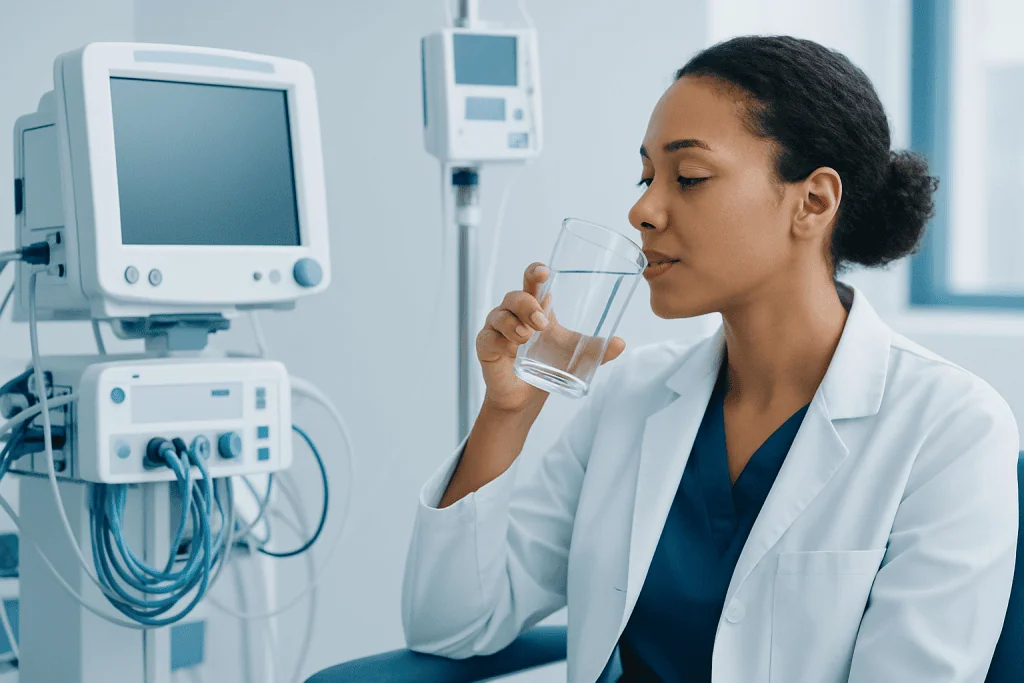
There is no universal daily target that suits everyone. General adequate-intake estimates for total water, including water from food and all beverages, are often around 2.7 liters daily for adult women and 3.7 liters daily for adult men. These are broad reference values, not personal prescriptions, and an individual may need more or less.
Food can supply a meaningful share of total water intake. Fruits, vegetables, soups, milk, yogurt, and cooked grains all contain water. Tea, coffee, and other nonalcoholic beverages contribute too, although very sugary drinks are best limited for overall health. Alcohol does not hydrate well and may increase fluid loss.
Thirst is a helpful signal for most healthy adults, particularly when combined with attention to urine. Pale yellow urine commonly suggests adequate hydration, while consistently dark yellow urine may suggest that more fluid is needed. Some vitamins, foods, and medicines can change urine color, so color alone is not a diagnosis.
Children, older adults, and people who cannot reliably recognize or respond to thirst may need more structured reminders and support with drinking. A clinician or dietitian can offer tailored guidance when hydration needs are uncertain.
Why Hydration Needs Change From Day to Day

Fluid needs rise when the body loses more water. Hot or humid weather, high altitude, fever, vomiting, diarrhea, and exercise can all increase losses through sweat, breathing, or the digestive system. During prolonged or intense activity, especially in heat, both fluids and electrolytes may need attention.
Pregnancy and breastfeeding can also increase fluid requirements. People who have physically demanding jobs, spend long periods outdoors, or wear heavy protective clothing may need to drink more frequently than they do on quiet indoor days.
Some medicines influence thirst, urination, or fluid balance. Diuretics, commonly called water tablets, are one example. Conditions affecting the kidneys, heart, liver, adrenal glands, or hormones may also alter the body’s ability to handle fluid. People with kidney disease or heart failure should follow the fluid guidance provided by their medical team rather than using general hydration rules.
Drinking excessive amounts of water very quickly can be unsafe because it can dilute sodium in the blood. This is uncommon but may occur during endurance events, in people with certain medical conditions, or when water intake is forced. Balanced, regular drinking is generally safer than consuming large volumes at once.
Recognizing Mild Dehydration
Mild dehydration can develop gradually. Common signs include thirst, a dry mouth, headache, tiredness, light-headedness, reduced urination, or darker urine. These symptoms can have other causes as well, but they are useful prompts to pause, rest if needed, and take fluids.
For a healthy person with mild symptoms after heat exposure or activity, drinking water gradually is often appropriate. A meal or snack may help replace energy and minerals. Oral rehydration solutions may be useful during significant diarrhea or vomiting, particularly for children or older adults, but a pharmacist or clinician can help identify the most suitable option.
It is sensible to avoid relying only on thirst during vigorous activity or very hot weather, as thirst may lag behind fluid loss. Taking regular drink breaks and having fluids available can make hydration easier. For children, caregivers should offer drinks frequently, since children may become dehydrated more quickly than adults.
Repeated dehydration may point to an underlying issue, such as uncontrolled diabetes, persistent gastrointestinal illness, medication effects, or difficulty accessing fluids. Evaluation can be important when symptoms keep returning.
Practical Ways to Use the 8-Ounce Measure
Using an 8-ounce serving as a simple unit can help a person spread fluids across the day without becoming overly focused on a rigid total. For example, someone may drink a glass with meals, keep water nearby while working, and take additional fluids before, during, and after activity according to thirst and conditions.
A refillable bottle with volume markings can be useful for people who prefer to track intake. Others may find it easier to build habits around routines: drinking after waking, with medication when permitted, at meals, or during breaks. Choosing plain water often helps reduce intake of added sugars and excess calories.
Water does not need to be the only option. Sparkling water without added sugar, milk, unsweetened herbal tea, and water-rich foods can all fit into a healthy routine. Adding slices of citrus, cucumber, or berries may make plain water more appealing without adding much sugar.
- Carry a drink when traveling or spending time outdoors.
- Drink more often during fever, hot weather, and exercise.
- Offer children water regularly, particularly during play and sports.
- Follow medical instructions carefully if a clinician has advised fluid restriction.
When to Seek Medical Care
Urgent medical care is needed for signs of severe dehydration or illness, including confusion, fainting, severe weakness, inability to stay awake, very little or no urination, rapid breathing, chest pain, or an inability to keep fluids down. Infants, young children, older adults, and people with long-term medical conditions should be assessed promptly if dehydration is suspected.
A doctor should also be consulted for ongoing thirst, frequent urination, recurrent dizziness, persistent vomiting or diarrhea, swelling, or unexplained changes in weight. These symptoms may relate to hydration, but they can also indicate conditions that need evaluation, including diabetes or kidney and heart problems.
People who have been told to limit fluids should ask their clinician how much is appropriate during heat, illness, travel, or exercise. Acibadem International’s multidisciplinary specialists and JCI-accredited hospitals can assess hydration concerns and related health conditions for international patients.
Frequently asked questions
Is 8 ounces of water the same as one cup?
In US volume measurements, 8 fluid ounces equals one cup, or approximately 240 mL. A drinking glass may hold more or less than this, so it is helpful to check its capacity rather than assuming every glass is one cup.
Do people need to drink eight 8-ounce glasses of water every day?
Not necessarily. The amount of fluid a person needs varies with age, body size, climate, activity level, diet, pregnancy, breastfeeding, medicines, and health conditions. Total hydration also includes fluids from food and other beverages.
Does coffee count toward daily fluid intake?
Coffee and tea generally contribute to daily fluid intake. Although caffeine can have a mild diuretic effect in some people, moderate intake does not usually cause dehydration in people accustomed to consuming caffeine. Unsweetened choices are generally preferable to drinks high in added sugar.
What color should urine be if hydration is adequate?
Pale yellow urine commonly suggests adequate hydration. Dark yellow urine may indicate a need for more fluids, especially when accompanied by thirst or reduced urination. However, vitamins, foods, and certain medicines can alter urine color.
Can a person drink too much water?
Yes. Drinking very large amounts of water in a short period can lower blood sodium to unsafe levels. This risk is greater in some medical conditions and during prolonged endurance activity, so fluid intake should be balanced and individualized.
When should dehydration be treated by a doctor?
Medical assessment is important for confusion, fainting, severe weakness, very low urine output, persistent vomiting or diarrhea, or inability to drink fluids. Children, older adults, and people with chronic illnesses should seek advice earlier because dehydration can become serious more quickly.
This article is for general information only and is not a substitute for professional medical advice. Please consult a qualified doctor about your individual situation.
Explore treatments in Turkey — costs, top hospitals & a free quote
JCI-accredited · board-certified surgeons · reply within 24h
Add us as a Preferred Source to see more of our trusted health content across Google Search, AI Overviews and Discover.
Check your numbers in seconds
BMI, calories, due date, blood pressure and 30+ more clinical calculators — free, instant, doctor-reviewed ranges.

More from the Health Library

Neuroleptics and Atypical Antipsychotics: An Evidence-Based Guide for Patients

Pimples — Explained by Medical Evidence, Not Myths

Pupil Size Chart: An Evidence-Based Guide for Patients

Face Roller: A Complete Medical Overview

Parasitic Worms — Explained by Medical Evidence, Not Myths