Abdominal Binder: A Complete Medical Overview
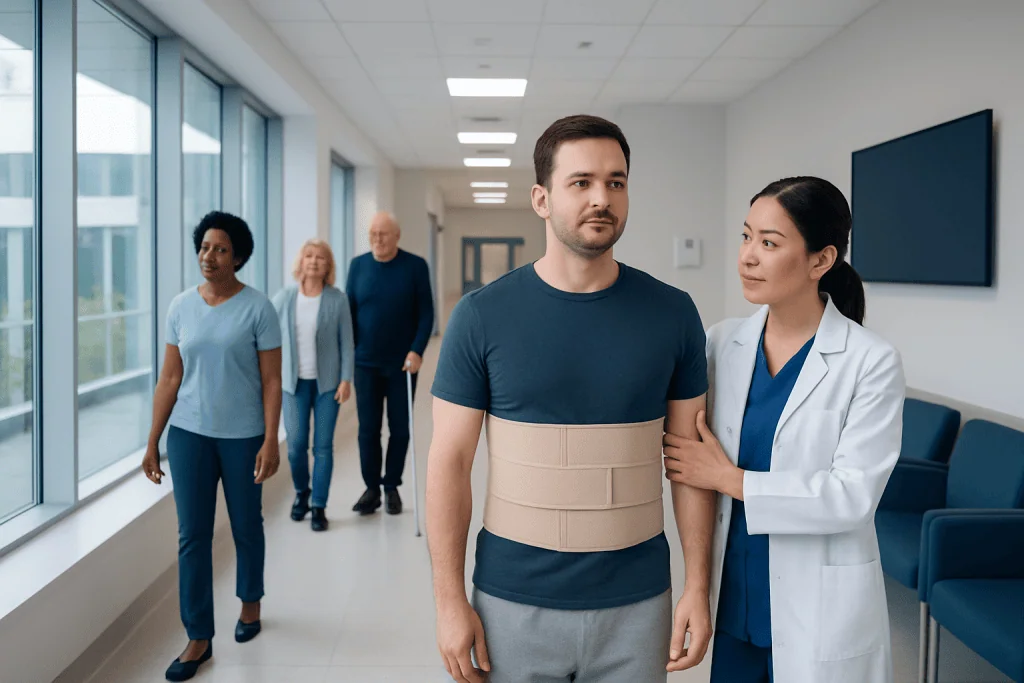
An abdominal binder is an external support garment that gently compresses the abdomen. It is commonly used after abdominal surgery, cesarean birth, or to support weakened abdominal muscles.
Key Takeaways
- An abdominal binder is an external support garment that gently compresses the abdomen.
- It is commonly used after abdominal surgery, cesarean birth, or to support weakened abdominal muscles.
- It may reduce discomfort and make coughing, standing, and walking feel easier during recovery.
- A binder should fit snugly but not restrict breathing, circulation, or bowel function.
- It is not suitable for every person or every condition, so medical guidance is important after surgery or with ongoing pain.
An abdominal binder is a wide compression wrap worn around the abdomen to provide support after surgery, childbirth, or certain abdominal and back conditions. It does not heal tissues on its own, but it can improve comfort, support movement, and help some people feel more secure during recovery when used correctly.
What is an abdominal binder?
An abdominal binder is a broad elastic or non-elastic wrap placed around the midsection to provide gentle, even support to the abdominal wall. It is commonly used after abdominal operations, after cesarean delivery, and sometimes for short-term support after injury or when abdominal muscles feel weak. Most designs fasten with Velcro or a similar closure so the amount of compression can be adjusted.
People often ask whether an abdominal binder is meant to “hold organs in place” or “make the stomach flat.” In medical use, its main role is simpler: it supports the tissues of the abdomen from the outside. This support may make movement more comfortable, especially when changing position, coughing, sneezing, or walking in the early stages of recovery.
An abdominal binder is not a cure for pain, hernia, or muscle separation, and it is not a replacement for follow-up care, wound care, or physical rehabilitation. Used appropriately, however, it can be a practical part of recovery and may help some people feel more confident returning to gentle activity.
When an abdominal binder may be used

Doctors may recommend an abdominal binder after procedures involving the belly area, such as bowel surgery, gynecologic surgery, or recovery from a robotic surgery procedure. It is also commonly used after cesarean birth, after some hernia repairs, and in selected cases of abdominal wall weakness. The reason is usually to improve comfort and support safe movement, not to speed healing by itself.
In some people, a binder may also be considered after trauma, after prolonged bed rest, or alongside rehabilitation for reduced core stability. Patients with conditions such as hernia or postoperative abdominal weakness should only use one under a clinician’s guidance, because the amount of support and the timing of use matter.
Typical situations where an abdominal binder may be helpful include:
- After open or minimally invasive abdominal surgery
- After cesarean delivery
- After selected abdominal wall procedures, including hernia repair
- During early mobility after surgery, when standing upright feels uncomfortable
- Short-term support for coughing, laughing, or transferring from bed to chair
Not every patient needs one. Some recover well without a binder, while others find it very helpful. The decision usually depends on the type of surgery, the condition of the abdominal wall, comfort level, and the treating team’s preferences.
Potential benefits and realistic expectations

The clearest benefit of an abdominal binder is support. By reducing the sensation of pulling around an incision or weakened abdominal muscles, it may make standing, walking, and daily movements easier. Many people also report that they feel more secure when the abdominal area is gently compressed, especially during the first days or weeks after surgery.
A binder may also help with practical recovery goals. When discomfort is better controlled, people may find it easier to move, breathe deeply, and cough effectively. These are important parts of postoperative recovery because they support circulation, lung expansion, and a gradual return to activity. In some settings, better comfort may make it easier to participate in rehabilitation after procedures such as colon surgery.
Still, expectations should remain realistic. An abdominal binder does not prevent all pain, remove the need for prescribed medicines, or eliminate the risk of complications. It does not replace core muscle retraining, and long-term overreliance may not be helpful if it discourages normal muscle use. The best outcomes usually come when it is used as one part of a wider recovery plan.
Possible risks, discomforts, and who should be cautious
Although abdominal binders are generally safe when fitted properly, they are not risk-free. If wrapped too tightly, they can make breathing feel shallow, increase pressure around the stomach, worsen reflux, or feel uncomfortable after meals. A binder that is too snug may also irritate the skin, especially in hot weather or when worn over a healing incision for long periods without checking the area.
Some people may notice rubbing, sweating, itching, or pressure marks. Others may feel tempted to wear the binder constantly and rely on it instead of gradually rebuilding natural trunk strength. Anyone with significant swelling, worsening pain, numbness, skin discoloration, or difficulty breathing should loosen the binder and seek medical advice promptly.
Extra caution is needed in people with breathing problems, severe bloating, certain circulation issues, open wounds, or skin fragility. A binder may also be unsuitable if there is concern about bowel obstruction, uncontrolled vomiting, or an abdominal problem that has not yet been diagnosed. In those situations, it is more important to identify the cause of symptoms than to compress the area.
How to wear an abdominal binder safely
The binder should sit around the abdomen comfortably and evenly, usually covering the area recommended by the clinician. It should feel supportive rather than restrictive. A good rule is that the wearer should still be able to breathe deeply, speak comfortably, and move without a pinching sensation. If it causes marked pressure, folding, or pain, it may need to be repositioned or resized.
Many people put the binder on while lying down or in a semi-reclined position, then adjust it after standing. This can help create even support. It is usually worn over a thin layer of clothing or a clean dressing if advised by the care team, which can reduce skin irritation. The skin should be checked regularly for redness, sores, moisture buildup, or signs of wound irritation.
Basic safety tips include:
- Follow the surgeon’s or doctor’s instructions about timing and duration of wear
- Keep the compression snug but not tight enough to limit deep breathing
- Remove it for skin checks, hygiene, and as directed for rest periods
- Do not place it directly over a problematic wound unless instructed
- Stop using it and seek advice if symptoms worsen instead of improving
There is no single schedule that suits everyone. Some people use a binder mainly during the day and while walking, while others use it only for short periods of activity. The plan should match the reason it was prescribed and the patient’s comfort and progress.
Abdominal binder after surgery, childbirth, or hernia care
After surgery, an abdominal binder is most often used to make movement more comfortable during the first phase of recovery. Patients recovering from open abdominal procedures may find that rolling in bed, sitting up, and walking are less uncomfortable with support. However, the binder should complement, not replace, standard postoperative care such as pain control, deep breathing exercises, wound checks, and gradual mobility.
After cesarean delivery or other pelvic and abdominal operations, some women feel that a binder gives a sense of stability and reduces strain around the incision. It may also help with confidence during early walking and infant care. Even so, persistent severe pain, heavy bleeding, fever, or wound concerns should never be attributed simply to “normal recovery” or masked by wearing a binder.
For hernia-related care, the role of a binder is more limited. It may provide temporary symptom relief in some cases, but it does not repair the weakness in the abdominal wall. People with a known or suspected incisional hernia or other abdominal wall bulges should discuss support garments with a surgeon, especially if there is pain, increasing size, nausea, or tenderness.
Near the end of the treatment journey, some international patients seek coordinated follow-up and rehabilitation support. Acibadem International’s multidisciplinary specialists and JCI-accredited hospitals diagnose and treat abdominal conditions for international patients when further evaluation or surgical planning is needed.
When to seek medical care
An abdominal binder should not be used to ignore ongoing or unexplained abdominal symptoms. Medical review is important if the person has severe or increasing abdominal pain, vomiting, fever, a rapidly enlarging swelling, difficulty passing stool or gas, shortness of breath, or signs of wound infection such as redness, warmth, drainage, or a bad smell. These symptoms may point to a complication that needs assessment.
People should also contact a doctor if the binder causes numbness, significant skin breakdown, chest discomfort, dizziness, or difficulty taking a full breath. If symptoms improve only while the binder is on and return immediately when it is removed, that may also be a sign that more evaluation is needed rather than simply more compression.
After surgery, follow-up should follow the surgeon’s instructions even if the patient feels well. If there are concerns about a bulge near the incision, ongoing weakness, or a possible hernia, a clinician may recommend examination and, when appropriate, further imaging or referral to a specialist.
Self-care and recovery habits that support healing
An abdominal binder works best when combined with healthy recovery habits. Gentle walking, changing position regularly, adequate hydration, and a balanced diet can support circulation and bowel function after surgery. People recovering from abdominal procedures are often encouraged to avoid heavy lifting until medically cleared, even if the binder makes them feel stronger.
Good posture and careful movement can also help. Supporting the abdomen with the hands or a pillow while coughing, sneezing, or standing up may reduce strain. As recovery progresses, a doctor or physiotherapist may recommend breathing exercises and gradual core rehabilitation so the body rebuilds natural support rather than depending on the binder alone.
Finally, the binder itself should be kept clean and dry according to the product instructions. A poorly maintained binder may irritate the skin or become uncomfortable. If there is uncertainty about fit, duration of use, or whether a binder is still needed, the safest step is to ask the treating clinician.
Frequently asked questions
What does an abdominal binder do?
An abdominal binder provides gentle external support to the abdominal wall. It may reduce discomfort during movement and help some people feel more secure after surgery, childbirth, or abdominal strain.
How tight should an abdominal binder be?
It should feel snug and supportive, but not tight enough to limit deep breathing, cause pain, or leave marked pressure lines. If it causes dizziness, shortness of breath, numbness, or worsening discomfort, it may be too tight.
Can an abdominal binder help after surgery?
Yes, it may help some patients feel more comfortable when standing, walking, coughing, or changing position after abdominal surgery. However, it should be used according to the surgeon’s advice and does not replace routine postoperative care.
Does an abdominal binder heal a hernia?
No, an abdominal binder does not repair a hernia or close a weakness in the abdominal wall. It may provide temporary support in selected cases, but a doctor should assess ongoing symptoms or any new abdominal bulge.
Can an abdominal binder be worn all day?
Some people wear it for much of the day during early recovery, but the schedule should be individualized. Regular skin checks, breaks as advised, and reassessment by a clinician are important to avoid irritation and unnecessary long-term dependence.
Are there any side effects of wearing an abdominal binder?
Possible side effects include skin irritation, sweating, discomfort after meals, shallow breathing if it is too tight, and pressure marks. These problems are more likely if the binder does not fit properly or is worn longer than recommended.
References
- National Institutes of Health
- MedlinePlus
- American College of Surgeons
- Royal College of Surgeons
- Cleveland Clinic
This article is for general information only and is not a substitute for professional medical advice. Please consult a qualified doctor about your individual situation.
Explore treatments in Turkey — costs, top hospitals & a free quote
JCI-accredited · board-certified surgeons · reply within 24h
Add us as a Preferred Source to see more of our trusted health content across Google Search, AI Overviews and Discover.

More from the Health Library

Alpha Lipoic Acid: What Patients Need to Know

Mouth Breather: An Evidence-Based Guide for Patients

Best Cereal for Diabetics: What Patients Need to Know

Posterior Fourchette — Explained by Medical Evidence, Not Myths

Size Breasts — Explained by Medical Evidence, Not Myths