Toenails Blue: An Evidence-Based Guide for Patients

A single blue or blue-black toenail is commonly due to a bruise under the nail after pressure or injury. Blue coloring in several toenails, especially with blue lips, breathlessness or chest symptoms, may signal low oxygen or circulation problems and needs urgent assessment.
Key Takeaways
- A single blue or blue-black toenail is commonly due to a bruise under the nail after pressure or injury.
- Blue coloring in several toenails, especially with blue lips, breathlessness or chest symptoms, may signal low oxygen or circulation problems and needs urgent assessment.
- Cold-related color changes often improve after gradual warming, while persistent or recurring changes should be discussed with a doctor.
- A new dark mark that grows, changes shape, extends onto nearby skin or has no clear injury should be medically evaluated.
- Do not puncture or drill a discolored nail at home; this can cause infection and further injury.
Toenails blue are often caused by minor trauma that leaves blood beneath the nail, but they can also occur with cold exposure, reduced circulation, certain medicines or, less commonly, low blood oxygen. The pattern, number of nails involved and accompanying symptoms help determine whether the change can be monitored or needs prompt medical care.
Overview: What Does It Mean When Toenails Are Blue?
Toenails blue can describe several different appearances: a small blue-purple patch, a dark blue-black area beneath one nail, or a more general bluish tint affecting multiple toes. In many cases, especially after tight footwear, sport or an accidental knock, the color is caused by a small collection of blood under the nail. This is called a subungual hematoma.
However, blue discoloration is not always due to an injury. Cold temperatures can temporarily reduce blood flow to the toes, while some heart, lung or blood-flow conditions can reduce the amount of oxygen reaching the skin. This bluish appearance is known as cyanosis. The context matters: a painless mark in one nail after a long hike is different from suddenly blue toes occurring with shortness of breath.
The nail itself grows slowly, so a bruise beneath it may remain visible for weeks or months before it moves outward with the growing nail. A clinician can help distinguish a harmless nail injury from pigment changes, infection, circulation concerns or rarer causes that require further investigation.
How Blue Toenails Can Look and Feel
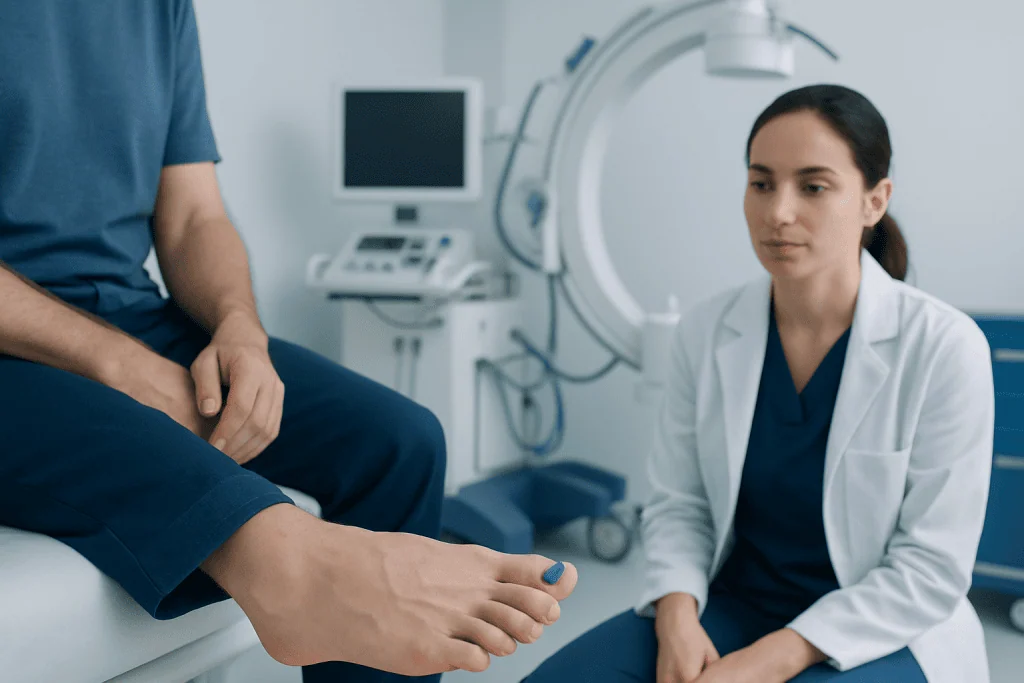
A trauma-related nail bruise is usually limited to one toe and may be tender, throbbing or painful shortly after the injury. The nail may look red-purple at first and then become dark blue, brown or black. Pressure from blood trapped beneath the nail can make the area particularly painful during the first day or two.
When cold exposure or reduced circulation is involved, several toes may look blue or dusky at the same time. The toes can feel cold, numb, tingling or painful, and their color may improve as the body warms. Some people experience episodic color changes in the fingers and toes due to blood-vessel spasm, often triggered by cold or emotional stress.
Other details are important. A dark streak running lengthwise in a nail, a spot that does not grow out with the nail, or pigment that spreads onto the skin beside the nail is not typical of a simple bruise. Although most nail discoloration is benign, these changes should be assessed by a qualified clinician or dermatologist.
- One painful dark nail after impact: often suggests a nail bruise.
- Several blue, cold toes: may suggest cold exposure or a circulation-related cause.
- Blue nails with blue lips or face: can indicate low oxygen and needs urgent medical attention.
- Persistent, changing dark pigment without injury: should be checked to rule out important nail conditions.
Common Causes of Blue Toenails

The most frequent explanation for a blue-black toenail is repeated pressure or direct injury. Running, hiking, football, dancing, dropped objects and shoes with too little toe room can damage tiny blood vessels beneath the nail. This may happen even when a person does not recall one clear injury. The big toenail is often affected because it experiences the greatest pressure inside footwear.
Cold can also make toenails appear blue. When the body is cold, blood vessels in the hands and feet narrow to conserve heat. In some people, blood-vessel spasm causes more noticeable and recurrent changes, sometimes progressing through pale, blue and red phases as blood flow returns. Smoking and nicotine exposure can also affect small blood vessels and may worsen circulation-related symptoms.
Less commonly, blue toenails are associated with low oxygen levels in the blood, impaired blood flow, or certain medicines and substances that affect skin or nail pigment. These causes generally affect more than one nail and may occur with symptoms elsewhere in the body. A greenish-blue color, particularly with nail lifting or moisture exposure, can sometimes be linked to bacterial growth; this differs from the deep purple or black appearance of a bruise.
Dark nail discoloration should not automatically be assumed to be trauma. Pigment-producing lesions, including rare forms of melanoma involving the nail unit, can appear as a brown, black or occasionally blue-black band or patch. Medical review is particularly important if there was no injury, the mark is enlarging or irregular, or it does not gradually move toward the nail tip as the nail grows.
Risk Factors and Clues That Help Identify the Cause
People who run long distances, play field sports, wear narrow shoes, work in jobs with repetitive foot pressure, or have toes that rub against footwear are more likely to develop nail bruises. Nails that are thickened, curved or already partly detached may also be more vulnerable to injury. Ensuring adequate space in the toe box can reduce repeated pressure on the nail.
Cold weather, wet footwear and prolonged immobility can make color changes more noticeable. Individuals with known circulation disease, diabetes, heart or lung disease, or a history of blood clots should take new toe color changes seriously, particularly if they are accompanied by pain, numbness, swelling or skin wounds. Diabetes can also reduce sensation, meaning an injury may not be felt clearly.
Doctors also consider recent medication changes, exposure to dyes or chemicals, smoking history, and whether discoloration is present in the fingernails as well. A useful observation is whether the color is within the nail plate, under the nail, or in the surrounding skin. Photographs taken in good light can help show whether the color is improving, stable or spreading over time.
How Blue Toenails Are Evaluated
A healthcare professional will usually begin by asking about injury, exercise, footwear, cold exposure, pain, recent illness and other symptoms. They will inspect the nail, surrounding skin and circulation in the feet. They may check warmth, pulses, sensation and how quickly color returns after gentle pressure on the toe.
For a suspected uncomplicated nail bruise, an examination may be all that is needed. If the injury was significant, an X-ray may be considered to look for a fracture of the toe. If a nail is very painful because of pressure from fresh trapped blood, a clinician may discuss a simple procedure to release pressure when appropriate.
When cyanosis or circulation problems are suspected, evaluation may include measurement of oxygen levels, blood tests or tests of heart and lung function, depending on the person’s symptoms and medical history. Persistent unexplained pigment changes may require dermatology assessment. In selected cases, a specialist may examine the nail with magnification or recommend a small sample to establish the diagnosis.
Treatment, Home Care and Prevention
Treatment depends on the cause. A minor nail bruise often heals without specific treatment as the nail grows out. Resting the foot, using a cool compress wrapped in cloth during the early period after injury, elevating the foot and wearing roomy shoes may improve comfort. Over-the-counter pain relief may be suitable for some people, but it should be chosen according to an individual’s health conditions and advice from a pharmacist or doctor.
It is important not to puncture, burn or drill through the nail at home. These approaches can introduce infection, injure the nail bed and delay proper care. A nail that becomes loose should be kept clean and protected; it should not be forcibly removed. If the nail falls off after trauma, a new toenail may take many months to grow.
For cold-related changes, gradual warming with dry socks and warm—not hot—surroundings is generally safer than direct heat. People with reduced sensation, diabetes or circulation disease should avoid heating pads or very hot water on their feet because burns may occur without being noticed. Recurrent cold-triggered episodes should be discussed with a clinician, especially if they cause pain or skin changes.
Prevention includes selecting shoes with sufficient toe space, trimming nails straight across, changing out of damp socks promptly and using well-fitting activity-specific footwear. Managing underlying heart, lung, vascular or metabolic conditions with a healthcare team is important when these conditions contribute to toe discoloration. Acibadem International’s multidisciplinary specialists and JCI-accredited hospitals can assess nail, circulation and related health concerns for international patients.
When to Seek Medical Care
Urgent medical care is needed if blue toenails occur with difficulty breathing, chest pain, confusion, fainting, blue lips or face, or sudden severe weakness. These symptoms may reflect inadequate oxygen or a serious circulation problem rather than a nail condition. Emergency assessment is also appropriate for a toe that becomes suddenly blue, pale or cold with severe pain, numbness or loss of movement.
A prompt, non-emergency medical appointment is advisable for severe throbbing after a nail injury, a suspected broken toe, increasing redness or swelling, pus, fever, or a wound around the nail. People with diabetes, reduced immunity, known poor circulation or loss of feeling in their feet should seek advice early for any new nail injury or color change.
A doctor or dermatologist should also evaluate a dark nail mark that appears without a known injury, gets wider or darker, has irregular edges, affects one nail persistently, or extends onto the skin around the nail. Most discolored nails do not represent a serious disease, but timely assessment provides clarity and ensures appropriate care.
Frequently asked questions
Can tight shoes cause toenails to turn blue?
Yes. Repeated pressure from tight, short or poorly fitting shoes can break small blood vessels beneath a toenail and cause a blue, purple or black bruise. This is common after running, hiking and other activities that repeatedly push the toes against the front of the shoe.
How long does a blue toenail take to heal?
Pain from a minor nail bruise often improves within days, but the color may remain until the nail grows out. Toenails grow slowly, so complete resolution can take several months. The discolored area should gradually move toward the nail tip over time.
Is a blue toenail always a bruise?
No. A bruise is a common cause, particularly when one nail is affected after pressure or injury, but cold exposure, circulation changes, medicines, infections and pigment conditions can also alter nail color. Persistent discoloration without a clear injury should be evaluated by a clinician.
Why are my toenails blue when I am cold?
Cold causes blood vessels in the feet to narrow, reducing blood flow near the skin surface and creating a bluish appearance. The color should usually improve with gradual warming. Repeated episodes, significant pain, numbness or sores on the toes should be discussed with a doctor.
Should a blue toenail be drained?
A painful collection of blood beneath a nail may sometimes be drained by a trained healthcare professional, usually soon after an injury. It should not be drained at home because this can lead to infection or damage to the nail bed. A clinician can also check for an associated toe fracture.
When is a dark or blue-black toenail concerning?
Medical assessment is important when there is no known injury, the mark becomes larger or more irregular, pigment spreads onto nearby skin, or the discoloration does not move outward as the nail grows. Urgent care is needed if blue toes occur with breathing difficulty, chest pain, blue lips, severe pain or sudden numbness.
References
- American Academy of Dermatology Association
- American Academy of Orthopaedic Surgeons
- National Heart, Lung, and Blood Institute
- NHS
- Mayo Clinic
This article is for general information only and is not a substitute for professional medical advice. Please consult a qualified doctor about your individual situation.
Explore treatments in Turkey — costs, top hospitals & a free quote
JCI-accredited · board-certified surgeons · reply within 24h
Add us as a Preferred Source to see more of our trusted health content across Google Search, AI Overviews and Discover.