Abscess Tooth: A Complete Medical Overview

An abscess tooth is a dental infection that forms a pocket of pus in the tooth, root, or surrounding gum. Common signs include throbbing pain, swelling, sensitivity to hot or cold, and a bad taste in the mouth.
Key Takeaways
- An abscess tooth is a dental infection that forms a pocket of pus in the tooth, root, or surrounding gum.
- Common signs include throbbing pain, swelling, sensitivity to hot or cold, and a bad taste in the mouth.
- Treatment often involves draining the abscess, root canal treatment, antibiotics in selected cases, or tooth removal if the tooth cannot be saved.
- Prompt care is important because untreated infection can spread to nearby tissues and, in rare cases, become serious.
- Good oral hygiene and regular dental checkups help reduce the risk of a tooth abscess.
An abscess tooth is a pocket of infection caused by bacteria in or around a tooth, often leading to pain, swelling, and sensitivity. It usually does not heal on its own, but timely dental treatment can remove the infection, protect nearby tissues, and ease symptoms.
Overview: what an abscess tooth means
An abscess tooth is a bacterial infection that creates a pocket of pus in the tooth, at the root tip, or in the gum next to a tooth. It is a common dental problem and usually develops when bacteria enter through tooth decay, a crack, trauma, or gum disease. In most cases, it causes pain and swelling, but some people notice pressure, tenderness, or a bad taste before strong pain begins.
A tooth abscess generally does not resolve without professional care. Even if the pain suddenly improves, that may mean the abscess has drained rather than healed. The source of infection can still remain inside the tooth or surrounding tissues, so treatment is needed to clear the infection and reduce the chance of it spreading.
There are different types of dental abscesses. A periapical abscess forms at the tip of the tooth root, usually after untreated decay or injury affects the pulp inside the tooth. A periodontal abscess starts in the gum or supporting tissues, often related to gum disease. A dentist identifies the type because the best treatment depends on where the infection began and how much the surrounding structures are involved.
Symptoms and warning signs

The most common symptom of an abscess tooth is persistent, throbbing pain. The pain may be felt in the tooth itself or radiate to the jaw, ear, or side of the face. Many people also notice that biting or chewing becomes uncomfortable, and the tooth may feel raised or overly sensitive when the upper and lower teeth come together.
Other common symptoms include sensitivity to hot or cold foods and drinks, swelling of the gum or face, redness near the affected tooth, and a foul taste or odor in the mouth if pus drains. Some people develop swollen lymph nodes under the jaw or a general feeling of being unwell. Fever can occur, especially if the infection is more active.
Not every abscess causes severe early symptoms. In some cases, the only sign is a small pimple-like bump on the gum, called a fistula, that drains intermittently. This can reduce pressure and pain temporarily, but it does not remove the infection. Ongoing drainage, recurring swelling, or discomfort should still be assessed by a dental professional.
- Throbbing toothache or jaw pain
- Pain with chewing or touching the tooth
- Hot or cold sensitivity
- Swollen gum, cheek, or face
- Bad taste, bad breath, or pus drainage
- Fever or swollen neck glands
Why a tooth abscess happens
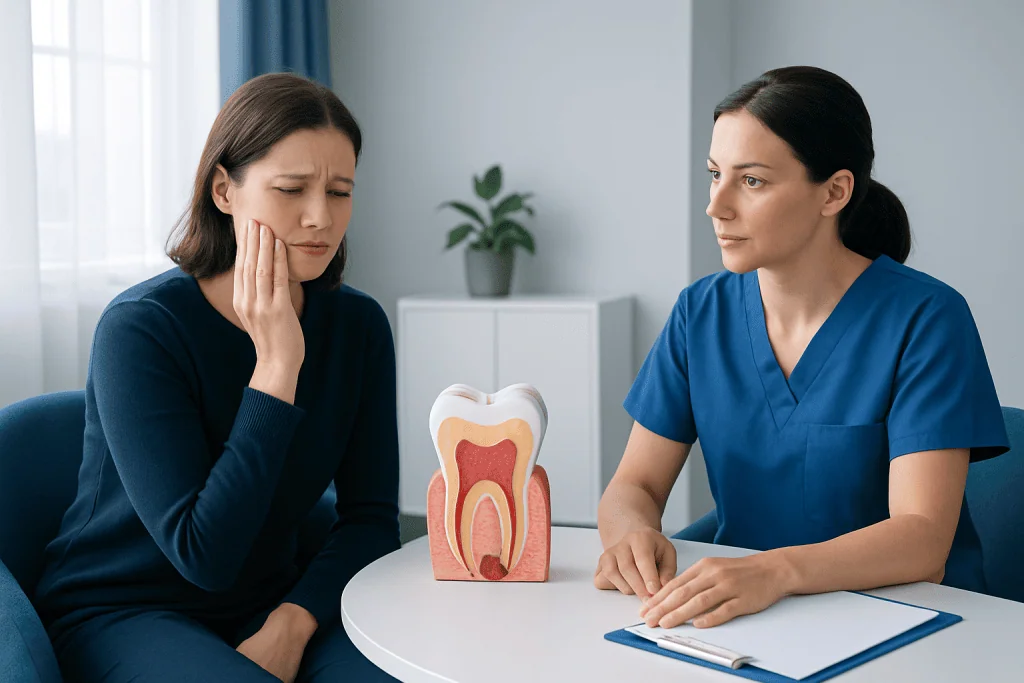
An abscess tooth most often begins when bacteria reach tissues that should normally be protected. Deep tooth decay is a frequent cause because it allows bacteria to travel into the inner pulp, where nerves and blood vessels are located. Once that tissue becomes inflamed or dies, infection can extend down the root and into the bone around the tooth.
Cracked, chipped, or injured teeth can also create an opening for bacteria, even when the damage seems small. Previous dental work may occasionally become worn or leak over time, allowing bacteria to re-enter. In the gums, plaque buildup and untreated gum disease can create pockets where bacteria multiply, leading to a periodontal abscess.
Some factors make abscess formation more likely. These include poor oral hygiene, frequent sugary foods or drinks, dry mouth, smoking, and delayed dental care. Health conditions that affect immune defenses, such as poorly controlled diabetes or treatments that suppress immunity, may also increase the risk or make infections harder to control.
How dentists diagnose an abscess tooth
Diagnosis starts with a dental examination and a discussion of symptoms, including when the pain began, whether it is constant or triggered by biting, and whether swelling or fever is present. The dentist checks the tooth, gum, and surrounding tissues for tenderness, visible swelling, drainage, cracks, deep decay, or a loose restoration.
Dental X-rays are often used to look for infection around the root and to assess damage to nearby bone. X-rays can also help identify whether the source is a deep cavity, a failed filling, or a periodontal problem. In some situations, the dentist may gently tap the tooth, perform temperature tests, or assess the health of the pulp to understand whether the nerve tissue has been affected.
If there is extensive facial swelling, difficulty opening the mouth, or concern that the infection extends beyond the tooth and gum, a doctor or oral and maxillofacial specialist may recommend additional imaging and urgent treatment. The goal is not only to confirm the abscess, but also to decide whether the tooth can be preserved and whether the infection is localized or spreading.
Treatment options and what to expect
The main aim of treatment is to remove the source of infection, drain any pus if needed, and preserve the tooth when possible. A dentist may make a small opening to drain the abscess and reduce pressure. If the infection is inside the tooth, root canal treatment is often recommended to clean the infected pulp, disinfect the root canals, and seal the tooth so bacteria cannot easily return.
If the tooth is too damaged to save, removal may be the safest option. After extraction, the infected area can be cleaned, and the dentist may discuss replacement options depending on the situation. Where gum disease is the source, treatment may focus on cleaning the periodontal pocket, improving gum health, and managing deeper infection. This can overlap with care used for tooth decay or periodontal disease, depending on the cause.
Antibiotics are not always the only or primary treatment, because they may not fully remove an enclosed dental infection without drainage or dental repair. However, antibiotics may be prescribed when there is spreading swelling, fever, surrounding tissue involvement, or when immediate dental treatment must be delayed. Pain relief, warm saltwater rinses, and avoiding very hot, cold, or hard foods may help until care is provided, but home measures do not replace treatment.
Some people benefit from coordinated care involving general dentists, endodontists, periodontists, or oral surgeons. In more complex cases, treatment planning may include imaging, gum treatment, or restorative dental care after the infection settles. For international patients who need coordinated evaluation, Acibadem International’s multidisciplinary specialists in JCI-accredited hospitals diagnose and treat dental and oral health conditions with an individualized plan.
Self-care, prevention, and what not to do
Preventing an abscess tooth starts with reducing the chance that bacteria can reach the inner tooth or gum tissues. Brushing twice daily with fluoride toothpaste, cleaning between teeth, limiting sugary snacks and drinks, and attending regular dental checkups are all important. Early treatment of cavities, cracked teeth, and gum disease can stop minor problems from developing into painful infections.
When symptoms appear, some simple steps may offer temporary comfort. Warm saltwater rinses can help keep the area clean, and over-the-counter pain medicine may reduce discomfort if it is appropriate for the person’s health needs. Choosing softer foods and chewing on the opposite side may also help while waiting for an appointment.
It is important not to ignore an abscess or try to squeeze, puncture, or drain it at home. These actions can worsen irritation or spread bacteria. Applying aspirin directly to the gum is also not recommended, because it can injure the tissue. If swelling increases, pain becomes severe, or fever develops, prompt professional evaluation is the safest next step.
- Brush twice daily and floss or clean between teeth every day
- Seek care early for cavities, broken teeth, or sore gums
- Use mouthguards if advised for sports or teeth grinding
- Keep medical conditions such as diabetes well managed
- Avoid tobacco, which can impair gum health and healing
When to seek medical care
A suspected abscess tooth should be assessed by a dentist as soon as possible, even if symptoms feel manageable. Prompt treatment can prevent worsening pain and reduce the chance that infection will involve the jaw, deeper tissues, or nearby structures. Waiting too long may make treatment more complicated and can sometimes lead to tooth loss.
Urgent medical or dental care is especially important if there is fever, rapidly increasing facial swelling, trouble swallowing, difficulty breathing, worsening weakness, or inability to open the mouth normally. These signs can suggest that the infection is spreading and should not be managed only with home remedies. Children, older adults, and people with immune suppression should also seek care without delay if symptoms suggest a dental abscess.
If the diagnosis is uncertain, clinicians may also consider other causes of oral pain or swelling, such as oral cancer or non-dental infections, especially when a lesion does not heal or symptoms are unusual. For persistent dental pain, jaw swelling, or suspected infection, a dentist or qualified doctor can guide the safest next steps.
Frequently asked questions
Can an abscess tooth go away on its own?
Usually no. Pain may lessen if the abscess drains, but the infection source often remains inside the tooth or gum. A dental professional should evaluate it and recommend treatment.
Is an abscess tooth an emergency?
It often needs prompt dental care, but not every case requires an emergency department. However, fever, facial swelling, trouble swallowing, or difficulty breathing need urgent medical attention because they can signal spreading infection.
Will antibiotics cure a tooth abscess?
Antibiotics can help in selected situations, especially if there is fever or spreading swelling. Still, they usually do not remove the source of infection by themselves, so dental treatment is often needed to drain the abscess or treat the tooth.
How is an abscess tooth different from a regular toothache?
A regular toothache can have many causes, including decay, sensitivity, or grinding. An abscess tooth is a bacterial infection and may be more likely to cause throbbing pain, swelling, pus drainage, bad taste, or fever.
Can a dentist save an abscessed tooth?
In many cases, yes. If the tooth structure is still restorable, treatment such as root canal therapy can remove the infection and preserve the tooth. If damage is too severe, extraction may be recommended.
What should someone do while waiting for a dental appointment?
They can rinse gently with warm saltwater, avoid very hot or cold foods, and use suitable over-the-counter pain relief if advised by a clinician or pharmacist. They should not try to burst the abscess or place aspirin directly on the gum.
This article is for general information only and is not a substitute for professional medical advice. Please consult a qualified doctor about your individual situation.
Explore treatments in Turkey — costs, top hospitals & a free quote
JCI-accredited · board-certified surgeons · reply within 24h
Add us as a Preferred Source to see more of our trusted health content across Google Search, AI Overviews and Discover.

More from the Health Library

Diclofenac Sodium Topical Gel: An Evidence-Based Guide for Patients

Wrist Tendon Anatomy — Explained by Medical Evidence, Not Myths

Oat Milk: What Patients Need to Know

Ph Balance: A Complete Medical Overview

Eruption Cyst: A Complete Medical Overview

At Home Blood Type Test: What Patients Need to Know
Oral & Dental Health Specialists at Acibadem

Dt. Emin Gökalp Baş
Oral & Dental Health
Dt. Emrah Özmutlu
Oral Dental & Maxillofacial Surgery
Dr. Emre Çengelli
Oral Dental & Maxillofacial Surgery
Dt. Emre Orhon Kuybulu
Oral & Dental Health