Eruption Cyst: A Complete Medical Overview

Eruption cysts occur in the soft gum tissue above an unerupted tooth, most often in children. They may look clear, bluish, purple, or dark red when a small amount of blood is present.
Key Takeaways
- Eruption cysts occur in the soft gum tissue above an unerupted tooth, most often in children.
- They may look clear, bluish, purple, or dark red when a small amount of blood is present.
- Most eruption cysts resolve without treatment when the underlying tooth breaks through the gum.
- Dental assessment is important if there is pain, infection, fever, persistent swelling, or delayed tooth eruption.
- Parents and caregivers should avoid trying to pop, cut, or drain a gum swelling at home.
An eruption cyst is a soft, dome-shaped swelling that can develop in the gum tissue over a tooth that is about to emerge. It is usually benign and temporary, but a dentist can confirm the diagnosis and check whether the tooth is erupting normally.
What Is an Eruption Cyst?
An eruption cyst is a small, fluid-filled swelling in the gum over a tooth that has not yet come through. It forms in the soft tissue rather than inside the jawbone and is generally considered a harmless developmental finding. In many cases, the swelling disappears naturally when the tooth erupts through the gum.
The term eruption hematoma is used when blood mixes with the fluid inside the swelling. This can make the area appear blue, purple, brownish, or dark red rather than translucent. Although the appearance can concern parents, an eruption hematoma is usually managed in the same way as an eruption cyst.
Eruption cysts are most commonly noticed in children during the normal stages of primary or permanent tooth eruption. They can also occur in adults when a tooth is delayed in emerging, including around wisdom teeth. A dental professional can distinguish an eruption cyst from other causes of gum swelling and advise whether observation is appropriate.
How an Eruption Cyst May Look and Feel
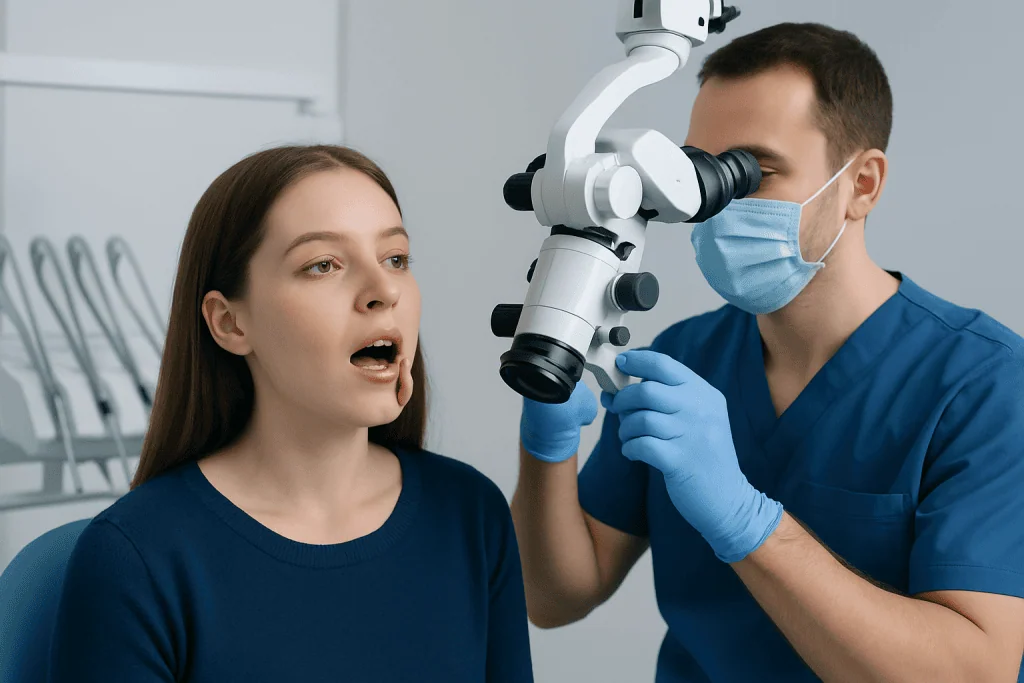
Typically, an eruption cyst appears as a smooth, rounded, raised area on the gum. It often sits directly over the crown of the tooth that is expected to emerge. The swelling may be clear or slightly white-yellow, but it can look blue or purple if it contains blood.
Many eruption cysts cause no discomfort. Some children may be more aware of the area when chewing, brushing, or touching the gum, particularly if the cyst is large or the tooth is close to breaking through. Infants and young children may be irritable for several reasons during teething, so changes in behavior should not automatically be attributed to the cyst alone.
An uncomplicated eruption cyst should not usually cause severe pain, spreading redness, pus, fever, or significant facial swelling. These features can suggest infection or another dental problem and should be assessed promptly. A swelling that remains after the tooth erupts, enlarges, or develops an unusual appearance also deserves professional review.
- Soft, dome-shaped swelling over an expected tooth location
- Clear, bluish, purple, or blood-tinged color
- A visible tooth shape or white point beneath the surface in some cases
- Mild local tenderness, or no symptoms at all
Why Eruption Cysts Develop
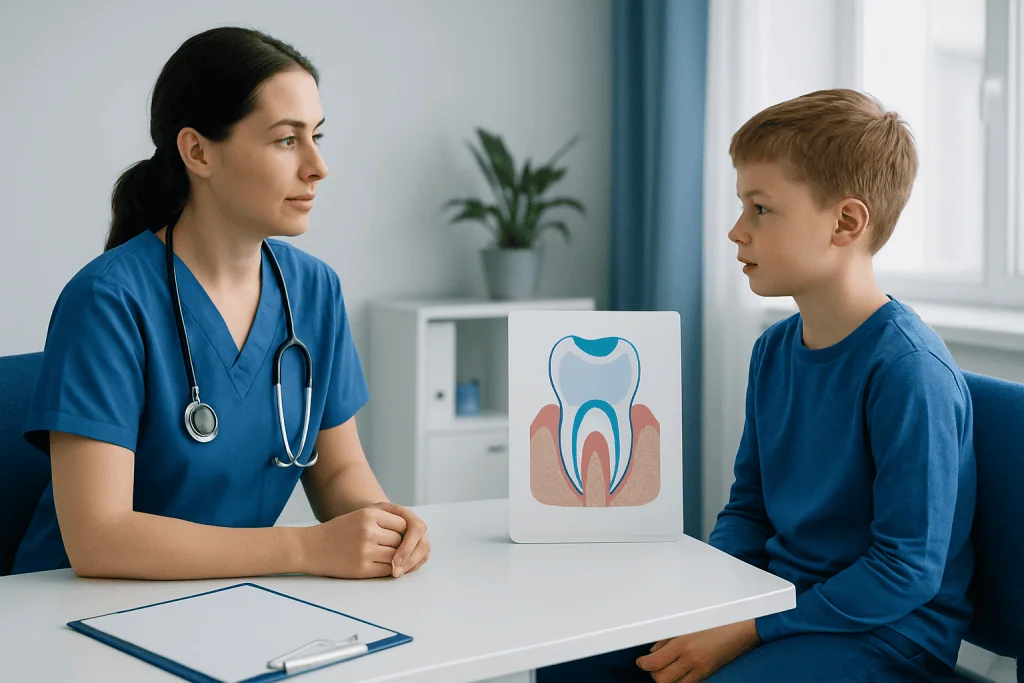
Teeth develop below the gums and gradually move toward the mouth as they erupt. An eruption cyst can form when fluid collects in the soft tissue between the erupting tooth and the overlying gum. The precise reason this occurs is not always known, and it is not usually related to poor oral hygiene or anything a parent has done.
Minor trauma to the gum during chewing or normal tooth eruption may contribute to bleeding into the swelling, producing an eruption hematoma. The condition may be seen with baby teeth, permanent front teeth, molars, or other teeth. It often occurs during periods when several teeth are emerging close together.
An eruption cyst differs from a dentigerous cyst. A dentigerous cyst develops within the jawbone around an unerupted tooth and is usually identified on dental imaging. By contrast, an eruption cyst is located in the soft gum tissue and often resolves without intervention. Nonetheless, a dental examination may be needed because the two conditions can occasionally have similar early features.
How Dentists Diagnose an Eruption Cyst
Dentists can often identify an eruption cyst through a clinical examination. They will consider the child’s age, the expected timing of tooth eruption, the swelling’s location, color, and texture, and whether a tooth appears to be just beneath the surface.
Dental X-rays are not necessary in every case. However, they may be recommended when the diagnosis is uncertain, the tooth does not seem to be progressing normally, the swelling persists, or the dentist needs to check the position of the underlying tooth. Imaging can also help rule out a cyst or lesion located deeper in the jaw.
Other possible explanations for a gum lump include an abscess caused by dental infection, trauma-related swelling, a retained tooth, or less common oral lesions. A dentist will also look for tooth decay, gum inflammation, signs of infection, and problems with the bite or eruption pathway. This careful assessment helps ensure that a simple eruption cyst is not mistaken for a condition needing different care.
Treatment and Monitoring Options
Observation is the usual approach for an uncomplicated eruption cyst. In many cases, the tooth will erupt through the gum and release the fluid naturally. The dentist may recommend watching the area over the following days or weeks and arranging a follow-up if the tooth does not emerge as expected.
Keeping the mouth clean can support comfort and reduce the chance of irritation. For older children and adults, gentle toothbrushing around the area is generally appropriate. Parents can clean an infant’s gums gently with a clean, soft cloth, while following age-appropriate oral-care guidance from their dental team. The cyst should not be squeezed, punctured, or cut at home, as this may introduce bacteria or injure the tissue.
If the cyst is large, repeatedly traumatized, uncomfortable, infected, or preventing the tooth from erupting, a dentist or oral surgeon may consider a minor procedure to open the overlying gum and expose the tooth. This is not required for most people. Treatment decisions depend on the examination findings, the affected tooth, symptoms, and whether the tooth has a clear path to erupt.
Acibadem International’s multidisciplinary dental and oral health specialists at JCI-accredited hospitals can assess gum swellings and tooth eruption concerns for international patients when specialist evaluation is needed.
Home Care and Protecting Oral Health
Most eruption cysts do not need special home treatment, but regular oral care remains important. Brushing twice daily with an age-appropriate toothbrush and toothpaste helps maintain healthy gums and teeth. Caregivers should supervise brushing in young children and follow their dentist’s advice about the appropriate amount of fluoride toothpaste for the child’s age.
Soft foods may feel more comfortable for a short time if chewing irritates the gum. Very hard, sharp, or sticky foods can be avoided temporarily if they rub against the swelling. Cool foods or drinks may be soothing for some older children, provided they are safe for the person’s age and dental needs.
Over-the-counter pain relief may sometimes be appropriate for discomfort, but it should only be used according to a qualified clinician’s advice and the product instructions for the person’s age and health status. Topical numbing gels are not suitable for everyone, especially infants and young children, so parents should ask a doctor, pharmacist, or dentist before using them.
Routine dental visits allow clinicians to monitor dental development and offer anticipatory guidance before and during tooth eruption. Good oral hygiene cannot always prevent an eruption cyst, but it can help reduce other common causes of mouth discomfort, including tooth decay and gum inflammation.
When to Seek Medical Care
A dentist should assess a new gum swelling if its cause is not clear, particularly when it is associated with a tooth that seems delayed or misplaced. An appointment is also sensible if an eruption cyst does not improve as the tooth begins to emerge, becomes larger, or remains after the tooth has erupted.
Prompt dental or medical care is important if there is severe or worsening pain, pus or a bad taste in the mouth, fever, marked redness, facial swelling, difficulty swallowing, trouble breathing, or a child who seems significantly unwell. These are not typical features of a simple eruption cyst and may require timely treatment.
Parents should seek professional advice rather than attempting to drain the swelling themselves. A dentist can provide reassurance when the finding is normal and can act early if the swelling is due to infection, trauma, or an eruption problem. For babies with feeding difficulties, persistent distress, or mouth lesions that are difficult to identify, a pediatrician or pediatric dentist can help determine the cause.
Frequently asked questions
Is an eruption cyst dangerous?
An eruption cyst is usually not dangerous. It is a benign swelling linked to a tooth coming through the gum and often resolves on its own. A dentist should assess it if there are signs of infection, substantial pain, or delayed tooth eruption.
How long does an eruption cyst last?
The duration varies, but many eruption cysts disappear when the underlying tooth erupts. This may happen over days to weeks, depending on how close the tooth is to the gum surface. If the swelling persists or the tooth does not emerge as expected, dental review is recommended.
Can an eruption cyst bleed?
Yes. When blood enters the fluid-filled swelling, it is called an eruption hematoma. It may look blue, purple, brown, or dark red and is commonly still harmless, but a dentist can confirm the cause of the discoloration.
Should an eruption cyst be popped?
No. It should not be popped, pierced, or cut at home. Doing so can cause pain, bleeding, tissue injury, or infection. Most cases can be observed safely, with treatment provided by a dental professional only if needed.
Can adults get eruption cysts?
Yes, although they are more frequently seen in children. Adults can develop an eruption cyst around a tooth that is delayed in emerging, including in some cases around wisdom teeth. An adult with a new gum lump should have it examined by a dentist.
Is an eruption cyst the same as a dental abscess?
No. An eruption cyst is associated with a tooth emerging through the gum and usually contains clear fluid or blood. A dental abscess is an infection that may cause significant pain, pus, swelling, fever, or a bad taste, and it needs prompt dental treatment.
References
- American Academy of Pediatric Dentistry
- American Dental Association
- NHS
- Merck Manual Consumer Version
This article is for general information only and is not a substitute for professional medical advice. Please consult a qualified doctor about your individual situation.
Explore treatments in Turkey — costs, top hospitals & a free quote
JCI-accredited · board-certified surgeons · reply within 24h
Add us as a Preferred Source to see more of our trusted health content across Google Search, AI Overviews and Discover.