Accessory Nerve Function in Neck and Shoulder Movement
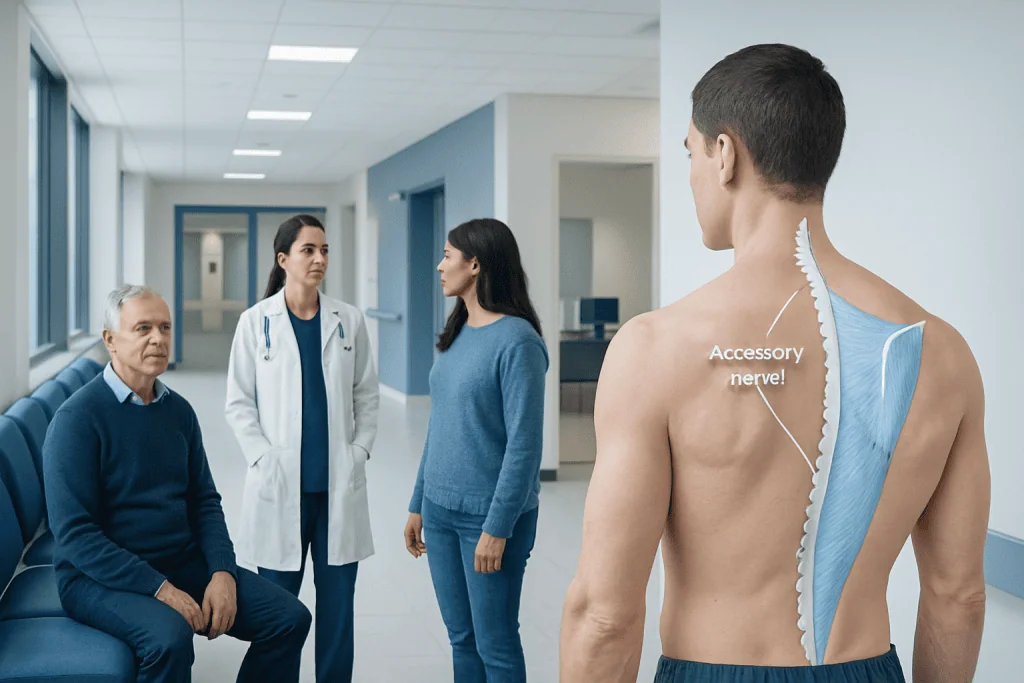
The accessory nerve is a cranial nerve that mainly controls the trapezius and sternocleidomastoid muscles. Its most noticeable roles are shrugging the shoulders, stabilizing the shoulder blade, and turning the head.
Key Takeaways
- The accessory nerve is a cranial nerve that mainly controls the trapezius and sternocleidomastoid muscles.
- Its most noticeable roles are shrugging the shoulders, stabilizing the shoulder blade, and turning the head.
- Injury may occur after neck surgery or trauma, but can also result from inflammation, compression, or less common neurologic conditions.
- A clinical examination and, when needed, nerve tests or imaging help identify the cause of weakness.
- Treatment depends on the cause and may include physiotherapy, pain management, monitoring, or surgical evaluation.
Accessory nerve function enables shoulder elevation, shoulder-blade control, and head turning by supplying the trapezius and sternocleidomastoid muscles. Problems affecting this nerve can cause shoulder drooping, weakness, pain, or difficulty turning the head, and early assessment can help guide recovery.
Overview: what does accessory nerve function mean?
Accessory nerve function refers to the work performed by the spinal accessory nerve, also called cranial nerve XI. This nerve carries movement signals from the brain and spinal cord to two important muscles: the sternocleidomastoid muscle in the side of the neck and the trapezius muscle across the upper back and shoulder. These muscles support comfortable head movement, posture, and shoulder control.
The sternocleidomastoid helps turn the face toward the opposite side and bend the neck. The trapezius helps lift the shoulder, rotate and stabilize the shoulder blade, and support arm movement above shoulder level. Although several muscles contribute to shoulder motion, weakness of the trapezius can make everyday actions such as carrying a bag, reaching overhead, or putting on clothing more difficult.
The accessory nerve travels through the neck relatively close to the surface in some areas. This anatomy makes it vulnerable to injury during certain neck procedures or after trauma. A change in shoulder or neck function does not always mean that this nerve is affected, however; joint, muscle, cervical spine, and other nerve conditions can cause similar symptoms.
How healthy accessory nerve function appears in daily movement
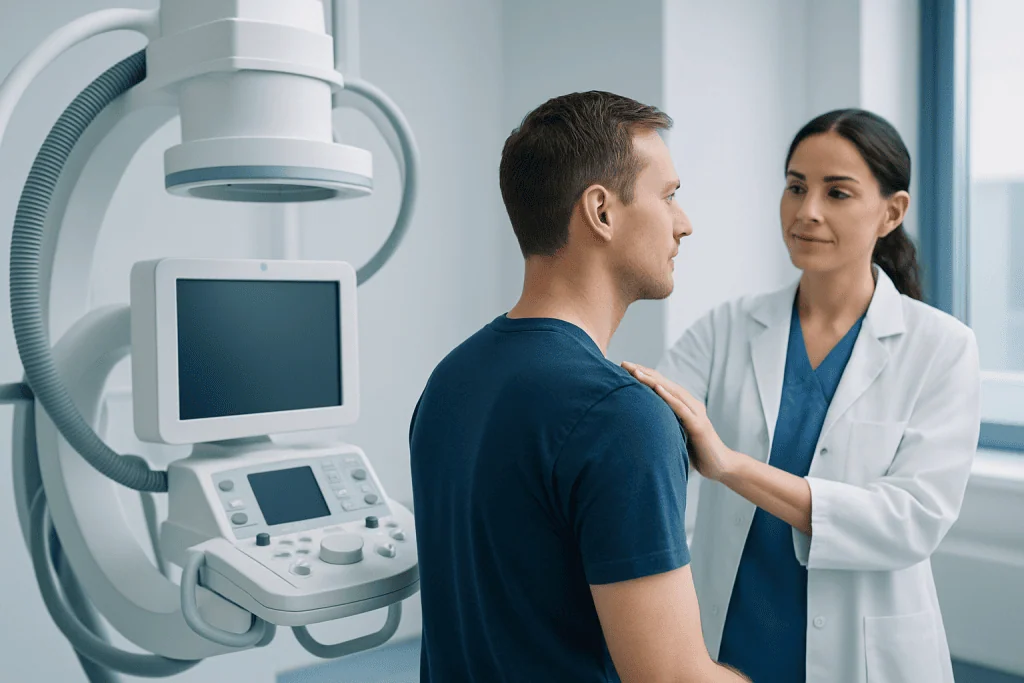
Normal accessory nerve function is often noticed only when it is impaired. When the nerve and muscles are working well, a person can raise both shoulders evenly, keep the shoulder blades stable while lifting the arms, and turn the head against gentle resistance. The trapezius works with other shoulder and upper-back muscles to allow smooth, coordinated movement rather than simply producing strength.
During a clinical examination, a healthcare professional may ask the person to shrug the shoulders while resistance is applied. They may also ask them to turn the head left and right against the examiner’s hand. Comparing both sides helps identify subtle differences in muscle bulk, strength, shoulder position, or movement pattern.
Accessory nerve function is also important for posture. The trapezius helps position the shoulder blade on the rib cage. If it is weak, the shoulder blade may sit lower or move abnormally during arm elevation, which can gradually place extra strain on surrounding muscles and tissues.
Possible symptoms of accessory nerve weakness or injury

The symptoms of accessory nerve dysfunction vary according to where the nerve is affected and how much function remains. Some people first notice one shoulder sitting lower than the other. Others experience fatigue, aching around the neck or shoulder, or reduced ability to lift the arm overhead. Symptoms may develop immediately after an injury or procedure, or become more noticeable over days to weeks.
Common features can include:
- Difficulty shrugging one shoulder or weakness when lifting it against resistance
- Shoulder drooping or a shoulder blade that appears more prominent or moves differently
- Upper shoulder, neck, or shoulder-blade pain, often related to altered muscle use
- Limited overhead reaching, especially when the arm is lifted to the side
- Weakness or discomfort when turning the head, particularly if the sternocleidomastoid is involved
- Muscle thinning over time in the trapezius or sternocleidomastoid
Pain and limited shoulder movement are not specific to accessory nerve problems. Rotator cuff disorders, frozen shoulder, arthritis, cervical nerve-root irritation, and other nerve injuries may produce overlapping symptoms. A professional examination is therefore important before assuming a particular cause.
Causes and risk factors
Accessory nerve problems can result from direct injury, stretching, compression, inflammation, or disorders affecting nerves more broadly. The nerve may be affected after penetrating injuries to the side of the neck, blunt trauma, or severe traction injuries involving the neck and shoulder. In some cases, the exact cause is not immediately clear.
Neck surgery is a recognized setting in which the nerve may be at risk, particularly procedures involving lymph nodes or masses in the side of the neck. Careful surgical technique is used to identify and protect the nerve, but temporary or permanent weakness can occasionally occur. Biopsy procedures in this region can also be relevant when assessing new shoulder weakness.
Less commonly, tumors, radiation-related tissue changes, infections, immune-mediated neuropathies, or neurologic diseases can affect accessory nerve pathways. Conditions involving the neck or brachial plexus may need consideration as well. A clinician will review the timing of symptoms, previous surgery or injuries, medical history, and associated signs such as numbness, fever, unexplained weight loss, or weakness elsewhere.
How clinicians assess accessory nerve function
Assessment begins with a focused history and physical examination. The clinician will ask about symptom onset, previous neck procedures, injury, pain pattern, and functional limitations. They will inspect the shoulders and upper back, check active range of motion, and compare strength in shoulder shrugging and head turning. The way the shoulder blade moves while the arm is raised may provide useful clues.
If the diagnosis is uncertain or symptoms are significant, additional tests may be recommended. Electromyography and nerve conduction studies can evaluate whether the trapezius and sternocleidomastoid receive normal nerve signals and may help distinguish accessory nerve injury from other causes of weakness. The timing of these tests matters, so a specialist may advise when they are most informative.
Ultrasound, magnetic resonance imaging, or other imaging may be used to examine the nerve region, muscles, cervical spine, shoulder, or a possible structural cause. Testing is selected individually rather than routinely for every person. The goal is to identify the source of symptoms and determine whether there is evidence of recovery or a need for more targeted treatment.
Treatment and rehabilitation options
Treatment is guided by the cause, severity, duration, and effect on daily activities. When there is mild weakness or a suspected temporary nerve irritation, a clinician may recommend observation with follow-up examinations. Pain relief strategies and activity adjustments can help a person remain comfortable while the condition is being assessed.
Physiotherapy is commonly important. A tailored program may focus on maintaining shoulder range of motion, strengthening unaffected supporting muscles, improving shoulder-blade mechanics, and reducing compensatory neck strain. Exercises should be selected by a qualified clinician because overly aggressive strengthening or stretching may worsen pain in some situations.
When testing suggests a significant nerve injury, particularly after trauma or surgery, referral to a peripheral nerve, orthopedic, or neurosurgical specialist may be appropriate. Some people may be considered for nerve repair, grafting, nerve transfer, or reconstructive procedures depending on the injury and timing. Surgery is not necessary for every case, and decisions are individualized after a detailed assessment.
At Acibadem International, multidisciplinary specialists in JCI-accredited hospitals can assess nerve-related shoulder and neck symptoms and coordinate diagnostic, rehabilitation, and surgical care for international patients when needed.
Self-care and protecting the shoulder
Until a diagnosis is established, it is usually sensible to avoid activities that repeatedly provoke significant pain, such as heavy overhead lifting or carrying a heavy bag on the affected side. Maintaining gentle, comfortable shoulder and neck movement can help prevent stiffness, but exercises should not cause sharp pain or increasing weakness.
Good workstation posture, supportive sleep positioning, and regular breaks from sustained neck positions may reduce secondary discomfort. Heat or cold may provide short-term relief for some people, depending on the nature of the pain. A healthcare professional or physiotherapist can offer individualized guidance based on the underlying problem.
People should not attempt to self-diagnose accessory nerve injury from shoulder asymmetry alone. Long-standing posture differences, muscle imbalance, shoulder conditions, and spine problems can all change how the shoulders look or move. Prompt assessment is particularly helpful when symptoms started after an injury or a procedure on the neck.
When to seek medical care
A person should arrange medical assessment for new or persistent shoulder drooping, difficulty shrugging, loss of overhead arm movement, or weakness turning the head. Evaluation is especially important when symptoms begin after neck surgery, a lymph node biopsy, trauma, or a new neck mass. Early review can help clarify the cause and support timely rehabilitation or specialist referral.
Urgent medical care is appropriate if weakness develops suddenly together with facial drooping, speech difficulty, confusion, severe headache, loss of balance, chest pain, or trouble breathing. These symptoms may indicate a condition other than isolated accessory nerve dysfunction and need prompt assessment.
Progressively worsening weakness, significant pain that does not improve, fever, unexplained weight loss, or numbness and weakness affecting the arm or leg also warrant timely review. A qualified doctor can determine whether symptoms are related to the accessory nerve or another condition requiring different care.
Frequently asked questions
What is the main function of the accessory nerve?
The accessory nerve supplies the sternocleidomastoid and trapezius muscles. It helps a person turn the head and lift, stabilize, and coordinate the shoulder blade and shoulder.
Can accessory nerve damage heal?
Recovery depends on the cause and extent of nerve injury. Some milder injuries improve gradually with time and rehabilitation, while more severe injuries may require specialist assessment and, in selected cases, surgical treatment.
What does accessory nerve injury feel like?
It may cause shoulder weakness, drooping, fatigue, neck or upper-back discomfort, and difficulty reaching overhead. Some people notice altered shoulder-blade movement or reduced strength when shrugging.
Can a neck biopsy affect the accessory nerve?
Because the nerve travels through parts of the side of the neck, it can be vulnerable during some procedures in that area. Most new weakness after a neck procedure should be assessed by the treating team or another qualified clinician.
How is accessory nerve dysfunction diagnosed?
Diagnosis is based on the history and an examination of shoulder shrugging, head turning, shoulder-blade movement, and muscle appearance. Electromyography, nerve conduction studies, and imaging may be used when additional information is needed.
Is shoulder pain always caused by accessory nerve damage?
No. Shoulder pain is common and may arise from muscles, tendons, joints, the cervical spine, or other nerves. A medical assessment helps distinguish among these causes and guide appropriate care.
This article is for general information only and is not a substitute for professional medical advice. Please consult a qualified doctor about your individual situation.
Joint and spine care in Turkey — expert assessment & treatment
JCI-accredited · board-certified surgeons · reply within 24h
Add us as a Preferred Source to see more of our trusted health content across Google Search, AI Overviews and Discover.

More from the Health Library

Furuncle: An Evidence-Based Guide for Patients

Penile Discharge: An Evidence-Based Guide for Patients

Moodiness: What Patients Need to Know

Sertraline: What Patients Need to Know

X virus: A Complete Medical Guide for Patients