Acute Stroke: What Patients Need to Know
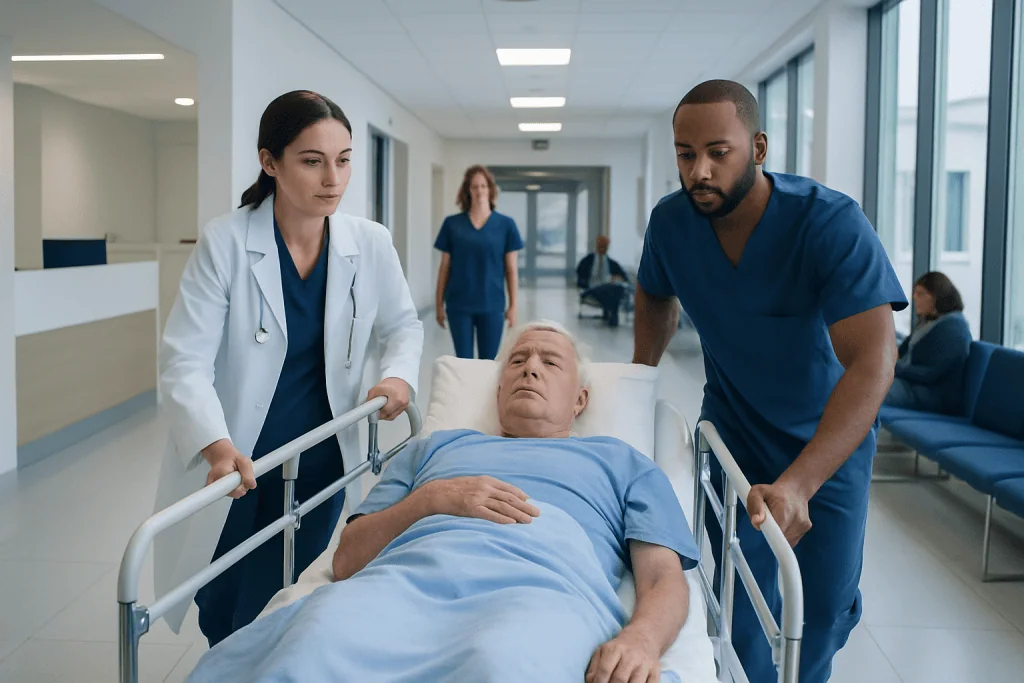
Acute stroke symptoms usually begin suddenly and should never be waited out at home. Face drooping, arm weakness and speech difficulty are key warning signs; emergency services should be contacted immediately.
Key Takeaways
- Acute stroke symptoms usually begin suddenly and should never be waited out at home.
- Face drooping, arm weakness and speech difficulty are key warning signs; emergency services should be contacted immediately.
- Most strokes are ischemic, caused by a blood clot, while hemorrhagic strokes result from bleeding in or around the brain.
- Brain imaging is essential because treatment differs depending on the type of stroke.
- Rehabilitation and prevention planning begin early and can support recovery and reduce the chance of another stroke.
Acute stroke is a sudden interruption of blood flow to part of the brain or bleeding within the brain. It requires immediate emergency assessment because rapid treatment may limit brain injury, disability and complications.
Acute Stroke: Why Immediate Action Matters
An acute stroke happens when part of the brain is suddenly deprived of oxygen-rich blood or when bleeding damages brain tissue. Brain cells are highly sensitive to oxygen loss, so symptoms can develop within seconds or minutes. It is a medical emergency, and the safest response is to call local emergency services immediately rather than driving the person to hospital or waiting to see whether symptoms improve.
There are two main types. An ischemic stroke is caused by a clot blocking an artery supplying the brain and accounts for most strokes. A hemorrhagic stroke occurs when a blood vessel ruptures and bleeds into or around the brain. A transient ischemic attack, often called a TIA or “mini-stroke,” causes temporary stroke-like symptoms but still needs urgent evaluation because it can be an early warning of a future stroke.
Prompt hospital assessment can identify the stroke type, locate the affected blood vessel and determine whether time-sensitive treatment is appropriate. Even when symptoms are mild, short-lived or uncertain, they should be treated as possible stroke symptoms until a clinician has assessed the person.
Recognizing Acute Stroke Symptoms
Stroke symptoms typically start suddenly. A useful public awareness tool is FAST: Face drooping, Arm weakness, Speech difficulty and Time to call emergency services. Ask the person to smile, raise both arms and say a simple sentence. New uneven facial movement, one arm drifting down, slurred words or difficulty finding words can indicate a stroke.
Other possible symptoms include sudden numbness or weakness of the face, arm or leg, especially on one side; confusion; trouble understanding speech; new loss of balance; severe dizziness; difficulty walking; sudden vision loss or double vision; and a sudden, unusually severe headache. A hemorrhagic stroke may also cause vomiting, reduced alertness or a stiff neck, although these symptoms have many possible causes.
Symptoms may resolve after a few minutes, particularly in a TIA, but this does not make them harmless. The exact time symptoms began, or the last time the person was known to be well, is important information for the emergency team. Family members or bystanders can help by noting this time and gathering a list of the person’s medicines and medical conditions if this does not delay emergency care.
What Causes Stroke and Who Is at Risk?
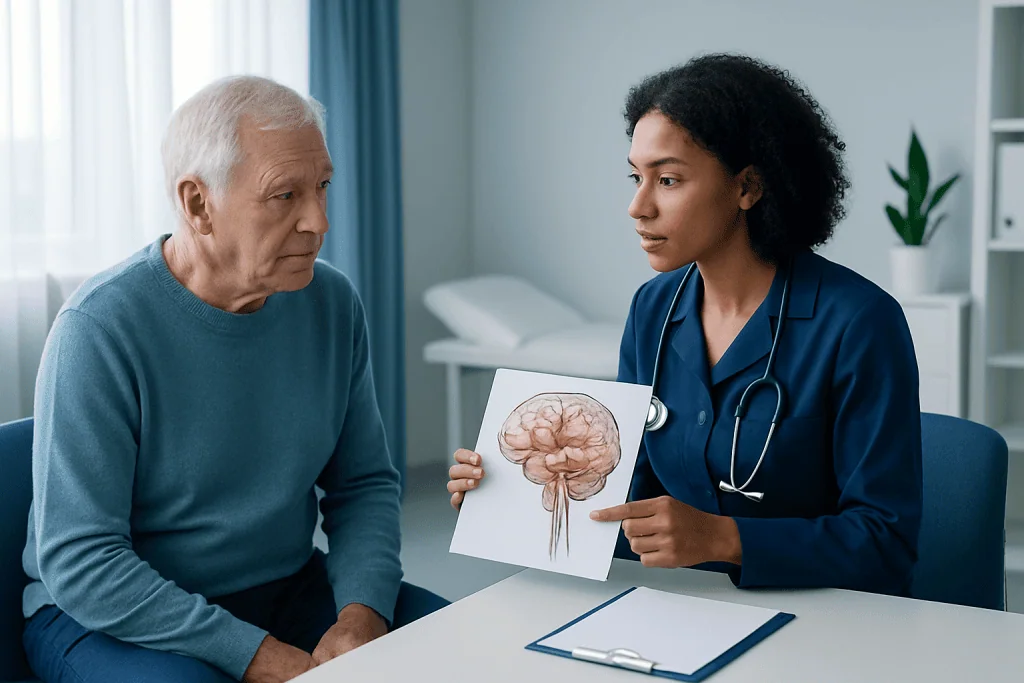
Ischemic stroke can result from a clot forming in a narrowed brain artery or travelling to the brain from elsewhere in the body, often the heart or neck arteries. Atrial fibrillation, an irregular heart rhythm, is one important source of blood clots. Narrowing of the carotid arteries, which carry blood to the brain, can also contribute to stroke risk.
Hemorrhagic stroke is often linked to long-standing high blood pressure that weakens small blood vessels. Other causes can include abnormalities in blood vessels, certain bleeding disorders, head injury, or medicines that affect blood clotting. The cause is not always immediately clear, which is why imaging and further testing are important after emergency stabilization.
Some risk factors cannot be changed, including older age, family history and a previous stroke or TIA. However, many important risks can be managed. These include high blood pressure, diabetes, high cholesterol, smoking, physical inactivity, obesity, unhealthy dietary patterns, heavy alcohol use and atrial fibrillation. Pregnancy and certain hormonal or inflammatory conditions may affect risk for some people and should be discussed with a clinician in the context of the individual’s health history.
How Acute Stroke Is Diagnosed in Hospital
Emergency clinicians first focus on breathing, circulation, blood glucose and the person’s neurological symptoms. They will ask when symptoms started, whether the person takes blood-thinning medication and whether there have been recent surgeries, injuries or bleeding problems. A focused examination checks speech, strength, sensation, coordination, vision and alertness.
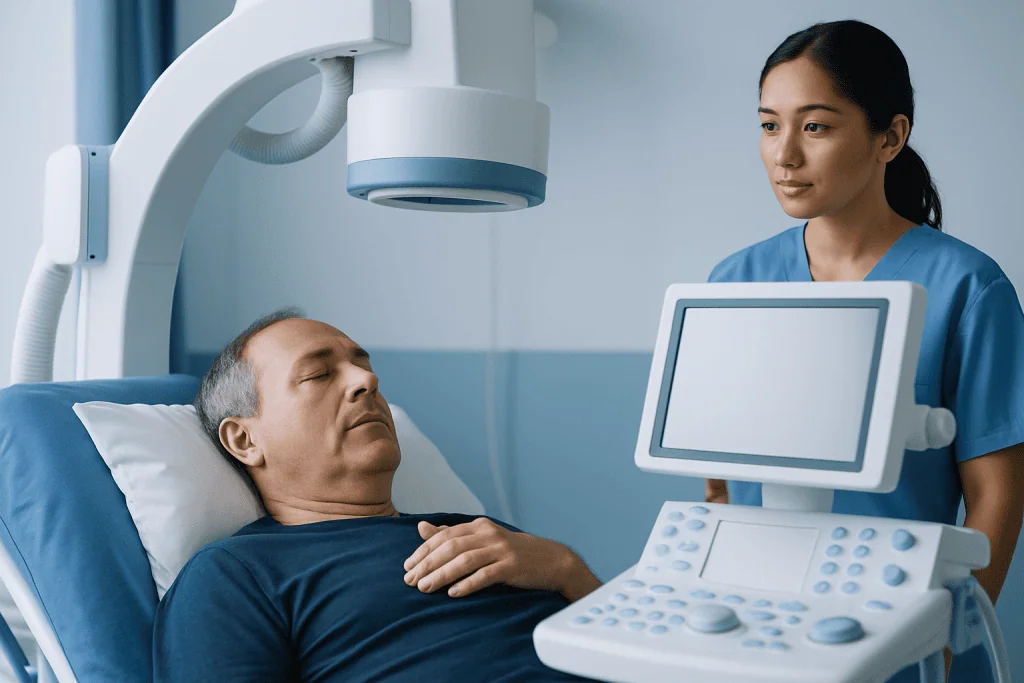
A non-contrast CT scan of the head is commonly performed urgently to look for bleeding. Depending on the situation, MRI or CT/MR angiography may be used to show brain tissue and blood vessels in more detail. These tests help distinguish ischemic stroke from hemorrhagic stroke and can identify some people who may benefit from clot-removing or clot-retrieval treatment.
Blood tests, an electrocardiogram and monitoring of heart rhythm are also commonly used. After the immediate emergency phase, clinicians may arrange ultrasound of the neck arteries, echocardiography and additional heart rhythm monitoring to investigate the likely cause. Finding the cause helps guide treatment to prevent a recurrent stroke.
Acute Stroke Treatment Options
Treatment depends on the stroke type, the time symptoms began, imaging findings, medical history and the person’s overall condition. For selected people with ischemic stroke, intravenous clot-dissolving medicine may be offered within an appropriate time window after careful safety assessment. This treatment is not suitable for everyone, particularly when there is a high risk of bleeding.
Some people with a blockage in a large brain artery may be considered for mechanical thrombectomy. In this procedure, a specialist uses a catheter inserted through an artery to remove a clot. Eligibility is based on imaging, the location of the blockage, the amount of potentially salvageable brain tissue and timing. It is performed in specialized stroke centers.
Hemorrhagic stroke treatment focuses on controlling bleeding and preventing further injury. This may include carefully managing blood pressure, reversing the effects of certain blood-thinning medicines when appropriate, treating raised pressure inside the skull and, in selected cases, neurosurgical or endovascular procedures. Supportive care also includes swallowing assessment, prevention of complications and early planning for rehabilitation.
Recovery, Rehabilitation and Preventing Another Stroke
Recovery after acute stroke is different for every person. Some people recover quickly, while others have ongoing difficulties with movement, speech, swallowing, vision, thinking, mood or fatigue. Rehabilitation may start in hospital as soon as the person is medically stable and can involve physiotherapy, occupational therapy, speech and language therapy, rehabilitation nursing, nutrition support and psychological care.
Progress often continues over weeks and months. Goals may include walking safely, improving hand function, communicating, returning to everyday activities and adapting the home or workplace. Family members and caregivers may need guidance as well, especially if there are changes in mobility, cognition, swallowing or behavior. Follow-up appointments allow the care team to adjust medicines and rehabilitation goals over time.
Preventing another stroke is a central part of care. Depending on the cause, this may include medicines to control blood pressure or cholesterol, antiplatelet medicines, anticoagulants for selected people with atrial fibrillation, diabetes management and treatment of narrowed arteries when indicated. Stopping smoking, following a heart-healthy eating pattern, being physically active within medical advice, limiting alcohol and taking prescribed medicine consistently can make a meaningful difference.
When to Seek Medical Care
Emergency medical care is needed immediately for any possible stroke symptom, even if it is mild or goes away. This includes sudden facial weakness, one-sided weakness or numbness, speech or understanding problems, loss of vision, severe imbalance, or a sudden severe headache unlike usual headaches. The person should not eat, drink or take aspirin unless instructed by emergency professionals, as swallowing may be unsafe and some strokes are caused by bleeding.
A person who has had a TIA, stroke or newly diagnosed atrial fibrillation should arrange timely follow-up with a qualified clinician, even if they feel well. Medical review is also appropriate for poorly controlled blood pressure, diabetes or cholesterol, or for new symptoms such as palpitations that may suggest an irregular heart rhythm.
For international patients, Acibadem International’s multidisciplinary specialists and JCI-accredited hospitals provide assessment and treatment for stroke-related conditions, with care plans tailored to the individual’s clinical needs. However, sudden stroke symptoms should always be managed through the nearest emergency service without delay.
Frequently asked questions
What is the difference between an acute stroke and a TIA?
An acute stroke causes brain injury because blood flow is blocked or bleeding occurs in the brain. A TIA causes similar symptoms that resolve, usually without visible lasting injury on standard imaging. However, a TIA is still urgent because it can signal a high risk of a future stroke.
Can a person have a stroke without facial drooping?
Yes. Facial drooping is common but not present in every stroke. Sudden trouble speaking, weakness or numbness, vision changes, loss of balance or severe unexplained headache can also be signs of stroke and require emergency assessment.
Why is the time of symptom onset important in acute stroke?
Some stroke treatments are only appropriate within specific time windows, although advanced imaging can sometimes help guide treatment beyond the earliest period. Knowing when the person was last seen well helps the emergency team make safe decisions quickly. If the onset was during sleep, the last known well time is usually used.
Should someone take aspirin if they think they are having a stroke?
No, aspirin should not be taken unless an emergency clinician advises it. Although aspirin can be used after some ischemic strokes, it may worsen bleeding in a hemorrhagic stroke. Immediate emergency evaluation and brain imaging are needed first.
Can acute stroke be prevented?
Not all strokes can be prevented, but many risk factors can be reduced. Controlling blood pressure, managing diabetes and cholesterol, avoiding tobacco, staying active, following a balanced diet and treating atrial fibrillation can lower risk. Regular medical care is especially important for people with previous stroke or TIA.
How long does recovery after a stroke take?
Recovery varies according to the stroke’s location, size, cause, treatment timing and the person’s general health. Some improvement may occur in the first days and weeks, while further gains can continue for months or longer with rehabilitation. Ongoing follow-up helps address changing needs and support independence.
References
- World Health Organization
- American Stroke Association
- National Institute of Neurological Disorders and Stroke
- European Stroke Organisation
- Centers for Disease Control and Prevention
This article is for general information only and is not a substitute for professional medical advice. Please consult a qualified doctor about your individual situation.
Explore treatments in Turkey — costs, top hospitals & a free quote
JCI-accredited · board-certified surgeons · reply within 24h
Add us as a Preferred Source to see more of our trusted health content across Google Search, AI Overviews and Discover.
Check your numbers in seconds
BMI, calories, due date, blood pressure and 30+ more clinical calculators — free, instant, doctor-reviewed ranges.