Age Screening Mammogram: How It Works, Results and What to Expect
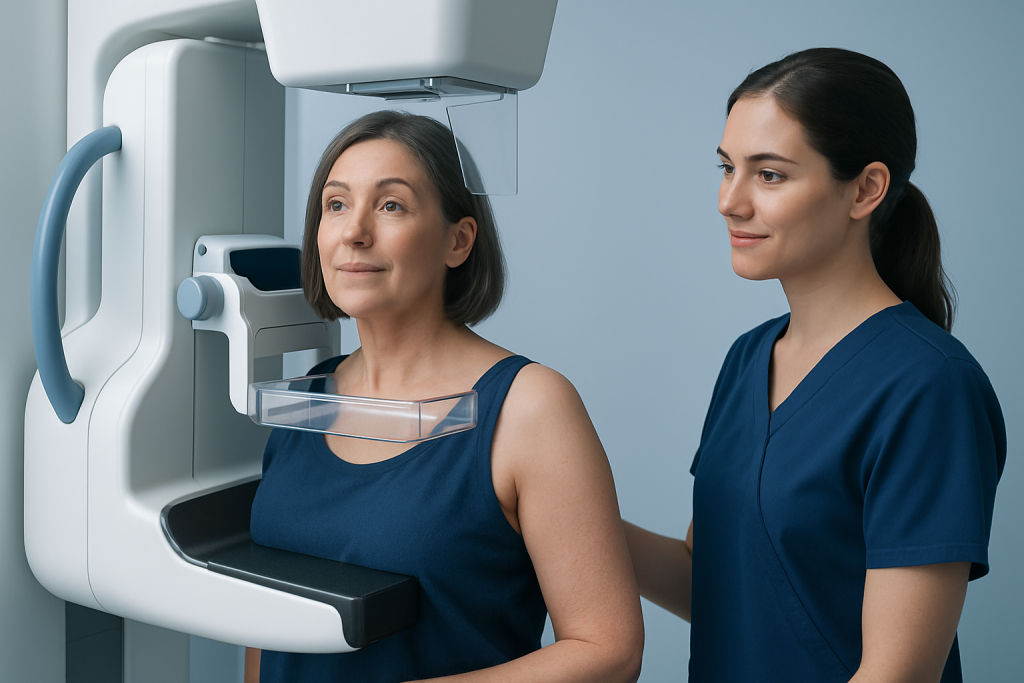
A screening mammogram looks for breast changes before symptoms develop. The age to begin screening and the interval between tests depend on age, personal risk and local clinical guidance.
Key Takeaways
- A screening mammogram looks for breast changes before symptoms develop.
- The age to begin screening and the interval between tests depend on age, personal risk and local clinical guidance.
- Breast compression is temporary and helps produce clear images while limiting radiation exposure.
- An abnormal mammogram result does not automatically mean cancer; additional imaging is commonly needed to clarify a finding.
- New breast symptoms should be assessed promptly rather than waiting for the next routine screening mammogram.
An age screening mammogram is a routine breast X-ray performed at recommended ages to look for early signs of breast cancer before a person notices symptoms. The examination is brief, and most people can return to their usual activities immediately afterward.
Age screening mammogram: an overview
An age screening mammogram is a breast imaging test that uses a small amount of X-ray radiation to identify changes in breast tissue at an early stage. It is intended for people who do not have a new breast symptom or known suspicious finding. Screening can identify some cancers before they can be felt as a lump, when treatment options may be less extensive.
Recommendations about the age to start screening and how often to have a mammogram vary between countries and medical organizations. For many people at average risk, regular mammography is discussed from around age 40 or 50 onward. The most suitable plan should be decided with a doctor, taking account of age, family history, prior breast conditions, breast density and personal preferences.
Screening mammography is different from diagnostic mammography. A diagnostic examination is used when someone has a breast concern, such as a new lump, nipple discharge or skin change, or when a screening image needs closer evaluation. Mammography is one part of broader breast health care and does not replace awareness of new breast symptoms.
Who should consider screening mammography?
People with an average chance of developing breast cancer should discuss age-based mammography screening with their primary care doctor, gynecologist or breast specialist. The decision may include the potential benefits of earlier detection as well as the possibility of false-positive results, extra imaging and, less commonly, biopsy for findings that are ultimately benign.
Some people may benefit from screening earlier, more often or with additional imaging. This can include those with a strong family history of breast or ovarian cancer, a known inherited cancer-related gene variant, prior radiation treatment to the chest at a young age, or certain high-risk breast biopsy findings. In these situations, a clinician may recommend a personalized program that includes mammography and sometimes breast MRI.
Breast implants, prior breast surgery and dense breast tissue do not prevent mammography, but they may affect how images are taken or interpreted. The imaging center should be told about implants, prior procedures, pregnancy or possible pregnancy, breastfeeding, and any prior breast images performed elsewhere. Previous mammograms are especially valuable because they allow the radiologist to compare stable tissue with new changes.
How the procedure works, step by step
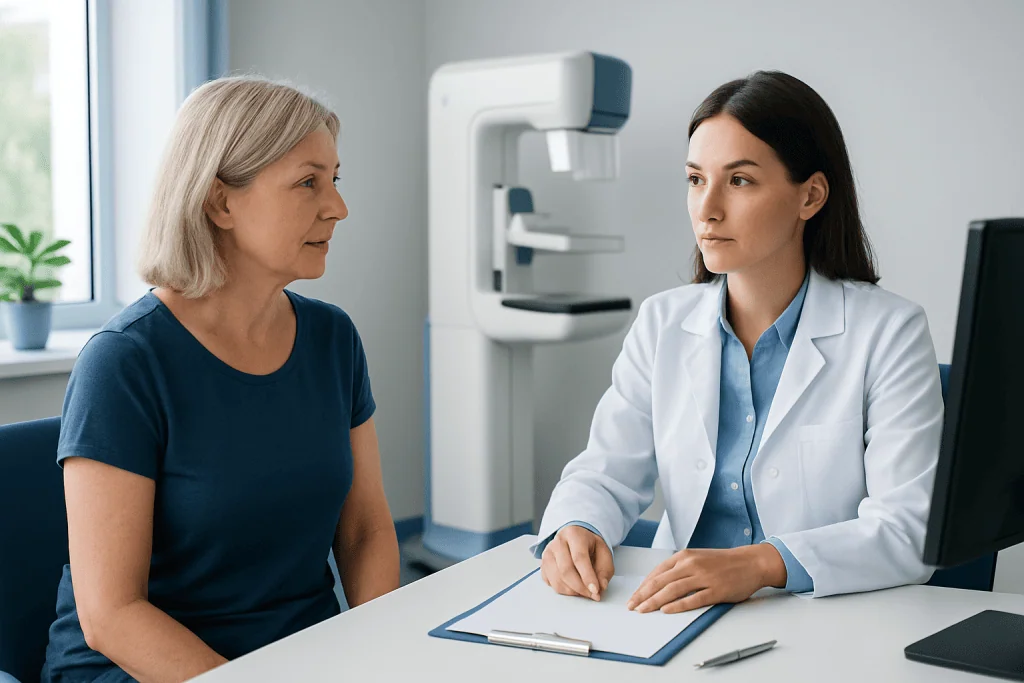
Before the appointment, the person checks in and is usually asked about their health history, breast symptoms, prior surgery, hormone use and family history. They change from the waist up and remove jewelry or other items that may interfere with images. A mammography technologist explains the process and positions one breast at a time on the imaging platform.
For each image, a clear compression paddle gently but firmly holds the breast still for a few seconds. Standard screening views are generally taken from above and from the side or angled position. Compression spreads the tissue so that small abnormalities are less likely to be hidden, reduces motion blur and helps keep the radiation dose as low as reasonably possible.
The examination itself commonly takes about 20 minutes, although the exact time can vary. Most people find compression uncomfortable rather than painful, and it lasts only briefly. The technologist can adjust positioning where possible, but cannot interpret the images or provide a final diagnosis during the examination.
Modern facilities often use digital mammography, and some use digital breast tomosynthesis, sometimes called 3D mammography. Tomosynthesis takes multiple low-dose images from different angles and creates layered views of the breast. It may improve visibility of some findings, particularly in dense breast tissue, but the most appropriate technique depends on the person and local practice.
Preparing for a mammogram and recovery afterward
Most people do not need special preparation. It can be helpful to schedule the examination when the breasts are least tender, often after a menstrual period for those who menstruate. Bringing or arranging transfer of prior images can reduce the chance of unnecessary repeat testing when a stable finding is seen.
What should you not do the night before a mammogram? There are usually no food or drink restrictions the night before, and regular medicines can generally be taken unless a clinician advises otherwise. On the day of the appointment, it is best not to apply deodorant, antiperspirant, lotion, powder, perfume or ointment on the breasts or underarms, because some products can leave particles that resemble changes on an X-ray. If these products have been used, the imaging center can advise whether cleaning the skin is sufficient.
There is no recovery period after a screening mammogram. Temporary pressure, tenderness or mild skin redness can occur, particularly in sensitive breasts, but this generally settles quickly. Normal work, driving, exercise and usual daily activities can be resumed immediately. Persistent, marked pain or skin injury is unusual and should be reported to the imaging center or a doctor.
Why do they cover your nipples during a mammogram? During positioning, the technologist may place a small marker over a nipple or other visible skin feature. This helps the radiologist recognize normal anatomy and distinguish a nipple shadow from a possible internal breast finding. It does not indicate that a problem has been found, and not every mammogram requires a marker.
Understanding mammogram results
A radiologist, a doctor trained to interpret medical images, reviews the mammogram and issues a report. Results may state that no suspicious change was seen, that routine screening should continue, or that further assessment is recommended. Additional assessment may involve extra mammogram views, breast ultrasound, MRI in selected circumstances or a tissue biopsy.
Can a radiologist tell if you have breast cancer from a mammogram? A mammogram can show findings that are suspicious for cancer, such as a new mass, distortion of breast tissue or certain patterns of calcifications. However, mammography alone usually cannot confirm cancer with complete certainty. If an image is concerning, a biopsy is typically needed to examine cells or tissue under a microscope and establish a diagnosis.
Do they tell you mammogram results right away? Some centers can provide preliminary information on the same day, particularly when additional images are completed immediately. In many cases, however, images are reviewed after the appointment and results are sent within several days. Timing depends on the facility, whether previous images are available and whether the radiologist needs further views. A person should ask the center how and when results will be communicated.
Being called back after a screening mammogram can cause understandable concern, but it is not the same as a cancer diagnosis. Callbacks are often requested because an area was not fully visible, because there is no older image for comparison, or because a common benign change needs closer evaluation. Attending any recommended follow-up appointment is important.
Benefits, limitations and possible risks
The principal benefit of age-based mammography screening is the opportunity to detect some breast cancers before they cause symptoms. Early detection may allow more treatment choices and can improve outcomes at a population level. Regular screening also provides comparison images over time, which can help radiologists identify meaningful new changes.
Mammography has limitations. It can miss some cancers, especially when breast tissue is dense or a cancer is difficult to see on an X-ray. It can also identify changes that prove not to be cancer, leading to additional testing, temporary anxiety or a biopsy. Occasionally, screening detects a slow-growing cancer that might never have caused health problems, a concern known as overdiagnosis.
The radiation dose from a mammogram is low. For most eligible people, the potential benefit of routine screening outweighs this small exposure, but individual circumstances matter. Pregnant people or those who may be pregnant should tell the imaging team before the examination so the need for imaging can be assessed carefully.
A doctor can help place these benefits and limitations in the context of an individual risk profile. People with higher-than-average risk may need tailored imaging, genetic counseling or referral to a breast clinic rather than relying only on standard age screening.
When to seek medical care
A routine screening mammogram is not designed to evaluate a new symptom. A person should arrange medical assessment promptly if they notice a new breast or underarm lump, persistent focal breast pain, skin dimpling, redness, swelling, a nipple turning inward for the first time, a rash around the nipple, or nipple discharge that is bloody or occurs without squeezing.
These symptoms have many possible explanations and are often caused by non-cancerous conditions. Nevertheless, timely clinical examination and appropriate imaging help clarify the cause. It is generally best not to wait until the next scheduled screening mammogram when a new or persistent breast change is present.
For people who need assessment after a symptom, an abnormal screening result or an elevated family risk, breast imaging and specialist review may be coordinated through a dedicated breast service. Breast cancer treatment plans, when cancer is diagnosed, are based on the cancer type and stage as well as the person’s overall health and preferences.
Acibadem International’s multidisciplinary specialists and JCI-accredited hospitals support international patients needing breast assessment, diagnostic imaging and treatment planning. A qualified clinician can advise on an appropriate screening schedule and any needed next steps.
Frequently asked questions
At what age should a person start screening mammograms?
The best age to begin screening depends on national guidance and personal breast cancer risk. Many guidelines recommend discussing regular screening from around age 40, while others begin routine screening later for people at average risk. A clinician can help determine the right timing based on family history, genetic risk and prior breast health.
How often should screening mammograms be done?
Screening intervals vary by guideline, age and individual risk. Some people are advised to have mammograms every year, while others may choose or be advised to screen every two years. Higher-risk individuals may need a different schedule and additional imaging.
Can a radiologist tell if you have breast cancer from a mammogram?
A radiologist can identify mammogram findings that may be suspicious for breast cancer, but imaging alone does not usually provide a definite diagnosis. If a finding needs clarification, further imaging may be arranged. A biopsy is generally required to confirm whether cancer cells are present.
What should you not do the night before a mammogram?
Most people do not need to avoid foods, drinks or regular medicines the night before a mammogram. On the appointment day, avoid deodorant, antiperspirant, powder, lotion and perfume on the breasts or underarms unless the imaging center says otherwise. These products can occasionally create image artifacts.
Why do they cover your nipples during a mammogram?
A small marker may be placed over the nipple to help the radiologist identify it clearly on the X-ray image. This can prevent a normal nipple shadow from being mistaken for a breast abnormality. It is a routine positioning aid and does not mean cancer is suspected.
Do they tell you mammogram results right away?
Some imaging centers provide preliminary information on the same day, especially if additional images are needed and completed immediately. Many centers send final results after a radiologist has reviewed all images, often within several days. The center can explain its usual result-reporting process at the appointment.
References
- World Health Organization
- U.S. Preventive Services Task Force
- American Cancer Society
- American College of Radiology
- National Cancer Institute
This article is for general information only and is not a substitute for professional medical advice. Please consult a qualified doctor about your individual situation.
Oncology care in Turkey — second opinion and treatment plan
JCI-accredited · board-certified surgeons · reply within 24h
Add us as a Preferred Source to see more of our trusted health content across Google Search, AI Overviews and Discover.