Albino White Person: What Patients Need to Know
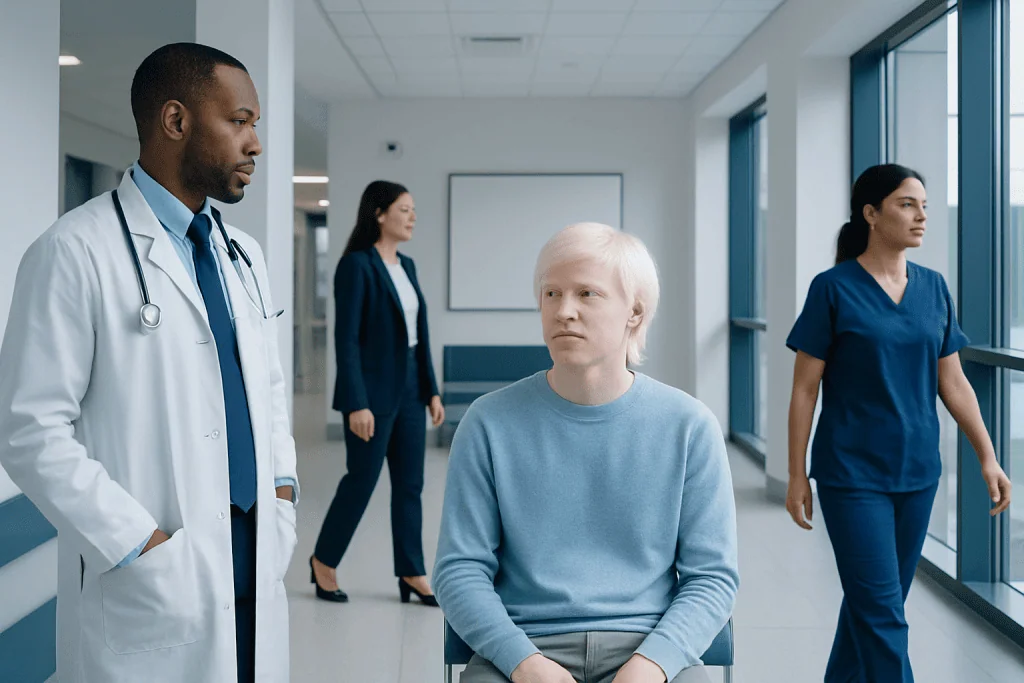
Albinism is an inherited condition that reduces or changes melanin pigment production. People with albinism may have very light skin, hair and eyes, but appearance varies between individuals and populations.
Key Takeaways
- Albinism is an inherited condition that reduces or changes melanin pigment production.
- People with albinism may have very light skin, hair and eyes, but appearance varies between individuals and populations.
- Vision differences, including reduced visual acuity, light sensitivity and eye movement changes, are common.
- Care focuses on protecting the skin and eyes from sunlight, managing vision needs and monitoring overall health.
- Some uncommon forms of albinism are associated with bleeding, immune or lung problems and need specialist assessment.
The term “albino white person” usually refers to a person with albinism, a genetic condition that causes reduced production of melanin, the pigment that gives color to the skin, hair and eyes. Albinism is not contagious and does not affect intelligence, but it can make sun protection and regular eye care especially important.
What Does “Albino White Person” Mean?
An “albino white person” is a phrase sometimes used to describe someone with albinism whose skin and hair appear very light or white. In healthcare, “person with albinism” is generally the more respectful and accurate term because it recognizes the individual before the condition. Albinism is a group of inherited genetic conditions that affect the body’s production or distribution of melanin.
Melanin is a natural pigment involved in the coloring of the skin, hair and eyes. It also helps protect the skin and eyes from ultraviolet (UV) light. When melanin is reduced, a person may have lighter-than-expected coloring for their family background and may be more sensitive to sunlight. Albinism can occur in people of every ethnic background and country.
Having albinism does not mean a person is ill in day-to-day life, and it does not affect personality, learning ability or intellectual capacity. However, many people with albinism have visual differences, and careful lifelong protection from sun exposure is important for skin health.
Types of Albinism and Differences in Appearance
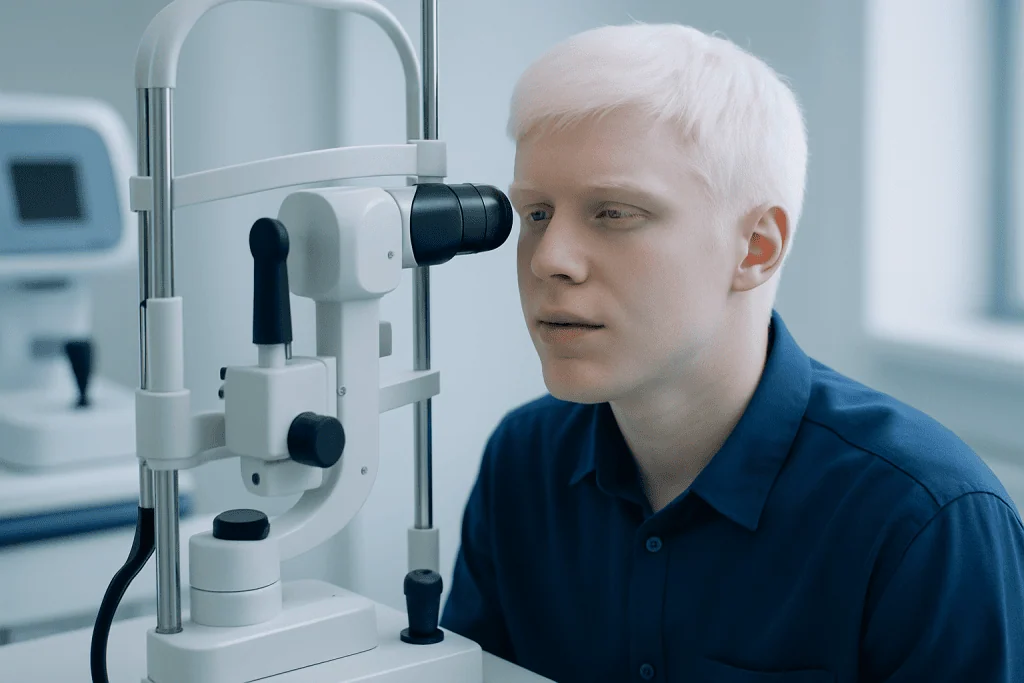
The most common group is called oculocutaneous albinism (OCA). It affects the eyes, skin and hair. Several genetic subtypes of OCA exist, and the amount of pigment a person produces can vary widely. Some people have white or very pale blond hair and very light skin, while others may have blond, reddish, brown or darker hair and skin that can develop some pigment over time.
Ocular albinism mainly affects the eyes. In this form, skin and hair coloring may be similar to that of relatives, so the condition can be less obvious from appearance alone. Eye findings may still be significant and usually require assessment by an eye specialist.
Rare syndromic forms of albinism can affect other parts of the body. For example, some may be linked with increased bruising or bleeding, recurrent infections, inflammatory bowel symptoms, or lung concerns. These forms are uncommon, but recognizing them matters because they may require coordinated care from specialists.
- Appearance does not reliably show the exact type of albinism.
- Two people with the same diagnosis may have different levels of skin, hair and eye pigment.
- Genetic evaluation can help clarify the subtype when this would guide medical care or family planning.
How Albinism Can Affect Vision
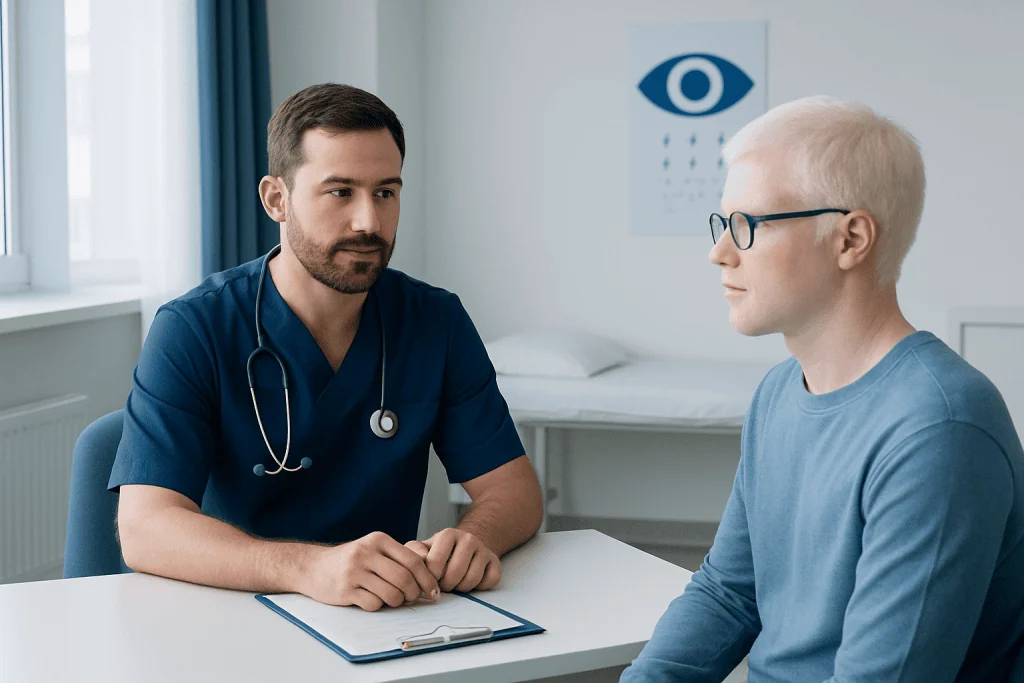
Eye-related features are often the most important medical aspect of albinism. Lower melanin levels can affect the development of the retina, particularly the macula, which is responsible for sharp central vision. As a result, many people have reduced visual acuity that cannot always be fully corrected with glasses alone.
Common features include sensitivity to bright light, involuntary side-to-side eye movements called nystagmus, crossed or misaligned eyes, reduced depth perception, and refractive errors such as nearsightedness, farsightedness or astigmatism. Some people also hold reading material close or tilt their head to find a more comfortable visual position.
These visual differences are present early in life and are not caused by doing anything wrong. An ophthalmologist or optometrist can assess vision, prescribe glasses or contact lenses when appropriate, and discuss visual aids. Children may benefit from classroom adjustments such as large-print materials, seating closer to the board, digital magnification and good control of glare.
Why Albinism Happens and How It Is Inherited
Albinism is caused by changes in genes involved in melanin production or function. Most forms of oculocutaneous albinism are inherited in an autosomal recessive pattern. This means a child usually receives one non-working gene copy from each parent. Parents may carry a gene change without having albinism themselves.
When both parents carry a change related to the same recessive form of albinism, each pregnancy can have a chance of resulting in a child with the condition. Ocular albinism may follow a different pattern, often involving the X chromosome. A genetics professional can explain inheritance in relation to a particular person or family.
Albinism cannot be acquired through contact, diet, lifestyle or sun exposure. It is not infectious, and it is not a result of something a parent did during pregnancy. Genetic testing is not required for every person, but it can confirm a diagnosis, identify certain rare syndromes and provide useful information for relatives considering future pregnancies.
Diagnosis and Ongoing Health Checks
Healthcare professionals may suspect albinism based on skin, hair and eye pigmentation along with characteristic eye findings. An eye examination is central to diagnosis. It may include measurement of visual acuity, assessment of eye alignment and movement, refraction testing for glasses, and examination of the retina and optic pathways.
Genetic testing may be offered to identify the specific type of albinism. This can be particularly useful if there are symptoms outside the eyes and skin, a family history of albinism, unexplained easy bruising, repeated infections, or questions about inheritance. Testing decisions should be discussed with a qualified clinician or genetic counselor.
Regular follow-up is individualized. Children commonly need ongoing eye assessments as vision needs change during growth. Adults should continue routine eye and skin checks. If a rare syndrome is identified or suspected, a care plan may also involve hematology, respiratory medicine, immunology, gastroenterology or other relevant specialties.
Managing Albinism: Skin, Eye and Daily-Life Support
There is no treatment that restores typical melanin production in the common forms of albinism. Management instead aims to reduce UV-related skin damage, support the best possible vision and address any associated health concerns. With practical adjustments and appropriate medical follow-up, people with albinism can participate fully in school, work, sports and family life.
Sun protection should be part of the daily routine. This includes seeking shade when possible, wearing wide-brimmed hats, UV-protective sunglasses, long sleeves and other protective clothing, and using broad-spectrum sunscreen on exposed skin according to product instructions. Sun protection is needed throughout the year, including on cloudy days, because UV radiation can still reach the skin.
For eye comfort, tinted lenses, photochromic glasses, sunglasses and hats with brims may reduce glare. Prescription glasses, contact lenses and low-vision aids may improve function for some people. Helpful tools can include magnifying devices, enlarged text, screen readers, high-contrast displays and adjustments to lighting. Eye surgery may be considered in selected cases, such as certain eye alignment concerns, after specialist evaluation.
Emotional and social support can be valuable, especially for children and teenagers who may receive unwanted attention or questions about their appearance. Families, schools and workplaces can help by using respectful language, making reasonable visual accommodations and supporting confidence and independence.
When to Seek Medical Care
A baby or child with unusually light pigmentation, frequent squinting, rapid eye movements, eye misalignment, marked sensitivity to light or difficulty seeing should be assessed by a pediatrician and eye specialist. Early assessment helps identify visual needs and enables families to plan appropriate support at home and school.
People known to have albinism should arrange routine eye and skin care. A doctor should be contacted promptly for a changing mole, a sore that does not heal, a new persistent skin growth, or a painful or severe sunburn. These symptoms do not necessarily indicate a serious condition, but timely examination is important because reduced pigment increases vulnerability to UV-related skin damage.
Urgent medical advice is appropriate if albinism is accompanied by unusual or prolonged bleeding, frequent or severe infections, persistent cough or breathing difficulty, or significant bowel symptoms. These may warrant evaluation for a rare syndromic form. Acibadem International’s multidisciplinary specialists and JCI-accredited hospitals can assess and treat people with albinism, including international patients, when coordinated care is needed.
Frequently asked questions
Is “albino white person” the correct term?
The phrase may be understood in everyday conversation, but “person with albinism” is usually preferred in healthcare and respectful communication. It describes a genetic condition without defining the person solely by it. Individual preferences may vary.
Are all people with albinism completely white?
No. Skin, hair and eye coloring can vary considerably depending on the type of albinism and a person’s genetic background. Some people have very little visible pigment, while others have blond, reddish, brown or darker coloring.
Can albinism affect a person’s intelligence?
The common forms of albinism do not affect intelligence. Children may need visual support at school because of reduced vision or light sensitivity, but these needs are different from intellectual ability. Appropriate accommodations can support learning and independence.
Can a person with albinism go outside in the sun?
Yes, but consistent sun protection is essential. Protective clothing, hats, sunglasses, shade and broad-spectrum sunscreen can reduce UV exposure. A dermatologist can provide individualized advice based on the person’s skin history and local climate.
Is albinism curable?
There is currently no cure that changes the underlying genetic cause or restores typical pigment production. Treatment focuses on vision care, sun protection, skin monitoring and management of any associated medical concerns. Regular follow-up can help address changing needs.
Can people with albinism have children?
Yes. Albinism does not usually prevent a person from having children. Because the condition can be inherited, genetic counseling may help individuals or couples understand the chance of passing a particular form of albinism to future children.
References
- National Eye Institute
- National Organization for Rare Disorders
- MedlinePlus Genetics
- American Academy of Ophthalmology
- DermNet
This article is for general information only and is not a substitute for professional medical advice. Please consult a qualified doctor about your individual situation.
Hair transplant in Turkey — costs, graft counts & a free assessment
JCI-accredited · board-certified surgeons · reply within 24h
Add us as a Preferred Source to see more of our trusted health content across Google Search, AI Overviews and Discover.