Alkaline Water: A Complete Medical Overview

Alkaline water has a higher pH than regular drinking water, usually because of naturally occurring minerals or added ionization. Most healthy people can drink alkaline water safely, but it is not a proven treatment for disease or a substitute for medical care.
Key Takeaways
- Alkaline water has a higher pH than regular drinking water, usually because of naturally occurring minerals or added ionization.
- Most healthy people can drink alkaline water safely, but it is not a proven treatment for disease or a substitute for medical care.
- Research on alkaline water is limited, and claims about curing illness, detoxifying the body, or changing blood pH are not supported by strong evidence.
- People with kidney disease, those on fluid or mineral restrictions, and infants should ask a doctor before using alkaline water regularly.
- The most important hydration goal is drinking enough safe water, regardless of whether it is alkaline or standard.
Alkaline water is water with a higher pH than standard drinking water, often marketed as a healthier choice. For most people, it is generally safe in moderation, but current evidence does not show clear medical benefits over clean, regular water for everyday hydration.
Overview: What alkaline water is and what it is not
Alkaline water is drinking water with a pH above 7, meaning it is less acidic than typical tap water. It may occur naturally when water passes over rocks and picks up minerals such as calcium and magnesium, or it may be produced artificially through ionization or by adding alkaline compounds. Many bottled products and home devices promote alkaline water as a wellness product.
From a medical perspective, alkaline water is best understood as a type of drinking water rather than a treatment. The body regulates its acid-base balance very tightly through the lungs, kidneys, and other systems. In healthy people, drinking alkaline water does not meaningfully change blood pH, which remains within a narrow range needed for normal body function.
Marketing claims often suggest that alkaline water improves energy, slows aging, enhances immunity, or prevents chronic disease. These claims are much stronger than the available scientific evidence. A few small studies have explored specific effects, but there is not enough high-quality proof to recommend alkaline water as necessary for better health.
For most adults, the main health value of any water is hydration. Safe, clean drinking water supports temperature control, circulation, digestion, and kidney function. In practical terms, whether a person chooses regular water or alkaline water matters less than consistently meeting daily fluid needs and following individualized medical advice when health conditions are present.
How alkaline water is made and how it differs from regular water
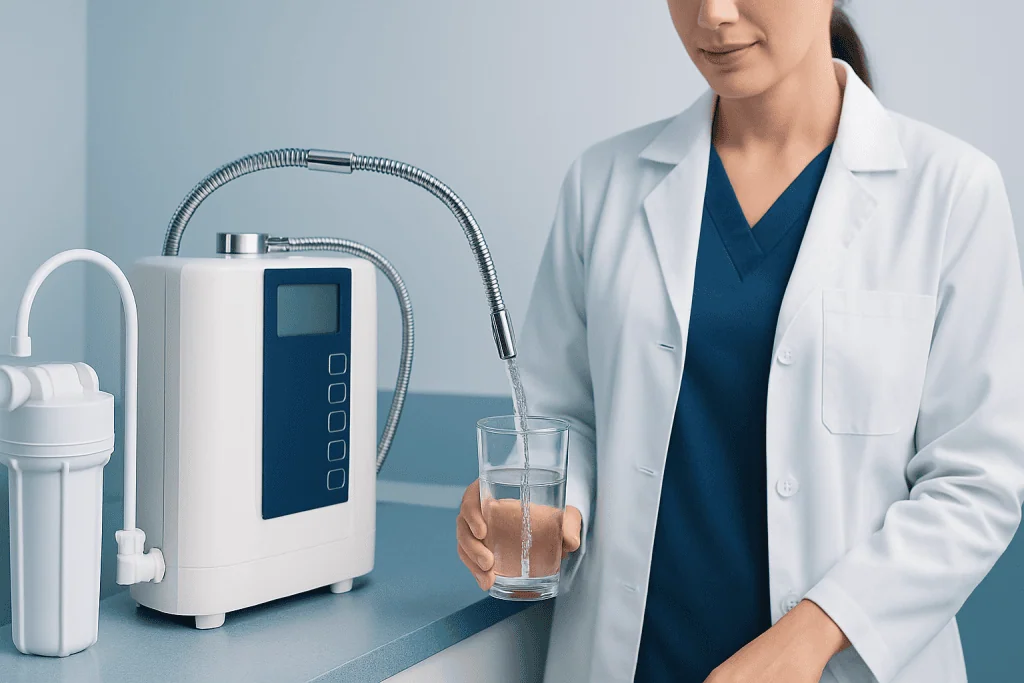
The main difference between alkaline water and regular water is pH. Regular drinking water commonly falls close to neutral, though the exact pH can vary by source. Alkaline water typically has a pH above 7 and may also contain more dissolved minerals, depending on how it is produced.
Natural alkaline water becomes less acidic by flowing through mineral-rich rock. Artificial alkaline water is often made by a machine that uses electrolysis, called a water ionizer, or by adding substances that raise pH. This means two products labeled “alkaline water” may differ in mineral content, taste, and purity.
Consumers sometimes confuse alkalinity with water quality. These are not the same. Water can have a higher pH and still fail to meet safety standards if it contains harmful contaminants. Likewise, ordinary tap or bottled water may be perfectly safe and healthy even if it is not alkaline.
When comparing options, the most important features are safety, reliable sourcing, and suitability for the individual. People who have concerns about water quality may benefit from medical guidance and, when relevant, formal water testing rather than relying on pH claims alone.
Possible benefits: what research suggests and what remains unproven

Some early research has examined whether alkaline water may help with certain narrow issues, such as post-exercise hydration or acid reflux symptoms. For example, laboratory findings have suggested that water with a higher pH may affect pepsin, an enzyme involved in reflux. However, lab findings do not automatically translate into meaningful symptom improvement for all patients, and clinical studies remain limited.
A few small studies have also looked at hydration markers in athletes or people after exercise. Results have been mixed, and study designs have often been too small or too short to draw strong conclusions. At present, there is no clear evidence that alkaline water improves physical performance better than adequate intake of regular water.
Claims that alkaline water can detoxify the body, prevent cancer, reverse aging, or correct an “acidic body” are not supported by strong medical evidence. The body already has effective systems for maintaining chemical balance and removing waste. If these systems are impaired, a person may need evaluation for an underlying condition rather than a special type of water.
People with ongoing digestive symptoms should not assume that alkaline water will solve the problem. Conditions such as acid reflux or other upper digestive disorders may require proper diagnosis and treatment. In these cases, symptom patterns, dietary triggers, and medical history are more informative than pH claims on a bottle.
Safety and risks: who should be more careful
For most healthy adults, drinking alkaline water in moderate amounts is generally considered safe. Even so, “safe” does not mean “better for everyone.” Regular use may be unnecessary, and some products can vary in mineral levels or quality depending on how they are made and stored.
People who have kidney disease should be especially cautious. The kidneys help regulate minerals and acid-base balance, so changes in fluid type or mineral intake may matter more in this group. Anyone with chronic kidney concerns, a history of kidney stones, or restricted mineral intake should speak with a doctor before regularly drinking alkaline water. In some cases, assessment by specialists involved in kidney disease treatment may be appropriate.
Possible downsides can include stomach discomfort, bloating, or an unpleasant taste for some people. Very high intake of strongly alkaline products may, in theory, disturb the normal acidity of the stomach, which plays an important role in digestion and protection against germs. However, major complications from ordinary commercial alkaline water are uncommon in healthy individuals.
Parents should be cautious about giving specialty waters to infants unless a pediatrician recommends it. People taking medications that depend on stomach acidity or those with complex medical conditions should also ask a clinician before making alkaline water a daily habit. If there are symptoms such as vomiting, weakness, confusion, or persistent digestive upset, medical advice is more important than changing beverage choices.
Common myths about alkaline water
One of the most common myths is that alkaline water can make the blood more alkaline. In reality, the body maintains blood pH within a very narrow range. If blood pH changes significantly, it can signal a serious medical problem that needs urgent evaluation, not a hydration trend.
Another myth is that alkaline water can cure chronic illness. There is no good evidence that it treats cancer, diabetes, heart disease, or infections. Patients with ongoing medical concerns should seek appropriate diagnosis and management instead of delaying care in favor of unproven claims. For instance, people with concerning blood sugar issues should be evaluated for diabetes rather than relying on special waters.
A third misconception is that more alkaline is always better. Extremely high pH is not automatically healthier, and higher pH does not equal higher quality. Water safety depends on proper production, storage, and contamination control as much as, or more than, pH level.
Finally, some people believe alkaline water is essential for wellness. It is not. Good hydration can come from safe tap water, bottled water, and many foods with high water content. For most people, healthy habits such as balanced nutrition, regular activity, and appropriate medical follow-up have a much stronger effect on long-term health.
How doctors evaluate symptoms linked to alkaline water or hydration concerns
If a person develops symptoms after drinking alkaline water, doctors focus on the symptoms themselves rather than the product label alone. The evaluation may include questions about how much was consumed, the source of the water, any home filtration or ionization device used, and whether others in the household have had similar symptoms.
Medical history matters. A clinician may ask about kidney disease, digestive disorders, reflux, medication use, electrolyte problems, pregnancy, or restrictive diets. In some situations, basic blood tests or urine tests may be needed to check hydration status, kidney function, or mineral balance. If there is persistent nausea, abdominal pain, swallowing difficulty, or recurrent heartburn, further digestive evaluation may be considered.
People with chronic symptoms such as indigestion, reflux, or chest discomfort should not assume that bottled alkaline water explains everything. Conditions may range from simple irritation to disorders that need medical treatment. When appropriate, a specialist may recommend investigations or gastroenterology care to identify the true cause.
If symptoms suggest dehydration, infection, or a more serious metabolic issue, treatment is directed at the underlying problem. In this way, alkaline water is approached as one possible factor in a broader health assessment, not as a stand-alone diagnosis.
Practical guidance: how to choose and use drinking water wisely
For everyday use, the best water is water that is safe, clean, and easy to drink regularly. If a person enjoys the taste of alkaline water and has no health condition that makes mineral intake a concern, it is usually reasonable to drink it in moderation. There is no need, however, to replace all regular water with alkaline water for health reasons alone.
Reading labels can help. Bottled water may list pH, mineral content, and source, but these details should be interpreted carefully. A higher pH does not prove superior hydration, and products with added minerals may not be ideal for everyone. People using home ionizers should maintain the device properly to reduce the risk of contamination or inaccurate pH levels.
Hydration needs vary by age, climate, physical activity, diet, and medical conditions. Water from food, soups, milk, and other beverages also contributes to total fluid intake. Signs of good hydration often include normal thirst control, pale urine in many circumstances, and steady energy, though individual patterns differ.
People with ongoing concerns about nutrition, digestion, kidney function, or hydration strategy may benefit from professional guidance. Near the end of a patient journey, some may seek coordinated support from specialists; Acibadem International’s multidisciplinary teams in JCI-accredited hospitals diagnose and treat related conditions for international patients, including through nutrition and diet support when appropriate.
When to seek medical care
Medical advice is appropriate if a person has persistent heartburn, trouble swallowing, repeated vomiting, abdominal pain, unexplained fatigue, swelling, or changes in urination. These symptoms may have causes unrelated to alkaline water and deserve proper assessment, especially if they continue or worsen.
People with kidney disease, severe digestive symptoms, chronic illness, or those taking multiple medications should ask a doctor before regularly using alkaline water products. This is particularly important if a product contains added minerals or if a home device alters water in ways that are not well monitored.
Urgent care is needed for signs of severe dehydration, confusion, fainting, chest pain, difficulty breathing, or severe weakness. These symptoms require prompt medical evaluation and should never be managed by simply changing the type of water being consumed.
In general, alkaline water should be viewed as a lifestyle choice rather than a medical solution. If a person is considering it for symptom relief or disease prevention, a qualified doctor can help separate marketing claims from evidence-based care.
Frequently asked questions
What is alkaline water?
Alkaline water is water with a pH above 7, meaning it is less acidic than standard drinking water. It may be naturally alkaline because of minerals from its source, or it may be made alkaline through processing or ionization.
Is alkaline water better than regular water?
For most healthy people, there is no strong evidence that alkaline water is significantly better than regular safe drinking water. The main health benefit comes from staying well hydrated, not from a specific pH level.
Can alkaline water change the body's pH?
In healthy people, alkaline water does not meaningfully change blood pH. The body tightly controls acid-base balance through normal functions of the lungs, kidneys, and other organs.
Is it safe to drink alkaline water every day?
Many healthy adults can drink alkaline water daily in moderation without problems. Still, people with kidney disease, infants, and those with complex medical conditions should ask a doctor before making it a regular habit.
Does alkaline water help with acid reflux?
Some limited research suggests it may have a role in certain reflux-related settings, but evidence is not strong enough to consider it a standard treatment. People with frequent or severe reflux should seek medical evaluation rather than relying only on specialty water.
Are there any side effects of alkaline water?
Most people have no major side effects, but some may notice bloating, stomach discomfort, or dislike the taste. Problems are more likely if the water has unusual mineral content, comes from an unreliable source, or if the person has an underlying health condition.
References
- World Health Organization
- U.S. Food and Drug Administration
- National Institutes of Health
- Centers for Disease Control and Prevention
- National Kidney Foundation
This article is for general information only and is not a substitute for professional medical advice. Please consult a qualified doctor about your individual situation.
Explore treatments in Turkey — costs, top hospitals & a free quote
JCI-accredited · board-certified surgeons · reply within 24h
Add us as a Preferred Source to see more of our trusted health content across Google Search, AI Overviews and Discover.

More from the Health Library



Related Specialists

Prof. Dr. Emre Bozkırlı
Endocrinology
Fzt. Mehmet Yakupçebioğlu
Physical Medicine & Rehabilitation
Assoc. Prof. Dr. Selçuk Görmez
Cardiology
Prof. Dr. Erhan Serin
Orthopedic Surgery & Traumatology