Alopecia Barbae: A Complete Medical Overview

Alopecia barbae usually causes smooth, round or oval bald patches in the beard. It is commonly related to an autoimmune process rather than poor shaving habits or infection.
Key Takeaways
- Alopecia barbae usually causes smooth, round or oval bald patches in the beard.
- It is commonly related to an autoimmune process rather than poor shaving habits or infection.
- Diagnosis is often clinical, but a doctor may check for fungal infection, skin disease, or related health conditions.
- Treatment may include observation, topical or injected medicines, and management of any associated condition.
- Early assessment is helpful when hair loss spreads, the skin becomes inflamed, or the diagnosis is unclear.
Alopecia barbae is a form of patchy hair loss that affects the beard area, most often as part of alopecia areata. It is not usually dangerous, but it can be distressing, and a medical evaluation can help confirm the diagnosis and guide treatment.
Overview: what alopecia barbae is
Alopecia barbae is a type of hair loss that affects the beard. It most often appears as one or more smooth, well-defined patches where beard hair suddenly becomes thinner or disappears. In many people, it is a localized form of alopecia areata, an autoimmune condition in which the body’s immune system mistakenly targets hair follicles.
The condition can affect the cheeks, jawline, chin, upper lip, or neck. Some people notice only a small isolated patch, while others develop several areas of hair loss over time. The skin in the affected area is usually normal in color and texture, without scarring, which means the hair follicle is often still present and capable of regrowth.
Alopecia barbae is not contagious, and it is not caused by shaving incorrectly. Although it does not usually threaten overall health, it can affect self-image and confidence. Because several skin and hair disorders can look similar, a clinician may need to distinguish alopecia barbae from problems such as fungal infection, irritation, or scarring conditions.
How it appears and how it may progress
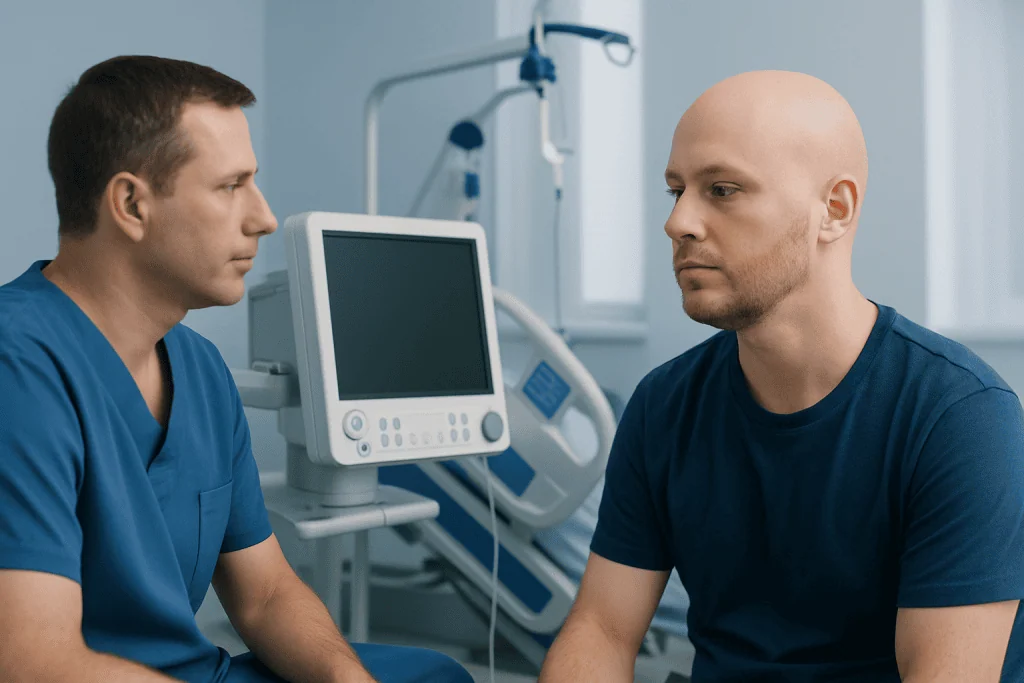
The most common sign is a sudden patch of beard hair loss with a smooth surface and clear border. The patch may be round, oval, or irregular. Some hairs at the edge can become short, thin, or tapered, and a person may notice increased shedding while washing or grooming the beard.
Symptoms are often limited to the beard area, but alopecia areata can also affect the scalp, eyebrows, eyelashes, or body hair in some individuals. People sometimes first develop isolated beard loss and only later notice hair loss elsewhere. Related conditions such as alopecia areata may help explain this broader pattern.
The skin is usually not painful, but mild itching, tingling, or sensitivity can happen before or during active hair loss. In many cases, hair may regrow on its own, sometimes initially as fine, pale, or soft hair before normal color and thickness return. However, the course is unpredictable, and some people experience repeated episodes.
- Smooth bald patches in the beard
- Sudden onset over days or weeks
- Minimal redness or scaling in typical cases
- Possible recurrence after regrowth
Causes and risk factors

The leading explanation for alopecia barbae is an autoimmune reaction. In autoimmune hair loss, immune cells affect the hair follicle and interrupt the normal growth cycle. This does not destroy the follicle in the way scarring disorders do, which is why regrowth remains possible.
Genetic tendency appears to play a role. People with a personal or family history of alopecia areata, thyroid disease, vitiligo, eczema, allergic disease, or other autoimmune conditions may have a higher likelihood of developing it. Stress is often discussed by patients, and while stress may contribute to flares in some people, it is usually not considered the sole cause.
Other conditions can resemble alopecia barbae and should be considered, especially if the skin is inflamed, scaly, painful, or scarred. These include fungal infection, traction from habitual pulling, bacterial folliculitis, and inflammatory skin disease. Doctors may also think about causes of more generalized hair loss when the pattern extends beyond the beard.
How doctors diagnose alopecia barbae
Diagnosis usually begins with a medical history and close skin examination. A doctor will ask when the hair loss started, whether it is spreading, whether there is itching or pain, and whether there is a personal or family history of autoimmune disease. They may also ask about recent illness, medications, grooming practices, and emotional stress.
In many cases, the appearance is typical enough for a clinical diagnosis. A dermatologist may use dermoscopy, a magnified examination of the skin and hairs, to look for signs that support alopecia areata and help exclude infection or scarring disease. If the diagnosis is uncertain, tests such as a skin scraping, fungal study, or occasionally a skin biopsy may be considered.
Some patients may also need blood tests, particularly if symptoms or history suggest an associated condition such as thyroid disease or nutritional imbalance. This is not necessary for everyone, but it can be useful when hair loss is widespread, recurrent, or accompanied by other symptoms. If specialized assessment is needed, care may involve dermatology evaluation to confirm the cause and discuss treatment options.
Treatment options and what to expect
Treatment depends on the size of the affected area, the speed of progression, associated symptoms, and the person’s preferences. Because some cases improve spontaneously, careful observation may be reasonable for a small patch that is not changing. When treatment is preferred, the aim is to reduce inflammation around the hair follicle and encourage regrowth.
Common medical approaches include topical corticosteroids or corticosteroid injections into the affected skin, especially for limited patchy disease. In selected patients, doctors may consider other topical immune-modifying medicines or additional therapies used for alopecia areata. The best choice varies, and treatment should be guided by a qualified clinician because side effects and response can differ between individuals.
If beard hair loss is part of broader autoimmune hair loss, management may overlap with hair restoration planning in carefully selected cases, although hair transplant is generally not the first-line option for active autoimmune disease. When there is diagnostic uncertainty or concern for a skin disorder rather than classic alopecia areata, a broader dermatology treatment plan may be more appropriate. During follow-up, the doctor monitors whether new patches appear, whether regrowth begins, and whether another diagnosis should be reconsidered.
Cosmetic support can also help. Some people trim the beard differently, shave completely, or use camouflage products while waiting for regrowth. Emotional support matters too, especially when the condition affects confidence or social comfort.
Self-care, grooming, and prevention
There is no guaranteed way to prevent alopecia barbae because the underlying process is often autoimmune. Still, general skin and hair care can reduce irritation and make the beard area more comfortable. Gentle cleansing, avoiding harsh products, and using careful shaving techniques may help protect the skin, even though they do not directly stop the autoimmune process.
It is sensible to avoid picking, frequent friction, or home remedies that burn or inflame the skin. If a person suspects a specific trigger such as a grooming product, changing that product may help limit irritation, but it is important not to assume that every patch of beard loss is due to contact sensitivity. If scaling, broken hairs, pus, or pain develops, the problem may be something other than alopecia barbae and should be assessed.
Supporting overall health can also be useful. Managing chronic conditions, following a balanced diet, sleeping well, and seeking help for significant stress may support general well-being. These steps are not a cure, but they can complement medical care and help patients feel more in control while the condition is monitored or treated.
When to seek medical care
Medical advice is recommended if a new patch of beard hair loss appears suddenly, especially when the diagnosis is uncertain. A doctor can confirm whether the problem is likely alopecia barbae or another condition that needs different treatment, such as fungal infection, folliculitis, or a scarring skin disorder.
Prompt assessment is particularly important if hair loss spreads quickly, affects the scalp or eyebrows, or comes with redness, pain, swelling, scaling, or drainage. These features are less typical of classic alopecia barbae and may point to another cause. It is also wise to seek care if there are symptoms that suggest an associated medical issue, such as fatigue, weight changes, or other skin pigment changes.
People who are significantly distressed by the cosmetic impact may benefit from an earlier consultation rather than waiting. Near the end of the care pathway, multidisciplinary specialists at Acibadem International and its JCI-accredited hospitals evaluate and treat conditions affecting the skin and hair for international patients when more detailed assessment is needed.
Frequently asked questions
Is alopecia barbae the same as alopecia areata?
Alopecia barbae is usually considered a beard-limited form of alopecia areata. In other words, it describes where the hair loss occurs rather than a completely separate disease. Some people have only beard involvement, while others may later develop hair loss in other areas.
Can beard hair grow back after alopecia barbae?
Yes, beard hair can grow back, and spontaneous regrowth is possible in some cases. Regrowth may begin as fine or lighter-colored hair before returning to a more typical appearance. However, the timing and completeness of regrowth vary from person to person.
Does shaving make alopecia barbae worse?
Shaving does not cause alopecia barbae and does not usually worsen the underlying autoimmune process. However, aggressive shaving or irritating products can inflame the skin and make the area more uncomfortable. Gentle grooming is generally preferred.
Is alopecia barbae caused by stress?
Stress alone is not considered the main cause, but it may contribute to flares in some individuals. Alopecia barbae is more strongly linked to immune system activity and genetic susceptibility. Because stress can affect overall well-being, managing it may still be helpful as part of broader self-care.
How is alopecia barbae different from a fungal beard infection?
Alopecia barbae usually causes smooth, non-scarred patches without marked redness or scaling. Fungal infection is more likely to cause broken hairs, inflammation, tenderness, crusting, or scaling. A doctor may need to examine the area or test a sample if the diagnosis is unclear.
Should someone with alopecia barbae have blood tests?
Not everyone needs blood tests. A clinician may order them if there are signs of another condition, such as thyroid disease, nutritional deficiency, or broader autoimmune involvement. Testing is based on the person's symptoms, history, and exam findings.
References
- American Academy of Dermatology
- National Institute of Arthritis and Musculoskeletal and Skin Diseases
- British Association of Dermatologists
- DermNet
- Mayo Clinic
This article is for general information only and is not a substitute for professional medical advice. Please consult a qualified doctor about your individual situation.
Hair transplant in Turkey — costs, graft counts & a free assessment
JCI-accredited · board-certified surgeons · reply within 24h
Add us as a Preferred Source to see more of our trusted health content across Google Search, AI Overviews and Discover.

More from the Health Library



Related Specialists

Merve Güvendi
Physical Medicine & Rehabilitation
Prof. Dr. Ayşenur Meriç Hafız
Otorhinolaryngology
Dr. Nilgün Çavdar
Physical Medicine & Rehabilitation
Dr. Atilay Büker
Radiology