Alzheimer’s vs Vascular Dementia: Key Differences in Symptoms and Progression

Alzheimer’s disease usually begins gradually and mainly affects memory early on. Vascular dementia is caused by reduced blood flow to the brain, often after strokes or small vessel disease.
Key Takeaways
- Alzheimer’s disease usually begins gradually and mainly affects memory early on.
- Vascular dementia is caused by reduced blood flow to the brain, often after strokes or small vessel disease.
- Vascular dementia may progress in a stepwise pattern, while Alzheimer’s tends to worsen more steadily over time.
- Diagnosis often involves medical history, cognitive testing, brain imaging, and review of vascular risk factors.
- Treatment focuses on symptom management, safety, daily support, and controlling conditions such as high blood pressure and diabetes.
Alzheimer’s disease and vascular dementia are two common causes of cognitive decline, but they do not affect the brain in the same way. Understanding how their symptoms, causes, and progression differ can help patients and families seek timely evaluation and appropriate care.
Overview: How Alzheimer’s and Vascular Dementia Differ
Alzheimer’s disease and vascular dementia are both forms of dementia, a term used for a group of symptoms that affect memory, thinking, behavior, and daily functioning. Although they may look similar at first, they have different underlying causes. Alzheimer’s disease is a neurodegenerative disorder in which brain cells gradually become damaged and die. Vascular dementia develops when blood flow to parts of the brain is reduced or interrupted, leading to brain injury.
One of the most important differences is how symptoms begin and change over time. Alzheimer’s disease often starts with subtle memory problems and slowly progresses. Vascular dementia may appear more suddenly after a stroke, or it may develop gradually because of repeated small vessel damage in the brain. In some people, symptoms seem to worsen in noticeable steps rather than in a smooth decline.
It is also possible for a person to have features of both conditions. This is sometimes called mixed dementia. In older adults, changes related to Alzheimer’s disease and blood vessel disease can occur together, making diagnosis more complex. Even so, identifying the main pattern can help guide treatment, rehabilitation, and long-term planning.
Symptoms: What Families May Notice First
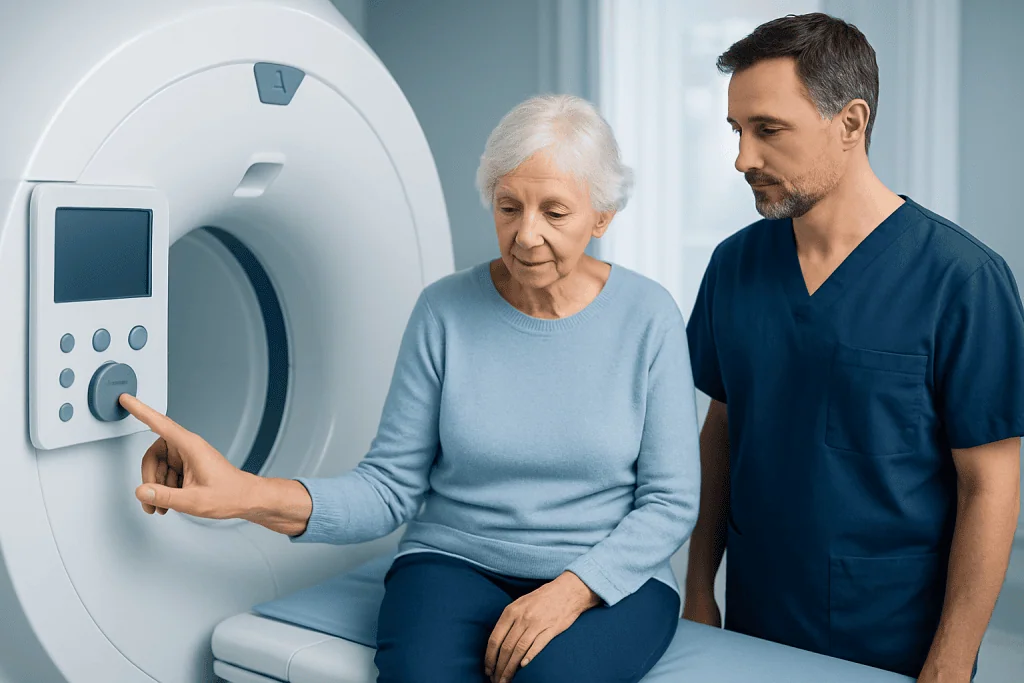
In Alzheimer’s disease, early symptoms often involve short-term memory. A person may repeatedly ask the same questions, forget recent conversations, misplace items, or have trouble learning new information. As the condition progresses, language difficulties, disorientation, poor judgment, and changes in mood or personality may become more noticeable.
In vascular dementia, symptoms can vary depending on which parts of the brain are affected. Memory can be involved, but problems with attention, planning, organization, decision-making, and mental speed are often especially prominent. A person may seem slower in thought, have difficulty following steps, or struggle to switch between tasks. Walking changes, balance problems, or weakness may also occur if strokes have affected movement pathways.
Common symptoms that may be seen in either condition include:
- Forgetfulness that disrupts daily life
- Difficulty managing medications, finances, or appointments
- Trouble finding words or understanding conversation
- Reduced ability to plan or solve problems
- Confusion in unfamiliar places
- Changes in mood, motivation, or social behavior
Because the symptom patterns overlap, families should not try to diagnose the cause based only on memory loss. A specialist evaluation is often needed to understand whether symptoms are more consistent with Alzheimer’s disease, vascular dementia, or a mixed picture.
Causes and Risk Factors

Alzheimer’s disease is linked to abnormal protein changes in the brain, including amyloid plaques and tau tangles, which gradually interfere with communication between nerve cells. Age is the strongest risk factor, but family history and genetics can also play a role. Some lifestyle and health factors, such as low physical activity, poor sleep, or untreated hearing loss, may influence overall brain health as well.
Vascular dementia is caused by conditions that damage blood vessels or reduce blood flow to the brain. This can happen after a major stroke, a series of smaller strokes, or long-term small vessel disease. Common risk factors include high blood pressure, diabetes, high cholesterol, smoking, obesity, atrial fibrillation, and heart disease. In many cases, vascular dementia is closely tied to long-standing vascular health.
The presence of vascular risk factors does not rule out Alzheimer’s disease, and Alzheimer’s disease does not protect against vascular injury. In reality, the brain can be affected by more than one process at the same time. That is why prevention and treatment often focus not only on cognitive symptoms, but also on protecting the heart and blood vessels.
Progression: Gradual Decline vs Stepwise Change
Alzheimer’s disease usually follows a gradual and progressive course. Symptoms often begin mildly and then slowly worsen over years. Early stages may mainly affect memory and word-finding. Later stages can interfere with dressing, cooking, managing routines, communication, and eventually basic self-care. The pace is different for every person, but the overall pattern is commonly steady decline.
Vascular dementia may follow a different path. If symptoms are related to one or more strokes, a person may decline suddenly and then remain stable for a period before another noticeable change occurs. This is often described as a stepwise pattern. However, not all vascular dementia behaves this way. Small vessel disease can also lead to a slow, gradual decline, especially in attention, gait, and executive function.
Changes in physical ability may be more prominent in vascular dementia than in Alzheimer’s disease, particularly early on. Problems with walking, urinary urgency, slowed movement, or weakness can suggest vascular brain injury. Still, every individual is different, and specialists often use imaging and formal testing to understand the pattern more accurately.
How Doctors Diagnose the Difference
Diagnosing dementia begins with a careful medical history and a description of symptoms from both the patient and someone who knows them well. Doctors ask when problems started, whether they came on gradually or suddenly, and how they affect work, finances, driving, medications, or daily activities. They also review current illnesses, medications, sleep, mood, and any history of stroke or transient ischemic attack.
Cognitive assessment helps identify which mental abilities are most affected. Memory testing may point toward Alzheimer’s disease, while greater problems with planning, attention, and processing speed may suggest vascular dementia. However, there is often overlap, so testing is interpreted together with the rest of the clinical picture.
Brain imaging is an important part of evaluation. MRI can show strokes, small vessel disease, shrinkage in certain brain regions, or other structural causes of cognitive symptoms. Blood tests may be used to look for treatable contributors such as thyroid disease, vitamin deficiencies, or infection. In selected cases, more specialized dementia assessment may be considered through a neurology consultation or comprehensive memory clinic review.
When symptoms are complex, doctors may also evaluate for depression, delirium, sleep disorders, medication side effects, or other neurological conditions. The goal is not only to name the type of dementia, but also to identify factors that can be improved and to create a realistic care plan.
Treatment and Day-to-Day Management
There is no single cure for either Alzheimer’s disease or vascular dementia, but treatment can help manage symptoms, maintain function, and support quality of life. Care plans are individualized and may include medication review, cognitive support, safety planning, physical activity, and help for caregivers. In Alzheimer’s disease, certain medications may be considered to support cognitive symptoms in some patients, depending on stage and medical suitability.
For vascular dementia, managing the underlying blood vessel problem is especially important. This often includes treatment of high blood pressure, diabetes, cholesterol disorders, or heart rhythm problems, along with advice on smoking cessation, exercise, and diet. Preventing further strokes can slow additional brain injury and may help preserve function.
Non-drug strategies are central in both conditions. Useful measures may include structured daily routines, calendars and reminders, simplified tasks, good lighting, fall prevention, and hearing or vision correction when needed. Occupational therapy, physical therapy, and speech-language therapy may be recommended depending on symptoms. If stroke-related deficits are present, stroke rehabilitation can be an important part of recovery and adaptation.
Near the end of the diagnostic and treatment process, some families may seek coordinated specialist care. Acibadem International’s multidisciplinary specialists and JCI-accredited hospitals evaluate and treat dementia-related conditions for international patients when advanced assessment or rehabilitation planning is needed.
Prevention, Self-Care, and When to Seek Medical Advice
Not every case of dementia can be prevented, but healthy lifestyle measures can support brain health and may lower risk, especially for vascular dementia. Managing blood pressure, blood sugar, and cholesterol is important. Regular exercise, a balanced diet, avoiding smoking, limiting excess alcohol, staying socially engaged, and treating hearing loss or sleep problems can all contribute to better long-term cognitive health.
Families should seek medical advice if memory or thinking problems begin to affect daily life, safety, communication, finances, or medication management. Prompt evaluation is especially important when symptoms start suddenly, worsen after a stroke, or are accompanied by weakness, speech changes, balance problems, or confusion. Sudden neurological symptoms may be an emergency and should be assessed urgently.
It is also wise to seek help early if a loved one is becoming isolated, depressed, agitated, or unable to manage basic routines. Early diagnosis can open the door to support services, legal and care planning, home safety changes, and treatment of reversible contributors. Even when the condition cannot be reversed, compassionate care and practical planning can make a meaningful difference for both patients and caregivers.
Frequently asked questions
Which is more common, Alzheimer’s disease or vascular dementia?
Alzheimer’s disease is generally the most common cause of dementia. Vascular dementia is also common, especially in older adults and in people with stroke or cardiovascular risk factors. Some individuals have mixed dementia, with features of both conditions.
Can vascular dementia start suddenly?
Yes. Vascular dementia can begin suddenly after a stroke or become more noticeable after a series of small strokes. In other people, it develops more gradually because of ongoing small vessel disease in the brain.
Is memory loss always worse in Alzheimer’s disease?
Memory loss is often the earliest and most prominent symptom in Alzheimer’s disease. In vascular dementia, attention, planning, and mental slowing may stand out more at first, although memory can also be affected. The exact pattern varies from person to person.
Can someone have both Alzheimer’s and vascular dementia?
Yes. This is often called mixed dementia. It means that both neurodegenerative changes and vascular brain injury are contributing to symptoms, which is common in older adults.
How do doctors tell the difference between the two?
Doctors use a combination of symptom history, cognitive testing, neurological examination, and brain imaging. They also look for stroke history and vascular risk factors such as high blood pressure or diabetes. Sometimes the distinction becomes clearer over time as the symptom pattern evolves.
Can vascular dementia be prevented?
Risk may be reduced by protecting blood vessel health. Controlling blood pressure, diabetes, and cholesterol, not smoking, staying active, and addressing heart rhythm problems can help lower the chance of stroke and vascular brain injury.
References
- World Health Organization
- National Institute on Aging
- Alzheimer's Association
- National Institute of Neurological Disorders and Stroke
- American Heart Association
This article is for general information only and is not a substitute for professional medical advice. Please consult a qualified doctor about your individual situation.
Dementia in Turkey — costs, top hospitals & a free quote
JCI-accredited · board-certified surgeons · reply within 24h
Add us as a Preferred Source to see more of our trusted health content across Google Search, AI Overviews and Discover.
Check your numbers in seconds
BMI, calories, due date, blood pressure and 30+ more clinical calculators — free, instant, doctor-reviewed ranges.

Neurology
Diagnosis and treatment of disorders of the brain, spinal cord, nerves and muscles.
51 specialists in this unit