Ankylosing Spondylitis: Inflammatory Back Pain and Treatment Options

Ankylosing spondylitis is part of a group of conditions called axial spondyloarthritis and commonly begins in young adulthood. Inflammatory back pain is typically worse after rest, improves with movement, and may be associated with morning stiffness.
Key Takeaways
- Ankylosing spondylitis is part of a group of conditions called axial spondyloarthritis and commonly begins in young adulthood.
- Inflammatory back pain is typically worse after rest, improves with movement, and may be associated with morning stiffness.
- Diagnosis is based on symptoms, physical examination, blood tests, and imaging such as X-ray or MRI of the sacroiliac joints.
- Treatment often combines exercise, posture care, nonsteroidal anti-inflammatory drugs, and, when needed, biologic or targeted therapies.
- Eye inflammation, bowel symptoms, psoriasis, or persistent heel and joint pain should be discussed with a doctor because they may be related.
Ankylosing spondylitis is a long-term inflammatory condition that mainly affects the spine and sacroiliac joints, often causing back pain that improves with movement. With early diagnosis, regular exercise, and appropriate medical treatment, many people can control symptoms and maintain daily activities.
Overview
Ankylosing spondylitis is a chronic inflammatory disease that primarily affects the spine and the sacroiliac joints, which are located where the lower spine meets the pelvis. It belongs to a wider family of rheumatic diseases known as spondyloarthritis. In current medical practice, doctors may also use the term axial spondyloarthritis, especially when inflammation is present before clear changes appear on X-rays.
The condition can cause ongoing back pain, stiffness, and reduced flexibility. Over time, inflammation may lead to new bone formation in some people, which can make parts of the spine less mobile. However, ankylosing spondylitis varies widely from person to person, and many patients maintain good function with early care, physical activity, and appropriate treatment.
Ankylosing spondylitis most often begins in adolescence or young adulthood, although diagnosis may be delayed because early symptoms can resemble common mechanical back pain. Recognizing the pattern of inflammatory back pain is important because timely treatment can help reduce symptoms, protect mobility, and improve quality of life.
Symptoms of Ankylosing Spondylitis
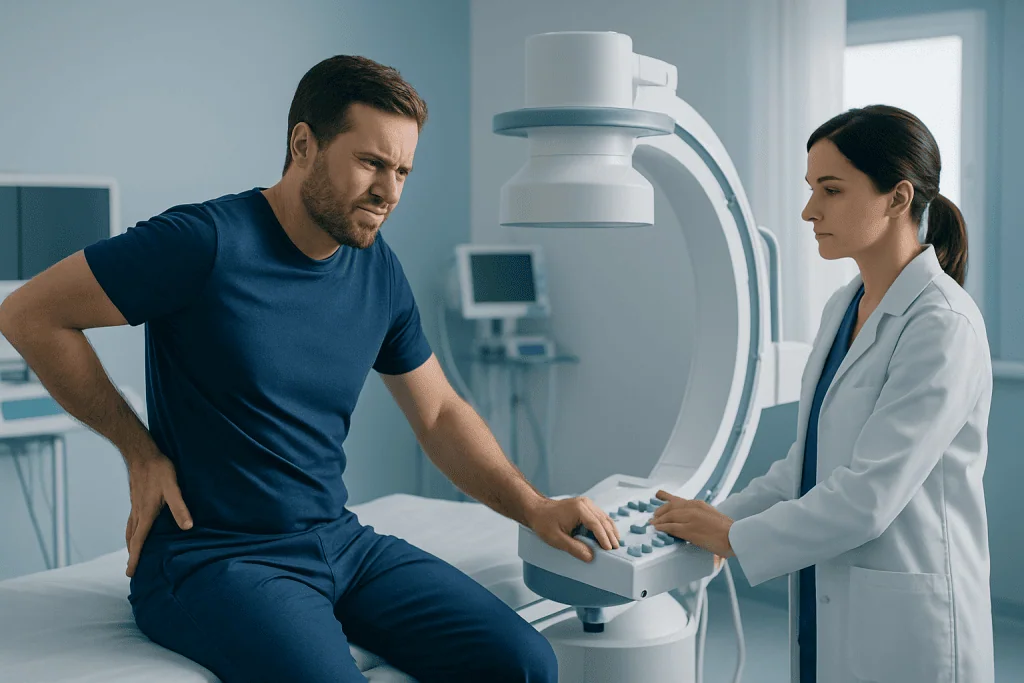
The most typical symptom is low back or buttock pain that develops gradually and lasts for more than several weeks. Unlike a muscle strain or disc-related pain, inflammatory back pain often feels worse after resting or sleeping and improves with movement, stretching, or a warm shower. Morning stiffness lasting longer than 30 minutes is common.
Pain may alternate between the left and right buttock because the sacroiliac joints are often involved. Some people notice stiffness in the neck or upper back, discomfort around the ribs, or reduced chest expansion. Fatigue can also occur because chronic inflammation affects the whole body, not only the joints.
Ankylosing spondylitis may involve areas outside the spine. Possible related symptoms include:
- Pain, swelling, or stiffness in the hips, shoulders, knees, or ankles
- Heel pain or tenderness where tendons and ligaments attach to bone
- Episodes of eye redness, pain, light sensitivity, or blurred vision, known as uveitis
- Psoriasis-like skin changes in some patients
- Inflammatory bowel symptoms such as persistent diarrhea, abdominal pain, or blood in the stool
Symptoms may come and go in flares. A person may feel relatively well for a period and then experience increased pain and stiffness. Tracking symptom patterns can help the medical team assess disease activity and adjust treatment safely.
Causes and Risk Factors

The exact cause of ankylosing spondylitis is not fully understood. It is considered an immune-mediated inflammatory condition, meaning the immune system becomes overactive in certain tissues, especially around the spine, sacroiliac joints, and tendon or ligament attachment points. This inflammation can cause pain and, over time, structural changes in the affected areas.
Genetics play an important role. Many people with ankylosing spondylitis carry a gene marker called HLA-B27, although having this marker does not mean a person will definitely develop the disease. Likewise, some people with ankylosing spondylitis do not have HLA-B27. Family history can increase risk, particularly when a close relative has ankylosing spondylitis, psoriasis, uveitis, or inflammatory bowel disease.
Other factors may influence disease expression, including sex, age at symptom onset, and interactions between the immune system and the gut microbiome. The condition is usually not caused by injury, poor posture, or routine physical activity. Mechanical strain can aggravate discomfort, but it does not explain the underlying inflammation.
Smoking is an important modifiable factor because it is associated with worse spinal symptoms and poorer overall outcomes in spondyloarthritis. For people who smoke, stopping is one of the most useful self-care steps to support long-term spine and general health.
Diagnosis
Diagnosis begins with a careful medical history and physical examination. A doctor will ask about the age symptoms began, whether pain improves with exercise, the duration of morning stiffness, family history, and any eye, skin, bowel, or peripheral joint symptoms. Examination may include checking spinal flexibility, posture, chest expansion, hip movement, and tenderness around the sacroiliac joints or heels.
Blood tests can support the diagnosis but do not confirm it alone. Tests may include markers of inflammation such as C-reactive protein or erythrocyte sedimentation rate, as well as HLA-B27 testing in selected patients. Some people with active ankylosing spondylitis have normal inflammatory markers, so normal results do not necessarily exclude the condition.
Imaging is often important. X-rays may show changes in the sacroiliac joints or spine when the condition has been present for some time. MRI can detect active inflammation earlier, before changes are visible on X-ray, and is especially helpful when symptoms strongly suggest axial spondyloarthritis.
Doctors also consider other causes of back pain, such as disc disease, osteoarthritis, infection, fracture, or other inflammatory conditions. Because diagnosis can be complex, evaluation by a rheumatologist is often recommended when inflammatory back pain is suspected.
Treatment Options
The goals of treatment are to reduce pain and stiffness, control inflammation, maintain posture and mobility, and prevent complications. Treatment is individualized according to symptom severity, disease activity, imaging findings, related conditions, and personal health factors. A combined plan usually works best.
Exercise and physiotherapy are central parts of care. Regular stretching, strengthening, posture training, and breathing exercises can help maintain spinal flexibility and chest expansion. Activities such as walking, swimming, cycling, and guided mobility programs are often helpful when matched to the person’s abilities and symptoms.
Nonsteroidal anti-inflammatory drugs, often called NSAIDs, are commonly used as first-line medication when appropriate. They can reduce pain and stiffness, but they are not suitable for everyone, particularly people with certain stomach, kidney, heart, or bleeding risks. A doctor should guide medication choice and monitoring.
If symptoms remain active despite initial treatment, biologic therapies or targeted synthetic medicines may be considered. These treatments act on specific inflammatory pathways, such as tumor necrosis factor or interleukin-17, and can be effective for many patients. Before starting them, doctors usually screen for infections and review vaccination status, and ongoing follow-up is required to monitor benefit and safety.
Prevention, Self-care, and Daily Living
Ankylosing spondylitis cannot always be prevented, especially when genetic risk is involved. However, people can take practical steps to reduce symptom impact and support long-term function. Consistency is important: short daily movement routines are often more helpful than occasional intense exercise.
Posture habits matter. People with ankylosing spondylitis are often encouraged to avoid prolonged slumped sitting, vary positions during work, and use supportive sleep arrangements that keep the spine in a comfortable neutral position. A physiotherapist can teach safe exercises for spinal extension, hip mobility, core strength, and chest expansion.
General health measures also support disease control and treatment safety. These include not smoking, maintaining a healthy weight, getting adequate sleep, and staying up to date with recommended vaccinations, especially before immune-modifying medications. A balanced diet cannot cure ankylosing spondylitis, but nutritious eating helps energy, bone health, and overall well-being.
During flares, gentle movement, heat, pacing activities, and following the agreed medication plan may help. Complete bed rest is usually not recommended for inflammatory back pain, because stiffness often worsens with inactivity. Any sudden change in symptoms should be discussed with a healthcare professional.
When to See a Doctor
A person should seek medical evaluation for back pain that starts before the age of 45, develops gradually, lasts longer than three months, and is worse with rest but better with movement. Morning stiffness, alternating buttock pain, unexplained fatigue, or a family history of spondyloarthritis-related conditions are additional reasons to ask about inflammatory back pain.
Prompt medical attention is important for eye symptoms such as a painful red eye, light sensitivity, or blurred vision, as these may indicate uveitis. A doctor should also be consulted for persistent joint swelling, heel pain, psoriasis-like rash, or bowel symptoms such as ongoing diarrhea or blood in the stool.
People already diagnosed with ankylosing spondylitis should keep regular follow-up appointments, especially if symptoms worsen, medication side effects occur, or daily function declines. Treatment plans may need adjustment over time, and monitoring helps ensure that therapies remain appropriate and safe.
For international patients seeking evaluation or ongoing management, Acibadem International’s multidisciplinary specialists and JCI-accredited hospitals can diagnose and treat ankylosing spondylitis within a coordinated care approach. Patients should consult a qualified doctor for individualized assessment and treatment decisions.
Frequently asked questions
Is ankylosing spondylitis the same as ordinary back pain?
No. Ordinary mechanical back pain is often related to muscles, discs, or joints and may worsen with activity. Ankylosing spondylitis causes inflammatory back pain that typically improves with movement and is worse after rest or sleep.
Can ankylosing spondylitis be cured?
There is currently no permanent cure, but effective treatments can control inflammation and reduce symptoms. Many people continue work, exercise, and daily activities with a personalized treatment plan and regular follow-up.
Does everyone with HLA-B27 develop ankylosing spondylitis?
No. HLA-B27 is a genetic marker that increases risk, but many people who carry it never develop the condition. Diagnosis depends on the full clinical picture, including symptoms, examination findings, blood tests, and imaging.
What exercise is best for ankylosing spondylitis?
The best exercise program usually includes stretching, posture training, strengthening, and aerobic activity. Swimming, walking, cycling, and physiotherapist-guided spinal mobility exercises are often useful, but the program should be adapted to the person’s symptoms and fitness level.
Are biologic medicines safe for ankylosing spondylitis?
Biologic medicines can be helpful for patients with active disease that does not respond adequately to initial treatment. They may increase infection risk in some people, so doctors screen carefully before treatment and monitor patients during follow-up.
Can ankylosing spondylitis affect the eyes or other organs?
Yes. Some people develop uveitis, which can cause a painful red eye, light sensitivity, or blurred vision. Ankylosing spondylitis may also be associated with psoriasis, inflammatory bowel disease, and inflammation in joints or tendon attachment sites.
References
- Assessment of SpondyloArthritis international Society
- American College of Rheumatology
- European Alliance of Associations for Rheumatology
- National Institute for Health and Care Excellence
- Spondylitis Association of America
This article is for general information only and is not a substitute for professional medical advice. Please consult a qualified doctor about your individual situation.
Ankylosing Spondylitis in Turkey — costs, top hospitals & a free quote
JCI-accredited · board-certified surgeons · reply within 24h
Add us as a Preferred Source to see more of our trusted health content across Google Search, AI Overviews and Discover.

Physical Medicine & Rehabilitation
Restoring movement and function after injury, surgery or neurological conditions.
150 specialists in this unitMore from the Health Library


Related Specialists

Ezgi Nur Çiçek
Physical Medicine & Rehabilitation
Emre Erden
Physical Medicine & Rehabilitation
Prof. Dr. Hasan M. Tanyeri
Ear Nose & Throat
Prof. Dr. Nazim Korkut
Otorhinolaryngology