Apple Skin Peel: An Evidence-Based Guide for Patients

Apple skin peel is a mild-to-moderate exfoliating treatment designed to improve surface skin concerns. It may help with dullness, uneven tone, mild acne, post-acne marks, and early signs of sun damage.
Key Takeaways
- Apple skin peel is a mild-to-moderate exfoliating treatment designed to improve surface skin concerns.
- It may help with dullness, uneven tone, mild acne, post-acne marks, and early signs of sun damage.
- A medical assessment is important to match the peel strength to the person’s skin type and goals.
- Temporary redness, dryness, peeling, and sensitivity are common after treatment.
- Sun protection and gentle skincare are essential before and after an apple skin peel.
Apple skin peel is a superficial chemical peel used to refresh the skin by removing dead surface cells and encouraging renewal. For many people, it can improve dullness, uneven texture, mild acne, and fine lines, but results and safety depend on skin type, proper assessment, and aftercare.
What is an apple skin peel?
An apple skin peel is a type of superficial chemical peel used to exfoliate the outermost layers of the skin. In practical terms, it is designed to loosen and remove dead skin cells so fresher skin can emerge, which may make the complexion look smoother, brighter, and more even. The term is often used in aesthetic practice for peels formulated with fruit-derived acids or combinations intended to be gentler than deeper chemical peels.
For patients asking what an apple skin peel does, the answer is usually straightforward: it can help improve skin texture, mild discoloration, clogged pores, and a tired or dull appearance. Some formulations are also used to support care for mild acne or post-acne marks. However, the exact ingredients and strength can vary by clinic, brand, and country, so not every “apple peel” is identical.
This is important because the effects of a peel depend on more than its name. A clinician considers the patient’s skin tone, sensitivity, acne history, medications, and treatment goals before deciding whether a superficial peel is suitable. People looking for broader resurfacing options may also discuss chemical peel treatment as part of a personalized skin plan.
How an apple skin peel works and what it can improve
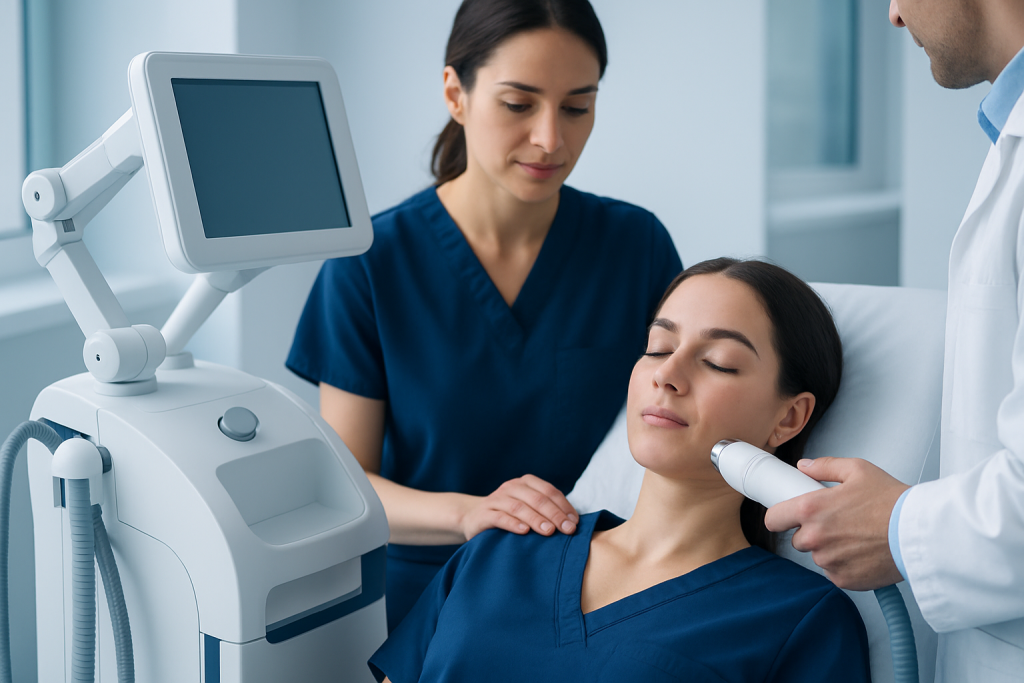
The skin naturally sheds old cells, but this process can slow with age, sun exposure, acne, and irritation. An apple skin peel works by applying a chemical solution to the skin surface for a controlled period. This loosens the bonds between older surface cells, allowing them to shed more easily. As the skin renews, the complexion may appear brighter and feel smoother.
Because it is usually a superficial peel, the main benefits are seen in the upper skin layers. It is commonly used for concerns such as:
- dull or rough skin texture
- mild uneven skin tone
- early fine lines
- mild acne and clogged pores
- post-inflammatory marks left after acne
- sun-related surface changes
Results tend to be gradual rather than dramatic after a single session. Some people notice a fresh glow within days, while others benefit most from a series of treatments spaced over time. The aim is not to change the face, but to improve skin quality in a controlled and evidence-based way.
Patients with active breakouts may also want an assessment for underlying acne or other inflammatory skin conditions, since these can affect peel choice and aftercare.
Who may benefit, and who should be cautious

Apple skin peel may suit adults who want a mild resurfacing treatment with limited downtime. It is often considered by people with dull skin, mild blemishes, visible pores, or uneven texture who are not seeking an aggressive procedure. It may also be used as part of an ongoing medical-aesthetic skin program under professional guidance.
Not everyone is a good candidate. Extra caution is needed in people with very sensitive skin, eczema, rosacea, active skin infections, open wounds, or a recent history of procedures that have already irritated the skin. People who develop dark marks easily after inflammation, or who have a deeper skin tone, may still be treated safely, but peel selection and aftercare need careful planning to reduce the risk of pigment changes.
A clinician will also ask about recent sun exposure, use of retinoids, acne medicines, hair removal methods, and any history of cold sores around the mouth. These factors can influence timing and safety. For individuals with persistent facial redness or irritation, evaluation for conditions such as rosacea may be more helpful than proceeding directly to a peel.
What happens before, during, and after the procedure
Before treatment, the skin is assessed and cleansed, and the patient’s medical history is reviewed. The clinician may advise stopping certain active skincare products for a short time beforehand, especially if they increase irritation. Clear expectations are also important: a superficial peel can improve skin quality, but it does not replace treatment for deeper scars, significant wrinkles, or pronounced laxity.
During the procedure, the peel solution is applied to the skin for a limited period. Patients may feel tingling, warmth, or mild stinging. The solution is then neutralized or removed, depending on the product used. The session is usually brief, and many people return to normal daily routines soon afterward.
After the peel, the skin may look pink and feel tight, dry, or slightly sensitive for several days. Light flaking or peeling can occur, but the amount varies. Gentle cleansing, moisturizing, and sun protection are central parts of recovery. Picking, scrubbing, or using harsh products too early can delay healing and increase the chance of irritation or discoloration.
In some cases, a clinician may recommend combining peel care with other doctor-led skin approaches, such as skin rejuvenation strategies, depending on the person’s concerns and skin tolerance.
Possible side effects and risks
Apple skin peel is generally considered a low-downtime procedure when performed appropriately, but it is still a medical-grade skin treatment with possible side effects. Common short-term effects include redness, dryness, tightness, mild burning, flaking, and temporary sensitivity to skincare products or sunlight. These usually improve within days.
Less commonly, a peel can trigger prolonged irritation, swelling, infection, acne flare, cold sore reactivation, or changes in skin color. Post-inflammatory hyperpigmentation is an important concern, especially in people with darker skin tones or those who have had recent sun exposure. Inexperienced use, overly strong products, or poor aftercare increase the risk of complications.
For this reason, it is wise to avoid home treatments that do not clearly disclose ingredients and concentrations. Even products marketed as gentle can irritate the skin barrier if they are used incorrectly or layered with other active agents. A qualified doctor or trained skin professional can help decide whether a superficial peel is appropriate and how to reduce risk.
Apple skin peel compared with other skin treatments
One reason patients ask about apple skin peel is that it sounds more natural or mild than a standard chemical peel. In reality, its safety and effectiveness depend on the actual formulation, concentration, contact time, and the person’s skin. The name alone does not tell how strong it is. That is why comparisons should focus on treatment depth and expected outcomes, not branding.
Compared with deeper peels, an apple skin peel usually has less downtime and a lower risk of complications, but the results are more subtle. Compared with facials or scrubs, it can provide more consistent exfoliation because the process is chemically controlled rather than purely mechanical. It may be a reasonable option for people who want visible but modest improvement without a long recovery period.
Some patients, however, need a different approach. Deeper acne scars, more advanced sun damage, or stubborn pigmentation may respond better to a broader doctor-led plan that can include laser treatment, prescription skincare, or other procedures. Treatment choice is best guided by diagnosis and skin examination rather than trends.
Self-care, results, and maintaining benefits
Good aftercare strongly affects outcomes. The skin barrier is temporarily more delicate after a peel, so gentle products matter. Patients are usually advised to use a mild cleanser, a fragrance-light moisturizer if tolerated, and broad-spectrum sunscreen every day. Sun exposure can worsen irritation and increase the risk of uneven pigmentation after treatment.
It is also helpful to pause potentially irritating products until the skin has recovered. These may include exfoliating acids, retinoids, harsh scrubs, and strong acne treatments, depending on professional advice. Makeup can often be resumed once the skin feels comfortable, but heavy coverage over actively peeling skin may be uncomfortable.
Results can be supported by a steady home routine rather than repeated aggressive treatments. For many people, the best long-term strategy is consistency: daily sun protection, suitable moisturization, and targeted products chosen for their skin type. If a patient continues to struggle with breakouts, visible redness, or changing spots, the issue may need medical evaluation rather than more exfoliation.
Near the end of the care pathway, some patients choose review at specialized centers. Acibadem International’s multidisciplinary specialists and JCI-accredited hospitals evaluate skin concerns and offer treatment plans for international patients when a supervised medical approach is needed.
When to seek medical care
Medical advice is recommended before an apple skin peel if the patient has very sensitive skin, frequent allergic reactions, active acne cysts, eczema, rosacea, a history of abnormal scarring, or a tendency to develop dark marks after irritation. Professional assessment is also sensible during pregnancy planning, while using prescription skin medicines, or after recent sunburn or cosmetic procedures.
After a peel, prompt medical review is appropriate if there is severe pain, intense swelling, spreading redness, blisters, pus, fever, or skin darkening that seems to be worsening instead of settling. Persistent irritation beyond the expected recovery window should also be checked. These symptoms do not always mean a serious problem, but they deserve evaluation.
Any new or changing skin lesion, bleeding spot, or pigmented patch should be examined by a qualified doctor rather than treated with repeated peels. Cosmetic improvement is safest when it begins with the right diagnosis.
Frequently asked questions
Is apple skin peel the same as a chemical peel?
Apple skin peel is generally considered a type of superficial chemical peel. The exact formulation can vary, so it is best to ask what acids or active ingredients are used and how deeply the peel is intended to act.
What does apple skin peel help with?
It may help improve dullness, rough texture, mild acne, clogged pores, uneven tone, and early fine lines. It is usually most effective for surface-level concerns rather than deep scars or advanced wrinkles.
How long does recovery take after an apple skin peel?
Many people have only mild redness, dryness, or flaking for a few days. Recovery depends on the formulation, skin sensitivity, and aftercare, so the treating clinician should give individualized guidance.
Can apple skin peel cause dark spots?
Yes, pigment changes can happen, especially if the skin becomes inflamed or is exposed to sun during healing. This risk can often be reduced with careful patient selection, proper technique, and consistent sunscreen use.
Is apple skin peel safe for sensitive skin?
Some people with sensitive skin can still have a superficial peel, but they need careful assessment first. If there is eczema, rosacea, barrier damage, or a history of strong reactions to skincare, a peel may need to be postponed or avoided.
How many sessions are usually needed?
Some patients notice improvement after one session, but a series is often recommended for gradual results. The number and timing depend on the person’s skin concerns, tolerance, and overall treatment plan.
This article is for general information only and is not a substitute for professional medical advice. Please consult a qualified doctor about your individual situation.
Explore treatments in Turkey — costs, top hospitals & a free quote
JCI-accredited · board-certified surgeons · reply within 24h
Add us as a Preferred Source to see more of our trusted health content across Google Search, AI Overviews and Discover.

More from the Health Library

Sucrose — Explained by Medical Evidence, Not Myths

Apple Vinegar Warts: What Patients Need to Know

Cystic Acne: What Patients Need to Know

BUN: A Complete Medical Overview

Shakeology: A Complete Medical Overview