Are Joints Bones? Anatomy Facts Patients Often Ask

Joints are not bones; they are connection points between bones. Cartilage, ligaments, synovium, and fluid help joints move smoothly.
Key Takeaways
- Joints are not bones; they are connection points between bones.
- Cartilage, ligaments, synovium, and fluid help joints move smoothly.
- Joint pain can come from many causes, including injury, inflammation, and wear and tear.
- Good posture, healthy body weight, and regular movement support joint health.
- Persistent swelling, stiffness, or loss of function should be assessed by a doctor.
Are joints bones? No. Joints are the places where two or more bones meet, and they work with cartilage, ligaments, and other tissues to support movement and stability. Understanding joint anatomy can help patients make sense of pain, stiffness, swelling, and everyday mobility concerns.
Overview
Are joints bones? The short answer is no. Bones are the hard structures that give the body shape and support, while joints are the places where two or more bones meet. Joints make movement possible and help the body bend, turn, walk, grip, and reach.
Many patients use the word “joint” to mean the entire area around a knee, shoulder, hip, or finger. In medical terms, a joint includes the ends of bones, cartilage, ligaments, the joint capsule, and often a lubricating lining called the synovium. These parts work together so motion is smooth and stable.
It is also helpful to know that not all joints move in the same way. Some joints, such as those in the skull, are almost immobile and mainly provide protection. Others, such as the knees and shoulders, are designed for a wide range of motion but may be more vulnerable to strain or injury.
What a Joint Is Made Of
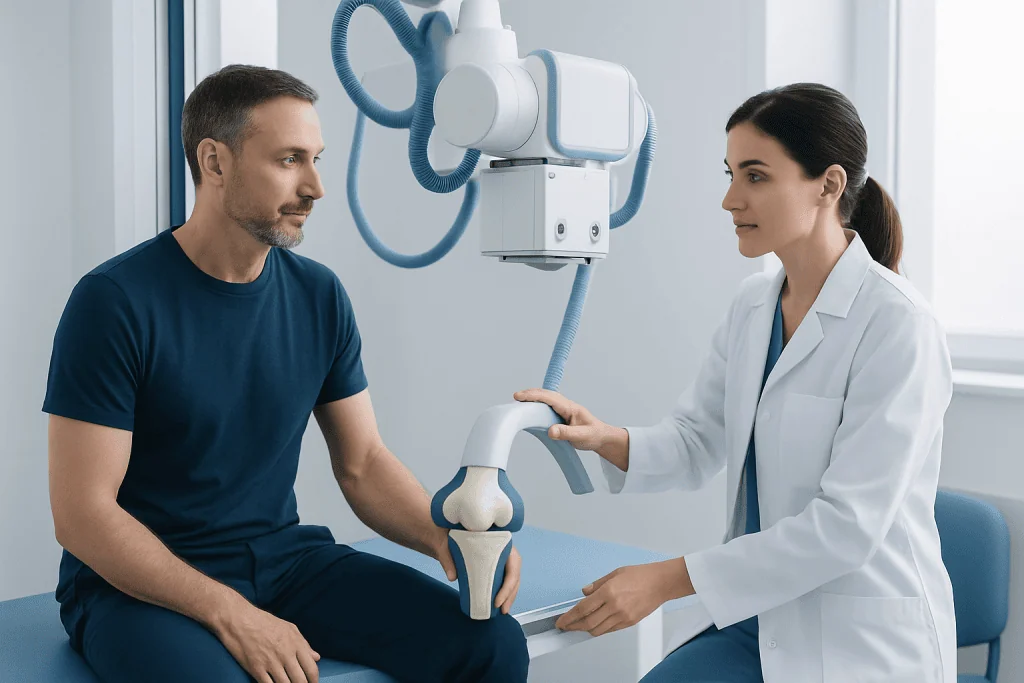
A healthy joint is more than a hinge between bones. The bone ends are usually covered with smooth cartilage, which helps reduce friction when the joint moves. This protective layer also helps absorb some of the load placed on the joint during walking, lifting, or other activities.
Ligaments connect bone to bone and help keep a joint aligned. Tendons, which attach muscle to bone, are not part of the joint itself, but they are essential for movement. The joint capsule surrounds many joints, and the synovium inside it produces synovial fluid, a natural lubricant that supports flexible motion.
When one part of this system is irritated or injured, the whole joint may feel painful or stiff. For example, cartilage wear, ligament sprains, inflammation of the synovium, or a fracture near a joint can all affect how the joint functions.
Symptoms That Affect Joints

Joint problems often cause pain, but pain may feel different depending on the cause. Some patients notice aching only during movement, while others feel pain even at rest. Stiffness, reduced range of motion, tenderness, clicking, or a sense that the joint is unstable can also occur.
Swelling and warmth may suggest inflammation or injury. In some conditions, the joint may look visibly larger than usual, while in others the symptoms are more subtle and mainly show up as difficulty climbing stairs, opening jars, or lifting the arm overhead.
Symptoms can be temporary after overuse, but persistent or worsening problems deserve attention. Joints that become locked, repeatedly give way, or lose function should be evaluated by a qualified doctor.
Common Causes and Risk Factors
Joint symptoms can arise from many different causes. Common examples include injuries such as sprains, strains, dislocations, or fractures; degenerative wear and tear such as osteoarthritis; and inflammatory conditions such as rheumatoid arthritis or gout. Infections, autoimmune diseases, and some metabolic disorders may also affect joints.
Risk factors vary by condition, but several are widely recognized. Aging, previous joint injury, repetitive stress, excess body weight, weakness of the muscles around a joint, poor biomechanics, and a family history of certain joint disorders can all contribute to problems over time.
Some joints are exposed to more stress because of occupation, sports, or daily activities. A person who kneels frequently, lifts heavy objects, runs long distances, or performs repetitive hand motions may be more likely to develop joint irritation or overuse symptoms.
How Doctors Diagnose Joint Problems
Diagnosis starts with a medical history and physical examination. A doctor may ask when symptoms began, which joints are affected, whether swelling or morning stiffness is present, and whether there was any injury or infection before the symptoms started.
Depending on the findings, the doctor may order imaging tests such as an X-ray, ultrasound, MRI, or CT scan to look at the bones and soft tissues around the joint. Blood tests may be useful when inflammation, infection, autoimmune disease, or gout is suspected. In some cases, fluid may be drawn from the joint for analysis.
These tests help identify whether the problem is coming from the bone, cartilage, ligaments, synovium, or another structure. That distinction matters because treatment is often different for arthritis, injury, infection, or nerve-related pain that only seems to come from a joint.
Treatment Options
Treatment depends on the cause, the joint involved, and how much the condition affects daily life. For minor injuries or overuse, rest, activity modification, ice or heat, and guided exercises may be recommended. For arthritis or chronic stiffness, physical therapy can help improve strength, flexibility, and joint mechanics.
Medications may be used to reduce pain or inflammation, but the choice depends on the diagnosis and the patient’s medical history. Some joint conditions respond to injections, braces, splints, or assistive devices. When symptoms are caused by structural damage, significant instability, or advanced arthritis, a surgical approach may sometimes be considered.
It is important not to treat all joint pain the same way. A sore knee after exercise, for example, is managed differently from a swollen joint with fever or from pain caused by an autoimmune condition. A doctor can help match treatment to the underlying reason for the symptoms. In selected cases, specialist evaluation and procedures such as joint replacement surgery or arthroscopy may be discussed when conservative care is not enough.
Prevention and Self-Care
Although not all joint problems can be prevented, many habits support long-term joint health. Regular low-impact exercise, such as walking, swimming, or cycling, helps keep muscles strong and joints flexible. Strengthening the muscles around a joint can reduce strain on the joint surfaces and supporting tissues.
Maintaining a healthy body weight is also helpful because extra weight increases load on weight-bearing joints such as the hips, knees, and ankles. Good posture, proper footwear, safe lifting techniques, and warm-up routines before exercise may also reduce injury risk.
For people with chronic joint conditions, pacing activities, taking breaks during repetitive tasks, and following a therapist’s home-exercise plan can make daily life easier. Small changes often matter more than complete rest, because gentle movement usually supports circulation and function better than prolonged inactivity.
When to See a Doctor
Medical evaluation is recommended if a joint is swollen, red, warm, or very painful, especially if symptoms come on suddenly. A doctor should also be consulted if pain follows an injury, if the joint cannot bear weight, or if there is a visible deformity.
Persistent morning stiffness, repeated episodes of swelling, unexplained fatigue, fever, or pain in multiple joints may suggest an inflammatory condition that needs assessment. Any joint problem that limits work, sleep, school, or daily activities should be taken seriously, even if symptoms seem mild at first.
Patients who are unsure whether the problem is in the bone, joint, muscle, or nerve should still seek evaluation. A clear diagnosis is the best way to choose safe, effective treatment. Acibadem International’s multidisciplinary specialists and JCI-accredited hospitals also diagnose and treat joint conditions for international patients.
Related Questions Patients Often Ask
Some patients ask whether cartilage is the same as a joint. Cartilage is only one part of many joints; it covers the ends of bones and helps them glide smoothly, but it is not the joint itself.
Others wonder whether bones can hurt because of joint problems. Yes, pain around a joint may feel like “bone pain,” but the source can be cartilage, ligaments, muscles, inflammation, or a fracture near the joint. That is why a proper assessment matters.
A common question is whether all cracking or popping sounds mean damage. Not necessarily. Some noises are harmless, but if clicking is paired with pain, swelling, locking, or instability, the joint should be examined by a doctor.
Frequently asked questions
Are joints bones?
No. Joints are the places where bones meet, and they help the body move. They are made up of bone ends plus supporting tissues such as cartilage, ligaments, and fluid.
What is the difference between bone and joint pain?
Bone pain often feels deep and may be related to injury, infection, or other bone conditions. Joint pain is usually felt with movement or around a specific joint and may be linked to arthritis, injury, or inflammation.
Why do joints crack or pop?
Joint noises can happen when tendons move, gas bubbles change in joint fluid, or tissues shift during motion. Many popping sounds are harmless, but pain or swelling with the noise should be checked.
Can joint pain mean arthritis?
It can, but not always. Arthritis is one possible cause of joint pain, but injuries, overuse, infections, and other conditions can cause similar symptoms.
Which joints are most commonly affected by problems?
The knees, hips, hands, shoulders, and spine are commonly affected because they are used often and may carry significant stress. The specific joint involved can offer clues about the cause.
Can exercise help sore joints?
Often, yes, if the exercise is appropriate for the condition. Gentle, regular movement and strengthening can support joint health, but painful or swollen joints should be evaluated before starting a new routine.
References
- Mayo Clinic
- National Institute of Arthritis and Musculoskeletal and Skin Diseases
- Arthritis Foundation
- MedlinePlus
This article is for general information only and is not a substitute for professional medical advice. Please consult a qualified doctor about your individual situation.
Joint and spine care in Turkey — expert assessment & treatment
JCI-accredited · board-certified surgeons · reply within 24h
Add us as a Preferred Source to see more of our trusted health content across Google Search, AI Overviews and Discover.