Are Microwaves Bad for You? Causes, Explanations, and Next Steps

Microwave ovens use non-ionizing radiation, which does not change food into radioactive material. Properly functioning microwave ovens are designed to contain microwave energy during normal operation.
Key Takeaways
- Microwave ovens use non-ionizing radiation, which does not change food into radioactive material.
- Properly functioning microwave ovens are designed to contain microwave energy during normal operation.
- The most common microwave-related injuries are burns from hot containers, steam, overheated liquids, and unevenly heated food.
- Food heated in a microwave can be nutritious and safe when it is cooked, stirred, and allowed to stand appropriately.
- A damaged microwave door, seal, latch, or casing should be checked by a qualified technician or the appliance replaced.
- Urgent medical care may be needed for significant burns, eye injuries, breathing difficulties after a burn, or symptoms of food poisoning.
Microwaves are generally not bad for people when the oven is in good condition and used according to its instructions. They use non-ionizing energy to heat food, do not make food radioactive, and are most commonly associated with preventable risks such as burns, steam injuries, and unevenly heated food.
Are microwaves bad for you?
For most people, microwave ovens are not bad for health when they are used correctly and are in good working condition. They heat food using microwave energy, a form of non-ionizing electromagnetic radiation. This energy causes water molecules in food to move and generate heat, but it does not make food radioactive and is not the same as ionizing radiation used in X-rays or radiation therapy.
Everyday microwave use has not been shown to cause radiation sickness or cancer when the appliance is intact and used as intended. Modern microwave ovens have metal shielding, a screened window, and safety interlocks designed to stop operation when the door is open. The more realistic health concerns are burns, scalds from steam or liquids, and foodborne illness when food is not heated evenly or stored safely.
Medical review is important if someone has a significant burn, persistent pain or vision changes after an injury, or symptoms such as severe vomiting, bloody diarrhea, high fever, or dehydration after eating food that may have been undercooked. A clinician can assess the injury or illness, identify likely causes, and recommend appropriate treatment.
How microwave ovens work and what “radiation” means
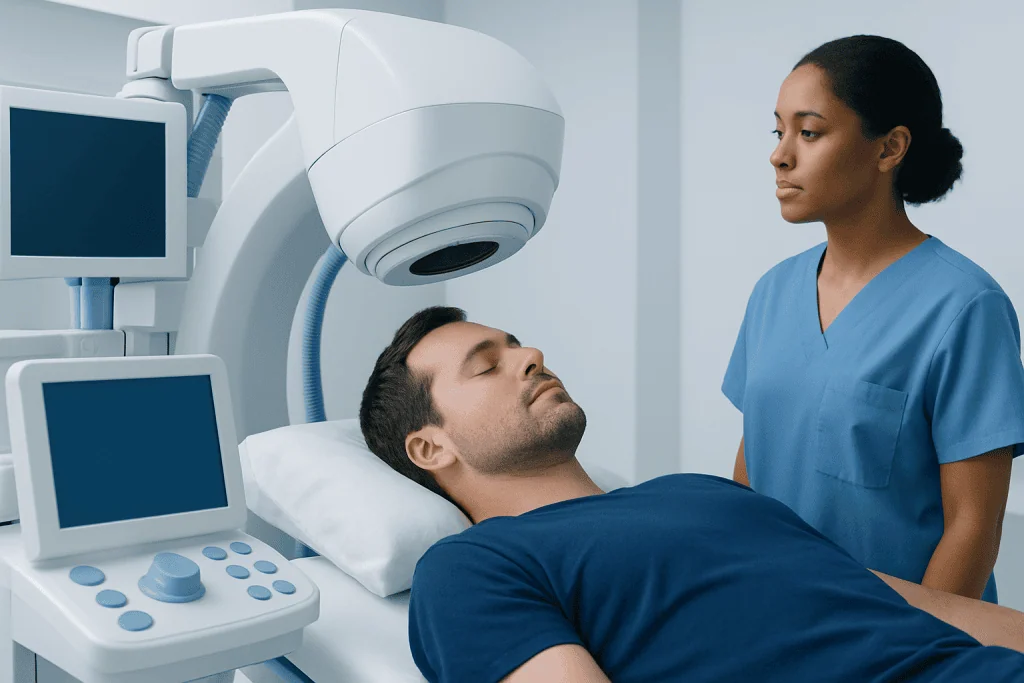
The word “radiation” can sound worrying, but it describes energy that travels in waves or particles. Microwave ovens use radiofrequency energy, which is non-ionizing. Non-ionizing radiation does not have enough energy to directly damage DNA in the way that ionizing radiation, such as X-rays and gamma rays, can.
Inside the oven, microwaves are absorbed mainly by water, fats, and sugars in food. This produces heat, although heating may be uneven because the energy does not always reach every part of food equally. Turntables, stirring, rotating food, and standing time after heating all help distribute heat more evenly.
The metal walls of the appliance reflect microwave energy inward, while the mesh in the door window allows light to pass through but helps contain the microwaves. Regulatory standards limit microwave leakage from ovens, and intact appliances are designed to remain within these limits during normal use. Standing near a properly closed, functioning microwave is not considered harmful.
Common risks are burns and food-safety problems
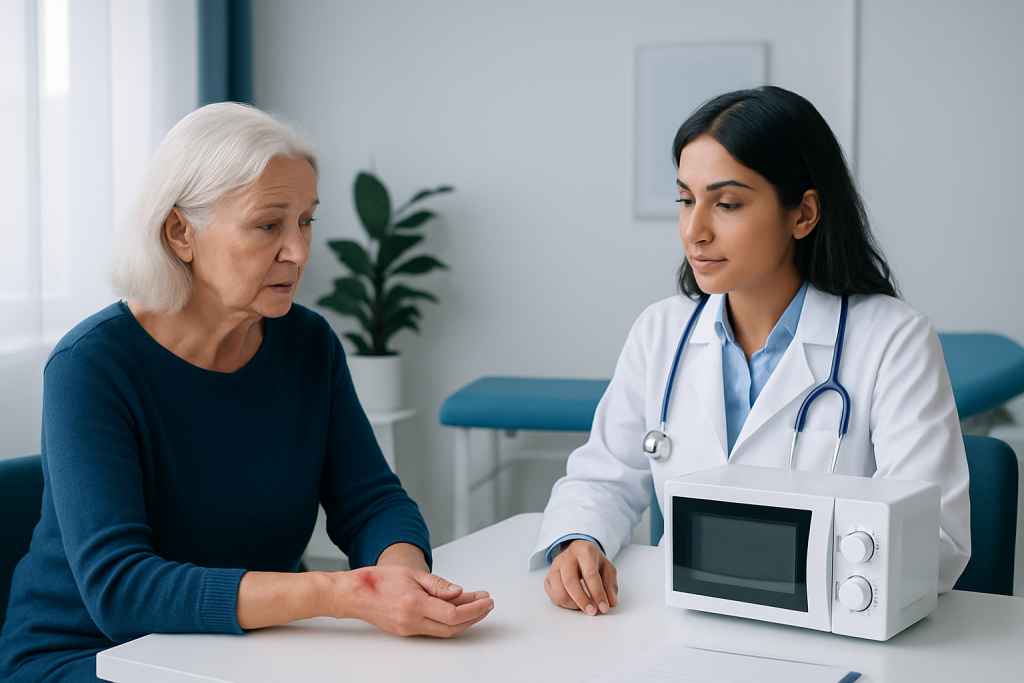
The most frequent microwave-related injuries are thermal injuries rather than radiation injuries. Containers, plates, and food can become unexpectedly hot. Steam released when opening a covered dish or microwave-safe bag can also burn the face, hands, or arms. Children should be supervised when using a microwave because hot food and containers can be difficult to handle safely.
Liquids may occasionally become overheated. This means water or another liquid becomes hotter than its usual boiling point without visibly bubbling, then suddenly boils when moved or when an ingredient is added. Using a microwave-safe container, avoiding excessive heating times, allowing liquids to stand briefly, and handling containers carefully can reduce this risk.
Uneven heating matters particularly for meat, poultry, eggs, leftovers, and ready meals. Cold spots can allow germs to survive if food has not reached a safe internal temperature throughout. Food should be stirred or turned where appropriate, covered to support even heating, allowed to stand after cooking, and checked carefully before eating. Leftovers should be refrigerated promptly and reheated thoroughly.
- Use microwave-safe glass, ceramic, or clearly labeled plastic containers.
- Avoid metal, aluminum foil unless the appliance instructions specifically permit it, and containers with metallic trim.
- Follow package heating instructions, including stirring and standing times.
- Take care with sealed foods, eggs in shells, and tightly covered containers, which may burst from steam pressure.
Does microwaving food affect nutrition?
Microwaving can change food in the same general ways as other forms of cooking: heat can reduce some heat-sensitive nutrients, including certain vitamins. However, nutrient losses depend on the food, cooking time, temperature, and amount of water used rather than on microwaves alone.
Because microwave cooking can be relatively quick and often uses little or no added water, it may preserve nutrients as well as, or sometimes better than, boiling or prolonged cooking. Steaming vegetables, using shorter cooking times, and avoiding unnecessary overcooking are practical ways to protect flavor, texture, and nutritional value.
Microwave heating does not create radioactivity in food. It also does not remove all nutrients or make food inherently less healthy. The nutritional quality of a meal still depends primarily on the ingredients, portion size, preparation method, and overall eating pattern. For example, frequently heating highly processed foods may be less beneficial because of the food choice itself, not because it was microwaved.
Safe microwave use at home
Reading the manufacturer’s instructions is an important part of safe use. The microwave should sit on a stable surface with adequate ventilation, and the door should close fully. Do not operate an empty microwave unless the manufacturer specifically says it is safe to do so, as the energy may not be absorbed properly and could damage the appliance.
Only containers labeled microwave-safe should be used. Some plastics may warp, melt, or release unwanted substances when heated, especially if they are not intended for microwave use. It is best to avoid heating food in old, cracked, damaged, or unmarked plastic containers. Glass and ceramic can be useful choices, but should also be checked for damage and suitability for microwave use.
A microwave with a bent door, broken latch, damaged seal, cracked window, corrosion around the door, or casing damage should not be used until it has been assessed by a qualified service professional. It is not necessary to attempt to measure leakage at home. The safer next step is to stop using a visibly damaged appliance and arrange repair or replacement according to local guidance.
When to seek medical care
Most minor burns from hot food or containers can be cooled under cool running water for about 20 minutes. Ice, butter, oils, toothpaste, and adhesive dressings should not be placed on a burn. Medical advice is recommended for burns that blister, are larger than the person’s palm, involve the face, hands, feet, genitals, or major joints, or occur in infants, older adults, or people with conditions that affect healing.
Urgent assessment is needed for deep-looking burns, white or charred skin, severe pain, numbness, breathing difficulty, burns from a fire or electrical source, or signs of infection during healing. Eye pain, blurred vision, persistent redness, or sensitivity to light after a steam or splash injury should also be reviewed promptly by a healthcare professional.
After eating microwaved food, medical care may be appropriate if symptoms suggest a significant foodborne illness. Concerning signs include persistent vomiting, bloody diarrhea, severe abdominal pain, high fever, confusion, marked weakness, or dehydration symptoms such as very little urine, dizziness, or inability to keep fluids down. A doctor will usually ask about the food eaten, timing of symptoms, other affected people, medical history, and hydration, and may perform an examination or order tests when needed.
What a doctor may check after a microwave-related concern
If a person is worried about a possible microwave injury, the evaluation depends on the symptoms rather than on routine testing for “microwave exposure.” For a burn, a clinician assesses the depth, size, location, pain level, circulation, sensation, and risk of infection. Treatment may include wound care advice, pain management, dressings, tetanus vaccination review, or referral to a burns specialist when appropriate.
For suspected food poisoning, a clinician considers the type of symptoms, how quickly they began, recent foods, travel, medications, chronic conditions, and whether others became ill. Tests are not always necessary, but stool tests, blood tests, or other investigations may be used for severe, prolonged, or high-risk cases. The priority is often preventing and treating dehydration while identifying any illness that needs specific care.
People with implanted medical devices, such as pacemakers or neurostimulators, can usually use a properly functioning microwave oven, but should follow the device manufacturer’s advice and discuss individual questions with their cardiologist or treating specialist. Acibadem International’s multidisciplinary specialists and JCI-accredited hospitals can assess burns, digestive symptoms, and other health concerns for international patients when medical evaluation is needed.
Frequently asked questions
Can microwaves cause cancer?
A properly functioning household microwave oven is not known to cause cancer through normal use. Microwave ovens use non-ionizing radiation, which does not have the same DNA-damaging properties as ionizing radiation such as X-rays. A damaged appliance should not be used until it is repaired or replaced.
Does food become radioactive after being microwaved?
No. Microwave energy heats food but does not make it radioactive. Once the microwave is switched off, the food does not retain microwave energy.
Is standing in front of a microwave dangerous?
Standing near an intact microwave with its door closed is generally considered safe. Appliances are designed with shielding and door safety mechanisms to contain microwave energy. If the door, latch, seal, or window is damaged, the appliance should not be used.
Are microwave-safe plastic containers safe?
Containers labeled microwave-safe are intended for microwave heating when used according to their instructions. Damaged, warped, cracked, or unmarked plastic containers should be avoided, particularly for high-fat foods that can become very hot. Glass or ceramic labeled as microwave-safe may be alternatives.
Why does microwave food sometimes heat unevenly?
Microwave energy may not reach all areas of food equally, creating hot and cold spots. Stirring, rotating, covering food where appropriate, and allowing standing time can help heat distribute more evenly. This is especially important when reheating leftovers or cooking foods that need thorough heating.
Can a microwave burn someone without touching hot food?
In normal household use, microwave injuries are most often caused by heat from food, steam, containers, or overheated liquids rather than direct exposure to microwave energy. Steam burns can occur quickly when opening covered dishes or bags. Significant burns should be assessed by a healthcare professional.
References
- World Health Organization
- U.S. Food and Drug Administration
- U.S. Department of Agriculture Food Safety and Inspection Service
- American Cancer Society
- National Health Service
This article is for general information only and is not a substitute for professional medical advice. Please consult a qualified doctor about your individual situation.
Explore treatments in Turkey — costs, top hospitals & a free quote
JCI-accredited · board-certified surgeons · reply within 24h
Add us as a Preferred Source to see more of our trusted health content across Google Search, AI Overviews and Discover.